
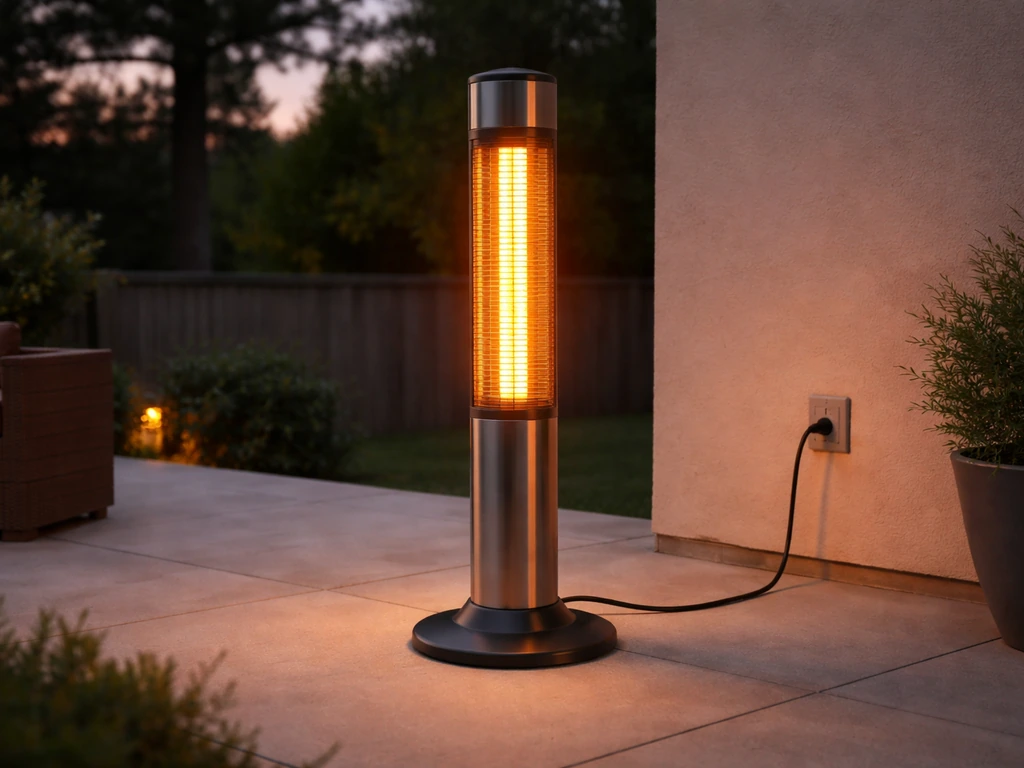
The best 120V patio heater for most people is an electric infrared model in the 1500W range that plugs straight into a standard household outlet. Options like the Dr. Infrared DR-238 and the Infratech W1512 cover a solid range of patio sizes, work on a normal 15A or 20A circuit, and require zero fuel lines or propane tanks. Which one is right for you depends on your patio size, whether it's covered or open, and whether you want a portable floor unit or something wall- or ceiling-mounted.
Best 120V Patio Heater: How to Choose and Top Picks

Willa Brennan
16 May 2026
What '120V patio heater' really means (and what to buy)
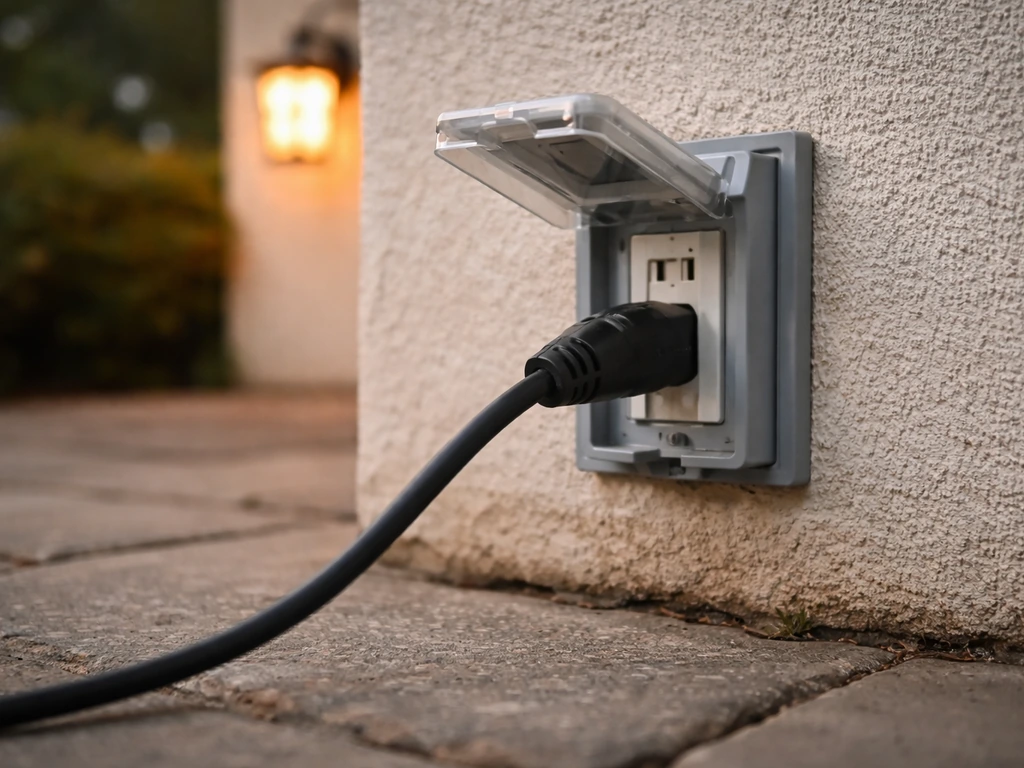
A 120V patio heater is simply a heater that runs on the same standard household current that powers your lamps and kitchen appliances. You plug it in, and it works. That distinguishes it from 240V electric heaters (which need a dedicated circuit like a dryer), propane models (which need a tank), and natural gas units (which need a gas line). If you searched for a '120V patio heater,' you almost certainly want something you can plug into an existing outdoor outlet and start using today, with no installation contractor required.
The practical ceiling for 120V electric heaters is about 1500W, which draws roughly 12. 5 amps. That fits comfortably on a 15A circuit and leaves headroom. Don't push that circuit with other loads at the same time.
The honest tradeoff: 1500W is genuinely useful for small to medium spaces but won't replace the raw output of a 48,000 BTU propane tower heater (those push roughly 14,000W equivalent). If you want to go beyond smaller plug-in units, you can also look at a hampton bay 48000 btu patio heater review to compare heat output and real-world performance 48,000 BTU propane tower heater.
If you're heating a large uncovered patio in cold weather, a propane heater or a 240V unit will outperform a 120V plug-in. But for a covered patio, a balcony, or a pergola, 1500W of focused infrared heat is surprisingly effective.
Infrared vs radiant vs convection: how each heats outdoors
These three terms cause a lot of confusion, so let's sort them out quickly. Infrared and radiant heat are essentially the same thing: electromagnetic energy that travels in a straight line and warms people and objects directly without heating the air in between. That's the key. When you're standing in front of an infrared patio heater, you feel warm because the radiant energy hits your skin and jacket directly, not because the air around you is warm. Outdoors, that matters enormously, because wind immediately carries away any heated air. Convection heaters, by contrast, heat the surrounding air, which makes them great indoors but mostly useless on an open patio.
For any outdoor or semi-outdoor use, infrared (radiant) is the right choice. Nearly every 120V patio heater you'll find worth buying uses infrared technology, typically with a quartz tube, carbon fiber filament, or halogen element. The differences between those element types mostly come down to how quickly they heat up (carbon fiber tends to be fast), how long they last, and the color of the glow they produce. Quartz tube elements are proven and widely used in commercial settings. Carbon fiber is newer and popular in residential plug-in units. Both work well at the 120V/1500W level.
Sizing and coverage for your patio (BTUs, watts, distance, and wind)
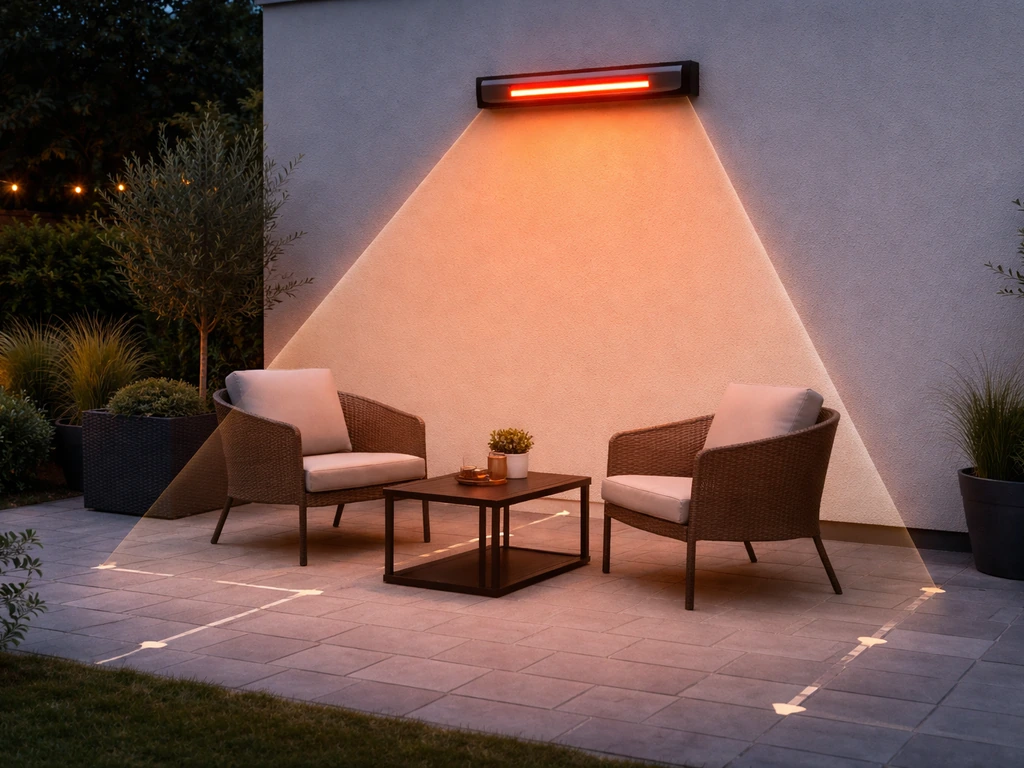
Coverage claims on product listings can be wildly inconsistent, and it's worth understanding why before you buy. The Infratech W1512, a 1500W wall-mount infrared heater, is rated for roughly a 5-foot by 5-foot heating area (about 25 square feet) when mounted at 6 to 8 feet high. Meanwhile, the Dr. Infrared DR-238, also 1500W and 120V, is listed with coverage up to 1,000 square feet. The difference isn't a lie from either brand; it's a different definition of 'coverage.' Infratech is describing a tightly defined comfort zone where you feel genuinely warm. The DR-238 figure is closer to the room volume that the heater can influence at any level, not necessarily keep toasty on a cold night.
For practical planning, use the tighter definition. A single 1500W infrared heater delivers real comfort to roughly one or two people sitting within about 6 to 8 feet of it. Schwank's coverage diagrams, which are based on a 10-foot mounting height, illustrate effective coverage areas around 8 by 8 feet for a similarly sized unit. If your patio is larger, plan on multiple heaters rather than expecting one plug-in unit to cover everything.
Mounting height is also critical: the sweet spot for ceiling or wall-mounted infrared heaters on covered patios is typically 7 to 9 feet above the floor. Go too high and the heat disperses too much before it reaches you. Go too low and it feels intense directly underneath but doesn't spread.
Wind is the variable manufacturers tend to gloss over. Infrared heat is line-of-sight, so wind doesn't blow it away the way it destroys convection heat. But wind chilling your skin reduces how warm you feel even with radiant heat hitting you. Infratech's own installation manual acknowledges that coverage can be noticeably reduced in extremely cold or windy conditions. On an open, exposed patio in a windy climate, you'll want to position heaters closer to seating areas and possibly add a windscreen or pergola to retain comfort.
Safety, weather ratings, and electrical requirements for 120V
Electrical safety is the area where people make the most preventable mistakes with 120V patio heaters. The CPSC is direct about this: plug your heater straight into a wall outlet. Do not use an extension cord or power strip. A 1500W heater pulls 12.5 amps continuously, and most household extension cords aren't rated for that sustained load. The result is a fire risk, not a theoretical one. If your outdoor outlet isn't in the right spot, have an electrician add one rather than running a long extension cord.
Outdoor outlets in the US are required by the National Electrical Code to have GFCI protection. If your existing outdoor outlet doesn't have a GFCI (the kind with the test and reset buttons), get that fixed before you plug in any patio heater. GFCI protection is what shuts off power instantly if water gets into the circuit, which is exactly the scenario you want guarded against when using an electric heater in an outdoor environment.
Look for an IP rating when buying any outdoor heater. IP65 means the unit is fully dust-tight and protected against water jets from any direction. That's the practical minimum for an exposed or semi-exposed patio. The Aura CF15120B carbon fiber model, for example, carries an IP65 rating. For fully covered patios with minimal rain exposure, you have more flexibility, but IP44 or higher is still worth seeking. For portable floor-standing units like the DR-238, tip-over protection is essential: UL-listed portable electric heaters are required to have a tip-over switch that cuts power when the unit falls over. Confirm that feature is present before buying any floor-standing model.
Best picks by patio type
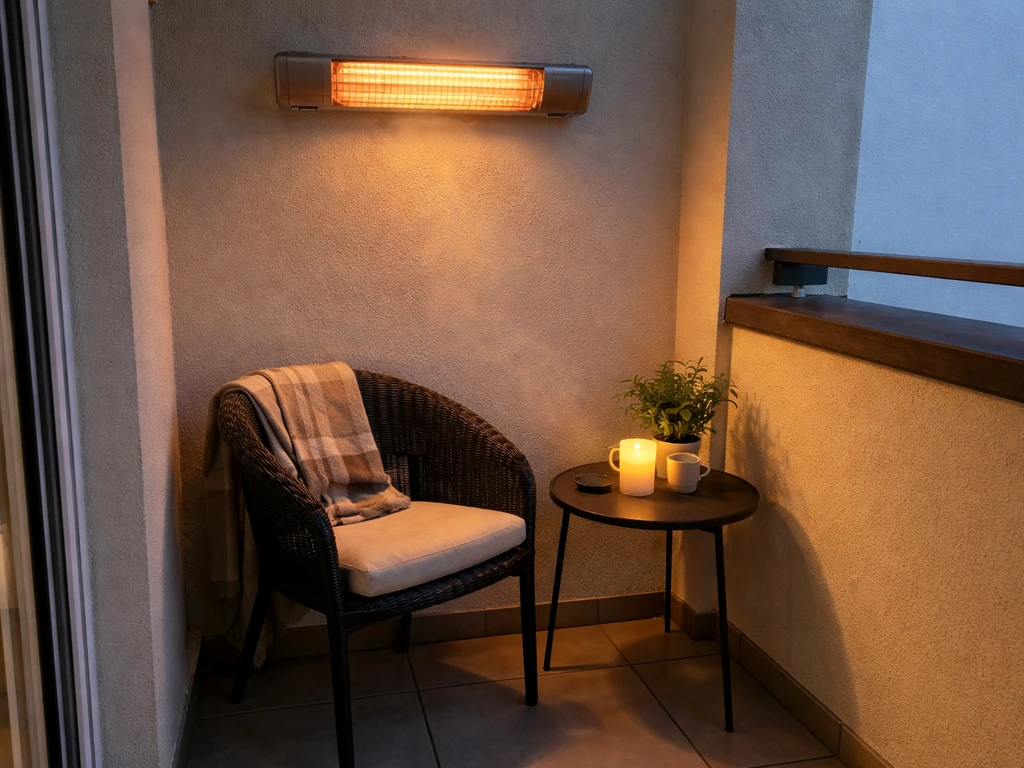
Small balcony or apartment patio (under 50 sq ft)
This is where 120V electric heaters genuinely shine. A wall-mounted 1500W infrared heater like the Infratech W1512 or the Ouellet CF15120B is ideal here. Both mount to a wall or ceiling, take up zero floor space on a cramped balcony, and plug into a standard outlet. The W1512 is built for commercial durability and will outlast cheaper alternatives. The Ouellet is a solid residential option if you want something a bit more budget-friendly. Both will comfortably heat one or two people seated underneath.
Medium patio or covered pergola (50 to 150 sq ft)
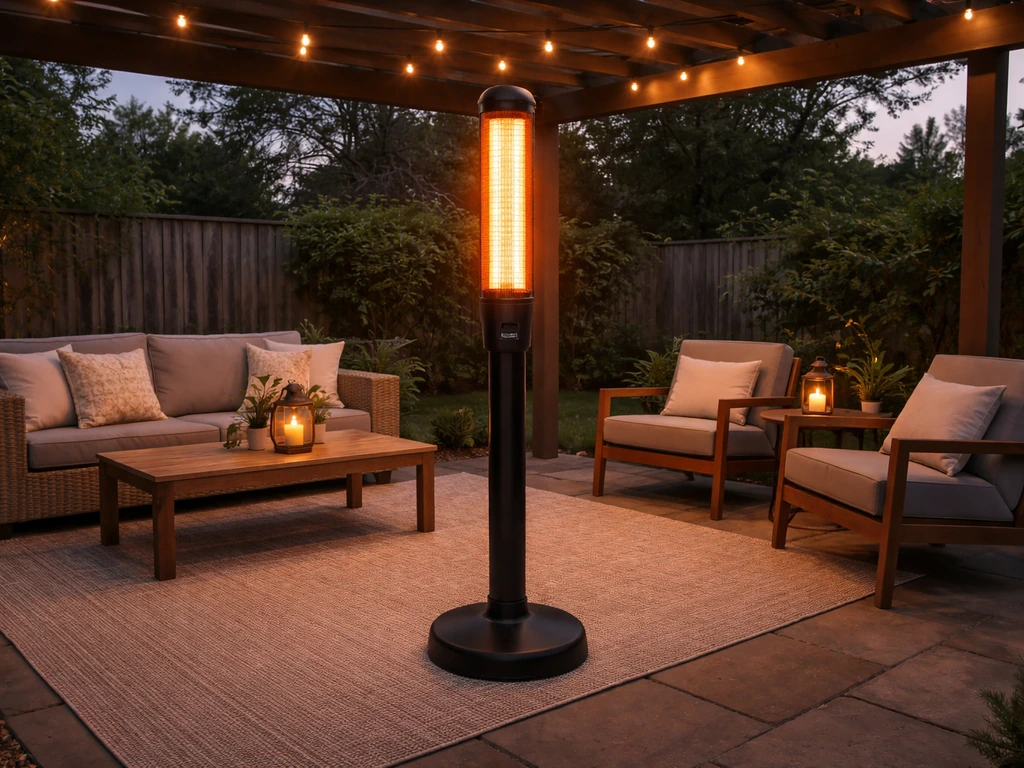
For a covered pergola or a medium-sized patio with some overhead protection, consider either a floor-standing infrared unit like the Dr. Infrared DR-238 or two wall-mounted 1500W units positioned to overlap coverage. The DR-238 is versatile: it offers three output settings (900W, 1200W, and 1500W), has a remote control, and can be wall- or ceiling-mounted as well as used freestanding. That flexibility is genuinely useful if you're not sure whether you want to commit to a permanent mount. For a pergola setup, mounting at 7 to 9 feet and angling slightly toward seating areas gives you the best coverage.
Open or larger patio (150+ sq ft, exposed to wind)
This is where a single 120V plug-in heater starts to hit its limits. You can make it work by using multiple units and positioning them strategically around seating zones, but if you're trying to heat a large open deck in cold weather, you'll likely find yourself comparing electric options to high-output propane towers. Those 48,000 BTU propane heaters offer dramatically more raw heat output and are worth considering for large uncovered spaces.
A good option in that category is the best 48000 btu patio heater for large, exposed spaces where 120V units struggle 48,000 BTU propane heaters. Those high-output propane tower models are often what people compare when looking at Hampton Bay 48000 BTU stainless steel patio heater reviews 48,000 BTU propane heaters. For this size and scenario, a 120V heater is best treated as a supplement or a solution for a single seating cluster rather than a whole-patio fix.
Portable vs tabletop vs mounted: what actually works for you
Each format has real tradeoffs, and the right choice depends on how your patio is used.
| Format | Best For | Tradeoffs |
|---|---|---|
| Floor-standing portable (e.g., DR-238) | Flexibility, moving heat to where people are, renters | Takes up floor space, tip-over risk, cord management |
| Tabletop | Small cafe-style tables, intimate seating, minimal space | Very limited coverage area, mainly warms hands/faces |
| Wall/ceiling mounted (e.g., W1512, Ouellet CF15120B) | Covered patios, permanent setups, balconies | Requires mounting hardware, fixed position, needs outlet nearby |
If you're a renter or move your outdoor furniture seasonally, a portable floor-standing unit with a remote and multiple heat settings (like the DR-238) gives you the most flexibility. If you own your home and have a covered patio or pergola, a wall- or ceiling-mounted unit is cleaner, safer, and more effective because you can position it at the ideal height with the right angle. Tabletop heaters are a nice supplement for a small table setting but shouldn't be your primary heat source for a patio.
Maintenance, operating cost, and mistakes to avoid
One of the biggest advantages of 120V electric infrared heaters is how little maintenance they need compared to propane units. There's no fuel line to check, no burner to clean, no igniter to replace. For mounted infrared heaters, Infratech's manual recommends periodically cleaning the housing, reflectors, and element: a wipe-down with isopropyl alcohol or a rinse with a garden hose (when powered off and cool) handles most buildup. Do this once a season and your heater will run efficiently for years.
Operating cost is straightforward to calculate. A 1500W heater running for one hour uses 1.5 kWh of electricity. At a US average of around 16 cents per kWh, that's about 24 cents per hour at full power. Running it on the 900W setting drops that to roughly 14 cents per hour. Over a season of regular use, that adds up but is still typically less expensive per hour of warmth than propane, especially at current propane prices.
Here are the most common mistakes people make with 120V patio heaters, and how to avoid them:
- Using an extension cord: plug directly into a GFCI-protected outdoor wall outlet only. A 1500W heater on an undersized extension cord is a fire waiting to happen.
- Buying one heater for a large open patio: 1500W covers roughly a 5x5 to 8x8 foot comfort zone effectively. Size your number of heaters to your seating area, not your total patio square footage.
- Mounting too high: above 9 to 10 feet, the radiant heat from a 1500W unit disperses enough that comfort drops significantly. Stick to the 7 to 9 foot sweet spot for covered patios.
- Ignoring IP ratings for weather exposure: if rain can reach your heater, you need IP65 or better. Skipping this is how heaters fail early and become safety hazards.
- Expecting manufacturer coverage claims to match real-world cold weather: manufacturers often measure comfort coverage in mild conditions. In wind or cold below 40°F, expect noticeably smaller effective coverage and position heaters accordingly.
- Forgetting about the circuit: confirm nothing else is pulling significant load on that circuit when the heater is running at 1500W (12.5A). Sharing with a refrigerator or other high-draw appliance risks tripping the breaker.
Before you buy, take three minutes to measure your patio, note whether it's covered or open, and count your outdoor outlets and their locations. That quick homework will tell you how many heaters you need, whether portable or mounted makes more sense, and whether your existing electrical setup is ready. Most people who end up disappointed with a patio heater either bought one that was too small for the space or placed it in a spot that didn't put anyone in the radiant heat path. Get those two things right, and a 120V electric infrared heater is one of the most convenient and genuinely effective ways to extend your outdoor season.
FAQ
Can I run a best 120V patio heater on a GFCI-protected outlet if I also have other devices on the same circuit?
Yes, but avoid stacking high-watt loads on the same 15A circuit. A 1500W heater draws about 12.5A continuously, so lights and a TV on the same circuit can push you toward nuisance trips. If you trip the breaker often, separate the heater to its own outlet or use a lower heat setting (900W) when other loads are running.
Is it safe to use a best 120V patio heater with an extension cord in winter weather?
No. Even “heavy duty” cords often can’t handle the sustained 12.5A load, especially outdoors where moisture and temperature swings add risk. The practical fix is adding or relocating a weather-rated outdoor outlet near where you want the heater, rather than relying on any cord.
How should I position a 120V infrared heater if my patio is uneven, windy, or has a bench against a wall?
Treat radiant heat like line-of-sight. If people are seated near a wall, angle the heater so the beam crosses the seating area, not the floor or a solid barrier. In wind, place heaters closer to the seating zone and consider a fixed windscreen or pergola panel so your guests stay within the warm zone longer.
What’s the best mounting height and angle for a wall or ceiling-mounted 120V heater on a covered patio?
Use the 7 to 9 foot range as your starting point. For angle, aim slightly toward where people sit (not straight down), so radiant energy reaches faces and upper bodies rather than just heating the edge of the seating. If you feel intense warmth directly underneath but little benefit farther out, lower the angle or reduce the mounting height (within manufacturer limits).
Why do some coverage numbers for a best 120V patio heater look wildly different, and how do I choose a realistic expectation?
Coverage claims often measure different things, like “comfort zone you can feel” versus “room influence.” As a planning rule, plan for comfort for about one or two people within roughly the 6 to 8 foot radiant path, then add another heater for each additional seating cluster. If the listing claims a huge area, assume it’s the tightly defined warm spot under ideal conditions.
Do carbon fiber, quartz tube, and halogen elements change how well a 120V patio heater works outdoors?
They mostly affect warm-up speed, element longevity, and the color of the glow, rather than changing radiant heating physics. What matters more outdoors is keeping the seating within the line-of-sight zone and using correct mounting height. Faster warm-up can still be worth it if you only use the patio intermittently.
What IP rating should I require for a partially exposed porch or a patio under light rain?
For an exposed or semi-exposed patio, IP65 is the practical minimum since it indicates protection from water jets from multiple directions. If your patio is truly covered and protected from direct rain, IP44 or higher can be acceptable, but only if the unit is not sprayed by sprinklers or runoff directly onto it.
If my heater is portable, do I need to worry about tip-over shutoff even with a patio heater that stays on a stable floor?
Yes. Confirm it has a UL-listed tip-over switch that cuts power if the unit falls or is knocked. Outdoors, bumps from chairs, kids, or gusts of wind can move a portable heater, and that protection is one of the few safety features that actively responds to the hazard.
How much electricity does a 120V patio heater use if I run it in bursts rather than one full hour?
Use the same kWh logic, power level times time. A 1500W heater uses 1.5 kWh per hour at full power, so 30 minutes is about 0.75 kWh, and 10 minutes is about 0.25 kWh. If you frequently use the 900W setting, your cost drops proportionally because wattage is the main driver.
Will infrared heat warm the air on a patio the way a convection heater does indoors?
Not meaningfully. Infrared primarily warms people and nearby objects directly, and that effect can fade when wind chills your skin. That’s why you should plan around seating placement and line-of-sight, not expect a general “warm the entire space” result.
What should I do to maintain a best 120V patio heater so it performs well over multiple seasons?
Plan on at least a once-a-season clean of the housing and reflectors and wipe down the element area as recommended by the manufacturer. Do not clean while hot, and avoid harsh abrasives that could damage coatings. If you live near salt air or heavy dust, you may need shorter cleaning intervals to prevent efficiency loss.
When does a 120V plug-in heater stop being the right choice and a propane or 240V option becomes necessary?
When you are trying to heat an open, uncovered space with many seats, 1500W typically becomes a supplement rather than a whole-patio solution. If you repeatedly can’t keep guests within the radiant zone or you need warmth across a wide area, you’ll likely be happier with a higher-output 240V electric or a propane tower-style heater designed for larger exposed areas.