
For most UK homeowners, the best pyramid patio heater right now is an 11.2kW LPG gas model running on a 13kg propane cylinder at 37mbar. At that output, you get real warmth across roughly 15 to 20 square metres on a calm evening, you can dial the flame up or down, and running costs sit around £2.40 to £2.80 per hour at high power. A full 13kg bottle gives you around ten to eleven hours of heat. That is the honest, practical answer before we get into the details that will help you pick the right one specifically for your space.
Best Pyramid Patio Heaters Guide: Choose the Right One

Willa Brennan
4 May 2026
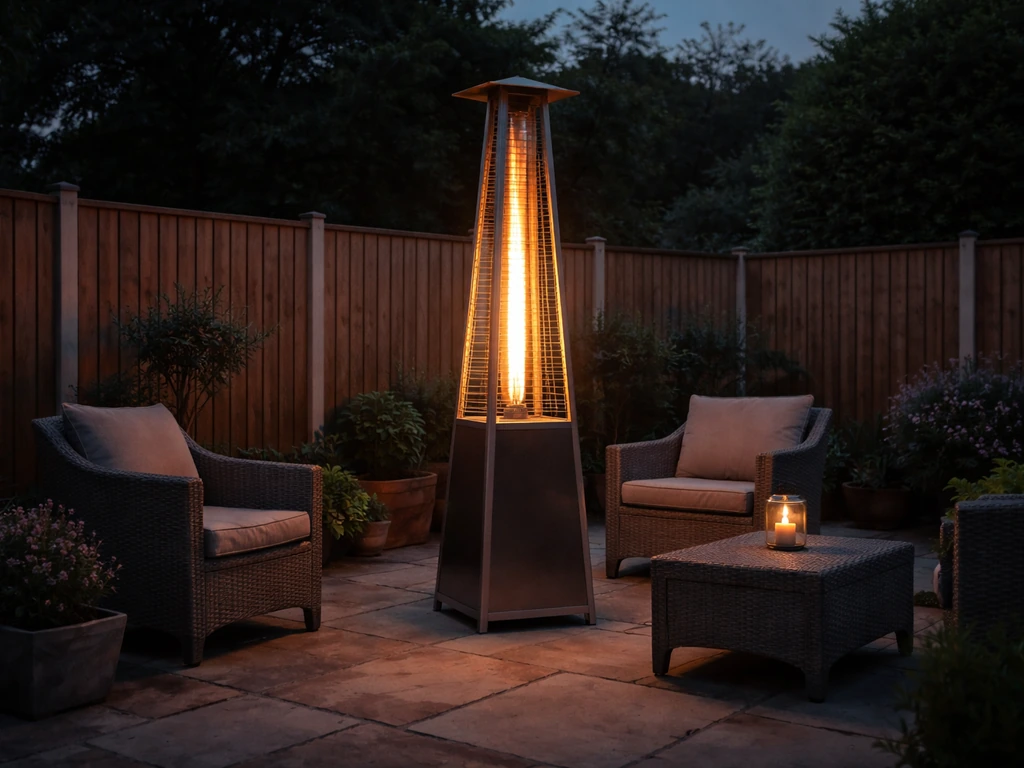
Quick winner checklist for pyramid patio heaters
Before you go any further, run through this checklist. If your situation ticks most of these boxes, a standard 11.2kW propane pyramid heater is probably the right buy. If you have specific conditions like a covered canopy, a tiny courtyard, or a very exposed garden, the sections below will steer you to the right spec.
- Heat output of 11.2kW (about 38,000 BTU) covers most medium UK patios up to 15 to 20 square metres in calm conditions
- LPG propane is the easiest fuel to source in the UK and works well in cold weather (butane struggles below about 5°C)
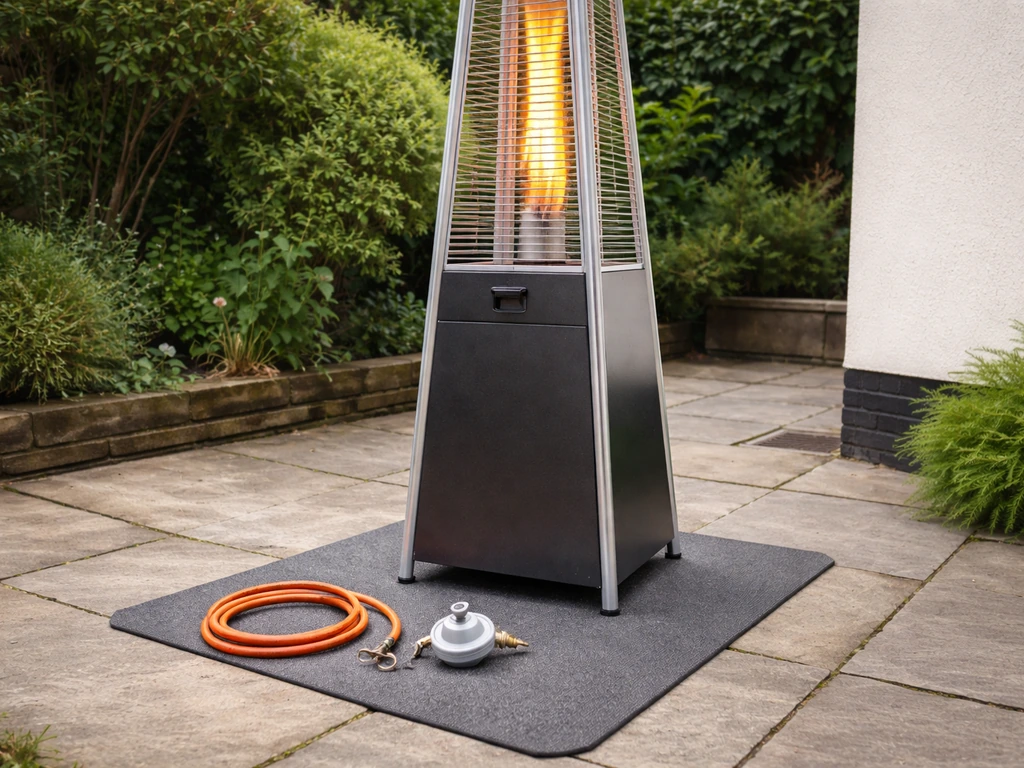
- Look for a 37mbar regulator included in the box, or buy a Calor 27mm clip-on propane regulator separately
- Electronic ignition (battery-powered, usually one AA) is far more reliable than a manual piezo in wet or windy conditions
- Variable flame control lets you back off heat and extend burn time without switching the heater off completely
- Tip-over cut-off is a non-negotiable safety feature on any gas pyramid heater
- Minimum assembled height of around 190cm keeps the heat source above head height for adults
- Weather cover included or available separately, especially important in the UK
- Check the unit is CE or UKCA marked and compliant with EN 14543: 2017, which sets design and safety standards for flueless outdoor patio heaters
Propane buying guide: fuel type, output, and safe operation
Propane is the fuel of choice for pyramid patio heaters in the UK, and there are good reasons for that. Unlike butane, propane vaporises reliably at low temperatures, so it keeps working on a cold April evening when butane would struggle. Most UK pyramid heaters are rated for LPG, which covers propane, butane, and blended cylinders, but propane is the practical default for outdoor use across most of the year.
The standard output for a UK pyramid heater is 11.2kW, consuming around 815g of LPG per hour at full power. That consumption figure is important because it lets you calculate run time directly. A 13kg cylinder gives you roughly ten to eleven hours at high power, or noticeably longer if you run the flame at a lower setting. The Planika Pyramid, which outputs up to 8.2kW at a maximum consumption of 0.50kg per hour, shows that a more economical design can squeeze up to 55 hours from an 11kg cylinder on lower settings, though that is a premium, decorative model in a different price bracket.
On the regulator side, you need a 37mbar propane regulator. This is the standard pressure for UK patio heaters and is what appliances like the electriQ Pyramid Flame Tower are specified for. Calor's 27mm clip-on propane patio regulator is widely available and fits most standard propane cylinders. Calor also describes its 27mm clip-on propane patio regulator as rated 37 mbar and suitable for patio heaters Calor's 27mm clip-on propane patio regulator. Some heaters include a hose and regulator in the box, but always check the spec sheet because the included regulator may not be rated for the correct pressure. If in doubt, buy a known-good 37mbar unit separately.
Safe operation is straightforward if you follow a few rules. Never move the heater while it is alight. Keep it away from enclosed spaces, including garages and conservatories, since combustion products build up fast in confined areas. Do not store spare LPG cylinders inside the home. Check your hose and fittings regularly for cracks or brittleness, and make sure any hose clamps meet the BS EN 16436-1 standard for vapour-phase LPG connections. If the heater includes a tip-over cut-off (and any decent model should), test it occasionally by gently tilting the unit when it is off to confirm the mechanism is functioning.
UK-specific considerations: standards, sourcing, and sizing
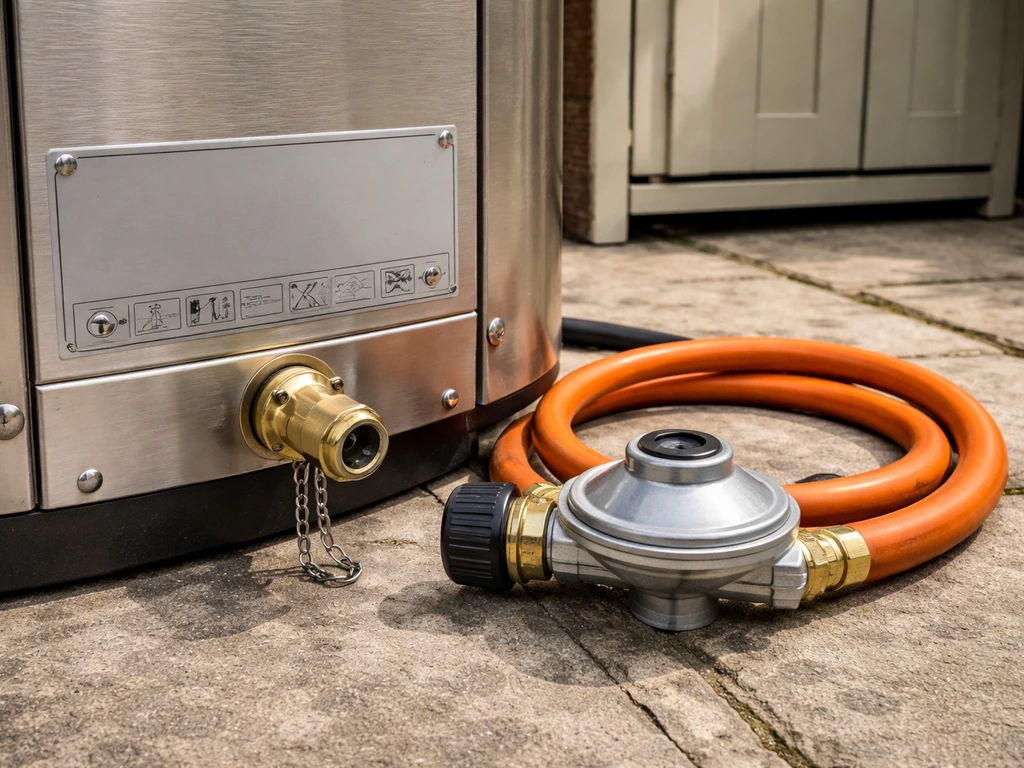
Buying a pyramid heater in the UK involves a few considerations that do not apply in the same way elsewhere. The most important is compliance. Any gas patio heater sold legitimately in the UK should be marked to show it meets EN 14543:2017, the European (and retained UK) standard that covers the design, safety, and marking requirements for flueless LPG patio heaters intended for outdoor or well-ventilated use. UKCA marking is increasingly the post-Brexit UK equivalent of CE marking, so look for one or both on any unit you consider.
LPG availability is excellent across the UK. Calor is the dominant supplier, with 13kg propane cylinders available from garden centres, DIY stores, and many fuel merchants. Flogas and other suppliers are also widely stocked. One thing to be aware of: cylinder rental and exchange schemes mean you often pay a deposit for the first cylinder and then just swap it when empty. Budget for that initial outlay on top of the heater price.
UK gardens and patios tend to be smaller than, say, typical US or Australian outdoor spaces, and they are often more sheltered by fencing or walls. That works in your favour with a pyramid heater. A 190cm tall model with an 11.2kW output is genuinely well-matched to a medium UK garden patio of 12 to 20 square metres. For smaller courtyard gardens under about 8 to 10 square metres, a 13kW model sounds tempting but can feel overwhelming at close range. Stick with 11.2kW and adjust via the flame control.
UK weather also means rain is a constant factor. Confirm the heater includes a dust and rain cover, and if it does not, buy one. Stainless steel or powder-coated frames hold up better than raw steel, and the flame window (usually toughened glass panels on a pyramid heater) should be checked for seal quality before you buy.
Choosing by patio size and covered vs uncovered setups
Coverage claims on patio heater listings vary wildly. I have seen the same 11.2kW pyramid heater listed as heating anywhere from 8 to 20 square metres depending on the seller. The honest answer is that effective coverage depends on wind, ambient temperature, and how close people are sitting to the heater. Think of a pyramid heater as warming a zone rather than heating a room. People within about two to three metres of the flame in calm conditions will feel it well. Beyond four metres, the effect drops off fast.
| Patio size | Recommended output | Covered or open? | Notes |
|---|---|---|---|
| Up to 8m² | 11.2kW at medium setting | Either | May feel too close at full power; use flame control |
| 10 to 15m² | 11.2kW (standard model) | Either | Good match; position centrally for best coverage |
| 15 to 20m² | 11.2kW to 13kW | Uncovered preferred | Two heaters work better than one oversized unit |
| 20m²+ | Multiple units or 13kW+ | Covered with ventilation | Single pyramid heater will not cover this reliably |
The covered vs uncovered question is more about safety than warmth. Under a pergola or canopy, combustion products from the gas flame need somewhere to go. UK LPG industry guidance (Liquid Gas UK CGS 04) is clear on this: you can use a gas pyramid heater under an awning or canopy only if the manufacturer's instructions explicitly allow it, and only if the covering does not trap combustion gases. If your canopy is solid or low, this rules out a gas pyramid heater entirely and you should look at an electric infrared tower instead. If your pergola is open-sided and slatted, it is usually fine, but check your heater's manual specifically.
The electriQ manual is a useful reference here: it specifies the heater can be used outdoors or in amply ventilated areas, and defines amply ventilated as having at least 25% of the surface area open. That is a practical benchmark you can apply to your own canopy or overhead cover.
Infrared vs radiant vs flame-style: what actually makes you warm
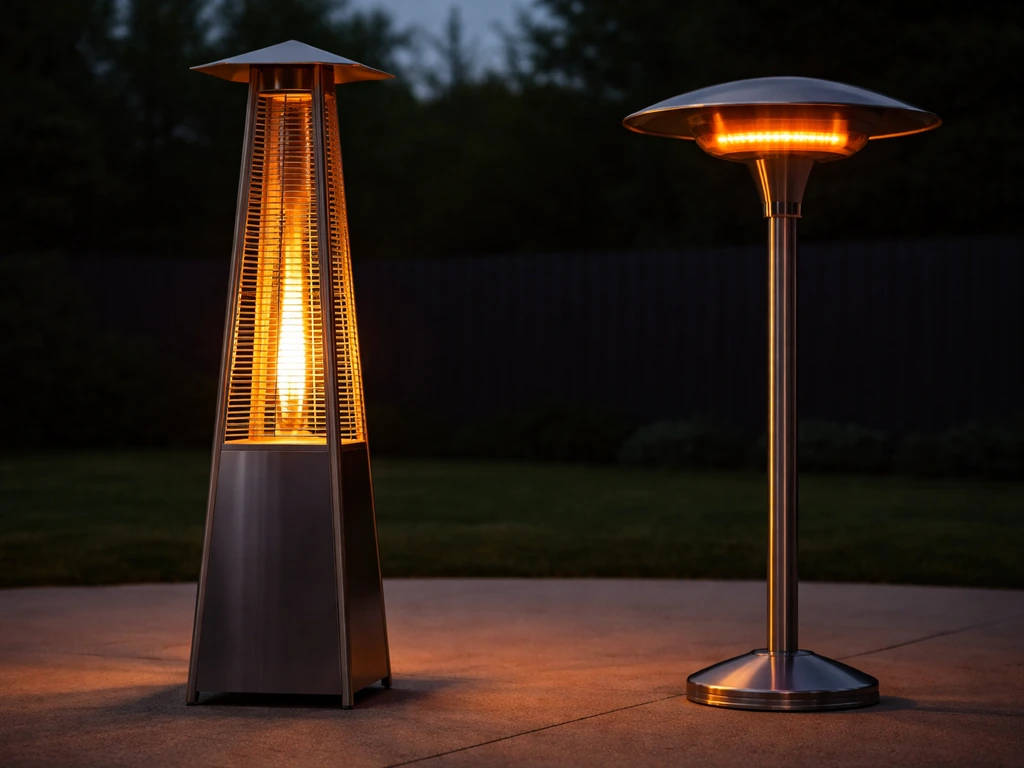
This is worth understanding because it affects how comfortable you actually feel, not just what the spec sheet says. Most pyramid patio heaters are open-flame gas heaters. They produce warmth through convection (heating the air around the flame) and some radiant heat, but they are not the same as a dedicated infrared heater. Dedicated infrared heaters, usually electric, heat objects and people directly without warming much air in between. That makes them very efficient in windy conditions because the wind cannot carry the warmth away as easily.
A gas pyramid heater sits somewhere between those two. The tall flame column produces genuine radiant warmth from the sides of the glass panels, which is why sitting around a pyramid heater feels pleasant even though the flame is contained. But a significant portion of the heat is still convective, which means wind strips it away quickly. In a sheltered spot, a pyramid heater produces a lovely ambient warmth. In an exposed garden, you will feel it mainly if you are close and directly facing the heater.
If you are comparing pyramid heaters against mushroom-style or umbrella-style models, the key difference is that a mushroom heater directs heat downward in a concentrated cone from a reflector, making it more effective at longer distances directly below. A pyramid heater distributes warmth more evenly in all directions at mid-height, which makes it better for people seated around the heater rather than standing beneath it. For a table of six sitting around a central heater, a pyramid often wins on social comfort. For a long narrow terrace, a mushroom or directional infrared may serve you better.
Placement, wind performance, and what it costs to run
Where to position your pyramid heater
Position matters more than most buyers expect. A pyramid heater placed in the centre of a seated group, at least 50cm clear of any seating or furniture, will warm the group far better than one shoved into a corner. The standard safe clearance is typically one metre from combustible materials, but check your specific model's manual since this varies. The flame column on a 190cm heater puts the main heat source at chest to head height for seated adults, which is actually ideal for outdoor dining.
Wind is the biggest enemy of any outdoor gas heater. The Ideal Home review of the Outsunny 11.2kW pyramid tested it in a windswept hillside garden and found that even at full power, effectiveness was significantly reduced compared to sheltered conditions. If your garden or terrace is regularly exposed to wind, place the heater in the most sheltered spot available, use garden screening or a low wall to break the wind if possible, and never rely on a single pyramid heater to compensate for an exposed location. In genuinely windy spaces, a directional electric infrared heater mounted on a wall or post will outperform any freestanding gas model.
Also take toppling risk seriously. A tall freestanding heater in wind can fall over. Liquid Gas UK guidance and independent review sources both flag this. Some models include a weighted base or can be secured with ground stakes. If yours does not, consider a purpose-made anchor weight or sand-filled base weight for stability.
Real-world running costs
At 815g of LPG per hour on full power, a standard 11.2kW pyramid heater burns through gas at a predictable rate. UK LPG prices have varied but sit in the range where a 13kg cylinder costs roughly £25 to £35 on exchange, giving a per-kilogram cost that works out to around £2.40 to £2.80 per hour at high power. Run the heater at medium power and that drops noticeably, both in cost and consumption, while still delivering comfortable warmth in a sheltered spot.
| Setting | Consumption (approx) | Cost per hour (approx) | Burn time from 13kg |
|---|---|---|---|
| High (11.2kW) | 815g/hour | £2.40 to £2.80 | 10 to 11 hours |
| Medium | ~500g/hour | £1.40 to £1.70 | 17 to 20 hours |
| Low | ~300g/hour | £0.80 to £1.00 | 28 to 35 hours |
Medium and low setting estimates are approximate since manufacturers rarely publish them directly, but they scale roughly with gas consumption. The practical takeaway is that running a pyramid heater at full blast for every outdoor evening is the expensive route. Get comfortable using the flame control to find a setting that is warm enough rather than maximum, and your cylinder will last considerably longer than the ten-hour headline figure suggests.
If you are comparing pyramid heaters against other styles or want a deeper look at specific reviewed models, the pyramid flame patio heater reviews section of this site walks through individual units in detail. If you are weighing pyramid heater vs patio heater options, you can use those comparisons to match the right style to your patio size and wind exposure pyramid flame patio heater reviews. And if you are not yet sure whether a pyramid shape is definitely right for your space, comparing a pyramid to a mushroom-style heater side by side is worth doing before you commit, since the coverage geometry is genuinely different and it comes down to how your group sits and how your patio is laid out.
FAQ
Can I use a propane cylinder with a 37mbar regulator if the heater is labelled for LPG generally?
Yes, as long as the heater documentation specifies the correct regulator pressure for propane/LPG. “LPG” on its own can still mean different pressure requirements, so confirm the pressure setting on the rating plate or manual, then match it with a 37mbar propane regulator before connecting.
What’s the correct way to estimate how many evenings a 13kg cylinder will last?
Use the heater’s stated full-power consumption to calculate hours, then apply a real-world efficiency factor for how often you run it at medium rather than maximum. If your typical evening is, for example, 60 to 70 percent of the time on medium settings, your runtime will be meaningfully longer than the 10 to 11 hours headline for full power.
Is it safe to light the heater under a pergola or partial cover?
Only if the manufacturer explicitly allows it, and the covering does not trap combustion gases. If the structure is solid, low, or enclosed enough that fumes linger, switch to an electric infrared option instead. A useful check is whether smoke-like exhaust disperses quickly when the heater is on.
Why do some listings claim 20 square metres coverage for the same 11.2kW pyramid heater?
Most of that spread comes from assumptions about wind level, ambient temperature, and seating distance. Pyramid heaters warm people in a zone, so effective area claims are usually based on people sitting quite close, often within a couple of metres, in calm conditions. If your garden is windy, treat coverage claims as optimistic.
How much clearance do I actually need from furniture, fencing, and walls?
The article notes one-metre guidance can vary, so follow your specific manual for the exact combustible-clearance distance. Also consider “line of exposure,” if a chair is angled toward the flame it may heat more than furniture behind a person, and if you place the heater near a wall the warmth can bounce back but also restrict airflow.
Should I choose a dust and rain cover for the heater, and what type is best?
Yes, because weather exposure accelerates corrosion and can damage the flame window seals. Pick a cover designed for outdoor use that fits securely without pressing on the glass panels, and ensure it does not create pockets that trap moisture against the burner area when left on.
What hose issues are most common, and how do I know when to replace parts?
Watch for cracks, brittleness, stiffness near the connections, and any signs of bulging or kinks. If clamps or connectors look worn or do not clamp firmly, replace them rather than tightening repeatedly. If you smell gas during a pre-use check, stop and have the setup inspected.
Do I need to test a tip-over cut-off, and how often should I do it?
If the heater has a tip-over cut-off, test it periodically as the manufacturer recommends. Do it only when the heater is off and cool, and use gentle, controlled tilting to confirm it triggers. If it fails, do not use the heater until it is checked.
Can I use more than one pyramid heater on the same patio?
You can, but don’t assume two heaters will always “add up” to full-room warmth. For best comfort, position each heater to warm its own seating cluster, keep safe clearances to surrounding furniture, and avoid placing them where wind tunnels between them will strip heat away.
Will an electric infrared heater be better if my patio is very exposed to wind?
Often, yes. In consistently windy areas, infrared styles tend to feel warmer at distance because they heat people and objects directly rather than primarily warming air. If your garden is near the coast, on a hillside, or behind open fencing with little shelter, an electric infrared option is usually the safer comfort upgrade.