
Bromic makes two propane patio heater families worth your attention: the Tungsten Smart-Heat Gas and the Platinum Smart-Heat Gas. The Tungsten is a directional radiant heater built for tougher, more exposed spots, available in 26,000 BTU and 43,000 BTU versions. The Platinum uses a ceramic-glass screen for softer, more even heat spread and comes in a 23,600 BTU (300 series) and a 39,800 BTU (500 series). Both are wall- or ceiling-mounted, both run on propane (LPG), and both are genuinely premium products with price tags to match. If you want the short path: small covered patio under 160 sq ft, go Platinum 300 series. Larger space or windier conditions, go Tungsten or Platinum 500. Need portability or a much tighter budget, look elsewhere.
Bromic Patio Heater Reviews and Buying Guide for Propane

Willa Brennan
20 May 2026
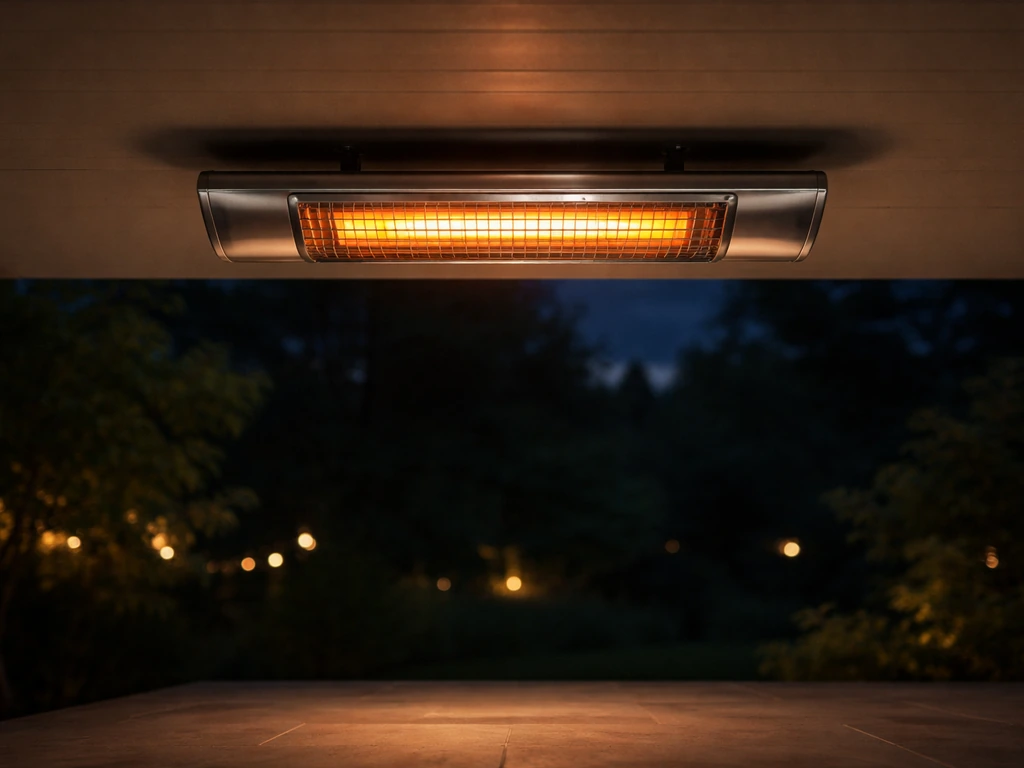
Why Bromic propane heaters stand out from the crowd
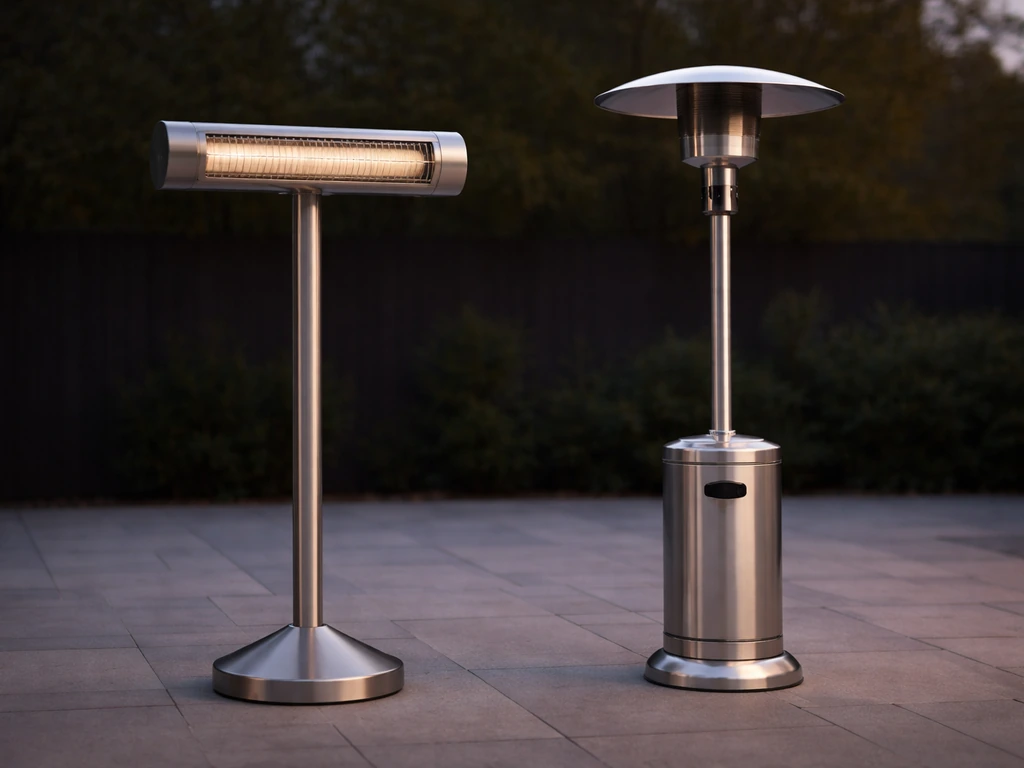
Most people searching for patio heaters end up comparing the usual standalone propane mushroom-style towers, electric infrared panels, or budget tabletop units. Bromic occupies a different tier entirely. These are fixed, wall- or ceiling-mounted units designed to look architectural, perform reliably in real weather, and last for years with minimal fuss. That's a meaningful distinction if you're finishing a proper outdoor living space and don't want a wobbly tower heater dominating the aesthetic.
Propane specifically makes sense over electric when you're dealing with a space where running a dedicated electrical circuit is expensive or impractical, or when you want more raw heat output for a larger uncovered area. Bromic's propane models push significantly more BTUs than their electric counterparts, which matters when you're trying to heat 200 sq ft on a cool evening with any kind of breeze. Natural gas is also an option in the Bromic lineup, but propane gives you more flexibility since you're not tied to a gas line, which is a real advantage for a deck or pergola that doesn't already have gas run to it.
Compared to brands like Shinerich, Hampton Bay, or Hanover, Bromic sits at the premium end. You're paying for build quality, smarter flame-monitoring technology (the Platinum uses a Honeywell control system with automatic lockout and restart on flame failure), and a design that integrates cleanly into a well-built outdoor space. If budget is your primary concern, there are solid alternatives in those other brand reviews. If you still want broader third-party opinions beyond Bromic, you can also check halogen patio heaters reviews for comparison on heat feel and real-world performance other brand reviews. But if you're investing in an outdoor space and want something that will perform and look good for years, Bromic is worth the premium.
Quick buyer checklist before you read the reviews
Run through these before you go deep on model comparisons. They'll save you from buying the wrong heater or getting surprised by what's not included.
- Measure your patio: know the square footage you actually want to heat, not the whole yard. Bromic's rated coverage maxes out at 215 sq ft per unit.
- Covered or uncovered: covered patios retain heat better and let you use a heat deflector accessory effectively. Fully open patios need the stronger BTU output and better wind resistance.
- Wind exposure: if your space gets regular breezes, the Tungsten handles up to 8 mph and the Platinum up to roughly 12.4 mph (20 km/h). Beyond that, you'll feel the difference.
- Mounting location: both series need a minimum of 3 ft clearance to the ground and 8 ft clearance to any combustible materials above. Confirm you have the ceiling height.
- Propane tank setup: you'll need a compatible LPG regulator and supply line. Neither is included in the box. Budget for this if you don't already have it.
- Controls are sold separately: Bromic's Affinity Smart-Heat On/Off controllers (available in 1, 2, or 5-channel versions) are not included with the heater. Factor that into your total cost.
- Installation: these are not plug-and-play units. Budget for a professional gas installer unless you're confident with gas line work.
- Accessories: a heat deflector (especially for the Tungsten) is worth adding if your covered patio has limited overhead clearance.
Bromic propane heater reviews: model by model
Tungsten Smart-Heat Gas (26,000 BTU and 43,000 BTU)
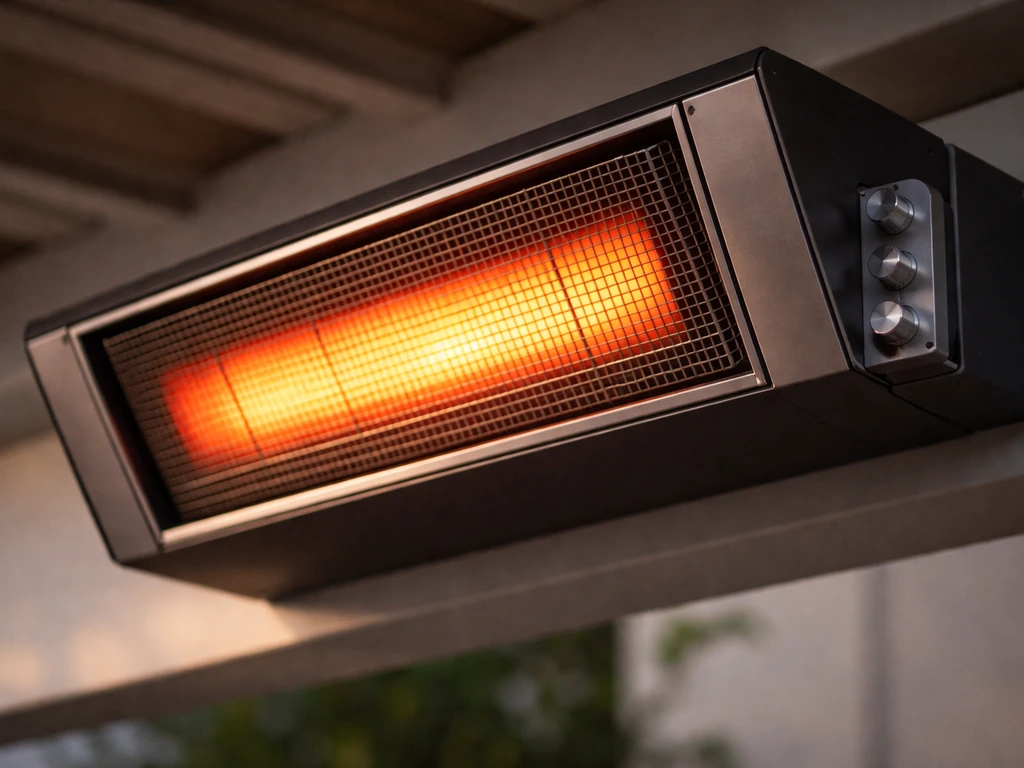
The Tungsten is Bromic's workhorse. It uses directional radiant heating, meaning the heat is aimed at people and surfaces rather than trying to warm the air volume around them. That's actually the right approach outdoors because heating open air is a losing battle. The patented screen and ionization probe system is what gives it that claimed 8 mph wind resistance, which is genuinely useful for a deck or pergola that isn't fully enclosed.
The 26,000 BTU version suits smaller to mid-size covered patios, roughly up to 150 sq ft in real conditions. The 43,000 BTU version is rated up to 215 sq ft and is the one to choose if your space is open, larger, or you live somewhere with genuinely cold winters. In practice, users report that both models deliver noticeable, focused warmth rather than the diffuse warmth you get from a mushroom heater. The directional nature means placement matters a lot: you want to mount it so the heating zone covers where people actually sit, not the middle of a walkway.
One thing worth noting from real-world use: the Tungsten is well-suited for well-ventilated spaces, and Bromic specifically positions it that way. If your patio is fully enclosed like a three-season room with minimal airflow, you'll want to check ventilation requirements carefully. Wind resistance is a strong point here, but the directional design can leave people at the edges of your seating area feeling cooler than those directly in the beam. For irregular layouts or L-shaped patios, you may need two units.
The Tungsten Heat Deflector accessory is a smart add-on for covered patios. It reduces the required top clearance to just 14 inches and redirects heat that would otherwise escape upward, which noticeably improves efficiency and comfort on a covered structure. If you're mounting under a pergola or low roof, this is close to a must-buy.
Platinum Smart-Heat Gas (300 Series: 23,600 BTU / 500 Series: 39,800 BTU)
The Platinum is Bromic's premium tier and it shows in both the look and the technology. The ceramic-glass screen gives it a more refined appearance and also does real work: it diffuses heat more evenly across the rated coverage zone instead of projecting a focused beam like the Tungsten. The 300 series is rated for 160 sq ft and the 500 series for 215 sq ft, which puts them in a similar ballpark to the Tungsten but with a softer, more enveloping heat feel that many people find more comfortable for dining or lounging.
The Platinum uses a Honeywell control system with flame monitoring via ionization/rectification. What that means practically is that if the flame goes out for any reason, the system detects it, shuts off the gas, and locks out. It will then attempt a restart. This is a genuinely important safety feature, especially for a propane heater that may be running unattended while guests are outside. The automatic lockout behavior gives the Platinum a meaningful edge over simpler ignition systems.
Wind resistance on the Platinum is rated to 20 km/h (about 12.4 mph), which is better than the Tungsten's 8 mph spec. If your patio is semi-exposed or you get regular light-to-moderate breezes, the Platinum holds up better. The recommended installation height is 2,400 mm (about 7.9 ft) from floor to the underside of the heater, and Bromic recommends adding a heat deflector if the clearance above the unit is less than 1,100 mm or if it's fully exposed to the elements. The 300 and 500 series share the same optimum mounting distance guidance: 3 ft forward projection and 8 to 10 ft mounting height to the seating area.
The Platinum is the model I'd choose for a well-designed outdoor entertaining space where aesthetics matter as much as performance. It looks expensive and it performs like it costs what it does. The 500 series in particular handles larger patios well and the even heat distribution means fewer cold spots compared to the Tungsten's directional approach.
Coverage and performance by patio size and layout
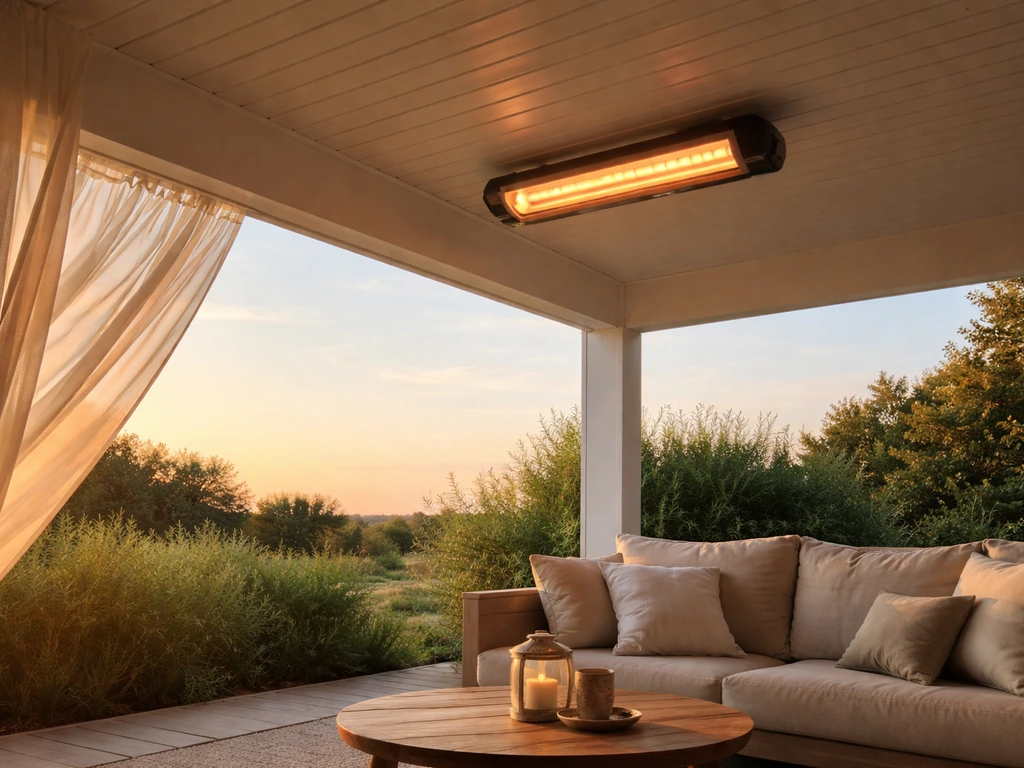
Bromic's rated coverage numbers are useful benchmarks, but real-world performance depends heavily on how your space is configured. Here's how to think about it practically.
| Patio Size / Type | Recommended Model | Key Consideration |
|---|---|---|
| Under 160 sq ft, covered | Platinum 300 Series (23,600 BTU) or Tungsten 26,000 BTU | Either works well; Platinum gives more even heat, add deflector for low ceilings |
| 160–215 sq ft, covered | Platinum 500 Series (39,800 BTU) or Tungsten 43,000 BTU | Platinum preferred for dining setups; Tungsten for more directional/spot heating |
| Under 200 sq ft, semi-open/breezy | Platinum 500 Series (best wind resistance) | Rated to 20 km/h; more reliable in light to moderate wind than Tungsten |
| 200+ sq ft or open/exposed | Two Tungsten 43,000 BTU or two Platinum 500 units | Single unit will not adequately cover this; plan for multiple heaters |
| Irregular or L-shaped layout | Two Tungsten 43,000 BTU (directional flexibility) | Mount to target separate seating zones; directional beam is easier to aim |
For covered patios, both models perform best when mounted centered over the primary seating area. The Platinum's even distribution means you can be slightly less precise, while the Tungsten's directional output rewards careful placement. If you have a long rectangular patio (say 10 x 20 ft), a single 500 series unit centered at one end will leave the far end noticeably cooler. Two units facing each other from opposite ends is the better solution for that layout.
For uncovered or fully exposed patios, both models will feel the effects of wind above their rated thresholds. Radiant heaters warm objects and people, not the air, so even in a breeze the heat you feel while in the coverage zone is real. But once wind exceeds the rated threshold, combustion quality drops and heat output becomes inconsistent. If your patio is regularly exposed to wind above 15 mph, honestly no wall-mounted gas heater is going to perform reliably and you should consider a protected placement or a different heating strategy.
Safety, installation, and what to know before you fire it up
These are propane appliances, so there's a right way and a wrong way to install them. Bromic's manuals are detailed and worth reading fully, but here are the critical points that matter most in practice.
Clearance requirements are non-negotiable. The Tungsten requires a minimum 3 ft clearance from the ground and 8 ft from any combustible material above it. The Platinum's recommended mounting height is approximately 7.9 ft (2,400 mm) from floor to the heater underside. If you can't meet those clearances with your existing structure, you either need to add a heat deflector or reconsider the mounting location.
Gas leak testing is required after every assembly or connection change. The Tungsten manual is explicit about this: the heater undergoes factory leak testing, but you still need to perform a complete leak test after installation using a soapy solution on all connections, with the control knob in the OFF position. Do not skip this step, and definitely don't leak test while smoking. The Platinum's Honeywell system adds an extra layer of protection with automatic gas shutoff on flame failure, but that doesn't replace proper installation and leak testing.
Both the Tungsten and Platinum are available in propane (LPG) or natural gas versions. Bromic states that its Tungsten collection, including Smart-Heat, is offered across natural gas and propane (LPG) fuel sources, with models designed for well-ventilated spaces. The LPG version is calibrated specifically for propane and is not interchangeable with the natural gas version. Make sure you're ordering the correct fuel type. Your LPG supply needs a compatible regulator, and the propane tank needs to be appropriately sized for your usage patterns. A 20 lb tank will run a 43,000 BTU heater for roughly 10 hours of continuous use, so plan your tank size and refill schedule accordingly.
Controls are not included with the heater. Bromic's Affinity Smart-Heat On/Off controllers are compatible with both the Platinum and Tungsten gas models. They come in 1-channel, 2-channel, and 5-channel versions, and one channel can control up to 10 gas heaters. The Affinity system supports Wi-Fi and Bluetooth control via the Bromic app, which is a genuinely useful feature for turning heaters on before guests arrive or shutting them off remotely. Budget this as a separate line item, because forgetting to price the controller is a common mistake.
Honest pros, cons, and who should buy which model
| Model | Best For | Pros | Cons | Avoid If |
|---|---|---|---|---|
| Tungsten 26,000 BTU | Small covered patios, spot heating up to ~150 sq ft | Directional precision, 8 mph wind resistance, compatible with Heat Deflector, lower cost entry point | Focused beam can leave edges cold, controls sold separately, requires professional install | You need even coverage across a wide seating area |
| Tungsten 43,000 BTU | Mid-size to larger patios up to 215 sq ft, semi-exposed spaces | High output, directional for targeting seating zones, solid wind resistance, pairs well for multi-zone setups | Directional heat means placement is critical, propane consumption is significant at full output | Your patio is fully enclosed or has very low overhead clearance without a deflector |
| Platinum 300 Series (23,600 BTU) | Smaller covered patios, design-forward spaces, up to 160 sq ft | Even heat via ceramic-glass screen, premium look, Honeywell flame monitoring, better wind resistance (20 km/h) | Lower BTU ceiling, pricier than Tungsten equivalent, controls still separate | You need to heat more than 160 sq ft reliably |
| Platinum 500 Series (39,800 BTU) | Larger patios, outdoor dining, breezy semi-open spaces up to 215 sq ft | Best-in-class even heat distribution, strongest wind resistance in the lineup, sophisticated flame safety system, premium aesthetics | Highest price point, professional installation strongly recommended, controls add to cost | Budget is your primary constraint or you only need occasional supplemental heat |
The honest bottom line: the Platinum 500 is the best performing and best looking heater in the Bromic propane lineup, and if you're building a serious outdoor entertaining space, it's worth the investment. The Tungsten 43,000 BTU is the better choice if you have a more irregular layout, need directional targeting, or want to keep costs a bit lower while still getting quality performance. The 300 series models (in both families) are solid for smaller spaces but you'll quickly wish you'd gone bigger if your patio is at or near their rated coverage limit.
Maintenance and accessories that keep it running well
One of the underrated advantages of a Bromic propane heater is how low-maintenance it actually is once it's properly installed. There's no pilot light to fuss with and the Platinum's automatic flame monitoring handles a lot of the safety supervision for you. But a few regular habits make a real difference in long-term performance.
- Inspect gas connections seasonally: before each heating season (and after any extended period of non-use), perform a fresh soap-solution leak test on all connections. This takes five minutes and is the single most important safety maintenance step.
- Clean the burner and screen: dust, debris, and spider webs are the most common cause of ignition problems and flame irregularity. Brush out the burner area and wipe down the ceramic-glass screen on the Platinum with a soft cloth. Do this at the start and end of each season.
- Check the ionization probe: on both the Tungsten and Platinum, the ionization probe is what monitors the flame. If you're getting inconsistent ignition or the heater is going into lockout more frequently than usual, a dirty or damaged probe is the most likely culprit. Clean it gently with fine emery cloth.
- Cover or store when not in use: if your patio heater will be unused for weeks at a time (especially in wet or salty coastal environments), a fitted cover prevents corrosion on the burner components and keeps the igniter dry. Bromic offers covers for their models.
- Check regulator and hose condition annually: propane hoses and regulators degrade over time. Look for cracks, stiffness, or discoloration on the hose, and replace it if anything looks questionable. A regulator that's more than 5 to 7 years old is worth replacing proactively.
- Add the Heat Deflector if you haven't already: if you're on a covered patio and you feel like you're not getting the warmth you expected, adding the Tungsten Heat Deflector (reduces required top clearance to 14 inches, redirects heat downward) often solves the problem without replacing the heater.
- Update the Bromic app and controller firmware: if you're using the Affinity Smart-Heat controller with Wi-Fi/Bluetooth, periodic firmware updates keep the control system working reliably. Takes a few minutes and prevents connectivity issues.
Spare parts availability for Bromic is generally good through authorized dealers. The key consumable components to have on hand if you use the heater regularly are a replacement igniter electrode and a spare thermocouple or ionization probe. These are inexpensive and can save you a cold evening waiting for a service call if something fails mid-season.
At the end of the day, Bromic propane heaters are a legitimate investment in your outdoor space. If you want to compare options specifically through Bernzomatic patio heater reviews, focus on the BTU range and heat distribution style first Bromic propane heaters. They're not the cheapest option on the market (brands like Shinerich or Hampton Bay come in at a fraction of the price), but they're built to a noticeably higher standard, look far better on a well-designed patio, and have the safety and control technology to justify the premium. If you're also considering Hampton Bay outdoor patio heater options, be sure to read dedicated Hampton Bay outdoor patio heater reviews before choosing a model. If you've measured your space, confirmed your mounting clearances, budgeted for the controller and installation, and know which coverage zone fits your patio size, you have everything you need to buy with confidence. If you want a wider comparison, Hanover patio heater reviews can help you judge how the options stack up for your space and budget.
FAQ
Can I convert a Bromic propane (LPG) patio heater to natural gas (or vice versa)?
Yes, but only if you use the exact matching fuel configuration. Bromic LPG and natural gas units are calibrated differently, and the gas supply also needs the right regulator setup. If you already have natural gas plumbed, buy the natural gas version rather than trying to convert an LPG unit.
How do I position a Bromic heater if my patio seating is not a simple rectangle? (L-shaped, sectional, or multiple zones)
Plan on placing your main seating inside the heater’s coverage zone, not just under the unit. With the Tungsten, people at the edges of the beam can feel noticeably cooler, so for L-shaped or uneven seating layouts you will often need either two units or a different mounting position to avoid cold corners.
What happens if it’s windier than the rated threshold on my Bromic patio heater?
Yes, the recommended coverage assumes outdoors with typical conditions, and wind can shorten the effective range. If your patio is regularly exposed to strong wind (above about the mid-teens mph), expect inconsistent output once you pass the manufacturer’s wind capability, and consider a more sheltered mounting spot or multiple smaller units.
Do Bromic patio heaters come with smart controls, or do I need to buy something extra?
You can use the heaters without a controller, but you lose convenience and multi-heater scheduling. Bromic notes that the Affinity Smart-Heat On/Off controllers are separate, and you can oversimplify your budget by forgetting that one channel can control up to 10 heaters, which may influence whether you need a 1-channel or 2-channel setup.
What maintenance should I expect during and between heating seasons? Do I need to keep spare parts?
No pilot light is typically an advantage, but you still need basic seasonal maintenance. Keep an eye on ignition performance, and plan to have the common wear parts on hand (like a replacement igniter electrode and the appropriate probe component) to reduce downtime if a mid-season issue happens.
Does the Platinum’s automatic lockout mean it is safe to run while guests are away from the patio?
Even with flame monitoring and automatic lockout, you still should not treat the heater as unattended in any scenario where it could be knocked, covered, or exposed to heavy precipitation. Lockout helps with flame failure detection, but installation quality, ventilation, and safe clearances remain your responsibility.
My pergola has a low clearance. Can I mount a Bromic heater closer than the recommended height using accessories?
You should not mount it anywhere you cannot meet the clearance requirements. Tungsten has minimum clearance guidance to the ground and combustibles, and the Platinum has a specific recommended mounting height from floor to underside. If your pergola or soffit limits placement, a heat deflector can help, but it does not make an unsafe clearance acceptable.
How should I choose a propane tank size if I do not run the heater continuously? (evenings with start/stop use)
For tank sizing, use usage patterns, not just the heater BTU. Continuous burn creates the shortest runtime, so the common approach is to run shorter pre-heating periods for guests, then lower or time cycles with a controller if you have one. This can significantly stretch a smaller tank compared with continuous use.
Which feels better for dining, softer heat coverage or targeted heat? Tungsten vs Platinum for comfort
If you want more even comfort, the Platinum’s ceramic-glass screen tends to create a broader, more uniform heat feel across its coverage zone. The Tungsten’s directional radiation warms what it is aimed at more strongly, which is great for targeting, but can leave farther edges cooler unless you mount and seat-plan carefully.
How do I avoid underbuying if my patio is near the heater’s rated coverage size?
You should measure your mounting plan and seating layout before deciding on a 300 series vs 500 series. The practical trap is buying “on the edge” of rated coverage for a patio that is exposed or has a long shape, then ending up with a cold far end. In those layouts, two units can outperform one correctly-sized unit because placement matters.
Do Bromic heaters still work well on very high-ceiling patios or partially enclosed spaces?
Yes, but it changes the best strategy. Bromic’s directional heating is usually ideal when mounted centered over the main seating area. If you have high ceilings or fully exposed sections, you may need the deflector option and a mounting height strategy that matches the manufacturer guidance rather than relying on the beam to reach everything.