
Dyna-Glo makes solid, mid-range propane patio heaters that punch above their price point for most backyard setups. For a different angle, a Crown Verity patio heater review can help you compare build quality and heat output against the Dyna-Glo lineup propane patio heaters. The standout picks are the DGPH201BR (48,000 BTU) for larger patios and the DGPH102SS (41,000 BTU) for smaller or budget-conscious buyers. Both use electronic ignition, include an anti-tilt safety device, and hold up reasonably well over multiple seasons, but they do have some real-world quirks around ignition reliability and wind sensitivity that you should know before buying.
Dyna-Glo Patio Heater Reviews: Best Picks by Patio Size

Willa Brennan
6 Jul 2026
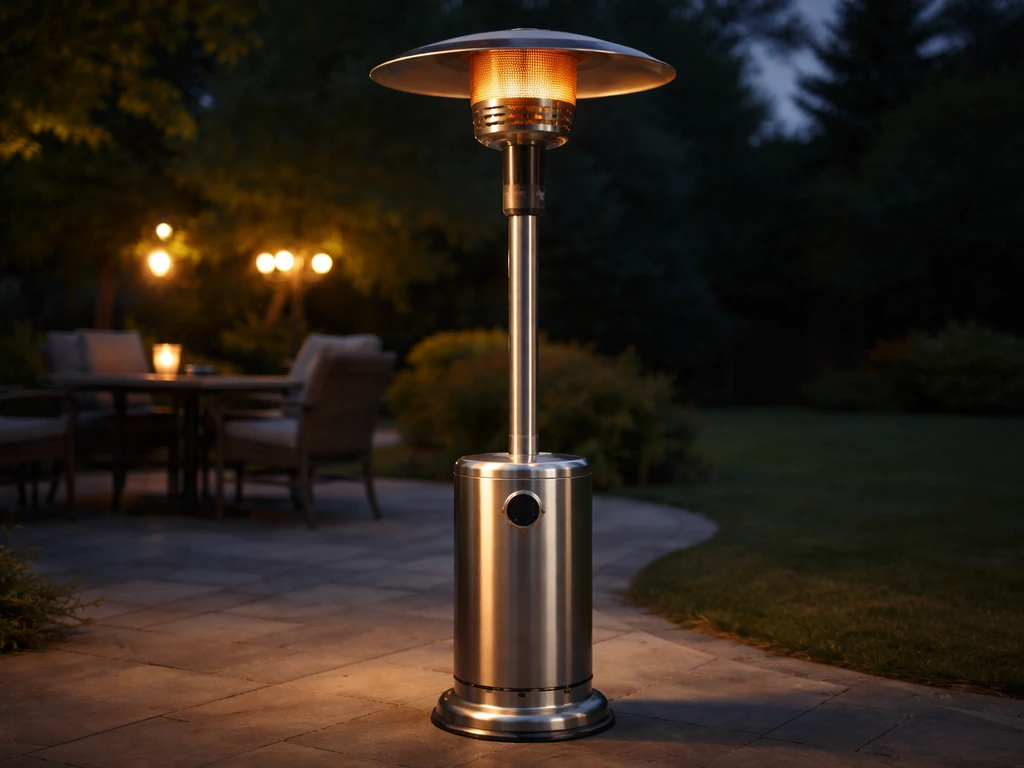
What to know before buying a Dyna-Glo patio heater
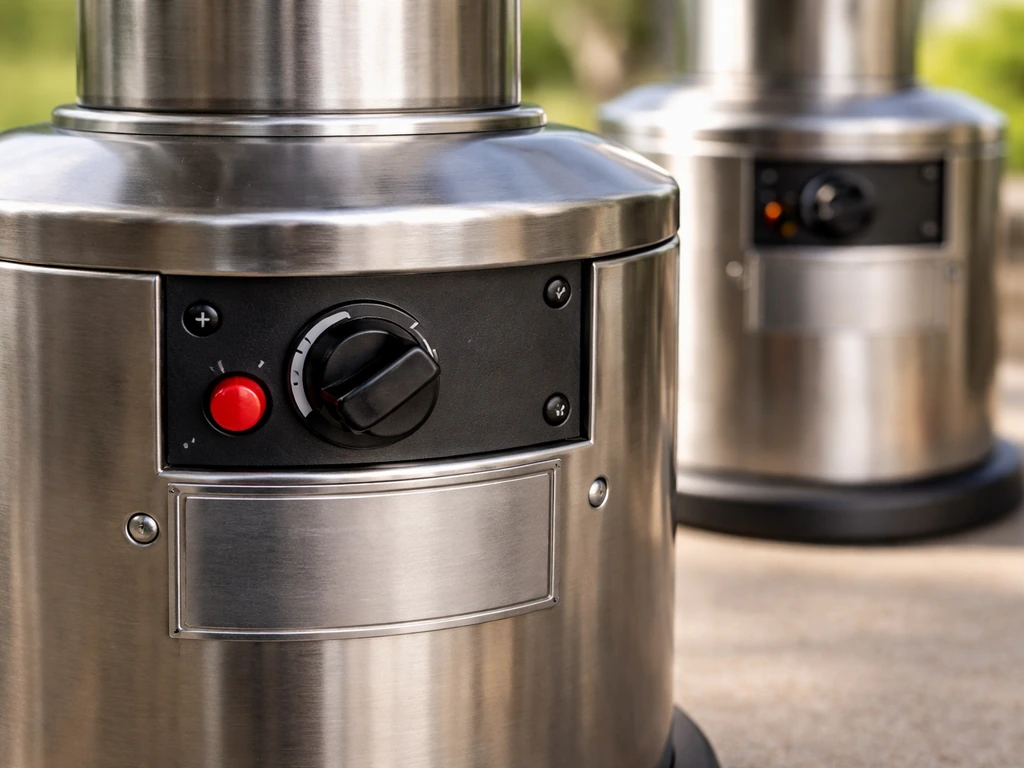
Before you land on a specific model, a few decisions will shape everything else. The biggest one is fuel type. Dyna-Glo's patio heater lineup is almost entirely propane-based, which means you're working with a standard 20 lb (5-gallon) propane tank that tucks under the base. That's convenient for portability but means you'll be swapping tanks every 8 to 10 hours of runtime at full burn. If you have a natural gas line running to your patio, Dyna-Glo does offer dedicated NG models (look for the BG suffix, like DGPHC300BG and DGPHC400BG), and those eliminate the refill chore entirely.
BTU output is the other number that matters most. Most Dyna-Glo models fall in the 41,000 to 48,000 BTU range. A rough rule of thumb: 40,000 BTU will comfortably heat a 10-foot radius on a calm night, while 48,000 BTU gives you a bit more buffer in cooler temperatures or when you need to warm a slightly larger gathering. If your patio is covered or enclosed on two or three sides, even a 41,000 BTU unit will feel noticeably more powerful because retained heat compounds quickly.
Wind is the variable most buyers underestimate. Dyna-Glo's own manuals specify that these heaters are designed to operate when wind velocity is below 10 mph. For the DGPH201BR/DGPH202SS, the manual specifies a wind operating limitation of below 10 mph (8.046 km/h) and indicates shutdown steps such as turning the cylinder valve off and disconnecting the regulator when not in use wind velocity is below 10 mph. Above that, you'll see the flame fluctuate, heat output drop, and in some cases the safety sensor will cut the burner off entirely. If your yard is reliably breezy, a standalone mushroom-style heater is going to frustrate you, consider a wall-mounted or porch-ceiling unit instead, or plan to use a windscreen.
Finally, think about where the heater will live. Dyna-Glo's floor-standing models have wheels on some configurations, which makes moving them in and out of storage practical. If you want something that stays put in a fixed spot, that's fine too, but make sure the base is on a level surface, the anti-tilt device will shut the heater down if it senses it's leaning, which is a safety win but can also trigger nuisance shutoffs on uneven decking.
Dyna-Glo model lineup and how to choose
Dyna-Glo's patio heater catalog is wider than most people expect. If you are also considering the Lynx patio heater, this same checklist of fuel type, BTU output, and wind limits will help you compare real-world performance Dyna-Glo's patio heater catalog. Here's a practical breakdown of the main categories and when each makes sense.
Propane floor-standing heaters (the core lineup)
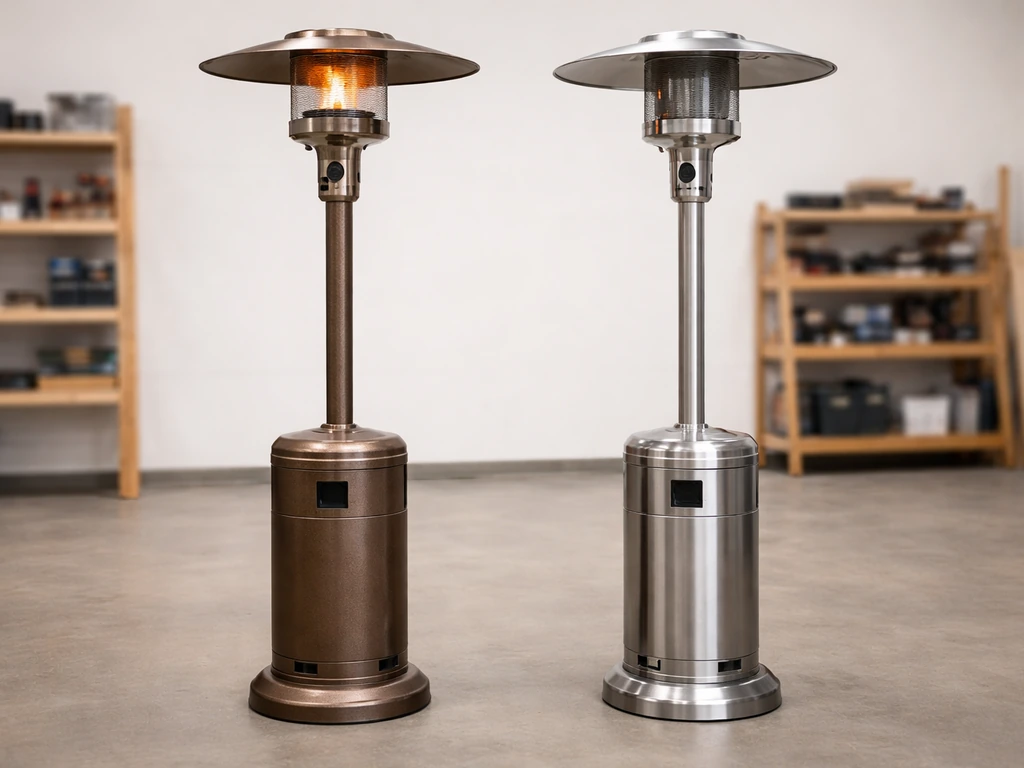
This is where Dyna-Glo does most of its business. The DGPH201BR and DGPH202SS are the 48,000 BTU hammered-bronze and stainless-steel versions of the same design. The DGPH102SS and DGPH101BR are 41,000 BTU variants in stainless and bronze finishes. Higher up, the DGPH301BL, DGPH302SS, DGPH401BR, and DGPH402SS add visual flair, the 400-series models feature a pyramid flame design with a clear glass tube that shows the flame, which looks great at night and is a genuine selling point for entertaining spaces. Dyna-Glo's current official patio heater lineup page lists these propane patio heater SKUs by model number, including DGPH201BR (48,000 BTU), DGPH202SS, DGPH301BL, DGPH402SS, and DGPH102SS among others DGPH301BL, DGPH302SS, DGPH401BR, and DGPH402SS. The pyramid models run at 42,000 BTU and use electronic push-button ignition.
Natural gas models
The DGPHC300BG, DGPHC400BG, and DGPHC120BG are Dyna-Glo's natural gas options. These are a good fit if you're doing a permanent patio setup and already have NG service. You eliminate tank management, operating costs drop significantly, and you never have to worry about running out mid-party. The trade-off is that you're tied to a fixed gas line, so these units don't move. If you're renting or not ready to run gas, stick with propane.
Auto-tilt and specialty models
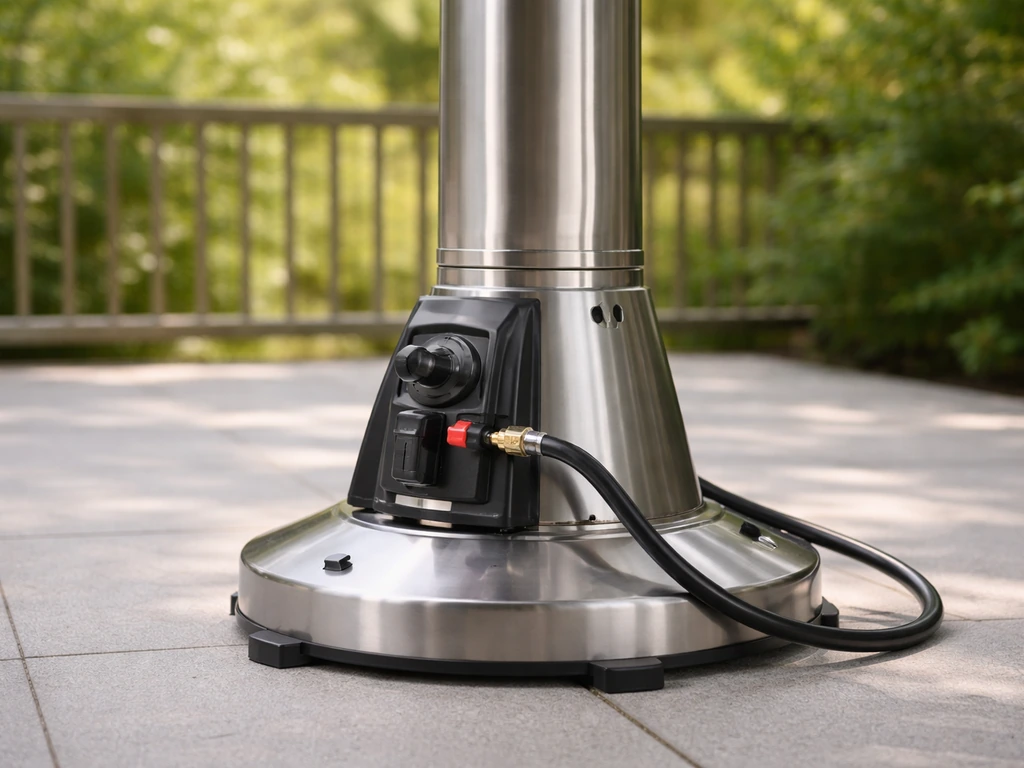
The DGPH901ATBR and DGPH902ATSS carry an "AT" designation that highlights the automatic tilt safety shutoff as a primary feature. These otherwise operate similarly to the standard floor-standing propane models. Dyna-Glo doesn't currently offer a dedicated electric or pellet patio heater in the same lineup, so if you're looking for those fuel types, you'll need to branch to other brands, Dimplex, for example, focuses specifically on electric infrared for covered spaces.
| Model | Fuel | BTU | Best For |
|---|---|---|---|
| DGPH201BR / DGPH202SS | Propane | 48,000 | Large open patios, 10–14 ft radius |
| DGPH102SS / DGPH101BR | Propane | 41,000 | Smaller patios, budget buyers |
| DGPH402SS / DGPH401BR | Propane | 42,000 | Entertaining spaces, visual appeal |
| DGPH301BL / DGPH302SS | Propane | Variable | Mid-size patios |
| DGPHC300BG / DGPHC400BG | Natural Gas | Varies | Permanent installs with NG service |
| DGPH901ATBR / DGPH902ATSS | Propane | Variable | Safety-focused buyers, families with kids |
Performance in real-world use
On paper, 48,000 BTU sounds like a lot of heat. In practice, a Dyna-Glo floor-standing propane heater on a calm evening will keep a circle of roughly 8 to 10 feet around it comfortable in temperatures as low as the mid-30s°F. Crank it down to the variable low setting and you can extend that tank life considerably while still maintaining warmth within about 6 feet. The heat is radiant from the top reflector, so it warms people and surfaces rather than the air itself, meaning you feel it immediately when you're within range, but the moment you step outside that cone, the effect drops off fast.
Response time is one of Dyna-Glo's genuine strengths. Once you get ignition, the burner is at full heat within about 60 seconds. There's no warmup delay like you'd see with an electric infrared heater, you hit the button, it lights, and you feel it quickly. That makes these heaters well suited for situations where you want heat on demand rather than preheating a space.
Wind resistance is the performance weak spot. The 10 mph limit in the manual isn't just a legal disclaimer, it's a real operational constraint. In gusty conditions, the flame will visibly flicker and the thermocouple (the safety sensor that keeps the gas valve open) can lose its temperature reading and cut off the gas. Several buyers have reported their heaters shutting down after 20 to 40 minutes on moderately breezy nights, which is consistent with how the thermocouple behaves when the flame is disrupted. If your outdoor space is wind-exposed, this is the single biggest reliability issue you'll deal with.
Heat consistency on a calm night is actually quite good. The variable heat control lets you dial down from full blast when guests are close, which is something not every budget heater offers. The pyramid flame models (400-series) distribute heat slightly differently because of the glass tube design, but the practical warming effect is comparable to the standard mushroom-head models at similar BTU ratings.
Build quality, durability, safety features, and ease of setup
Assembly on most Dyna-Glo floor-standing heaters takes about 30 to 45 minutes with no special tools. The manuals are clear, and the main steps involve attaching the pole sections, securing the burner head, and connecting the regulator to a propane tank. One thing to watch: the DGPH301BL and DGPH302SS models require 1 AA battery for the electronic ignition module, easy to forget and annoying to discover when you're setting up outdoors.
Build quality is where Dyna-Glo sits solidly in the middle of the market. The stainless-steel models (SS suffix) hold up better to humidity and rain exposure than the hammered-bronze painted finishes. The bronze paint can show chips and surface rust after a season or two, especially if the heater isn't covered or stored during wet weather. The stainless versions are worth the small price premium if you plan to leave the heater outdoors regularly.
Safety features across the lineup are genuinely good for the price tier. Every Dyna-Glo patio heater includes an anti-tilt safety device that shuts off the gas if the unit tips beyond a safe angle. The AT-series models make this a headline feature, but the standard models have it too. Dyna-Glo also uses electronic ignition with flame-sensing behavior: if the flame goes out unexpectedly, the safety circuit stops the gas flow. This is the same system that causes the "shuts off when I release the knob" issue some buyers report, which is almost always a thermocouple or flame-sensing calibration issue rather than a defect in the heater itself.
Clearance requirements matter, especially on covered patios. The manuals specify minimum clearances from overhead structures, generally at least 36 inches overhead and 24 inches to the sides. Running a tall floor-standing propane heater under a low pergola roof is a fire hazard, so measure before you buy. If you have a covered patio with limited overhead clearance, a lower-profile electric option would be a safer fit.
What buyers actually say: the honest pros and cons
Synthesizing buyer feedback across retail pages and community forums, here's what consistently comes up on both sides.
What people love
- Heat output is strong and felt quickly — most buyers say the warmth is noticeable within seconds of ignition
- Electronic ignition makes startup easy — no lighter or matches needed
- The pyramid flame (400-series) models are visually striking and double as ambient lighting for evening entertaining
- Variable heat settings give useful control over fuel consumption and comfort distance
- Anti-tilt safety shutoff gives peace of mind around kids and pets
- Assembly is straightforward and most buyers complete it solo without frustration
- Price-to-performance ratio is consistently cited as a strength — these heaters compete with units sold at higher price points
Common complaints
- Ignition problems are the most frequent complaint — some units are hard to light, require multiple attempts, or stop lighting reliably after a season
- Wind sensitivity causes nuisance shutoffs on breezy nights, which frustrates buyers who live in exposed locations
- Hammered-bronze painted finishes show rust and wear faster than the stainless versions, especially without a cover
- The thermocouple/flame sensor sometimes causes the heater to shut off when the knob is released — typically fixable by holding the knob in longer during startup (usually 15–30 seconds) to let the thermocouple heat up
- Regulator pressure issues can cause the heater to lose heat or flame after extended use — often traced to a partially closed tank valve or a tank that's running low
- Some buyers report the reflector hood developing discoloration or minor warping after extended high-BTU use
- No cover is included — buying a weatherproof cover separately is strongly recommended
The ignition and thermocouple shutoff complaints are worth addressing head-on because they're the most common source of returns. Nine times out of ten, if a Dyna-Glo heater lights then shuts off when you release the knob, the fix is to hold the knob in the pilot position for longer, a full 20 to 30 seconds, before releasing. The thermocouple rod needs time to reach operating temperature before it will hold the safety valve open. If the problem persists after that, the thermocouple itself may need replacement, which is a $10 to $20 part and a simple DIY job.
Cost to own: fuel efficiency, operating costs, and maintenance
Propane prices vary by region, but as a working estimate, a 20 lb propane tank costs roughly $20 to $25 to fill. At full 48,000 BTU output, a standard Dyna-Glo heater will burn through that tank in approximately 8 to 9 hours. Run it on the variable low setting (which cuts BTU output significantly) and you can stretch a tank to 15 or more hours. A realistic seasonal budget for a moderate user (weekends, April through October) is 8 to 12 tank fills, putting annual propane cost at roughly $160 to $300 depending on usage patterns and local prices.
Natural gas models flip the economics considerably. NG is typically a fraction of the cost of propane per BTU, and since these units connect to your home's gas line, there's no tank management. If you're doing a permanent patio setup, the NG models can pay back the slightly higher upfront cost in two to three seasons of regular use. The downside is the gas line installation cost itself, which can run $200 to $800 depending on how close your existing line is to the patio.
Maintenance is genuinely low-effort. At the start of each season, clean the burner screen with a soft brush to remove spider webs and debris (a clogged screen is a common cause of ignition issues), check the regulator connection for wear, and replace the ignition battery if needed. Inspect the thermocouple rod for corrosion and clean it gently with fine steel wool if it's discolored. At end of season, disconnect the propane tank, store it separately outdoors (never inside), and cover the heater with a properly fitted weatherproof cover. Doing this consistently will add years to the life of the unit.
| Fuel Type | Avg. Cost Per Tank/Fill | Hours Per Fill (Full Output) | Est. Annual Fuel Cost (Moderate Use) | Best For |
|---|---|---|---|---|
| Propane (20 lb tank) | $20–$25 | 8–9 hrs | $160–$300 | Portable setups, renters, flexibility |
| Natural Gas (line-connected) | ~$1–$3/hr equivalent | Unlimited | $50–$120 | Permanent installs, high-frequency use |
Best picks by patio size and use case
Small patio (under 150 sq ft) or covered space
The DGPH102SS (41,000 BTU, stainless) is the right call here. It's the most compact of the standard floor-standing models at 32" x 32" x 88", heats up quickly, and won't overwhelm a small covered patio with excess heat. The stainless finish holds up better than the bronze alternatives in the longer term. If you're on a tight budget, the DGPH101BR in bronze saves a few dollars but plan to invest in a good cover and expect to touch up the finish eventually.
Medium-to-large patio (150–350 sq ft) or open uncovered space
Go with the DGPH201BR or DGPH202SS at 48,000 BTU. The extra output makes a real difference in open, uncovered settings where ambient heat dissipates quickly. The DGPH202SS in stainless is the durability pick. If aesthetics matter and you're entertaining regularly, the DGPH402SS pyramid flame model at 42,000 BTU is a fantastic choice, slightly less BTU than the 48K model, but the visual appeal is a genuine upgrade and the heat is more than adequate for a group gathered around it.
Permanent outdoor kitchen or patio with NG line
The DGPHC400BG is the top pick here. Natural gas means no tank swaps, lower operating cost per hour, and a cleaner setup for a permanent entertaining space. Have a licensed plumber or gas technician connect the line and you're essentially set-and-forget for the season.
Safety-first households (kids, pets, high-traffic decks)
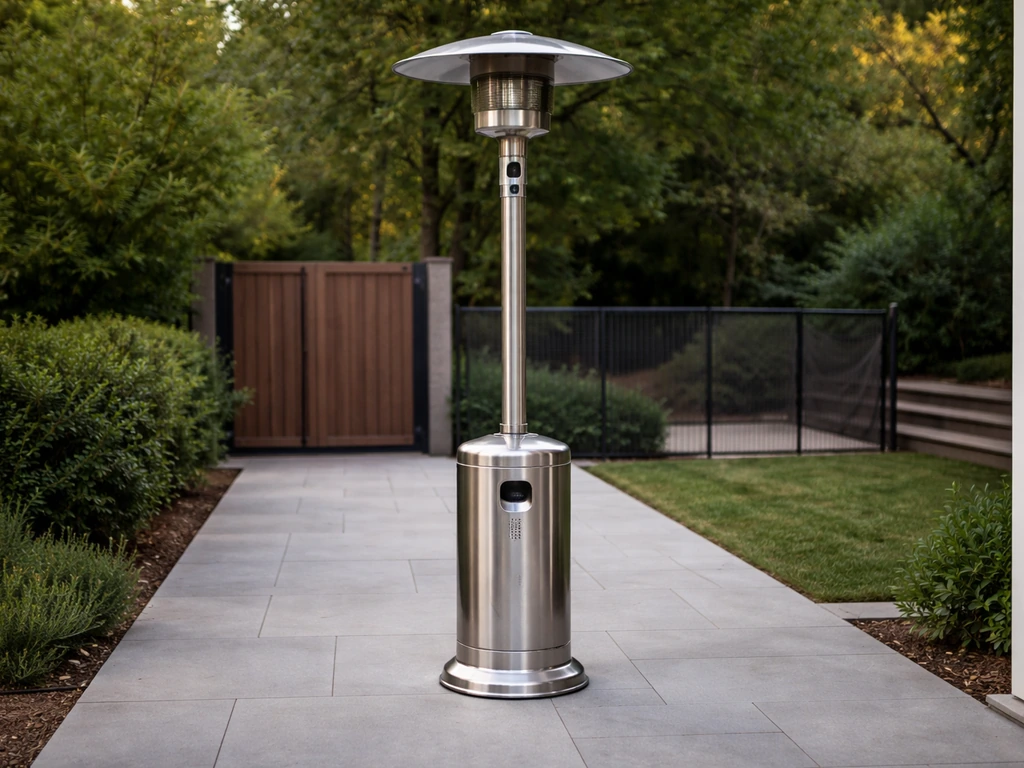
Either of the AT-series models (DGPH901ATBR or DGPH902ATSS) is worth the slight premium for the emphasized auto-tilt safety system. The stainless DGPH902ATSS holds up better outdoors. In any case, pairing the heater with a weighted base and using it away from high-traffic pathways reduces tip risk significantly.
Alternatives and buying tips to avoid returns
Dyna-Glo is a strong value buy, but it's not the right heater for every situation. Here's when to look elsewhere and what to check before you commit.
If you have a covered or enclosed patio with limited ceiling clearance, Dyna-Glo's propane floor-standers are genuinely not suitable, the overhead clearance requirements alone rule them out for most pergolas and covered decks. In that scenario, an electric infrared heater (like what Dimplex offers) or a wall-mounted propane unit is a much safer and more practical fit. Electric infrared heaters also produce zero combustion byproducts, which matters if the space isn't well-ventilated.
If you want premium build quality and are willing to spend more, brands like Lynx or Crown Verity operate in a higher tier with commercial-grade components and better wind tolerance. For a design-forward aesthetic with a heritage feel, the Santorini category of heaters is worth a look. Dyna-Glo's value proposition is price-to-performance, not premium materials, know which one you're prioritizing.
Before you buy any Dyna-Glo heater, check these things to avoid a return:
- Measure overhead clearance on your patio — you need at least 36 inches above the reflector head for safe operation
- Check the wind exposure of your typical outdoor space — if evenings are regularly breezy (above 10 mph), plan a windscreen or reconsider the location
- Decide on stainless vs. bronze finish based on your storage habits — if it lives outdoors year-round, stainless is worth the extra few dollars
- Buy a cover at the same time — Dyna-Glo and third-party covers are widely available and dramatically extend heater life
- Check that your propane tank valve opens fully before blaming the heater for low flame output — a partially open valve mimics regulator failure
- When lighting for the first time, hold the knob in the pilot position for a full 20–30 seconds before releasing — skipping this step is the cause of most reported shutoff problems
Bottom line: Dyna-Glo is a reliable, practical choice for most homeowners who want solid propane heat on a reasonable budget. The 48,000 BTU DGPH202SS (stainless) is the safest all-around pick for medium and large patios, while the DGPH402SS pyramid flame earns its spot for anyone who wants heat and ambiance in one package. Just go in knowing the wind limitations, plan your ignition technique correctly, and cover the unit when it's not in use, do those three things and you'll get years of solid performance out of it.
FAQ
My Dyna-Glo patio heater ignites but shuts off when I release the knob, what should I try first?
Hold the knob in the pilot position longer than you think you need, typically 20 to 30 seconds, so the thermocouple reaches operating temperature. If it still drops out, inspect the flame sensing area for misalignment and look for corrosion on the thermocouple rod, those two issues often cause repeated shutoffs.
How do I choose between 41,000 BTU and 48,000 BTU for dyna-glo patio heater reviews?
If your patio is open on more than one side, choose the 48,000 BTU class for a larger “comfortable circle” and less temperature drop as people move in and out. If it is enclosed on two or three sides or you heat only a small group, 41,000 BTU usually feels stronger because retained heat builds up, and you will get better tank life.
What wind setup or windscreen should I consider so the heater does not shut down?
Use a windscreen only if it does not block required side clearance or trap heat around the gas components. If your area regularly exceeds the stated wind limit, plan to reposition the heater to a more sheltered spot or switch to a different heater style, wall-mounted units usually tolerate breezes better than standalone mushroom heaters.
Is natural gas (BG models) worth it compared with propane, and what is the hidden cost?
Natural gas can lower operating cost and remove tank swaps, but you should budget for gas line installation and any required permits. If your run is short and the patio is a long-term setup, the payback window is often 2 to 3 seasons, if not, propane’s lower upfront cost can be the better choice.
How often should I replace the ignition battery for models that use an AA battery?
Replace the battery when you notice slower starts or inconsistent electronic ignition, many users find they only need it occasionally after seasonal storage. A good habit is to check the battery at the start of each season so you do not troubleshoot ignition outdoors when temperatures are cold.
What routine maintenance prevents the most common ignition problems?
Clean the burner screen at the start of each season to remove spider webs and debris, then check the regulator connection for looseness or wear. Also inspect the thermocouple rod for discoloration, a lightly cleaned corroded tip can restore consistent flame sensing without replacing the part immediately.
Can I store the heater on the patio or in a garage with the propane tank attached?
Do not store a propane tank indoors or in enclosed spaces like a garage. Disconnect the tank after the season, store it outdoors in a safe location, and keep the heater covered with a properly fitted weather cover to prevent bronze finish corrosion.
Does stainless steel really outperform hammered-bronze finishes in wet climates?
Yes, stainless models resist humidity and rain much better, so they usually avoid the chips and surface rust that show up on bronze paint after one to two seasons. If your heater stays outdoors year-round, the stainless versions are typically the lower hassle option even if they cost more initially.
What clearance mistakes cause returns with dyna-glo patio heater reviews?
The biggest mistake is assuming a covered patio or low pergola is “fine” without measuring overhead height. Measure from the top of the heater to the lowest overhead structure and keep side clearances as specified, because trapped heat and restricted airflow can create unsafe conditions and lead to nuisance shutdowns.
How should I position the heater for best warmth since it is radiant heat?
Place the heater so people are within the radiant “cone” rather than expecting it to warm the air. If guests will spread out, aim for the higher BTU model or cluster seating closer to the reflector, radiant heaters drop off quickly once you step outside the effective range.
What is a realistic runtime expectation at full and low settings?
At full output, many owners see about 8 to 9 hours per 20 lb tank. On the variable low setting, runtime can extend to roughly 15 hours or more, because BTU output drops and the burner cycles less aggressively.
How do I reduce tip risk and avoid nuisance anti-tilt shutdowns on uneven decks?
Set the base on a level, stable surface, avoid placing it on sloped or soft decking, and keep it away from high-traffic paths where people or chairs might bump it. If the anti-tilt sensor triggers frequently, re-level the placement before assuming the unit is defective.