
For most covered patios up to about 150 square feet, a 1500W infrared electric patio heater is the sweet spot. It plugs into a standard 120V outlet, costs roughly $0. 18–$0. 22 per hour to run, and heats the people in its path almost instantly.
Electric Patio Heater Review: Best Picks by Patio Size

Willa Brennan
3 May 2026
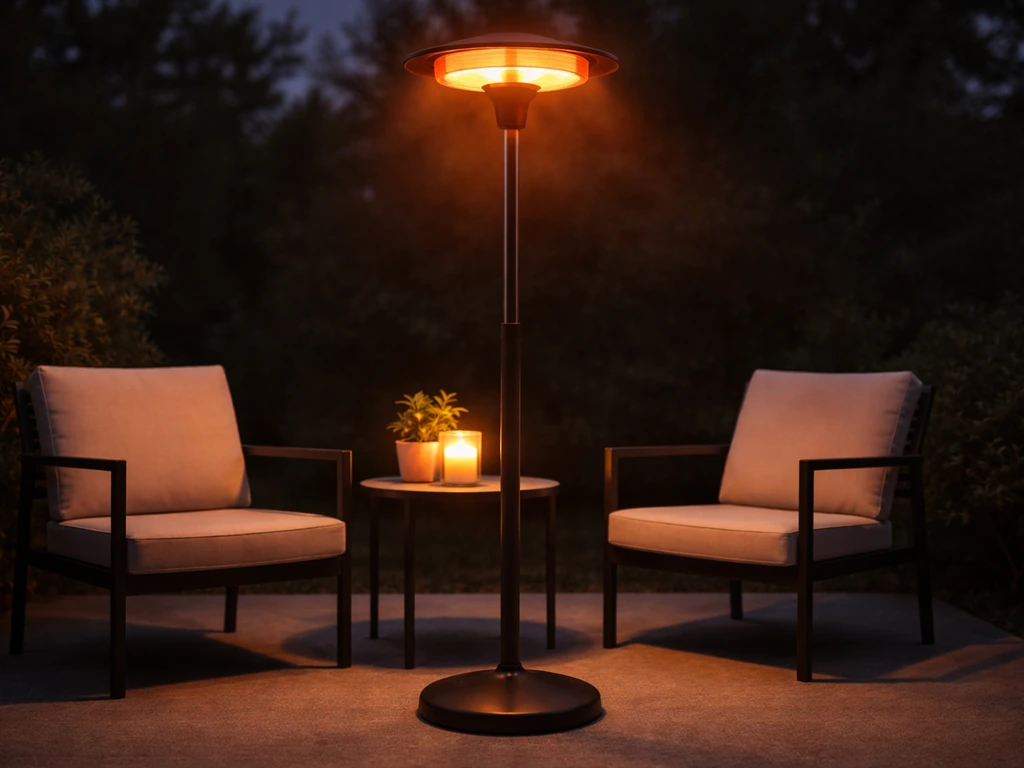
If your space is larger, open to wind, or you want whole-zone warmth rather than directional heat, you'll need to think about wattage, mounting position, and whether electric is even the right fuel type for your setup. This guide walks through exactly how to figure that out, with side-by-side reviews of the models worth buying right now.
If you want a deeper look, these optimus 500/1000/1500w electric patio heater reviews break down which power setting fits your patio size and conditions.
Best electric patio heater picks by patio size and use
There's no single 'best' electric patio heater because the right model depends almost entirely on where you're putting it and what you're expecting it to do. Here's a quick shortlist based on the most common scenarios readers ask about.
| Use Case | Recommended Type | Wattage to Look For | Top Pick Style |
|---|---|---|---|
| Small covered patio (under 100 sq ft) | Wall-mount or tabletop infrared | 1000–1500W | AZ Patio Heaters 1500W Infrared |
| Medium covered patio (100–200 sq ft) | Freestanding infrared tower | 1500W | SereneLife 1500W IP65 Tower |
| Large covered patio or pergola (200+ sq ft) | Ceiling-mount or dual-head infrared | 2000W+ | HIL-1500DI or 2000W ceiling mount |
| Open/uncovered patio (mild wind) | Freestanding infrared, angled low | 1500W, positioned close | Carbon infrared tower with remote |
| Open/uncovered patio (windy) | Consider propane instead | Electric loses effectiveness | Not recommended for exposed areas |
| Balcony or tight space | Wall-mount infrared | 750–1500W | Compact IP44+ wall mount |
| Budget-conscious buyer | Basic freestanding infrared | 1500W | SereneLife or AZ Patio Heaters |
One honest caveat upfront: electric patio heaters are genuinely excellent for covered, sheltered patios. Once you move into fully exposed, windy outdoor spaces, the physics work against them. Wind strips heat away faster than any 1500W element can replace it. If that's your situation, a propane heater with 40,000+ BTU output is a better call.
How electric patio heaters actually work (and why it matters)
Almost every outdoor electric patio heater sold today uses infrared technology rather than convection. That distinction is important. Convection heaters warm the air around them, which is useless outdoors because the air just drifts away. Infrared heaters emit radiant heat that travels in a beam, like sunlight, and warms solid objects and people directly. Infratech's 2017 catalog materials also present the infrared-heater energy-efficiency claim (including a manufacturer-stated 90% efficiency figure), so treat that number as a manufacturer claim blank" rel="noopener noreferrer">Infrared heaters emit radiant heat. You feel it the moment you step into the beam, even if the surrounding air is cold.
Within infrared, there are two main element types: quartz (also called halogen or short-wave) and carbon (medium-wave). Quartz elements glow bright orange and get very hot very quickly. Carbon elements run at a lower surface temperature, which makes them safer around kids and pets and better suited for close-range use on small patios. The warmth from either feels similar, but carbon elements tend to last longer and produce a softer, more even heat spread.
Most heaters in the 1500W range use a parabolic reflector dish behind the element to focus and project heat outward. The quality of that reflector matters more than most people realize. A well-designed parabola (like the ones you'll see called out in product descriptions) directs heat in a tight, useful beam. A cheap stamped-metal reflector scatters it and wastes a good chunk of your wattage. When you're reading reviews, comments like 'it barely keeps me warm at 6 feet' often trace back to a poor reflector, not low wattage.
What to actually compare when reading electric patio heater reviews
Product listings are full of numbers that sound impressive but don't tell you much on their own. Here's what to focus on when you're scanning reviews and specs sheets.
Heat output and coverage
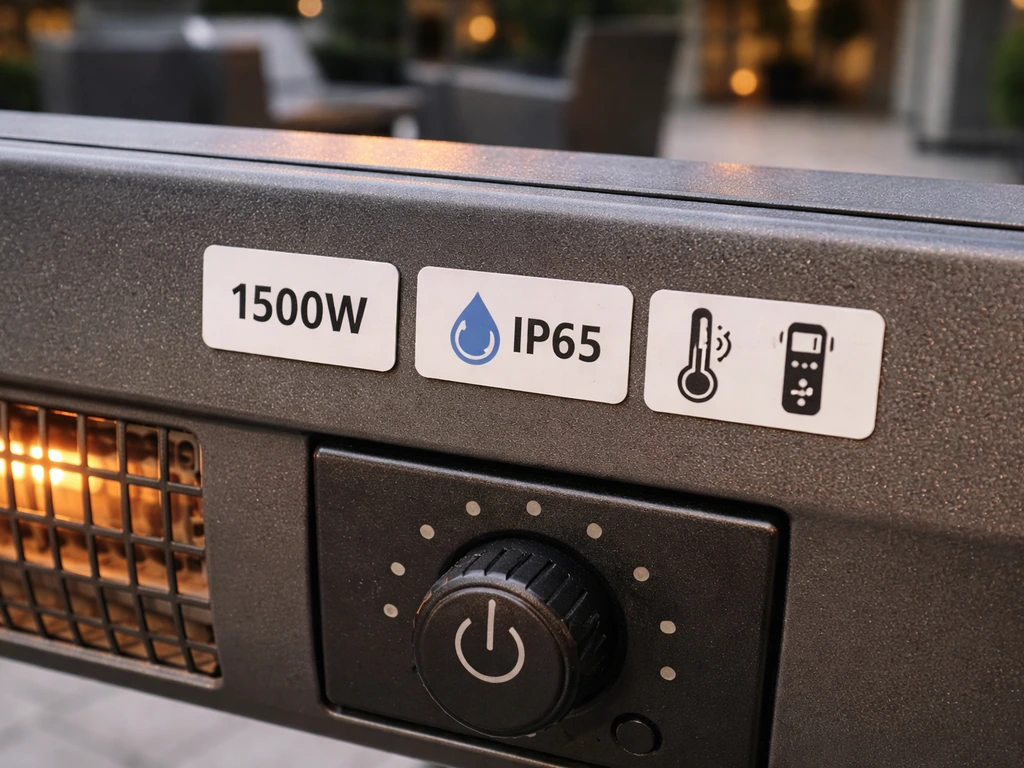
Wattage is your primary performance number for electric heaters. 1500W is the practical ceiling for a standard 120V/15A household outlet, which is why almost every plug-in patio heater tops out there. For 240V hardwired units, you'll see 2000W, 2400W, and higher. As a real-world benchmark, a 1500W infrared heater can comfortably warm people within about 10–15 feet in calm, covered conditions. The SereneLife 1500W, for example, claims heat reach up to 15 feet, which aligns with what users report in sheltered patio setups.
Weather resistance (IP rating)
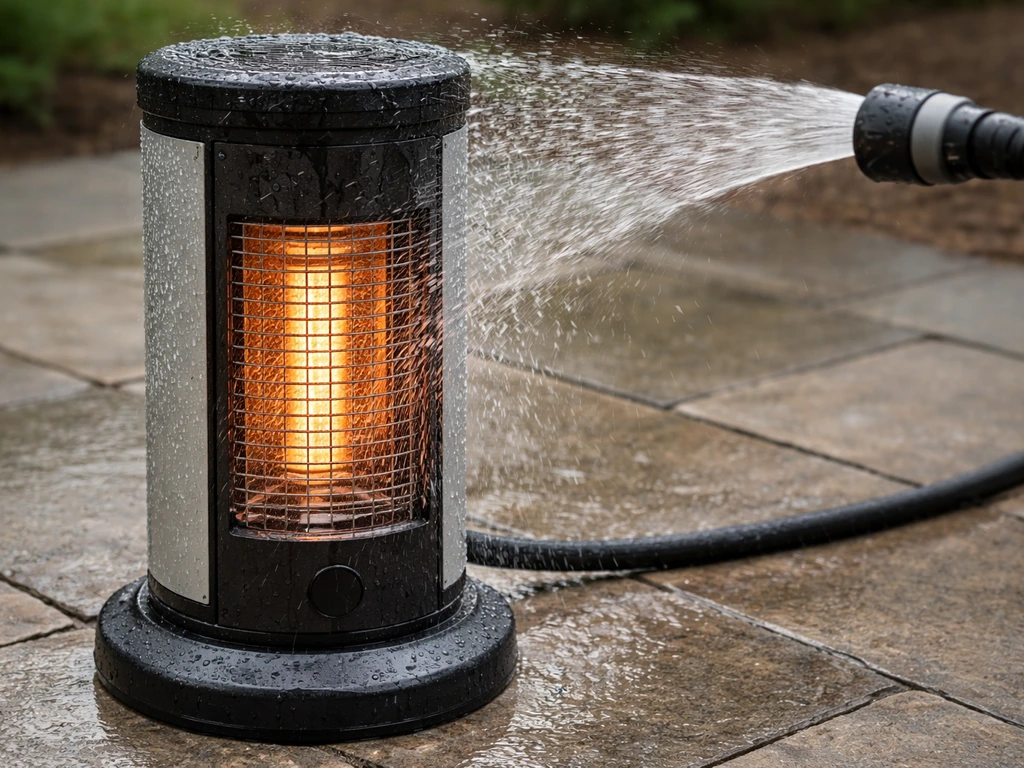
Look for an IP (Ingress Protection) rating on any heater you're placing outdoors. IP44 means it's protected from splashing water and objects larger than 1mm. IP65 means it's fully dust-tight and protected from water jets from any direction. For a covered patio with no direct rain exposure, IP44 is fine. For anything near open sky or in a humid climate, go IP65 minimum. The SereneLife 1500W is IP65-rated, which is one reason it shows up repeatedly in outdoor-specific reviews.
Safety features
Tip-over protection should be non-negotiable on any freestanding model. Overheat protection (a thermal cutoff that shuts the unit down if it runs too hot) is equally important. Better models include both as standard. Some units also have a cool-touch exterior, which matters if children or pets share the patio. These aren't bonus features, they're basics you should filter out any model that lacks them.
Controls and convenience
Higher-end electric patio heaters include remote controls, built-in timers, and variable wattage settings (for example, 1000W/2000W on dual-mode units). A remote is genuinely useful on a wall-mount or ceiling-mount unit you can't easily reach. A timer helps if you tend to forget the heater is on. Variable output lets you dial back on milder evenings to cut running costs. These aren't essential on every setup, but they noticeably improve the day-to-day experience.
Mounting options and power requirements
Freestanding towers plug into a standard outlet and require no installation. Wall-mount and ceiling-mount units need a bracket and sometimes hardwired 240V power, which means an electrician. Check the voltage (120V vs 240V) and amperage before you buy. A 1500W heater on 120V draws about 12.5 amps, which works on a standard 15A circuit. A 2000W unit typically needs 240V, meaning a dedicated circuit if you don't already have one.
Side-by-side reviews of top electric patio heater models
Here are the models I keep coming back to when recommending electric patio heaters, covering different placements, budgets, and use cases.
SereneLife 1500W Outdoor Electric Patio Heater (IP65)
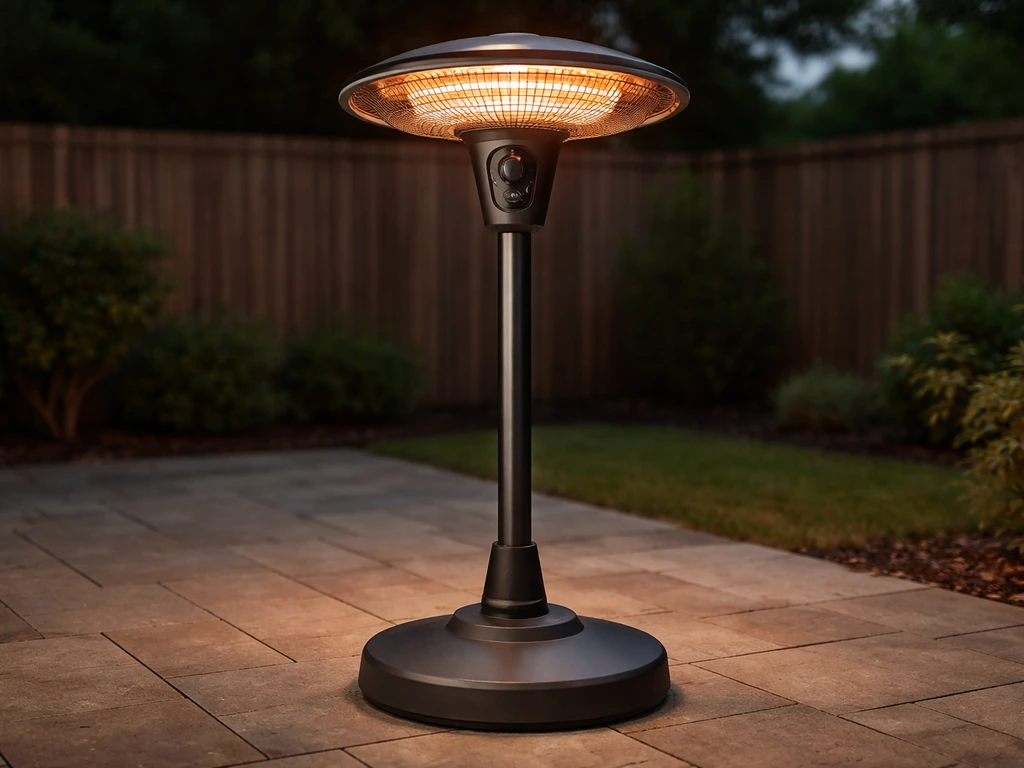
This is the one I'd hand to most people asking for a plug-and-play outdoor heater. It's IP65-rated, which means it handles humidity and light rain without any issues. Users consistently report effective warmth at 10–15 feet in covered patio setups, which tracks with the 1500W output and a decent reflector design. It's a freestanding tower, so no installation required, and at this price range it's hard to beat for covered medium-sized patios. The main limitation is the same as any tower-style unit: it's directional, so positioning matters, and it won't work well if someone keeps bumping into it on a tight deck.
- Output: 1500W
- Weather rating: IP65 (fully dust-tight, water jet resistant)
- Coverage: Up to 15 feet in sheltered conditions
- Mounting: Freestanding tower
- Power: Standard 120V outlet
- Best for: Covered patios 100–200 sq ft, renters, anyone who can't mount a heater
AZ Patio Heaters 1500W Infrared Patio Heater
AZ Patio Heaters has been making outdoor heaters long enough to get the basics right, and this 1500W infrared unit reflects that. It's straightforward: quartz infrared element, parabolic reflector, 120V plug-in operation. Review ratings on Best Buy are positive, with buyers noting solid consistent warmth for small to medium covered spaces. It's not loaded with features (no remote, no timer on the base model), but it's reliable and well-built for the price. A good choice if you want something simple that just works.
- Output: 1500W
- Element type: Quartz infrared
- Mounting: Freestanding or wall-mountable depending on variant
- Power: Standard 120V outlet
- Controls: Basic on/off
- Best for: No-fuss covered patio heating, small to medium spaces
HIL-1500DI 1500W Freestanding Infrared Patio Heater (Home Depot)
The HIL-1500DI is a freestanding infrared heater with a strong presence on Home Depot's shelves and a solid track record in customer reviews. It's often praised for its build quality compared to budget alternatives, and the structured review data from Home Depot shows consistent performance ratings. It positions well for covered patios where you want something that looks more polished than a basic tower unit. Some users note the cord length could be longer, so plan your outlet placement before you set it up.
- Output: 1500W
- Style: Freestanding infrared tower
- Power: Standard 120V outlet
- Standout: Better build quality relative to price range
- Watch out for: Cord length, plan outlet placement carefully
- Best for: Covered patios where aesthetics matter alongside performance
1500W Carbon Infrared Tower Heater with Remote and Timer
Carbon infrared tower heaters with remote control and timer functionality sit at the top of the convenience range for plug-in electric patio heaters. The carbon element heats up in seconds and runs at a safer surface temperature than quartz, which is a real benefit on a small deck where people brush past the unit. Remote control and a built-in timer (as seen in several 2026 roundups from sources like Heater Advisor) make these the most comfortable daily-use option. Tip-over and overheat protection are standard on the better versions. The trade-off is price: expect to pay more than a basic quartz tower. But if you're using it every evening, the quality-of-life difference is worth it.
- Output: 1500W
- Element type: Carbon infrared (medium-wave, lower surface temp)
- Controls: Remote control, built-in timer
- Safety: Tip-over switch, overheat protection
- Power: Standard 120V outlet
- Best for: Daily use, families with kids or pets, anyone who wants hands-free control
2000W Dual-Mode Wall-Mount or Ceiling-Mount Infrared Heater
If you're willing to hardwire a 240V circuit (or already have one), a 2000W ceiling-mount or wall-mount infrared heater opens up significantly better coverage for larger covered patios. Variable output (1000W/2000W) lets you match heat to conditions, which both saves electricity and extends element life. Ceiling mounting keeps the heater out of the way completely and provides more even downward heat distribution than a directional tower. Installation cost is the main barrier: budget for an electrician if you don't have 240V outdoor access already. Worth noting: some brands like Blumfeldt offer wall-mount electric heaters in this category with good build quality, and Heller makes a 2000W outdoor unit that covers similar ground.
- Output: 2000W (often with 1000W low mode)
- Mounting: Wall or ceiling mount, permanent installation
- Power: 240V hardwired (requires electrician if no existing circuit)
- Controls: Variable output modes, some include remote
- Best for: Large covered patios 200+ sq ft, permanent outdoor living spaces
Quick comparison table
| Model | Wattage | IP Rating | Mounting | Controls | Best For |
|---|---|---|---|---|---|
| SereneLife 1500W | 1500W | IP65 | Freestanding | Basic | Medium covered patios, renters |
| AZ Patio Heaters 1500W | 1500W | Not specified (check listing) | Freestanding/Wall | Basic | Simple plug-in, small/medium covered |
| HIL-1500DI (Home Depot) | 1500W | Check listing | Freestanding | Basic | Covered patios, better aesthetics |
| Carbon Infrared Tower w/ Remote | 1500W | IP44+ | Freestanding | Remote + Timer | Daily use, families, convenience |
| 2000W Wall/Ceiling Mount | 1000–2000W | IP44–IP65 | Permanent mount | Variable + Remote | Large covered patios, permanent spaces |
Running costs, weather performance, and safety
What it costs to run an electric patio heater
A 1500W electric patio heater costs roughly $0.18–$0.22 per hour to run at the US average electricity rate of about 12–15 cents per kWh (rates vary by state, so check your bill). Run it two hours every evening and you're looking at $10–$13 a month. That's cheaper per session than refilling a propane tank, though propane produces significantly more heat per dollar at high output levels. The electric advantage is convenience and no refill runs. The math stays in electric's favor if your patio is small enough to heat efficiently with 1500W.
A dual-mode 2000W unit on its low 1000W setting costs about $0.12–$0.15 per hour, which is a nice way to stretch a session on milder evenings without wasting money on full output.
How weather affects electric heater performance
Infrared heat is not affected by cold air temperatures the same way a convection heater would be. The beam still reaches you and warms you directly even when it's 40°F outside. What kills performance is wind. Even a modest 10 mph breeze strips the warmth off your skin faster than the infrared can replace it. In practice, an electric infrared heater rated for 15-foot reach in calm conditions might only feel comfortable at 6–8 feet in a light breeze. If your patio gets regular wind, position the heater so it's between you and the wind source, or add a windbreak (a fence panel, lattice, or outdoor curtains). For genuinely windy open patios, upgrade your expectations or switch to propane.
Safety considerations
Electric infrared heaters are among the safest outdoor heater types. There's no open flame, no fuel tank, and no carbon monoxide risk. That said, a few rules matter. Never use an indoor-rated heater outdoors, even in covered spaces. Moisture will damage unrated electronics and create real shock hazards. Keep the minimum clearance distance (usually 12–24 inches from flammable materials, check your model's manual). Don't run the heater on an extension cord that isn't rated for the wattage, a 1500W heater on a lightweight cord is a fire risk. Use a 14-gauge or heavier extension cord if you need one, and keep it short. And for freestanding models especially, always confirm tip-over protection is present before you buy.
How to choose the right electric patio heater: a step-by-step checklist
Work through these steps in order and you'll land on the right model without second-guessing yourself.
- Measure your patio. Length x width in square feet. Under 150 sq ft: a single 1500W unit works. 150–300 sq ft covered: consider two 1500W units or a single 2000W ceiling mount. Over 300 sq ft or open: electric alone probably isn't enough.
- Decide covered vs open. Covered patio with a roof or pergola? Electric infrared is a great fit. Open sky with regular wind? Factor in propane as an alternative or plan to add a windbreak.
- Check your outlets. Is there a 120V outlet within reach of where you want the heater? For wall/ceiling mounts at 2000W+, do you have a 240V outdoor circuit or budget for an electrician ($150–$400 typical)?
- Choose your mounting style. Renting or want flexibility: freestanding tower. Permanent covered outdoor room: wall or ceiling mount for better heat distribution and a cleaner look. Tight balcony: wall mount or compact tabletop.
- Set your IP rating minimum. Covered patio, no direct rain: IP44 is acceptable. Any exposure to rain or heavy humidity: IP65.
- Pick your must-have features. Need tip-over protection? (Yes, if it's freestanding.) Want remote and timer? (Worth it if you'll use it daily.) Variable heat settings? (Useful for shoulder-season evenings.)
- Check element type preference. Kids and pets nearby: carbon infrared runs cooler on the surface and is a safer pick. Fastest heat-up, no safety concerns: quartz infrared works great.
- Calculate running cost for your budget. Multiply your local kWh rate by the heater's wattage divided by 1000, then by how many hours per week you'll use it. Compare that monthly figure against propane if you're on the fence.
- Read 10–15 recent reviews focusing on: warmth at the distance you'll actually sit, build quality comments after 6+ months of use, and any complaints about cord length, wobbling base, or control reliability.
- Buy with a return window. Outdoor heater performance is genuinely hard to judge from specs alone. Choose a retailer with a 30-day return policy so you can test it in your actual conditions.
If you want to go deeper on specific brands, there are detailed individual model reviews worth checking out for units like the Blumfeldt electric patio heater range, Optimus electric models (including their 500W/1000W/1500W lineup), and the Heller 2000W outdoor heater, each of which has its own strengths depending on your setup. But for most people, the five models reviewed above cover the realistic range of covered residential patio needs without overcomplicating the decision. For more detailed comparisons and model-by-model picks, see our optimus electric patio heater reviews coverage.
FAQ
Can I use an indoor-rated electric patio heater outdoors on a covered porch?
Yes, but only if the heater is explicitly rated for outdoor use (with the correct IP rating) and you follow the minimum clearance. If your heater has a cord or plug, make sure both are designed to handle moisture outdoors, otherwise you can run into corrosion and shock risk even on covered patios.
Why does my electric patio heater seem to have less reach than the product claims?
You should base reach on your heater’s beam pattern, not the marketing “feet” number. If the unit points too high, or the reflector is offset, you may feel warmth mainly at the sides of the beam and less at seat level. For best results, aim for heat hitting people at around seated height, not the floor or directly into an empty corner.
Is a ceiling-mount electric patio heater better than a tower heater for whole-area comfort?
If you have a ceiling or wall outlet, a ceiling-mount infrared unit usually gives more even coverage than a floor or tower model because heat spreads downward rather than only outward. For directional tower heaters, you often need to reposition them for each seating layout, especially around changes in wind direction.
Do carbon infrared heaters cost less to run than quartz models?
It can be, depending on how you use it. Quartz and carbon both run at high power, but carbon elements generally operate at lower surface temperatures, which may reduce nuisance burn risk and extend usefulness for close-range seating. However, long-term cost is driven more by wattage and runtime than element type, so prioritize a lower-output setting (or variable wattage) if you don’t need full power every time.
How can I reduce the operating cost of an electric patio heater during mild weather?
Often, yes if the heater has variable wattage (like dual-mode) or you can cycle it with a timer. For example, using a 1000W low setting on milder evenings can reduce per-session cost while still keeping people comfortable, especially in covered conditions with limited wind.
What’s the safest way to power a 1500W electric patio heater if my outlet is far away?
Extension cords are a frequent problem. Even when the cord is rated, you should avoid long runs because voltage drop can make the heater draw more current and trigger overheating protection. If you must use one, keep it short and use a heavy-gauge outdoor-rated cord that matches the heater’s wattage requirements.
Will a 1500W electric patio heater overload my outdoor circuit?
You’re right to check, because outdoor electric heaters can be sensitive to circuit limits. A 1500W 120V unit draws about 12.5A, which usually fits a 15A circuit, but only if nothing else high-draw is running at the same time (space heaters, microwaves, portable AC). For 240V 2000W units, you may need a dedicated outdoor-rated circuit.
How much clearance do I need between an infrared patio heater and furniture or railings?
Always verify the heater’s stated clearances and then add margin for real-world situations, like cushions, table skirts, and nearby railings that can block airflow or trap heat. If you’re mounting near overhead structures, pay extra attention to the minimum distance because radiant heaters can still concentrate energy at close range.
What safety features should I require (and verify) before buying a plug-in patio heater?
Many heaters include overheat and tip-over protection, but not all models do, and not all protections work the same way. A good practical check is to look for language indicating both tip-over shutdown and thermal cutoff, and to confirm whether the unit automatically restarts or stays off until you manually reset after overheating.
How should I position an infrared heater if my patio is windy but still partially covered?
Yes, and it’s one of the most common “why it feels weak” issues. If your windbreak creates a sheltered pocket, the heater can perform closer to spec, but if the wind is channeling from an opening right at the beam, comfort drops quickly. Try moving the heater so it’s between you and the wind source, and consider adding side curtains or a fixed panel to reduce lateral drafts.