
The Flame Pro tabletop patio heater (Model #14306, Item #1807351) is a compact propane-powered heater rated at 10,000 BTU with a 52-inch heat radius. It runs on either a 1 lb disposable propane cylinder or an external 20 lb tank via the included 6-foot hose adapter, giving you flexibility for short sessions or long outdoor evenings. If you have a small uncovered or semi-covered patio, a cafe table setup, or a camping situation and you want a heater that sits right on the table without a bulky floor stand, this one is genuinely worth a look. Just know upfront: it is propane only, strictly outdoor use, and the heat zone is intimate rather than whole-patio wide.
Flame Pro Tabletop Patio Heater Guide for Propane Heat

Willa Brennan
6 May 2026
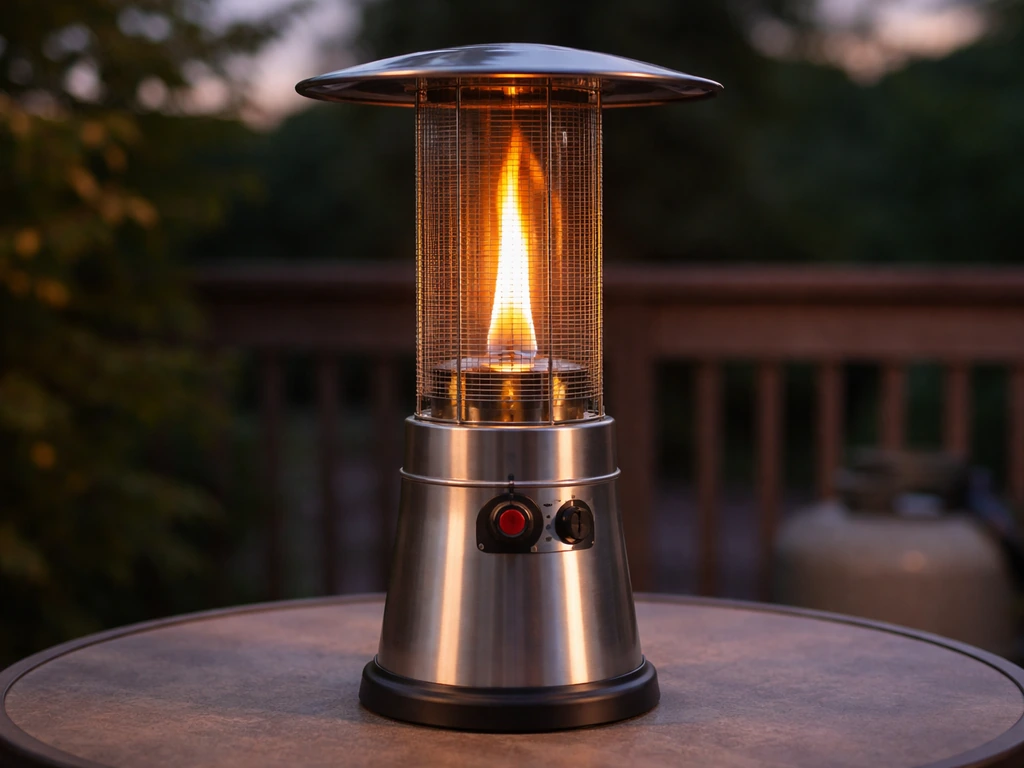
What exactly is the Flame Pro tabletop patio heater?
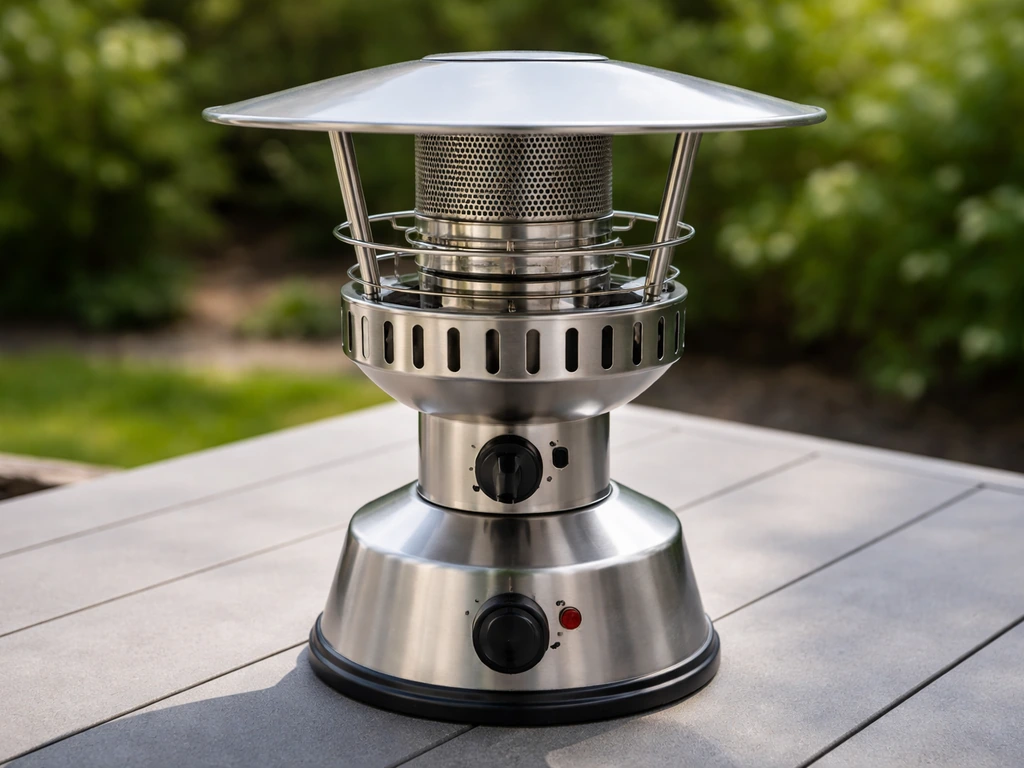
The FlamePro 14306 is a tabletop propane heater sold through Costco as a bundle that includes an adapter hose for connecting to a standard 20 lb propane tank. It measures roughly 12.5 inches square and stands 23.4 inches tall, weighing just under 12 lbs. That compact footprint means it sits comfortably on most patio or dining tables without dominating the surface.
Tabletop patio heaters like this work by burning propane through a burner head, then bouncing heat off an aluminum reflector that redirects warmth downward and outward toward the people sitting around it. The FlamePro version uses a high-temperature black-painted aluminum reflector for that purpose, and it includes a flame distribution buffer designed to keep the flame more stable when a light breeze kicks up. It is not a radiant panel heater and it is not electric. Think of it as a scaled-down version of those tall mushroom-cap propane heaters you see at restaurants, just in a form factor that sits on your table instead of standing on the floor.
One-handed impulse ignition (push-button) makes lighting simple, and the adjustable flame control lets you dial the heat up or down. There is also a tip-over and flame-out shutoff safety mechanism built in, which automatically cuts the gas supply if the unit falls over or the flame dies unexpectedly. That is a meaningful safety feature for a heater this close to people and tabletop items.
How to size and position it for your patio
The manufacturer claims a 52-inch heat radius at 10,000 BTU. In real-world terms, that means effective warmth extends roughly 4 to 4.5 feet from the center of the unit. At a round 4-person table, guests seated around the table will feel meaningful warmth if the heater is centered. At a larger rectangular table seating six or more, people at the ends will likely feel little heat from a single unit.
This is not a heater that warms a patio. It warms the people immediately around the table. Keep that expectation clear before you buy. If your outdoor dining area is a 10 by 12 foot covered patio with four chairs tight around a table, the Flame Pro will do a solid job. If you are trying to heat a 20 by 20 foot open deck, you need something bigger (a full-sized floor-standing propane heater or multiple units).
For positioning, center the heater on the table if possible so heat distributes evenly. Clearances matter here too (covered below in the safety section), but practically speaking: do not push it to the edge of the table where guests might brush against it, and do not place it directly under a low overhead umbrella or fabric canopy. The manual requires 24 inches of clearance from combustibles on all sides and the top, so a standard patio umbrella pole directly over the unit is a problem unless there is substantial vertical clearance. The manual also instructs that combustible material should not be within blank" rel="noopener noreferrer">24 inches, and it directs you to turn off the gas valve if the flame goes out and wait before relighting.
Covered vs uncovered patios
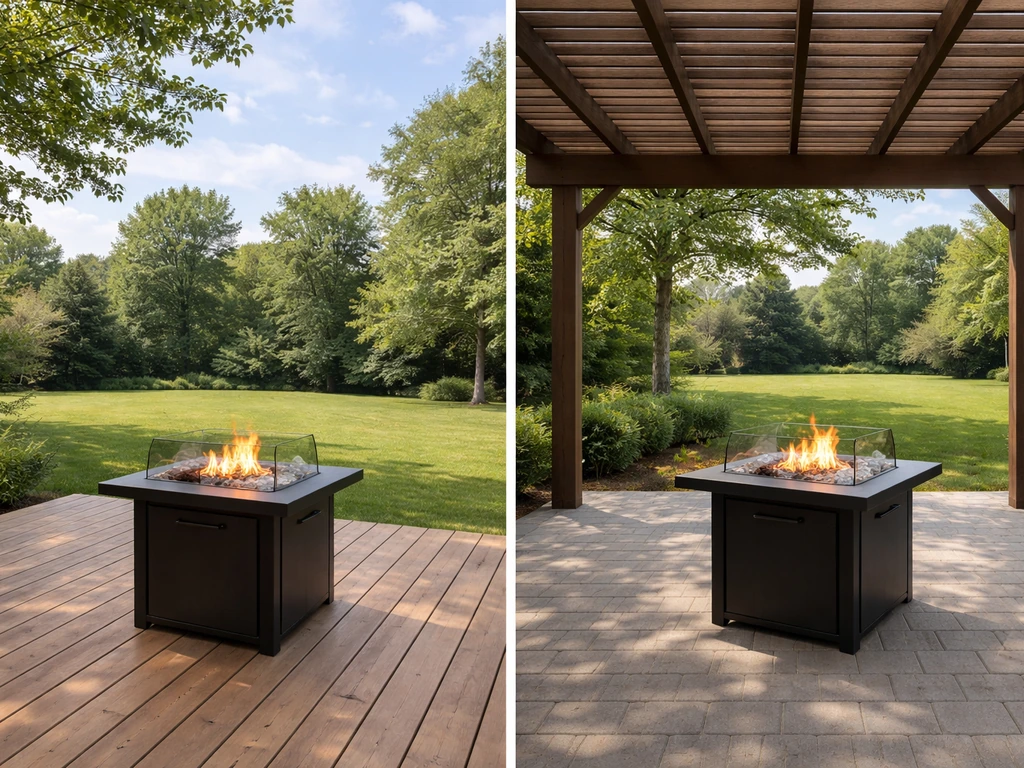
Because the FlamePro burns propane, it must be used outdoors in a ventilated space. A fully open patio or deck is ideal. A pergola with open sides generally qualifies as adequately ventilated. A screened-in porch, a patio with roll-down vinyl sides, or any enclosed structure does not qualify and is explicitly prohibited by the manual. This is a hard line, not a suggestion, because propane combustion produces carbon monoxide and using this heater in any enclosed space can be fatal.
Fuel type and real-world performance
The FlamePro 14306 runs on propane only. You have two practical tank options and the runtime difference between them is dramatic.
| Tank Option | Capacity | Estimated Burn Time | Best Use Case |
|---|---|---|---|
| 1 lb disposable cylinder | 16 oz propane | 2 to 4 hours | Short sessions, camping, travel |
| 20 lb external tank (via hose) | Standard BBQ tank | 43 to 83 hours | Regular home patio use, extended sessions |
The wide range in burn time (43 to 83 hours on the 20 lb tank) reflects the flame setting. At max output (10,000 BTU), you burn through propane faster. Dialed down to a lower setting, fuel lasts significantly longer. For most patio evenings where you are not running the heater at max blast, expect the 20 lb tank to last a solid season of casual use before needing a refill.
On heat output: 10,000 BTU is respectable for a tabletop unit. To put it in context, the competing Cuisinart COH-500 tabletop propane heater pushes 11,000 BTU, so the Flame Pro is in the same ballpark. The manufacturer describes the Cuisinart COH-500 tabletop propane heater as 11,000 BTU and designed to evenly warm up to 30 sq. ft. Both are designed to warm people in close proximity, not large open spaces. At max output on a calm evening, you will feel genuine warmth sitting within 3 to 4 feet of the unit.
Wind is the real performance variable with any propane tabletop heater. The Flame Pro's flame buffer helps, but a steady breeze above 10 to 15 mph will still noticeably reduce effective warmth and may cause flame instability. This is a universal propane heater limitation, not unique to this model.
Safety setup and operating rules
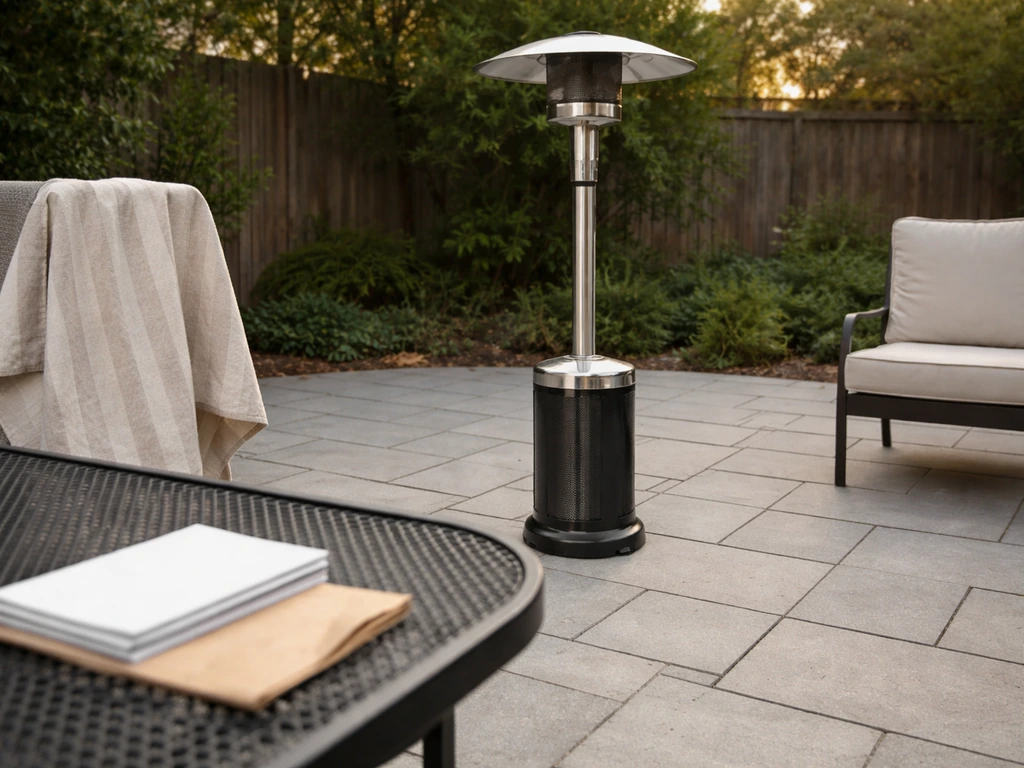
Take the safety requirements for this heater seriously. The manual is explicit and the risks are real.
Clearances
- Keep all combustibles at least 24 inches (61 cm) from the top and all sides of the unit. This includes tablecloths, fabric chair cushions, paper goods, and overhead covers.
- When using an external 20 lb tank, keep the tank at least 40 inches (1 meter) away from the heater while it is lit.
- Never store a spare propane tank on or near the unit.
- Ensure the area around the heater is clear of flammable liquids or vapors before igniting.
Carbon monoxide and ventilation
This cannot be overstated: the FlamePro 14306 produces carbon monoxide as a byproduct of propane combustion. Using it in any enclosed space, including a screened porch, camper, tent, car, or home, can kill you. The manual uses exactly that language. Always use it in a genuinely open-air outdoor setting with free airflow. If you are unsure whether your covered patio counts as enclosed, err on the side of caution or choose an electric infrared heater instead.
Lighting the heater correctly
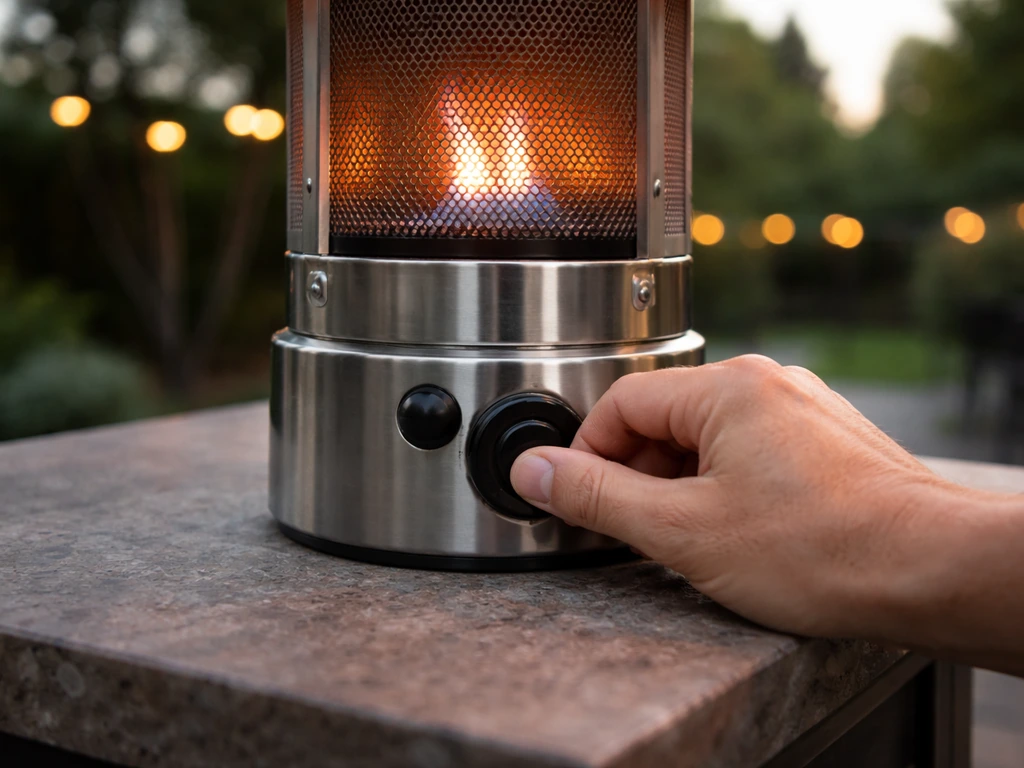
- Turn the control knob to the ignite/light position and press the impulse igniter.
- Once the flame starts, hold the control knob down for a full 15 seconds before releasing. This allows the thermocouple to heat up and hold the gas valve open.
- If the flame goes out while the heater is running, turn the gas valve off completely and wait 5 minutes before trying again. Do not attempt to relight immediately.
- Never disconnect any part of the heater while it is in use.
Wind and stability
Place the heater on a stable, level table surface. Never use it on uneven ground where it could tip. The tip-over shutoff will cut gas if it falls, but falling itself can still cause burns or damage. On gusty evenings, consider moving to a more sheltered spot on the patio or switching to a lower flame setting for better stability.
How the Flame Pro compares to other tabletop and patio heater options
The tabletop heater category has a few genuinely different directions you can go: propane (like the Flame Pro), electric infrared, and larger floor-standing propane. Each has real trade-offs.
| Heater Type | Heat Output | Wind Performance | Fuel/Power | Best For | Key Limitation |
|---|---|---|---|---|---|
| Flame Pro 14306 (propane tabletop) | 10,000 BTU / 52 in radius | Moderate (has flame buffer) | Propane only, 1 lb or 20 lb tank | Small tables, open patios, camping | Open-air only, CO risk in enclosures |
| Cuisinart COH-500 (propane tabletop) | 11,000 BTU | Similar to Flame Pro | Propane only | Small tables, similar use case | No built-in hose adapter in all versions |
| Electric infrared tabletop | 600–1,500W typical | Better (no flame to disrupt) | Requires outlet | Covered patios, screened porches | Cord tether, no portability |
| Floor-standing propane (mushroom cap) | 40,000–48,000 BTU | Poor (heat disperses) | Propane, 20 lb tank | Large open patios, crowds | Bulky, expensive, overkill for table use |
If you have a covered or semi-enclosed patio and want to run a heater through the colder months without worry about CO, an electric infrared tabletop or wall-mounted unit is genuinely the safer and more practical choice. Infrared heaters also perform better in breezy conditions because they heat objects and people directly rather than warming the air. The trade-off is you need a power outlet nearby and you lose the portability that makes the Flame Pro useful for camping or spontaneous use away from the house.
Where the Flame Pro earns its place is in the scenario where you want a portable, no-cord-needed heater for casual outdoor use on an open patio or deck. The dual-tank system (1 lb for short trips, 20 lb for home use) is a practical advantage that many competing tabletop propane heaters do not offer in a single unit. If you are also exploring the broader FlamePro lineup, the brand also makes floor-standing pellet heaters, which are a different category entirely with longer burn times but more setup involved. If you are looking for a Flame Pro pellet patio heater review angle, note that the brand’s pellet models are a different category with longer burn times and more setup. If you are curious about the brand’s pellet models, this FlamePro pellet patio heater review covers how their burn times and setup compare to tabletop propane units.
Before you buy: checklist and common mistakes
Features and buying checklist
- Confirm your patio is genuinely open-air with free airflow. If it is screened, enclosed, or under a very low solid roof, choose electric instead.
- Check that your table is large enough to center the heater with at least 24 inches of clearance from any combustible surface or object in every direction.
- Decide whether you need the 1 lb cylinder for portability or the 20 lb tank for extended home use. The FlamePro supports both, which is a meaningful advantage.
- Verify you have access to propane refill or exchange for 20 lb tanks (most hardware stores and grocery chains offer this). The 1 lb disposable cylinders are convenient but expensive per BTU over time.
- Look for the tip-over shutoff and flame-out safety shutoff on any tabletop propane heater you consider. The FlamePro has both.
- Check ignition type. One-handed impulse (push-button) ignition is much more convenient than match-lighting in cold weather.
- Assess wind exposure on your patio. If it is frequently breezy, the FlamePro's flame buffer helps but is not a full solution. An electric infrared may serve you better.
- Consider weather resistance for storage. The FlamePro is aluminum with heat-resistant paint, reasonable for outdoor use, but like most tabletop heaters it should be stored indoors or covered when not in use.
Common mistakes to avoid
- Using it in any enclosed or semi-enclosed space. This is the most dangerous mistake with any propane heater. The FlamePro manual is explicit: enclosed use can be fatal.
- Trying to relight immediately after a flame-out. Turn the valve off and wait 5 minutes. Relighting too soon risks a gas buildup.
- Not holding the knob down for the full 15 seconds after lighting. This causes the thermocouple to stay cold and the flame to go right out when you release the knob. It is the most common 'this heater doesn't work' complaint and it is always operator error.
- Placing it near tablecloths, fabric cushions, or paper decor. The 24-inch clearance rule applies to everything flammable, not just hard surfaces.
- Leaving it unattended while running. The manual prohibits this and common sense backs it up.
- Using it if any part has been submerged in water. Water damage to the regulator or valve components creates a serious leak and ignition risk.
- Storing a backup propane cylinder on or next to the running heater. Keep spare tanks well away.
The Flame Pro tabletop patio heater is a solid, practical choice for open-air small-table setups where you want propane flexibility without the bulk of a floor-standing unit. If you want something closer to a bigger, higher-output LPG option for wider coverage, compare this setup to a performance series lpg patio heater instead. If you are comparing options beyond this Flame Pro model, the Fire Sense Performance Series LPG patio heater is another LPG choice worth considering for outdoor tabletop use. Get the clearances right, use it strictly outdoors, learn the 15-second knob hold, and connect to a 20 lb tank if you plan to use it regularly. Do those things and it will earn its spot on your patio table all season.
FAQ
Can I use a flame pro table top patio heater under a roof or pergola if it is partially covered?
Use only outdoors with free airflow. A covered patio can still be considered unsafe if it is partially enclosed with roll-down sides, windbreak panels, or a mostly closed canopy, because propane combustion can produce carbon monoxide. If you cannot see clear open air on multiple sides, treat it as enclosed and do not use this heater.
What safety steps should I take beyond the tip-over shutoff when using this tabletop heater?
Do not rely on the tip-over shutoff as a substitute for safe placement. Put the heater on a stable, level table, keep it away from tablecloth edges, and avoid setting it where people or pets might bump it. If it tips, the burner area can still get hot enough to burn hands or ignite nearby items before the gas shuts off.
How much clearance does the flame pro table top patio heater need from umbrellas, cushions, and other nearby items?
The manual calls for 24 inches of clearance from combustibles on all sides and the top. In practical terms, that means no low overhead umbrella fabric, hanging plants, or nearby chairs with fabric cushions close to the reflector, and keep any table accessories (like decorative trays or lanterns) farther away than you think.
Why does my flame pro tabletop heater feel weak on windy nights, and what can I do?
It has a strong dependence on wind. If you start feeling little heat, try lowering the flame setting only if you need longer runtime and stability, then reposition to a more sheltered spot rather than keeping it in the open. Even with the flame buffer, a steady breeze above about 10 to 15 mph can reduce warmth and affect flame stability.
Is the 52-inch heat radius enough for my table size, and where should I place the unit for best coverage?
Centering matters because the reflector throws heat downward and outward in a limited zone. At a round table, people closer to the center axis get the most warmth, while at ends of larger tables the heater may not reach. If you have a long rectangular table, you will usually need two units or a larger floor-standing heater to cover the far seats.
Should I choose the 1 lb cylinder or the 20 lb tank for a flame pro table top patio heater?
Yes, but do it carefully to match your setup. If you use the disposable 1 lb cylinder, you likely will have shorter run time and more frequent swaps. For regular backyard use, the 20 lb tank typically gives much longer burn time, especially when you are not running at the top flame setting for the entire evening.
What enclosed spaces are explicitly off-limits for this propane tabletop patio heater?
Propane heaters should not be treated like electric units. Do not use them in screened porches, tents, campers, garages, or any indoor-like space, even if windows are open, because the space may still trap combustion products. If you want a heater for a semi-enclosed area during colder months, switch to an electric infrared heater instead.
What are common mistakes that cause poor flame performance or odor when using the Flame Pro model 14306?
Keep the burner and reflector area clean and free of dust, grease, and spilled food. If you notice irregular flame behavior, soot, or odor changes, stop using it and inspect for blockages before relighting. Also ensure the gas connection is secure, and leak-check any new tank connection with a leak solution before lighting.
How should I set the flame control to balance comfort, runtime, and stability?
If the patio is open-air enough to be considered safe, choose the lowest flame setting that still keeps guests comfortable. Lower output typically stretches runtime and can improve stability in light breezes. Then fine-tune during the evening as conditions change instead of starting at max output for the whole session.