
The Garden Glow 4kW tabletop patio heater is a propane or butane gas-fired heater, not electric. It puts out between 2kW and 4kW (roughly 7,000 to 11,000 BTU) depending on where you set the dial, costs around £0.44 to £0.88 per hour to run at current gas prices, and realistically warms a 4 to 6 square metre zone around your table. If you want something that works without a power socket, heats up fast, and sits neatly on a table or bench between your guests, this is a solid option. If you were hoping for an electric plug-in model, this isn't it.
Garden Glow 4kW Tabletop Patio Heater Buyer Guide

Willa Brennan
5 May 2026

What the Garden Glow 4kW tabletop heater actually is
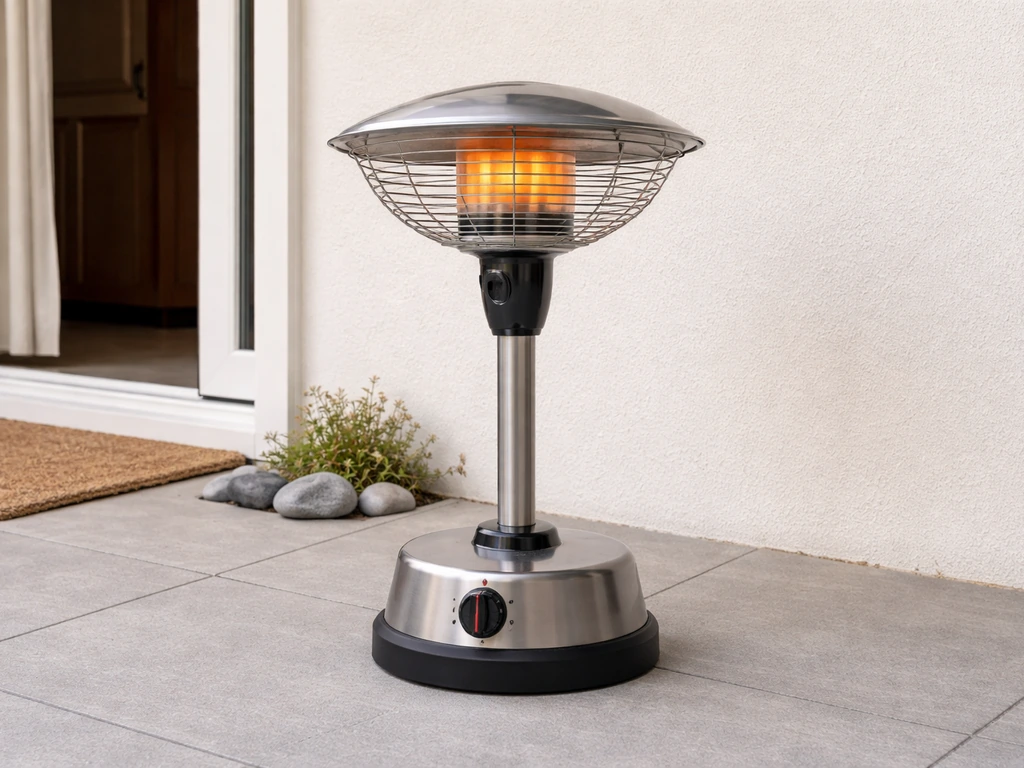
A lot of people searching for this heater aren't sure whether they're looking at a gas or electric model. The Garden Glow 4kW tabletop patio heater is a gas-fired radiant heater that runs on propane or butane only. There's no mains plug, no power cable, and no need for an outdoor socket. It comes with a gas hose and regulator included so you can connect a standard gas canister and get going.
At 5kg and 90cm tall with a 53.3cm diameter head, it's genuinely portable and compact enough to sit on a garden table, low wall, or outdoor side unit. It's aimed at people who want directional warmth close to where they're sitting rather than trying to heat an entire patio from a tall freestanding unit. Think dinner parties for four to six people, a small covered terrace, or a cosy corner of a larger garden.
The heater uses piezo ignition, which means you light it with a press-and-turn action rather than a match or lighter. Variable heat control lets you dial between 2kW at the lower end and 4kW at full power. That range is useful because you're not locked into burning gas at full rate all evening.
Key specs at a glance
| Specification | Detail |
|---|---|
| Fuel type | Propane or butane gas only |
| Heat output range | 2kW to 4kW (7,000 to 11,000 BTU) |
| Ignition | Piezo (press-and-turn, no lighter needed) |
| Dimensions | D53.3cm x H90cm |
| Weight | 5kg |
| Hose length | 204cm |
| Gas consumption | 450g to 945g per hour |
| Estimated coverage | 4 to 6 sqm (practical), up to 10 sqm (optimistic) |
| Electricity required | No |
| Guarantee | 24 months |
| Included accessories | Gas hose, gas regulator |
One thing worth noting on the coverage figure: the manufacturer hasn't published an official heating area measurement. The 4 to 6 sqm figure comes from independent assessments and aligns with what a 4kW gas tabletop heater can realistically deliver outdoors. Some listings stretch this to 5 to 10 sqm, which is more of an optimistic maximum than a guaranteed comfortable zone. In practical terms, expect guests within about 1.5 to 2 metres of the heater to feel it properly.
How to set it up and use it safely
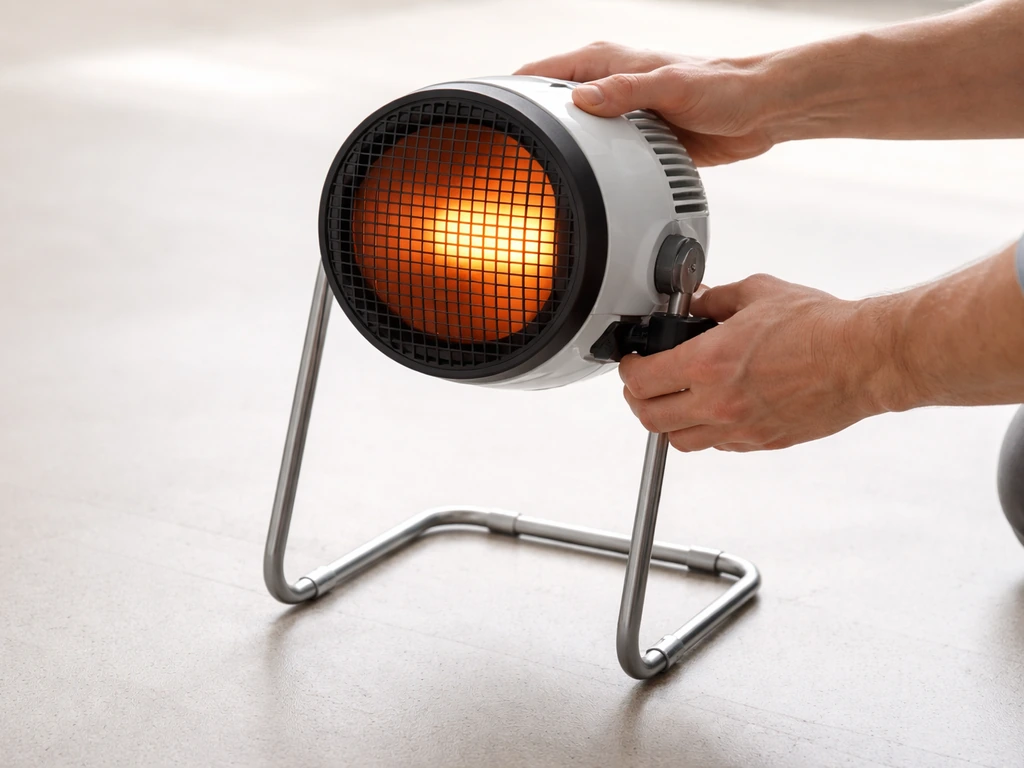
The heater ships requiring assembly, so budget a bit of time when it first arrives. The process isn't complicated but you do need to attach the head to the stand and connect the hose correctly before use. The U.S. Consumer Product Safety Commission cautions that using outdoor heaters indoors can cause deadly carbon monoxide buildup in minutes use it safely. Always check the hose connection for leaks before lighting: apply soapy water to the joint and look for bubbles. If you see any, tighten or replace the connection before proceeding.
Step-by-step lighting guide
- Assemble the heater according to the included instructions and place it on a stable, level surface.
- Connect your propane or butane canister using the included hose and regulator. Hand-tighten securely.
- Do a quick leak check with soapy water on the connection point before lighting.
- Open the gas valve on the canister slowly.
- Press and hold the control knob in, turn it to the ignition position, and press the piezo igniter button. Hold for a few seconds after the flame catches to let the thermocouple warm up.
- Once lit, adjust the dial to your desired heat level between 2kW and 4kW.
- To shut down, turn the control dial to the off position first, then close the gas valve on the canister.
Placement and clearance rules
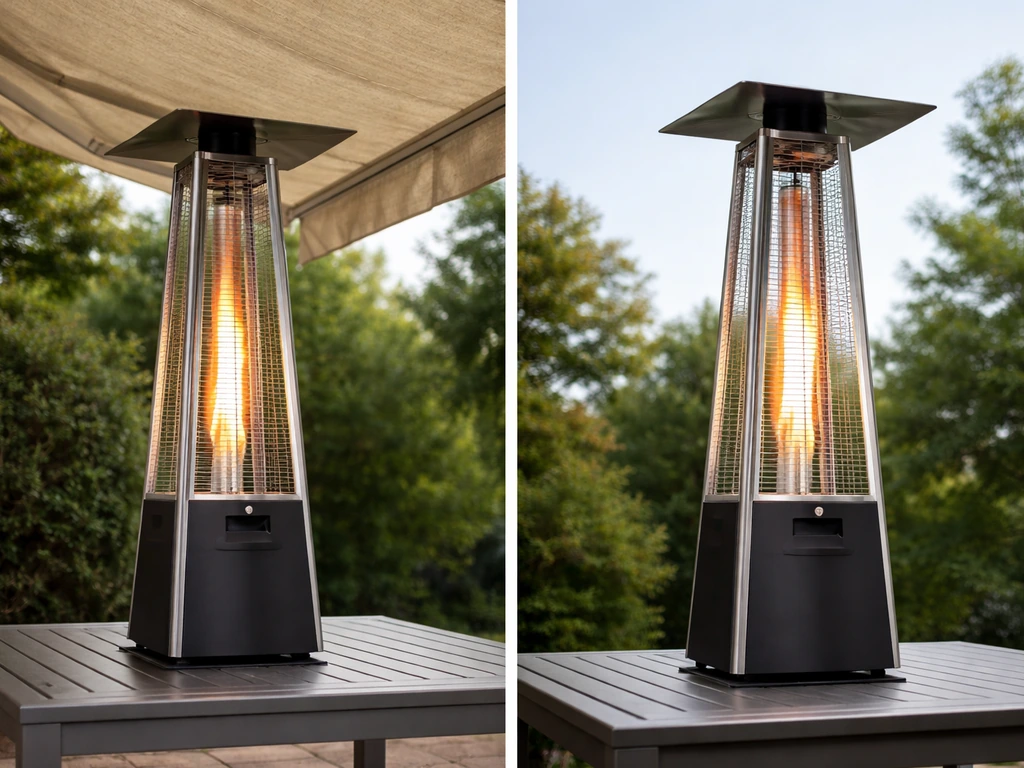
Because this is a gas flame heater, where you put it matters a lot more than with an electric model. The UK Health and Safety Executive (HSE) warns that carbon monoxide is produced by incomplete burning of carbon-based fuels such as gas Gas safety. Keep the following in mind every time you use it:
- Never place it under combustible materials like a fabric parasol, wooden pergola roof, or low awning. The heat and flame can ignite overhead surfaces.
- If you use it under a non-combustible cover (like a metal or tiled roof), maintain a minimum clearance of at least 20cm above the heater head, though more is always safer.
- Keep the heater at least 1 metre from chair backs, cushions, and outdoor fabrics.
- Position it centrally on the table or surface so it won't be knocked by guests reaching across.
- Never use it indoors, in a tent, or in any enclosed space. Carbon monoxide risk is serious with any gas-fired heater.
- Keep children and pets away from the heater body and the burner area.
- Don't move the heater while it's lit or still hot.
The 204cm hose gives you reasonable flexibility in positioning, but don't stretch the hose tight or run it across a walkway where someone could trip. If you're using a larger gas canister stored nearby, make sure it's upright and away from direct heat sources.
What to expect from the heat output in real conditions
At 4kW, this heater will make a genuine difference to how comfortable your guests feel when sitting around a table on a cool evening, roughly in the 5 to 14°C range. The radiant heat is directional, so people closest to the heater benefit most. On a still night in a sheltered spot, you can realistically warm a circle of about 1.5 metres around the unit comfortably.
Wind is the biggest enemy of any outdoor gas heater. Even a light breeze will carry heat away from your guests and make the heater feel much less effective. If your patio is exposed, consider adding a windbreak or positioning guests on the sheltered side. Covered patios and enclosed courtyards are where tabletop gas heaters like this genuinely shine because the heat stays around the table instead of drifting off.
On an uncovered exposed patio in a breeze above around 15 to 20 km/h, you'll find you're burning gas faster for noticeably less comfort. That's not a flaw specific to this model; it applies to any tabletop heater at this power level.
Common issues and quick fixes
| Problem | Likely Cause | Fix |
|---|---|---|
| Heater won't ignite | Gas not flowing or thermocouple not warm | Hold knob in longer after the flame catches; check canister has gas |
| Flame goes out after lighting | Thermocouple not held long enough | Hold the ignition button for 10 to 15 seconds after the flame appears |
| Not feeling much heat | Wind or being too far from the unit | Reposition closer (within 1.5m), add a windbreak, or increase dial setting |
| Uneven warmth at the table | Heater not centred or positioned too low | Raise or reposition to the centre of the seating area |
| Gas smell but no flame | Gas flowing without ignition | Turn off immediately, ventilate the area, wait 5 minutes before retrying |
| Low flame at full dial setting | Canister nearly empty or regulator issue | Check gas level; replace canister or check regulator connection |
Pros, cons, and how it stacks up against other tabletop heaters
The Garden Glow 4kW is a good value entry point into tabletop gas heating. It covers the basics well: variable output, no need for a power socket, decent heat for a small group, and included hose and regulator so you can start using it straight away. The 24-month guarantee is also reassuring for a product at this price point.
The trade-offs are real though. At only 4kW, it's on the lower end of output for a gas tabletop heater if you're trying to warm more than four or five people. Compared to a 2. 1kW electric tabletop model with a rattan base, this one generates more heat but requires ongoing gas purchases and more careful placement.
If you specifically want an electric alternative, look at options like the Firefly table top electric patio heater. If you specifically want a 2. 1kW tabletop electric patio heater with a rattan base, you'll need to look for an electric model instead of a gas unit like the Garden Glow. Against a larger freestanding patio heater, the tabletop format wins on portability and table-level warmth but obviously can't heat a wider outdoor space.
| Feature | Garden Glow 4kW Gas Tabletop | 2.1kW Electric Tabletop | Firefly 4kW Gas Tabletop | Freestanding Gas Patio Heater |
|---|---|---|---|---|
| Heat output | 4kW max | 2.1kW max | 4kW max | 10 to 15kW typical |
| Fuel type | Propane/butane | Mains electric | Propane/butane | Propane/butane or gas |
| Needs power socket | No | Yes | No | No (gas) or Yes (electric) |
| Coverage (practical) | 4 to 6 sqm | 2 to 4 sqm | 4 to 6 sqm | 10 to 20 sqm |
| Running cost per hour | ~£0.44 to £0.88 | ~£0.50 to £0.60 at current rates | Similar to Garden Glow | £1.50 to £3.00+ |
| Portability | High | Medium (cord) | High | Low |
| Best for | Small tables, no socket nearby | Covered patios with a socket | Small tables, no socket nearby | Large patios, parties |
If you're comparing the Garden Glow against other 4kW tabletop gas heaters like the Firefly 4kW gas tabletop, the main differentiators come down to build quality, burner design, and price rather than raw output since both run at the same wattage with similar fuel. The Kettler tabletop heater range is also worth considering if you want a more premium build and a longer track record of UK customer support.
If you're comparing brands, the kettler kalos patio heater reviews are a useful next read to see how the Kettler tabletop range stacks up on build and comfort versus this Garden Glow model. If you are comparing options, it can help to also look at the Kettler table top patio heater models to see how their output and build quality stack up.
If you're specifically comparing models, you may also want to check Kettler Universal Lantern Patio Heater 80cm reviews for real-world feedback on performance and build.
What it costs to run
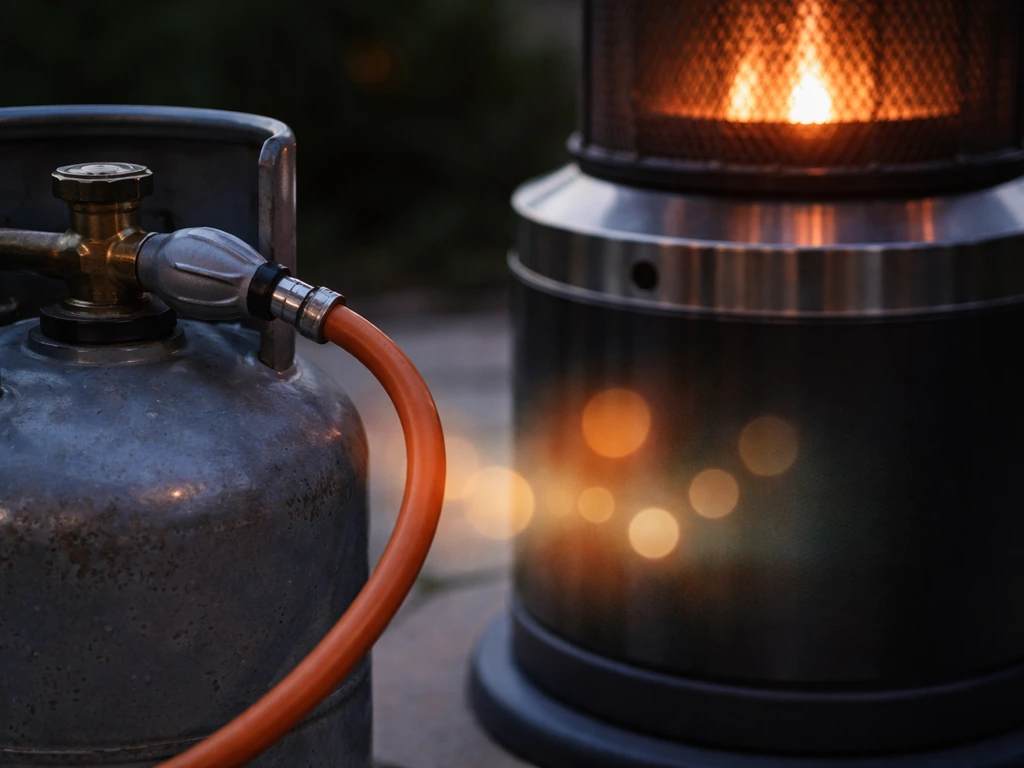
This is genuinely one of the more useful things to know before buying. Using a standard 13kg propane canister at around £32, the Garden Glow burns through roughly 945g of gas per hour at full 4kW output. That works out to about £0.88 per hour at full power. Dial it back to 2kW (the lower setting) and you're using closer to 450g per hour, cutting the cost to around £0.44 per hour. For a three-hour dinner evening, you're spending between £1.32 and £2.64 in gas depending on how hard you run it.
A 13kg canister gives you roughly 13 to 28 hours of use depending on settings, so it lasts several evenings before needing a replacement. For most casual garden users, that's good economy. If you're running it every evening through spring and autumn, the ongoing gas cost adds up, but it's comparable to what you'd spend on a similar-output electric heater at current UK electricity rates.
One practical tip: buy a spare canister so you're never caught mid-evening with an empty one. Propane and butane canisters in the right size (typically the threaded or clip-on types compatible with the regulator) are widely available at garden centres, hardware stores, and online.
Maintenance, storage, and what to check every season
Gas tabletop heaters don't need a huge amount of maintenance but a few habits will extend the life of the unit and keep it safe to use year after year.
Cleaning
Always let the heater cool completely before touching it or cleaning it. The burner and reflector can stay very hot for 20 to 30 minutes after use. Once cool, wipe down the reflector and body with a damp cloth. Don't use abrasive cleaners or anything that could clog the burner jets. Check the burner for spider webs, debris, or insect nests at the start of each season as these are a real ignition hazard and a surprisingly common reason gas heaters fail to light properly.
Seasonal storage
- Turn off the gas at the canister and allow the heater to burn off the gas remaining in the hose before shutting the control dial.
- Disconnect the hose and regulator and store them coiled loosely, not kinked.
- Store the canister upright in a well-ventilated outdoor space, not in a garage or shed with a boiler or other ignition source nearby.
- Use an optional weatherproof cover to protect the heater head and body from moisture and UV damage over winter.
- Inspect the hose for cracks, splits, or brittleness before using it again in spring. Replace it if in doubt.
Warranty and support
The Garden Glow 4kW comes with a 24-month guarantee, which is better than the standard 12 months you see on some budget tabletop heaters. Keep your proof of purchase and check the retailer's returns policy at the time of buying. If you purchased through a marketplace like Groupon, support routes can be less direct, so buying from a dedicated garden or outdoor retailer tends to make warranty claims simpler.
Quick maintenance checklist
- Check gas hose for cracks or damage before each season and before each use if stored for more than a month.
- Test the leak connection with soapy water whenever you reconnect the hose.
- Clean the burner jets and reflector at the start of each season.
- Inspect the piezo igniter for wear and test it before use.
- Check that the control knob moves smoothly and returns to the off position properly.
- Store with a weatherproof cover when not in use for extended periods.
- Replace the hose at least every two years regardless of visible condition.
Who should buy this heater (and who shouldn't)
The Garden Glow 4kW tabletop gas heater is a good fit if you want a portable, no-socket-required heater for a small table or covered patio, you're heating a group of four to six people within about 1.5 metres, and you're comfortable doing basic gas canister connection and safety checks. It's also a strong choice for anyone who doesn't have a convenient outdoor power socket or wants the freedom to move the heater around the garden.
It's not the right choice if you need to heat a large open patio, if you want a completely hands-off electric option, or if you're looking for something to use under a low fabric awning or under a tight wooden pergola with limited clearance. In those cases, a mains electric infrared tabletop heater gives you more placement flexibility indoors and out, or a full-sized freestanding heater covers more ground. If you're weighing up alternatives, models like the Fire Sense tabletop heater or the Firefly tabletop electric heater are worth comparing depending on whether you prioritise gas portability or electric convenience.
For most people looking for a compact, affordable gas tabletop heater for cool evening use, the Garden Glow 4kW does what it promises. Set it up right, keep it sheltered from the wind, and it'll add real warmth to your table for a fair running cost across the whole season.
FAQ
Can I use the Garden Glow 4kW tabletop patio heater with a regular barbecue cylinder?
It depends on the regulator and connector type. The heater is designed for standard propane or butane canisters compatible with the included regulator, so a full-size barbecue cylinder may not fit. Check the regulator specification on your unit and only use a cylinder connection that matches it, otherwise you risk an unsafe gas seal.
Is it safe to run the heater under a gazebo, awning, or pergola?
Only if there is adequate clearance and good ventilation. Even with a tabletop heater, flame and hot surfaces need space, and restricted overhead areas (tight pergolas, low fabric awnings) can trap heat and combustion byproducts. If you cannot keep comfortable headroom around the heater and clear airflow above, avoid using it there.
Do I need to turn the gas off at the canister after every use?
Yes, as a good habit. Turn the burner controls down, extinguish the heater, then close the cylinder/canister valve to stop gas flow at the source. This reduces the chance of residual leaks and makes the next connection check easier.
What should I do if it won’t light with the piezo ignition?
First, confirm the canister has gas and the hose regulator connection is fully seated. Then perform a leak check with soapy water at the joint, looking for bubbles. If the burner still fails to ignite, stop and clear the burner area (and check for debris or insect nests), then try again when everything is dry and correctly positioned.
How close can guests sit to the heater on a table?
Keep people within the effective radiant zone, about 1.5 to 2 metres for comfortable warmth, but also respect hot-surface proximity. Don’t allow guests to touch the reflector or guard, and avoid placing it right against glass, resin table tops, or anything that could soften or scorch.
Can I use it outdoors on a windy day if I lower the heat setting?
Lowering the dial can help slightly with burn rate, but wind mainly reduces comfort by carrying radiant heat away. If it is breezy enough that people notice the heater feels weak, a stronger windbreak or choosing a more sheltered spot will make more difference than using a lower setting.
What fuel should I choose, propane or butane?
Both are compatible with this unit, but behaviour can differ by temperature. Propane generally performs better in colder conditions, while butane can be less reliable when it gets quite chilly, depending on local temperatures and canister formulation. If you expect low temperatures, propane is often the safer choice.
How do I store the heater and gas canister after use?
Let the heater cool fully before handling or packing it away, then store it in a dry place. Keep the canister upright and away from direct heat sources, and follow the canister label guidance for storage. Avoid storing gas and the heater together in an enclosed, unventilated area.
Do I need to assemble the heater every time I use it?
No, assembly is typically a one-time setup. However, each session should include a quick hose connection inspection and a brief leak check before lighting. If you move it frequently or reattach the hose, the leak check becomes especially important.
Why do some listings claim a larger heating area than 4 to 6 square metres?
Outdoor coverage is variable, and tabletop heaters produce directional radiant heat rather than uniform heating. Larger advertised areas usually assume sheltered conditions, low wind, and very close guest positioning. For realistic comfort, treat any higher claims as optimistic maxima and plan for people to sit close to the heater.
Is a 13 kg canister always the best option, and how long will it last?
It depends on your preferred fuel setup, but the heater’s runtime varies by setting, wind, and how long you keep it at higher output. A 13 kg propane canister typically lasts several evenings, but if you frequently run near full power, expect shorter runtime. If you entertain often, consider keeping a spare canister sized to your regulator connection.
What maintenance checks should I do beyond cleaning the outside?
At least at the start of each season, check the burner for blockages, spider webs, and debris, then clear anything that could obstruct ignition or flame pattern. Also inspect the hose for wear, twisting, or cracking, and ensure the burner vents are not clogged before the first use after storage.
Will the heater work if my patio table is made of glass, plastic, or composite materials?
Use caution. Tabletop heaters run hot at the base and reflector, and radiant heat can damage heat-sensitive materials. Place it on a stable, heat-resistant surface and avoid glossy or lightweight materials that can warp or discolor, especially under prolonged higher settings.