
The right patio heater for your space comes down to three things: how many BTUs it puts out, what fuel type fits your setup, and whether the reviews back up the manufacturer's claims with real-world safety and reliability data. A 40,000 BTU propane tower heater works beautifully for an open backyard deck but is overkill (and inefficient) on a small covered patio where a 1,500-watt electric infrared panel does the job better. For hands-on comparisons, electric patio heater reviews that include real safety and performance notes can help you narrow down the best match patio heaters electric reviews. Read through the sections below and you'll know exactly what size you need, what the ratings actually measure, and which type of heater to shortlist.
Patio Heater Ratings and Reviews: How to Choose by BTU

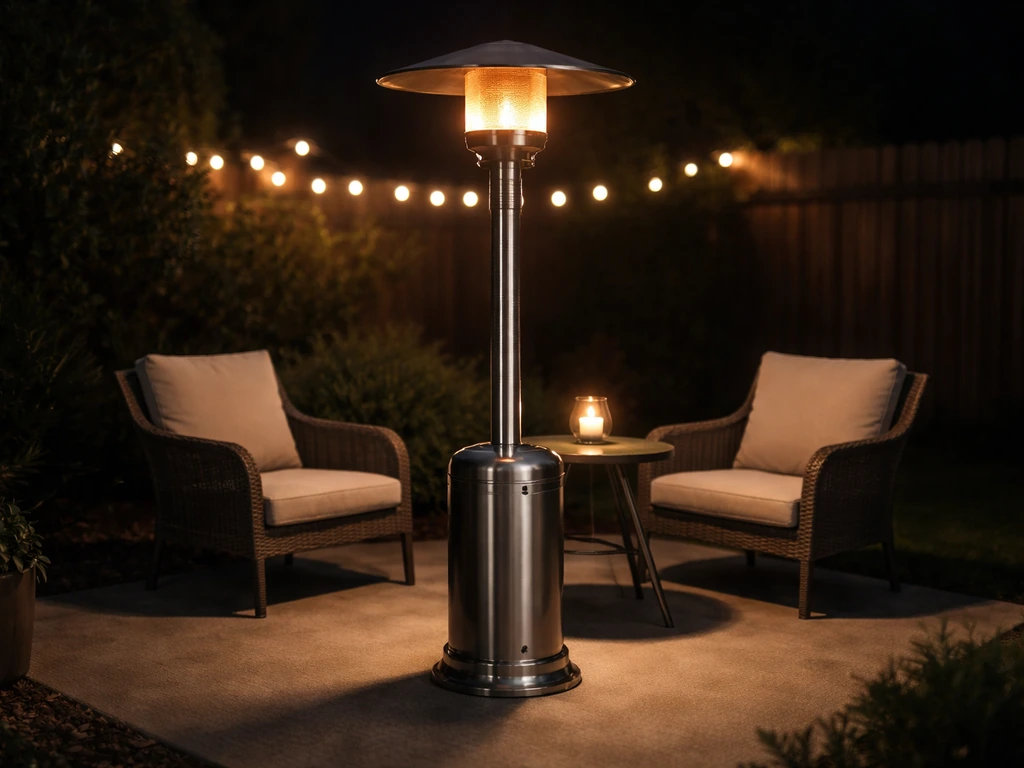
What 'patio heater ratings' really mean
When you see a heater rated 4.3 stars across hundreds of reviews, that number is a blended average of very different things: heating performance, ease of assembly, customer service interactions, and sometimes just how the box arrived. A high star rating alone doesn't tell you if the heater is safe, how long it lasts, or whether it actually heats the area the manufacturer claims. That's why it helps to think about ratings the way Consumer Reports approaches space heater evaluations: separate scores for heating performance, safety, and reliability rather than one merged number.
Consumer Reports' lab methodology for space heaters includes tip-over tests, overheat tests, and what they call a 'drape test' (checking what happens if fabric falls against the heater). These produce a fire-safety score that's independent of how warm the unit gets. That same framework is worth applying when you read any patio heater review. Look for whether reviewers specifically mention the tip-over shutoff, auto-shutoff on overheat, and how hot the external surfaces get. Those details matter far more than a five-star rating from someone who just liked the color.
The CPSC has flagged real-world cases where tested portable heater samples lacked a working tip-over switch entirely. If reviews mention that a heater kept running after being knocked sideways, that's a red flag worth taking seriously, not a minor complaint. Ratings that look great on paper can mask a serious safety gap if no one in the review pool tested for that.
How to read patio heater BTU ratings for real-world coverage
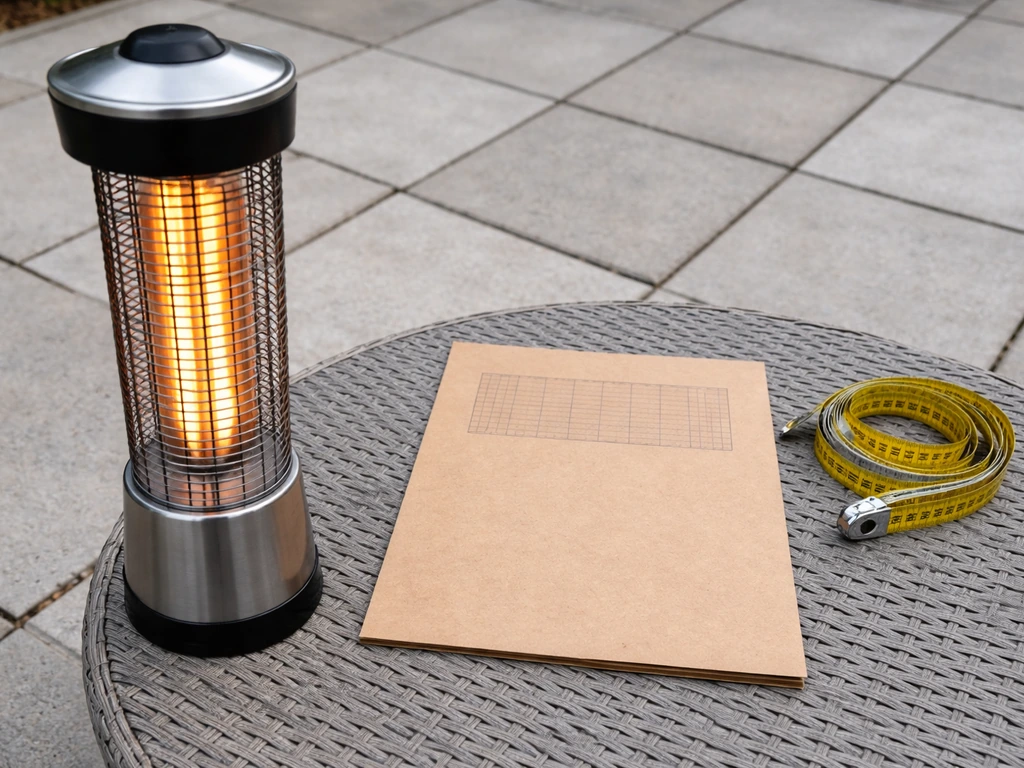
BTU stands for British Thermal Unit, and it measures the amount of heat energy a heater produces per hour. The higher the BTU, the more heat output. But BTU ratings on a product page describe what the burner or element produces, not what you'll actually feel sitting six feet away on a breezy evening. There's a big gap between those two things.
For electric heaters, you can do a quick conversion yourself: multiply the wattage by 3.412 to get BTU per hour. A 1,500-watt electric patio heater produces about 5,118 BTU/hr. That's useful when you're comparing an electric model (which lists watts) against a propane model (which lists BTU directly). They're measuring the same thing, just in different units.
Here's the important caveat on coverage claims: most manufacturer sizing charts assume an outdoor temperature rise of only 5 to 10 degrees Fahrenheit above ambient. That's a modest target. If you're sitting outside in 35°F weather hoping to feel like it's 65°F, you're asking for a 30-degree rise, which requires a lot more BTUs than the packaging implies. SunStar's sizing guidelines make this assumption explicit, and it explains why so many buyers feel their heater 'doesn't heat as much as advertised', the advertised area assumes mild conditions, not a cold fall evening.
Infrared heaters add another layer of complexity. ASHRAE notes that infrared radiant heat works differently from convective heat: the rays warm objects and people directly, and those warmed surfaces then re-radiate heat back into the space even after the heater shuts off. That means a 30,000 BTU infrared heater can feel more effective than a 30,000 BTU forced-air unit at the same distance because the heat transfer mechanism is more efficient for outdoor use. Keep that in mind when comparing BTU ratings across heater types.
BTU size guide by patio type
Use this as a starting point. Your actual needs depend on wind exposure, local climate, and how warm you want to feel, but these ranges are grounded in the 5-to-10°F rise assumption most sizing charts use. For colder climates or windier spaces, move up a tier.
| Patio Type | Seating Distance | Recommended BTU Range | Best Heater Format |
|---|---|---|---|
| Small covered patio (under 100 sq ft) | 4–6 ft from heater | 10,000–20,000 BTU | Electric infrared or wall-mounted natural gas |
| Medium covered patio (100–200 sq ft) | 6–8 ft from heater | 20,000–30,000 BTU | Propane tower or electric infrared panel |
| Large covered patio (200–400 sq ft) | 8–10 ft from heater | 30,000–40,000 BTU | Propane tower, natural gas, or multiple electric units |
| Open/uncovered patio or deck | 6–8 ft from heater | 40,000–48,000 BTU | Propane tower (48,000 BTU) or natural gas |
| Tabletop / small seating group | 2–4 ft from heater | 8,000–12,000 BTU | Tabletop propane or tabletop electric |
One thing the table can't capture is installation height and angle. SunStar's sizing guidelines show that a heater mounted too high or aimed at the wrong angle can lose a third or more of its effective warmth at seating level. For wall-mounted and ceiling-mounted infrared units especially, getting the angle right matters as much as the BTU number.
How to use consumer-style reviews: reliability, safety, and value
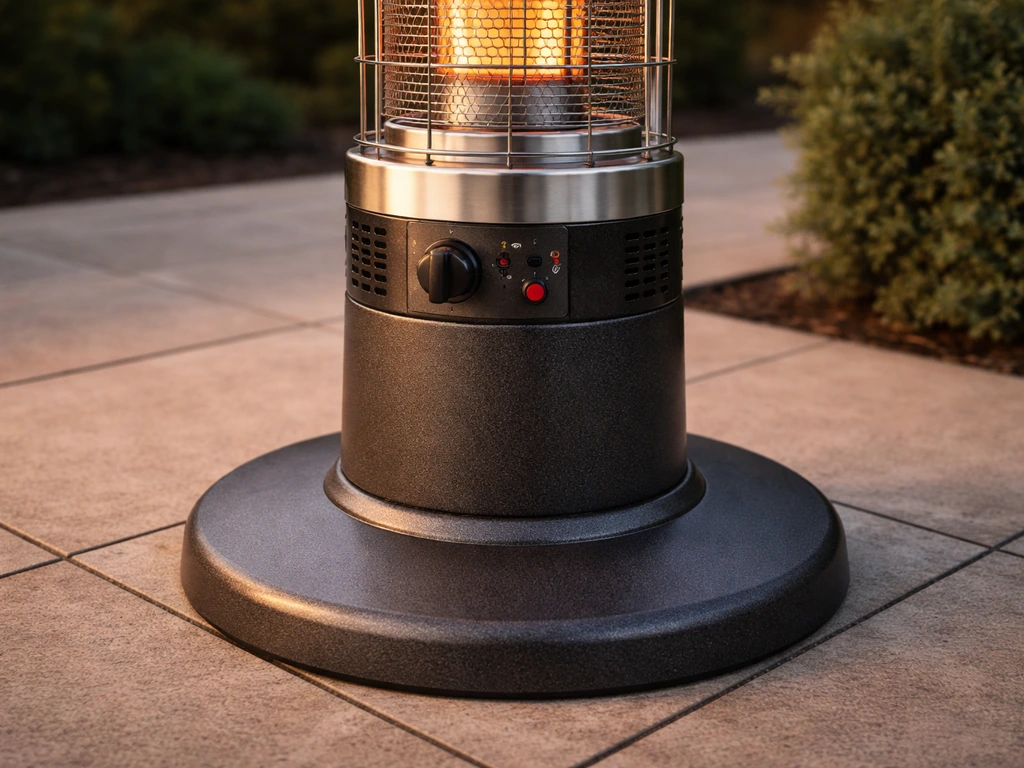
The Consumer Reports methodology for space heaters is a good mental model even if you're reading Amazon reviews or comparison blog posts. Break what you're reading into five categories: heating performance, safety features, reliability over time, ease of use, and value for price. When you scan reviews with that framework, patterns show up fast.
- Heating performance: Do reviewers say it heats the area the manufacturer claims? Look for mentions of square footage, distance from heater, and ambient temperature — not just 'it gets warm.'
- Safety: Check specifically for tip-over shutoff, auto-overheat shutoff, and cool-touch housing. If any reviews mention the unit continued running after being tipped, treat that as a disqualifier.
- Reliability: Filter reviews by 'critical' and look for patterns around igniter failures, thermocouple issues (for propane/gas), and rust or corrosion — especially for units left outdoors year-round.
- Ease of use: Assembly complaints and confusing controls show up in reviews disproportionately for new buyers. If setup problems dominate the one-star reviews, expect the same.
- Value: A $80 heater that lasts one season costs more than a $250 heater that lasts six. Check reviews from one-plus years ago to see how units hold up after regular use.
One specific red flag worth calling out for electric models: the CPSC advises plugging electric heaters directly into a wall outlet, never into an extension cord or power strip. When you see a review that says 'stopped working after a few months,' check whether the reviewer mentioned using an extension cord. That failure is user error, not product defect, and it can skew a heater's overall rating unfairly downward.
Best heater type by fuel and setup
Each fuel type has a real niche. Here's an honest breakdown of where each one shines and where it struggles.
Propane
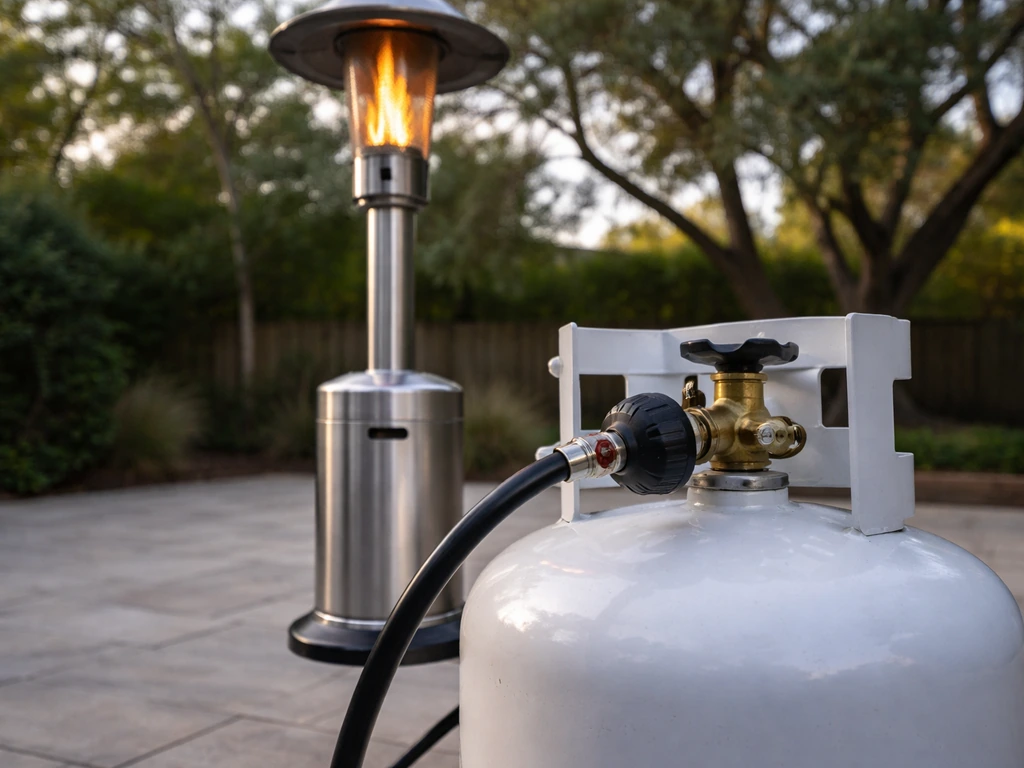
Propane towers are the most popular choice for open patios because they're portable (no gas line needed), put out serious heat (most are 40,000–48,000 BTU), and look good doing it. The trade-off is tank management: a standard 20 lb propane tank gives you roughly 10 hours of use at full blast, so you'll be refilling or swapping tanks regularly if you entertain often. Propane is also not ideal under low-clearance covered patios because most tower designs require 36 inches of clearance above the heat emitter.
Electric
Electric heaters are the right call for covered patios and smaller spaces. They're clean, instant-on, and don't require a fuel supply beyond a standard outlet. A 1,500-watt unit gives you about 5,100 BTU/hr, which is enough for a small covered area with people seated within 6 feet. For more coverage, go with a wall-mounted or ceiling-mounted infrared electric panel in the 2,000–4,000 watt range. Just remember: dedicated wall outlet only, no extension cords. USFA (FEMA) heating fire safety guidance likewise recommends plugging portable heaters directly into outlets and never into an extension cord.
Natural gas
If you have a natural gas line or are willing to run one, this is the best long-term option for a permanent outdoor setup. Running costs are lower than propane, and you never run out of fuel mid-party. Natural gas patio heaters are typically mounted on a post or wall and can put out 30,000–50,000 BTU depending on the model. The downside is installation cost and the fact that the heater isn't portable once it's connected.
Pellet
Pellet-burning patio heaters (and outdoor pellet stoves) are a niche but growing option for people who want the ambiance of a real fire alongside the heat. They work best as a centerpiece for a seating area rather than a primary heat source for a large space. BTU output varies widely, and ratings for pellet heaters lean heavily on ease of fueling, ash cleanup, and ignition reliability. If ambiance matters as much as warmth, pellet is worth considering; if you just want efficient heat, stick with gas or electric.
Infrared vs conventional vs tabletop: who each is for
These three categories cut across fuel types and describe how the heat actually reaches you, which matters as much as the BTU number.
| Type | How It Heats | Best For | Main Trade-off |
|---|---|---|---|
| Infrared (radiant) | Emits radiant waves that warm people and objects directly | Covered patios, windy spaces, seated groups at fixed distances | Less effective at heating large open areas; placement matters a lot |
| Conventional (convective) | Heats the surrounding air, which rises and circulates | Open patios with still air; general area heating | Wind disrupts heat; less efficient outdoors than indoors |
| Tabletop | Usually infrared or gas flame; heats a small zone | Intimate seating groups of 2–4 people at 2–4 ft distance | Low total BTU; not suitable as a primary heat source for larger groups |
Infrared heaters are the strongest performer in most real outdoor scenarios because wind doesn't carry the heat away the way it does with convective heating. If you've ever stood near a propane tower on a breezy evening and felt almost nothing, you were experiencing convective heat loss. A properly angled infrared panel or overhead infrared heater in the same conditions would feel noticeably warmer because the radiant waves travel directly to you. This is why infrared options (both electric and gas-fired) dominate covered patio installs.
Tabletop heaters are exactly what they sound like: compact, low-BTU units designed for a small table and a tight group. They're great as supplemental heat or for a two-person bistro setup, but don't expect one tabletop unit to heat a party of eight. If you're looking at tabletop options for a larger gathering, you'd want multiple units or a different format entirely.
For deeper dives on specific types, electric infrared models and heat lamp-style options each have their own review considerations worth exploring separately, as do brand-specific reviews and regional options like Australian-market heaters designed for different climate profiles. If you want to narrow down options quickly, patio heater reviews Australia can help you compare performance, safety, and real coverage for local conditions. When you compare patio heat lamp reviews, focus on heat reach, safety controls, and how reviewers describe warmth at your seating distance. If you want to narrow down options faster, patio heater cover reviews can highlight which covers protect against weather while still letting the heater work effectively review considerations. For seasonal trends in patio heater performance and buyer preferences, use these reviews to compare what works best each fall and winter seasonal trends patio heater reviews.
Shortlisting next steps: what to check before you buy
Before you click buy, run through this checklist. It takes five minutes and saves a lot of returns.
- Measure your patio and identify whether it's covered or open. A covered patio under 150 sq ft is a completely different buying scenario than an open 300 sq ft deck.
- Estimate your temperature rise target. If you're in a region where evenings drop to 40°F and you want to feel comfortable at 65°F, you need a 25-degree rise, which pushes you toward higher BTU outputs than most coverage charts assume.
- Confirm your fuel source. Do you have a natural gas hookup, or are you working from a propane tank or a standard electrical outlet? That often narrows your options more than anything else.
- Check the safety feature list: tip-over shutoff and auto-overheat shutoff are non-negotiable. If either is missing from the spec sheet, move to the next product.
- Read the critical reviews specifically. Filter for one- and two-star reviews and look for patterns around igniter failure, rust, and heat output falling short of claims after a few months.
- For electric models, verify you have a dedicated wall outlet nearby. If you'd need an extension cord to reach it, you either need to relocate the heater or install a proper outlet.
- Check clearance requirements. Most propane tower heaters need 36 inches of overhead clearance. Ceiling-mounted infrared units have their own minimum distance requirements from surfaces and people.
- Compare across at least two or three brand options in your fuel type and BTU range before deciding. Pricing in the patio heater category varies enormously for very similar specs, and brand-specific reviews often reveal durability differences that spec sheets don't.
The honest reality is that there's no single best patio heater, but there is a best one for your specific situation. A 48,000 BTU propane tower for an open backyard entertainer, a 2,000-watt wall-mounted infrared panel for a covered dining area, a tabletop gas heater for a bistro corner: each is the right answer in its context. Once you know your BTU target, your fuel type, and what the safety ratings actually mean, picking the right model gets straightforward fast.
FAQ
If two patio heaters list the same BTUs, will they feel equally warm?
No. BTU is only the heater’s output rate, not the temperature you’ll feel. You still need to account for wind exposure, seating distance, and mounting height and angle, because those factors determine how much of that output reaches you.
What in patio heater ratings reviews should I treat as a serious safety issue?
Check the review text for mentions of safety shutdown after tipping or overheating, and look for complaints that specify the heater stayed on when knocked sideways. A “red flag” is a unit that kept operating with the tip switch not functioning, even if the star rating is high.
Why do some patio heater coverages claims feel exaggerated in cold weather?
Yes. Many outdoor heaters are rated assuming only a modest outdoor temperature rise above ambient (often 5 to 10°F). If you’re trying to feel a large jump on cold nights, you typically need to size up beyond the advertised coverage rather than using the chart literally.
How do I compare BTU output across electric and propane heaters using patio heater ratings reviews?
For electric units, prioritize the actual wattage-to-BTU math and also confirm the placement rules. Using an extension cord or power strip can cause overheating or failure, so reviews that mention those setups are less reliable for judging the product.
Why do infrared patio heaters sometimes “feel hotter” than forced-air heaters with similar BTUs?
Infrared can outperform in real outdoor conditions because it warms people and objects directly, and those surfaces keep radiating after the unit cycles off. That means perceived warmth at your seating distance may be better than what a BTU-only comparison suggests, especially in breezy spots.
How do installation height and angle affect the BTU results I see in reviews?
Don’t just check the BTU number, check the mounting geometry. If an infrared unit is mounted too high or aimed past the seating area, you can lose a large share of effective warmth at standing or seated height.
How long will a propane patio heater run before I need a new tank?
For propane towers, plan around tank runtime at the kind of output you’ll actually use. A common expectation is around 10 hours at full blast with a standard 20 lb tank, so frequent hosting may require refills, swaps, or keeping a spare tank.
Can I use a propane tower under a covered patio with low clearance?
Under low-clearance covered patios, propane towers can be a poor fit because many designs need substantial clearance above the emitter. If your space has tight overhead height, infrared electric (wall or ceiling) is often more practical, provided you can place and angle it correctly.
What power setup issues cause electric patio heaters to fail early?
For electric patio heaters, a direct-wall outlet is typically the correct setup, and some models also require a properly matched circuit for their watt draw. If a review says the unit “wouldn’t stay on” or “died early,” look for power-related details like extension cord use.
Can a tabletop patio heater replace a tower or wall-mounted unit for a group?
Tabletop heaters are mainly for small groups and localized warmth. If you’re heating a larger gathering, buying one tabletop unit often leads to disappointment, you’d generally need multiple units or a different heater format for wider coverage.
How should I read star ratings when reviewers talk about very different experiences?
If you’re selecting between brands based on reviews, separate patterns by category. Look for clusters about heating performance, safety feature behavior, long-term reliability, ease of use, and value, because one averaged star rating hides tradeoffs.