
A patio heater with a granite top is almost always a tabletop-style heater where the flat surface surrounding the burner column is made from real granite, simulated granite (a composite or stone-look veneer), or a granite-patterned cast material. The granite part is the tabletop surface itself, not the heat source. You set drinks on it, it looks great, and it gives the unit a more furniture-like feel. The actual heat still comes from the fuel type underneath: blank" rel="noopener noreferrer">propane, electric, natural gas, or occasionally pellet. Knowing that distinction upfront saves a lot of confusion when you're comparing specs and shopping.
Patio Heater With Granite Top: How to Choose, Size, and Install

Willa Brennan
4 Jul 2026
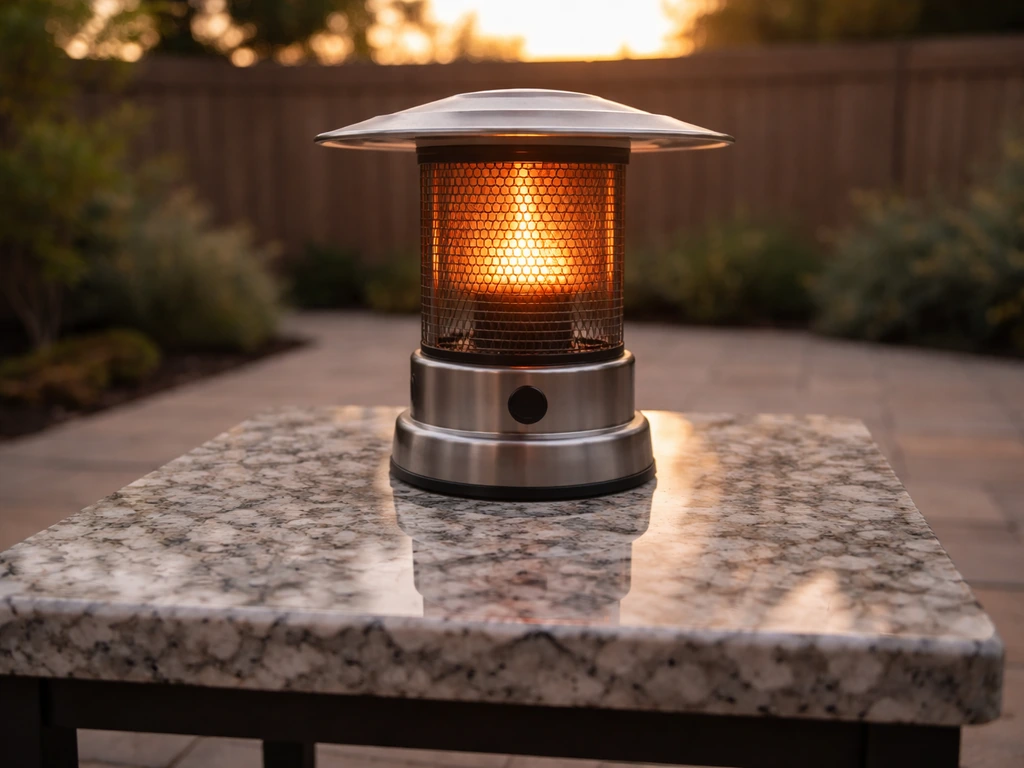
What 'granite top' actually means on these heaters
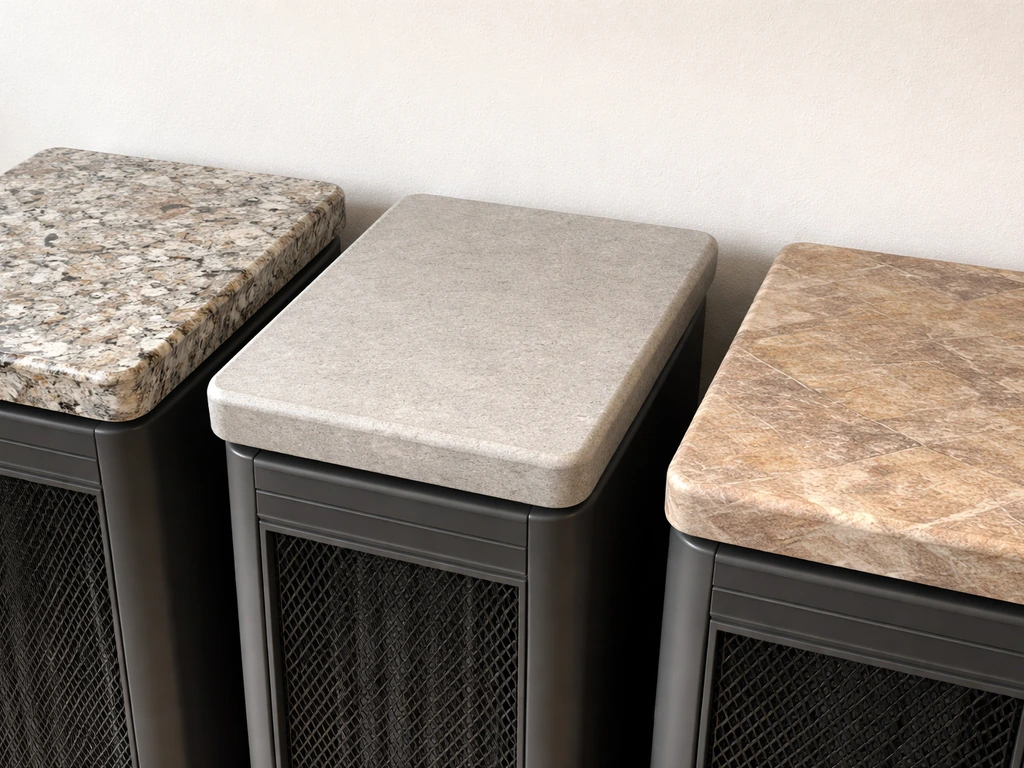
There are three things sellers mean when they say 'granite top,' and they're not the same product. First, some tabletop heaters have a real granite slab set into or mounted on top of the unit. Second, many budget and mid-range models use 'simulated granite' which is a composite material or resin finish designed to look like stone. One older product listing even used the phrase 'Cocoa Brown Simulated Granite' to make this clear, but plenty of listings just say 'granite' without clarifying. Third, a small number of freestanding or bistro-table-style patio heaters are sold as a full furniture set, where the heater column rises through the center of a table that has a granite or stone-look top.
Real granite holds up better to outdoor conditions, resists scratching, and won't discolor from spills the way coated or composite tops can. Simulated granite is lighter and cheaper to replace, but the finish can chip or fade over a few seasons. From a heat perspective, neither type meaningfully changes how warm the unit keeps you. The granite top does help with heat dispersion slightly, since stone absorbs and slowly radiates warmth, but the main job of the granite surface is aesthetics and function as a side table, not heating. Don't let the stone top be the deciding factor in which heater you buy. Let the heat output and fuel type do that work.
Heat output and coverage: how many BTUs or watts do you actually need
Tabletop heaters with granite tops are compact units designed for small groups, not large patios. To learn more about the range table top patio heater format and how it compares to other tabletop styles, check the model’s BTU rating and fuel type. Most fall in the 10,000 to 12,000 BTU range for propane models. The Cuisinart COH-514, for example, puts out 11,000 BTUs and is rated to warm roughly 30 square feet, which is about the area around a two-person bistro table. That's a realistic ceiling for this style of heater. Don't expect a granite-top tabletop unit to heat a 200-square-foot deck, because it simply won't.
Electric tabletop heaters are typically rated in watts rather than BTUs. A rough conversion: 1,000 watts equals about 3,412 BTUs. A 1,500-watt electric tabletop heater delivers roughly 5,100 BTUs, which is noticeably less output than a 11,000 BTU propane unit. That said, electric infrared models deliver heat more directionally, so a lower wattage can still feel warmer if you're seated close to it. For larger patio heaters in the freestanding category (like Bromic's Tungsten Smart-Heat at 38,500 BTUs), a granite-top feature would typically only appear on a companion bistro table rather than the heater itself.
| Patio Size / Setup | Recommended Output | Typical Heater Style |
|---|---|---|
| Small balcony or bistro (up to 30–40 sq ft) | 10,000–12,000 BTU or 1,500W | Granite-top tabletop heater |
| Mid-size patio (50–100 sq ft) | 30,000–40,000 BTU or 3,000–4,000W | Freestanding or wall-mount + separate table |
| Covered pergola (50–150 sq ft) | 25,000–35,000 BTU or 2,000–4,000W | Ceiling-mount infrared or overhead gas |
| Large open backyard (150+ sq ft) | 40,000+ BTU | Multiple freestanding units or fixed gas |
Wind exposure matters a lot. An uncovered patio in a breezy yard can rob you of 30 to 40 percent of effective warmth compared to a calm, covered space at the same BTU rating. If your patio is exposed, size up by at least 20 percent. A 12,000 BTU tabletop unit that works perfectly on a sheltered balcony will feel borderline useless on a windy open deck.
Fuel type choices and real tradeoffs
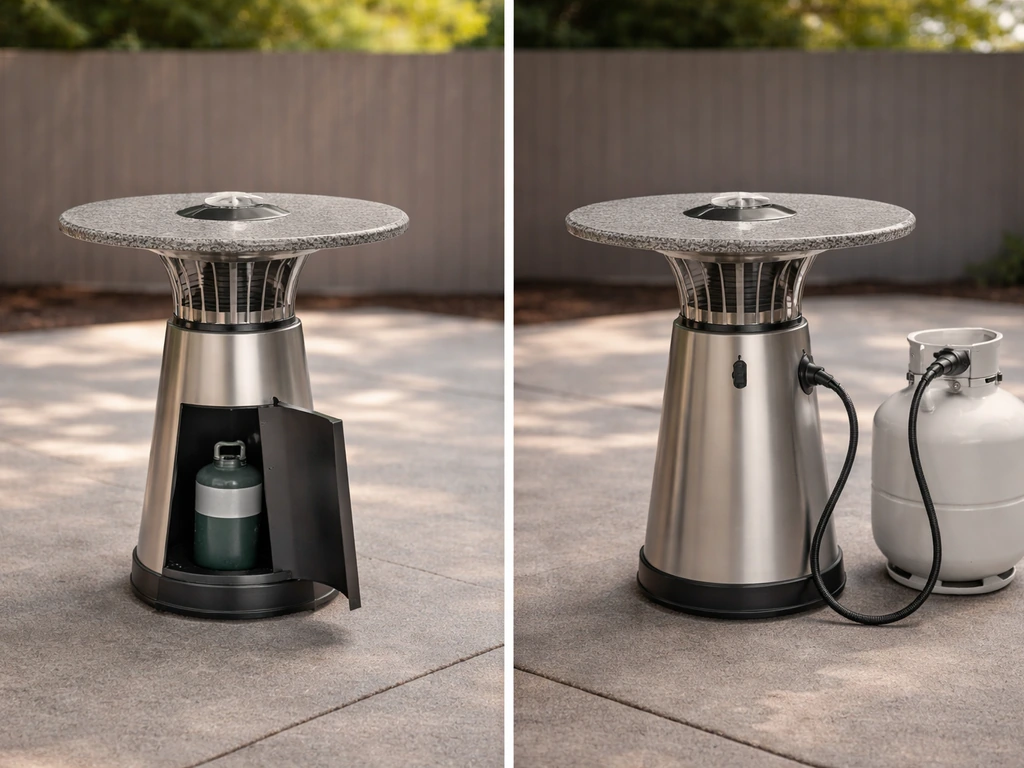
Most granite-top tabletop heaters run on propane, either from a small 1-pound canister tucked inside the base or a larger 20-pound tank connected by a hose. Propane is the most practical option for tabletop units because it's portable and needs no installation. The downside is that you'll be buying or swapping tanks regularly, especially in cool weather when you run the heater often. Always check whether the unit uses an integrated small canister (more convenient, shorter burn time) or a larger external tank (longer run time, less portable).
Electric tabletop heaters are the simplest option if you have an outdoor outlet nearby. No fuel to manage, no open flame, and they're generally safe around kids and pets. The tradeoff is cord management and lower heat output compared to a comparable propane unit. They also stop working if you lose power, which matters during cold-snap evenings. Electric models are a great fit for covered patios and balconies where running an extension cord is easy.
Natural gas is rarely found in tabletop heaters because it requires a fixed gas line. It's more common in freestanding or wall-mounted units. If you're installing a permanent patio setup and already have a gas line, natural gas is the most cost-effective fuel to run over time, and there's no tank to refill. But it removes portability entirely, and you'll need a licensed plumber or gas technician for the connection.
Pellet-burning tabletop heaters exist but are niche. They create a real flame effect, produce pleasant ambient warmth, and can double as a fire pit tabletop. The drawbacks are more maintenance (ash cleanup), the need to store pellets, and less precise heat control. They're best for people who want atmosphere as much as warmth. You won't find many granite-top models in this category specifically, but if aesthetics and fire ambiance are your priority, it's worth exploring.
| Fuel Type | Typical Output | Portability | Installation | Ongoing Cost | Best For |
|---|---|---|---|---|---|
| Propane | 10,000–12,000 BTU (tabletop) | High | None | Moderate (tank refills) | Anywhere with no fixed utilities |
| Electric | 1,000–1,500W (tabletop) | Medium | Outdoor outlet needed | Low (electricity) | Covered balconies, near outlets |
| Natural Gas | 30,000–50,000 BTU (freestanding) | None (fixed) | Gas line required | Low (piped gas) | Permanent patio setups |
| Pellet | Variable | Medium | Minimal | Low-moderate (pellet bags) | Ambiance + warmth combined |
Infrared vs radiant flame-style heating: what changes with a granite top
Most propane tabletop heaters with granite tops are radiant flame-style units. They burn gas against a perforated metal screen or burner head, and the heat radiates outward and upward in all directions. This creates a warm glow and heats the air around the unit fairly evenly. The granite top helps retain a bit of that surface warmth and makes the heater feel more like furniture than an appliance.
Infrared heaters work differently. Instead of heating air, they emit infrared radiation that warms objects and people directly, similar to how sunlight feels warm on your skin even on a cold day. Infrared tabletop models (both electric and propane) tend to feel warmer faster because they're heating you, not just the surrounding air. Infrared electric models, like quartz tube heaters, are particularly effective for this. The Infratech W series and similar directional infrared units are popular for covered patios because they can be aimed precisely. However, most compact granite-top tabletop heaters use a traditional radiant burner rather than true infrared elements, so the granite top on an infrared-style tabletop unit is less common. If you want a true infrared table top patio heater, look for infrared elements or quartz tube designs rather than a traditional radiant burner infrared-style tabletop unit.
For chilly evenings where you're sitting close to the heater, a radiant flame-style tabletop propane unit with a granite top works well. The flame is visually inviting and heats the immediate area effectively. If you want faster, more targeted warmth and you're less concerned about the social centerpiece quality of a flame, an infrared tabletop heater might suit you better, even if it doesn't have the same granite-top aesthetic.
Safety, installation, and clearances for granite-top heaters
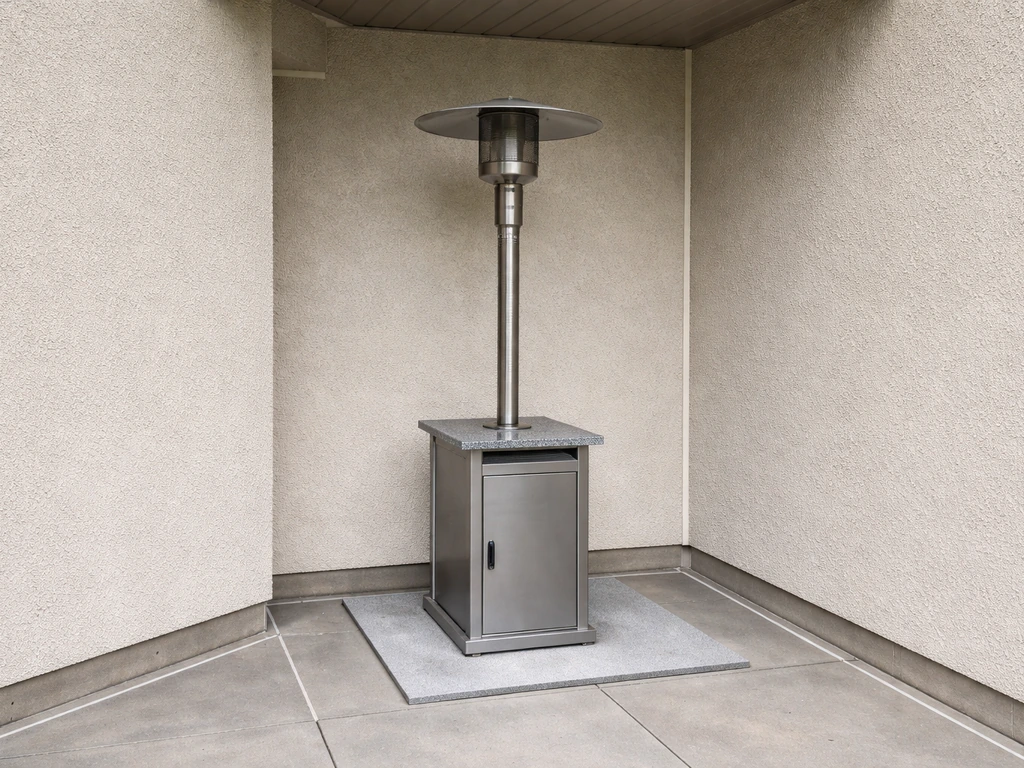
Granite itself is a naturally fire-resistant material, which is one reason it's a sensible choice for a heater's top surface. However, the heater components below it still produce significant heat, and the whole unit needs proper clearance from combustible materials. In that Reddit woodstoving thread, users discuss the difference between manufactured stone and “real granite,” including considerations about durability and heat when setting hot items on the surface manufactured stone and real granite. For the Cuisinart COH-514 tabletop model, the manufacturer specifies a minimum clearance of 3.61 feet (about 1,100 mm) to any combustible materials. Patio Comfort's PC-02 tabletop model lists 18 inches on the top and sides as its minimum clearance. Always check your specific model's manual for exact clearance numbers.
For freestanding outdoor gas heaters, Bromic's guidance calls for at least 3 feet from any combustible objects on all sides. For situations where overhead clearance is tight, such as a pergola or covered patio, Bromic notes that clearances under about 43 inches (1,100 mm) above the heater call for a heat deflector. The NFPA also references that patio heaters should not be placed within 5 feet in event or public space contexts, which is a useful conservative benchmark for home use too. The National Park Service fire and life safety guidance for outdoor events states that patio heaters shall not be located within 5 ft within 5 feet.
- Never use a propane or natural gas tabletop heater indoors or in enclosed spaces: carbon monoxide buildup is a serious hazard
- Place granite-top tabletop heaters on stable, level surfaces only. The stone top adds weight but also raises the center of gravity slightly, so avoid uneven ground
- Keep the heater away from outdoor curtains, fabric furniture cushions, and overhead pergola fabrics or covers
- Check that the granite or simulated granite top is properly secured to the unit before each use, especially after transport
- Look for units with a tip-over shutoff feature. This automatically cuts fuel when the heater is knocked over, which is a must-have safety feature for any propane tabletop heater
- For propane units, look for an OPD (Overfill Protection Device) on the tank valve: this prevents dangerous overfilling when refilling at exchange stations
- Do not place on glass patio tables unless the table is rated for the weight and heat exposure involved
If you're setting up on a tiled or stone patio surface, the good news is that the floor itself is fire-resistant. But be mindful of patio furniture nearby and any overhead structures. A granite top on the heater does not make the unit safe to use in tighter spaces: the clearance requirements are driven by the heat coming off the burner and sides, not the top surface material.
Buying checklist: what to look for and what to compare
Before you buy any granite-top patio heater, run through this checklist. It covers the specs that actually matter and helps you separate genuinely good units from ones that look nice in photos but underperform or break down quickly.
| Spec to Check | What to Look For | Red Flags |
|---|---|---|
| Heat Output | 10,000–12,000 BTU for tabletop propane; 1,200–1,500W for electric tabletop | Vague 'high output' claims with no BTU/watt number listed |
| Coverage Area | Manufacturer claim matched to your actual seating area (e.g., 30 sq ft for a bistro setup) | Inflated coverage claims like '150 sq ft' for a 10,000 BTU unit |
| Granite Top Material | Real granite or clearly labeled composite/simulated with weather resistance rating | Generic 'stone look' with no material spec; check for chip or crack warranty |
| Ignition Type | Push-button or electronic ignition for ease of use | Match-only ignition on gas models is inconvenient and a minor safety concern |
| Safety Features | Tip-over shutoff (propane/gas), OPD valve, automatic shutoff timer | No tip-over protection listed, especially for propane units |
| Controls / Thermostat | Adjustable heat settings or variable control knob; thermostat on electric units | Single on/off only with no output adjustment |
| Construction / Frame | Powder-coated or stainless steel body; rust-resistant hardware | Painted mild steel without corrosion protection, especially for coastal areas |
| Fuel / Tank Compatibility | Clear specification of tank size (1 lb canister vs. 20 lb external) | No mention of tank size or unclear hose/adapter compatibility |
| Certifications | CSA, UL, or CE certified | No safety certification listed at all |
Budget-wise, genuine granite-top tabletop heaters typically start around $80 to $150 for simulated granite models and $200 to $400 for units with real stone tops or heavier-duty construction. Mid-range units in the $150 to $250 range tend to be the sweet spot: they usually include tip-over protection, electronic ignition, and a better-quality stone top without the premium markup. You can also find granite-top heater-table sets (where the heater column integrates into a full table) in the $300 to $600 range, which is a strong option if you're outfitting a seating area from scratch.
If aesthetics are important and you're comparing granite-top models against other tabletop styles, it's worth knowing that powder-coated tabletop heaters and bronze tabletop heaters are popular alternatives in the same product category. If you are considering alternatives, a powder coated table top patio heater can be a lower-maintenance option with a similar tabletop look. They typically offer similar heat output at a lower price point, just without the stone-surface appeal. Infrared tabletop heaters are another adjacent option worth comparing if targeted directional warmth matters more than the social centerpiece effect of a flame.
Maintenance and longevity: keeping the granite and the heater in good shape
Real granite is durable but not completely maintenance-free outdoors. The biggest issue is that outdoor granite tops are exposed to rain, bird droppings, pollen, and general grime. Clean the granite surface with warm water and a mild dish soap on a soft cloth. Avoid acidic cleaners like vinegar, which can slowly etch the stone surface over time. If your granite top is sealed (most natural granite outdoor applications are), re-apply a penetrating stone sealer once a season to protect against moisture absorption and staining.
Simulated granite tops are easier to clean but more prone to surface scratches. Use a non-abrasive cloth and avoid scouring pads. If the surface coating starts to delaminate or chip significantly, it's mostly a cosmetic issue, but check whether the manufacturer offers replacement tops, since some tabletop heater brands sell them separately.
For the heater components themselves, maintenance varies by fuel type. For propane and natural gas units, inspect the burner screen or emitter screen annually. Spiders and insects love to nest in gas burner ports during off-season storage, and a blocked port can cause uneven flames or dangerous backfire pressure. Clean the burner assembly with a soft brush or compressed air. Check the gas hose and connections for cracks or brittleness each season. The igniter electrode may need cleaning if it's not sparking reliably: a light wire brush on the tip usually solves this.
Electric tabletop heaters need less mechanical maintenance. Wipe down the heating element housing (when cool and unplugged), check the power cord for damage, and make sure the reflector surface isn't caked with dust or debris, since a dirty reflector reduces heat output noticeably. Store electric heaters indoors during winter or use a weatherproof cover if leaving them outside. For all heater types, storing them covered or indoors when not in regular use is the single biggest factor in extending their lifespan.
Best-use scenarios and quick recommendations by patio setup
Here's how to match the right granite-top heater setup to your actual situation. If you're shopping specifically for a bronze table top patio heater, use the same matching approach so the BTUs, fuel type, and coverage fit your space. These are direct recommendations, not theoretical ones.
| Your Setup | Best Heater Type | Target Specs | Key Priority |
|---|---|---|---|
| Small balcony or apartment patio, 2–4 people | Propane tabletop with granite top | 10,000–12,000 BTU, 1 lb or 20 lb tank | Portability, tip-over safety, compact size |
| Covered pergola or screened porch | Electric tabletop (infrared) or wall-mount infrared | 1,200–1,500W electric; ensure ventilation for gas units | No open flame near fabric, directional heat |
| Mid-size backyard with some wind exposure | Freestanding propane + granite-top side table separately | 30,000–40,000 BTU freestanding unit | Output and wind resistance over aesthetics |
| Permanent outdoor dining setup | Natural gas freestanding or integrated bistro heater-table | 30,000+ BTU, fixed installation, real granite top | Long-term value, low running cost, aesthetics |
| Budget-conscious buyer under $150 | Simulated granite top propane tabletop | 10,000–11,000 BTU, electronic ignition, tip-over shutoff | Safety features over stone material quality |
Before you buy, measure your seating area, check whether you have access to an outdoor outlet or a gas line, and decide whether you need portability or are setting something up permanently. For most people searching for a granite-top patio heater, a 10,000 to 12,000 BTU propane tabletop unit in the $150 to $250 range with electronic ignition, tip-over shutoff, and either a real or well-rated simulated granite top is going to be the right call. If you are shopping for an East Oak Table Top Patio Heater, pay special attention to the BTU rating, fuel type, and whether the listing specifies real granite or simulated granite. It's warm enough for a small group, looks great on a patio table, and doesn't require any installation. If you're heating a larger space, treat the granite-top tabletop unit as your table accent and pair it with a full-size freestanding heater for the real heating work.
The stone top is a genuine quality-of-life upgrade: it makes the heater feel like part of the patio furniture rather than a utility appliance, and it handles spills and weather better than a metal or plastic surface would. Just don't let it be the only reason you pick a unit. Match the BTUs to your space, verify the safety features are there, confirm what 'granite' actually means in the product listing, and you'll end up with a heater you're happy with well into the season.
FAQ
Does a granite top make the patio heater safe to use closer to furniture or overhead structures?
Most “granite top” tabletop heaters are designed so the stone sits above the burner column, not around the firebox. That means you should still follow the manual’s clearance limits from the sides and overhead structures, and you should not block the heater’s venting or any lower base openings with furniture or storage bins.
If two heaters both claim “granite top,” can I compare them by appearance and ignore BTUs?
Yes, because the main driver of warmth is BTU (or watts for electric) plus how exposed you are to wind. As a rule of thumb, if your patio is open and breezy, size up by more than you would in a sheltered area, even if the granite top looks identical on two models.
How can I tell whether a propane granite-top tabletop heater uses a small canister or a bigger tank?
Look for the “fuel in use” details, and then check how the listing describes the fuel source. Integrated canister units (often 1-pound) usually have shorter burn times but are easiest to swap, while larger tank setups run longer but need hose handling and a more stable placement.
What wording should I look for to confirm whether the granite top is real stone or simulated?
If the listing does not specify whether the top is real granite versus simulated granite, treat it as simulated until proven otherwise. Real stone models typically describe “slab” or “natural granite,” while simulated versions often mention composite, resin, or stone-look finish.
Are electric granite-top tabletop heaters practical if I need to use an extension cord?
For covered patios, cord and outlet planning is often the deciding factor. Choose an electric model only if you can use an outdoor-rated extension cord safely, keep the cord out of foot traffic, and prevent the cord from contacting the heater’s hot zones or being pinched under furniture.
What cover and storage habits best protect a granite-top tabletop heater year-round?
Even though granite is durable, the underside and edges still experience weather exposure. Use the cover that fits the entire heater footprint, wipe off standing moisture after storms, and avoid letting debris accumulate on the burner area when the unit is stored outside.
Can I set hot items or cook on a patio heater’s granite top like a tabletop?
It depends on the model’s design. Many “granite top” units are intended for seating-table use, but the basin or burner column can still get hot, so avoid placing hot cookware or directly heating with it. Use it as a side surface, not a stovetop substitute, and keep drinks away from the burner column area.
How far from the heater should people sit to actually feel warmth from a granite-top tabletop model?
Expect moderate heat range for tabletop units. If your group is standing farther away or your patio is large, you will feel “glow” near the heater and less warmth at the edges. Measure the seating cluster size first, then compare against the BTU rating target for that distance.
Is a granite-top tabletop heater more like infrared or radiant-flame heat?
Granite tops can look similar between radiant-flame and infrared-style heaters, but the heat behavior differs. If the model is radiant-flame, it warms the air more and feels more evenly around the unit, while true infrared models warm people more quickly and feel more targeted.
What placement changes help when my patio heater with granite top is in a windy location?
Wind can steal warmth, but placement helps too. Put the heater where a wall or planter blocks prevailing wind, keep it away from gaps in railings, and avoid locating it where ceiling fans or airflow from doors constantly blow across the flame area.
How do I estimate ongoing fuel cost for a propane granite-top tabletop heater?
For most propane tabletop heaters, running costs depend on how long you use it and how much fuel the system consumes under your conditions. If you burn it frequently on cool evenings, the convenience of a larger tank can outweigh portability, but confirm the unit’s tank compatibility before you buy refill options.
How do I clean and reseal an outdoor real granite top without damaging it?
Even “real granite” can be sealed and still be affected by outdoor buildup. Clean with warm water and mild dish soap on a soft cloth, avoid acidic cleaners, and re-seal only if the stone is designed for sealing (many products specify a sealant type).
What maintenance steps matter most for electric granite-top tabletop heaters?
Electric models are typically simplest to maintain, but heat can drop if the reflector or heating window is dirty. Wipe the reflector when cool, unplug first, inspect the cord for abrasions, and store indoors when possible to avoid corrosion of electrical contacts.
What should I check before using a propane granite-top patio heater after winter storage?
If your unit uses propane, you should still inspect the burner screen annually and clear insect nests during off-season storage. A blocked burner port can cause uneven flames or unsafe behavior, so don’t run the heater without checking if it was stored outside.