
A tabletop propane patio heater in the 10,000 to 11,000 BTU range is the right move if you want portable, flameless-style warmth for a small outdoor seating area without running an extension cord. For most people, the Cuisinart COH-500P hits the sweet spot: 11,000 BTUs, runs on a standard 1-lb propane cylinder, covers roughly 30 square feet around your table, and costs under $100. Just know before you buy that the 1-lb tank is not included, and if you want to connect it to a larger 20-lb tank for longer sessions, you'll need an optional regulator that also doesn't come in the box.
Table Top Patio Heaters Propane: Buying Guide, Safety, BTU Picks

Willa Brennan
29 Apr 2026
What a tabletop propane heater actually is (and how it stacks up against electric)
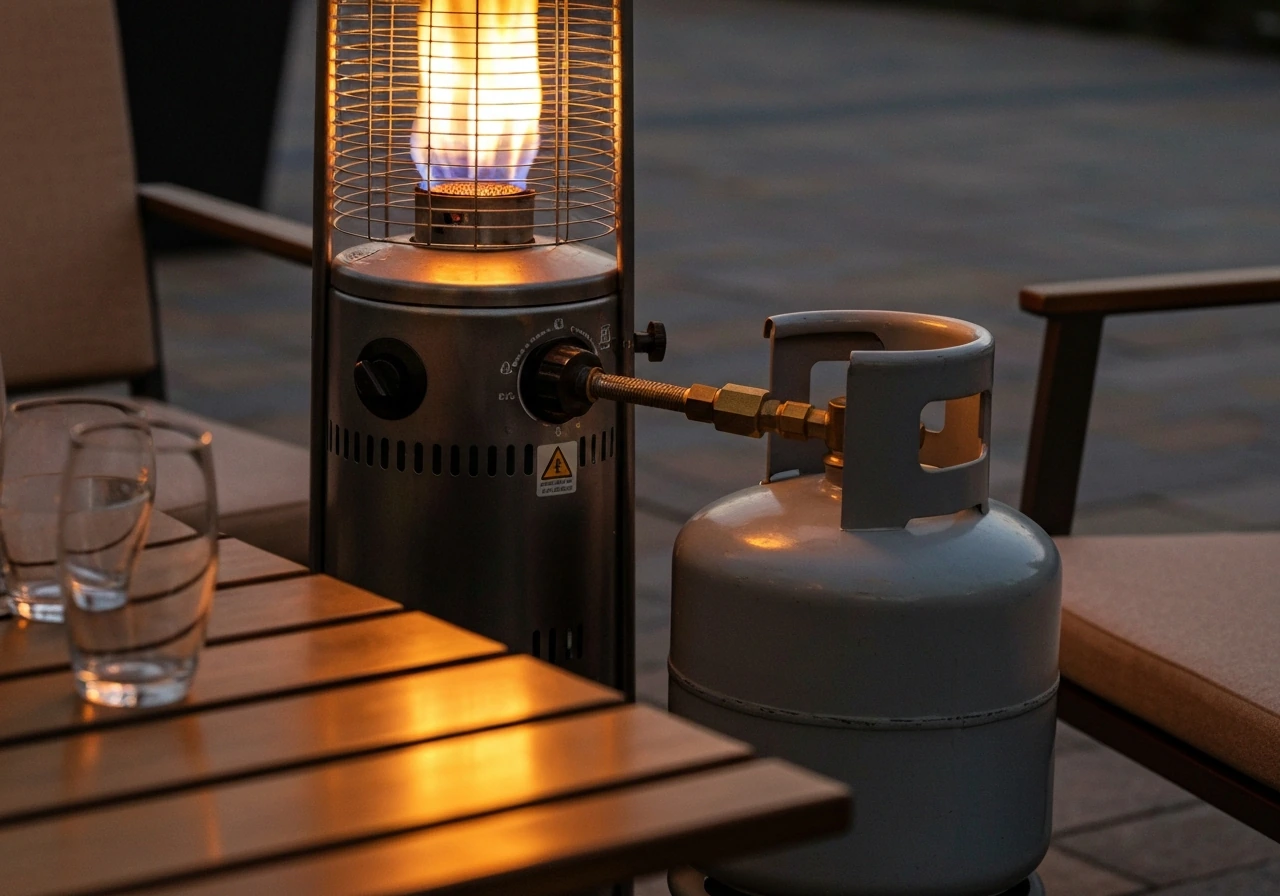
A tabletop propane patio heater is a compact, freestanding unit designed to sit on a table or flat surface and throw heat across a small seating zone. Most use a burner with a reflector plate overhead to direct warmth downward and outward rather than letting it all rise straight up. They're fueled by propane cylinders, which means no power outlets needed and full portability from backyard to campsite to restaurant patio.
The main alternative is a tabletop electric heater, which plugs into a standard outlet and is often infrared-based. Electric models have zero fuel cost per session (just electricity), no cylinder to manage, and no open flame, which makes them a better fit for fully covered or semi-enclosed spaces where propane combustion products can accumulate.
Propane tabletop heaters, on the other hand, give you real flame ambiance and can go anywhere you take them, but they do need adequate ventilation and a steady supply of fuel. There are also tabletop pyramid-style heaters that run on propane with a visible flame column, which is more of a decorative centerpiece than a pure warmth-focused tool. For this guide, we're focused on the practical warmth-first propane models.
If you are shopping specifically for a table top pyramid patio heater, look for a propane model with the right clearances and a stable setup.
Propane tank vs. gas bottle: what to check before you buy
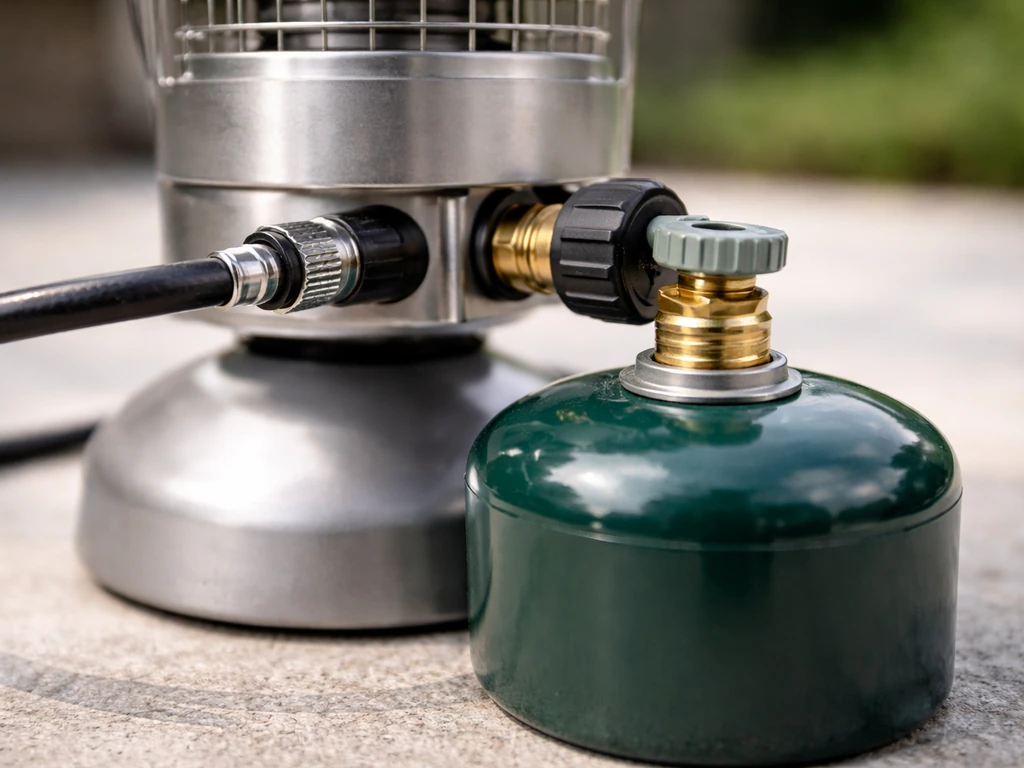
This is where a lot of people get tripped up. Tabletop propane heaters typically run on one of two fuel setups: a small 1-lb propane cylinder (the kind you'd use for a camping stove) or a larger 20-lb propane tank via a hose-and-regulator connection. Most tabletop models ship ready to use with the 1-lb cylinders, but the cylinder itself is almost never included in the box, so you'll need to grab one at a hardware store or gas station before your first use.
The 1-lb cylinder screws directly into the heater's built-in regulator, usually with a clockwise twist until it's snug. No tools needed. The Cuisinart COH-500P manual specifically describes this: twist the 1.02-lb tank clockwise into the regulator until tightened. For a 20-lb tank connection, you'll need a separate low-pressure regulator and hose rated for propane, and this accessory is sold separately. Not every tabletop heater supports the larger tank hookup at all, so check the product specs before assuming you can extend your runtime that way.
Before buying any model, verify these three things: (1) what cylinder size and connection type it accepts, (2) whether the regulator is built in or sold separately, and (3) whether the model is rated for outdoor use only or can also handle semi-enclosed covered patios. European models may refer to 'gas bottles' with different valve fittings, so if you're shopping internationally, double-check that the connector is compatible with propane cylinders sold in your region (US standard is the 1-lb Lindal valve or the 20-lb POL/QCC1 for larger tanks).
How many BTUs do you actually need?
BTU stands for British Thermal Unit and it's just a measure of heat output. Higher BTUs means more heat, but it doesn't automatically mean better for your situation. A tabletop heater's job is to warm the people sitting right around it, not an entire patio, so you don't need the 40,000 BTU floor-standing tower units here.
For a small bistro table for two on a calm evening, 7,500 to 11,000 BTUs is plenty. The Cuisinart COH-500P at 11,000 BTUs is rated to cover about 30 square feet effectively, which is roughly the footprint of a 5x6-foot seating area. If you have a larger table with four to six chairs, or you're often dealing with wind, you'll want to sit at the higher end of that range or consider running two units. In covered outdoor spaces, heat stays more concentrated, so a mid-range 8,000 to 10,000 BTU model can feel warmer than the same unit in an open yard.
| Patio Setup | Recommended BTU Range | Notes |
|---|---|---|
| Bistro table for 2, calm evenings | 7,500–10,000 BTU | A single tabletop unit works well |
| Table for 4, light wind | 10,000–11,000 BTU | Use a wind guard if available |
| Table for 4–6, open yard or breezy | 11,000+ BTU or two units | Wind significantly reduces perceived heat |
| Covered patio, any size table | 8,000–11,000 BTU | Heat stays more concentrated; ventilation required |
| Open deck, cold climate (below 40°F) | 11,000 BTU minimum | 1-lb cylinder may freeze faster in cold temps |
One thing worth knowing: in cold weather, small 1-lb propane cylinders can actually freeze during use due to the rapid heat draw. The Cuisinart manual is refreshingly honest about this, stating a 1-lb tank lasts about 25 minutes before it freezes. That's short. If you're planning longer sessions in cold temps, either have multiple cylinders on hand or use the optional hose to connect a 20-lb tank, which has far more thermal mass and handles cold much better.
Safety: what you need to get right every time
Propane tabletop heaters are genuinely safe when used correctly, but there are a few non-negotiable rules. Skip any of these and you're taking a real risk.
Stable placement
Always set the heater on a flat, stable surface. Propane.com also advises that portable outdoor propane heaters should be placed and, if needed, relocated with proper precautions, and that propane cylinders should stay upright on a level surface with plenty of ventilation place and relocate with proper precautions. Most tabletop propane heaters have a relatively high center of gravity because of the cylinder underneath, so a wobbly table or an uneven deck board is a tipping hazard. If the unit has a tilt auto-shutoff (a feature worth paying for), it will cut the gas if the heater falls. But the best outcome is one that never tips at all.
Clearance from combustibles
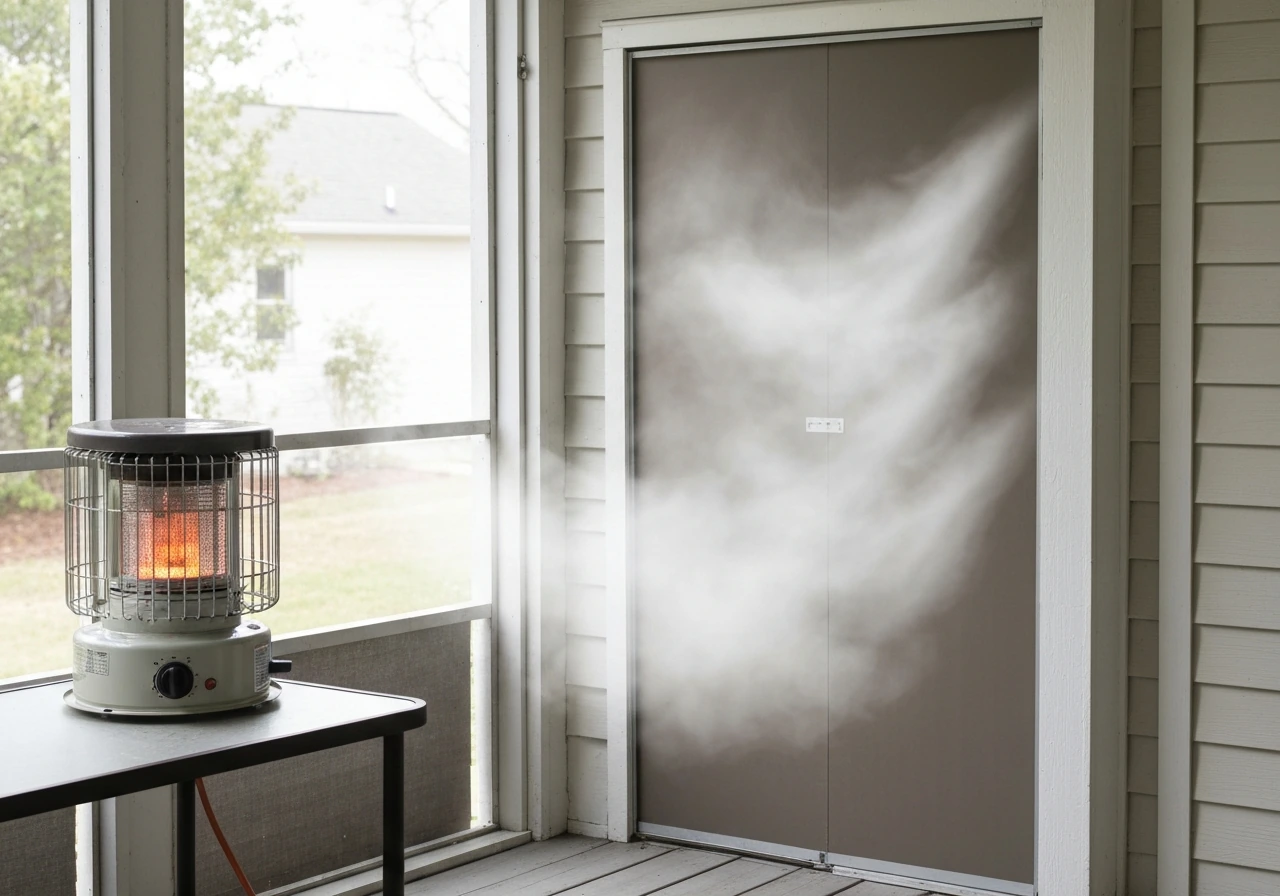
Keep at least 3.6 feet (about 1,100 mm) between the heater and any combustible material overhead or to the sides. That includes patio umbrellas, fabric awnings, string lights, and overhanging branches. The Cuisinart COH-500P manual specifies exactly this minimum clearance. If your covered patio has a low ceiling, measure before you fire it up.
Ventilation
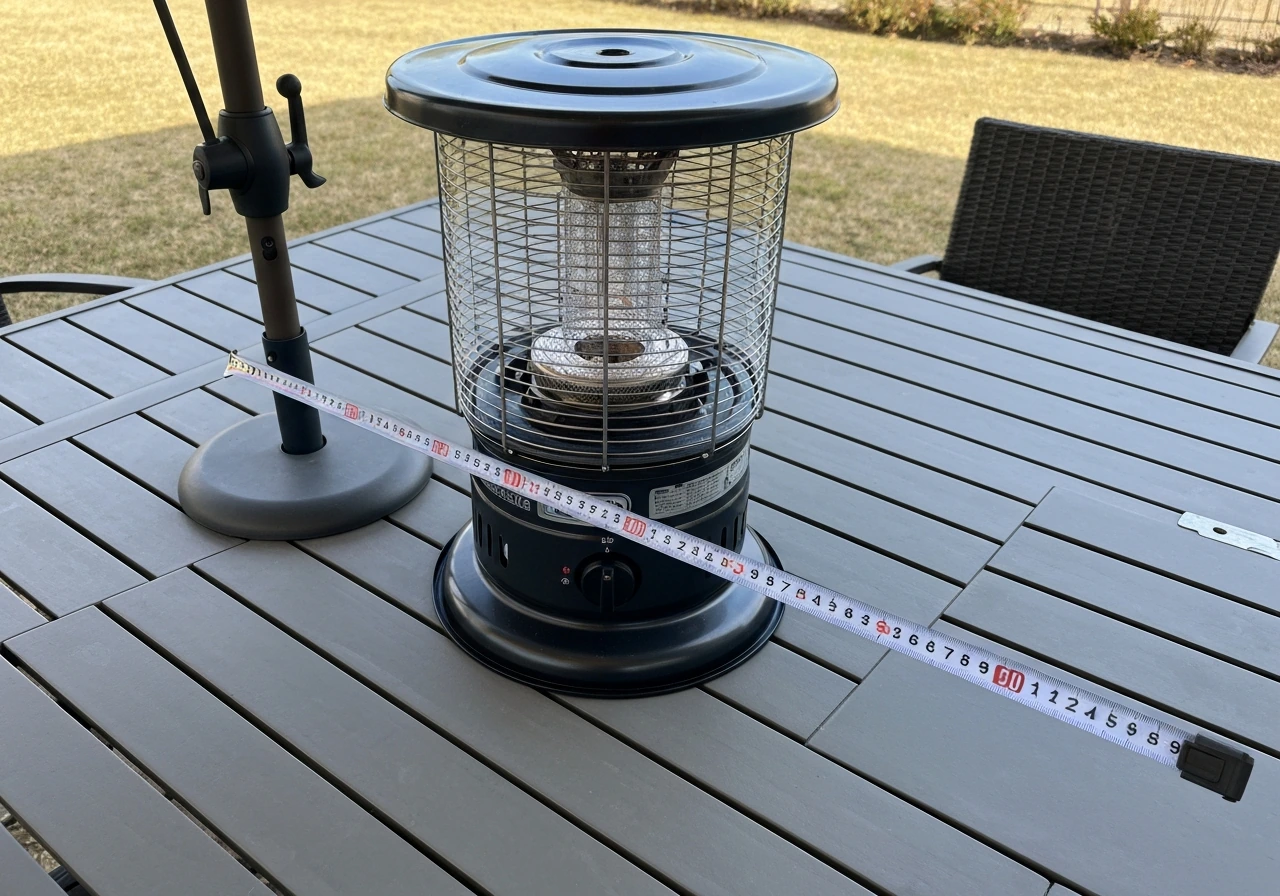
Never use a propane heater in an enclosed space. A screened porch with all sides closed, a tent, a garage with the door down: these are all off-limits. Propane combustion consumes oxygen and produces carbon monoxide. Propane.com warns that unsafe carbon monoxide can result from improper or defective propane appliance operation or maintenance, and from blocked air intakes. You need open-air flow around the heater at all times. Covered patios with open sides are generally fine; four-walled spaces are not.
After-use handling
The metal components stay dangerously hot after the flame goes out. The Cuisinart manual instructs users to not touch or move the heater for at least 45 minutes after use. Keep kids and pets away during that cooldown period, and turn the gas valve off before you step away from the unit.
If you smell gas
If the burner won't light and you smell gas, don't keep trying. Move away from the heater, wait at least 5 minutes for the gas to dissipate, then try again. If you still smell gas after it's turned off, the connection may be loose or the cylinder may be defective. Don't light it until you've found and resolved the source.
Safety features to look for when buying
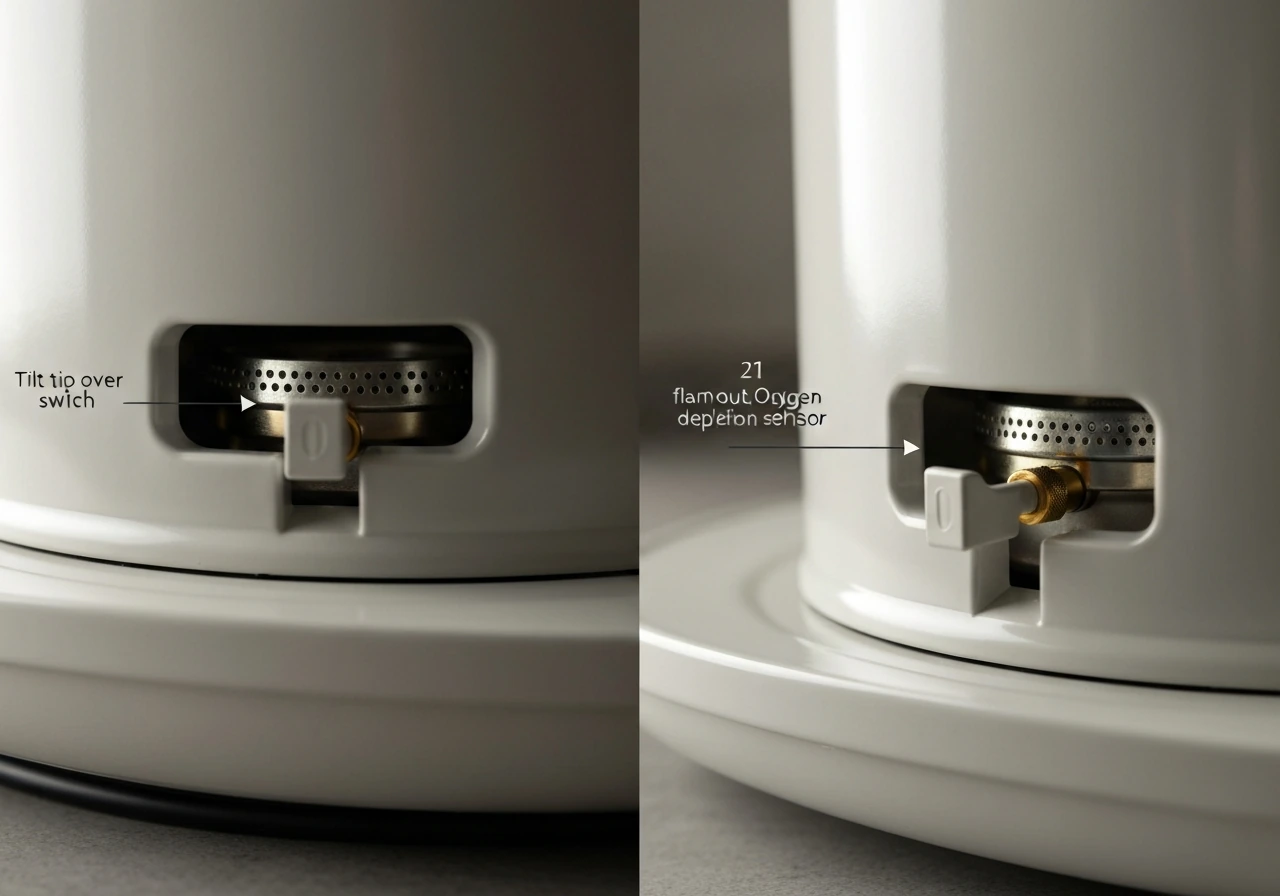
- Tilt/tip-over auto-shutoff: cuts gas automatically if the unit falls
- Flame-out safety shutoff: stops gas flow if the flame blows out in wind
- Oxygen depletion sensor (ODS): shuts off the heater if oxygen levels drop too low (more common on indoor-rated models but worth having on covered-patio units)
- Stable base or anti-tip weight distribution
- Clearly labeled gas valve with distinct on/off positions
The features that actually matter when you're comparing models
Once you're past safety and BTU output, here's what separates a frustrating purchase from a great one.
| Feature | What to Look For | Why It Matters |
|---|---|---|
| Portability | Compact size, integrated cylinder storage, carry handle | You'll move it more than you think |
| Ignition type | Push-button piezo ignition vs. manual match/lighter | Piezo is far more convenient in wind or cold |
| Wind guard | Glass or metal wind shield around burner | Open-flame burners without a guard struggle above 10 mph wind |
| Burner type | Radiant reflector plate overhead vs. open-flame cone | Reflector tops direct heat downward more efficiently |
| Regulator/valve quality | Adjustable heat output dial, smooth gas flow control | Single-setting valves give you no flexibility |
| Cylinder compatibility | 1-lb and/or 20-lb tank support | Dual compatibility extends runtime options |
| Heat direction | Downward-focused reflector vs. 360-degree radiant | Reflector models are better for seated table use |
| Build quality/stability | Wide base, weighted bottom, durable steel or aluminum | Cheap bases tip easily on uneven surfaces |
Wind guards are one of the most underrated features. If your patio is open to any breeze at all, a heater with a glass or metal shield around the burner will outperform a higher-BTU model with no protection in real-world conditions. It's not just about keeping the flame lit. It's about keeping the heat directed at people instead of being immediately swept away.
Best tabletop propane heater picks by use case
There's no single best tabletop propane heater for everyone, but there is a best one for your specific situation. Here's how to shortlist based on what matters most to you.
Best all-around: Cuisinart COH-500P
For most people buying a tabletop propane heater for a small patio table, the Cuisinart COH-500P is the easiest recommendation. If you're looking specifically at the table top patio heater model hps-c-pc, make sure it matches your preferred cylinder setup and coverage area before buying. It puts out 11,000 BTUs, heats up to 30 square feet, connects to a standard 1-lb propane cylinder with no tools, and also supports a 20-lb tank hookup (regulator sold separately).
The reflector top plate does a solid job directing heat downward. It's available at Home Depot and widely stocked, so getting replacement parts or fuel is straightforward. The honest trade-off: a single 1-lb tank only gets you about 25 minutes of runtime in cold conditions before the cylinder starts to freeze. For warmer evenings, you'll get longer, but plan accordingly.
Best for longer sessions: Cuisinart COH-500P with 20-lb tank adapter
If you're hosting for hours rather than a quick 20-minute warm-up, buy the COH-500P and immediately add the optional hose-and-regulator for the 20-lb tank. This setup is still portable (the heater itself sits on the table, the tank stays on the ground nearby) and gives you many hours of runtime. The 20-lb cylinder also won't freeze the way a 1-lb one does in cold weather. It costs more upfront between the heater and the adapter, but it's the most practical setup for regular outdoor entertaining.
Best for maximum portability: 1-lb cylinder-only compact models
If you need something you can toss in a bag for camping, tailgating, or a trip to a friend's patio, look for compact tabletop models that are purpose-built for 1-lb cylinders only. These are typically lighter, smaller, and more pack-friendly than dual-compatible models. The trade-off is shorter runtime and more cylinder swaps. Budget versions from brands like Mr. Heater's Little Buddy (which can sit on a tabletop) are popular in this category and usually run under $75.
Best for covered patios: check for ODS before buying
For a covered patio with limited airflow, prioritize models with an oxygen depletion sensor. This feature shuts the heater off automatically if oxygen levels fall, which is critical in lower-ventilation settings. The Cuisinart COH-500P is rated for outdoor use, so if your covered patio has enclosed walls, a tabletop electric heater may actually be the safer and more practical choice. For open-sided covered patios, any well-rated propane model will work.
Budget vs. premium at a glance
| Category | Price Range | What You Get | What You Give Up |
|---|---|---|---|
| Budget (under $60) | $40–$60 | Basic burner, 1-lb cylinder, manual ignition | Wind guard, adjustable heat, long-term durability |
| Mid-range ($60–$100) | $60–$100 | Piezo ignition, reflector plate, some models dual-tank compatible | Premium build materials, brand support |
| Premium ($100–$150+) | $100–$150+ | Dual-tank support, wind guard, quality valve, durable construction | Higher upfront cost; diminishing returns for casual use |
Setup, use, and keeping it running well
First-time setup
- Unbox and inspect the heater for any shipping damage before attaching any fuel source.
- Read the manual's minimum clearance requirements and identify where you'll place it on your table.
- If using a 1-lb cylinder: twist it clockwise into the regulator inlet until firmly seated. No wrench needed.
- If using a 20-lb tank: connect the optional hose-and-regulator to the tank's valve (hand-tight plus a quarter turn), then connect the hose to the heater's inlet.
- With the gas valve closed, do a leak check by applying soapy water to all connections. Bubbles mean a loose connection. Tighten and recheck before lighting.
- Open the gas valve slowly, press and hold the ignition button for 3 to 5 seconds, then press the piezo igniter (or use a long lighter if it's a manual-ignition model).
- Once lit, hold the valve open for 15 to 30 seconds to heat the thermocouple, then release. The flame should stay on.
Swapping and refilling cylinders
Always turn off the gas valve and let the heater fully cool before disconnecting a cylinder. Twist the empty 1-lb cylinder counterclockwise to remove it, then thread the new one clockwise until snug. With 20-lb tanks, close the tank valve first, then disconnect the hose. Take empty 20-lb tanks to a propane refill station or exchange kiosk (hardware stores, Home Depot, and many gas stations have exchange programs). Propane refill is usually cheaper than exchange, but exchange is faster and requires no special equipment.
Cleaning and maintenance
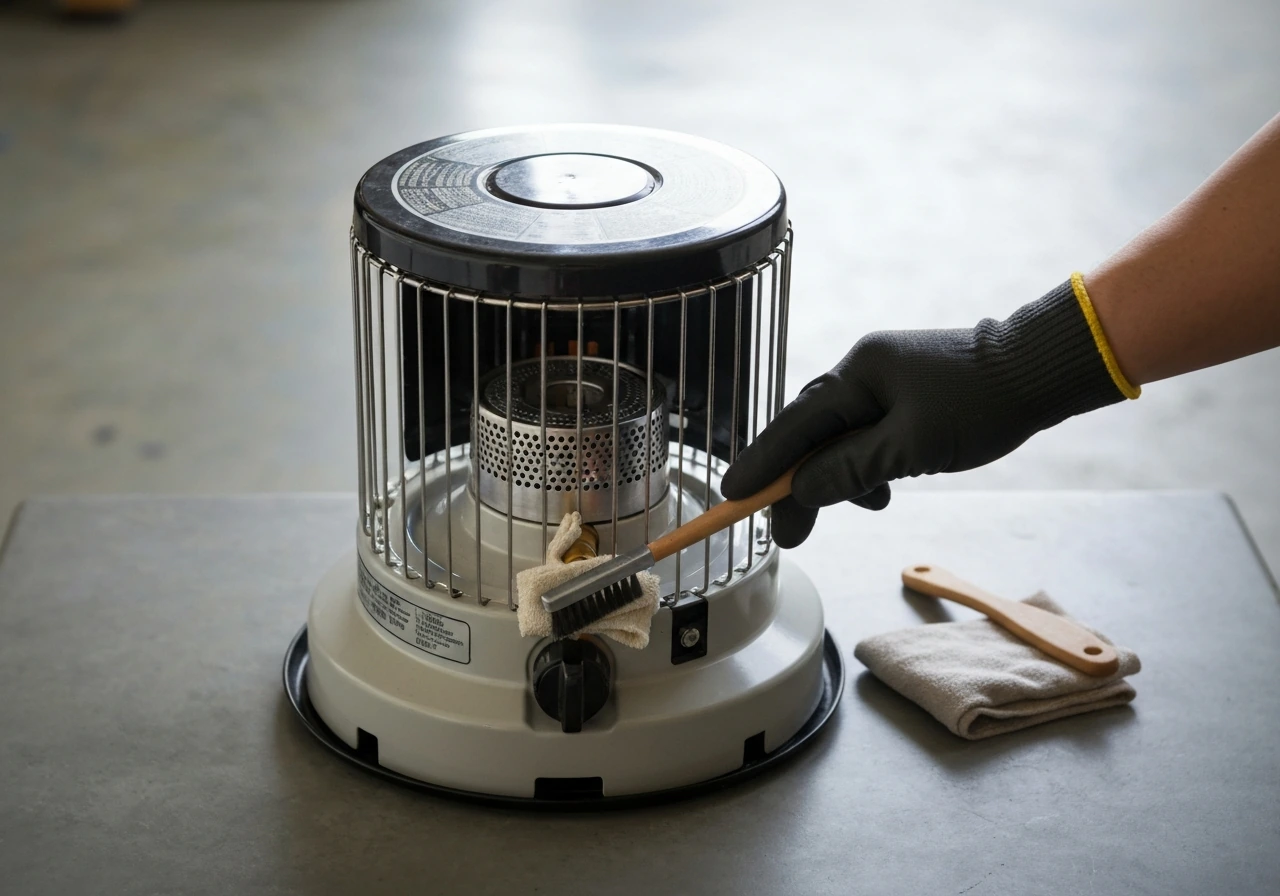
- After each use: wipe down the exterior with a damp cloth once fully cooled. Remove any debris from the burner screen.
- Monthly (if used regularly): inspect the burner ports for spider webs or insect debris, which can block gas flow. Clear gently with a toothpick or compressed air.
- Check the regulator and hose connections for cracks or brittleness, especially at the start of a new season.
- If the igniter stops sparking, check for moisture or a corroded electrode tip. Dry it thoroughly and try again before replacing.
- After the season: remove the propane cylinder before storing, clean all surfaces, and store the heater in a dry indoor location. Never store propane cylinders indoors.
Storage
Store the heater itself indoors or in a covered shed during off-season months. If the heater came with a cover (some Cuisinart models include one), use it to keep dust and moisture out of the burner. Propane cylinders should always be stored upright in a cool, ventilated outdoor space, never in a garage, basement, or enclosed shed with poor airflow. A 1-lb partially used cylinder can stay connected to the heater during short storage periods if you're using it frequently, but for longer storage, disconnect and cap both the cylinder and the inlet.
Propane vs. electric: the quick honest take
If portability matters, propane wins. If you have a permanent outdoor space with a nearby outlet and want simpler operation with no fuel management, a tabletop electric patio heater is worth a serious look. For covered spaces with limited ventilation, electric is often the safer choice. If you love the ambiance of a real flame and want to use the heater away from power, propane is the clear pick. Both work well; it's really about your setup and preferences.
FAQ
Can I run a table top patio heater propane model under a low umbrella or near string lights if I keep the 3.6 feet clearance?
You still need to verify the heater’s clearance measurements are for both sides and overhead, and that nothing can sway into the hot zone (umbrella during wind, strings during breeze). If you cannot guarantee a stable, non-swaying setup, choose a wind-guard model or switch positions rather than relying on “mostly clear” spacing.
What happens if my patio is semi-enclosed but not fully enclosed, is oxygen-depletion protection enough?
An oxygen depletion sensor helps, but it is not a substitute for ventilation. In spaces with limited airflow, place the heater where the air can circulate around the burner area, keep at least the specified clearances, and avoid using it when doors or windows are closed most of the time.
How do I tell whether my table top propane patio heater will accept a 20-lb tank without buying the wrong regulator?
Check the product specs for an explicitly supported “20-lb tank connection” or a required hose-and-regulator type. A common mistake is buying a random low-pressure regulator kit that matches propane in general, but not the connector and expected pressure for that heater.
Can I use a larger tank by gravity or without the correct regulator?
No. Propane heaters designed for tabletop use require the proper regulator and correct hose rating. Bypassing the regulator or using non-matching fittings can cause unsafe flame behavior and leaks.
Why does my table top patio heater propane flame look weak or uneven even though the BTU rating is high?
Common causes are a nearly empty cylinder, cold-cylinder performance (especially 1-lb tanks freezing), wind blowing the flame away from the reflector, or partial obstruction of the burner/reflector. Make sure the burner and reflector are clean and positioned correctly, and shield the unit from direct gusts.
Is it okay to leave a 1-lb cylinder connected to the heater when storing it overnight?
Short storage during frequent use is often fine, but for longer downtime disconnect and cap the inlet connection. Also store cylinders upright in a cool, ventilated outdoor area, never in a garage or enclosed space where gas could accumulate.
What should I do if I get condensation or frost on the 1-lb propane cylinder during use?
Frost typically indicates the cylinder is pulling fuel faster than it can vaporize, which is normal for small tanks in cold conditions. Reduce runtime per session, swap in a fresh cylinder, or consider using a 20-lb setup with the optional hose and regulator for better cold performance.
How long should I wait after turning off before moving or covering the heater?
Let it fully cool before touching or relocating it. The article advises waiting at least 45 minutes after use, and you should also keep kids and pets away during that cooldown, since metal surfaces stay dangerously hot.
If the heater won’t light and I smell gas, should I try again immediately after shutting it off?
No. Move away, wait at least 5 minutes for gas to dissipate, then try again only if the smell is gone and the connection is secure. If you still smell gas after turning off, do not ignite it until the leak source is identified.
Can I use a table top patio heater propane on a wooden table or directly on a deck?
Place it on a flat, stable, non-combustible surface where heat and radiant warmth will not build up against the material. A wobbly or uneven surface is a tipping hazard, and radiant heat can discolor or damage some surfaces over time, so use a heat-safe base if needed.
What’s the practical way to choose between one heater and two heaters for a larger patio table?
If the seated group spans more than the manufacturer’s effective coverage, adding a second unit positioned to cover the outer seating corners usually works better than chasing very high BTU. In wind, two shielded units are also more consistent than one unshielded unit.
Do tabletop electric heaters ever make more sense than propane in covered areas?
Yes. In covered outdoor spaces with limited airflow, the article notes propane can be risky due to combustion byproducts. If your patio is enclosed on multiple sides or ventilation is uncertain, an electric tabletop heater can be the safer, simpler choice because it avoids cylinder management and combustion gases.