
BALI OUTDOORS makes a solid lineup of propane patio heaters that genuinely deliver on their BTU claims, with standing models putting out 36,000–40,000 BTU and a compact tabletop option at 10,000 BTU. If you're looking at a full-size standing heater for an open patio of up to 15 feet across, the 40,000 BTU mushroom-style model (UR50BK2) is their most capable option and the one most people mean when they search for Bali outdoor patio heater reviews. The 20-inch glass tube model at 36,000 BTU is a good step down if you want something a bit sleeker, and the tabletop (Model SRPT13) works well for small decks or as a supplemental heat source. The short version: Bali heaters are a genuinely good value for propane-powered outdoor heat, but they're almost entirely propane-focused, they're not magic in high wind, and they're not the right pick for every setup.
Bali Outdoor Patio Heater Reviews: Best Picks by Size

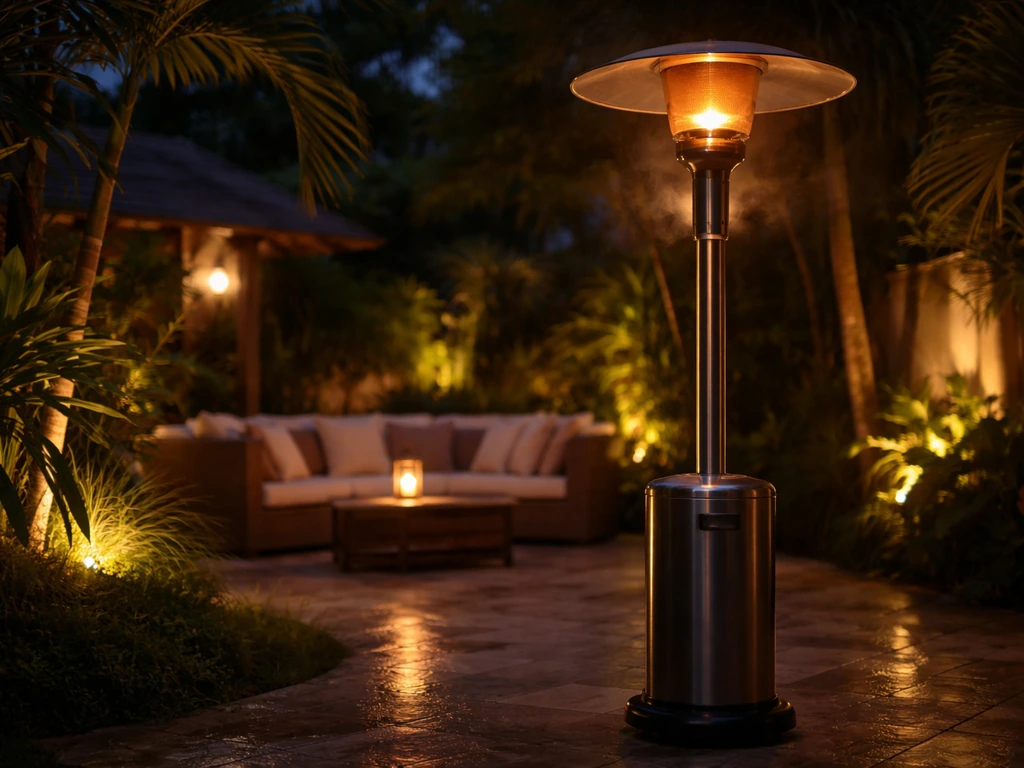
What 'Bali' patio heaters actually are
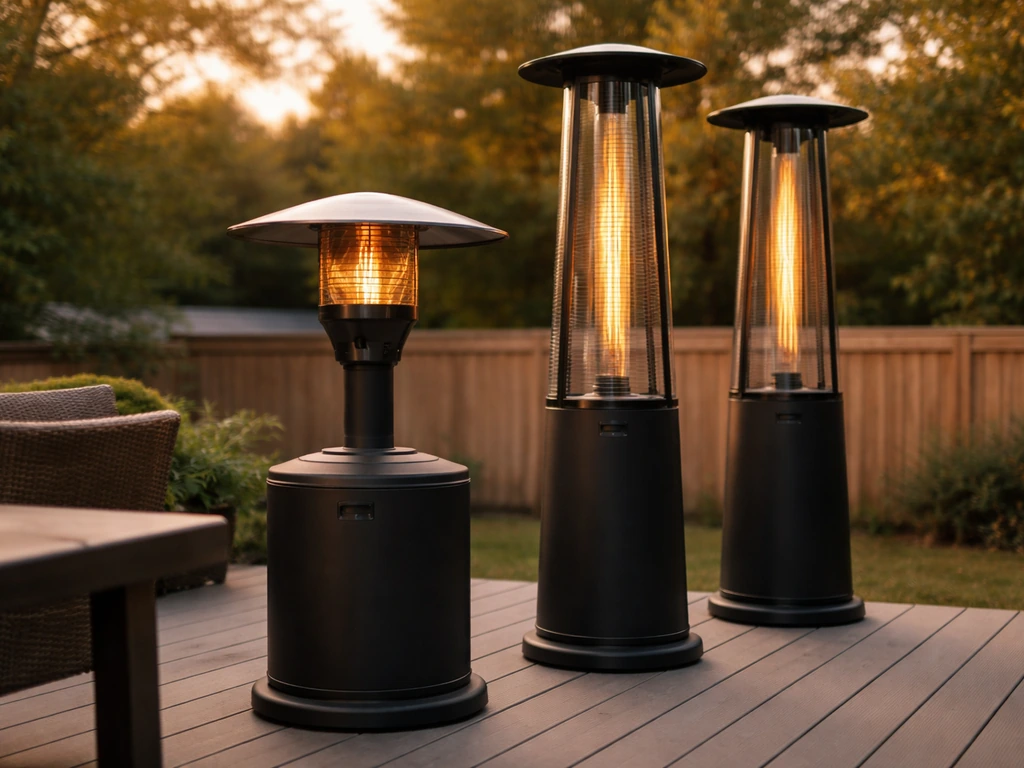
BALI OUTDOORS is an outdoor living brand that sells patio heaters primarily through its own website and third-party retailers like Amazon and Do It Best. The name sometimes causes confusion because 'Bali' also appears as a model or line name for other outdoor furniture brands, but when you're searching for Bali outdoor patio heater reviews, you're almost certainly looking at BALI OUTDOORS propane heaters. The brand does not currently offer a broad electric or natural gas lineup under its own name, so if you've seen a 'Bali' electric heater somewhere, double-check the brand carefully before buying.
The three core models worth knowing about are: the 32-inch standing mushroom heater (UR50BK2, 40,000 BTU), the 20-inch glass tube standing heater (36,000 BTU), and the tabletop propane heater (SRPT13, 10,000 BTU). Each serves a different use case, and getting clear on which one fits your setup before you buy will save you a return trip.
Key things to look at before buying any patio heater
BTU output is the single most cited spec, but it only tells part of the story. BTU measures the maximum heat energy output, not necessarily how much warmth you'll feel standing 8 feet away on a breezy evening. A 40,000 BTU propane heater like the Bali standing model can heat a circle roughly 10–15 feet in diameter in still air, but wind cuts that effective range significantly. The number you actually care about is how much usable heat reaches your seating area under real conditions.
Coverage area matters just as much as raw BTU. For a small patio under 200 square feet, a 10,000 BTU tabletop model can do the job if the space is enclosed or sheltered. For an open deck of 300–500 square feet, you're looking at one or two 40,000 BTU standing units. Beyond 500 square feet or in windy, uncovered spaces, you'll likely need multiple heaters or a different fuel type entirely.
Mounting height and heater design change how heat disperses. Most standing patio heaters top out around 7–8 feet tall, and Bali's UR50BK2 stands about 86.7 inches (just over 7 feet). The mushroom reflector on top bounces infrared heat outward and downward, so the heat spreads in a wide circle. The glass tube design on the 20-inch model creates a visible spiral flame that radiates heat outward from a lower central point, which some people find works better for tighter seating arrangements.
Weatherproofing is another real consideration. Most residential propane patio heaters, including Bali's lineup, are rated for outdoor use but are not designed to be left out in heavy rain or snow. If you're in a wet climate, plan on covering or storing the heater when it's not in use. For covered patios, check the clearance requirements carefully before placing a tall standing heater under a pergola or low roof overhang.
How Bali patio heaters actually perform
The 40,000 BTU standing heater (UR50BK2)
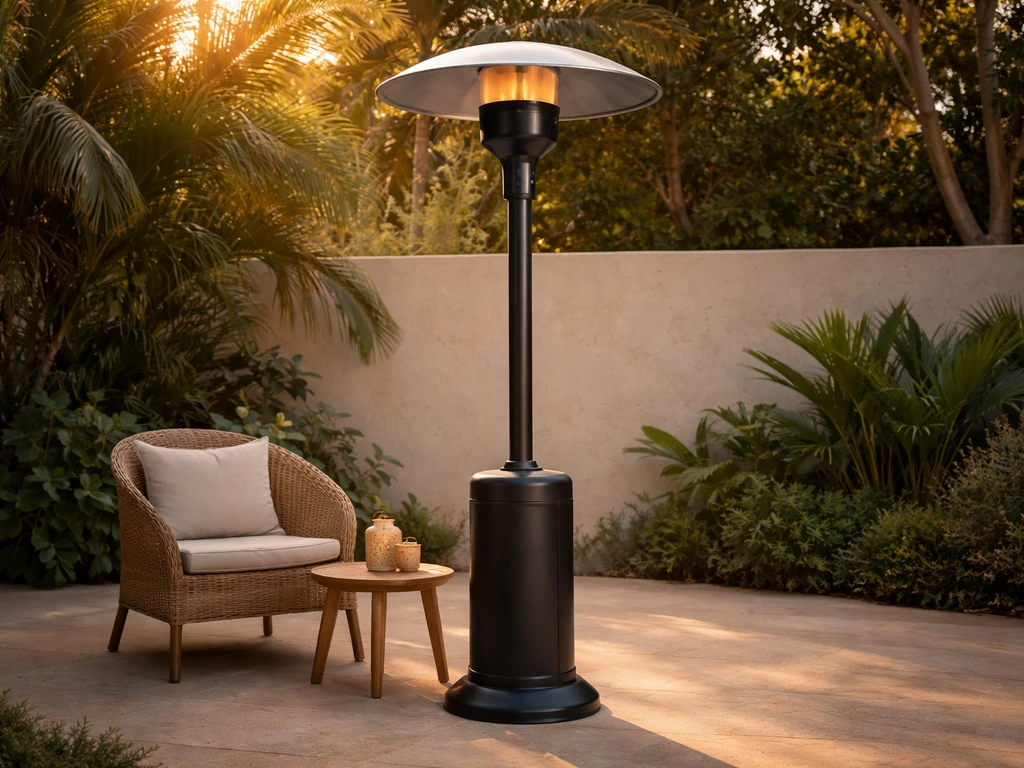
This is Bali's flagship and the model most people are looking at. At 40,000 BTU with a 32-inch mushroom reflector head and an overall height of about 86.7 inches, it hits the same performance tier as name-brand competitors that often cost significantly more. The push-and-turn ignition is reliable: you push, hold to build heat, and turn to light. In calm to light-breeze conditions, the 10–15 foot heat circle is accurate in my experience. It will comfortably warm a group of 4–6 people seated around a fire pit table at about 6–8 feet from the center.
The blank" rel="noopener noreferrer">auto shut-off tilt device and flame failure device are real safety features, not just marketing. The tilt device cuts gas if the heater tips over, and the flame failure device shuts off the gas valve if the flame goes out unexpectedly, preventing unburned propane from escaping. The manual notes the heater should not be operated when blank" rel="noopener noreferrer">wind speed exceeds 10 mph, which is a reasonable limit for any open-flame standing heater. In gusts, the flame can flicker out, which is annoying but not dangerous thanks to the flame failure device.
Fuel consumption is straightforward: on high, a standard 20 lb propane tank (which fits in the base) lasts roughly 8–10 hours. Turn it down to medium and you'll get 12–15 hours. At roughly $2–3 per hour of heating, a full evening session at high costs about $6–9 in propane. That's competitive with running two or three electric space heaters.
The 20-inch glass tube heater (36,000 BTU)
The glass tube model trades the wide mushroom-style heat dome for a more focused, visible flame column. Bali rates it at 36,000 BTU with a 5–6 foot radius of effective heat distribution. That's a smaller footprint than the UR50BK2, making it better suited for a narrower patio or a spot where you want heat concentrated around one seating area rather than spread across a wide open space. The borosilicate glass tube is durable and handles thermal expansion well, and the push-button ignition is simpler to operate than push-and-turn. The aesthetic is also a real selling point: the visible spiral flame looks great on an evening patio in a way a plain mushroom heater doesn't.
The tabletop heater (SRPT13, 10,000 BTU)
The Bali tabletop runs on 1 lb propane cylinders, which you can buy at any hardware store or gas station. At 10,000 BTU it's not going to heat a large space, but for a small covered porch, a bistro table for two, or as supplemental heat alongside a standing unit, it does exactly what it's supposed to do. It's CSA certified, includes both a flame failure device and an anti-tilt switch, and uses push-and-turn ignition. The main limitation is the 1 lb cylinder: at 10,000 BTU, you'll burn through a small cylinder in roughly 1–2 hours on high, so stock up if you're planning a longer evening.
Propane vs electric vs natural gas vs pellet: which fuel type fits your setup
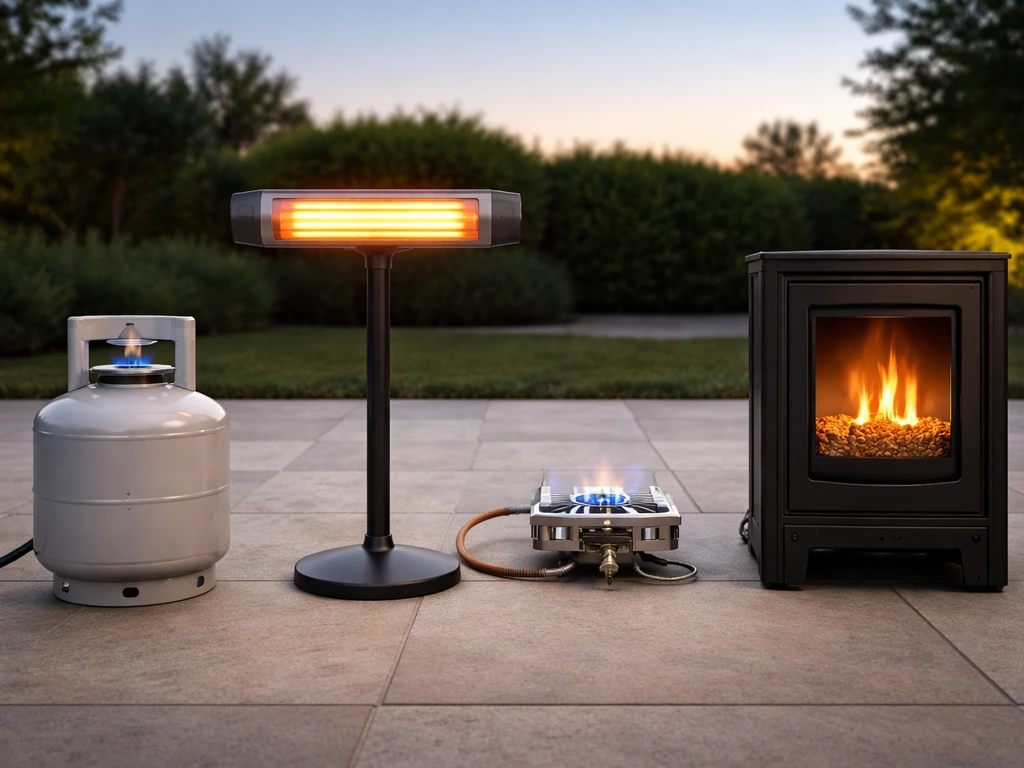
Since Bali's lineup is almost entirely propane, it's worth being honest about when propane is the right choice and when it isn't. Propane's big advantages are portability and raw BTU output: a 40,000 BTU propane heater is hard to match with a single electric unit. Electric patio heaters typically range from 1,500–5,000 watts (roughly 5,000–17,000 BTU equivalent), which means you'd often need two or three electric units to match one propane standing heater's output. However, electric heaters are cleaner, require zero fuel storage, work better in covered spaces (no combustion byproducts), and often come with thermostat controls that propane standing heaters usually lack.
Natural gas heaters are the best long-term option if you have an existing gas line and want a permanent installation. They eliminate propane tank refills entirely and typically cost less per BTU to operate. The trade-off is the installation cost and loss of portability. Pellet patio heaters are a niche option, burning wood pellets for a campfire-like atmosphere, but they require more maintenance, produce smoke, and are rarely a practical choice for a typical suburban patio.
| Fuel Type | BTU Range | Portability | Operating Cost | Best For |
|---|---|---|---|---|
| Propane (Bali) | 10,000–40,000 | High (tank in base) | $2–3/hr on high | Open patios, no gas line, portable use |
| Electric | 5,000–17,000 BTU equiv. | Medium (needs outlet) | ~$0.15–0.50/hr | Covered patios, enclosed spaces, thermostat control |
| Natural Gas | 40,000–60,000+ | Low (fixed installation) | Lowest long-term | Permanent setups with gas hookup |
| Pellet | Varies | Medium | Variable | Ambiance-focused, rural settings |
For ignition, Bali's propane heaters use either push-and-turn or push-button ignition, both of which are reliable as long as you purge air from the gas line on first use and keep the thermocouple clean. If your heater is struggling to stay lit, a dirty or misaligned thermocouple is the most common culprit.
Safety, setup, and keeping your heater running well
Clearances are the safety item that most people overlook. For a standing propane heater under a covered patio or pergola, you need to check the manufacturer's minimum overhead clearance, typically 24–36 inches above the top of the heater. Bali's manual specifies clearances, so read it before placement. Do not run a propane heater in a fully enclosed space: combustion produces carbon monoxide, and even a screened-in porch with limited ventilation is a risk.
Installation is straightforward: connect the regulator hose from the heater to your propane tank, turn on the tank valve slowly, then use the push-and-turn or push-button ignition as instructed. If the flame won't hold after 30–60 seconds of holding the ignition button, release and wait a few minutes before trying again so residual gas disperses. The first light of the season often takes a few attempts as air works out of the line.
For weather exposure, Bali's standing heaters are built for outdoor use but should be covered or stored when not in use for extended periods, especially through winter or rainy seasons. A fitted heater cover (typically sold separately) prevents moisture from corroding the burner head and keeps spiders out of the gas orifice, which is a surprisingly common cause of ignition failures. Clean the reflector and burner assembly once a season with a dry cloth, and inspect the gas hose and regulator for cracks annually before the first use of the year.
Common troubleshooting fixes
- Heater won't ignite: Check that the propane valve on the tank is fully open and the tank isn't empty. Purge air from the line by holding the ignition button for a full 30 seconds before sparking.
- Flame goes out shortly after lighting: The thermocouple likely needs cleaning or the heater is in too much wind. Move the heater or add a windbreak.
- Low flame output despite full tank: Overfill protection device (OPD) on the propane tank may have tripped. Turn off the tank valve, disconnect, wait 30 seconds, and reconnect slowly.
- Heater tips over and won't relight: The auto shut-off tilt device has activated. Right the heater fully, wait a few minutes, and restart normally.
How Bali stacks up against other brands and heater types
Compared to other propane standing heaters in the same price range, Bali's 40,000 BTU models are genuinely competitive. The build quality is solid for the price point, the safety features (tilt device plus flame failure device) are what you'd expect from a properly certified heater, and the heat output matches the spec sheet in real-world use. Where Bali falls short compared to premium brands is in finish longevity: the powder coat on budget-tier heaters including Bali can show rust spots after a couple of seasons if the heater isn't stored properly. Brands like Frontgate sit at a higher price point and offer more premium materials and finishes, which matters if the heater is a permanent fixture in a high-end outdoor space.
If you're comparing Bali to infrared electric heaters, the calculus shifts depending on your patio setup. Infrared electric heaters (wall-mounted or ceiling-mounted) are better for covered patios because they don't use an open flame, they have no fuel cost, and they often include thermostat or remote controls. They're also wind-immune since there's no flame to blow out. For an open, uncovered backyard patio where you want a lot of heat for a group without running electrical wiring, a 40,000 BTU propane unit like Bali's standing model is still the most practical and cost-effective single-unit solution.
Tabletop heaters from Bali or any brand (including models from Nuu Garden or Gardenline's portable lineup) work well as supplemental heat but shouldn't be your only heat source for a full patio. They're best thought of as personal warmth extenders for two to four people at a single table, not as a substitute for a full-size standing or mounted heater.
| Heater Type | Best Setup | Heat Output | Key Trade-off |
|---|---|---|---|
| Bali 40K BTU standing propane | Open patio, 300–500 sq ft, portable use | 40,000 BTU, 10–15 ft circle | Needs fuel, wind-sensitive |
| Bali 36K BTU glass tube propane | Smaller open patio, tight seating areas | 36,000 BTU, 5–6 ft radius | Smaller coverage than mushroom style |
| Bali tabletop propane | Small covered deck, bistro table | 10,000 BTU | Short 1 lb cylinder runtime |
| Infrared electric (wall/ceiling mount) | Covered patios, pergolas, screened porches | 5,000–17,000 BTU equiv. | Needs electrical wiring, lower BTU ceiling |
| Natural gas standing heater | Permanent patio with gas line | 40,000–60,000+ BTU | No portability, installation cost |
Which Bali heater to buy (and what to skip) based on your setup
Here's the practical shortlist based on patio size and conditions. If your patio is open, roughly 300–500 square feet, and you want one heater to cover a seating group, the UR50BK2 standing 40,000 BTU model is the right call. It's portable, no installation required beyond attaching the propane tank, and it will genuinely warm a circle of 6–8 people in calm conditions. Buy this one.
If your patio is smaller, say 150–250 square feet, or you have a tighter seating arrangement around a bistro table or fire table, the 20-inch 36,000 BTU glass tube model is worth considering. The more focused heat radius fits better in confined spaces and the aesthetic is a significant upgrade over a plain mushroom heater. This is also a good choice if you want the visual appeal of an open flame column.
The tabletop model (SRPT13) is the right pick if you have a small covered porch, a balcony, or want a portable heat source you can move between a dining table and a lounging area. If you’re specifically looking at the Swan Al Fresco SH16330N portable patio heater review, it’s worth comparing its portability and fuel setup against Bali’s propane options for your patio size and exposure portable heat source. It's not a primary heat source for a full patio, but it's excellent for exactly what it is: a compact, portable propane heater for two to four people.
What to avoid
- Don't buy a standing propane heater (Bali or any brand) if your main use case is a fully covered or semi-enclosed patio. The open flame needs ventilation and overhead clearance. An electric infrared heater is safer and more practical in those spaces.
- Don't expect a single standing heater to cover a patio larger than about 500 square feet in open, windy conditions. You'll be disappointed. Budget for two units or look at a higher-BTU natural gas option.
- Don't skip the heater cover if you live in a wet climate. Moisture damage to the burner assembly is the most common reason a heater fails after the first winter. A $20–30 cover extends the life of a $150–200 heater significantly.
- Don't use the tabletop model as your only heat source for a full outdoor gathering. At 10,000 BTU, it's a great supplement but not a replacement for a full-size unit.
- Don't place any standing propane heater under a low roof, pergola, or umbrella without verifying the overhead clearance in the manual. The reflector top gets extremely hot and fire risk is real.
Overall, Bali outdoor patio heaters represent solid value in the propane standing heater category. If you're trying to narrow down the best option, these gardenline portable patio heater reviews can help you compare different heater styles and performance Bali outdoor patio heaters. They're not the only option out there, and depending on your space, you might find that a portable electric heater or a natural gas model is a better long-term fit. But if you want a propane standing heater that delivers real heat output, includes proper safety features, and won't break the bank, Bali earns its spot on the shortlist.
FAQ
Do Bali outdoor patio heaters work well on windy patios, or will they shut off too often?
Bali’s standing propane models are designed to run in calm to light breeze conditions, and the manual notes operation should not exceed about 10 mph wind. In gusty weather the flame can flicker out, but the flame-failure safety feature will shut the gas off. If you get frequent flame-outs, reposition the heater farther from open draft paths (like doorway airflow), or consider an infrared electric heater for that area.
How should I choose between the 40,000 BTU mushroom and the 36,000 BTU glass tube if both sound “powerful”?
Don’t choose by BTU alone, choose by seating geometry. The mushroom head typically warms a wider circle and suits groups around a central fire table, while the glass tube is better for a narrower radius and tighter seating rings. If your patio is open on multiple sides, the wider spread usually wastes less heat by keeping more seats within the effective zone.
What is the fastest way to troubleshoot a Bali propane heater that won’t stay lit?
If the burner lights but won’t hold flame, the most common cause is a dirty or misaligned thermocouple. Wipe the thermocouple area gently (when cooled), check that the connection is secure, and confirm the flame envelops the thermocouple as designed. If it still won’t stay on, stop troubleshooting and service it, since repeated attempts can waste propane.
Can I use a Bali patio heater indoors or in a screened-in porch?
No, you should not run it in a fully enclosed space because propane combustion can produce carbon monoxide. A screened-in porch still may not provide enough ventilation, so treat it as a risk area. If you’re considering any partial enclosure, rely on the manufacturer’s ventilation and clearance guidance and avoid locations with limited airflow (like under low, close-in roofs).
What propane tank size should I buy, and will the 20 lb tank fit comfortably in the base?
For the 40,000 BTU standing model, Bali uses a setup that supports a standard 20 lb propane tank in the base area. That typically gives about 8 to 10 hours on high or 12 to 15 hours on medium. If you want longer runs without swapping tanks, plan your seating length and consider keeping a spare tank ready before long evenings.
Is it safe to leave my Bali patio heater outside when it’s raining or during winter?
They’re built for outdoor use, but they are not meant to sit in heavy rain or snow long term. Use a fitted cover when not in use, and for extended seasonal storage, store it indoors or at least under shelter. Moisture can cause ignition problems, and corrosion or spider activity can block the gas orifice over time.
How much clearance do I need under a pergola or near a roof overhang?
Clearance depends on the model, but Bali’s guidance is typically on the order of 24 to 36 inches above the top of the heater for covered setups. Measure from the highest point (including the head and any reflector). If your structure has low beams or slats, treat it as a potential restriction even if the sides are open.
Should I buy a dedicated propane regulator and hose, or will the Bali kit be enough?
Use the regulator hose included with the heater (or the exact replacement part specified by the manufacturer). Don’t mix generic hoses or regulators with different fittings or pressure ratings. If you need a longer setup, confirm compatibility with the exact model before purchasing adapters, since mismatched parts can cause poor ignition or unsafe operation.
How often do I need to clean or inspect a Bali propane heater?
At minimum, do a seasonal inspection before the first use. Clean the reflector and burner with a dry cloth, then inspect the gas hose and regulator for cracks or wear. If you store the unit outdoors, check more often, because wind-driven debris and moisture can accumulate around the burner area.
Is a Bali tabletop heater worth it, or will it be too weak for my patio?
A tabletop propane unit is mainly for personal warmth around a small table or a tight seating cluster. At 10,000 BTU, it can work for small sheltered spaces, but on larger patios it becomes supplemental rather than primary heat. A common mistake is buying tabletop thinking it will replace a standing heater, it usually won’t unless the area is very small and protected from wind.
Why do some people report Bali powder coating rust spots after a couple seasons?
Finish longevity is strongly affected by storage habits and how close the heater sits to moisture sources. If the unit is repeatedly exposed to rain without a cover, powder coat can develop rust spots and the burner assembly may also corrode. If it’s a frequent-use patio fixture, plan on regular cover use and at least once-per-season inspection.
How many heaters do I actually need for a 300 to 500 square foot patio?
For open patios in the 300 to 500 square foot range, the practical approach is usually one or two standing heaters in the 40,000 BTU class, but wind and layout can change that. If seating is split across corners or the patio is very exposed, two heaters spaced apart typically outperform one heater because it reduces the distance people stand from the effective heat circle.