
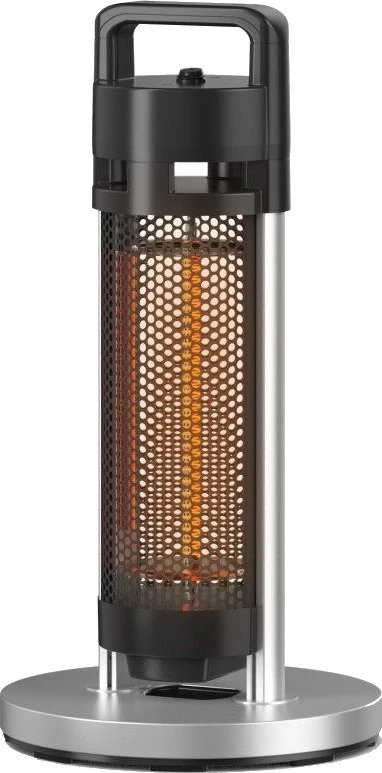
The Swan Al Fresco SH16330N is a solid, no-fuss electric patio heater that works well for small patios and covered outdoor spaces where you need quick, plug-in warmth without gas cylinders or complex installation. It runs on 1200W of electric power, uses a carbon fibre heating element with an aluminium reflector, and radiates heat in a 360-degree pattern around its central column. For a compact garden, a sheltered terrace, or a covered pergola where you're sitting within about 2 metres of the unit, it genuinely delivers. That said, 1200W is on the modest end for open or exposed patios, and if you're dealing with a large space or persistent wind, you'll want something more powerful. Here's everything you need to decide if this is the right heater for your situation.
Swan Al Fresco SH16330N Portable Patio Heater Review

What the Swan Al Fresco SH16330N is and who it's for
The SH16330N sits in a specific niche: it's a portable, standalone electric patio heater aimed at people who want outdoor warmth without the hassle of propane tanks or permanent wiring. It's lightweight, has a built-in carry handle, and plugs straight into a standard outdoor socket via its 1.8-metre power lead. The aluminium housing keeps it relatively weatherproof, and the IP44 rating means it can handle splashed water and light rain without issue.
Who is this actually for? It makes the most sense for renters, people with smaller outdoor spaces (think a patio table for four), or anyone who wants a heater they can move from the garden to the decking to the garage without any setup faff. It's also a good fit for covered patios and verandahs where the heat doesn't need to fight wind before it reaches you. If you're hosting larger gatherings on an open lawn or need to heat a big terrace, the 1200W output is going to feel underpowered.
Key specs at a glance
| Spec | Detail |
|---|---|
| Fuel type | Electric (plug-in) |
| Heat output | 1200W |
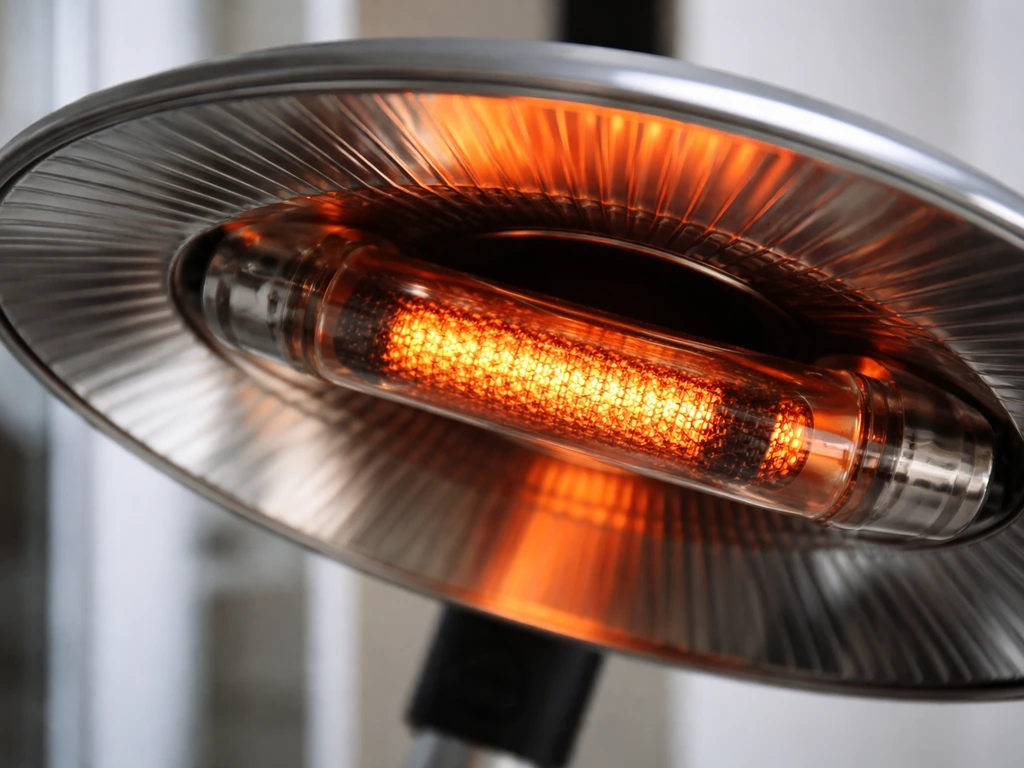
| Heating element | Carbon fibre with aluminium reflector |
| Heat pattern | 360 degrees around central column |
| IP rating | IP44 (splash and rain resistant) |
| Dimensions | 320mm (W) x 320mm (D) x 600mm (H) |
| Power lead length | 1.8 metres |
| Safety feature | 360-degree anti-tilt (tip-over) switch |
| Housing material | Aluminium |
| Portability | Built-in handle, no castor wheels |
| Controls | On/off switch |
The 360-degree heat distribution is genuinely useful if you have a round or square table setup where people are sitting on all sides. Unlike a directional infrared panel heater that blasts heat in one direction, the SH16330N's carbon element wraps warmth around the column. The aluminium reflector helps push that heat outward rather than letting it dissipate straight upward. At 1200W, it's the equivalent of running a strong electric fan heater, though without the fan noise since this is a radiant heater.
How it actually performs on a real patio
Distance and seating layout
In calm conditions, the SH16330N is comfortable for people sitting within roughly 1.5 to 2 metres of the unit. Beyond that, the warmth drops off noticeably. For a small garden table with four seats clustered around it, placing the heater centrally works well because of that 360-degree distribution. If your seating arrangement is linear, like a long sofa along a wall, you'd get better results from a directional unit aimed at your guests.
Wind and exposed patios
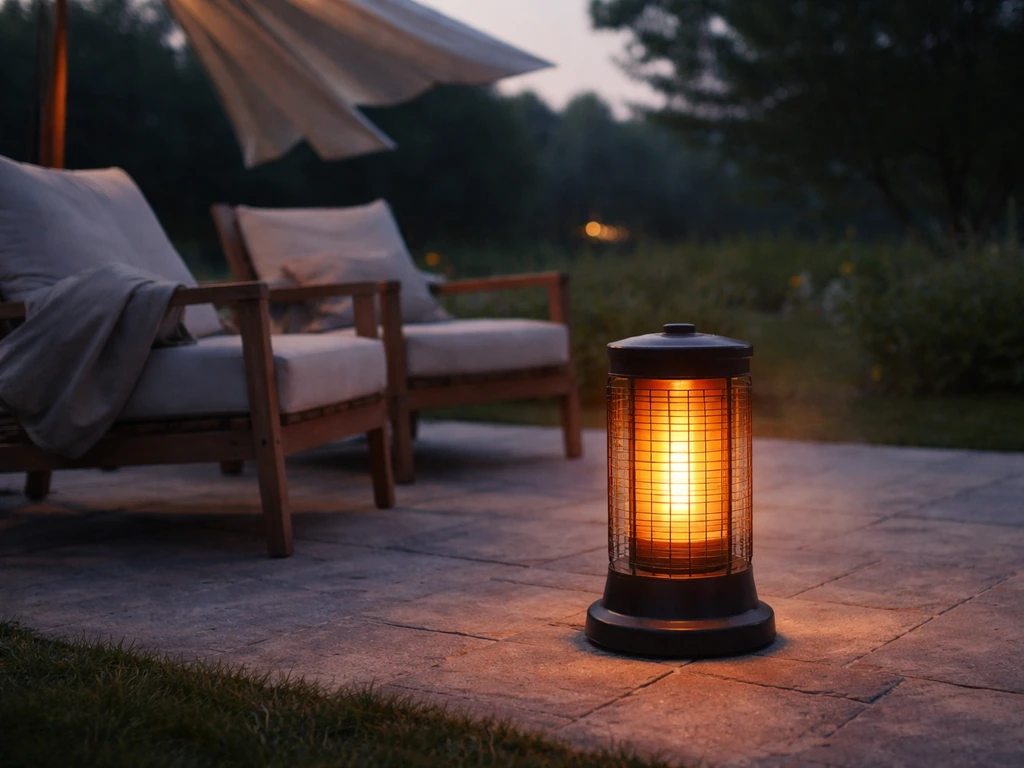
This is where the SH16330N's limits show up clearly. At 1200W, it doesn't have the raw output to push through even a moderate breeze. If your patio is exposed and catches wind regularly, the warmth simply won't reach people effectively. Covered or semi-enclosed spaces, like a pergola with side panels or a conservatory with the doors open, are where this heater genuinely shines. The heat stays in the space, the 1200W is enough to raise the ambient temperature, and guests actually feel it. On a completely open patio on a cold evening with any wind, you'll be disappointed.
Covered vs. uncovered spaces
IP44 means the SH16330N can handle rain splashes and isn't going to be damaged by a light shower, but operating it in heavy rain isn't recommended. More practically, placing it under a canopy or covered area not only protects the unit but dramatically improves its heating performance because the radiant warmth bounces off nearby surfaces rather than disappearing into open sky. If you have a covered patio, this heater punches above its wattage class. If your space is fully open to the elements, consider stepping up to a higher-wattage electric heater or a propane model.
Setup, controls, and everyday use
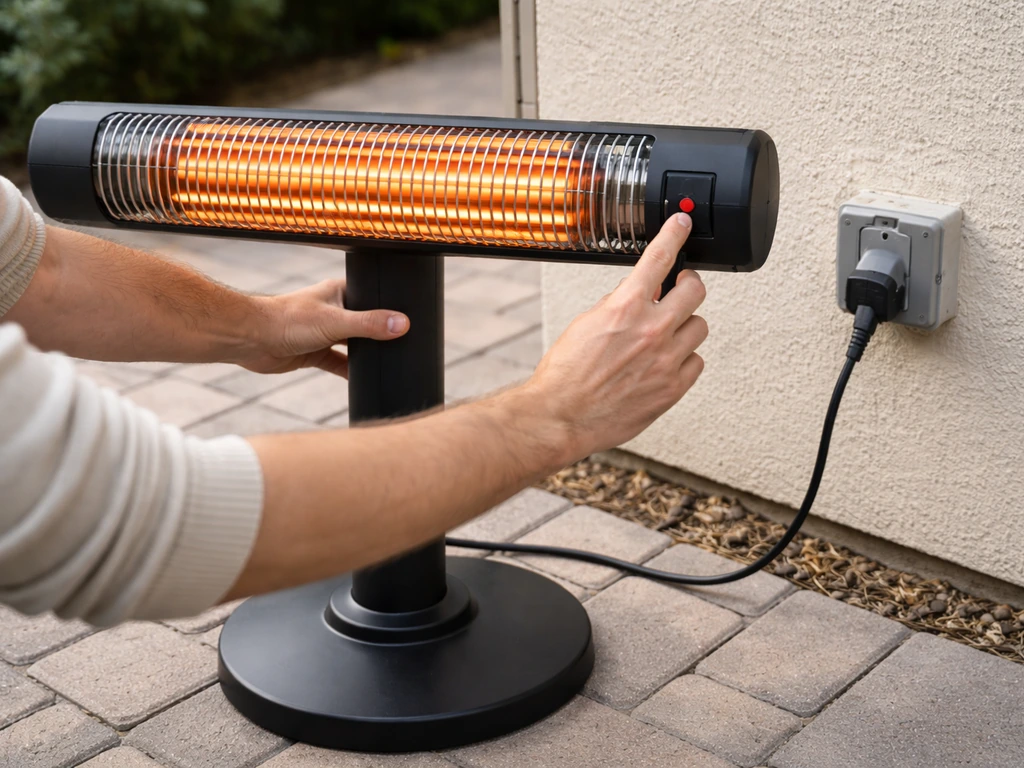
Setup is about as simple as patio heaters get. There's no assembly required beyond unpacking it, no gas lines, no filling cylinders. You place it where you want it, plug it in to a standard socket (making sure you're using an outdoor-rated extension lead if needed), and switch it on. The 1.8-metre lead is decent but not generous, so plan your placement around where your outdoor socket is.
Controls are basic: it's an on/off switch. There's no thermostat, no adjustable heat setting, and no timer. You get 1200W or nothing. For most casual outdoor use that's fine, but if you want to dial the warmth up or down depending on the temperature, you won't have that option here. It heats up quickly once switched on, which is one of the advantages of carbon fibre elements over halogen alternatives.
Day to day, the portability is a genuine selling point. The built-in handle makes it easy to carry from storage to the patio and back. There are no castor wheels, so you're carrying it rather than rolling it, but given its compact dimensions (it's only 60cm tall per the manual specs) it's not cumbersome. The electricity.gg product listing for the Swan SH16330N lists its dimensions as 32.0 cm (W) x 32.0 cm (D) x 68.5 cm (H) compact dimensions (it's only 60cm tall per the manual specs). If you store it inside between uses, it'll last longer and the element will stay in better condition.
Safety, clearances, weather tolerance, and maintenance
Safety features and placement
The tip-over safety switch is a proper 360-degree mechanism, meaning if the unit falls in any direction it cuts power immediately. That's important for a portable heater that gets moved around and doesn't have the stability of a tall free-standing tower model. Keep at least 50cm of clear space around the unit on all sides and avoid placing it directly under low overhangs or too close to fabric furniture, parasols, or hanging plants. Carbon fibre elements get very hot, and while the aluminium housing provides some shielding, radiant heat still projects outward with intensity.
Weather tolerance
IP44 is adequate for outdoor use: it handles water splashing from any direction, so light rain during use isn't a problem. It's not waterproof though, so don't leave it out in heavy rain or allow standing water near the base. For long-term storage, bring it inside or cover it properly. The aluminium housing resists corrosion well, which helps if you're in a coastal environment or somewhere with high humidity.
Routine maintenance
- Wipe down the aluminium housing with a damp cloth periodically to remove dust and debris that can affect heat output
- Check the power lead for any cracking or damage before each season, especially if it's been stored outdoors
- Inspect the carbon fibre element visually for any signs of damage or discolouration
- Keep the reflector clean so it continues to direct heat outward efficiently
- Store the heater inside or under a waterproof cover when not in regular use
How it stacks up against other patio heaters
The SH16330N competes in a crowded space. There are plenty of portable electric patio heaters at similar price points, and there are also propane options and larger infrared electric heaters that offer more heat for not dramatically more money. Here's how the main choices compare for someone deciding between them.
| Heater Type | Heat Output | Best For | Main Trade-off |
|---|---|---|---|
| Swan SH16330N (electric) | 1200W | Small covered patios, close seating, portability | Low output, no adjustable settings, not for open or windy spaces |
| Mid-range portable propane heater | 7–14kW (equivalent) | Open patios, larger gatherings, no power socket needed | Needs gas cylinder, heavier, less convenient to move |
| High-wattage electric infrared heater (2000W+) | 2000–3000W | Larger covered patios, wall or ceiling mount | Needs installation or sturdy mounting, less portable |
| Tabletop electric heater | 700–1200W | Very small tables, intimate outdoor dining | Even lower coverage area than SH16330N |
| Garden line portable heater | Varies (often 2000W+) | Mid-sized open gardens | Less compact, often bulkier |
If you're cross-shopping with propane options, the honest answer is that propane heaters win decisively on raw heat output and performance in open, windy conditions. A standard portable propane patio heater delivers several kilowatts of heat, which is many times what the SH16330N puts out. The trade-off is convenience: propane heaters need fuel, weigh more, and take more effort to set up and maintain. If you have an outdoor socket and a small covered space, the Swan's plug-in simplicity is a real advantage. If you want more context, see our bali outdoor patio heater reviews to compare wattage, coverage, and value across popular options for the island climate small covered spaces. If your priority is heating a large or exposed patio effectively, propane or a higher-wattage electric option is the better call.
Compared to other portable electric heaters reviewed on this site, the SH16330N's 360-degree heat distribution stands out as a practical design choice for round-table setups. If you want to compare options, these portable patio heater reviews will help you match the right type and output to your setup. Many budget electric patio heaters are directional, which means you get a hot spot rather than even warmth around a seating group. The carbon fibre element also heats up faster than halogen alternatives and tends to feel less glare-y in low-light evening use.
Who should buy it and who should skip it
Buy the Swan SH16330N if:
- You have a small patio, balcony, or covered outdoor area where seating is within about 2 metres of the heater
- You want plug-in simplicity with no gas, no installation, and no ongoing fuel cost beyond electricity
- Portability matters to you and you want to move the heater between spaces or store it easily
- Your outdoor socket is within 1.8 metres of where you'll use the heater (or you have a suitable outdoor extension lead)
- You mostly entertain in calm or sheltered conditions rather than exposed, windy gardens
Skip the SH16330N and look at alternatives if:
- Your patio is large or open to the wind, where 1200W won't keep people warm
- You want adjustable heat settings or a thermostat to manage warmth precisely
- You're heating a long, linear seating area where directional heat would work better than 360-degree distribution
- You need to heat more than a small group of four to six people in close proximity
- Your budget allows for a 2000W+ electric infrared heater that gives significantly more output for not much more money
If you're comparing across multiple brands in this category, it's worth looking at how other portable patio heaters from brands like Bali Outdoors, Gardenline, and Nuu Garden handle similar use cases, since they often offer different power outputs, fuel types, and design trade-offs at overlapping price points. If you're specifically looking at Gardenline portable patio heater reviews, you can use the same checklist for power output, coverage area, and wind performance. The Swan SH16330N wins on simplicity and portability, but it's not the most powerful or versatile option in the portable heater category.
Bottom line: the Swan Al Fresco SH16330N is a genuinely useful heater for the right situation. It's well-built for its price, safe, easy to use, and the 360-degree heating design is a thoughtful touch for small group settings. Just go in with realistic expectations about its 1200W output, keep it in sheltered spaces, and it'll do a good job of extending your outdoor evenings through spring and autumn without any fuss. If you are also shopping for a Frontgate patio heater, check these frontgate patio heater reviews to compare coverage, heat output, and weather performance before you buy. If you're also looking at Nuu Garden patio heaters, it helps to read dedicated Nuu Garden patio heater reviews to compare heat output, coverage, and build quality against the Swan SH16330N.
FAQ
Can I use the Swan SH16330N with an extension lead, and what should I check first?
Yes, but only if you have enough power on the circuit and a suitable outdoor-rated extension lead. Because it draws 1200W, it can overload a lightly loaded outdoor socket when used alongside other high-watt devices, so avoid running it through undersized or indoor-only leads.
Does the SH16330N have a thermostat or adjustable heat settings?
If you want temperature control, this model is not designed for it. It has on/off only, so for evenings that cool down quickly, you may need to manually switch it back on earlier (or add a second heater) rather than expecting a thermostat to maintain a set level.
How far away do people need to sit for it to feel effective?
Aim for short range. The article indicates comfortable warmth roughly within 1.5 to 2 metres, so if you have guests farther away, try moving the unit closer to the seating cluster or using a directional higher-watt heater for a longer reach.
Will the 360-degree heating work for a sofa-style seating arrangement along a wall?
Great for a round or clustered table, weaker for long or wall-facing seating. The 360-degree design spreads heat around the column, so in a linear layout you may find a directional heater aimed at your guests feels warmer without requiring more electricity.
Is IP44 enough to leave the heater outside in wet weather?
Keep it dry during and after use. IP44 handles splashes, but heavy rain and standing water near the base are not recommended, so use a sheltered spot, wipe off moisture, and store it indoors or under a proper cover.
What happens if the power cuts out, is there any backup option?
Not as a primary plan. If you lose power you will lose heat, since the heater is mains electric, and there is no battery backup. For occasional use, consider a dedicated outdoor socket circuit or a generator sized for the 1200W load plus any safety margin.
What clearance and placement rules should I follow to avoid overheating risks?
Carbon fibre elements heat up fast, but they also get very hot. Keep it away from parasols, fabrics, hanging plants, and any surface that could be scorched, and respect the recommended clearance so airflow around the housing is not blocked.
How well does it perform in windy conditions, and what can I do to improve it?
With wind, expect reduced perceived warmth. Since 1200W is modest, even a moderate breeze can prevent heat from reaching people, so prioritize semi-enclosed patios, side-panel pergolas, or locations where nearby walls reduce airflow.
Will the tip-over switch cause frequent shutoffs if I move it onto uneven ground?
Yes, but only where it can be safely supported and kept stable. The tip-over safety switch cuts power in any direction, so on uneven decking or soft ground it may interrupt more often, so place it on a level, firm surface.
How should I store it between seasons to protect the element and housing?
Cover storage helps, but do not store it still damp. Let it cool fully, then dry the exterior, keep it in a dry indoor location if possible, and use a breathable cover to reduce condensation and corrosion over time.