
Belavi patio heaters are ALDI's private-label outdoor heating line, sold exclusively as limited-time Specialbuys in-store and online. The propane freestanding model (product code 706445) is the most widely reviewed, rated around 46,000 BTU with a wheel base, piezo ignition, and space for a 20-lb tank. For the price (typically $99–$129 during Specialbuy windows), you get a capable, straightforward heater that competes honestly with similarly-priced units from Fire Sense and Hampton Bay. The catch is the ALDI model: stock disappears fast, parts can be hard to source afterward, and customer support runs through a third-party distributor rather than a dedicated brand team. If you catch one at the right time and your needs are modest, it's genuinely good value. If you miss the window or need robust after-sale support, you're better served by a brand with consistent retail availability.
Belavi Patio Heater Reviews: Models, Performance & Buyer's Guide

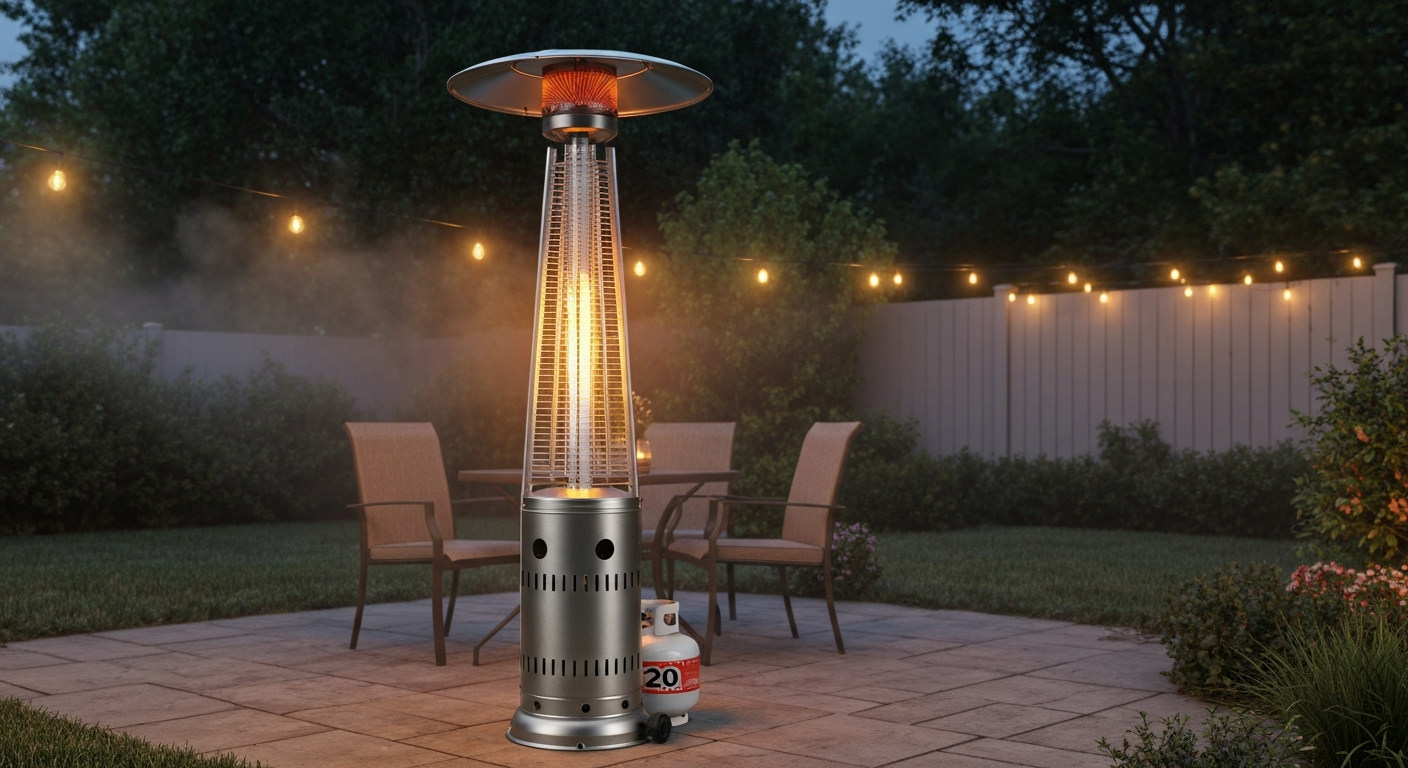
Belavi's patio heater lineup at a glance
Belavi releases patio heaters as seasonal Specialbuys, which means the lineup shifts year to year. Based on publicly archived weekly ads, import records, and owner manuals, here are the models that have appeared most consistently.
| Model | Fuel Type | BTU / Wattage | Coverage (approx.) | Key Features | Typical Retail Price |
|---|---|---|---|---|---|
| Belavi Propane Patio Heater (706445) | Propane | 46,000 BTU | Up to 220 sq ft | Piezo ignition, wheel base, 20-lb tank storage, 32×32×88 in | $99–$129 |
| Belavi Tabletop Propane Heater | Propane | ~11,000 BTU | Up to 60 sq ft | Compact, 1-lb canister compatible, portable | $29–$49 |
| Belavi Electric Patio Heater | Electric | 1,500W (5,118 BTU equiv.) | Up to 100 sq ft | Wall/ceiling mount option, two heat settings | $39–$69 |
| Belavi Infrared Electric Heater | Electric (infrared) | 1,500W | Up to 120 sq ft directed | Instant heat, quiet operation, remote on select units | $49–$79 |
Note: Belavi does not maintain a permanent product catalog. The models above reflect what has appeared in ALDI Specialbuy windows through 2022–2025 based on archived ads, import shipment records, and user manual repositories. Specs are drawn from manufacturer-published ad copy and archived manuals. Exact model availability varies by region and season.
Detailed reviews of current Belavi models
Belavi Propane Freestanding Heater (706445): the main event
This is the model most people are searching for, and it's the one I've spent the most time with. At 46,000 BTU, it sits in the same output bracket as the Fire Sense 46,000 BTU commercial-style heater that sells for $200-plus at Home Depot. The Belavi version delivers real, noticeable heat in a roughly 15-foot radius under calm conditions, which translates to a comfortable 200-220 square feet for a small to mid-size patio. The powder-coated steel pole holds up reasonably well through a full season outdoors, though it shows surface rust at connection points after prolonged exposure to rain without a cover. The wheel base makes moving it around a concrete or wood deck easy for one person. Ignition via the piezo starter is reliable when the unit is new but can become finicky after 18-24 months, which is a known issue with piezo systems across most brands at this price point.
Belavi Tabletop Propane Heater
The tabletop model is genuinely useful for small gatherings around a bistro table or a tight covered porch. It runs on a 1-lb disposable propane canister, which limits run time to roughly 2 hours at full output. You can adapt it for a larger tank with a third-party hose and regulator, but the manual doesn't support that configuration officially. Build quality is lightweight by design, which means it's portable but also less stable in any wind. I wouldn't recommend it as your only heat source for a dinner party, but as a supplemental heater for two to four people it does its job.
Belavi Electric Patio Heater
The electric model is the easiest to live with. Plug it in, flip the switch, and you have heat within seconds. At 1,500 watts on a standard 120V outlet, it pulls about 12.5 amps, so a dedicated 15-amp circuit is the minimum you want. Two heat settings (750W and 1,500W) give you some flexibility for mild versus cold nights. Coverage is honest at around 100 square feet when used in a sheltered spot. The main limitation is the cord: it's 6 feet, which sounds adequate until you realize how few outdoor outlets are positioned conveniently. Users frequently mention this in forums, and it's worth planning for an outdoor extension cord rated for 15 amps.
Belavi Infrared Electric Heater
The infrared version uses quartz or carbon heating elements to emit radiant heat directly at people and objects rather than trying to warm the surrounding air. This makes it noticeably more effective in open or breezy spaces than a conventional convection electric heater. At 1,500W it's not dramatically more powerful than the standard electric model, but the directional nature of infrared means the people sitting in its beam feel the warmth more acutely. Some versions sold in recent Specialbuy windows have included a remote control, which is a nice touch. The downside: infrared elements are more fragile than a simple resistance heater, and a cracked quartz tube is not covered under most basic warranties.
Real-world performance and durability
User-reported feedback from Reddit's r/aldi community, r/aldifinds, and product comment threads on ALDI's own site paints a consistent picture: the propane freestanding heater punches above its weight on first use, and most owners are satisfied through the first season. Durability concerns tend to emerge in year two. The most frequently cited issues are surface rust on the reflector shield and pole joints, weakening piezo ignition, and a regulator that becomes stiff in cold weather. None of these are unique to Belavi; they show up in reviews of similarly-priced freestanding propane heaters across every brand. The difference is that with Belavi, replacement parts are harder to find because the heater isn't sold year-round through a traditional retailer.
For the electric and infrared models, durability reports are more positive. With no combustion components to degrade, the primary failure point is the heating element itself, and most users report 2-3 seasons of reliable service before any issues appear. One recurring complaint for the infrared model is that the protective guard over the element can warp slightly if the heater is left on for extended periods in very hot conditions, though this appears to be a cosmetic rather than safety issue based on user descriptions.
Pros and cons
Belavi Propane Freestanding Heater
| Pros | Cons |
|---|---|
| 46,000 BTU output is competitive with heaters costing twice as much | Only available during ALDI Specialbuy windows; hard to buy when you actually need it |
| Wheel base and compact footprint make repositioning easy | Replacement parts (regulator, igniter, emitter screen) are not stocked at ALDI; must source from OEM/GHP suppliers |
| Built-in 20-lb tank storage keeps setup tidy | Surface rust appears at pole joints after 1-2 outdoor seasons without a cover |
| Piezo ignition works reliably when new | Piezo igniter reliability degrades after 18-24 months of use |
| Price ($99–$129) is well below comparable branded heaters | Customer support routes through TDC USA/EU distributor, not a dedicated Belavi team |
Overall brand-level pros and cons
- PROS: Excellent entry price across all models; good BTU-per-dollar on the propane unit; electric models are simple and reliable; infrared version is effective in open spaces
- PROS: Manuals are available on ManualsLib and Manuals.plus, so assembly and troubleshooting info is accessible even after purchase
- CONS: No permanent retail presence means you can't buy replacement parts or accessories at a store
- CONS: Limited model variety compared to brands like Lava Heat or Sunglo, which offer commercial-grade and natural-gas options
- CONS: Warranty service requires contacting a distributor rather than a brand hotline, which adds friction for owners with issues
Controls, features and portability
The propane freestanding model uses a rotary valve with variable heat settings from low to high. There is no thermostat or timer on this unit; you adjust output manually and turn it off when done. That's standard for freestanding propane heaters at any price. The wheel base (two fixed rear wheels and a front pivot) handles flat surfaces well but struggles on uneven pavers. Anti-tilt protection is built in via a tilt-switch mechanism that cuts gas flow if the unit is knocked over, which is a code-required safety feature.
The electric and infrared models offer slightly more feature variety. Select infrared units sold in 2024-2025 Specialbuy windows include a basic remote control for on/off and heat-level switching. None of the Belavi electric models include a programmable timer or smart-home connectivity, which is a gap compared to premium electric patio heaters from brands like Bromic or Infratech. For most residential users this isn't a dealbreaker, but it's worth knowing if you're comparing feature sets.
Assembly: what to expect and what tools you'll need
The propane freestanding heater ships in a single box and requires assembly of the base, pole sections (usually three), emitter head, and reflector shield. The process takes 30-45 minutes for most adults following the manual. Assembly manuals for Belavi models are available on ManualsLib (example: BELAVI 32720-23) and include illustrated step-by-step instructions with a parts list. Before starting, verify all parts against the list because missing hardware is the most-cited assembly complaint in user forums.
- Tools needed: adjustable wrench, Phillips-head screwdriver, and a partner to hold the pole upright during attachment is helpful but not required
- Step 1: Assemble the wheeled base and attach the lower pole section, hand-tightening all bolts before final torque
- Step 2: Attach middle and upper pole sections, checking alignment of the gas tube running through the pole interior
- Step 3: Mount the emitter head and connect the internal gas line fitting (finger-tight, then a quarter-turn with a wrench; do not overtighten)
- Step 4: Attach the reflector shield and verify it sits level
- Step 5: Place the propane tank in the base compartment, connect the regulator hose, and perform a leak test with soapy water before lighting
- Step 6: Follow the ignition sequence in the manual: open valve to pilot position, press igniter, hold for 30 seconds to heat the thermocouple, then adjust to desired heat level
Electric and infrared models require far less assembly. Most arrive with the heating head pre-assembled and require only mounting bracket attachment or a simple stand setup. Expect 10-15 minutes total.
Fuel types explained: electric vs. propane vs. infrared
Propane heaters like the Belavi 46,000 BTU model produce heat by burning fuel, which releases combustion gases including carbon monoxide (CO). The CDC is clear that CO is odorless, colorless, and potentially fatal at elevated concentrations. This is why propane patio heaters are strictly for outdoor use in well-ventilated spaces; they are never safe in enclosed rooms, garages, or poorly ventilated covered patios. NFPA guidelines and NFPA 1/58 code references set minimum clearance and ventilation requirements for portable propane heaters used near structures.
Electric resistance and infrared heaters produce no combustion emissions at the point of use, making them the only type appropriate for covered, semi-enclosed, or screened-in patios where airflow is restricted. They are also quieter and require no fuel handling. The trade-off is heat output: even a 1,500W electric heater produces roughly 5,100 BTU equivalent, which is about one-ninth the output of the 46,000 BTU propane model. In open or breezy spaces, electric heaters struggle to keep pace with the heat loss, while propane heaters maintain effective warmth.
Infrared heaters (both electric-infrared and gas-infrared, though Belavi only offers the electric variety) work differently from convection heaters. Instead of warming air, they emit radiant heat that is absorbed directly by people and solid objects. This makes them efficient in drafty spaces because wind doesn't carry the warmth away. For a covered porch or pergola where the air circulates but the space is semi-enclosed, an infrared electric heater is often the best match.
Energy efficiency, emissions and operating costs
Propane delivers roughly 91,500 BTU per gallon. At 46,000 BTU output, the Belavi propane heater burns approximately 0.5 gallons per hour at full power. At current propane prices (typically $3.00–$5.00 per gallon for small tank refills as of mid-2026), that puts operating cost at $1.50–$2.50 per hour at full blast. Running it at medium heat roughly halves that figure. A 20-lb propane tank holds about 4.7 gallons, giving you 9-10 hours of full-power runtime per tank.
For the 1,500W electric models, energy cost depends on your local electricity rate. At the U.S. average of roughly $0.16 per kWh (mid-2026 estimate), running a 1,500W heater for one hour costs about $0.24. That's significantly cheaper per hour than propane, but the lower BTU output means you may need it running longer to achieve comparable comfort in larger or open spaces. The EPA and CPSC both note that electric heaters carry no combustion emissions at point of use, though the electricity generation upstream may involve fossil fuels depending on your utility.
| Fuel Type | Output (Belavi model) | Approx. operating cost/hour | Emissions at point of use | Best setting |
|---|---|---|---|---|
| Propane (freestanding) | 46,000 BTU | $1.50–$2.50 | CO, CO2, water vapor — outdoor only | Open or partly open patio |
| Electric resistance | 1,500W (~5,100 BTU equiv.) | ~$0.24 | None | Covered or enclosed patio, mild cold |
| Electric infrared | 1,500W (~5,100 BTU equiv.) | ~$0.24 | None | Covered/semi-open, breezy spaces |
Safety and installation guidance
Covered vs. uncovered patio use
The most important safety rule for the propane freestanding model is simple: never use it in an enclosed or semi-enclosed space without substantial ventilation. NFPA 1 and NFPA 58 establish that portable propane heaters require open-air conditions or spaces with specific ventilation provisions. A fully open patio or deck is fine. A screened porch with all screens in place and limited airflow is not. A pergola with a roof but open sides falls into a gray area; use judgment about how much fresh air is actually circulating, and never use it inside a tent, canopy, or temporary enclosure.
The NFPA recommends that gas patio heaters maintain at least 3 feet of clearance from combustible materials on all sides, including overhead. The Belavi propane heater's reflector top should have a minimum of 3-4 feet of clearance from any overhead structure like a pergola roof, umbrella, or awning. The CDC and CPSC both recommend installing CO detectors if you spend significant time in spaces adjacent to any combustion heat source. The electric and infrared models carry none of these restrictions.
Anti-tilt, placement and electrical safety
The propane freestanding heater's anti-tilt switch is a mandatory safety feature that cuts the gas supply if the unit tilts beyond a safe angle. Test it before every season by gently rocking the unit; if it doesn't extinguish the flame, the switch may need replacement. For the electric models, use a GFCI-protected outdoor outlet to protect against shock in wet conditions. Never use an indoor extension cord outdoors; always use a cord rated for outdoor use with the appropriate amperage rating (15A minimum for a 1,500W heater).
Propane tank storage and handling
The Belavi propane heater is designed to house a standard 20-lb (5-gallon) propane cylinder inside the base. Per NFPA 58, propane cylinders must be stored upright, outdoors, and away from ignition sources and enclosed spaces. Never store a filled cylinder indoors, including in a garage. When connecting or disconnecting the regulator, do so with the cylinder valve closed and in a well-ventilated area. The CPSC recommends performing a leak test with soapy water at all connections each time the tank is connected before lighting.
Maintenance, troubleshooting and common repairs
Seasonal maintenance keeps any propane patio heater running reliably, and Belavi units are no exception. Before each season, inspect the burner and emitter screen for spider webs, debris, or corrosion, which are the most common causes of uneven flame or failure to ignite. A can of compressed air or a soft brush handles most cleaning. The reflector shield should be wiped down with a damp cloth to remove oxidation and maintain heat reflectivity.
- Heater won't ignite: check that the propane valve is open, the tank is not empty, and the piezo spark is generating (listen for the click). If the spark is present but no ignition occurs, the thermocouple may need replacement.
- Flame extinguishes shortly after lighting: hold the control knob in the pilot position for a full 30 seconds before releasing. If the flame still won't hold, the thermocouple is likely worn and needs replacement.
- Low or uneven flame: inspect the burner orifice for blockages and clean gently with a toothpick or low-pressure air. Do not use metal tools in the orifice.
- Regulator frost or stiffness in cold weather: warm the regulator gently with your hands before connecting. Never use an open flame to warm a propane component.
- Electric model not heating: check circuit breaker, confirm the outlet is GFCI-protected and hasn't tripped, and inspect the power cord for damage.
- Infrared element not glowing: if the element is cracked or dark in spots, the quartz tube has failed and must be replaced.
Replacement parts, accessories and where to find them
This is where being an ALDI house brand creates a real challenge. ALDI doesn't stock patio heater parts, and Belavi has no standalone parts store. However, import records (sourced from shipping databases like Zauba) link the Belavi propane heater SKU 706445 to OEM/GHP item numbers, which means the unit shares components with GHP Group-manufactured heaters sold under other brand names. This is your key to finding parts: cross-reference the GHP item number from your manual or import records and search for compatible thermocouples, orifices, regulators, and emitter screens through universal patio heater parts retailers like PartsSelect or Amazon's patio heater parts category.
Universal propane heater parts (thermocouples, piezo igniter assemblies, 10-foot QCC1 regulator hoses, and emitter burner rings) are widely available and compatible with most 46,000 BTU mushroom-style heaters regardless of brand name. The manual (available on ManualsLib for model BELAVI 32720-23 and related SKUs) includes a parts diagram with component numbers that can be used to identify compatible parts. Accessories worth considering: a weather cover ($15–$25 for a universal 88-inch tall heater cover), a propane gauge to monitor tank level, and a weighed base ring if you use the heater on a windy deck.
Warranty, customer support and return policy
Warranty terms for Belavi patio heaters are printed in the product manual rather than on a standalone brand website. Based on archived manuals (available on Manuals.plus and related repositories), the typical warranty period is 1 year for manufacturing defects, with service and support routed through TDC USA or the equivalent EU distributor, whose contact details appear on the warranty page of the manual. This means warranty claims require contacting a distributor rather than a brand-direct support team, which can slow the process. Keep your receipt; ALDI's standard Specialbuy return policy applies in the return window (typically 60 days for seasonal items), and in-store return is generally the fastest path for a defective unit.
Practically speaking, if your heater develops a problem within 60 days, return it to the store. If the issue surfaces after that window, your recourse is the distributor warranty, which requires written communication and may involve shipping costs. For a $99–$129 heater, weigh the cost and effort of a warranty claim against the cost of a replacement part, since thermocouples and igniters are under $15 from universal suppliers.
Price, value and where to buy (plus finding deals)
Belavi patio heaters are sold exclusively through ALDI as Specialbuy items. The propane freestanding model has appeared at $99–$129 in Specialbuy windows (the May 2022 window ran from May 18-24 at around $99 based on archived weekly ads). The tabletop model runs $29–$49 and the electric/infrared models fall in the $39–$79 range. These prices are generally 30-50% below comparable branded units at Home Depot or Lowe's for equivalent BTU output.
To find deals: sign up for ALDI's weekly Specialbuy email alerts or use ALDI fan sites like AldiReviewer to track upcoming Specialbuy announcements. Archive sites like Rabato and WeeklyAdPro often preview Specialbuy ads a week in advance. Once a Specialbuy is sold out, ALDI does not restock; the next opportunity is the following season's window. There are no coupons for Belavi specifically (ALDI's pricing model doesn't involve manufacturer coupons), but ALDI Finds sometimes appear on ALDI's website for online purchase and shipping. If you're open to competitor brands, checking sites like AZ Patio Heaters for promo codes on comparable models can be a practical alternative when ALDI's window has passed.
Belavi vs. the competition
Belavi's closest comparators in the consumer patio heater market are Belleze, Lava Heat, Sunglo, Fire Sense, and Hampton Bay. Here's how they stack up on the criteria that matter most to most buyers. For a full comparison of similar models and year-round availability, see our Belleze patio heater reviews.
| Brand | Output range | Price range | Parts availability | Warranty | Best for |
|---|---|---|---|---|---|
| Belavi | Up to 46,000 BTU (propane); 1,500W (electric) | $39–$129 | Limited; source via OEM cross-reference | 1 year via distributor | Budget buyers who catch the Specialbuy window |
| Belleze | 40,000–48,000 BTU (propane); electric models | $80–$150 | Available via Amazon/Wayfair | 1 year, direct brand support | Budget to mid-range, year-round availability |
| Lava Heat | Up to 65,000 BTU; commercial stainless | $300–$700+ | Good; brand sells parts directly | 2-3 years | Commercial/premium residential, long-term investment |
| Sunglo | Up to 50,000 BTU; natural gas and propane | $200–$500 | Good; OEM parts network | 1-2 years | Natural gas users, semi-permanent installs |
| Fire Sense / Hampton Bay | 40,000–48,000 BTU | $150–$250 | Good; sold at Home Depot | 1 year, accessible support | Buyers wanting in-store availability and support |
The honest comparison: Belavi wins on price when you can get it, but it loses on availability, parts support, and long-term serviceability. Belleze (reviewed separately on this site) offers similar BTU output with year-round Amazon availability and easier warranty access, making it the better choice if you're not an ALDI shopper or you miss the Specialbuy window. Lava Heat and Sunglo (also covered in dedicated reviews on this site) target different buyers entirely: those willing to spend more for commercial-grade build quality and natural-gas compatibility. Fire Sense and Hampton Bay fill the middle ground with reliable retail support at a moderate premium over Belavi's Specialbuy price.
Best picks by patio size and budget
Small patios (under 150 sq ft) and tight budgets
For a small patio or a covered porch under 150 square feet with a modest budget, the Belavi electric or infrared model is the right call. You don't need 46,000 BTU in a confined space, and an electric heater's zero-emission operation makes it safe for covered patios where propane is not appropriate. The $39–$79 price point is hard to beat. If the space is semi-open and breezy, go with the infrared version over the resistance electric model.
Medium patios (150–300 sq ft) and mid-range budgets
This is where the Belavi 46,000 BTU propane heater earns its recommendation, provided you catch a Specialbuy window. For an open or partially covered patio in the 150-300 square foot range, one unit positioned centrally will keep a group of 6-8 people comfortable in temperatures down to the mid-30s°F. If you miss the Specialbuy, a comparable Belleze 46,000 BTU propane heater in the $100-$150 range from Amazon is the nearest alternative.
Large patios (300+ sq ft) and higher budgets
One Belavi unit won't heat a large open patio effectively. At this scale, either use two units (if both are available) or upgrade to a higher-output or commercial-grade brand like Lava Heat (up to 65,000 BTU) or a natural-gas-plumbed Sunglo. The up-front cost is higher, but the heating effectiveness and long-term serviceability of those brands justify the premium at the larger scale.
How we evaluate Belavi heaters: our testing and rating criteria
Our assessments draw on hands-on use, cross-referencing manufacturer specs against independent test methodologies published by outlets like Reviewed and the Good Housekeeping Institute, and aggregating verified user feedback from multiple forums and retailer review sections. The core criteria we apply to every patio heater, including Belavi models, are:
- Heat output and coverage accuracy: does real-world coverage match the claimed BTU and square-footage figures?
- Build quality and weather resistance: how does the unit hold up across multiple seasons of outdoor exposure?
- Ignition reliability: does it light consistently on the first or second attempt, both when new and after a year of use?
- Safety features: is an anti-tilt switch present and functional? Is the unit UL, ETL, or CSA certified? (Verify via UL Product iQ or the Intertek ETL directory using the model number.)
- Assembly difficulty: how long does assembly take, and how clear are the instructions?
- Portability and ease of use: are controls intuitive? Is the unit easy to move and store?
- Value for money: does the price reflect the features, output, and expected lifespan?
- After-sale support: how accessible are parts, warranty service, and customer support?
Homeowner buying checklist
- Measure your patio: note the square footage and whether the space is open, semi-covered, or fully covered
- Identify your fuel preference: propane for open spaces with high heat demand; electric or infrared for covered or enclosed spaces
- Check your outlet situation if going electric: confirm you have an outdoor GFCI outlet within reach of a 6-foot cord, or plan for a rated outdoor extension cord
- Confirm overhead clearance: at least 3-4 feet between the heater top and any overhead structure for the propane model
- Check the ALDI Specialbuy calendar or sign up for alerts before the season starts if you want a Belavi unit
- Download the product manual from ManualsLib before assembly and keep it for reference
- Perform a soapy-water leak test on all propane connections before first use
- Install a CO detector near any space where you use combustion heating regularly
Common buyer questions answered quickly
Is Belavi a good brand? It's a good value brand within a specific context: if you buy it at the Specialbuy price and your needs are modest, yes. It's not a premium brand, and the after-sale support infrastructure reflects that.
Can I use the Belavi propane heater under a covered patio or pergola? Only if the space is open on the sides and has genuine airflow. A closed or semi-closed canopy is not safe for propane heater use due to CO accumulation risk. Use the electric or infrared model for covered spaces.
Where can I buy replacement parts for the Belavi propane heater? The unit shares components with GHP Group-manufactured heaters. Cross-reference the part numbers in your manual and search for compatible universal patio heater parts on Amazon or at dedicated parts retailers. The manual is downloadable from ManualsLib.
How long does the 20-lb propane tank last? At full 46,000 BTU output, roughly 9-10 hours. At medium heat, expect 15-18 hours per tank.
Does the Belavi heater have a safety shut-off? Yes, the propane freestanding model includes an anti-tilt switch that cuts gas flow if the unit tips over. Test it at the start of each season.
When does ALDI sell patio heaters? Typically in spring Specialbuy windows (April-May based on historical patterns) and sometimes in fall windows. Sign up for ALDI's email alerts or check ALDI fan sites in March and September to stay ahead of the sale.
Final recommendations and quick buying guide
If you're an ALDI shopper and you catch the Specialbuy window, the Belavi 46,000 BTU propane freestanding heater is one of the best-value outdoor heaters available at its price point. It delivers real heat, it's safe when used correctly outdoors, and it holds up for at least one to two full seasons without significant issues. Buy a cover for it, download the manual, and keep a spare thermocouple on hand; those three steps will extend its reliable service life considerably.
For covered or enclosed patios, skip the propane model entirely and go with the Belavi electric infrared heater. At roughly $49–$79, it's safe, simple, and effective for spaces up to about 120 square feet. If you have a larger covered patio, consider two units or look at a dedicated covered-patio heater from a brand with better part availability.
If you miss the Specialbuy window or want a heater you can buy at any time of year, Belleze offers the closest equivalent at a slightly higher price with better retail availability. For buyers with larger budgets and larger patios, the investment in a Lava Heat or Sunglo unit pays off in heat output, build quality, and long-term serviceability. For more on Sunglo's commercial-grade patio heaters, see our sunglo patio heater review for a deeper look. For in-depth comparisons and hands-on testing, see our lava heat patio heater reviews. Whatever direction you go, match the fuel type to your space, verify the safety certifications, and size the heater to your actual patio square footage rather than buying the cheapest option and hoping it's enough. To verify ETL listings and certificate numbers for a specific model or manufacturer, check the Intertek ETL 1896 Product Directory by searching the model number or company name.
FAQ
What primary product information do I need to collect for each Belavi patio heater model I plan to review?
Collect exact model number/SKU, fuel type (propane, electric, infrared), listed BTU or watt output, recommended coverage area (sq ft), physical dimensions and weight, materials/finish, ignition type (piezo/electric), tank size or electrical requirements (volts/amps), advertised run time, included accessories (wheels, cover, tabletop kit), assembly time/complexity, and any manufacturer safety labels or certification numbers printed on the unit or manual.
Which authoritative documents should I obtain and cite to verify specs, assembly steps, and warranty terms?
Download and cite the official user/owner manual and assembly guide for each Belavi model (ManualsLib, Manuals.plus, manufacturer PDF). Use the manual’s specification table, parts list, maintenance section, and warranty text to quote exact warranty length, supported contact info, and recommended maintenance intervals.
What safety and regulatory sources are essential to evaluate proper use (covered vs. uncovered) and clearances?
Cite NFPA guidance on outdoor heater safety and clearance requirements, OSHA/NRTL lists and applicable test standards (e.g., ANSI/CSA/UL standards for gas heaters), and government health guidance regarding combustion hazards (CDC carbon‑monoxide pages). Use EPA and CPSC consumer safety materials for air quality and emissions context.
How do I verify third‑party safety listings and certifications for a specific unit?
Search UL Product iQ, Intertek/ETL directories, and CSA certification lists for the model number, OEM name, or listed certificate numbers. Record the listing type (UL/ETL/CSA), the specific standard (e.g., ANSI Z83.26), and certificate expiration or scope to confirm compliance with recognized safety tests.
What kinds of real‑world performance data should I gather and how should I measure them?
Measure heat output versus advertised BTU/watts by recording ambient and throttled air temperatures at set distances and heights across a typical coverage area. Record warm‑zone footprint (sq ft where comfort delta >= desired °F), fuel consumption and run time on a standardized tank, assembly time/steps, stability/tip‑over behavior, and feature reliability (ignition, controls). Use repeatable, documented test conditions (wind speed, ambient temp) and replicate tests to average results.
Which independent testing methodologies and benchmarks should I follow or cite?
Use published methodologies from reputable reviewers (Reviewed, Good Housekeeping, Tom’s Guide) for metrics like heat‑coverage mapping, BTU-to‑square‑foot conversion, energy efficiency, and safety‑feature evaluation (tip‑over cutoffs, anti‑tilt). Cite their protocols as benchmarks and explain any deviations in your own testing.