
The best patio heater for most people is a 40,000 BTU freestanding propane model. It heats a 10 to 15 foot radius, runs about 10 hours on a standard 20 lb tank, costs under $200, and works on any patio without any installation. But that answer only holds if you have an open or semi-open space, easy access to propane, and want something you can move around. Change one of those factors and the best pick changes too.
Best Patio Heaters Reviews: Top Picks by Fuel and Space

Willa Brennan
15 May 2026
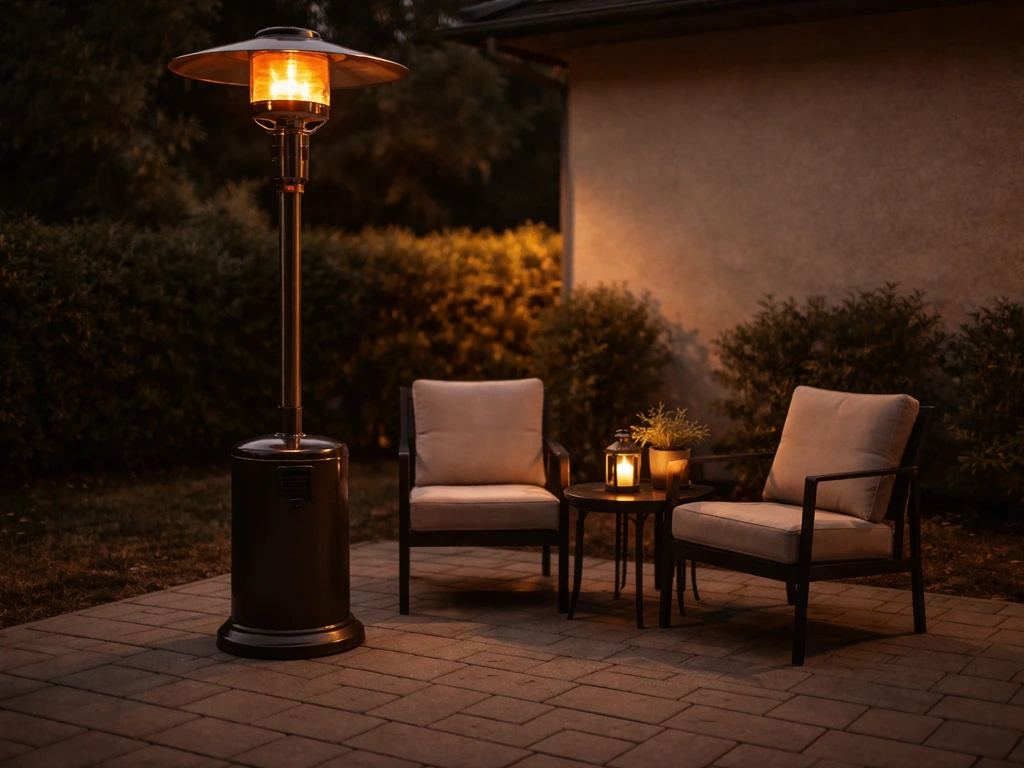
Here is how to figure out exactly which heater fits your setup, plus honest reviews of the top options across every major category. If you want to compare specific models, see our outdoor patio heaters reviews for detailed recommendations by heater type honest reviews.
How to choose the best patio heater for your setup
Before you buy anything, nail down three things: how big your patio is, whether it is covered or open, and what fuel source makes the most sense for your situation. Everything else, including price and features, flows from those decisions.
Patio size and heat output (BTU explained simply)
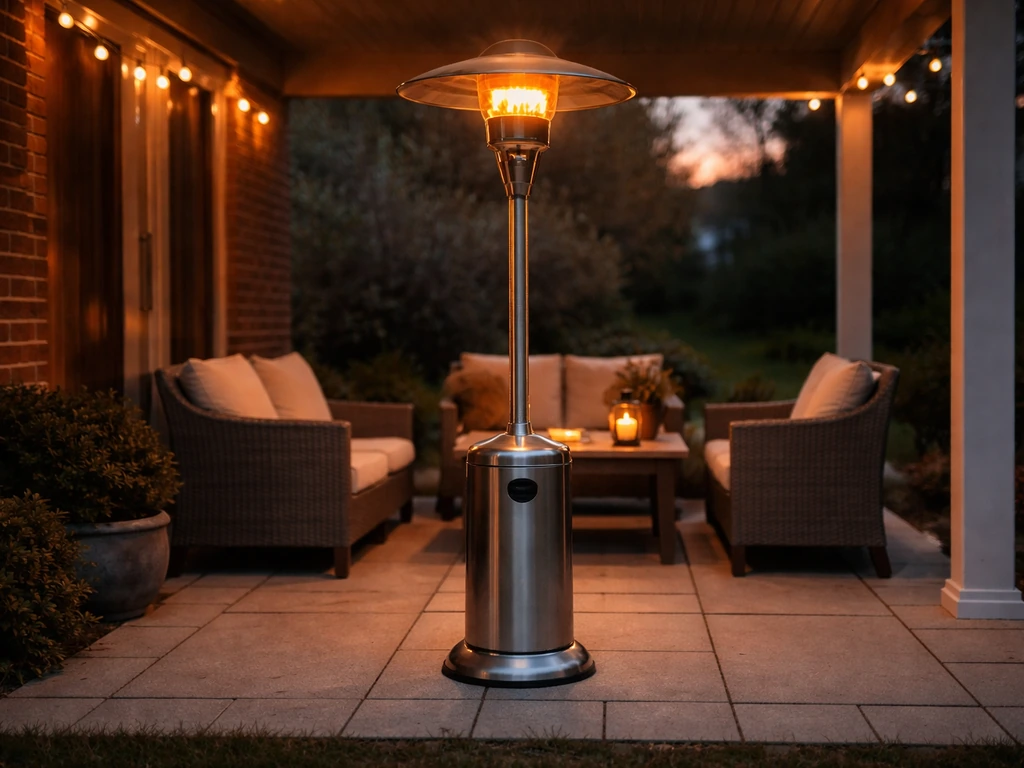
BTU stands for British Thermal Unit and it just measures how much heat a heater puts out per hour. The higher the BTU, the more area it can warm. As a practical rule: a 40,000 to 48,000 BTU heater covers roughly a 10 to 15 foot radius, which is enough for most standard patio seating areas. A 10 by 12 foot patio with a table and four chairs sits comfortably inside that range. If your patio is larger, or you are heating a wide-open deck, you may need multiple heaters or one of the higher-output models like the Solo Stove Tower at 72,000 BTU.
Covered vs. open patios change everything
A covered patio holds heat much better than an open one. Under a pergola or roof, even a mid-range electric or propane heater will feel noticeably warmer because the heat has nowhere to escape. On an exposed deck or open yard, wind is your enemy. Wind kills radiant heat fast, and manufacturer coverage estimates almost always assume calm conditions. On a windy patio, push toward higher-BTU models, infrared heaters (which warm objects and people directly rather than the air), or position heaters strategically to block prevailing wind. Fuel type also matters here: never run a propane or natural gas heater inside an enclosed structure without adequate ventilation, since these fuels produce carbon monoxide.
Choosing the right fuel type
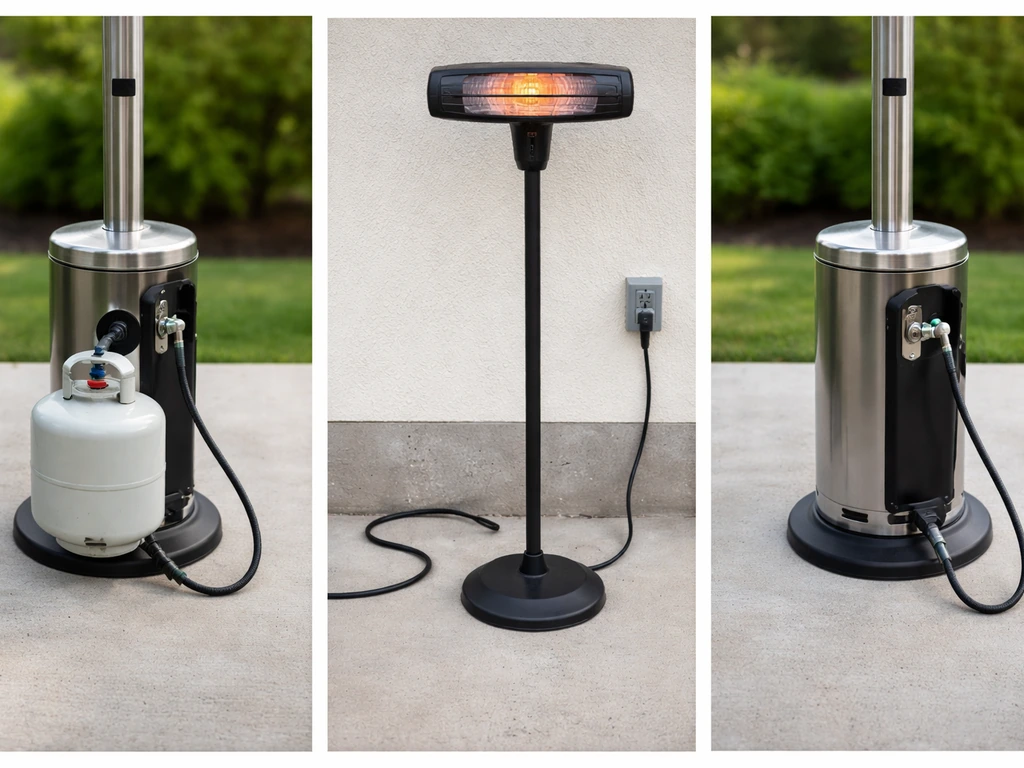
| Fuel Type | Best For | Heat Output | Mobility | Operating Cost | Installation Needed |
|---|---|---|---|---|---|
| Propane | Open patios, renters, portability | High (40,000–48,000 BTU typical) | High (portable) | Moderate (tank refills) | None |
| Electric / Infrared | Covered patios, wind exposure, low maintenance | Lower (1,500–5,000W) | Medium | Low per hour | Outlet access only |
| Natural Gas | Permanent setups, high use, large spaces | High (40,000+ BTU) | None (fixed) | Low long-term | Professional gas line required |
| Pellet / Wood | Ambiance + heat, open areas | Very high (up to 72,000 BTU) | Medium | Low per burn | None (freestanding) |
If you rent your home or want flexibility, propane or a plug-in electric model are the easiest calls. If you entertain frequently and have an outdoor gas line already, natural gas saves money over time. Pellet heaters like the Solo Stove Tower are a great choice if you want serious heat output plus the ambiance of a real flame, and you do not mind refilling a hopper every few hours.
Other factors that matter before you buy
- Mobility: Do you need to move the heater between spaces, or will it stay in one spot? Propane and electric tower heaters with wheels are easiest to reposition.
- Wind sensitivity: Open patios lose heat quickly. Infrared heaters and high-BTU propane models perform better in breezy conditions than standard electric models.
- Safety clearances: Any patio heater needs adequate clearance from walls, overhangs, and furniture. A minimum of 3 feet of clearance on all sides is a common baseline, and keep heaters at least 5 feet from exits.
- Budget: Upfront cost versus operating cost often flip. Cheaper propane heaters cost more per hour to run than a natural gas model with higher installation cost.
- Aesthetics: Stainless steel tower heaters look sleek. Pellet heaters have a fire-pit vibe. Tabletop models blend in easily.
Top picks: best patio heaters by category
There is no single best patio heater. There is a best heater for your specific situation. Here are the top picks across the categories that actually matter to most buyers. Bob Vila’s Best Patio Heaters of 2025 roundup also presents distinct category winners, including a best bang for the buck pick top picks across the categories.
| Category | Top Pick | Why It Wins |
|---|---|---|
| Best Overall | 40,000–48,000 BTU Freestanding Propane Heater | Versatile, portable, strong heat, no installation |
| Best for Large Open Spaces | Solo Stove Tower (Pellet, 72,000 BTU) | Highest output, 10-ft radius, real flame ambiance |
| Best for Covered Patios | Wall-Mount or Ceiling Infrared Electric Heater | Safe indoors/covered, no fumes, precise heat |
| Best Value | Budget Freestanding Propane (under $150) | Low upfront cost, widely available replacement parts |
| Best for Small Spaces | Tabletop Propane or Electric Heater | Compact, no footprint, surprisingly effective |
| Best Permanent Setup | Natural Gas Freestanding Heater | Lowest long-term cost, no tank swaps, high output |
| Best Ambiance | Solo Stove Tower or Pellet Fire Pit Heater | Real flame, high BTU, doubles as a conversation piece |
Propane patio heater reviews
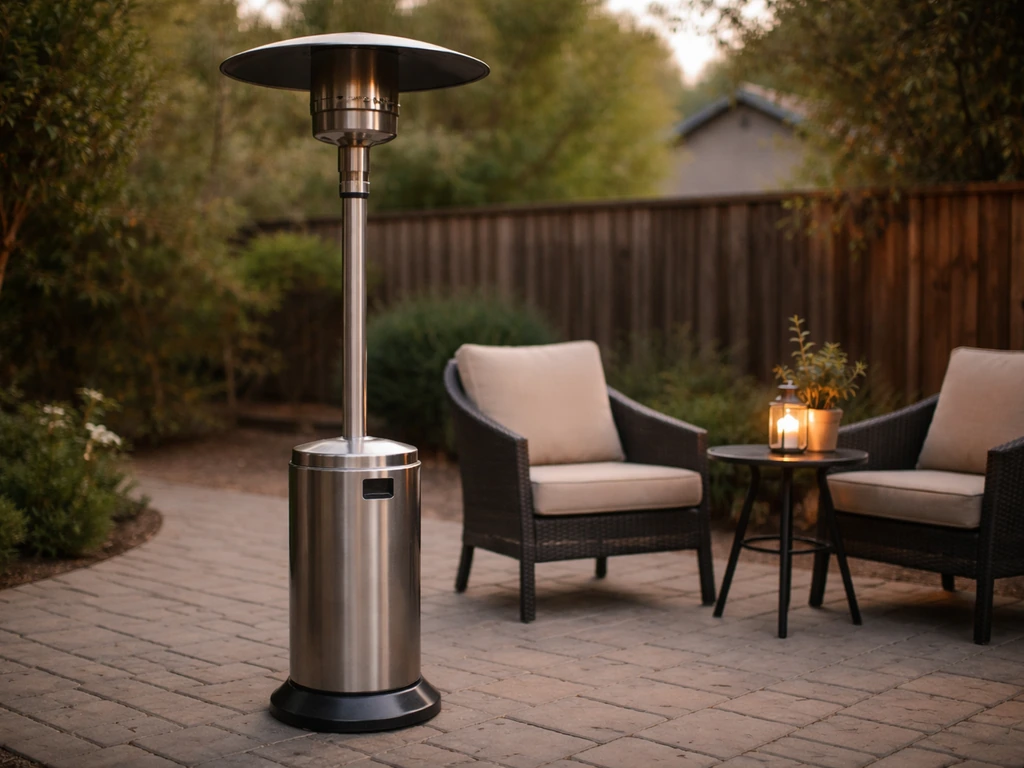
Propane heaters are the most popular category for a reason. They are powerful, portable, and require zero installation beyond connecting a tank. The classic freestanding mushroom-top design with a 40,000 BTU output is the industry workhorse, and it earns that reputation. At full output, you burn roughly 1 pound of propane per hour, meaning a standard 20 lb tank lasts about 10 hours of continuous use. That is a full weekend of evening entertaining on one refill. If you are comparing options, these commercial patio heater reviews can help you shortlist reliable models by fuel type and coverage Propane patio heater reviews.
The Sunglo A270 is a solid example of what a quality propane tower heater looks like. It runs at 40,000 BTU, lasts around 10 hours on a 20 lb cylinder, and includes a piezo igniter and tip-over shutoff. Build quality is noticeably above average for the category. Coverage depends heavily on wind exposure, as even the manufacturer acknowledges, so do not expect a 15-foot radius on a breezy evening. In calm conditions it comfortably warms a 10-foot zone.
Propane heater pros and cons
| Pros | Cons |
|---|---|
| No installation needed, just connect a tank | Tank runs out and needs refilling or swapping |
| High heat output (40,000–48,000 BTU) | Wind reduces effective coverage noticeably |
| Portable with wheels or carry handles | Ongoing fuel cost adds up with heavy use |
| Works on any patio regardless of outlets | Produces combustion byproducts, keep area ventilated |
| Wide range of price points ($100–$400+) | Tip-over risk if not on a level, stable surface |
Propane is best for renters, people who entertain on multiple patio areas, and anyone who wants heat without touching their home's gas or electrical systems. It is also the most beginner-friendly category since setup takes about two minutes. The main downside is the recurring cost and the inconvenience of running out mid-party. Keeping a backup tank on hand solves that completely.
What to look for in a propane heater
- Tip-over automatic shutoff: non-negotiable for safety
- Piezo ignition: easier and more reliable than match lighting
- Variable heat settings: lets you dial back output and extend tank life
- CSA or UL certification: means it has passed safety testing
- Wheel kit included or available: essential if you plan to move it
Electric patio heater reviews and infrared options
Electric heaters are the go-to for covered patios, screened porches, and any situation where an outdoor-rated electrical outlet is nearby. They produce no combustion byproducts, which means they are safe to use in covered or semi-enclosed spaces where propane or gas would be a carbon monoxide risk. They also heat up instantly and require zero maintenance beyond occasional cleaning.
Infrared electric heaters deserve special attention. Unlike standard electric heaters that warm the air (which then blows away), infrared heaters emit radiant heat that warms people and objects directly, the same way the sun does. On a breezy patio, this makes a real difference. An infrared heater at 1,500W can feel warmer in a light wind than a standard electric model at 2,000W. Wall-mounted and ceiling-mounted infrared panels are particularly effective under pergolas and covered patios, where they can be angled directly at seating areas.
Electric and infrared pros and cons
| Pros | Cons |
|---|---|
| Safe for covered, semi-enclosed spaces | Lower maximum heat output than propane or gas |
| No fuel cost, just electricity | Needs an outdoor-rated electrical outlet nearby |
| Instant on/off, precise control | Long extension cords reduce safety and performance |
| No combustion byproducts or carbon monoxide risk | Wall/ceiling mount versions require some installation |
| Infrared models work well in light wind | Operating cost can be higher than gas with heavy daily use |
For covered patios, electric infrared is often the best overall category, not just a runner-up. The lack of CO risk is a real safety advantage. Models rated for outdoor or damp-location use are essential here. Never use an indoor space heater outside, even in a covered area. Look for the IP44 or IP55 weatherproof rating, or explicit outdoor-rated labeling.
Natural gas and pellet patio heaters: when they make sense
Natural gas heaters
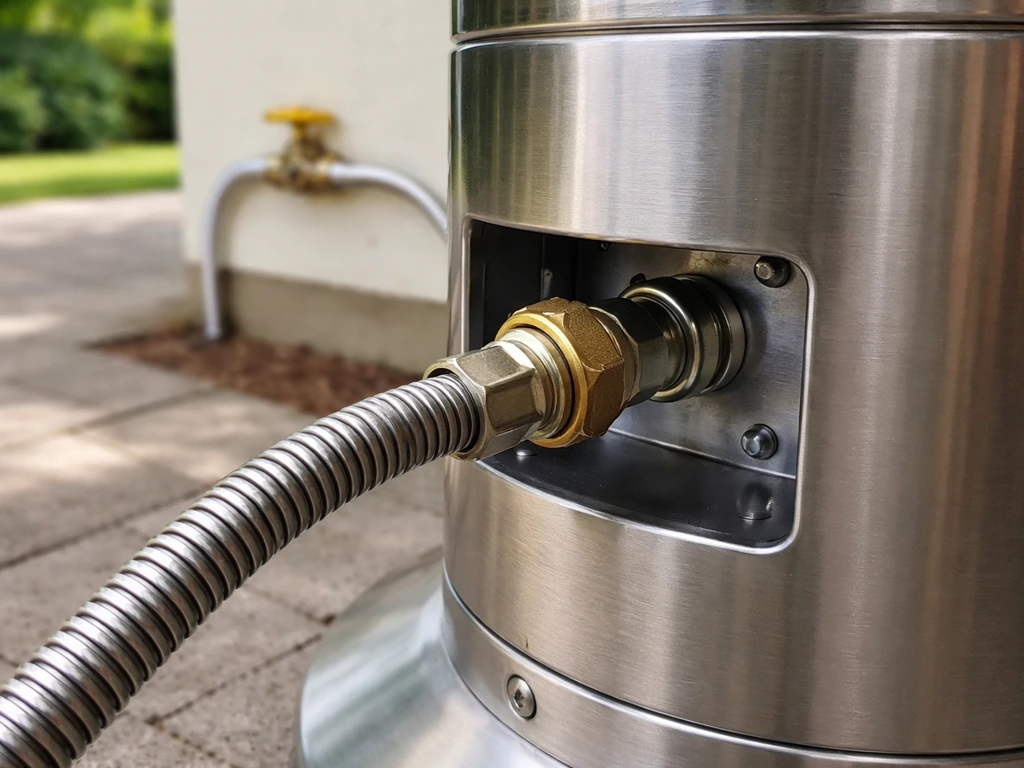
Natural gas patio heaters are the best long-term investment for homeowners who entertain frequently and already have, or plan to run, an outdoor gas line. Output matches propane (40,000 BTU and up) but fuel cost is significantly lower per hour. There are no tanks to swap, no running out mid-event, and no propane smell. The catch is that you need a licensed plumber or gas technician to install the gas line, which costs several hundred dollars upfront. The heater itself is also fixed in place, so flexibility is zero. If those trade-offs work for your situation, the total cost of ownership over a few seasons easily beats propane.
Pellet patio heaters
Pellet-fueled heaters are a newer and genuinely exciting category. The Solo Stove Tower is the standout product here, and it has earned its reputation. At 72,000 BTU it puts out more heat than any standard propane tower heater, with a stated 10-foot radiant heat radius. The onboard hopper holds 25 pounds of wood pellets and gravity-feeds them for up to 3 hours before a refill. The real draw is the experience: you get a visible flame, real wood heat, and the aesthetic of a fire pit combined with the structure of a traditional patio heater. It is freestanding and requires no gas line or outlet.
The trade-offs are real, though. Pellets need to be stored dry, and you will burn through them faster than you expect at high output settings. Ash cleanup is part of the routine. It is also not a grab-and-go option the way a propane model is. But if you want serious heat output and do not want to run gas lines, a pellet heater like the Solo Stove Tower is one of the best all-around options on the market right now.
Tabletop and small-space heaters: best for tight patios
Tabletop patio heaters are underrated. If your patio is small, a balcony, a compact bistro area, or a fire-table setup, a full-size tower heater is overkill and often a safety hazard in tight quarters. Tabletop models, both propane and electric, sit on a table surface and heat the immediate zone around it, which is often exactly what you need for two to four people seated together.
Propane tabletop heaters typically run on 1 lb disposable propane canisters, which is convenient for occasional use but adds up in cost for frequent entertaining. Electric tabletop models plug into any outdoor outlet and are the cleanest, easiest option for a covered balcony or porch. Output is obviously lower than a tower heater, generally in the 10,000 to 15,000 BTU range for propane and 1,000 to 1,500W for electric, but in a small, sheltered space that is often enough to keep guests comfortable in cool weather.
Tabletop options are also the most budget-friendly entry point, often starting under $50 for basic electric models and under $80 for small propane units. If you are not sure how much you will actually use an outdoor heater, starting with a tabletop model is a smart, low-commitment way to test the experience. More detailed coverage of the tabletop category and specific model comparisons lives in the dedicated tabletop patio heater reviews section of this site.
Safety, setup, and a buying checklist to use before you order
Every patio heater can cause a fire, burn injuries, or in the case of fuel-burning models, carbon monoxide poisoning if used carelessly. The CPSC consistently flags heating equipment as a leading cause of home fires and CO incidents. That does not mean patio heaters are dangerous when set up correctly, but it does mean setup and placement decisions are not optional fine print. Propane safety guidance also recommends keeping portable outdoor propane heaters at least 5 feet away from exits to reduce knock-over risk in assembly occupancies setup and placement decisions are not optional fine print.
Clearance and placement rules
- Keep any patio heater at least 3 feet from furniture, umbrellas, and overhead structures
- Place heaters at least 5 feet from any exits or doorways, as required by fire safety standards
- Never use propane or natural gas heaters in fully enclosed spaces, garages, or tents
- On windy days, position the heater upwind of your seating area and check for shifting conditions
- Always place freestanding heaters on a flat, level, stable surface to prevent tip-overs
Fuel-type safety notes
- Propane: Always let the heater cool completely before changing or disconnecting the tank. Check the regulator hose for cracks or wear every season. Store spare tanks upright and outdoors.
- Electric: Only use outdoor-rated extension cords if needed, and keep them as short as possible. Look for IP-rated weatherproof heaters. Never use indoor heaters outside.
- Natural gas: Have a licensed professional install the gas line and initial connection. Inspect fittings annually for leaks with a gas leak detector or soapy water test.
- Pellet: Clean ash from the burn chamber regularly to maintain airflow and prevent flare-ups. Store pellets in a sealed, dry container to prevent moisture absorption.
Pre-purchase checklist
- Measure your patio: know the square footage and identify your primary seating zone before choosing BTU output
- Decide on fuel type based on your patio setup (covered vs. open, outlet access, gas line availability)
- Confirm you have a flat, stable surface for freestanding models, or appropriate mounting for wall/ceiling heaters
- Check local codes: some municipalities restrict open-flame heaters on apartment balconies or in certain zones
- Look for safety certifications: CSA, UL, or ETL listing confirms the unit has been tested to recognized safety standards
- Factor in operating cost: calculate approximate fuel or electricity cost per hour at your expected usage frequency
- Buy or plan for a backup fuel source if using propane, having a second tank means you never run cold mid-party
- Check the return policy: a heater that does not perform as expected in your specific setup should be returnable
The right patio heater genuinely extends the time you spend outside by weeks every year. The wrong one sits in the corner unused because it is too heavy to move, runs out of fuel at the wrong moment, or just does not heat the space well enough. Use the framework in this guide, match the fuel type and output to your actual patio, and you will land on the right pick.
Start with the category that fits your setup best, and if you want to go deeper on any single product type, the stainless steel patio heater reviews, commercial patio heater reviews, and tabletop patio heater reviews sections on this site break down those categories in much more detail. If you are specifically comparing Cuisinart models, you can also check Cuisinart patio heater reviews before deciding stainless steel patio heater reviews.
FAQ
How accurate are patio heater “coverage” and BTU claims for real patios?
Treat the BTU number as maximum output, not usable warmth in real life. For practical choosing, confirm it covers your seating radius under your wind conditions, then expect noticeable heat drop beyond the advertised radius. If your patio is open on one side, plan for closer placement (or add a second heater) rather than buying a single unit “just in case.”
What placement tips prevent tip-over and overheating issues?
Yes, propane towers and most infrared electrics can tip, so look for built-in tip-over shutoff. For space planning, keep the heater centered relative to where people sit, keep the base on a level surface, and maintain clearances from railings, furniture, and nearby structures, especially under a pergola or near curtains.
How should I position an infrared heater for best warmth in wind?
Infrared electric panels work best when aimed at where people sit, not at the far edge of the patio. In a windy setup, mount or position so radiant heat directly intercepts guests, and avoid aiming upward toward open sky. If you can, use two smaller panels aimed at seating instead of one that only partially covers the group.
Can I use an electric patio heater under a pergola or covered porch safely?
If you have an outdoor-rated outlet, an electric infrared heater is often the simplest for covered areas because it avoids combustion byproducts. The key is verifying the heater is explicitly rated for outdoor use (damp-location or wet-location as applicable) and using a properly rated extension cord if the manufacturer allows one.
When is it unsafe to use propane or natural gas heaters under a roof or in an enclosed outdoor space?
Don’t assume “covered” means “safe” for gas heaters. For propane or natural gas, ventilation still matters, and outdoor flames need airflow to prevent dangerous buildup. If you are anywhere near doors, windows, or a mostly enclosed screen room, prefer electric (ideally infrared) or use a licensed installer for gas systems and follow clearances and ventilation guidance.
What are the most common “practical” reasons people run out of heat or get stuck mid-party?
For propane, plan for tank logistics, not just runtime. Keep a spare tank if you host long evenings, and store the reserve outdoors in a cool, ventilated area away from ignition sources. For electric, plan for outlet location and cord routing so guests cannot trip on cables.
Should I buy one high-BTU heater or multiple smaller ones?
A higher BTU heater can waste fuel if it heats empty space. Use the seating area as your target, then size for that radius. For large decks, the better approach is usually multiple lower-BTU heaters placed closer to the crowd, which improves comfort and reduces glare and hot spots.
How do I handle windy locations where manufacturer coverage seems off?
Wind makes coverage dramatically less reliable because it steals radiant heat from people and carries it away. Look for models designed for windy conditions, and place heaters where they are protected by structural elements (walls, hedges, windbreak panels) rather than in the center of an open yard.
How can I estimate total cost per hour across propane, natural gas, pellet, and electric?
Fuel cost depends on your local gas or electricity rates and typical usage hours. A straightforward way to estimate is cost per hour (use your heater’s stated consumption for propane, your utility rate for electricity, and your gas price for natural gas). Then compare against initial costs and installation requirements, especially the upfront gas line work for homeowners.
What’s the best heater choice for a small balcony or tight patio layout?
Yes, but the “best model” for a small space is usually a tabletop or directional infrared unit. Towers can overwhelm tight patios and create clearance problems. If you have limited floor space, prioritize a compact size, stable base, and heat aimed at a specific seating cluster.
Can I use indoor heaters outdoors or under a covered area?
Never use an indoor-only space heater outside, even temporarily under cover. Also confirm cord and outlet ratings for electric units, and for gas models confirm you have the right fuel type and proper leak safety practices. When in doubt, choose a patio-rated heater explicitly labeled for outdoor use.