
Better Homes Hearth & Patio Inc is a real, physical retail and service business located at 386 Lincoln Highway, Fairless Hills, PA 19030 (phone: 215-269-9900). It is not a product brand or a national chain, it's a local hearth and patio dealer in Bucks County, Pennsylvania that sells and services gas-burning and wood-burning hearth products, patio heaters, and related outdoor gear.
Better Homes Hearth & Patio Inc: Is It Legit for Patio Heaters?

Willa Brennan
1 May 2026
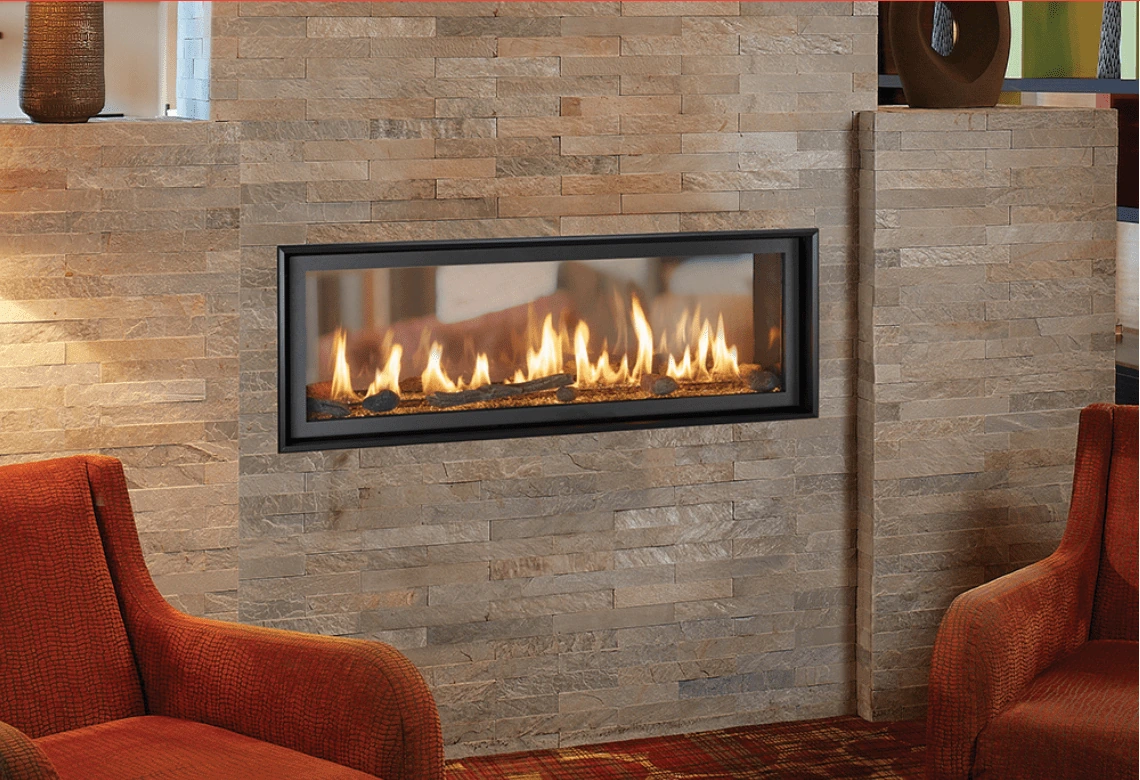
The business has been operating on Lincoln Highway since 1994 and has been under the ownership of Peter Stillitano since 2009, when it was incorporated. If you're in the Philadelphia/Bucks County area and you searched for this company, you've found the right place. If you're somewhere else in the country, you'll want a local dealer instead, but the buying checklist and heater guidance below applies everywhere.
What Better Homes Hearth & Patio Inc actually is
This is a specialty hearth and patio retailer, not a big-box store and not a product manufacturer. That distinction matters because specialty dealers like this one typically offer something the big-box stores don't: in-house installation, service, and repair. The company's own website lists "Full-Service Repair & Installation" as a core offering, which means they'll handle the gas line hookup, venting, and any required clearance work, not just drop a box on your porch.
A quick note on naming confusion: there is a separate nonprofit called "Better Homes Inc" based in nearby Bristol, PA, registered with the IRS for a completely different purpose. Don't mix them up. The hearth and patio shop at 386 Lincoln Highway is the one you're looking for if you want a patio heater or fireplace insert.
The business is also listed as a vendor on the Bucks County Veterans Discount Card program, which is a small but meaningful signal that it has community ties and engages with local government initiatives. That's worth knowing if you're a veteran in the area.
Legitimacy checks before you buy

Let's be honest about what the third-party data shows. The BBB lists Better Homes Hearth & Patio Inc with a B- rating and notes the business is not BBB Accredited. The BBB file dates back to 1984, which tells you this business has been around for decades, but a B- rating means there have been unresolved complaints or issues flagged over time. Revdex also shows at least one complaint, and one complaint narrative specifically raised a concern about a permit not being obtained for a gas appliance installation.
That permit issue is the most important red flag to address upfront. Gas appliance installations almost always require a permit in Pennsylvania and most other states. If a contractor skips that step, you're left with an unpermitted install that can affect your homeowner's insurance, your ability to sell the house, and your safety. Before you commit to any installation work with this company (or any local hearth dealer), ask directly: "Will you pull the permit for this job?" If the answer is evasive, walk away.
Your buying-safety checklist for any hearth or patio dealer
- Verify the physical address and call the listed phone number before placing an order or scheduling service. For Better Homes Hearth & Patio, that's 386 Lincoln Highway, Fairless Hills, PA 19030 and (215) 269-9900.
- Ask whether installation will be permitted and inspected by the local building department. This is non-negotiable for gas appliances.
- Confirm that the gas connector used meets safety standards: listed metal flexible double-wall non-corrosive connectors with an accessible individual shutoff valve upstream of the appliance.
- Check the warranty terms on whatever product you're buying. Manufacturer warranties are typically handled directly with the manufacturer, not the dealer. Clarify who handles warranty claims and what the dealer's own return/exchange policy is.
- Read recent reviews on Angi and Google, not just the BBB rating. Angi shows both positive and negative reviews for this business, so read through several to get a real picture.
- For any propane or LPG portable heater, look for safety labels indicating a Low Oxygen Automatic Shut-Off System or Oxygen Depletion Sensor (ODS) — these are CPSC-recognized safety features.
- If you're buying an electric heater, never use an indoor extension cord outdoors. Only use cords specifically marked for outdoor use with the proper jacketing and wire gauge.
Bottom line on legitimacy: Better Homes Hearth & Patio Inc is a real, long-established local business, not a scam. But like any specialty contractor, your experience will depend heavily on asking the right questions upfront, especially about permits and installation standards. Do that, and you'll have a much smoother transaction. If you’re in Albany, NY, start by comparing local hearth and patio options that can handle installation, permits, and ongoing service best fire hearth and patio albany ny.
Choosing the right patio heater for your space
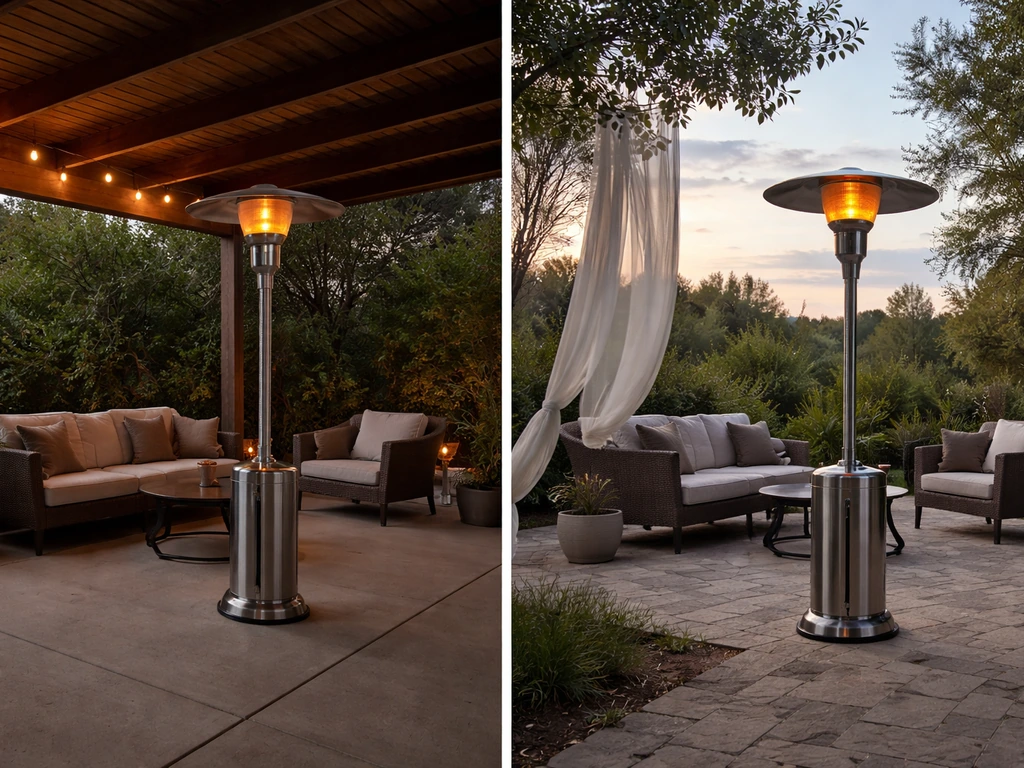
Before you even think about fuel type or brand, you need to know two things: how many square feet you're heating, and whether your space is covered or open. A good rule of thumb is 20 BTU per square foot. So if you have a 300 sq ft covered patio, you need roughly 6,000 BTU. A larger 1,500 sq ft open patio needs closer to 30,000 BTU. Most freestanding propane patio heaters top out around 40,000-48,000 BTU, which handles most residential patios comfortably.
Covered vs. uncovered matters as much as size. In a covered or partially enclosed space, heat stays in longer, so you can often get away with a lower-BTU unit. In a fully open, exposed yard, especially in a windy location, you'll lose heat fast and need either a higher-output unit or an infrared heater (more on that below). Also think about clearances: any heater needs breathing room. For wall-mounted or ceiling-mounted infrared heaters specifically, you'll want at least 18 inches of clearance on all sides and 36 inches directly in front of the heating element. Measure your space before you buy.
Space types and what works best
- Open backyard patio (no cover): A tall freestanding propane mushroom-style heater or a natural gas post heater works well. Wind is your enemy, so a higher BTU output helps compensate.
- Covered patio or pergola: Wall-mounted or ceiling-mounted electric infrared heaters are ideal here — safe for covered spaces, no open flame, and highly efficient when the heat can't escape upward.
- Screened-in porch: Electric only. No propane or natural gas in an enclosed screened space — you need ventilation for combustion appliances.
- Small deck or balcony: A tabletop propane or electric heater is your best bet. Freestanding tall heaters are often too large and a tipping hazard on elevated, narrow decks.
- Restaurant or commercial outdoor seating: Overhead natural gas infrared heaters are the professional standard — high output, low maintenance, and they don't take up floor space.
Fuel-type comparison: propane, electric, natural gas, and pellet
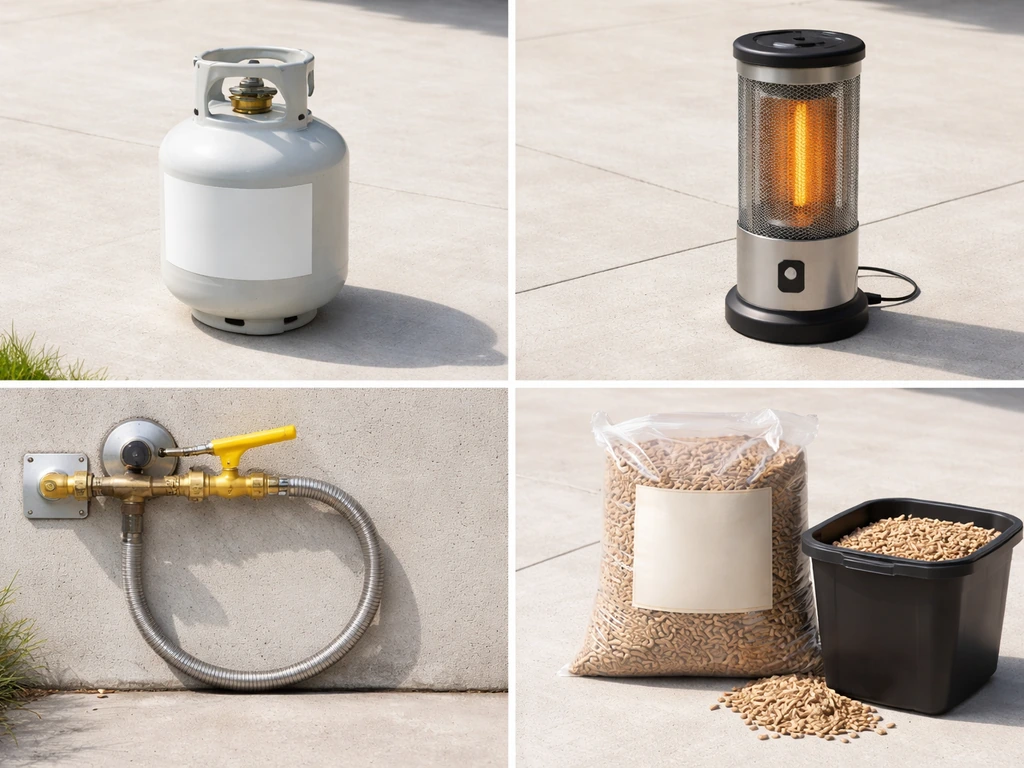
Each fuel type has genuine trade-offs. There's no universal winner here, the right choice depends on your space, your existing infrastructure, and how you use your patio.
| Fuel Type | Typical BTU Range | Best For | Key Trade-Off | Installation Complexity |
|---|---|---|---|---|
| Propane | 10,000 – 48,000 BTU | Open patios, portable use, no gas line | Tank refills/exchanges; not ideal for daily high-use | Low — no permanent install needed |
| Electric | 1,500 – 5,000W (5,100 – 17,000 BTU equiv.) | Covered patios, screened areas, low-maintenance use | Operating cost higher than gas at scale; needs outdoor outlet | Low to medium — may need outdoor circuit added |
| Natural Gas | 30,000 – 60,000+ BTU | Permanent installs, high-use patios, commercial spaces | Requires gas line run and permitted installation | High — plumbing and permit required |
| Pellet | Varies by appliance | Ambiance-focused hearth areas, eco-conscious buyers | Requires ash cleanup, approved venting (UL 641 PL vent pipe), less common for pure patio heating | Medium to high — venting and fuel storage needed |
Propane is the most flexible option and makes sense if you rent, move seasonally, or just want something you can position anywhere. Natural gas is the best long-term value for a permanent patio setup where you use the heater frequently, the per-BTU cost is lower than propane, but you'll pay for the gas line installation upfront.
Natural gas heaters do require "special plumbing and installation," which is exactly the kind of service a full-service dealer like Better Homes Hearth & Patio is set up to handle. Electric is the cleanest and safest for covered or enclosed spaces but costs more to run at the same heat output. Pellet heaters are more of a hearth/ambiance product than a pure patio heating solution, great for atmosphere, but more maintenance than the others.
Infrared vs. traditional heating: when each style makes sense
Traditional patio heaters (think: the tall stainless mushroom-style propane heaters you see at restaurants) work by heating the air around them. They're effective in calm conditions but lose efficiency fast when wind carries that warm air away. Infrared heaters work differently, they emit radiant heat that warms objects and people directly, the same way the sun warms you even on a cold day. Wind doesn't affect infrared heat the way it does convective air heating.
If your patio is exposed and gets any kind of breeze, infrared is worth the investment. Wall-mounted electric infrared heaters (like those from Infratech or similar brands) are particularly effective on covered patios and pergolas. They mount overhead or on a wall, don't take up floor space, and deliver consistent heat in a directed pattern. The clearance requirements are real though, at minimum 18 inches on the sides and 36 inches directly in front of the element. Measure your ceiling height and wall space before ordering.
Traditional convective heaters still have a place. They're cheaper upfront, widely available, and work fine for calm, sheltered patios. If you're outfitting a small backyard patio for occasional evening use and you're not dealing with wind, a standard propane heater at a lower price point does the job well. Infrared shines in high-use, windier, or more permanent setups where efficiency and performance under real conditions matter more than upfront cost.
| Feature | Infrared Heater | Traditional (Convective) Heater |
|---|---|---|
| How it heats | Warms people and objects directly | Warms surrounding air |
| Wind resistance | High — wind doesn't carry radiant heat away | Low — loses efficiency in breeze |
| Best placement | Covered patios, pergolas, overhead mounting | Calm, open patios, freestanding use |
| Upfront cost | Medium to high | Low to medium |
| Clearance requirements | Strict (18" sides, 36" front minimum) | Varies — generally more forgiving |
| Fuel options | Mainly electric; some gas infrared available | Propane, natural gas, electric |
| Ideal use case | Frequent use, windy locations, permanent installs | Occasional use, calm conditions, portable setup |
Tabletop and small-space heaters: what works on a balcony or small patio
If you're working with a small footprint, a balcony, a bistro-style patio, or a dining area where you want warmth close to the table without a floor-standing unit in the way, tabletop heaters are worth a serious look. These are typically propane-fueled (using a small 1 lb. cylinder) or electric, and they top out around 10,000-12,000 BTU for propane models and around 1,500W for electric versions.
They won't heat a large open area, but for two to four people sitting around a table, a quality tabletop propane heater is surprisingly effective. The main safety consideration on a balcony or elevated deck is stability, make sure the base is solid and the unit can't tip over. A tipping propane heater is a serious hazard. Most quality tabletop models have a tip-over auto-shutoff, but verify that feature before you buy.
For entertaining, tabletop units also pull double duty as ambient centerpieces. If you're hosting a dinner party and want warmth at the table without a tall heater blocking conversation sight lines, a low-profile tabletop model is the practical choice. Electric tabletop infrared options are also available and are the safest bet for any partially enclosed entertaining space.
Quick size guide for tabletop vs. freestanding
| Heater Type | Coverage Area | Ideal Space | Fuel |
|---|---|---|---|
| Tabletop propane | Up to ~100 sq ft | Small balcony, dining table, 2-4 people | 1 lb. propane cylinder |
| Tabletop electric | Up to ~80 sq ft | Covered balcony, screened porch, indoor-adjacent spaces | 110V outlet |
| Freestanding propane (medium) | 150 – 250 sq ft | Mid-size open patio, deck | 20 lb. propane tank |
| Freestanding propane (full-size) | 250 – 400 sq ft | Large patio, restaurant-style open area | 20 lb. propane tank |
| Wall/ceiling-mount electric infrared | 100 – 300 sq ft (per unit) | Covered patio, pergola, commercial seating | Hardwired 240V or 110V |
How to actually compare brands and models before you buy
Whether you're buying from Better Homes Hearth & Patio Inc locally or ordering online from another retailer, the comparison process is the same. Don't just look at BTU output and price, those two numbers alone will lead you to the wrong heater half the time. Here's what to actually evaluate. For extension cords, CPSC advises using cords that are outdoor-rated and appropriate for the intended use outdoor-rated extension cords.
- Calculate your BTU needs first: measure your patio's square footage and multiply by 20. That gives you a minimum BTU target. Add 20-30% buffer if your space is open and exposed to wind.
- Check the coverage claim against real-world reviews, not just the spec sheet. A heater rated for 300 sq ft in still air may cover only 150 sq ft effectively on a windy evening.
- Verify outdoor safety certifications: look for CSA, ETL, or UL listings on the product. For propane and gas heaters, look for Oxygen Depletion Sensor (ODS) labeling if you'll ever use the heater in any semi-enclosed area.
- Ask about the warranty before you buy: who handles it (manufacturer or dealer?), what it covers (parts, labor, freight?), and how long it lasts. Most quality patio heaters carry a 1-2 year manufacturer warranty on parts.
- For gas heaters from a local dealer: confirm the installation includes a permitted inspection, a proper individual shutoff valve accessible near the appliance, and listed flexible connectors compatible with your gas type (natural gas vs. propane — they are NOT interchangeable without conversion).
- For electric heaters: confirm your outdoor outlet is on a properly rated circuit. Many wall-mounted infrared heaters require a 240V dedicated circuit — if you only have a standard 110V outdoor outlet, that affects which models you can use.
- Read reviews on Angi, Google, and retailer sites — look specifically for comments about heat output in real conditions, durability after one or two seasons, and ease of ignition in cold weather.
One more thing worth asking any local dealer, including Better Homes Hearth & Patio: "What brands do you stock parts for?" A dealer who can actually service what they sell, not just install it and walk away, is worth a lot more over the 5-10 year life of a hearth product. If they stock parts and have technicians who know the product line, that's a genuine advantage over buying the same brand online from someone who can't help you with a repair two years later.
If you're comparing retailers beyond just this one local dealer, it's worth looking at what other full-service hearth and patio shops offer in your region. If you are looking for an alternative energy hearth and patio shoppe LLC, compare their service and permit process just as carefully full-service hearth and patio shops. Businesses positioned as full-service specialty dealers, similar to Better Homes Hearth & Patio's model, tend to offer better post-sale support than big-box stores, but quality varies significantly. Reading hearth and patio reviews across multiple dealers in your area before committing to an installation is always a smart move, especially for gas appliances where the installation quality matters as much as the product itself.
Your next steps in a nutshell: measure your patio, calculate your BTU target, decide on fuel type based on your infrastructure and use frequency, then shortlist two or three specific models that meet your specs. If you're in the Bucks County/Fairless Hills area and want a full-service gas installation, calling Better Homes Hearth & Patio at (215) 269-9900 and asking the permit and service questions listed above is a reasonable starting point. If you're elsewhere, use the same checklist to evaluate your local dealer. Either way, you now have everything you need to buy the right heater for your space, safely.
FAQ
If Better Homes Hearth & Patio Inc is a legitimate business, why is the permit issue such a big deal?
Because gas work that is installed without the required permit can create safety and compliance gaps that are not fixed just by paying for the unit. In practice, it can affect inspection status, homeowner’s insurance coverage after an incident, and what shows up during a future sale or refinance appraisal.
What should I ask to confirm the installation will meet code, not just “be done correctly”?
Ask whether the installer follows manufacturer installation instructions and local gas code requirements for venting, regulator sizing, leak testing, and clearance to combustibles. Also ask if they provide documentation you can keep (permit number, inspection results, and any test/leak documentation).
Will a permit be required for both natural gas and propane patio heaters?
Often yes for gas appliance installations, but the exact trigger can differ by heater type and how it connects to gas. Natural gas usually involves a line and shutoff work that commonly requires permitting, while propane setups can require permits depending on whether there is fixed piping, anchoring, or connection changes.
What’s the difference between buying a patio heater and having it installed through a dealer like better homes hearth & patio inc?
A dealer installation typically includes the site checks (gas line access, venting route, and clearances), any required hardware like shutoffs and regulators, and post-install testing. Buying only the heater means you may have to find a separate contractor and still ensure the work meets permit and inspection requirements.
How do I estimate whether BTU sizing is right for my specific patio setup?
Use both square footage and “exposure.” If your patio is windy or fully open, your needed output is usually higher than a covered patio of the same size. For a quick reality check, consider whether people will feel warmth quickly near seating, not just whether the unit can technically match BTU on paper.
Do infrared heaters really work better in wind, and how should I choose one if I’m unsure?
Infrared heaters warm objects and people directly, so wind is less likely to “steal” the heat the way it does with convective heaters. If your patio has airflow, start by confirming mount locations and clearance space, since poor placement can reduce comfort even with the right heater type.
How strict are the clearance rules for infrared wall or ceiling heaters?
They are more than guidelines, they’re safety and performance requirements. If you cannot maintain the stated minimums around the heating element and in front of it, you should reconsider the mounting location or heater type, because insufficient clearance increases risk and can cause uneven heating or overheating.
What parts support should I expect after installation, and what does “stocks parts for” practically mean?
Practical parts support means they can access common components (burners, igniters, control valves, thermocouples, switches, or control boards) without long delays. Ask how long it typically takes to get parts and whether they offer scheduled service or diagnostics if the heater stops working during the season.
If the heater breaks after a year, will I be stuck with costly repairs or long waits?
Your risk drops when the dealer sells brands they can service and have local knowledge of. Ask for the typical repair process, whether they keep the most common replacement parts on hand, and whether you get an estimated labor rate and diagnostic fee before work starts.
Can I place a tabletop propane heater on any balcony or deck?
Not without checking stability and ventilation. You should confirm the surface can safely support the base, that the unit is level and can’t tip, and whether the manufacturer specifies a minimum clearance from railings and ceiling overhangs. Tip-over shutoff helps, but it is still safer to avoid placement where a knock could happen.
What’s the most common buying mistake people make when choosing a patio heater?
Choosing based on BTU rating alone, especially if they ignore exposure, seating distance, wind patterns, and mounting height. Another common mistake is assuming one heater type fits all spaces, when tabletop, convective floor-standing, and mounted infrared each target different comfort goals.
How can I verify I am talking to the right “Better Homes” entity and not a different organization?
Confirm the address on Lincoln Highway in Fairless Hills, the local hearth and patio business focus, and the business phone number. Also verify they are discussing patio heaters and service/installation, not unrelated nonprofit activities.
What should I do before calling a dealer if I want the fastest, most accurate recommendation?
Bring measurements and constraints: patio dimensions, whether it is covered or open, approximate ceiling height, wind exposure, available electrical outlets (if electric), and where a gas line or propane placement would be located. Having those details makes it easier to shortlist models that fit both comfort and code constraints.