
Blumfeldt electric patio heaters are genuinely worth considering in 2026, especially if you have a covered or semi-covered outdoor space and want instant, smoke-free warmth without dragging out a propane tank. Most models run between 2000W and 2500W, heat up in seconds, and come loaded with remote controls, thermostats, and programmable timers. They are not magic in open, windy yards, but in the right setup they deliver reliable, comfortable radiant heat. Here is everything you need to decide whether one fits your patio.
Blumfeldt Electric Patio Heater Review: Worth Buying?

Willa Brennan
24 Jun 2026
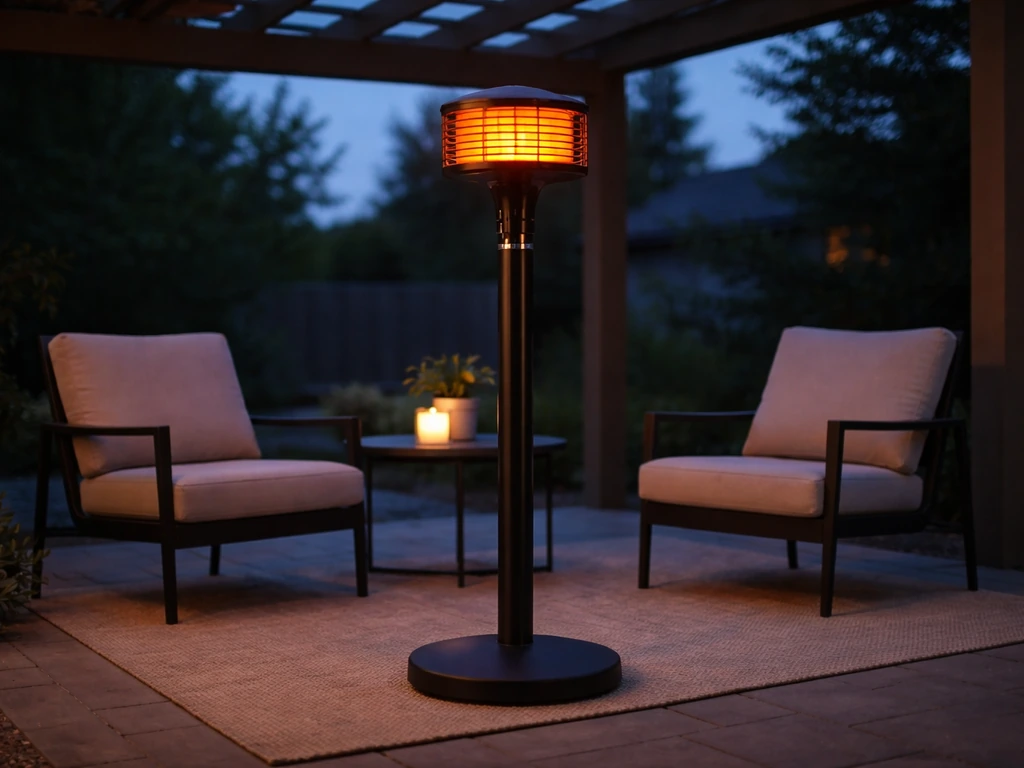
What a Blumfeldt electric patio heater is and how it heats
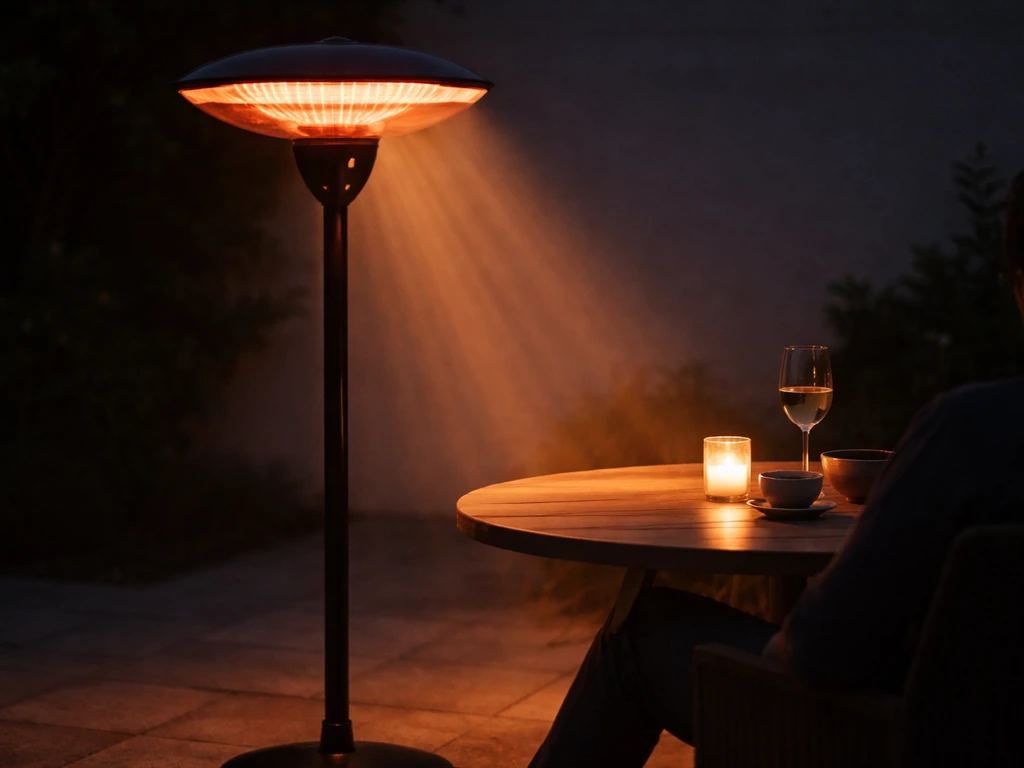
Blumfeldt makes a range of freestanding, wall-mount, and hanging infrared electric patio heaters. The key technology across nearly all their models is infrared radiant heat, described by the brand as IR ComfortHeat, operating in the 2 to 10 micrometer wavelength range. That is worth understanding because it changes what you feel. Instead of warming the air around you (which a fan heater or convection heater does), infrared heaters send radiant energy directly to people, furniture, and surfaces. You feel the warmth almost immediately, even if the air temperature itself has not changed much.
The practical result: the Heat Guru 2000W reaches usable heat in about 6 seconds. The Heat Guru Plus 2000W advertises instant warmth with zero warm-up time. Even the Heat Guard 2100W, which uses a slightly different approach and takes around 3 minutes to reach full output, is fast compared to propane mushroom heaters that need a minute or two of careful ignition before they settle. Because the heat is radiant rather than convective, it does not depend on still air to build up warmth in a space. That said, strong wind can still reduce perceived comfort because it carries away body heat and disrupts the zone the heater is warming.
Blumfeldt offers these heaters in a few different form factors. The Heat Guru and Heat Guard are freestanding floor units. The Heat Hexa is a hanging pendant-style heater, useful when you want to keep the floor clear. The Heat Hexa product listing also specifies three power levels at 800W, 1200W, and 2000W and describes it as an infrared radiant heater with a built-in thermostat, programmable timer, and remote control The Heat Hexa is a hanging pendant-style heater. The Heat Square and Rising Sun are ceiling or wall-mount options. The form factor changes installation requirements but the heating technology is essentially the same across the range.
Top reasons to buy vs skip
Performance and coverage
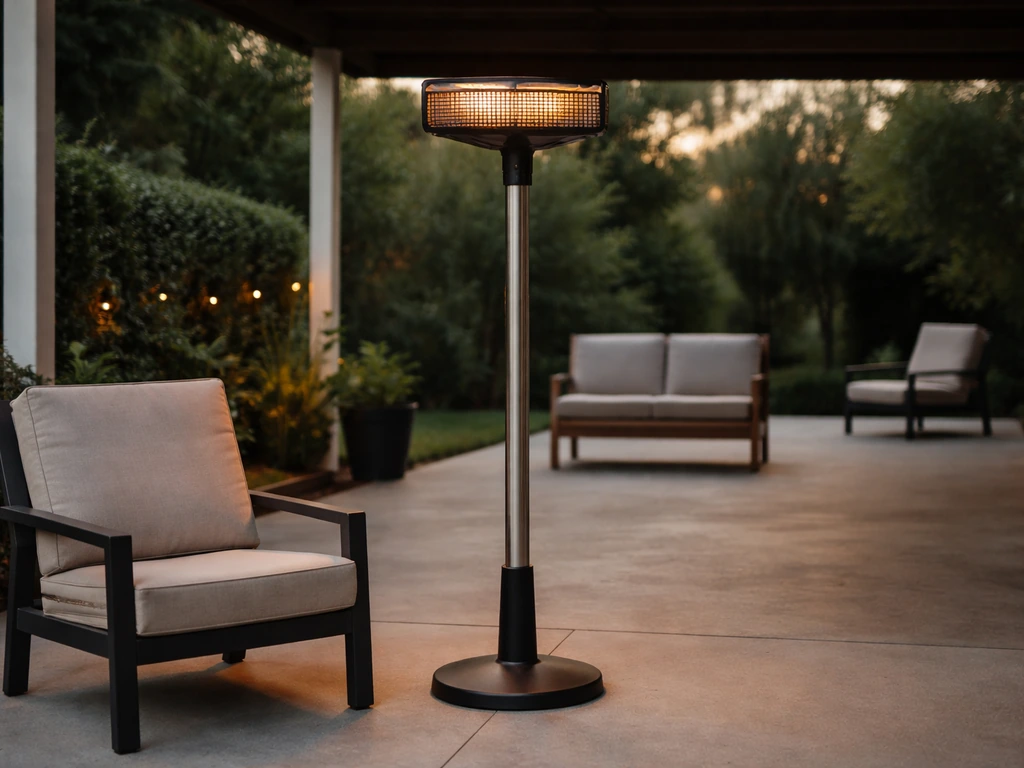
The Heat Guard 2100W claims effective coverage of up to 42 square meters, which is generous for a single freestanding unit. Realistically, that figure applies to a well-sheltered area at moderate ambient temperatures. In open outdoor spaces or when temps drop below 5°C, you will feel the coverage shrink noticeably.
The Heat Square on its lower 800W setting is described as capable of warming a seating area in a targeted way, which is accurate for a close-range spot heater but not a whole-patio solution. For medium patios (roughly 10 to 25 square meters), a single 2000W to 2500W Blumfeldt unit is a reasonable fit.
If you are specifically looking at Optimus 500/1000/1500W electric patio heater reviews, wattage is usually the first thing to compare for coverage and heat output 2000W to 2500W Blumfeldt unit. For larger areas, you are better off with two units or a higher-output option.
Honest buy and skip advice
- Buy it if: You have a covered pergola, enclosed porch, or semi-sheltered patio and want plug-in convenience with no fuel logistics.
- Buy it if: You value instant heat, quiet operation, and zero fumes — great for covered dining areas where combustion heaters are impractical.
- Buy it if: You want programmable control — the timers, thermostats, and remote controls on these units are genuinely well-implemented compared to cheaper infrared heaters.
- Skip it if: Your patio is fully exposed and regularly windy. Infrared heat in wind is less effective, and you will end up disappointed regardless of wattage.
- Skip it if: You need to heat a very large open terrace (over 40 square meters) with a single unit. This range is not designed for that.
- Skip it if: You are far from a power outlet and plan to run extension cords across a high-traffic area — that is a safety and practicality headache.
Key specs and buying fit
| Model | Wattage | Heat Settings | IP Rating | Controls | Form Factor |
|---|---|---|---|---|---|
| Heat Guru 2000W | 650 / 1350 / 2000W | 3 | IP44/IP65 | Remote, timer (1-24h) | Freestanding |
| Heat Guru Plus 2000W | 2000W (adjustable) | Adjustable | IP44/IP65 | Remote, thermostat, timer | Freestanding |
| Heat Guard 2100W | 2100W, 3 levels | 3 | IP44/IP65 | Remote, thermostat, timer | Freestanding |
| Rising Sun 2500W | 2500W (adjustable) | Adjustable | IP34/IP44 | Remote, thermostat, timer (up to 24h) | Height-adjustable freestanding |
| Heat Hexa 2000W | 800 / 1200 / 2000W | 3 | IP34 | Remote, thermostat, timer | Hanging pendant |
| Heat Square 2000W | 1000 / 2000W | 2 | IP24 | Remote, thermostat, timer | Ceiling/wall hanging |
A few things jump out from that table. First, IP ratings vary across models and it matters more than most buyers realize. IP44 means the unit can handle splashing water from any direction, which makes it genuinely suitable for covered patios in rain. IP34 offers slightly less protection.
The Heat Square at IP24 is the most limited and should not be used anywhere it might get directly rained on. Second, wattage is the single biggest driver of coverage and running cost. The 2000W to 2100W range is the sweet spot for most residential patios. The 2500W Rising Sun gives you a bit more headroom for larger or windier spaces.
Third, every model in the current lineup includes a remote control and programmable timer, which is a genuine usability advantage over bare-bones infrared heaters in this price category.
Real-world setup and operation
Placement and clearances
Blumfeldt's own safety documentation is specific about clearances and it is worth taking seriously. For hanging models like the Heat Hexa, the manual specifies at least 50 cm above the heater, 25 cm to the sides, and a minimum of 180 cm below it. For wall-mount and freestanding units, the 10031445 safety instructions call for at least 180 cm (roughly 6 feet) of clearance to the floor, 30 cm to the ceiling, and a 1-meter buffer from any flammable objects. These are not conservative suggestions. Infrared heaters concentrate heat in a beam, and anything too close (fabric awnings, wooden beams, outdoor curtains) can overheat in a way you would not expect from a convective heater.
For freestanding models like the Heat Guard, the weighted base and built-in tip-over switch are real safety features, not just marketing. The tip-over switch cuts power automatically if the unit falls, and the automatic overheat cutoff on the Heat Guru adds another layer of protection for extended use. Those are worth having, especially if you have kids or pets around.
Power requirements and cord safety
All Blumfeldt electric patio heaters run on standard household current (230V in Europe, where the brand is primarily sold). A 2000W unit draws roughly 8. 7 amps, and a 2500W unit draws about 10. 9 amps.
That is within normal circuit capacity for a single appliance, but you should check that the circuit you are plugging into is not already loaded with other high-draw devices. Do not use thin indoor-rated extension cords. If you need an extension cord to reach the patio, use a heavy-duty outdoor-rated cord rated for at least 13 amps and keep it as short as practical to avoid voltage drop and tripping hazards.
Blumfeldt's manual is also clear that if the power cord is damaged, it must be replaced by a qualified person, not patched with tape or a hardware store fix.
Day-to-day operation
In practice, using a Blumfeldt heater is straightforward. You plug it in, point the head toward your seating area, and use the remote to choose your wattage level, set the thermostat to the temperature you want (on models that have one), and optionally program a shutoff timer. The timer function (1 to 24 hours on most models) is genuinely useful for patio dinners where you want heat for two or three hours and do not want to remember to switch it off. Freestanding units with adjustable height let you tilt the head to direct heat at seated or standing guests, which makes a bigger comfort difference than most people expect.
Blumfeldt electric vs other patio heater fuel types
Knowing where Blumfeldt electric infrared heaters fit in the broader patio heater landscape helps you decide whether they are the right choice for your situation, or whether a different fuel type (or a different electric style) would serve you better.
| Heater Type | Heat Delivery | Covered Space OK? | Open/Windy Space | Running Cost | Ventilation Needed? | Convenience |
|---|---|---|---|---|---|---|
| Blumfeldt electric infrared | Radiant (direct to people/surfaces) | Yes, ideal | Moderate — wind reduces comfort | ~£0.50-0.65/hr at 2000W (at ~25-32p/kWh) | No | High — plug and go |
| Propane patio heater | Convective + radiant | Not recommended (fumes, fire risk) | Better than electric in wind | ~£0.80-1.20/hr depending on gas price | Yes — outdoors only | Medium — needs refills |
| Natural gas heater | Convective + radiant | Not recommended unless vented | Decent in wind | Lower ongoing cost with gas line | Yes — outdoors only | Low — needs installation |
| Pellet heater | Convective radiant | Not recommended (combustion) | Reasonable in light wind | Variable, fuel storage needed | Yes — outdoors only | Low — needs fuel prep |
| Other electric infrared (e.g., Heller, Optimus) | Radiant | Yes | Similar limitation in wind | Comparable per watt | No | High — plug and go |
The biggest practical advantage electric infrared heaters like Blumfeldt have over propane and gas options is that you can use them in covered, enclosed, or semi-enclosed spaces without worrying about combustion fumes, carbon monoxide, or fire clearance from gas. That makes them the clear choice for covered pergolas, screened porches, or restaurant-style covered patios. Propane heaters push back in fully open, exposed spaces because convective heat is less vulnerable to wind, but you are also dealing with tank logistics, ignition, and the inability to run them under a low ceiling or shelter.
Compared to other electric infrared options, Blumfeldt competes well on control features. Brands like Heller and Optimus also offer infrared patio heaters in a similar wattage range, and the core heat delivery technology is comparable. Where Blumfeldt tends to stand out is in build quality and control polish: the combination of remote, programmable timer, and thermostat on most models is more complete than you get with budget infrared heaters.
If you are comparing across brands in this electric infrared category, it is worth reading other electric patio heater reviews (including models from Heller and Optimus) to see whether the price premium for Blumfeldt's feature set makes sense for your budget. This electric patio heater review can help you compare comfort, coverage, and controls across the options before you buy.
Value check: running costs, efficiency, and durability
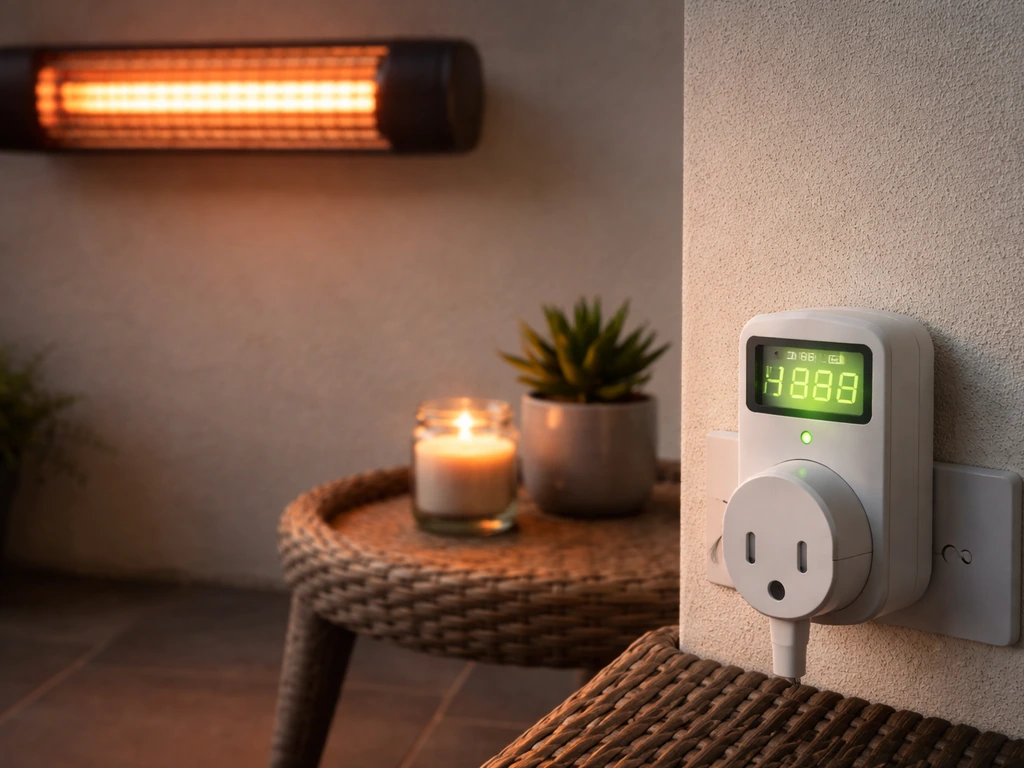
At current UK electricity rates of roughly 25 to 32 pence per kWh (mid-2026), a 2000W Blumfeldt heater running at full power costs about 50 to 64 pence per hour. Drop it to the mid-setting (around 1350W) and you are paying 34 to 43 pence per hour. Those costs are real and they add up if you are running the heater nightly, but they are broadly in line with other electric infrared heaters of the same wattage.
If you are also considering the Heller 2000W electric outdoor patio heater, this review can help you compare heat output, controls, and real-world performance against the Blumfeldt line heller 2000w electric outdoor patio heater review. For comparison, a propane patio heater burning at 13,000 BTU/hr (a typical medium output) costs roughly 70 to 90 pence per hour at current propane prices in the UK, so electric infrared is actually competitive on running cost, not just convenience.
On durability, Blumfeldt's ceramic infrared lamp in the Heat Guru Plus is rated for over 10,000 operating hours. At two hours of use per evening, that is roughly 13 years of regular patio use before the lamp element needs replacing. The IP44 and IP65 ratings on the higher-spec models mean the housing can handle real outdoor exposure, including rain splash and moisture. The IP34 on the Rising Sun and Heat Hexa is less impressive if your setup gets a lot of direct weather. Overall build quality is European-market standard, which means it is better than the cheapest imported heaters but not in the same category as commercial-grade outdoor heaters.
Who should buy a Blumfeldt electric patio heater
The Blumfeldt range fits some use cases very well and genuinely does not suit others. Here is how to match the right scenario.
| Your Setup | Best Fit Model | Notes |
|---|---|---|
| Small balcony (under 10 sqm), covered or semi-covered | Heat Square 1000/2000W or Heat Hexa | Hanging models save floor space; IP24 (Heat Square) limits rain exposure |
| Medium covered patio (10-25 sqm) | Heat Guard 2100W or Heat Guru Plus 2000W | Freestanding, full control features, IP44/IP65 rated |
| Larger covered pergola or terrace (25-40 sqm) | Rising Sun 2500W or two Heat Guru units | Single 2500W unit at the upper end; two units for reliability |
| Fully exposed open garden | Not the ideal category — consider propane | Infrared heat is less effective in persistent wind |
| Covered restaurant/commercial outdoor dining | Heat Guard 2100W or Rising Sun 2500W | Timer and thermostat reduce oversight burden; robust IP rating important |
| Evening entertaining, spot heating near seating | Any 2000W model on mid or high setting | Direct the head at seated guests for best comfort |
The sweet spot for this brand is a covered or sheltered outdoor space where you want clean, fume-free heat with minimal setup fuss. If that describes your patio, the Heat Guard 2100W or the Heat Guru Plus 2000W are the two models most worth looking at closely: both hit the wattage range where coverage and running cost balance well, both include the full control package, and both carry the higher IP44/IP65 rating that makes you less nervous about British weather. If you want to dig into real-world performance, comfort, and value, these optimus electric patio heater reviews can help you compare options side by side Heat Guard 2100W. If your priority is hanging or ceiling mounting to save floor space, the Heat Hexa is the logical pick.
One final practical note: before buying, confirm the physical distance from your nearest outdoor outlet to where you want to position the heater. Blumfeldt heaters come with a fixed power cord, and if that cord does not reach, you will need a proper outdoor extension lead rated for the wattage. Getting that detail right before delivery will save you a lot of frustration on the first cold evening you want to use it.
FAQ
What’s the biggest reason a Blumfeldt electric patio heater underperforms even if the wattage looks right?
Most complaints come from placement and shelter, not the heater. Infrared works best when you can create a focused “warm zone” (close seating, fewer gaps, less wind). If the heater is aimed too high, too far away, or placed in a very exposed area, you’ll feel heat drop-off quickly even at 2000W to 2500W.
Can I use a Blumfeldt heater under a pergola or in a semi-enclosed patio safely?
Yes, but only if you respect clearance limits and avoid directing the beam at combustible fabrics or wood. Also check that the ceiling or rafters are far enough from the heater for your model type (freestanding versus wall-mount versus hanging), and keep curtains or outdoor covers pulled back so they stay outside the heated zone.
Do I need an outdoor extension lead, and what should I look for?
If the fixed cord cannot reach, use an outdoor-rated extension lead rated for at least 13A and keep it as short as practical. Using a thin or indoor-only lead can cause voltage drop and overheating, which is especially important at 2000W to 2500W draws.
What circuit setup should I check before plugging in a 2000W or 2500W model?
Confirm the outlet is on a circuit that is not already powering other high-draw devices like kettles, electric ovens, or multiple patio lights with high load. As a rule of thumb, a 2000W unit draws around 8.7A and a 2500W unit around 10.9A, so avoid sharing the same outlet with other heavy appliances via adapters or power strips.
How do I decide between a freestanding, wall-mounted, or hanging Blumfeldt model?
Freestanding is easiest for repositioning and works well for “move-and-aim” warmth. Wall-mount suits fixed seating layouts. Hanging is great for clearing the floor, but it demands the strictest attention to overhead clearance and keeping the beam off nearby awnings and fixtures.
Is the thermostat actually useful on an infrared model, or is it just marketing?
It’s useful for maintaining a set target rather than manually changing levels during dinner. That said, thermostatic control can cycle the heater on and off if ambient conditions shift, so expect a “breathing” effect rather than constant max output. For best results, set the thermostat and choose a level that matches your seating distance.
How far away should my seating be from the heater?
Aim for close-range comfort. Infrared creates a beam, so the effective warmth zone shrinks with distance and wind. If your model’s stated coverage assumes sheltered conditions, treat it as an upper bound and plan for shorter distances (or add a second unit) if your patio is drafty or uncovered.
What IP rating is best for British weather on a patio heater?
For rain exposure, IP44 is the safer target for covered patios where splashes happen. IP34 can be acceptable for protected areas with limited direct wetting. IP24 is the most restrictive, so avoid locations where rain can directly hit the unit or where it can be sprayed frequently by cleaning or sprinklers.
How long should I expect the ceramic infrared lamp to last in real use?
If you use it around two hours per evening, the “over 10,000 operating hours” type rating can translate to roughly a decade-plus of regular seasonal use. However, lamp aging accelerates if the heater is frequently cycled from cold in harsh conditions, so if you heat intermittently, plan for earlier replacement than the most optimistic scenario.
What maintenance should I do to keep performance consistent?
Keep the front grill and lamp area clean and dry, and do not spray cleaners directly onto the unit. Check the power cord condition periodically (no nicks or kinks), and wipe the exterior with a dry or manufacturer-approved method. If you notice reduced warmth, confirm the heater is still aimed correctly and not partially obstructed by nearby covers or furniture.