
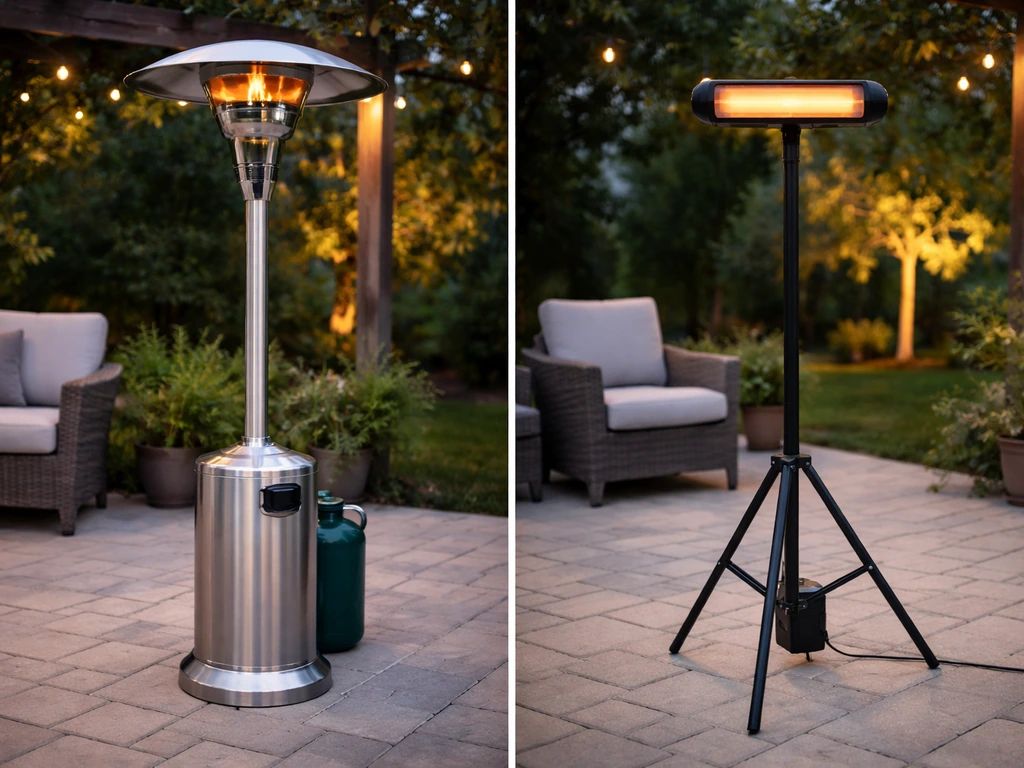
Costco's patio heater lineup is genuinely solid for the price, especially if you're shopping in-store or online and want to avoid the research rabbit hole. Right now the lineup covers two main categories: tall freestanding propane heaters (46,000 to 50,000 BTU) and compact electric infrared heaters on tripods (1,500W). The propane models work best for large open patios where you need serious warmth across a wide area, while the electric options are better suited to smaller covered spaces or anyone who doesn't want to deal with propane tanks. None of the current Costco models run on natural gas or pellets, so if that's what you need, you'll want to look elsewhere.
Costco Patio Heater Review: Best Propane and Electric Picks

Willa Brennan
18 Jun 2026
What to know before buying a Costco patio heater
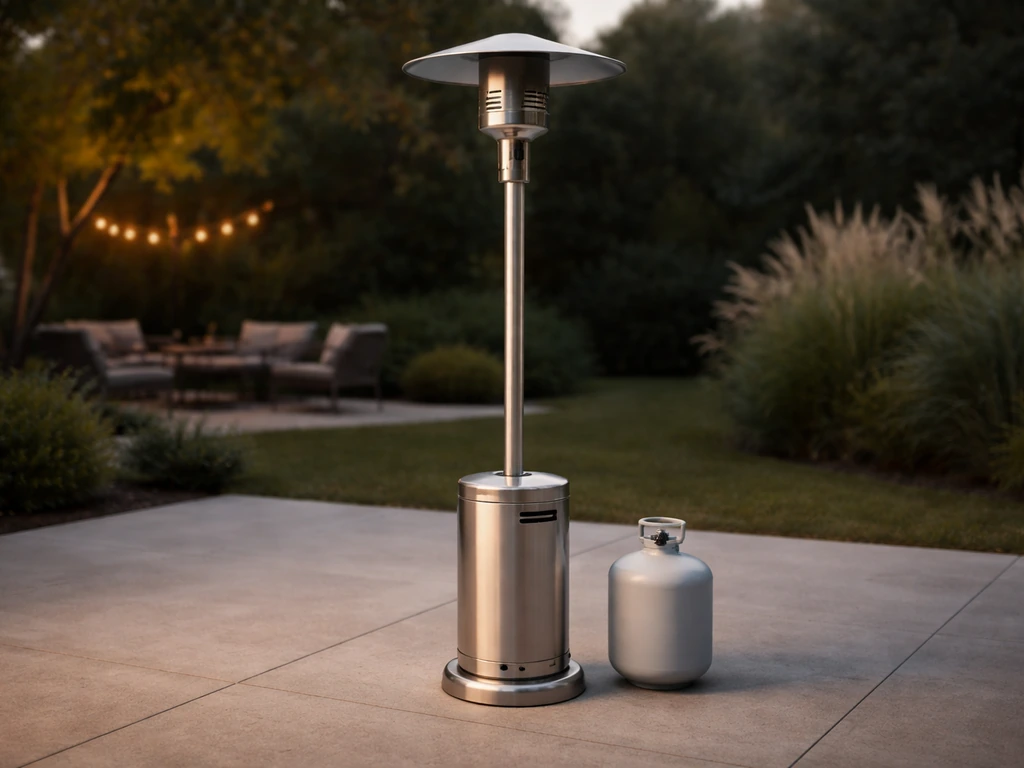
Costco carries a rotating selection, and availability shifts seasonally, so the models you see online today may not be in your local warehouse next month. That said, a few things stay consistent across their lineup that are worth knowing upfront before you add anything to your cart.
- Propane tanks are never included with any Costco patio heater. You'll need a standard 20 lb (5-gallon) tank, which runs about $20 to $30 to fill. Factor that into your budget.
- The propane heaters use propane vapor withdrawal only, not liquid withdrawal. This matters practically: always keep the tank upright and never try to run the heater with a partially inverted or sideways tank.
- Electric models need a standard 120V outlet nearby. The infrared tripod heaters are portable, but you're tethered to an extension cord, so placement flexibility is somewhat limited.
- All current Costco propane models include an electronic ignition, which means no match lighting. This is a bigger convenience upgrade than it sounds, especially in wind or cold.
- Wheel kits come with the tall propane models, making them easier to move around a patio or store in a garage for winter.
- Costco's return policy is one of the best in retail, and patio heaters typically fall under their standard satisfaction guarantee. That's a meaningful safety net if you buy in season and something doesn't perform as expected.
If you're shopping Costco specifically because of the price or the return policy, both are legitimate reasons. But don't assume any Costco heater is automatically the best deal on the market. I'll walk you through what each model is actually like to use, and where they compare well (or fall short) against alternatives.
Top Costco patio heater picks and who each one is for
Here's a quick breakdown of the current Costco patio heater models, what they are, and who they make the most sense for. I'll go deeper on each one in the sections that follow.
| Model | Fuel Type | Heat Output | Best For |
|---|---|---|---|
| Fire Sense Patio Heater (Item 1031510) | Propane | 46,000 BTU | Large open patios, entertaining areas, backyard decks |
| Fire Sense Lux Patio Heater (Item 1452771) | Propane | 50,000 BTU | Bigger patios or windier yards that need maximum output |
| Northwoods Rapid Induction Heater (Item 1500115) | Propane | 46,000 BTU / ~304 sq ft | Mid-size patios, faster warm-up, more compact footprint |
| Dr. Heater Carbon Infrared Tripod (Item 1590166) | Electric (infrared) | Not specified in BTU | Covered patios, garages, screened porches, directional heat |
| Kenmore Infrared Electric Tripod (Item 1786035) | Electric (infrared) | 1,500W | Small covered spaces, rental situations, plug-and-go convenience |
Fire Sense Patio Heater (46,000 BTU)
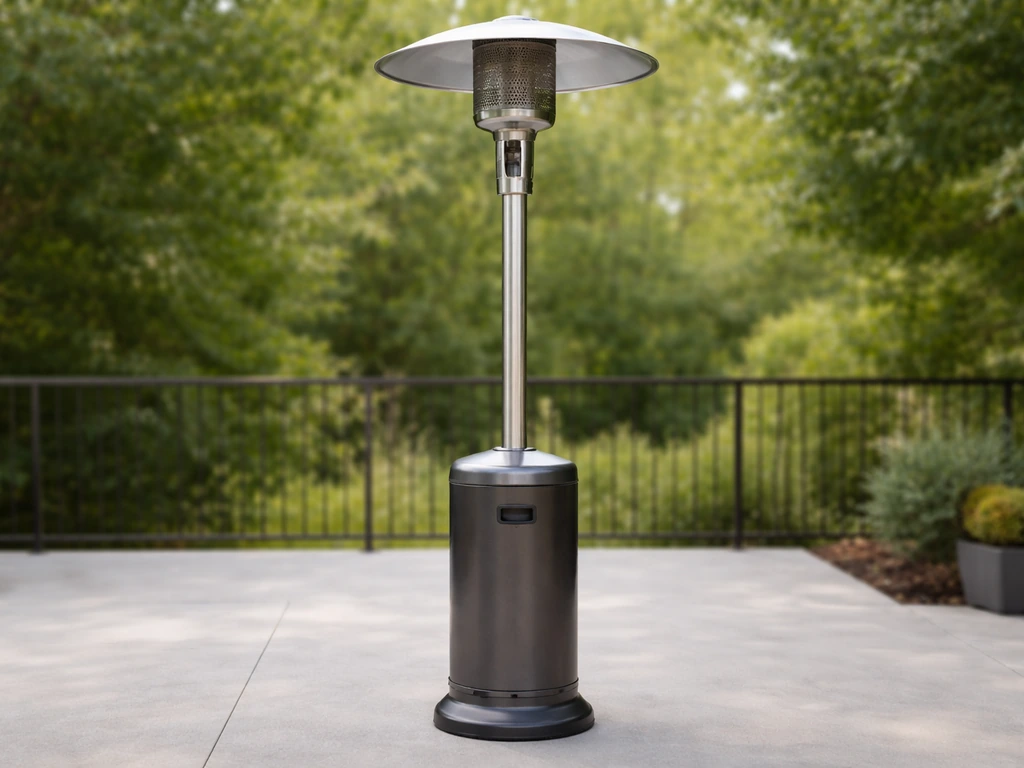
This is the classic tall mushroom-style propane heater that most people picture when they think 'patio heater.' At 90.6 inches tall and 32 inches wide at the base, it radiates heat in a 360-degree pattern from the top reflector dome. It's the go-to choice for large open patios, deck parties, or restaurant-style setups. The electronic ignition is reliable in calm conditions, though like all propane heaters, strong wind can challenge the pilot. The wheel kit is a welcome addition for moving it around or storing it inside.
Fire Sense Lux Patio Heater (50,000 BTU)
This is the step-up version of the standard Fire Sense, adding about 4,000 BTU over the base model. At 50,000 BTU, it's one of the higher-output propane heaters you'll find at Costco. Costco lists the [Fire Sense Lux Patio Heater (Item 1452771)](https://www. costco.
com/lux-patio-heater. product. 100661258. html?
bvstate=pg%3A6%2Fct%3Ar) as a liquid propane model with a 50,000 BTU output, an electronic ignition system, and a wheel kit included (propane tank not included). The extra heat matters most if your patio is exposed to wind, you're in a cooler climate, or you want to push the season into late fall. The base footprint (33 x 33 inches) is nearly identical to the standard model, so it's not a bigger heater physically, just a hotter one.
Worth the price difference if you're regularly hosting in shoulder-season weather.
Northwoods Rapid Induction Heater (46,000 BTU)
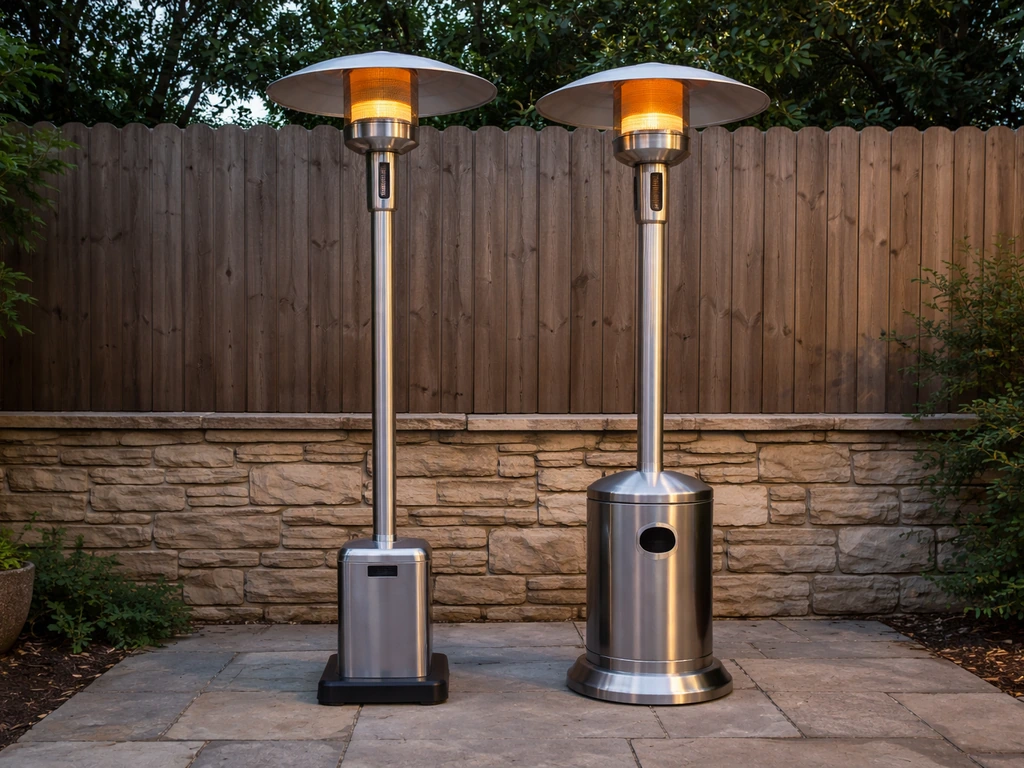
This one is more compact than the classic mushroom heaters, measuring just 21 x 21 inches at the base and 73 inches tall. The 'rapid induction' design is meant to heat up faster than a traditional dome heater. Costco's listing specifically notes a heat coverage area of 304 square feet, which is helpful because most heater listings don't call that out explicitly. It's CSA certified and has adjustable flame output. If you have a mid-size patio and want something a bit less imposing than a full-size tower heater, this is worth a close look.
Dr. Heater Carbon Infrared Tripod and Kenmore Infrared Electric Tripod
These two electric infrared models are in the same category: freestanding tripod heaters that plug into a standard outlet and use carbon infrared elements to produce targeted, radiant heat. If you want to compare options in the same category, a mosaic patio heater review can help you judge warmth, coverage, and overall value side by side electric infrared models. The Kenmore runs at 1,500W and includes a remote control, which is a nice convenience touch. The Dr.
Heater model is listed as suitable for both indoor and outdoor use and can also be wall-mounted if you want a more permanent setup. Neither will heat a large open patio on a cold night the way a 46,000 BTU propane tower will, but for a covered porch, screened room, or garage hangout space, they're genuinely practical and zero-fuss to operate.
Propane vs electric: which fuel type makes sense for your patio
This is the most important decision you'll make before buying, and it comes down to your patio setup more than personal preference. Here's how to think about it honestly.
When propane wins
If your patio is large, open, or uncovered, propane is the clear winner. A 46,000 or 50,000 BTU propane tower heater can warm a 15 to 20 foot circle of outdoor space in a way that no 1,500W electric heater can match. Propane is also fully portable with no power cord, so you can set it anywhere on the patio without planning around outlet placement.
The trade-offs are the ongoing cost of propane refills, the need to store and transport tanks, and slightly more ignition fussiness in windy conditions. Note that none of the Costco propane models connect to a natural gas line, so if you have a built-in gas supply at your home, you'd need to look at other brands.
When electric wins
Electric infrared heaters shine in enclosed or semi-enclosed spaces: covered patios, screened porches, four-season rooms, garages, or any setup with a ceiling. In these environments, infrared heat reflects off surfaces and accumulates efficiently, making 1,500W feel like plenty. You also get instant heat the moment you flip the switch, no tank to refill, and no combustion byproducts to worry about in poorly ventilated spaces. The downside is that on a fully open patio on a breezy 45-degree night, an electric tripod heater won't keep you warm enough.
| Factor | Propane (Costco models) | Electric Infrared (Costco models) |
|---|---|---|
| Heat output | 46,000 to 50,000 BTU | 1,500W (~5,100 BTU equivalent) |
| Best space type | Open, uncovered patios | Covered, enclosed, or semi-enclosed spaces |
| Portability | High (no cord, wheel kit included) | Moderate (cord-dependent) |
| Startup time | 30 to 60 seconds | Nearly instant |
| Ongoing fuel cost | $2 to $3/hour at full output | ~$0.18/hour at average US rates |
| Wind performance | Moderate (pilot can extinguish) | Unaffected by wind |
| Safety in enclosed spaces | Not safe indoors or in enclosed areas | Safe for indoor and covered outdoor use |
| Setup complexity | Easy (wheel in, connect tank) | Easy (unfold tripod, plug in) |
If you're still on the fence, ask yourself one question: is my patio covered or uncovered? Covered with a roof overhead, go electric. Open to the sky, go propane. That single factor will steer you right about 90% of the time.
Heat coverage, placement, and wind performance for real patios
BTU numbers and wattage ratings look good on a spec sheet, but real-world coverage depends heavily on how and where you place your heater. Here's what actually matters.
For the tall propane tower heaters, the heat radiates outward in a circular pattern from the dome at the top. You'll get the most warmth within 6 to 10 feet of the heater horizontally. The Northwoods model explicitly rates its coverage at 304 square feet, which works out to a circle roughly 20 feet in diameter. That's a useful real-world benchmark: if your patio is larger than that, plan on two heaters or accept that the edges will be cooler. Placing a tower heater in the center of your patio (rather than against a wall) maximizes warmth for seated guests, since the heat radiates equally in all directions.
Wind is the biggest enemy of any outdoor heater, and the mushroom-style propane heaters are more vulnerable than most. A consistent breeze above 10 mph can blow out the pilot flame and make the heater feel significantly less effective, since moving air carries heat away from your guests faster than the heater can replace it. If your patio is exposed and regularly windy, placing the heater near a fence, wall, or windbreak helps considerably. The electric infrared tripod heaters don't have this problem at all since there's no flame, though wind still reduces perceived warmth by stripping heat from your skin.
For covered patios, the dynamics flip. Radiant heat bounces off the ceiling and walls, making even a 1,500W electric heater feel quite effective in a 10 x 12 foot covered space. With propane heaters under a covered patio, you must ensure you have proper ventilation. The Fire Sense manual is explicit that these are outdoor heaters and should not be used in enclosed spaces due to carbon monoxide risk. Never run a propane heater in a fully enclosed gazebo, tent, or porch with no airflow.
Safety, durability, controls, and ease of use
These are the criteria I weigh most heavily when evaluating any patio heater, because a heater that's difficult to use or feels flimsy will end up in the garage after one season.
Safety features
All of the propane models in Costco's current lineup include an anti-tilt shutoff, which cuts the gas if the heater tips over. This is a non-negotiable safety feature and it's good to see it standard across the lineup. The Northwoods model carries CSA certification, which means a third-party organization has independently verified the safety design. For the electric models, the Dr. Heater in particular is rated for both indoor and outdoor use, which signals it's been evaluated for the kinds of enclosed spaces where improper use of propane would be dangerous.
Durability and build quality
The tall propane heaters have a powder-coated steel construction that holds up reasonably well outdoors, but they're not waterproof. If you're leaving any of these out through rain or winter, invest in a heater cover or store them in the garage. The infrared tripod heaters are built to be compact and portable rather than weather-hardened. They're fine left on a covered porch but shouldn't be left uncovered in the rain. For the price point Costco is offering, the build quality is competitive, though if you want a truly premium, all-weather propane tower you'd need to step up to a commercial-grade brand.
Controls and ignition
Every Costco propane heater currently listed uses electronic ignition, which is a meaningful convenience over match-lit or piezo-style igniters. You press a button, and in most cases the heater lights within one or two attempts. The Northwoods model adds adjustable flame output so you can dial back the heat on milder nights, which saves fuel and extends your tank life. The Kenmore electric model includes a remote control, which is genuinely useful when the heater is mounted higher up or placed across the patio. The Dr. Heater tripod model appears to use simple on/off controls directly on the unit.
Ease of use and setup
None of these heaters require professional installation. The propane towers come partially assembled and attach to a standard 20 lb propane tank at the base. Assembly typically takes 20 to 30 minutes with basic tools. The wheel kits (included with both Fire Sense models) make repositioning easy and are worth using rather than trying to drag the heater across a deck. The tripod electric models fold up like a camera tripod and set up in minutes. The Kenmore and Dr. Heater units are among the least intimidating outdoor heaters to get running for the first time.
Operating costs, fuel availability, and value vs alternatives
Price tags at Costco are generally competitive, but the real cost of a patio heater includes what you spend running it all season. Here's how the math works out. If you want a more specific comparison of an Imus Eco patio heater, check an Imus Eco patio heater review to see how it stacks up for your patio size and wind exposure.
Propane operating costs
A standard 20 lb propane tank holds roughly 4.7 gallons of propane. At full 50,000 BTU output, a tank lasts approximately 9 to 10 hours. At full 46,000 BTU output, you get a bit more. Running the heater at a moderate setting extends that significantly. Propane refills cost around $20 to $30 depending on your area, so plan on roughly $2 to $3 per hour of full-output use. If you run a propane heater two nights a week for a five-month season, you're looking at $160 to $240 in propane costs alone. Exchange tanks at Costco itself are often competitively priced, which is a genuine added convenience if you're buying the heater there anyway.
Electric operating costs
The Kenmore and Dr. Heater models run at 1,500W. At the average US electricity rate of around $0.12 to $0.16 per kWh, that's roughly $0.18 to $0.24 per hour of operation. Running an electric infrared heater every evening for a full season costs a fraction of what propane does. If operating cost is a priority and your covered patio allows it, the electric models make a strong financial case over time, even if the upfront heat output is lower.
How Costco's value compares to other brands
Costco's propane heaters are competitively priced against comparable models from other retailers. The Fire Sense and Northwoods brands are legitimate outdoor heating brands, not generic no-name imports. If you're comparing Costco's lineup against alternatives like Heatmax, Paramount, or Mosaic patio heaters, the biggest differences tend to be in build materials, warranty terms, and whether the alternative brand offers natural gas compatibility or commercial-grade components.
If you're specifically considering a Heatmax patio heater, compare the fuel type, build quality, and any warranty details against the Costco models before you buy. For most residential buyers, the Costco models represent solid mid-range value. Where you might want to consider a specialty brand is if you need a specific fuel type like natural gas, a commercial-grade build for high-traffic use, or features like Bluetooth controls or smart home integration.
How to choose the right Costco patio heater: a simple buyer checklist
Run through these questions before you finalize your pick. They'll get you to the right model faster than reading any spec sheet.
- Is your patio covered or uncovered? Covered and enclosed: go electric (Kenmore or Dr. Heater tripod). Open to the sky: go propane (Fire Sense or Northwoods).
- What's your patio size? Under 200 sq ft: any model works. 200 to 300 sq ft: the Northwoods or standard Fire Sense (46,000 BTU) is sufficient. Over 300 sq ft or regularly windy: step up to the Fire Sense Lux (50,000 BTU) or consider two heaters.
- How often do you need to move the heater? Frequent repositioning: choose a model with the wheel kit (both Fire Sense models include one). Rarely moved or wall-mounting: the Dr. Heater tripod's wall-mount option is worth considering.
- Do you want a remote? The Kenmore model includes one. None of the propane models do.
- Do you have a propane tank already? If not, add the cost of a 20 lb tank ($25 to $50 new, or an exchange) to your budget. All propane models require it and none include one.
- Is your outlet within reach of where you want to place an electric heater? Measure before you buy. A heavy-duty outdoor extension cord is fine, but factor in the cord path.
- Check current Costco availability before going in. Patio heaters sell out seasonally. Confirm your chosen item number is in stock online or call your warehouse to check floor inventory.
- Verify the model's CSA or UL certification before buying if safety certification matters for your local codes or insurance. The Northwoods model is explicitly CSA certified in Costco's listing; confirm the same for any other model you're considering.
- Consider your end-of-season storage plan. The tall propane towers are 90 inches tall and need a cover or garage space. The electric tripods fold down smaller and store easily.
The bottom line: most people shopping Costco's patio heater lineup will be well-served by either the Fire Sense Lux propane tower for large open patios or the Kenmore infrared electric tripod for covered spaces. If you want a deeper, model-by-model breakdown of what to expect, check out this paramount patio heater review for real-world guidance Costco's patio heater lineup. Both deliver solid real-world performance for their respective use cases, come from recognizable brands, and are backed by Costco's return policy, which adds meaningful peace of mind. If you want to compare Costco's offerings against other mid-range and specialty brands before making a final call, it's worth looking at what other patio heater brands are doing in similar price brackets to make sure you're getting the best fit for your specific setup.
FAQ
Are Costco propane patio heaters safe to use under a pergola or near an overhang?
Usually only with good airflow and clear clearance. The key is to avoid treating them like indoor heaters, follow the manual’s outdoor-only guidance, keep the heater away from walls and ceiling materials, and never run it in a fully enclosed porch, gazebo, or tent. If you can smell propane or the flame looks unstable, shut it off and reposition.
How much clearance should I leave around a propane tower heater?
Use the heater’s stated safety clearance, not guesswork. In practice, you want enough space for radiated heat to avoid overheating nearby furniture and enough room so guests cannot bump the unit. Also keep the propane tank base clear, so the regulator area stays unobstructed and dry.
What’s the best way to place a heater on a patio for maximum warmth?
For propane towers, place it so guests sit within about 6 to 10 feet of the unit (centered if you can). For electric infrared tripods, angle and aim matter more than people expect, mount height should keep heat aimed at seating, and positioning slightly offset to your main seating area often feels warmer than putting it dead center.
Will an electric infrared heater work on a patio even if it’s windy?
It can, but expect reduced comfort. Infrared heat still delivers radiant warmth, but wind strips heat from your skin and reduces the “feels like” effect. If you buy electric for a breezy area, prioritize a location with a windbreak (fence, hedge, or wall) and keep the heater aimed at where people sit.
Do I need to adjust BTU or wattage choices if I’m using the heater for just a small group?
Yes, coverage is about where people actually sit. If you only need warmth for 2 to 4 seats, you may prefer two smaller placements closer to the group rather than one heater centered far away. That can also help you avoid running the heater at full output longer than necessary.
How do I estimate real seasonal operating cost more accurately than the article’s quick numbers?
Multiply your expected runtime by actual settings. For propane, full-output runtime is rarely what people use, if you plan to run on a moderate flame most nights, your cost will be lower than a “full tank” estimate. For electric, use your local kWh rate and decide whether you’ll run it for 2 hours or 6 hours per outing, then add any time you’ll use it on lower power if the model supports it.
Is a cover enough, or should I store Costco propane heaters indoors in winter?
A cover helps, but it does not replace proper storage if you have heavy rain or freezing conditions. Powder-coated steel can still corrode, and regulators and ignition components are vulnerable to moisture. For best results, store the tank safely and bring the heater into a garage or shed during harsh weather.
Can I use a Costco propane heater with any 20 lb propane tank?
Match the connection type and ensure the tank is in good condition. Costco typically uses standard 20 lb tanks with a common regulator setup for these heaters, but you should confirm the exact fit on the model you’re buying. If your tank has a damaged valve or regulator issue, don’t connect it.
Why won’t my propane heater ignite consistently after a tank change?
Common causes are a not-fully-seated connection, air trapped in the line, or the unit being tilted. Make sure the heater is upright and on a stable surface, confirm the tank valve is fully opened, and if it’s windy, shield the flame area briefly while attempting ignition. If you still get repeated failure, stop and inspect the regulator and ignition area rather than forcing more attempts.
Is it okay to leave an electric infrared heater running unattended?
Avoid unattended operation. Even though it is electric, tripods and radiant elements can present fire and tip-over risk if pets, kids, or people bump the unit. Use it while you’re present, keep clearances from furniture and curtains, and unplug or switch off when leaving.
Can the Dr. Heater infrared unit really be wall-mounted, and what changes if I do?
It can, but wall mounting changes the safety and comfort variables. You’ll want to verify the required mounting height and clearance from walls, aim the radiant output toward your seating area, and ensure the mounting surface can handle heat exposure. Once mounted, remove trip hazards from the floor but double-check that controls remain accessible or use the appropriate switching method.
Do Costco patio heaters require any professional installation?
Neither the propane towers nor the infrared tripods typically require professional installation for normal use, they are designed for DIY setup. However, you still should do a pre-use checklist: verify assembly is complete, tighten connections, confirm correct tank mounting, and test ignition safely before relying on the heater for a gathering.
When should I consider buying two heaters instead of one bigger unit?
If your patio is larger than the heater’s stated effective circle, two smaller or strategically placed heaters often outperform one unit at the perimeter. Also, for social setups where people are spread out, two heaters reduce cold zones near corners and help you run at lower output for longer comfort.