
East Oak makes two main types of tabletop patio heaters: the E-GLOW 1500W electric infrared model and a propane tabletop model (the MN11BN2, rated at 11,000 BTU). If you want plug-and-play simplicity with no fuel to manage, the electric E-GLOW is the one to get. If you need cordless freedom and more heat output, the propane tabletop is the better fit. Either way, a tabletop heater from East Oak is built for small outdoor spaces, intimate gatherings, and situations where a full floor-standing unit would be overkill or take up too much room. A bronze table top patio heater is a great way to add focused radiant warmth to small outdoor spaces without taking up floor space.
East Oak Table Top Patio Heater Buying and Setup Guide

Willa Brennan
11 Jul 2026
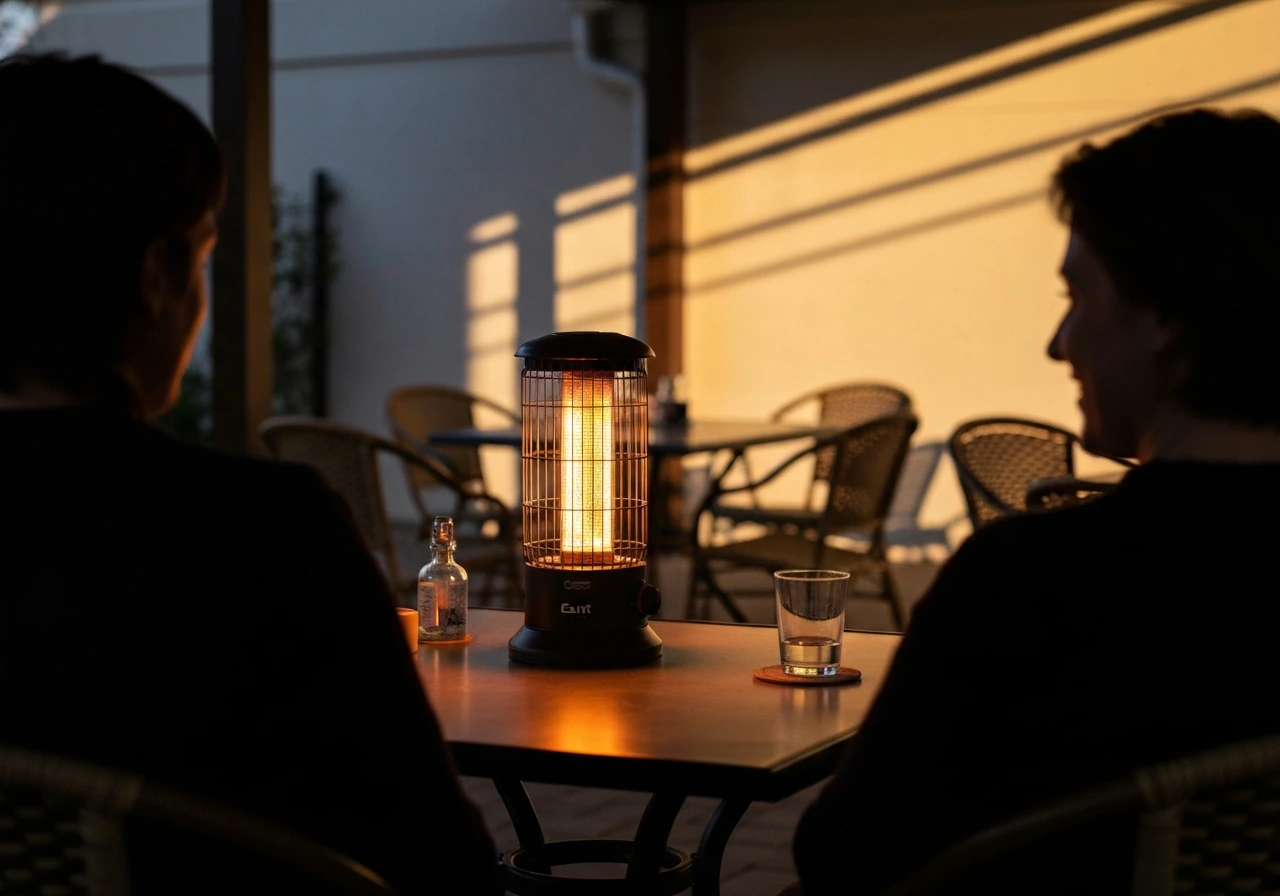
What an East Oak tabletop patio heater actually is (and when it makes sense)
A tabletop patio heater sits on a surface rather than standing on the ground. That simple distinction changes everything about how you use it. Tabletop units are ultra-portable, typically weigh under 10 pounds (for electric) or 15 to 20 pounds with a small propane tank attached, and they create a focused warm zone for a small group rather than blanketing a wide area. Think: two to six people gathered around a bistro table, a covered deck corner, or a small apartment balcony where a floor model would block traffic or look out of place.
East Oak's tabletop electric heater uses infrared heating, which warms people and objects directly rather than heating the surrounding air. That makes it noticeably faster and more efficient than convection heaters in open or breezy spaces. The propane tabletop model works similarly but via a gas burner, giving off radiant warmth without needing a power outlet. Both are completely different products from East Oak's larger floor-standing propane models (the RADIATE at 50,000 BTU and the TORCH at 55,000 BTU with a 20-foot heat range), which are much more powerful but require permanent placement and a full-size propane tank.
Tabletop heaters make the most sense when you want targeted, close-range warmth for a small group, you need portability, or your space simply can't accommodate a tall floor heater. They are not the right tool for heating a large open patio or trying to warm a dozen people spread across a yard. If that's your situation, a floor-standing unit is a better starting point.
Choosing the right tabletop heater for your patio size and coverage needs
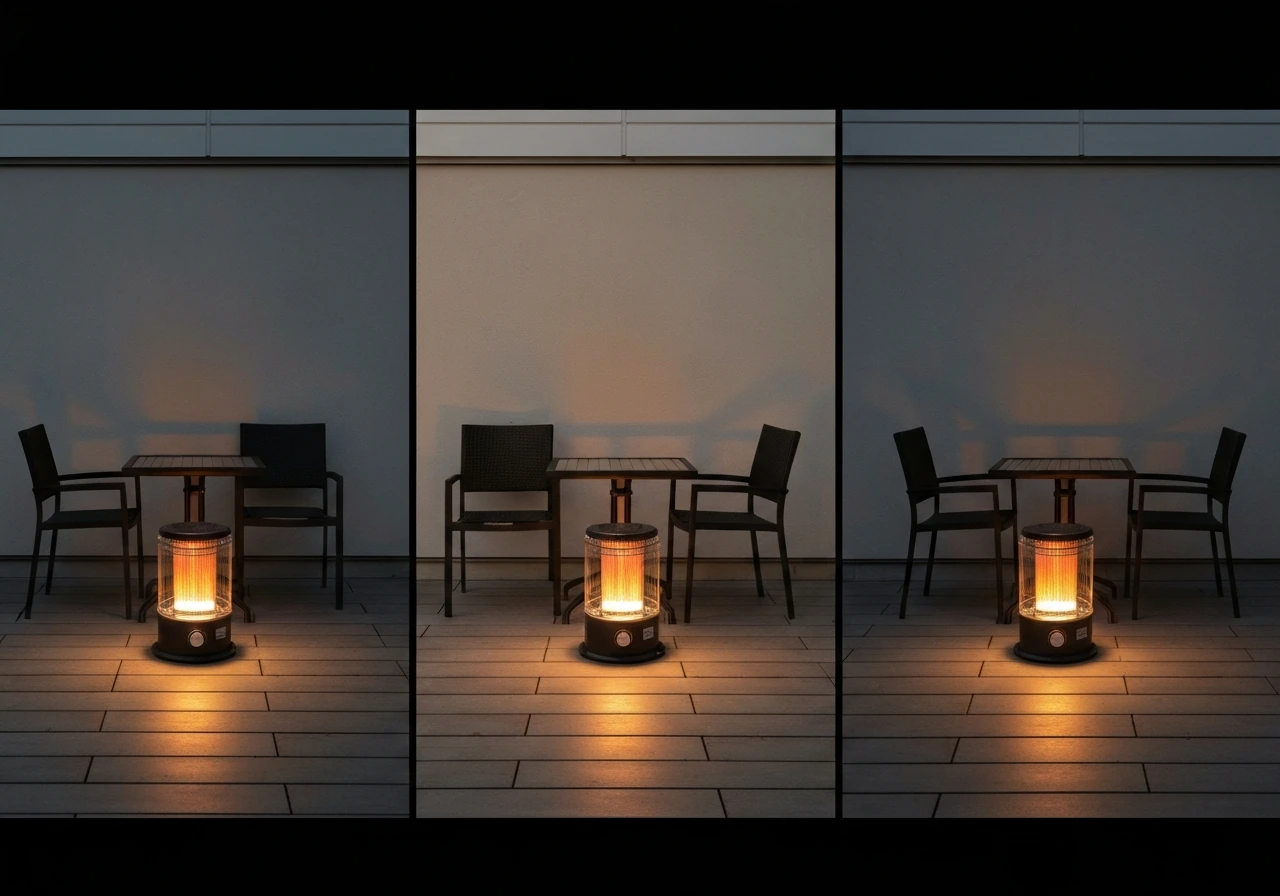
Coverage area is the most misunderstood spec on any patio heater. Manufacturers list optimistic numbers, and real-world warmth is considerably more concentrated than the marketing suggests. A 1500W electric infrared heater like the East Oak E-GLOW will comfortably warm a circle of about 6 to 8 feet in diameter around the unit under calm conditions, meaning it's ideal for a table with four chairs and nothing more. East Oak's 11,000 BTU propane tabletop pushes a bit further but still tops out at roughly a 10-foot zone at most.
The key variables that shrink that zone in real life are wind, ambient temperature, and whether you're under a cover. A covered patio retains heat much more effectively than an open one. On a 45°F evening with even a mild breeze, expect the effective warm zone to shrink by 30 to 40 percent compared to a still, warmer night. Use the table below to match your situation to the right product type. For most layouts, a range table top patio heater is the same type of targeted heater concept, just sized and fueled for your specific outdoor setup table below.
| Patio scenario | Best tabletop fit | Why it works |
|---|---|---|
| Small covered balcony or deck (under 100 sq ft) | East Oak E-GLOW 1500W electric | No fumes, plug-in convenience, IP65 rated for light rain |
| Uncovered patio, calm evenings, 4–6 people | East Oak propane tabletop (11,000 BTU) | More heat output, no cord required, portable |
| Open yard or large patio (200+ sq ft) | Floor-standing propane heater (50,000–55,000 BTU) | Tabletop units won't cover this area effectively |
| Apartment balcony or tight space | East Oak E-GLOW 1500W electric | Compact footprint, anti-slip base, timer + remote |
| Camping or truly off-grid use | Portable propane tabletop | No outlet needed, runs on a 1 lb or 20 lb tank |
The specs that actually matter before you buy
Heat output: BTUs vs watts
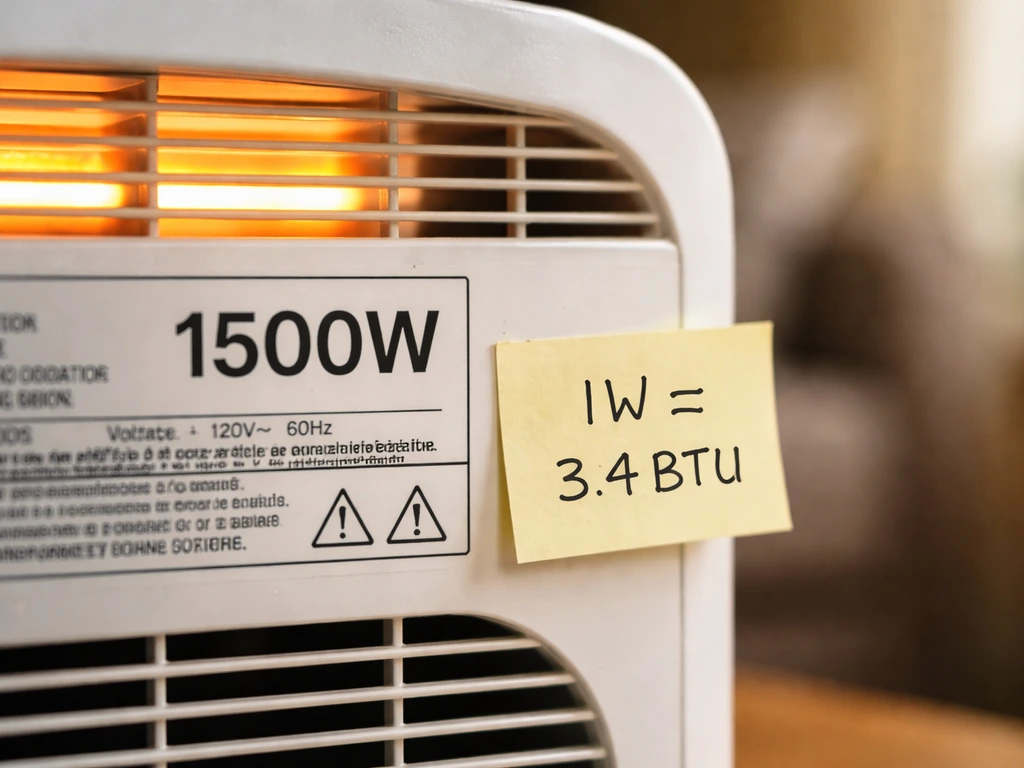
Electric heaters are rated in watts, propane heaters in BTU/hour. As a rough conversion, 1 watt equals about 3.4 BTUs. So the East Oak E-GLOW at 1500W puts out roughly 5,100 BTU/hr, which is modest. East Oak's tabletop propane model at 11,000 BTU is about twice as powerful for raw heat output. Neither one is meant to replace a 50,000 BTU floor heater, but both are completely adequate for two to six people sitting within 6 to 8 feet.
Infrared vs non-infrared
The East Oak E-GLOW is an infrared heater, which means it emits radiant heat that warms you directly, similar to how sunlight feels. This is a genuine advantage outdoors because the heat isn't wasted warming ambient air that the wind will simply carry away. Traditional convection heaters heat the air around them, which works reasonably well indoors but loses efficiency fast outside. If you're comparing East Oak's electric model to other tabletop options, always check whether a competing unit is infrared or convection. For outdoor use, infrared wins almost every time. The E-GLOW's 360-degree heat dispersion also means you don't need to aim it at people, unlike some directional infrared panels.
Controls, timer, and safety features
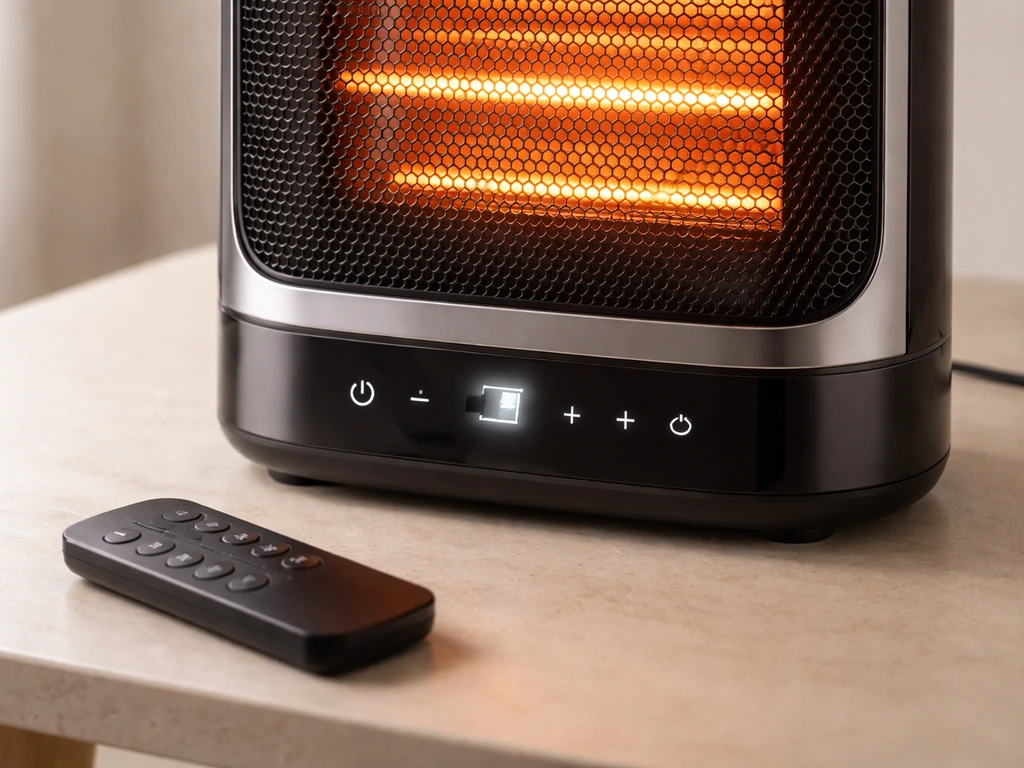
The East Oak E-GLOW has touch-button controls on the unit plus a remote, and it includes a 0 to 24 hour programmable timer. That timer is genuinely useful for safety because it eliminates the risk of leaving the heater running overnight. The unit also carries an IP65 waterproof and dustproof rating, which means it can handle rain splashes and dust without a problem. An anti-slip base keeps it stable on most outdoor tables. For propane models, look for an automatic flame-failure/safety shutoff, which cuts gas flow if the flame goes out unexpectedly. East Oak's propane tabletop includes this as a standard safety feature.
Fuel type at a glance
Fuel type shapes the entire ownership experience, not just the heat output. Here's a quick comparison for small outdoor spaces.
Electric vs propane vs other fuel options for small outdoor spaces
| Fuel type | Heat output | Portability | Running cost | Best for | Watch out for |
|---|---|---|---|---|---|
| Electric (1500W) | ~5,100 BTU/hr | Cord-dependent | Low (120V outlet) | Covered patios, balconies, calm conditions | Needs outlet within reach, cord management |
| Propane tabletop (11,000 BTU) | ~11,000 BTU/hr | Fully portable | Moderate (1 lb or 20 lb tanks) | Open patios, camping, no outlet available | Cylinder/regulator compatibility, fuel storage |
| Natural gas tabletop | Varies, usually 10,000–30,000 BTU | Fixed (gas line required) | Low ongoing cost | Permanent outdoor kitchen setups | Requires gas line, not truly portable |
| Pellet/wood-fired tabletop | Variable, low BTU output | Portable but messy | Low fuel cost | Ambience more than warmth | Open flame, ash, not recommended near flammables |
For most people looking at East Oak specifically, the choice is between the electric E-GLOW and the propane tabletop. If you have an outdoor outlet on or near your patio and use a covered or semi-covered space, the electric model is easier to live with day to day: no tanks to buy, no regulator connections to fumble with, and the IP65 rating handles weather without extra care. If your patio is open, you have no outlet nearby, or you want to take the heater to different locations (a camping trip, a friend's backyard), the propane tabletop wins on flexibility. It's also worth noting that propane regulator and adapter compatibility can cause real frustration: don't assume the hose and regulator from a different brand will fit East Oak's propane tabletop. Follow the manual for the correct connector type.
If you're also considering other tabletop heater styles, options like infrared tabletop heaters offer the same radiant-heat benefits as the E-GLOW with different form factors or finishes. Powder-coated tabletop heaters, bronze finish models, and granite-top styles are all in the same functional category and generally compare favorably in durability and aesthetics, though specs vary by brand. For pure warmth per dollar spent, the East Oak E-GLOW holds up well against comparable models in its price class.
Placement and safe operation: what you need to know before you turn it on
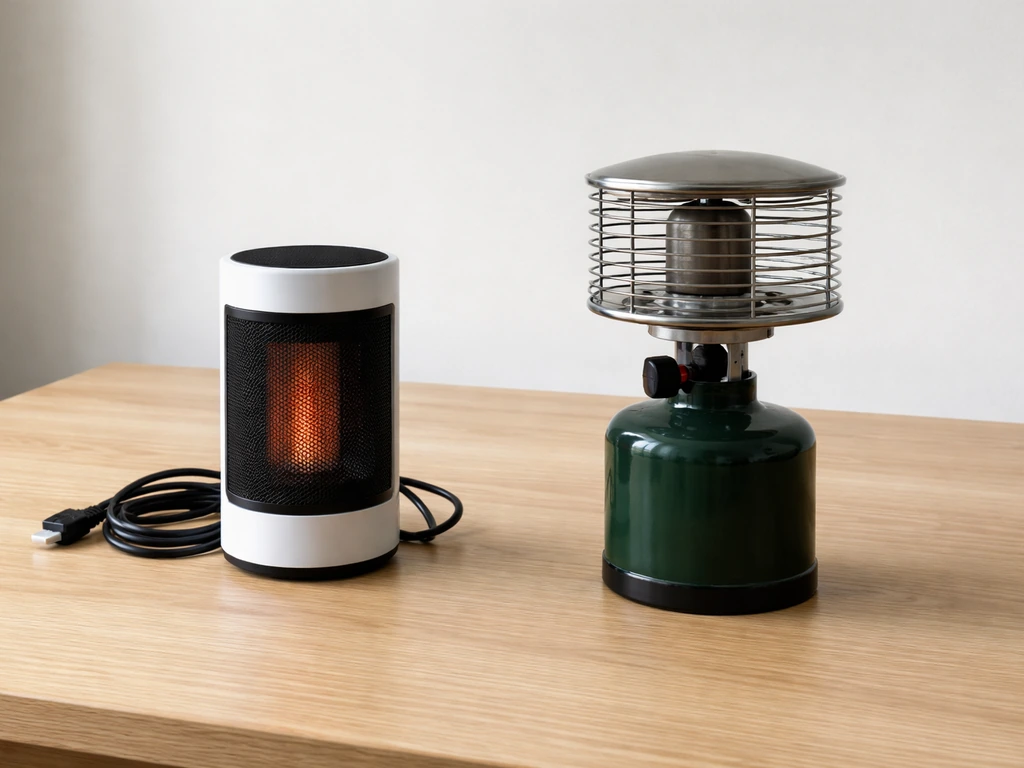
The single most important safety rule for any tabletop heater is clearance from combustibles. OSHA also requires sufficient clearance to combustibles for temporary heating devices and references specific guidance in Table F-4, including protections against ignition issues such as heater upset from wind action on coverings for flammable-liquid-fired heaters blank" rel="noopener noreferrer">clearance from combustibles. blank" rel="noopener noreferrer">Keep at least 3 feet of clear space between the heater and anything that can burn: umbrellas, curtains, string lights, paper, fabric chair covers, and overhanging plants. This is consistent guidance from the NFPA, OSHA, and Consumer Reports, and it applies to both electric and propane tabletop models. On a small table with chairs around it, that often means centering the heater and keeping decor and table items well away from the heat source.
For the East Oak E-GLOW electric model, setup is simple: place it on a stable flat surface, plug it into a 120V outdoor-rated outlet, and use the touch controls or remote. The anti-slip base handles most stable table surfaces. Do not use a lightweight extension cord; if you need an extension, use a heavy-duty outdoor-rated cord rated for at least 15 amps. Never run the cord under a rug or through a door gap.
For the propane tabletop model, follow East Oak's manual step by step when connecting the propane cylinder. Tighten connections hand-firm and check for leaks using soapy water around the connection points before igniting. Always connect and disconnect propane cylinders outdoors. Store propane cylinders upright, on a level surface, in a ventilated outdoor area away from heat sources. Never transport a connected propane tank in an enclosed vehicle. When the heater is in use, do not move it while the flame is lit.
- Maintain at least 3 feet of clearance from all combustibles (fabric, paper, plants, awnings)
- Place the heater on a stable, level, non-combustible surface
- For electric: use an outdoor-rated outlet and a heavy-duty extension cord if needed
- For propane: connect and check for leaks before igniting, follow the manual for regulator connection
- Never move a propane tabletop heater while the flame is on
- Keep children and pets at least 3 feet from the heater at all times
- Use the built-in timer (E-GLOW) to prevent leaving the heater on unattended
- Store propane cylinders upright outdoors in a ventilated space; buy a heater cover for off-season storage (East Oak sells compatible covers)
Real-world performance: warm-up time, wind, and what you can actually expect
Infrared electric heaters like the E-GLOW warm up almost instantly, usually within 30 to 60 seconds of powering on. You don't need to pre-heat or wait for the unit to reach operating temperature the way you might with a convection heater. The 360-degree dispersion means everyone at a round table with a 4-foot diameter will feel warmth without repositioning the unit, which is a real quality-of-life advantage for dinner parties.
Propane tabletop heaters take 60 to 90 seconds to reach full output and produce a warmer, more intense radiant heat. On a cold night (below 40°F), the propane model will outperform the electric one noticeably. However, note that propane regulator output can drop in very cold temperatures (below 20°F), which can reduce BTU output somewhat.
Wind is the biggest real-world performance killer for any outdoor heater. Even a 10 mph breeze will disrupt the warm pocket that a tabletop heater creates. For the electric E-GLOW, wind mainly just carries away the warm air but the radiant heat still reaches people sitting close. For propane models, wind can actually extinguish the flame, which is where the CSA/ANSI Z83.26-rated flame-failure shutoff becomes important: if the flame dies, gas flow stops automatically. In windy conditions, position the heater on the windward side of your seating area so the warmth blows toward your guests rather than away from them, and consider whether a covered patio or windbreak fence would improve performance significantly.
On a covered patio in calm conditions at 45 to 55°F, a 1500W electric tabletop heater will keep four people comfortable sitting within 4 to 5 feet of the unit. On an exposed, breezy patio at the same temperature, expect to feel mild rather than warm warmth unless you're within 3 feet. These aren't flaws of the East Oak specifically: they're the physics of tabletop heater output in any brand, and they're why matching the heater to your specific setup before buying matters so much.
Your buying checklist and the clearest path to the right choice
Before you order, run through these questions. Your answers will point directly at the right model and help you avoid the most common buying mistakes.
- Do you have an outdoor-rated electrical outlet within reach of your table? If yes, the East Oak E-GLOW 1500W electric is your starting point. If no, look at the propane tabletop.
- Is your patio covered or open? Covered: electric works great. Open and breezy: propane's extra BTUs help.
- How many people are you usually heating? Up to 4 at a standard bistro table: either model works. More than 6, or spread across a larger area: consider a floor-standing propane heater instead.
- Do you need portability beyond the patio (camping, travel, other locations)? Propane wins here; the electric model needs an outlet.
- What's your average outdoor temperature when you use the patio? Below 40°F regularly: propane tabletop or a higher-wattage electric. Mild 45–60°F: the 1500W electric is sufficient.
- Are you comfortable managing propane cylinders and regulator connections? If not, the electric model genuinely removes that complexity.
- Do you need to leave the heater running unattended for periods? Use the E-GLOW's built-in 0–24 hour timer to auto-shutoff.
- What accessories will you need at purchase time? For propane: a compatible 1 lb or 20 lb propane cylinder (verify the correct regulator per East Oak's manual). For electric: a heavy-duty outdoor extension cord if your outlet isn't close. Both models: a heater cover for off-season storage.
Best-fit recommendations by situation
| Who you are | Best pick | Why |
|---|---|---|
| Small covered patio, 2–4 people, outlet available | East Oak E-GLOW 1500W electric | Instant heat, no fuel, IP65 rated, timer included |
| Open patio, 4–6 people, no outlet nearby | East Oak propane tabletop (11,000 BTU) | More BTUs, fully portable, no cord needed |
| Budget buyer wanting simplicity | East Oak E-GLOW electric | Lower ongoing cost, fewer accessories needed |
| Wants to use heater off-patio (camping, travel) | Propane tabletop | Runs without power, portable |
| Large open patio, 8+ people | East Oak RADIATE or TORCH (floor-standing) | 50,000–55,000 BTU floor models cover a 20-foot diameter |
| Style-conscious buyer prioritizing aesthetics | Compare bronze, powder-coated, or granite-top models | Similar specs but with finish/material upgrades |
What to do next
If you've landed on the E-GLOW electric: check that your outdoor outlet is within 6 feet of where you want to place the heater, or pick up a heavy-duty outdoor extension cord rated for 15 amps before your order arrives. Download East Oak's user manual from their product page before first use and read the control and timer setup section: it takes about five minutes and saves a lot of guesswork. If you're going with the propane tabletop: confirm the cylinder size and regulator type in the East Oak manual before buying a cylinder separately. Have a soapy-water leak check ready before the first ignition. Either way, verify that UL or CSA certification appears on the product label when it arrives: this confirms it's been tested to ANSI Z83.26/CSA 2.37 standards for outdoor heater safety. If the heater ever underperforms, the most likely culprits are wind exposure, distance from the heat source, or ambient temperatures below the heater's effective range: adjust placement before assuming anything is wrong with the unit. Also, if you're shopping for a powder coated table top patio heater, prioritize finish quality because it affects corrosion resistance and long-term durability outdoors outdoor heater safety.
FAQ
Can I use an east oak table top patio heater in light rain or drizzle?
Yes, but only if the outlet and extension cord are rated for outdoor use and the connection stays elevated and dry. The IP65 rating helps the heater handle splashes, it does not make a wet cord or a loose plug safe. If you will use it in rain, route the cord so water drips off the cable before it reaches the plug (a drip loop).
What extension cord setup is safe for the east oak table top patio heater (electric)?
For the E-GLOW, aim to plug into a 120V outdoor-rated receptacle within the cord limit (6 feet is ideal). If you need a longer run, use a heavy-duty outdoor extension cord rated at least 15 amps, and keep the cord where it will not be stepped on, pinched under table legs, or exposed to pooling water.
How much clearance do I need from overhead items (umbrellas, pergola ceilings, curtains)?
Don’t cover the heater or place it inside a glass enclosure or under a low cabinet or pergola ceiling. Even with clearance rules, tabletop heaters can trap heat and increase the chance that combustibles get hot. If your patio has overhead structures, add extra clearance beyond the minimum and keep flammables (tablecloths, umbrellas, curtains) well outside the heater footprint.
Is the programmable timer enough for overnight safety with an east oak table top patio heater?
A programmable timer helps, but it does not replace supervision. For safety, set the timer for the time you actually plan to be outside, and turn it off manually when everyone stands up to leave. For extra caution, avoid setting long timers when temperatures are dropping quickly or when kids or pets are likely to access the table.
What should I troubleshoot first if my east oak table top patio heater feels like it is not putting out enough warmth?
If it seems weak, check the simplest causes first: wind exposure, too much distance from the seated group, and whether the space is covered. For electric infrared, also verify the heater is not partially blocked by the table edge or decorative items near the front. If performance still seems low, confirm the unit is operating (remote and touch controls) and that the outlet is providing full power.
What happens in wind with the propane east oak table top patio heater, and can I relight it right away?
When propane wind can extinguish the flame, the built-in flame-failure shutoff stops gas automatically. Still, do not keep reigniting repeatedly in strong gusts. Reposition so the heater is on the windward side of your group, and consider adding a windbreak or moving to a more sheltered spot before trying again.
Where should I place the heater on the table if my patio layout is not a perfect circle?
Yes. Tablets are often centered for even coverage, but you should place the heater so the radiant output faces the seating area and stays at least 3 feet away from combustibles like curtains or umbrella fabric. If your table has a wall or planter behind it, position the heater to keep the hottest area away from that side.
Can I move the propane east oak table top patio heater while it is running?
No. Do not move a propane tabletop heater while the flame is lit, and never transport a connected propane cylinder in an enclosed vehicle. If you need to relocate, turn it off fully, let it cool, then move it with the cylinder disconnected only when the manual allows it and you are outdoors.
Can I use a propane tank and regulator from another brand with the east oak propane tabletop model?
Yes, but only if you use the correct connector and regulator specified in East Oak’s manual for that exact propane model. Compatibility issues are common, and a mismatched regulator can cause poor performance or unsafe conditions. If you are buying a cylinder separately, confirm the cylinder type (and regulator style) before you order.
Why does it feel like my electric east oak table top patio heater heats slower than expected, even though it should warm up quickly?
The E-GLOW generally reaches usable output quickly (within about a minute), but the perceived warmth depends on distance and wind. Infrared warms people and nearby objects first, so you may feel it fast even if the surroundings remain cool. In contrast, propane usually takes longer to hit full intensity, especially below freezing.