
Fire Sense makes solid patio heaters across a few distinct categories: infrared electric pole-mounted units (like the popular 1,500-watt model 02117), propane gas heaters including both residential and commercial-rated options, and tabletop models. If you're shopping today, the clearest split is between the electric infrared heaters (plug-in, best for covered patios up to about 100 sq. ft.) and the propane gas heaters (up to 48,000 BTU, better for open-air spaces and bigger areas). Neither is universally better, it comes down to your patio size, whether it's covered or open, how much wind you deal with, and whether you have the right electrical setup or a propane supply.
Fire Sense Patio Heaters Review: Infrared, Electric, Commercial Picks

Willa Brennan
17 May 2026
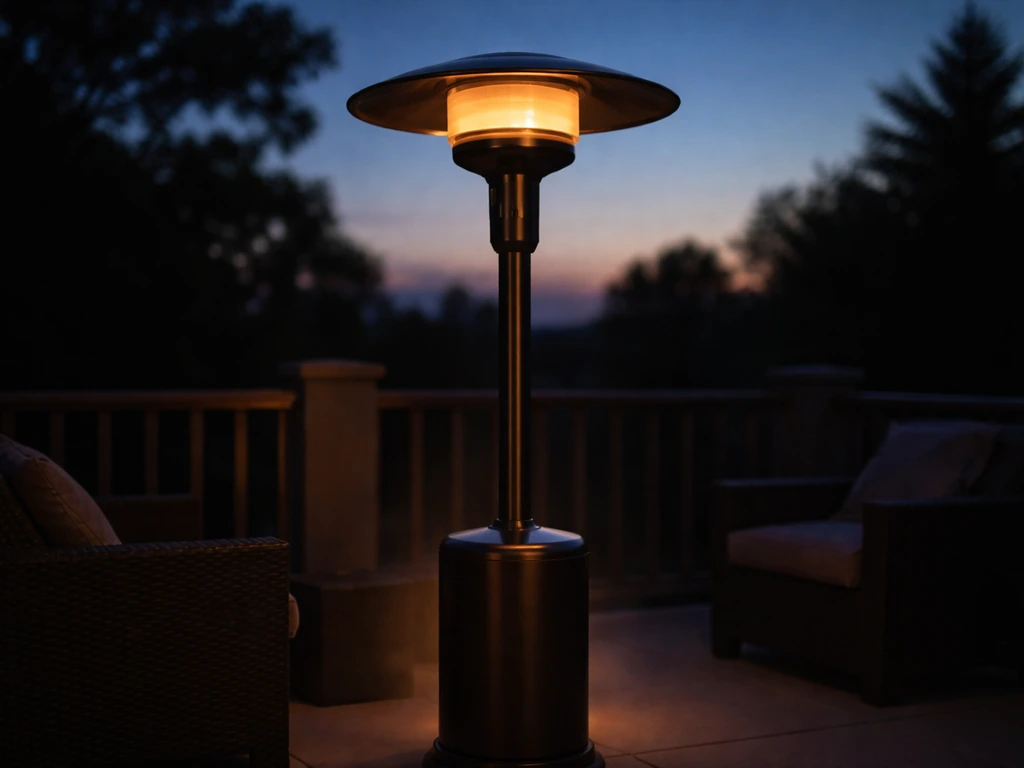
What to Know Before You Buy a Fire Sense Heater
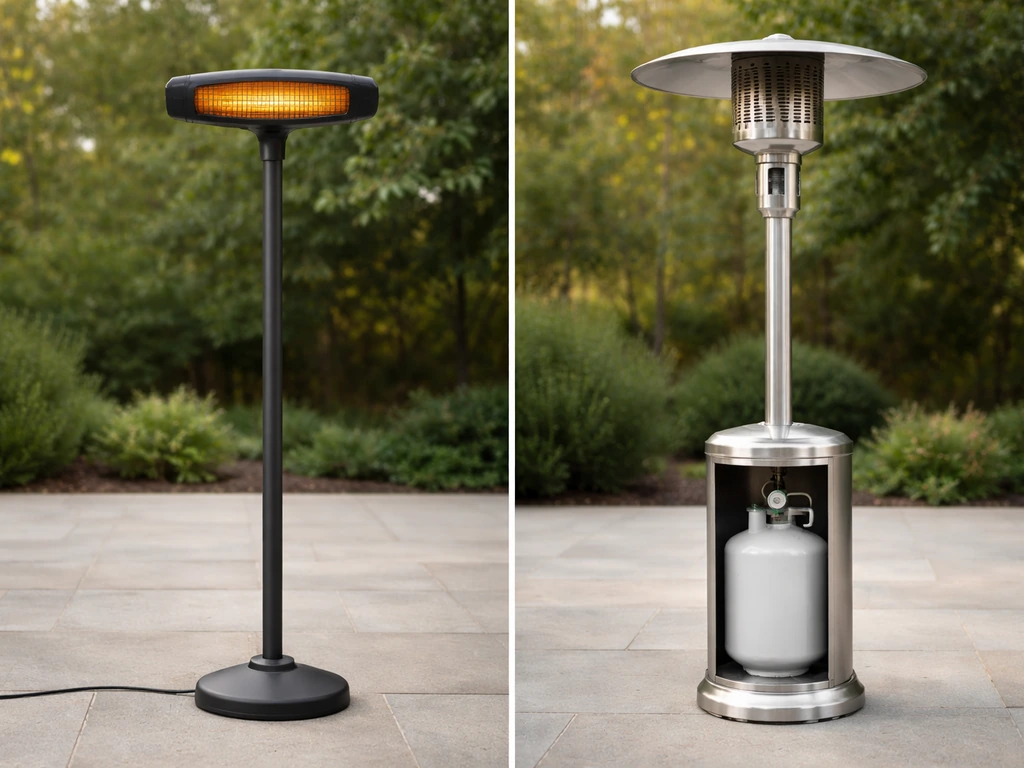
The first thing to figure out is whether you want electric or propane. Fire Sense sells both, and they behave very differently in the real world. Their electric infrared units run off a standard 120V outlet, but not just any outlet. The 02117, for example, requires a dedicated 20-amp circuit. That means if your patio doesn't already have one, you may need an electrician before you even unbox the heater. On the plus side, electric infrared heaters are instant-on, quiet, and don't require fuel storage.
The propane gas models are a different animal. Fire Sense's residential propane units (like the DLX 46K, which is explicitly labeled 'Residential Application Only' in its manual) use standard 20-lb propane tanks and work well for backyard patios. Their commercial LP models, rated up to 48,000 BTU, are built for venues like restaurant patios and event spaces where you need serious heat output and the heater runs for long hours. Understanding which tier you need saves you money and headaches.
Here's the quick mental model: infrared electric = smaller covered patio, plug-in convenience, lower upfront cost; residential propane = mid-to-large open backyard, no electrician needed, portable; commercial propane = restaurants, event venues, high-demand use where durability and output matter most.
Infrared vs. Electric: What's the Difference?
Worth clarifying: Fire Sense's electric heaters ARE infrared heaters. 'Infrared' describes how they heat, by radiating warmth directly to people and objects rather than heating the air first. That's actually a big advantage on a covered patio, where the radiant warmth feels immediate and comfortable. But because they're heating a zone, not a room, coverage is limited. The 02117 is rated for 100 square feet, which is realistic for a small seating area or dining nook.
Fire Sense Infrared Patio Heater Review: Real-World Performance
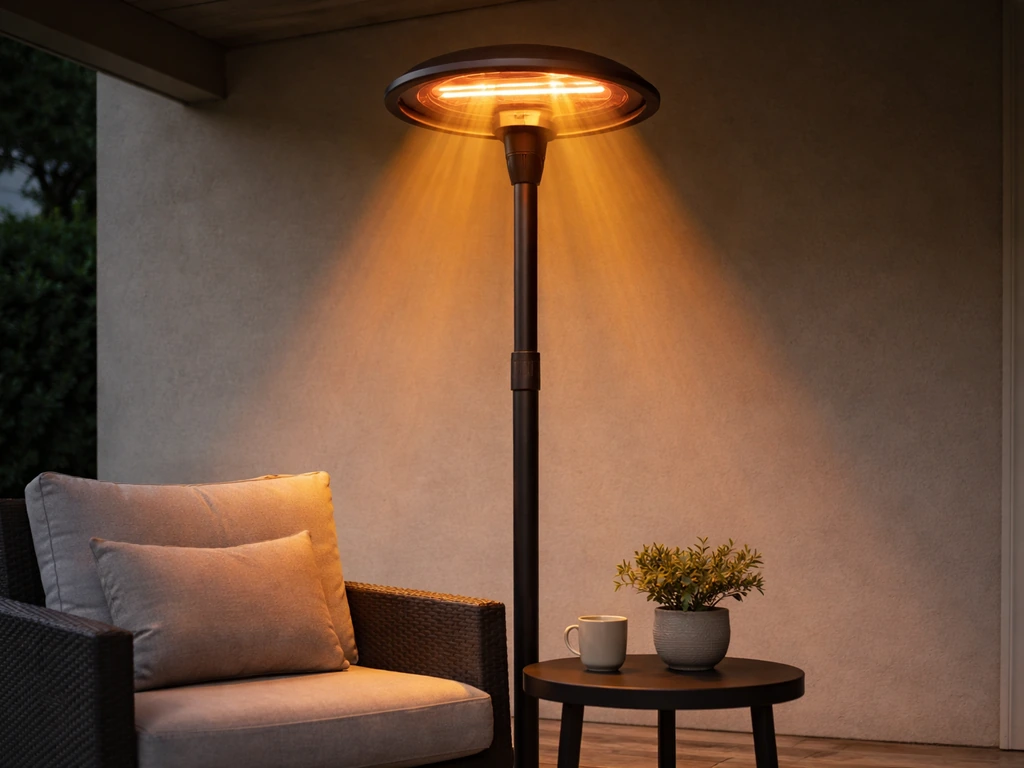
The model 02117 is the flagship electric infrared option in the Fire Sense lineup, and it's the one you'll find at both Home Depot and Best Buy right now. It's a telescoping pole-mounted unit in stainless steel, rated at 1,500 watts and 1,500 BTU/hr of heat output. Coverage is 100 square feet according to its spec sheet, and in practice that number is accurate for a calm, covered patio, think a 10x10 ft. deck with a pergola or roof overhead.
In real-world use, infrared heaters like this one shine in covered or semi-enclosed spaces. You feel the warmth within seconds of turning it on, which is genuinely satisfying on a cool evening. The stainless steel construction holds up reasonably well outdoors, but there's an important caveat baked right into the manual: never use this heater in rain. The glass tube element can crack if it gets wet. That means if your patio isn't covered, you either need to be very disciplined about bringing it in or choose a propane model instead.
Wind is also a limiting factor. Infrared heaters lose effectiveness quickly in open, breezy conditions, the radiated warmth gets disrupted and dispersed. For anything more than a light breeze, you'll be disappointed with the output. Keep it sheltered and covered, and it performs well.
Installation and Electrical Requirements
The 02117 needs a dedicated 20-amp, 120V circuit. At 1,500 watts, it draws about 12.5 amps at full power, so while you technically have some headroom on a 20A circuit, the manual is clear: don't share this circuit with other loads. The manual also warns against using extension cords unless they're properly gauged for the load. If you do use one, it needs to be rated for outdoor use and the correct amperage, undersized cords are a fire risk. Assembly involves setting up the telescoping pole, and you should complete the full assembly before plugging anything in.
Cost to Run
This is where the electric infrared model actually looks pretty good. At 1.5 kW, running cost is simply 1.5 times your local electricity rate per hour. At the U.S. average of around $0.15/kWh, that's roughly $0.23 per hour to run. Even at $0.25/kWh (which is on the high end for most of the country), you're looking at under $0.40/hour. Compared to propane, that's competitive and predictable, no tank refill runs, no price fluctuation.
Safety Features
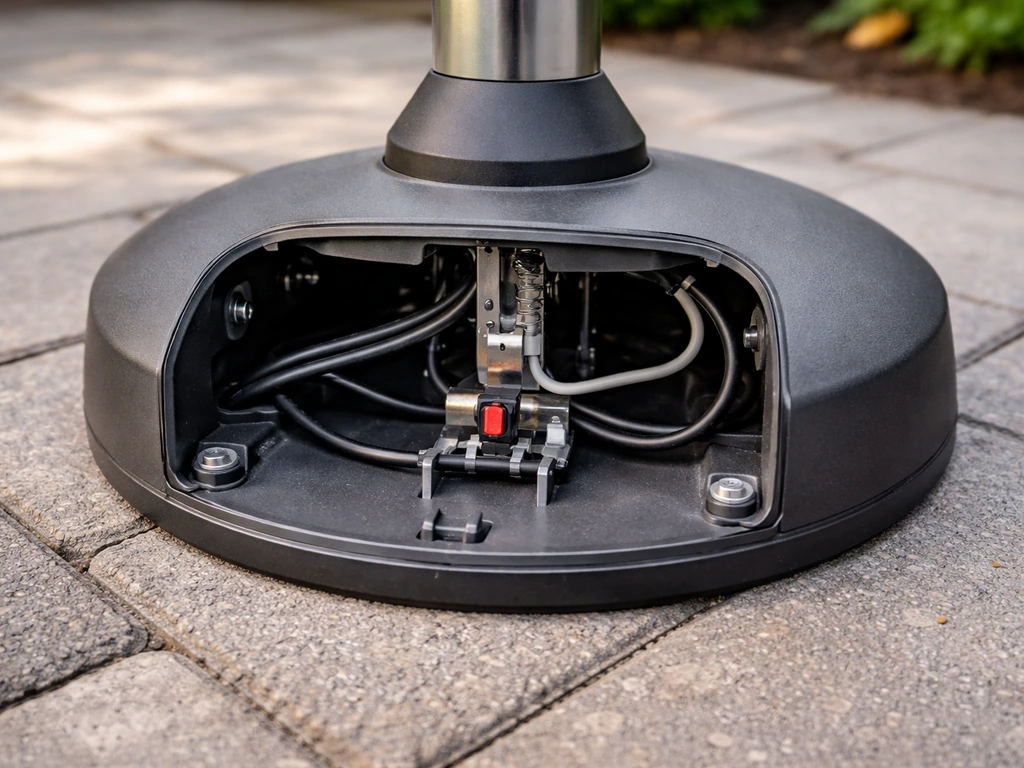
The 02117 includes a tip-over safety switch that cuts power if the unit tips over, which matters on a pole-mounted heater. The manual also specifies keeping children and pets at least 3 feet away and placing the unit on firm, level ground. The glass heating tube is fragile: if the heater falls and strikes a hard surface, the tube can shatter. That's a real-world concern if you have a busy patio with kids or pets around.
Fire Sense Electric Patio Heater Reviews: The Full Picture
Across the Fire Sense electric infrared lineup (which also includes models 60694 and 02678 in the same family as the 02117), the pattern is consistent: 1,500-watt output, pole-mounted or wall-mountable configurations, stainless steel finish, and the same electrical requirements. Controls are typically a simple on/off switch or a basic dial, nothing fancy like a smart thermostat or app control. That keeps the price down but means you don't get programmable scheduling or precise temperature targeting.
Noise is a non-issue with infrared electric heaters, they're silent. That's a real quality-of-life advantage over propane heaters, which have an audible flame. Maintenance is also minimal: occasionally wipe down the reflector housing, check that the glass tube is clean and uncracked, and inspect the cord for weather damage. There are no filters, no ignitors to replace, no fuel lines to maintain.
The honest downside: 100 sq. ft. coverage is genuinely limited. If you have a larger patio or want to heat a group of more than four or five people spread out, one unit won't cut it. You'd need to either run multiple units (requiring multiple dedicated circuits) or step up to a propane model with higher BTU output.
Fire Sense Commercial Patio Heater Review: Is It Worth the Upgrade?
The commercial Fire Sense LP patio heater (48,000 BTU, model 61541 referenced in the manual) is a completely different league from the residential electric units. This is a large, freestanding propane heater designed for restaurant patios, event spaces, and high-traffic outdoor venues. The output difference is dramatic: 48,000 BTU vs. 1,500 BTU-equivalent from the electric unit. In practical terms, the commercial LP heater can warm a much larger open area, think a 20-person restaurant patio rather than a small residential deck.
Durability and Safety at the Commercial Level
The commercial manual spells out some important operational limits that directly affect where and how you can use this heater. Wind velocity must be below 10 mph, above that, the flame becomes unstable and efficiency drops sharply. Efficiency also falls off below 40°F (5°C), which is worth knowing if you're in a cold climate trying to extend your outdoor season into winter. The emitter surface can reach temperatures approaching 1,600°F, and the manual specifies a cooldown period of roughly 45 minutes after use before anyone touches the burner assembly. That's a serious burn hazard to communicate to staff if you're running this in a commercial venue.
Clearance requirements are strict: at least 36 inches from the top of the unit to any ceiling or overhead combustible, and 24 inches from the sides. If you're placing this under a covered patio or pergola, measure carefully before you buy. The manual also states that this heater must only be used with liquid propane, no other fuel, no exceptions, or you void the warranty and create a safety hazard.
Who the Commercial Model Is Actually For
Restaurants, bars, and event spaces with open-air or partially sheltered patios are the sweet spot. The higher BTU output justifies the larger footprint and propane logistics. For residential use, the commercial model is overkill in most cases, and you'd be better served by Fire Sense's residential propane options (like the DLX 46K, which is explicitly designed and rated for home use). Using a commercial-rated heater residentially isn't dangerous, but you'll be hauling bigger tanks and dealing with more heat than most home patios need.
Comparing Fire Sense Models Side by Side
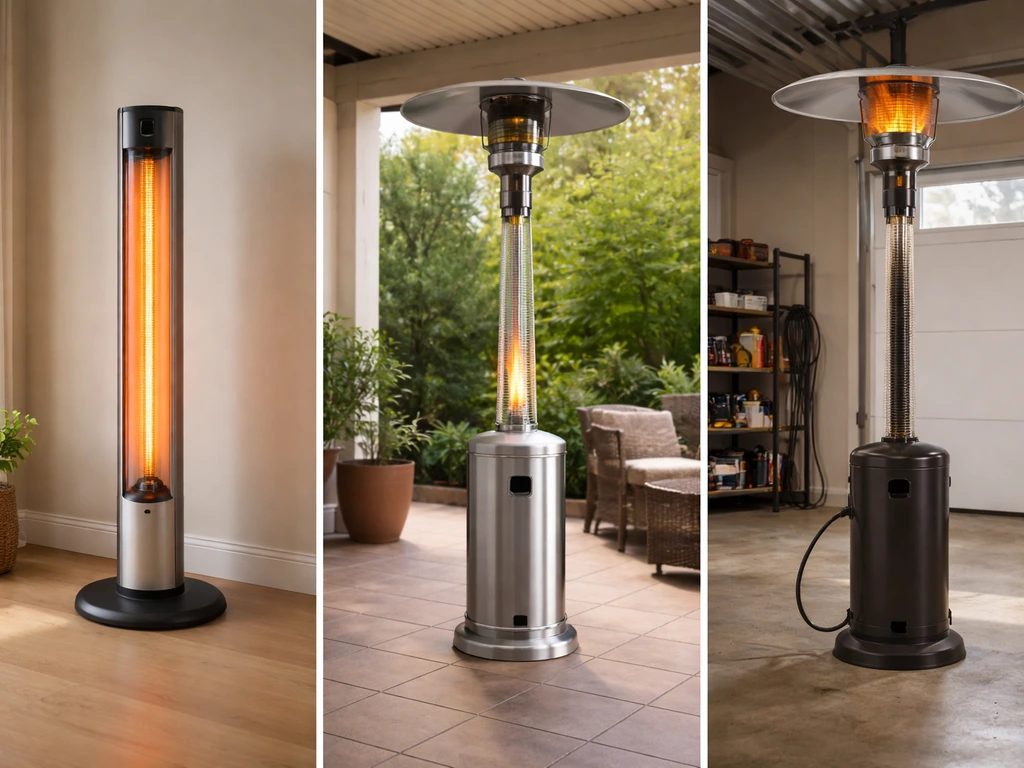
| Feature | 02117 Infrared Electric | DLX 46K Residential Propane | Commercial LP (48,000 BTU) |
|---|---|---|---|
| Heat Output | 1,500W / ~5,100 BTU | 46,000 BTU | 48,000 BTU |
| Coverage Area | ~100 sq. ft. | ~200–250 sq. ft. | ~250+ sq. ft. (open air) |
| Fuel Type | 120V Electric | Liquid Propane | Liquid Propane only |
| Installation | Dedicated 20A circuit required | No install; tank attachment | No install; tank attachment |
| Wind Tolerance | Low (best in calm, covered) | Moderate | Max 10 mph per manual |
| Rain/Wet Use | Not safe (glass tube) | Not recommended | Outdoor only; no enclosures |
| Noise Level | Silent | Audible flame | Audible flame |
| Safety Features | Tip-over switch | Tip-over switch | 45-min cooldown; strict clearances |
| Best For | Small covered patio | Mid-size residential patio | Restaurant/event venue |
| Residential Rating | Yes | Yes (labeled residential) | Commercial (can use residentially) |
| Approx. Run Cost | ~$0.23/hr at $0.15/kWh | Propane tank cost per hour | Propane tank cost per hour |
Checklist for Choosing the Right Fire Sense Model
Before you click 'add to cart,' run through these questions. They'll eliminate the wrong models fast.
- Measure your patio: Under 150 sq. ft. and covered? The 02117 electric infrared can work. Over 150 sq. ft. or open air? You need a propane model.
- Check your electrical setup: Do you have a dedicated 20-amp outdoor circuit? If not, factor in electrician costs before buying an electric unit.
- Assess your wind exposure: Is your patio sheltered or open to wind? Both the electric and commercial propane units are limited above 10 mph wind. If your patio is windy, a residential propane heater in a sheltered corner is more practical.
- Covered vs. uncovered: Covered patios benefit most from infrared electric heaters. Uncovered patios in the rain mean you need propane—and you still shouldn't run it in heavy rain.
- Who will use it: Restaurants and venues with staff should look at the commercial LP model. Families with kids should prioritize tip-over protection and keep 3 ft of clearance.
- Budget for fuel: Electric is predictable and cheap per hour. Propane costs fluctuate, and commercial models go through fuel faster at 48,000 BTU.
- Cold climate use: Remember that propane heater efficiency drops below 40°F. If you're in a genuinely cold region, factor this in.
Top Picks and What to Watch Out For
Best for Small Covered Patios: Fire Sense 02117 Infrared Electric
If you have a covered patio under 150 sq. ft. and access to a dedicated 20-amp circuit, the 02117 is the easiest Fire Sense heater to live with. It's silent, instant-on, cheap to run, and requires almost no maintenance. The tip-over switch adds a layer of safety for family use. Just keep it dry, keep it sheltered from wind, and don't share the circuit with other appliances. This model comes up frequently in the broader Fire Sense electric patio heater conversation, and the specs hold up to scrutiny.
Best for a Typical Residential Backyard: Fire Sense DLX 46K
For an open or semi-open backyard patio where you want flexibility and stronger heat output without a commercial footprint, the DLX 46K is the go-to residential propane option. It's labeled residential in its manual, sized appropriately for home use, and doesn't require any electrical work. You'll spend more per hour on propane than on electricity, but the coverage and portability trade-off is worth it for larger outdoor spaces.
Best for Restaurants and Event Venues: Fire Sense Commercial 48,000 BTU LP
If you're outfitting a restaurant patio or event space and need serious heat output that runs for hours, the commercial LP model delivers. Just enforce the wind and clearance rules strictly, the 10 mph wind limit and 36-inch overhead clearance aren't suggestions. Train staff on the 45-minute cooldown before anyone touches the burner area.
If you're comparing Fire Sense's 46,000 BTU models more closely, the detailed breakdown in the Fire Sense 46,000 BTU patio heater review covers output nuances worth reading. If you're comparing Fire Sense's 46,000 BTU models more closely, the detailed breakdown in the Fire Sense 46,000 BTU patio heater review and firestorm patio heater reviews provide useful output and value comparisons.
If you're specifically looking at the 46,000 BTU class, that Fire Sense 46000 BTU patio heater review goes deeper into what to expect for real output and coverage.
Common Pitfalls to Avoid
- Buying the electric infrared unit without confirming you have a dedicated 20A outdoor circuit—this is the most common installation surprise.
- Using the infrared electric heater in rain or near a sprinkler zone. The glass tube will crack if it gets wet while hot.
- Running any Fire Sense propane heater in winds above 10 mph and expecting full performance. You won't get it.
- Choosing a commercial model for a small residential patio—it's too powerful, too large, and burns through propane unnecessarily.
- Using extension cords with the electric model without checking the gauge and outdoor rating first.
- Forgetting that propane efficiency drops below 40°F, which limits how useful the gas models are in colder weather.
- Ignoring the 45-minute cooldown on commercial LP units—the emitter surface approaches 1,600°F and stays dangerous long after the flame is off.
- Skipping the clearance check: the commercial LP model needs 36 inches of overhead clearance and 24 inches on the sides from any combustible material.
Fire Sense is a legitimate, well-distributed brand with solid representation at major retailers like Home Depot, Lowe's, and Best Buy, so parts, manuals, and support are accessible. They're not the highest-end patio heater brand on the market, but they hit a practical price-to-performance range that works for most homeowners and small venues. If you're also weighing other brands, it's worth checking how Fire Sense compares to options available specifically through Costco, where the specs and bundle pricing can differ from what you'll find at general retailers. If you're also considering shopping at Costco, you may find different bundle pricing and availability, so the Fire Sense patio heater costco review can help you compare.
FAQ
Can I use the Fire Sense 02117 on a covered patio but under a ceiling or pergola?
You should still verify clearance. The electric model has its own placement and heat-safe distance guidance, and the safe spacing can differ from propane units, which have stricter overhead requirements. Measure where the glass tube points, keep combustibles away, and do not block airflow around the housing.
What’s the safest way to handle the “never use in rain” warning for the infrared electric heaters?
Plan for sudden weather. If there’s any chance of exposure, use a weather cover designed for outdoor electric heaters and keep the heater disconnected during storms. Avoid relying on umbrellas or partial shielding, since water can reach the glass tube and cause cracking.
How many Fire Sense 02117 units do I need if my patio is bigger than 100 sq. ft.?
Treat 100 sq. ft. as a calm, sheltered zone size for one unit. For larger patios, a common approach is to estimate the area you want warmed (seating zone only) and add units so their heated zones overlap slightly. If you have windier conditions or you want warmth across the whole yard, you’ll likely need to step up to propane instead of adding more electric heaters.
Is it okay to use an extension cord with the 02117 if I don’t have a dedicated outlet?
The manual discourages it unless the cord is correctly rated for outdoor use and the proper amperage. In practice, for a heater that needs a dedicated 20-amp circuit, using an extension cord is often the wrong fix. The safer route is installing the correct outlet or circuit so the heater plugs directly in.
Do I need a CO (carbon monoxide) detector for Fire Sense propane patio heaters?
It’s a good safety step, especially for semi-enclosed patios or if airflow is limited. Propane heaters produce combustion gases, so a CO detector helps you catch buildup early. Also follow the manual’s outdoor placement guidance and avoid running propane heaters in enclosed areas.
What propane tank setup works best for the DLX 46K, and do I need a regulator?
The DLX 46K is designed for standard 20-lb propane tanks, which usually means you’ll use the tank’s normal regulator setup as specified for the heater. Do not improvise fittings. Make sure the hose and connection match the model’s requirements before first use, since incorrect hardware can lead to leaks or poor performance.
Can I convert the commercial 48,000 BTU Fire Sense LP heater to another fuel type?
No. The commercial LP heater is specified for liquid propane only, and using a different fuel violates the manual and can void warranty. If you want a natural gas option, you generally need a unit that is purpose-built for natural gas rather than attempting a conversion.
What should I do if the commercial heater struggles on a windy night?
If wind exceeds the manual’s limit, flame stability and efficiency can drop. The fix is placement and shelter, not increasing output. Position it away from strong gust paths, confirm required clearances are met, and if it still feels ineffective, switch to a design better suited for breezier conditions (often electric infrared for sheltered areas, or fewer, better-placed units).
How long should I wait before touching the commercial heater after shutting it off?
Expect a long cooldown. The commercial manual calls out roughly a 45-minute wait before anyone touches the burner assembly, because emitter surfaces can remain extremely hot. Add a “cool down” rule for staff or family, especially in high-traffic areas.
Do the electric infrared heaters need any special cleaning or tube maintenance?
They require light upkeep rather than complex maintenance. Focus on keeping the reflector housing clean and ensuring the glass tube is free of damage. If you ever see cracks or signs of impact damage, stop using the unit, since the tube is fragile.
Is it better to run one large propane heater or multiple smaller electric heaters?
It depends on your patio type and how much area you want to heat. Electric can be excellent for immediate, silent warmth in a tight, covered zone, but it won’t scale well for full-yard heating without multiple units and electrical circuits. Propane tends to win for open-air coverage, larger gatherings, and fewer logistics steps if you can manage tanks and follow strict clearance and wind rules.
Where can Fire Sense units be operated to avoid overheating or safety issues?
Follow surface and placement guidance carefully. For electric units, use level, firm ground and keep the heater stable to reduce drop or tip risk. For propane units, measure clearance to overhead combustibles and keep side distances. If your setup can’t meet clearance requirements, don’t buy that model for that location.