
If you're looking at a Living Accents tabletop patio heater, you're most likely choosing between two propane models: the 10,000 BTU SRPT03 and the 11,000 BTU PH01-S-PC. Both sit on a table, run on a 1 lb propane cylinder, cover roughly 75 sq ft, and are sold at major retailers like Home Depot and Ace Hardware. The 11,000 BTU PH01-S-PC is the stronger pick for most people thanks to its electronic ignition, tilt safety shutoff, and slightly higher output. Either way, these are outdoor-only propane heaters that work best on small uncovered or semi-covered patios where you need warmth around a single table.
Living Accents Table Top Patio Heater Buying Guide

Willa Brennan
3 Jul 2026
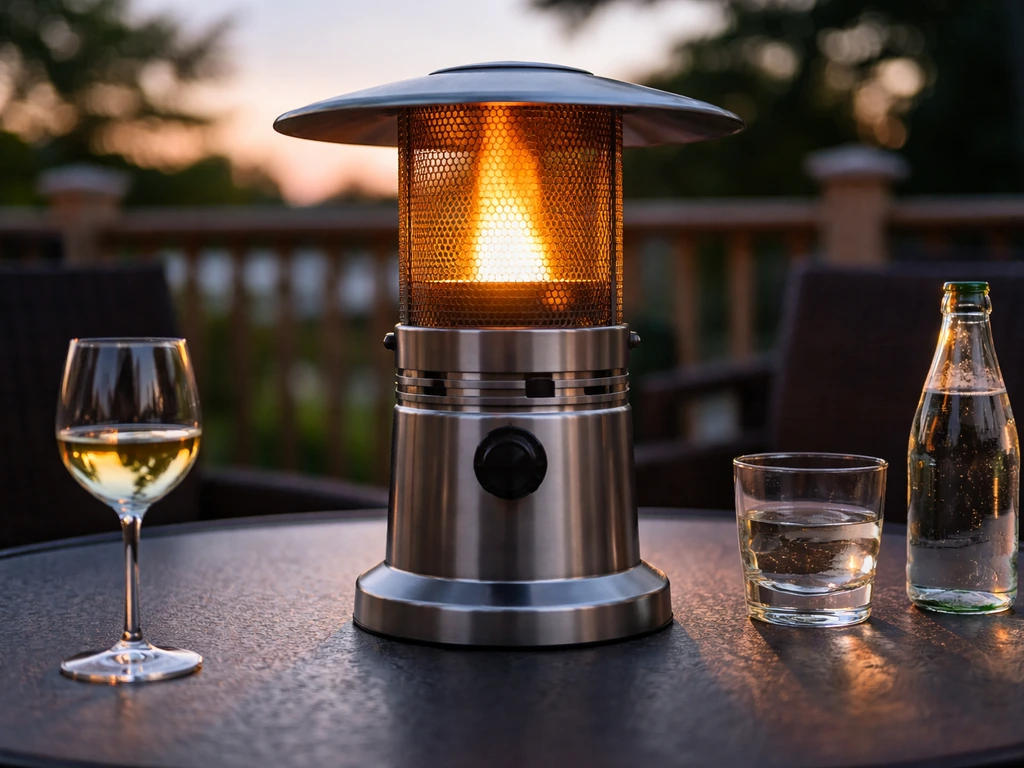
What a Living Accents tabletop patio heater actually is (and what it isn't)
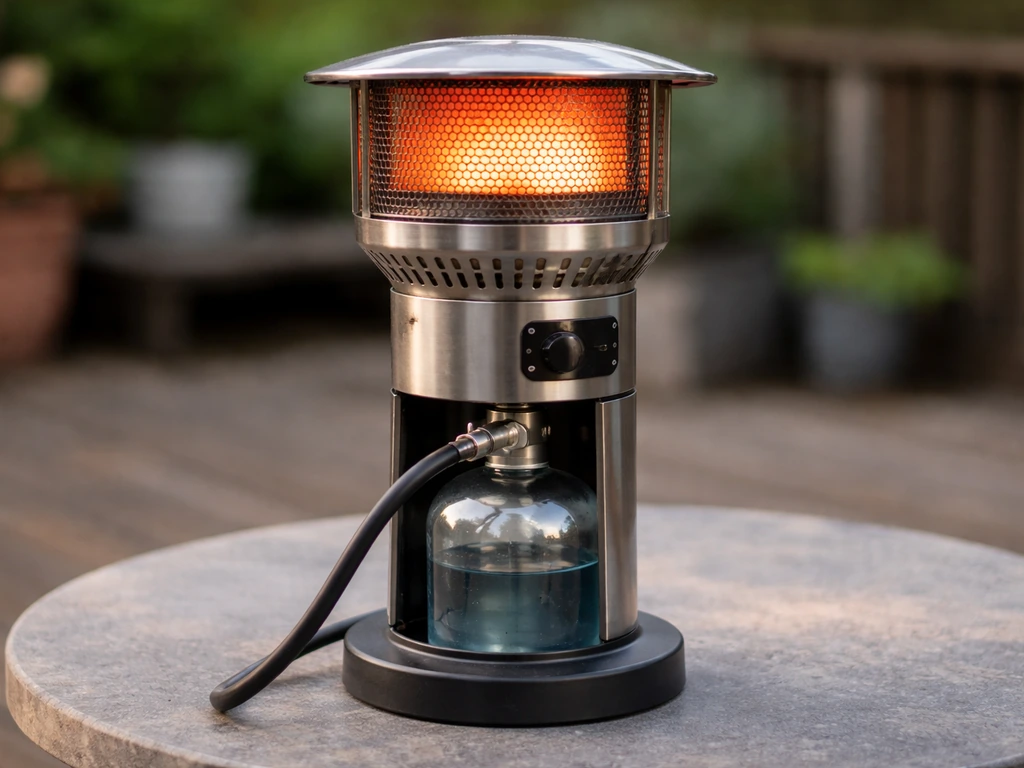
Living Accents is a budget-friendly outdoor products brand sold primarily through The Home Depot and similar big-box retailers. Their tabletop patio heaters are compact propane-fueled units designed to sit on top of a patio table or flat outdoor surface, not on the ground. They look like a miniature version of the tall mushroom-style standing patio heaters you see on restaurant patios, complete with a reflector dish on top and a burner assembly in the center.
What they are not: they are not electric infrared heaters, they are not natural gas heaters, and they are not pellet heaters. Every tabletop model Living Accents currently offers is a combustion appliance burning liquid propane. They are also not indoor heaters. The manuals for both the PH01-S/PH01-SS and HLDS032 models include explicit carbon monoxide warnings stating that using them in an enclosed space can be fatal. If you want something for a screened-in porch, a pergola with solid walls, or any semi-enclosed space, you need an electric infrared option instead, not one of these.
They also are not high-capacity heaters for large patios. At 10,000 to 11,000 BTU, they're sized for personal warmth around a small table, not for heating a 300 sq ft deck. Keep that in mind as you size your purchase.
Fuel type, heat source, and how these heaters work
Both Living Accents tabletop models burn propane. You attach a standard 1 lb disposable propane cylinder (the same green cylinder sold at camping stores) to the base of the unit. Gas travels up through the post to a burner assembly at the top, ignites either by a piezo spark or electronic ignition depending on the model, and the flame heats a burner screen/emitter. A reflector dish above the burner pushes radiant heat downward and outward toward the people sitting around the table.
This is radiant heat, not forced air. It warms objects and people directly in its path rather than heating the surrounding air. That's actually a good thing outdoors because wind blows away warmed air but can't strip away radiant heat the same way. The wire guard and burner screen protect the flame and reduce flare-up risk. The reflector dish is the key component for directing that heat where you actually want it.
At 0.45 lbs of propane per hour (the stated gas consumption for the PH01-S-PC), a single 1 lb cylinder gives you roughly 2 to 2.2 hours of run time at full output. That's the honest trade-off with these small tabletop units: they're convenient and portable, but you'll burn through 1 lb tanks quickly. If you're planning longer evenings, buying a small adapter hose to run the heater from a larger 1 lb refillable or even a standard 20 lb BBQ tank is worth considering (check your model's manual to confirm compatibility before doing this).
How much space will it actually heat?
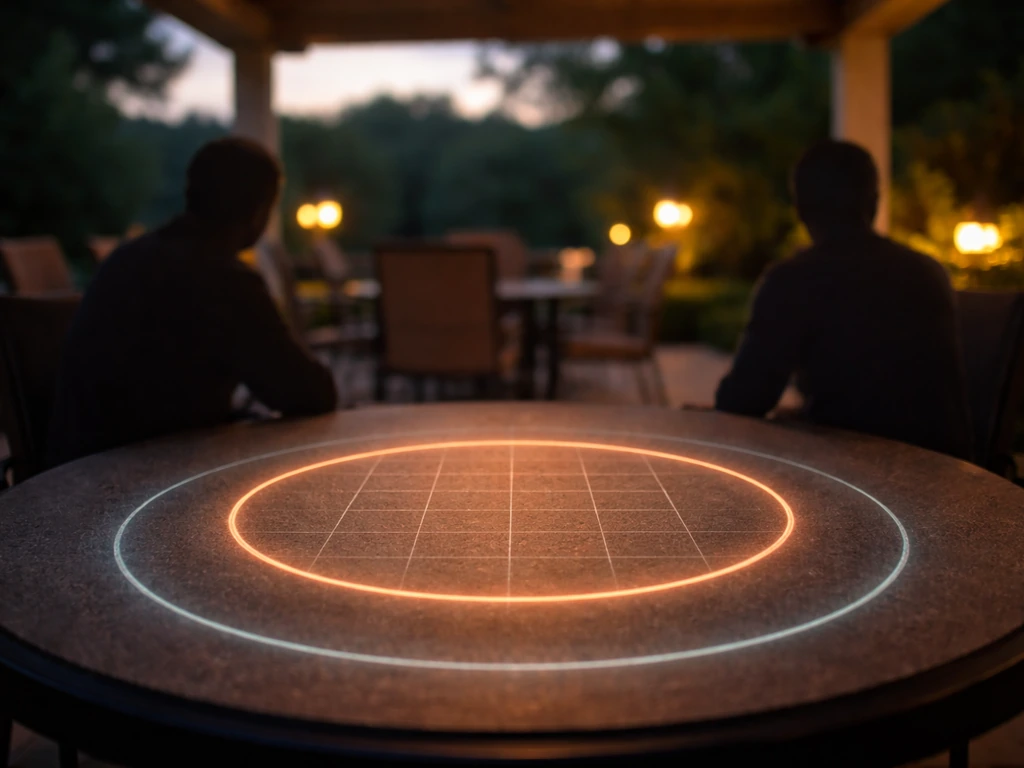
The stated coverage area for both Living Accents tabletop models is 75 sq ft. In real-world outdoor conditions, treat that number as an optimistic ceiling, not a guarantee. Here's what to realistically expect:
| Scenario | Realistic Coverage | Notes |
|---|---|---|
| Calm night, mild weather (55°F+) | 65-75 sq ft | Closest to the stated spec; works well for a 4-person table |
| Light breeze or cool night (45-55°F) | 40-55 sq ft | You'll feel warmth if seated within 3-4 feet of the unit |
| Windy or cold night (below 45°F) | 25-35 sq ft | Mostly useful for the 1-2 people closest to the heater |
| Covered patio or pergola (open sides) | Up to 75 sq ft | Overhead coverage traps radiant heat better; significant improvement |
The practical takeaway: a Living Accents tabletop heater is best suited for a 4-person patio table in calm or lightly breezy conditions. Place it in the center of the table or at one end, and everyone within about 4 feet will feel meaningful warmth. If your patio is larger than 100 sq ft or you regularly deal with gusty evenings, a single tabletop unit won't cut it. You'd want to either pair two units or step up to a full-size floor-standing patio heater.
Safety checks and placement rules you actually need to follow
Propane tabletop heaters get dismissed as casual accessories, but they're combustion appliances and need to be treated that way. These are the rules pulled directly from the Living Accents model manuals, and I'd take them seriously:
- Outdoor use only, always. The manual states this heater produces carbon monoxide and that using it in an enclosed space can kill you. Covered patios with open sides are fine. A screened-in porch, garage, tent, or any space with walls and limited airflow is not.
- Maintain minimum clearances. Keep at least 3 feet of clearance from combustible materials on the sides and at least 2 feet of clearance above the reflector. Check your patio umbrella height, overhead string lights, or pergola ceiling before lighting it.
- Use a stable, level surface. These heaters are top-heavy with a reflector dish sitting several feet above the base. Place it on a flat, non-tippy table surface. The PH01-S-PC includes a tilt-activated auto shut-off as a backup, but that's a last resort, not a reason to be careless.
- Don't block airflow. The burner needs air to combust cleanly. Don't crowd the unit with decorations, centerpieces, or anything that restricts airflow into or out of the heater housing.
- Check connections before lighting. When attaching a new propane tank, hand-tighten the connection firmly, then allow at least one minute for air to purge through the pilot before attempting ignition. Loose connections are a common cause of failed ignition and gas leaks.
- Wind management. In gusty conditions, the flame can be unstable or extinguish. Position the heater where it has some natural wind protection, like against a fence or wall (while maintaining side clearances), rather than in the middle of an open exposed area.
- Let it cool before moving. Don't touch or relocate the heater immediately after use. The reflector, housing, and burner assembly stay very hot for 15 to 20 minutes after shutoff.
- Store propane safely. Never store a connected propane cylinder indoors. Disconnect and store tanks in a cool, ventilated outdoor area away from ignition sources.
Features worth comparing between the two main models
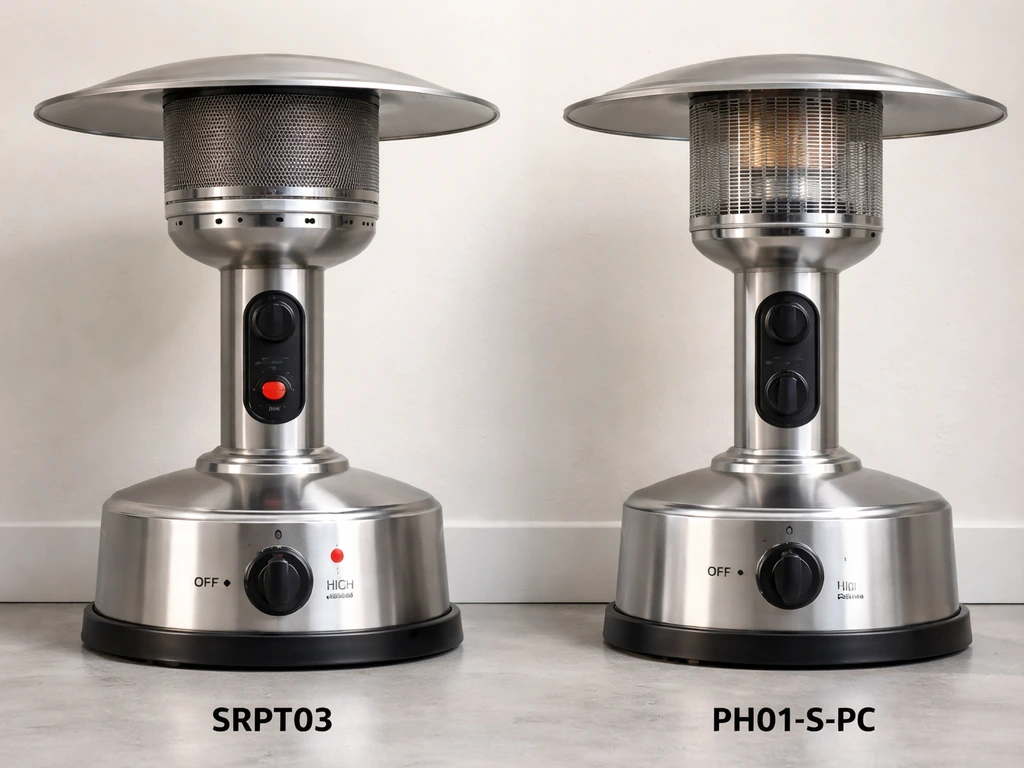
Living Accents keeps their lineup simple. You're really deciding between the SRPT03 and the PH01-S-PC. Living Accents lists the SRPT03 as a 10,000 BTU tabletop propane heater with a compact footprint (20 in wide and about 32.6 in tall) SRPT03 dimensions. Here's how they stack up on the features that actually matter day to day:
| Feature | SRPT03 (10,000 BTU) | PH01-S-PC (11,000 BTU) |
|---|---|---|
| Heat output | 10,000 BTU | 11,000 BTU |
| Coverage area | 75 sq ft | 75 sq ft |
| Ignition type | Likely piezo (push-button spark) | Electronic ignition |
| Safety shutoff | Not confirmed in available specs | Auto tilt shutoff (confirmed) |
| Burner protection | Screen guard | Burner screen guard |
| Fuel | 1 lb propane cylinder | 1 lb propane cylinder |
| Dimensions | 20 in W x 32.6 in H | 22.44 in W/D x 11.02 in H (base) |
| Weight | Not listed in available specs | 17.6 lbs |
| Finish | Bronze steel | Stainless steel |
| CSA listed | Yes (stated on retailer page) | Not confirmed in available specs |
| Timer feature | None | None |
| Adjustable heat settings | Not confirmed | Not confirmed |
The electronic ignition on the PH01-S-PC is a meaningful convenience upgrade over a standard piezo push-button. Electronic ignition tends to spark more reliably, especially in cold or damp conditions. The confirmed tilt shutoff is also a real safety advantage, particularly if you have kids or pets around the table. For those reasons, the PH01-S-PC is the better buy if you can find it available. The SRPT03 is a solid backup option if the PH01-S-PC is out of stock, but verify whether it includes a tilt shutoff before purchasing.
Neither model includes a timer or multiple heat settings based on available spec data. You get one output level (or a manual valve control to reduce flow), which is fairly standard for this class of heater. If programmable timers or variable heat settings are important to you, you'd need to look at electric tabletop infrared models from other brands, like the Cimarron stainless steel tabletop halogen or similar electric options.
Living Accents tabletop vs other patio heater types: which makes sense for you
A Living Accents tabletop propane heater is a good pick for a specific kind of person: someone who wants portable, no-installation warmth for a small outdoor table and doesn't mind buying 1 lb propane canisters. But it's definitely not the right tool for every situation. Here's how it compares to the other main heater types covered on this site:
| Heater Type | Best For | Drawbacks vs Living Accents Tabletop |
|---|---|---|
| Living Accents tabletop propane | Small patio table, portable use, no power outlet needed | Short runtime on 1 lb tanks, outdoor-only, no timer |
| Electric infrared tabletop | Covered patios, enclosed spaces, zero emissions | Needs power outlet, less portable, cord management |
| Full-size propane floor heater | Larger patios (150-250 sq ft), group gatherings | Much larger footprint, not table-mountable, heavier |
| Natural gas patio heater | Permanent patio setups with gas line access | Requires professional installation, not portable at all |
| Pellet patio heater | Ambiance + heat, long burn times | Bulky, requires pellet supply, more maintenance |
| Infrared wall/ceiling mount | Covered patios, permanent installation | Fixed position, requires mounting, not portable |
If you have a covered patio or any semi-enclosed space, skip the propane tabletop entirely and go electric infrared. The CO risk with any combustion heater in partially enclosed spaces is real, and it's not worth it. Electric infrared tabletop options like the Cimarron stainless steel tabletop halogen or the Mosaic tabletop models offer comparable table-level warmth without the ventilation concerns. If you want a similar table-level glow that fits the mosaic tabletop heater style, compare those Mosaic tabletop propane models next.
If your patio is fully open and larger than 150 sq ft, a full-size standing propane heater rated at 40,000+ BTU will serve you much better than stacking two tabletop units. Living Accents also makes a 46,000 BTU freestanding model if you want to stay in the same brand family.
If portability and zero installation are your priorities and your space is genuinely a small open patio table scenario, the Living Accents tabletop propane units are a practical, affordable choice that you can buy off the shelf at Home Depot today. Other tabletop propane options like the Sahara tabletop patio heater and the Lifestyle Sirocco tabletop patio heater compete in this same space and are worth a look if you want to compare build quality and feature sets before committing. The Sahara table top patio heater is another option in this same small, portable category, so it can be worth comparing BTU output, ignition type, and safety features before you decide.
Keeping it running well: maintenance, cleaning, and troubleshooting
Routine maintenance
These are simple appliances, but a little regular care goes a long way toward reliable ignition and consistent heat output.
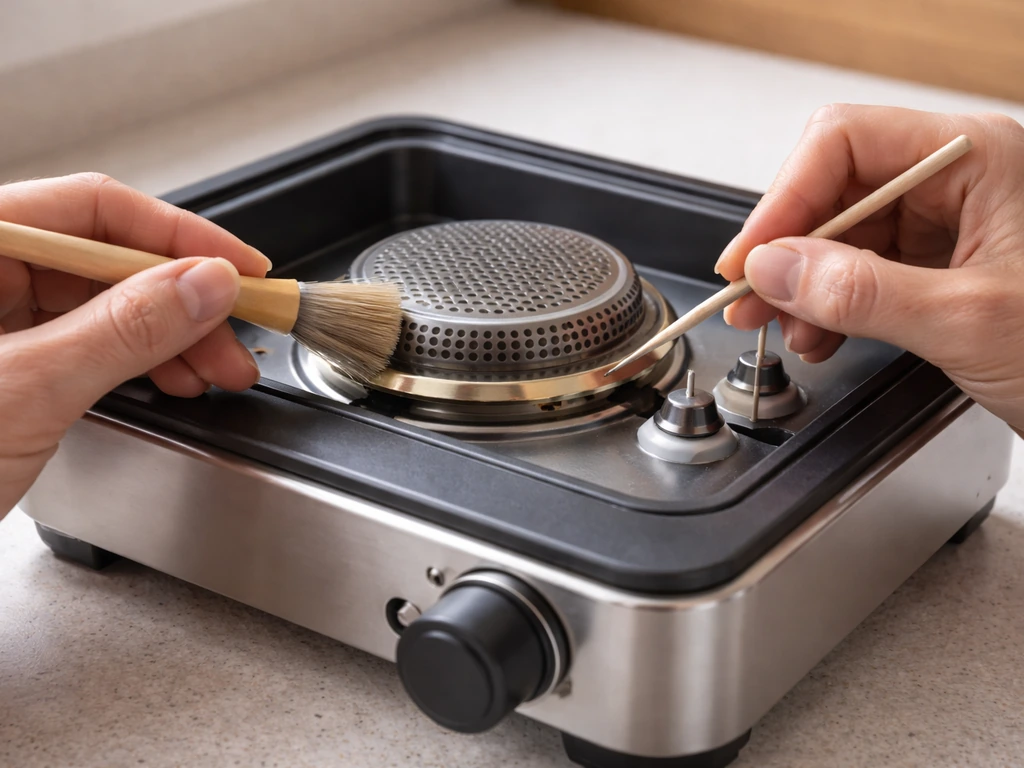
- Clean the burner holes every few uses. Spiders, insects, and debris love to nest in burner ports. A clogged burner hole causes uneven flames, yellow flame instead of blue, and ignition failures. Use a thin wire or a can of compressed air to clear any blockage. This is the single most common cause of poor performance.
- Wipe down carbon deposits. Over time, soot and carbon build up on the burner assembly and reflector. A soft cloth with mild soap and water handles most of it. Don't use abrasive pads on the reflector dish; it can scratch the surface and reduce heat reflection.
- Inspect the gas connection O-ring. Before each season, check the rubber O-ring at the propane connection point. If it's cracked or degraded, replace it before using the heater. A worn O-ring causes slow gas leaks.
- Store it covered or indoors during off-season. Moisture is the enemy of the ignition components and burner assembly. A weatherproof cover or indoor storage extends the heater's life significantly.
- Check the tilt shutoff mechanism. On the PH01-S-PC, gently tilt the unit and confirm the gas shuts off. If it doesn't, don't use the heater until the mechanism is repaired or replaced.
Troubleshooting common problems
Most issues with these heaters come down to a handful of recurring problems. Here's what to check first:
- Heater won't ignite: First check if the propane tank is empty or near-empty (low pressure is the most common cause). Then confirm the control valve is in the ON or PILOT position. Next, check for dirt or debris around the pilot and burner holes. If you just connected a fresh tank, wait at least one full minute for air to purge before attempting ignition again. Finally, check whether the thermocouple connection to the gas valve is secure and free of corrosion.
- Flame is weak or keeps going out: This usually means low fuel pressure (tank almost empty), a partially blocked burner port, or wind interference. Try a fresh tank and clear the burner holes. If wind is the issue, position the heater with natural windbreak behind it.
- Uneven or yellow flame instead of blue: Yellow flame means incomplete combustion, almost always caused by a blocked air intake or dirty burner ports. Clean the burner holes and make sure nothing is obstructing airflow into the base of the unit.
- Gas smell without ignition: Turn everything off immediately, disconnect the tank, and move away from the area. Check the connection for cross-threading or a damaged O-ring. Don't attempt re-ignition until you've identified and fixed the leak source.
- Heat output seems lower than expected: First check that you're on a full tank. Then inspect the reflector dish for heavy soot buildup, which significantly reduces heat reflection efficiency. Clean the reflector and test again. Also consider whether outdoor temperature or wind conditions are simply pushing the effective range below the 75 sq ft rated coverage.
Your next steps before you buy
Before you click purchase or drive to the store, run through this quick checklist: confirm your patio is fully open-air or has genuinely open sides (not a screened enclosure), measure your table and count your seats to verify a 75 sq ft coverage zone works for your setup, decide whether you want the convenience of electronic ignition (PH01-S-PC) or are fine with a push-button piezo (SRPT03), stock up on 1 lb propane cylinders or source a compatible adapter hose for a larger tank if you plan on long evenings, and check current in-store availability at your local Home Depot since tabletop propane heater stock can vary seasonally. If you are comparing options, the lifestyle sirocco table top patio heater is another compact choice worth looking at for small outdoor spaces tabletop propane heater. With those boxes checked, you'll get reliable, comfortable heat without any surprises on the first cold evening you actually need it.
FAQ
Can I use a living accents table top patio heater in a screened-in porch or under a pergola with solid walls?
No. These are propane combustion units, and using them in partially enclosed areas raises carbon monoxide risk. If your space has any substantial walls or a closed roof with limited airflow, switch to an electric infrared tabletop option instead, and only run the propane heater in truly open air conditions.
How long will a 1 lb propane cylinder last on the PH01-S-PC or SRPT03?
Expect about 2 to 2.2 hours at full output for the PH01-S-PC based on the stated burn rate. Real runtime can be shorter if the unit is cycled, used at a reduced setting does not guarantee much longer time, or if wind forces the flame to burn differently. Plan extra cylinders if you need heat through multiple hours.
Will two living accents table top patio heaters heat a 150 sq ft deck adequately?
Not reliably. The stated coverage is roughly 75 sq ft per unit, and outdoor conditions often reduce effectiveness. If you routinely need warmth over a larger open area, step up to a floor-standing heater rated for much higher BTUs rather than trying to cover large decks by doubling small units.
Where should I place the heater on the table for best warmth?
For even comfort, position it near the center of the tabletop if you have a 4-person layout. If seating is offset to one side, placing it closer to the larger seating cluster helps. Also keep everyone within the practical 4-foot warmth zone, since radiant heat is strongest directly in front of the reflector.
Does the living accents table top patio heater have multiple heat settings or a timer?
No. Based on available specifications, these models are not designed with programmable timers or multiple heat levels. You may be able to reduce output with a manual valve control on at least some versions, but you should not expect thermostat-like cycling or timed operation.
What’s the difference between electronic ignition and piezo push-button ignition on these models?
Electronic ignition (on the PH01-S-PC) generally lights more consistently in cold or damp conditions because it uses a dedicated spark system. Piezo push-button models can still work well, but they may require more attempts if moisture is present or if the burner is not clean.
Do I need to buy new propane cylinders, or can I connect the heater to a larger tank?
You can use the standard 1 lb disposable cylinders, but if you plan long evenings, a compatible adapter hose to a larger tank can reduce how often you swap cylinders. Before buying any adapter, confirm compatibility in the specific heater’s manual, since not all regulators and hoses work safely with every tabletop model.
What should I check if the heater won’t ignite or won’t stay lit?
First, verify the cylinder is connected correctly and has propane remaining. Next, check that the burner screen and area around the burner are clean and dry, since debris or moisture can interfere with ignition. If it still fails, do not keep repeatedly trying without troubleshooting, and consult the manual for model-specific reset or inspection steps.
Is it safe to use a living accents table top patio heater under any overhang?
Small overhangs are not automatically safe. Treat it like an indoor combustion appliance in terms of ventilation needs, since the safest approach is fully open-air placement with no trapping of exhaust. If you must use it near an awning, ensure the sides are open and keep clearance from fabrics and structures, following the manual’s spacing guidance.
What maintenance helps the heater perform consistently season after season?
Keep the burner screen and reflector dish free of soot, dust, and grease buildup, and store the unit dry when not in use. Before the first cold-night use of the season, inspect the ignition area, confirm the cylinder connection is clean, and make sure the heater sits stable so the tilt shutoff is not triggered unintentionally.