
A patio table top fire pit is a compact, freestanding fire feature designed to sit on a table surface or low platform and deliver warmth, ambiance, or both within a few feet of where you're sitting. Most run on propane (either a 1 lb camping cylinder or a 20 lb tank), but electric tabletop models are increasingly common, and bio-ethanol versions exist too (though that last option comes with serious safety concerns you need to know about). The right pick depends on your patio size, whether you're under a covered structure, how much real heat you actually need, and how much setup hassle you're willing to deal with.
Patio Table Top Fire Pit Guide: Fuel, Sizing, Safety, Setup

Willa Brennan
15 May 2026
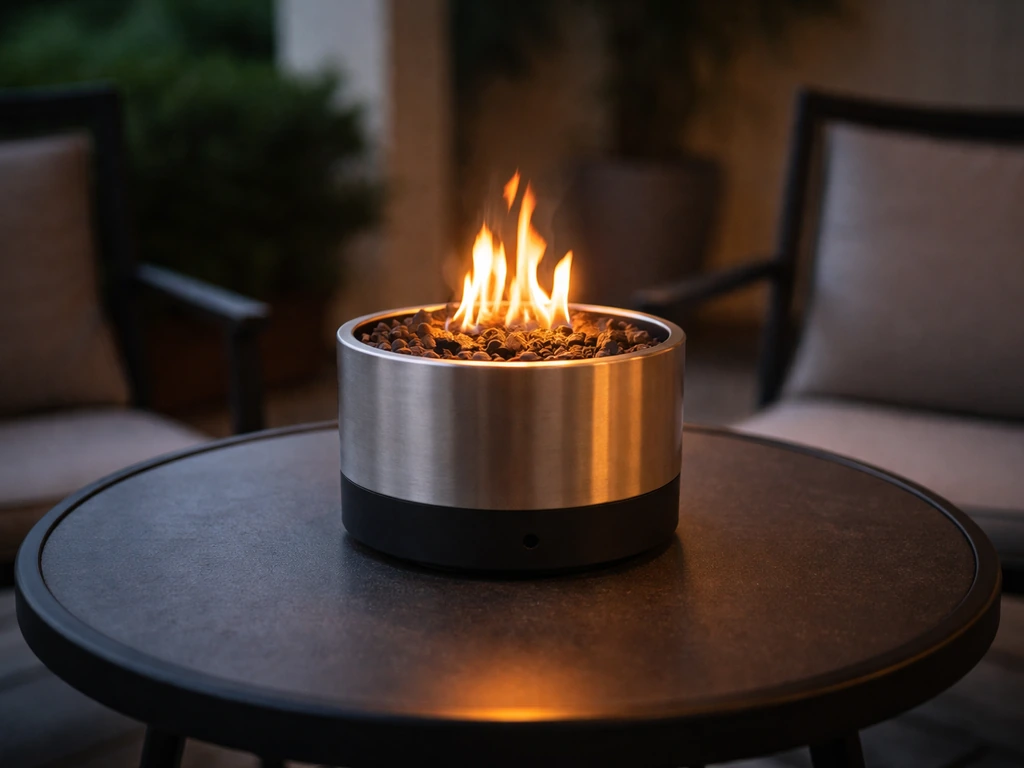
What a tabletop fire pit is (and why people actually buy one)
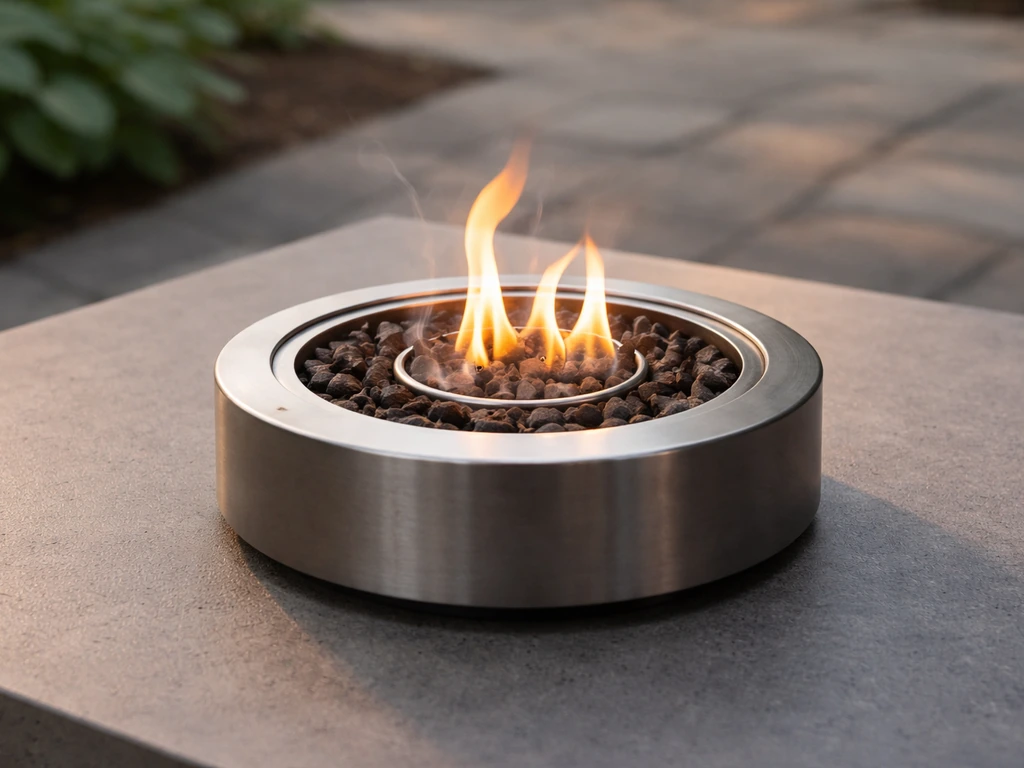
Tabletop fire pits are essentially scaled-down versions of full-size fire pit tables, built to be portable, affordable, and easy to pull out when the temperature drops. They're not trying to heat your whole patio the way a standing propane patio heater does. Instead, they create a focal point for conversation, throw off localized warmth in a radius of about 4 to 8 feet, and make outdoor evenings feel intentional rather than just cold and dark.
People buy them for a few specific reasons: they rent and can't install a permanent fire feature, their patio is small and a full-size fire pit table would take up too much space, they want something they can store away easily, or they just want the look and feel of a real flame on a modest budget. They're also popular on apartment balconies, though covered or enclosed balconies raise ventilation issues you need to take seriously (more on that below).
Tabletop models sit in a category alongside tabletop propane patio heaters, which focus almost entirely on heat output rather than flame aesthetics. If you choose a tabletop propane heater, also consider whether it includes a top reflector shield to help direct heat downward and reduce sideways spill tabletop propane patio heaters. If pure warmth is the goal and you don't care about the visual, a tabletop patio heater might actually serve you better. But if you want the fire experience at a smaller scale, a tabletop fire pit is the right tool.
Sizing it right for your patio and setup
Tabletop fire pits aren't one-size-fits-all, and BTU output matters a lot here. A small propane tabletop bowl running around 10,000 BTU (like the common 10-inch diameter propane fire bowl designs that use a 1 lb camping cylinder) will warm the people immediately around the table but won't do much beyond about 4 to 6 feet. Larger tabletop units in the 40,000 to 50,000 BTU range start to feel genuinely warm at 8 to 10 feet, which is more useful if you have a group sitting in a spread-out arrangement.
For a small bistro table or a tight balcony where you have two to four people clustered close, a 10,000 to 20,000 BTU propane unit or a 1,500W electric model is typically enough. For a larger patio dining table seating six or more, you want to be in the 40,000 to 50,000 BTU range for propane, or consider pairing a mid-output tabletop fire pit with a separate standing patio heater to cover the perimeter. If you need heat beyond what a tabletop unit covers, a hampton bay table top patio heater can be a related option to compare for perimeter warmth separate standing patio heater. If you end up needing broader coverage for more open seating areas, compare a patio heater top setup against your tabletop option.
Also think about where the unit is going physically. A fire pit sitting on a wooden table needs serious clearance from combustibles. One sitting on a concrete or stone surface at center-table is a different scenario than one perched on the edge of a plastic outdoor table. Always check the manufacturer's clearance specs before you place it. For the Camp Chef Santa Fe tabletop fire pit, the manual specifies a minimum clearance range of 72 inches and also warns not to use it when winds cause flames to lap over the top manufacturer's clearance specs.
Fuel types: propane vs electric vs bio-ethanol
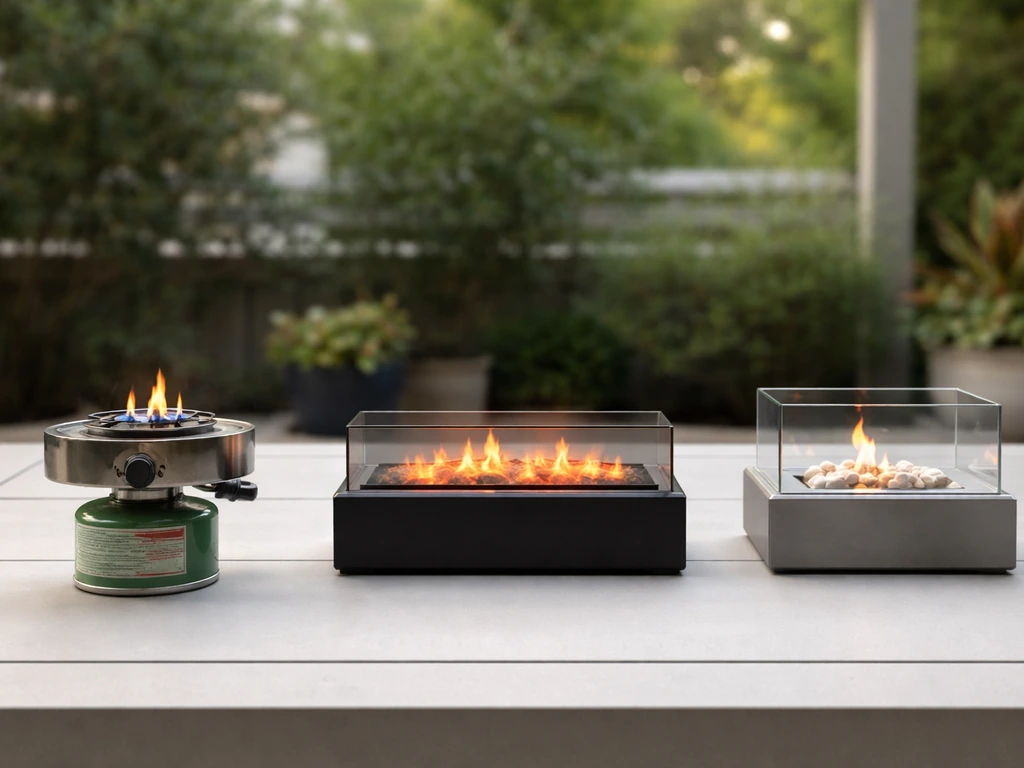
This is genuinely the most important decision you'll make, and each fuel type has a real-world personality that specs alone don't capture.
Propane: the most popular option
Propane tabletop fire pits are the dominant category for good reason. They produce a real flame, work without any electrical outlet nearby, and are available in a wide range of sizes and outputs. Small units run off a 1 lb camping cylinder (convenient and clean, but you'll burn through it in a few hours at full output).
Larger tabletop units connect to a standard 20 lb tank, which at moderate flame height can run anywhere from 12 to 18 hours before you need a refill. Most quality propane units use piezo ignition (push-button spark) so there's no lighter required, and blank" rel="noopener noreferrer">thermocouple flame-failure protection shuts off the gas if the flame goes out unexpectedly, which is a non-negotiable safety feature to look for.
The downsides: propane produces combustion byproducts (CO included), which means you cannot use a propane tabletop fire pit in an enclosed space or under tight overhead construction. This is a hard rule, not a suggestion. If your covered patio has walls on multiple sides, a propane unit is genuinely not safe there.
Electric: the covered-patio winner
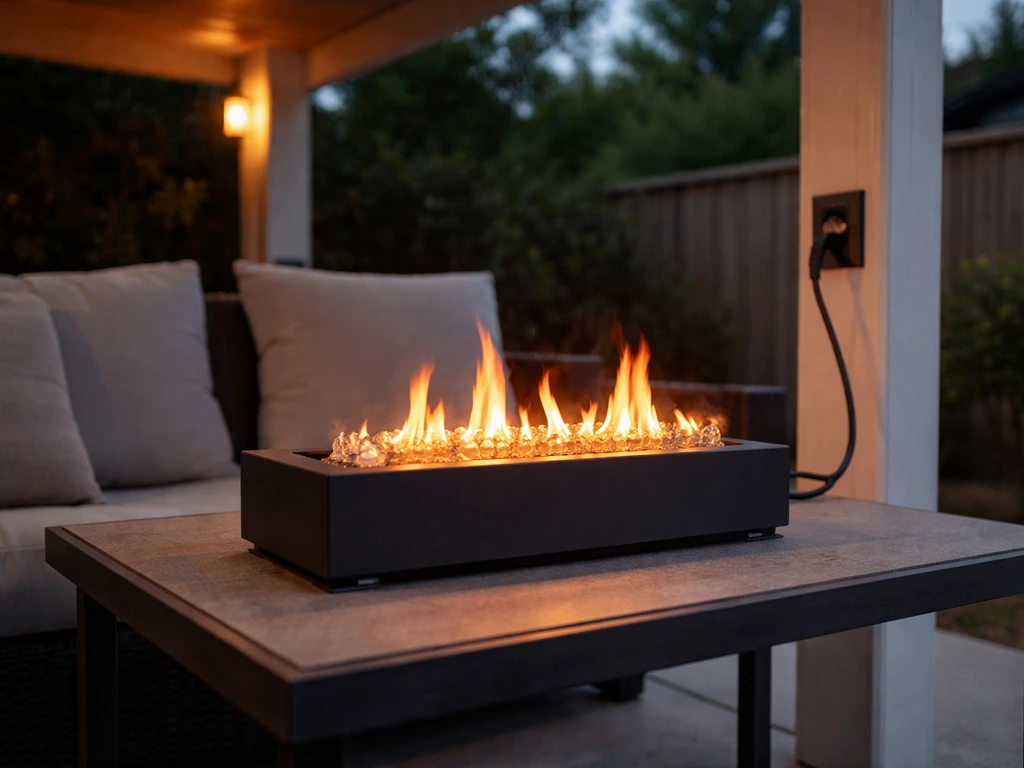
Electric tabletop fire pits and electric tabletop heaters with flame effects are the right answer for covered patios, screened enclosures, and any space where ventilation is limited. If you are shopping for a paramount table top patio heater, the same covered-patio logic applies electric tabletop heaters. They produce zero combustion emissions, and you can shut them off instantly. The better models offer multiple heat modes (typically a high setting around 1,500W and a low setting around 850W), a built-in thermostat, and remote control operation. The flame effect is simulated rather than real, which matters to some people and not at all to others.
One practical note: when you turn off an electric heater, the internal fan often keeps running for up to 90 seconds to dispel residual heat. That's normal behavior, not a malfunction. The tradeoff with electric is the cord: you need an outdoor-rated outlet within reach, and managing a power cord on a table surface requires some planning so it doesn't become a trip hazard or sit near heat.
Bio-ethanol: skip it for now
Bio-ethanol tabletop fire pits burn liquid alcohol fuel and produce a real flame without needing a gas line or cord. They sound appealing in theory, but the safety record is genuinely alarming. As of May 2026, the CPSC has issued warnings telling consumers to stop using certain bio-ethanol portable tabletop fireplaces entirely due to risks of uncontrolled pool fires (liquid alcohol spilling and igniting across a surface) and flame jetting from fuel containers.
Separately, the Colsen-branded tabletop fire pit recall documented 31 reports of flame jetting and 19 burn injuries. These aren't edge cases from misuse. The category has structural safety issues that haven't been resolved. Until there are better-regulated products with proven safety records, bio-ethanol tabletop fire pits aren't worth the risk.
| Fuel Type | Real Flame | Heat Output | Covered Patio Safe | Convenience | Safety Notes |
|---|---|---|---|---|---|
| Propane (1 lb) | Yes | ~10,000 BTU | No (ventilation required) | Very portable, no cord | Thermocouple required; no enclosed use |
| Propane (20 lb) | Yes | 20,000–50,000+ BTU | No (ventilation required) | More run time, tank storage needed | Thermocouple required; no enclosed use |
| Electric | Simulated | 850–1,500W (~2,900–5,100 BTU equivalent) | Yes | Needs outlet, cord management | Safe indoors/covered; fan runs 90 sec after off |
| Bio-Ethanol | Yes | Low–moderate | Not recommended | No cord/tank needed | Active CPSC warnings and recalls; avoid |
Safety essentials for tabletop use
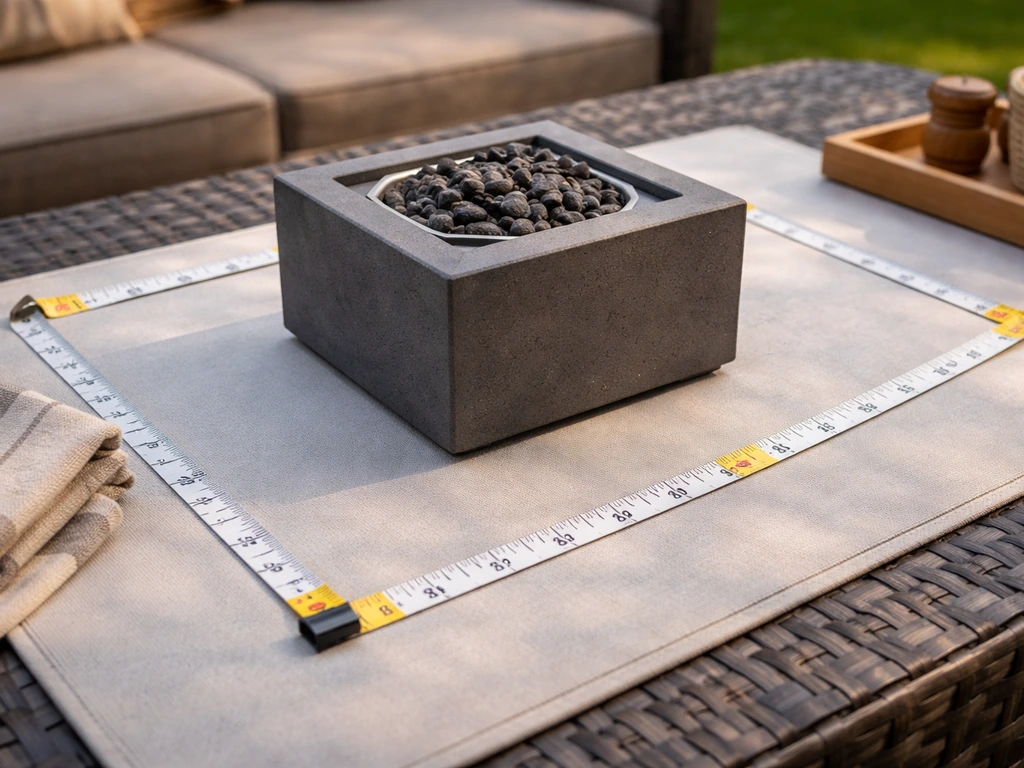
The fact that this fire feature is sitting on a table changes the safety math compared to a floor-level fire pit. You're putting a heat source close to people's faces, close to food and drinks, and often on a surface that isn't fireproof. These are the rules that matter.
- Clearance from combustibles: check your model's specific manual, but typical propane tabletop units require at least 48 inches of clearance on the sides to combustible materials. Some Camp Chef tabletop models specify a minimum 72-inch clearance. These aren't suggestions—they're based on radiant heat and flame behavior.
- Surface stability: the table needs to be level and stable. A wobbly table with a lit propane fire pit on it is a serious hazard. Never use on a surface that rocks or flexes under weight.
- Wind: if wind is causing flames to lap over the side of the bowl or burner ring, shut the unit down. This applies to propane units especially. Windscreens help, but they don't override common sense.
- Ventilation: never operate a propane or any combustion-fuel tabletop fire pit in an enclosed space, under a low ceiling with limited airflow, or in an area where gas could accumulate. The Camp Chef Santa Fe manual explicitly prohibits use under overhead construction or in enclosed areas.
- Turn off when unattended: propane especially—turn off the gas at the tank valve when you're done, not just at the burner control. This prevents slow leaks.
- Keep kids and pets back: the bowl and immediate surroundings get hot. Treat the 2-foot zone around the unit as a no-go area.
- Electric cord safety: use outdoor-rated extension cords only, and route the cord so it's not near the heat element or in a path where it gets stepped on.
- For propane: check connections and hose condition before each season. A cracked hose near a flame is an emergency waiting to happen.
Materials, design, and weatherproofing
Tabletop fire pits are made from a range of materials, and what works for an uncovered patio in a mild climate won't necessarily hold up on an exposed deck in a wet or cold region.
Cast iron and powder-coated steel are the most common materials for propane fire pit bowls. Cast iron holds heat well and looks substantial, but it's heavy and will rust if left exposed to rain without a cover or seasonal sealing. Powder-coated steel is lighter, more rust-resistant than raw steel, but the coating can chip over time, especially with thermal cycling. For any outdoor metal unit, a waterproof cover is worth the cost of the cover almost immediately. Stainless steel components (especially burners and connection hardware) are a meaningful upgrade if you live somewhere with high humidity or coastal salt air.
Tile-top and concrete-look designs (popular in the AZ Patio Heaters style tile-top fire pit category) are heavier but handle weather well and look sharp on a patio table. The decorative elements like glass beads or lava rocks that fill the burner area should be removed and dried before long-term storage because trapped moisture can cause issues when you restart in spring.
For covered patios specifically: electric tabletop models are the clear winner because you don't have to worry about moisture interacting with a propane connection or combustion fumes building up under the roof. If you do use a propane unit under a covered but well-ventilated pergola, make sure airflow is genuinely adequate and the ceiling height is generous. A covered patio with three enclosed walls is not safe for propane regardless of how nice the coverage looks.
What to actually compare when buying
There are dozens of tabletop fire pit models out there, and the spec sheets blur together fast. Here's what actually matters and what you can safely ignore.
Specs and features that matter
- BTU output (propane): match this to your patio size and how many people you're heating. 10,000 BTU handles a small table of two to three; 40,000 to 50,000 BTU is needed for a larger gathering. Don't overbuy if you have a small space—more BTU in a tight area just means discomfort.
- Fuel connection type: does it use a 1 lb camping cylinder (easy, no hose, limited run time) or a 20 lb tank (more run time, needs hose and regulator, must store safely)? Clarify before purchasing.
- Thermocouple safety valve: this shuts off gas if the flame goes out. Non-negotiable for any propane unit. If a spec sheet or product listing doesn't mention it, ask or move on.
- Piezo ignition: push-button spark start. Not universal on cheaper units, but worth having so you're not digging for a lighter every time.
- Wattage (electric): 1,500W high / 850W low with thermostat control is the sweet spot. Remote control is a real quality-of-life feature worth paying for.
- Dimensions and weight: tabletop placement means you need to know the footprint relative to your table size, and the weight matters for how securely it sits.
- Materials and finish quality: powder-coated steel minimum; stainless hardware a plus; look for whether the legs and base feel solid when assembled.
Specs and features you can deprioritize
- Decorative filler type (lava rock vs glass beads): purely aesthetic, replace them if needed, not a quality indicator.
- Color and finish options: nice to have, but don't pay a premium for a color choice when the burner quality underneath is what matters.
- Claimed 'windproof' designs: some work better than others in light wind, but none replace the rule of shutting down in genuinely windy conditions.
- Brand name alone: there's a wide range of quality across brands. Check the specific model's ignition type, safety valve, and material quality rather than buying on brand recognition.
Budget tiers and what to expect
Under $60 buys you a basic propane tabletop bowl using 1 lb cylinders, typically around 10,000 BTU with simple manual controls. Fine for occasional use and small tables. In the $100 to $200 range you get larger BTU output, better materials, often a 20 lb tank connection, and piezo ignition. Above $200 for propane, you're getting into table-integrated fire pit table designs and heavier cast or tile constructions. For electric, $80 to $150 covers a solid 1,500W tabletop unit with remote and thermostat. Above $150, electric units add better flame simulation and design quality.
Setup, use tips, and keeping it running reliably
First setup
- Read the manual before assembling. Clearance requirements, connection steps, and first-light procedures vary by model.
- For propane: connect the regulator to the tank hand-tight (no tools needed for standard connections). Do a leak test with soapy water on every connection before the first light. Bubbles mean a leak. Fix it before proceeding.
- For electric: plug into an outdoor-rated GFCI outlet. Run the cord along the table edge and secure it so it doesn't hang near anyone's feet.
- Place the unit on a level, stable surface with the clearances your manual specifies. Confirm the table itself won't tip under the weight.
- Add lava rocks or glass filler after reading whether the manual specifies a particular depth or arrangement for proper flame distribution.
In-use tips
- Light from the side, not directly above the burner. Keep your face back.
- If a propane unit doesn't light on the second or third push of piezo ignition, turn the gas off and wait 60 seconds before trying again. Gas can accumulate in the bowl.
- In windy conditions, reduce flame height rather than fighting to maintain a high flame.
- For 1 lb cylinder units: cold temperatures reduce propane pressure, which means weaker flame in winter. If you're using in cold weather, the cylinder itself may feel frosted and output will drop.
- Don't move the unit while lit. This applies especially to tabletop propane units where tank connections can shift.
Maintenance and troubleshooting
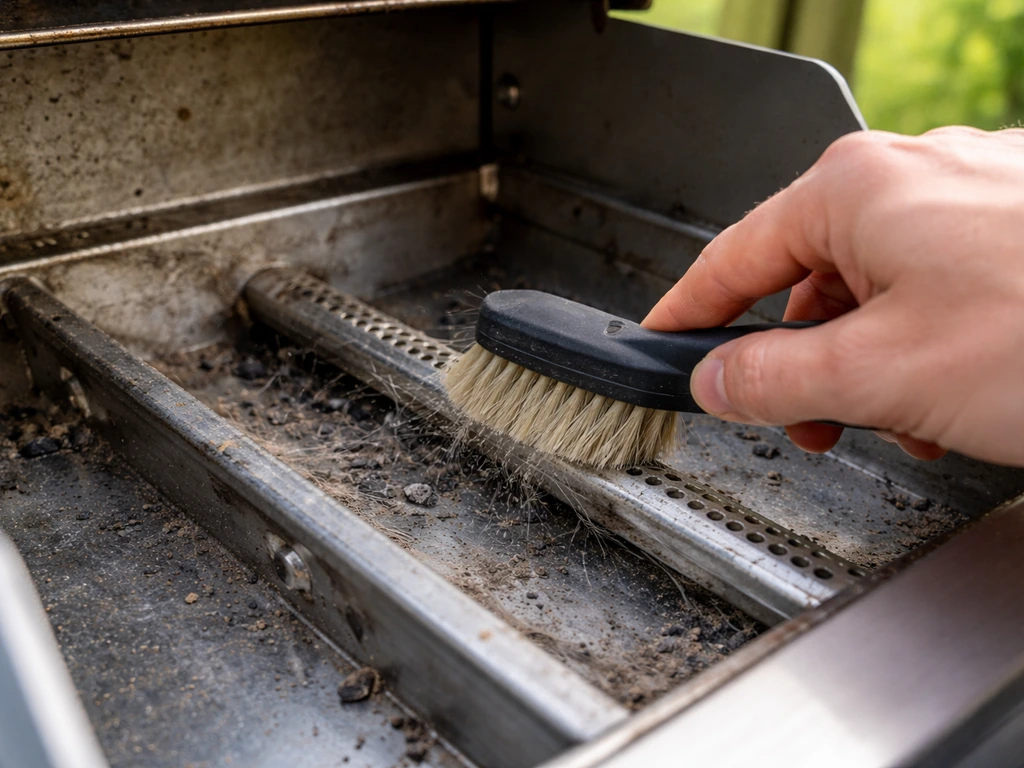
- Clean the burner ports at the start of each season with a soft brush or compressed air. Spider webs and debris are the most common cause of uneven flame or ignition failure.
- Inspect the hose (on 20 lb tank models) for cracks or stiffness before each use season. Replace if anything looks degraded.
- For electric units: wipe down the unit when cool. Check that the vents aren't blocked by debris, since restricted airflow will trigger thermal shutoff.
- Glass beads and lava rocks: remove, dry completely, and store indoors over winter. Moisture trapped in the filler can pop or cause uneven flame distribution.
- If the propane flame is weak but the tank has fuel: check for a regulator reset (disconnect the hose, wait 30 seconds, reconnect slowly) and relight. Many regulators lock down if opened too fast.
- If the flame keeps going out on a propane unit: the thermocouple may need cleaning or replacement. It's a small rod near the burner. Clean it with steel wool and retest. If it still fails, replacement thermocouples are inexpensive and widely available.
- Cover the unit when not in use. Even a basic grill cover extends the life of any metal outdoor fire feature significantly.
The bottom line: for an open or semi-open patio where you want real flame and real warmth, a propane tabletop fire pit in the 20,000 to 50,000 BTU range with blank" rel="noopener noreferrer">thermocouple protection and piezo ignition is the practical choice for most people. For a covered patio or any space where ventilation is a question, go electric and don't compromise on that. For many outdoor propane patio heater setups, swapping in a replacement top shield reflector can help manage heat direction and protect surrounding areas. And regardless of what anyone tells you about bio-ethanol options right now, the active CPSC safety warnings make them a category to avoid until there's a demonstrably safer generation of products.
FAQ
Can I use a patio table top fire pit on a balcony or under a pergola if it’s partially covered?
If it’s propane, you should only use it when airflow is clearly adequate and the space is not enclosed on multiple sides. A well-ventilated pergola can work for some setups, but if your balcony is effectively a small room (walls on most sides, low ceiling, or poor cross-breeze), switch to an electric tabletop model instead.
What clearance distance should I keep from furniture, umbrellas, or the edge of the tabletop?
Follow the manufacturer’s clearance specs, then add extra margin for anything that can shift, like patio chair backs, umbrella poles, or decorative table items. As a practical rule, keep flammables (including paper, cushions, and table linens) well away from the burner area because heat and flame can radiate upward and sideways more than people expect.
Is a propane tabletop fire pit safe to use near food and drink?
It can be safe if the unit is rated for tabletop use and you keep heat-sensitive items away from the hottest zone. Avoid placing drinks or dishes directly beside the burner, and never set anything on the tabletop that could fall into the fire bowl (for example, loose napkins or lightweight serving trays).
How do I know whether I should choose 10,000 to 20,000 BTU or go higher for my patio table size?
Think in terms of seating radius, not overall patio heating. If your group sits clustered close, 10,000 to 20,000 BTU usually covers the conversation area. If people sit farther apart or you want warmth across a wider dining table, step up toward 40,000 to 50,000 BTU or plan an additional heat source for the outer perimeter.
Can I use a propane tabletop fire pit with a 1 lb cylinder on low to make it last longer?
Yes, but “lasting longer” is not the same as “nearly infinite runtime.” Running at reduced flame height extends cylinder life, but you still need to monitor the cylinder and ensure the unit remains stable and properly ignited. Plan for shorter runtime at higher output, especially if you want consistent flames throughout the evening.
What should I check about the propane connection before every use?
Inspect the hose/regulator and fittings for secure connection and visible damage, and confirm the fuel line routing keeps it from being pulled, kinked, or contacting hot surfaces. Also make sure the valve is fully in the correct position before ignition, and never attempt repairs with improvised parts.
Why does an electric tabletop fire pit take a minute to feel warm after turning it on or after shutdown?
Many electric units ramp heat output, and after you turn them off the internal fan can continue for up to around 90 seconds to clear residual heat. That delay is normal, but you should keep your hand and any nearby items away from hot air discharge areas during the cool-down window.
How close can an electric tabletop fire pit be to the power outlet and extension cord?
Use an outdoor-rated outlet and keep any extension cords away from the heat plume and any area people may step on. If the cord will be on a table surface, you’ll need a routing plan that prevents tangling and trip hazards, because cords near heat can be damaged faster and create safety issues.
What’s the safest way to store a patio table top fire pit between seasons?
Let it fully cool, wipe down surfaces, and store it covered to limit moisture exposure. For burner compartments, remove and dry decorative media if your design uses lava rocks or glass beads, because trapped moisture can interfere with start-up and cause uneven performance later.
What maintenance steps improve ignition reliability for propane units?
Keep the burner and ports clean and free of debris, and make sure the unit is dry before attempting ignition. If ignition feels weak or inconsistent, stop using it and check for obstructions rather than repeatedly clicking the igniter, since buildup can affect flame stability.