
Pyramid patio heaters and mushroom patio heaters both run on propane (or sometimes natural gas) and both put out serious heat, but they deliver that heat in completely different ways. A mushroom heater pushes radiant warmth outward in a wide circle from a dome-shaped reflector on top of a pole. A pyramid heater channels heat downward through a tall glass tube with a reflector at the top, and adds the visual drama of a visible dancing flame inside. If you want the widest coverage for a big open patio, mushroom wins. If you want ambiance plus decent focused heat for a smaller seating area, pyramid is the better fit. Everything else comes down to your specific patio setup, and that's what this guide walks through.
Pyramid Patio Heater vs Mushroom: Which Heats Better?

Willa Brennan
17 May 2026
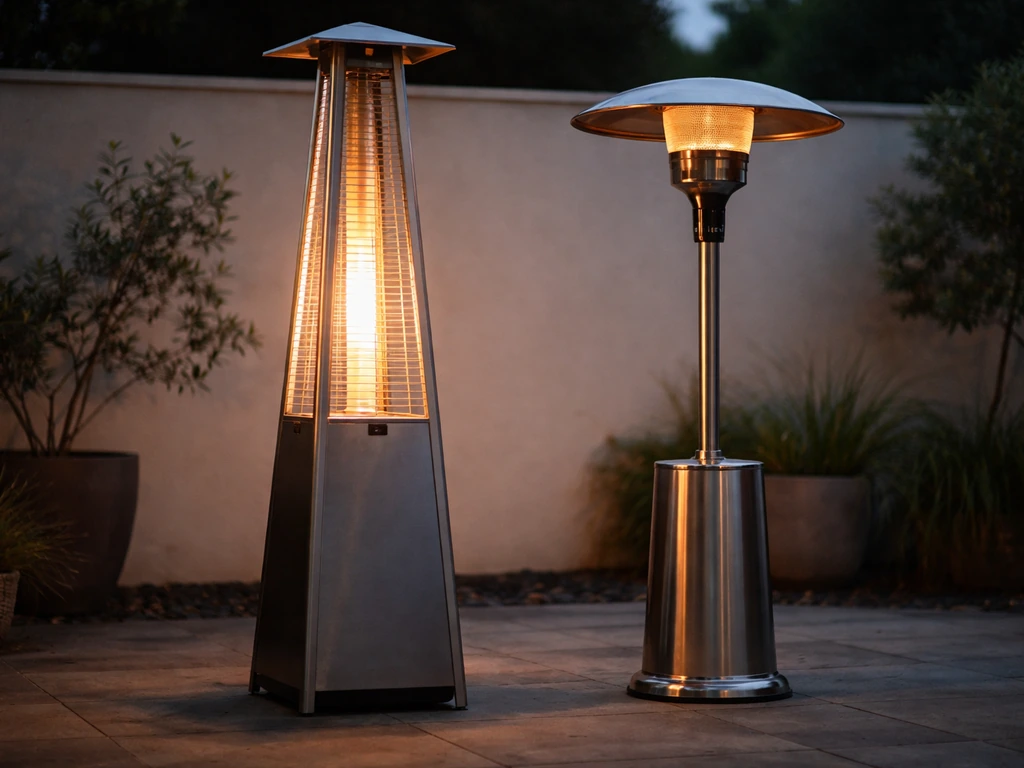
What 'pyramid' and 'mushroom' patio heaters actually are
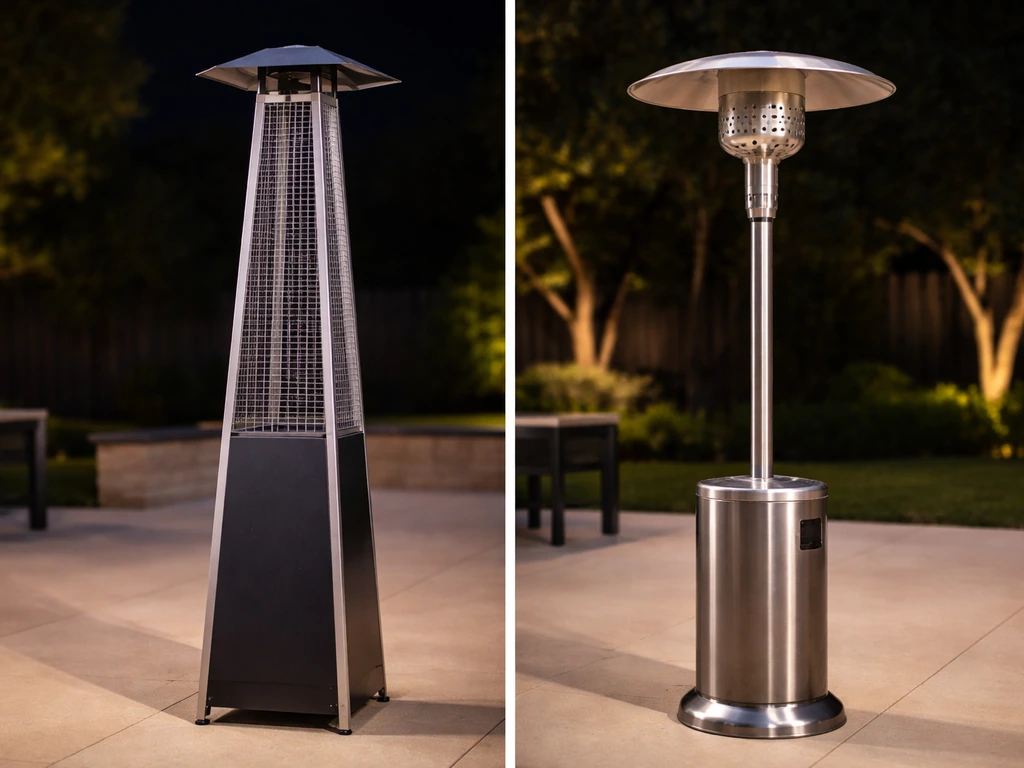
The term 'mushroom heater' is basically the original name for what most people picture when they think 'patio heater.' You've seen these at restaurants and bars: a tall pole, a propane tank hidden in the base, and a wide dome-shaped reflector on top that looks like a mushroom cap. The burner sits inside that dome, heats a perforated metal screen, and the dome reflects radiant heat outward and slightly downward in a wide cone. They can run on propane, butane, or natural gas depending on the model. They're also called umbrella heaters for obvious visual reasons.
A pyramid heater is a more modern design with a distinctive triangular glass tube running most of the height of the unit, usually around 91 inches tall. The flame burns inside that glass column (which is why you get that dramatic dancing-flame effect), and blank" rel="noopener noreferrer">a reflector at the top directs the warmth downward. The fuel tank and controls live in the base. Most pyramid heaters sold in the U.S. run on propane, and ratings cluster around 40,000 to 42,000 BTU/hr. The Belleze 42,000 BTU model is a good example of what you'll find on most retail shelves. The glass-tube design is purely functional, not just decorative: it protects the flame from wind while letting you see it.
How they actually heat your patio
This is where the real difference shows up. Mushroom heaters radiate heat in a wide, fairly even circle from the top of the pole. A 46,000 BTU mushroom heater can comfortably warm a circle roughly 10 to 15 feet in diameter, depending on ambient temperature. The heat spreads outward from the dome, which means people sitting in a ring around the heater all feel it pretty equally. It's a democratic heat distribution that works well for larger gatherings or a big open deck.
Pyramid heaters direct heat more vertically. The reflector at the top throws warmth downward rather than outward, so the effective comfort zone is more concentrated directly around the unit and close to the ground. At 40,000 to 42,000 BTU, you're heating a smaller footprint but heating it more intensely. People seated right next to a pyramid heater feel great. Those at the edges of the patio, not so much. Think of it as a spotlight versus a floodlight.
BTU output and real-world comfort
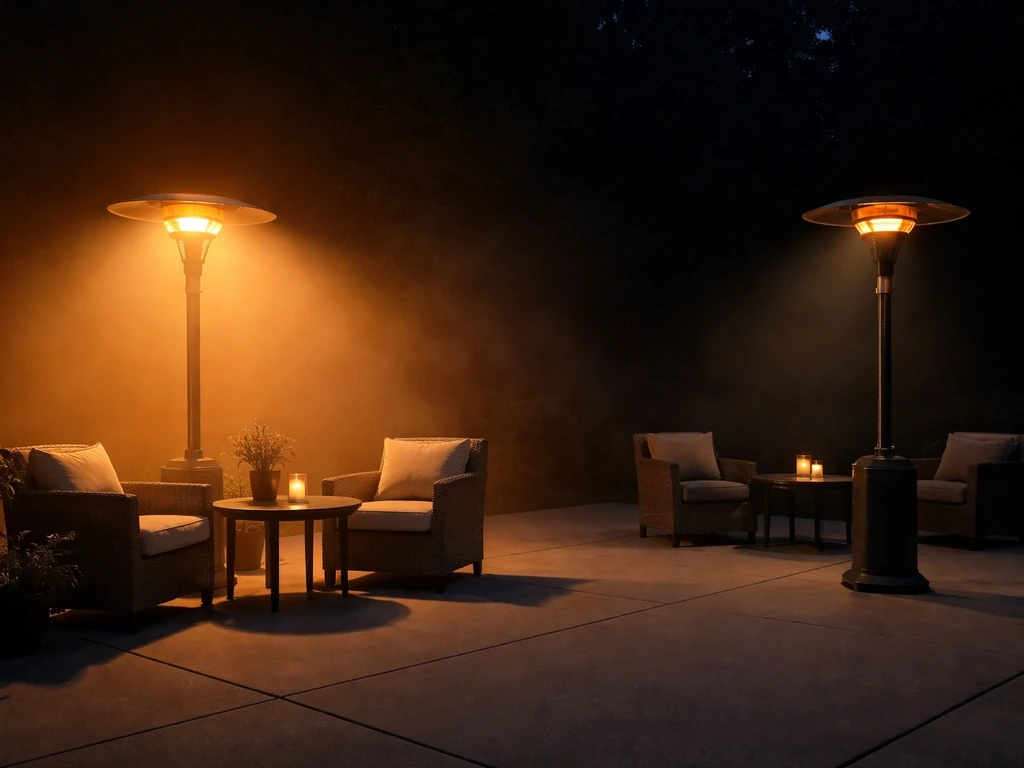
Both heater types typically land in the 40,000 to 46,000 BTU range for standard full-size units. On paper that's similar, but the comfort experience differs because of heat direction. A 46,000 BTU mushroom heater warming a 12-foot circle gives each person a gentler, more ambient warmth. A 40,000 BTU pyramid warming a tighter 6 to 8-foot area delivers more intense, direct heat to fewer people. Neither is objectively better, it just depends on how many people you're heating and how spread out they are.
Wind, covered patios, and where to place each one
Wind is the enemy of both heater types, but it hurts mushroom heaters more. The dome reflector on a mushroom heater is exposed to the elements, and a steady breeze can strip away the radiant warmth before it reaches your guests. Wind also gets under the dome and disrupts the burner flame, which drops efficiency fast. If your patio is open and breezy, you'll need windbreaks like a fence, privacy screen, or hedge nearby to get decent performance from a mushroom heater.
Pyramid heaters handle wind a bit better, specifically because the glass tube encases the flame. The fire stays protected and visible even in moderate wind, which is one of the reasons people like them in exposed backyard settings. That said, the heat output can still be scattered by strong gusts once it leaves the reflector at the top. No freestanding gas heater thrives in genuinely windy conditions, but the pyramid design gives you a slight edge outdoors.
For covered patios, pergolas, or screened porches, the calculus changes. Mushroom heaters under a covered structure perform extremely well because the cover traps the rising warmth and reduces wind interference. Important: both heater types require significant vertical clearance. Mushroom heaters typically need at least 2 to 3 feet of clearance above the reflector dome, and pyramid heaters need clearance above their full height (around 91 inches plus buffer). Never use either under a low ceiling or near flammable materials.
Fuel types, efficiency, and what you'll actually spend running them
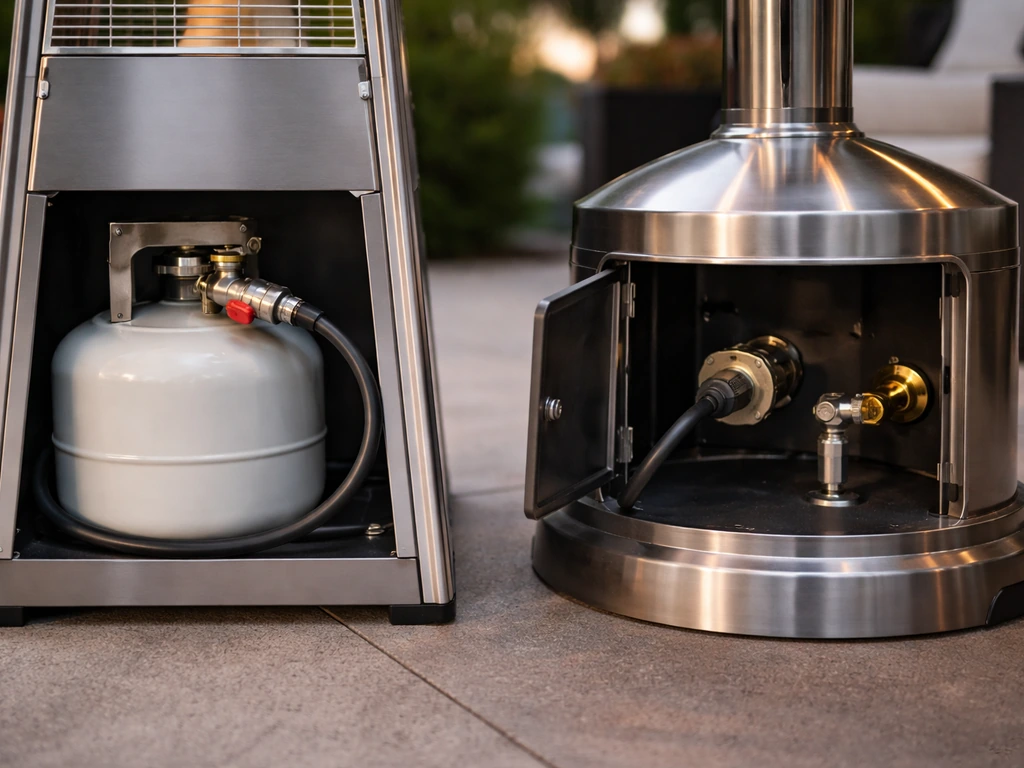
Most pyramid heaters sold in the U.S. are propane-only. You connect a standard 20 lb propane tank (the same size as a typical BBQ grill tank) to the base. At 40,000 BTU/hr on full blast, a 20 lb tank gives you roughly 8 to 10 hours of run time. In practice, you'll run most heaters on medium heat, which stretches a tank to 12 to 15 hours. At current propane prices (around $3.50 to $5 per gallon depending on your area), that works out to roughly $1.50 to $3 per hour of operation.
Mushroom heaters offer more fuel flexibility. Propane and butane models are the most common for residential use, and natural gas models are widely available for permanent installations. For example, product listings for mushroom patio heaters often document fuel consumption in comparison-spec tables, such as listing gas-use values for butane and propane models. A mushroom heater connected to a home's natural gas line costs significantly less per hour to run (typically $0.50 to $1.00 per hour at residential natural gas rates) and eliminates the hassle of tank swaps. Butane mushroom heaters have similar run costs to propane but perform worse in cold weather since butane struggles to vaporize below about 32°F.
If you're doing a natural gas hookup, mushroom heaters are your only real option in this comparison since pyramid models with natural gas connections are rare in standard retail. The natural gas route requires a licensed plumber or gas fitter for installation, which adds upfront cost, but the long-term fuel savings make it worth it if you heat your patio regularly.
| Factor | Pyramid Heater | Mushroom Heater |
|---|---|---|
| Typical BTU output | 40,000–42,000 BTU/hr | 40,000–46,000 BTU/hr |
| Heat direction | Downward from top reflector | Outward/downward from dome |
| Effective comfort radius | 6–8 ft (concentrated) | 10–15 ft (spread out) |
| Fuel options | Propane (mostly) | Propane, butane, natural gas |
| Wind resistance | Better (enclosed flame) | Moderate (exposed dome) |
| Ambiance/flame visibility | High (visible glass flame) | Low to none |
| Typical height | ~91 inches | 84–94 inches |
| Portability | Moderate (heavier base) | Good (wheeled base common) |
| Estimated run cost (propane) | $1.50–$3/hr | $1.50–$3/hr |
| Natural gas option | Rare | Common |
Safety, tip-over risk, and clearances
Stability is a legitimate concern with both designs. Pyramid heaters are tall and top-heavy, with that glass tube making them especially vulnerable to tipping in strong wind or if bumped by kids or pets. The glass itself is tempered and designed to handle heat, but it can crack or shatter if the heater tips over or is hit by something. Most pyramid heaters have a weighted base and an auto shut-off that kills the gas if the unit tips, but you should still position them away from high-traffic areas and anchor them on a flat, level surface.
Mushroom heaters are generally more stable due to their lower center of gravity and wider base. The dome at the top is metal, not glass, so there's no shatter risk. The burner screen inside the dome gets extremely hot, but it's recessed under the dome so accidental contact is less likely than with a glass tube running the full height of the unit. Both types should be kept a minimum of 3 feet from any people, furniture, and combustible materials on all sides.
On overhead clearance: check the specific model's manual for exact requirements, but plan for at least 3 feet above the top of any heater under a covered structure. For pyramid heaters, that means your pergola or patio cover needs to be at least 10 to 11 feet above the ground to safely accommodate a standard 91-inch unit. Many homeowners underestimate this and end up with a heater that's unsafe to use under their existing structure.
- Always use the tip-over auto-shutoff feature, and confirm your model has one before buying
- Keep both heater types at least 3 feet from furniture, walls, and overhead structures on all sides
- Never leave either heater running unattended or overnight
- Pyramid heaters: position away from areas where the glass tube could be bumped
- Check for gas leaks at connections each time you swap or attach a propane tank
- Store propane tanks outdoors, never in a garage or enclosed space
Maintenance, controls, and living with one day to day
Both heater types are reasonably low-maintenance, but they have different pain points. Mushroom heaters develop corrosion and carbon buildup on the emitter screen over time, especially if you leave them outdoors through rain and seasons. The dome reflector also oxidizes and loses reflectivity, which genuinely reduces heat output. Plan to clean the emitter screen and wipe down the reflector dome once a season with a soft cloth and mild cleaner. The burner orifice can clog with debris or insect nests (this is a real and surprisingly common issue), so check it before the first use each season.
Pyramid heaters have the glass tube to contend with. Tempered glass is durable but not indestructible. Soot buildup inside the tube reduces the visual flame effect and can slightly reduce heat output. Most manufacturers recommend cleaning the glass with a non-abrasive cleaner. The bigger concern is cracking from thermal shock, so avoid cold water on a hot tube or dragging the heater over rough surfaces. When you're not using it, cover the unit with a fitted weatherproof cover.
On controls: most modern heaters in both categories use a piezo ignition (push-button electronic spark) with a knob to adjust heat level. Some nicer models have a thermocouple safety valve that shuts off gas if the flame goes out. This is a feature worth paying for. Basic models require you to hold down the gas button for 15 to 30 seconds until the thermocouple warms up and allows gas flow, which feels awkward at first but is completely normal. Controls on mushroom heaters are usually at the base where the tank lives, which is comfortable to reach. On pyramid heaters the controls are also in the base, but the distance from base to seated guests can make quick adjustments slightly less convenient.
Which one should you actually buy
Choose a mushroom heater if you have a larger open patio (12 feet or more across), frequently entertain groups of 6 or more people, want the option of a permanent natural gas connection, or prioritize stability and lower maintenance. It's also the better pick if ambiance isn't important to you and you just want practical, efficient, wide-coverage heat. The mushroom design has been the industry standard for decades for good reason.
Choose a pyramid heater if you have a smaller, more intimate seating area (a bistro set, a cozy corner, or a firepit-style hangout for 2 to 4 people), want a striking focal point that doubles as decor, or mostly use propane and don't want to deal with a gas line. If you want the best outdoor pyramid patio heater, look for the BTU output and a reflector design that suits how much area you need to warm. The visible dancing flame is genuinely appealing and sets a mood that a mushroom heater simply can't match. For more on how this visual flame translates into real comfort, see our pyramid flame patio heater reviews dancing flame. If you've been looking at the best pyramid patio heaters available right now, you'll find several strong 40,000 to 42,000 BTU propane options at major retailers.
Quick buyer checklist before you purchase
- Measure your patio: under 10 ft across, lean pyramid; 12 ft or more, lean mushroom
- Count your typical guests: 2 to 4 people, pyramid works great; 6 or more, mushroom is more efficient
- Check overhead clearance: measure from ground to cover, subtract 91 inches (pyramid) or 94 inches (mushroom) and confirm you have at least 3 ft to spare
- Decide on fuel: want natural gas? Go mushroom. Happy with propane tanks? Either works
- Check the product listing for BTU rating (look for 40,000 BTU minimum), auto shut-off/tip-over protection, and thermocouple safety valve
- Factor in wind: open and breezy yard? Pyramid's enclosed flame handles it slightly better
- Budget for a cover: both types last significantly longer with a fitted weatherproof cover when stored
- Avoid: models without tip-over shutoff, models with no thermocouple safety valve, and any heater without a clear stated BTU rating
One last thing: don't overspend chasing BTUs. More BTU doesn't always mean more comfort if the heat is being thrown in the wrong direction for your setup. Match the heat delivery style to your patio geometry first, then compare specs. Whether you go pyramid or mushroom, a well-placed 40,000 BTU heater suited to your layout will always outperform a mismatched 50,000 BTU unit that's fighting your space.
FAQ
If both heaters list similar BTU ratings, which one feels warmer in real life?
Yes, but the winner depends on whether you mean “warmth per person” or “warmth in a radius.” For heaters that run at similar BTU, mushroom typically feels more even for groups because its dome throws heat outward in a circle. Pyramid usually feels hotter right under the reflector, so it can be the better choice if everyone will sit close and you want a more focused heat zone.
How do I choose between them for my specific seating arrangement?
Use the planned seating layout, not just the patio size. As a quick rule, if your group forms a ring or spread-out conversation area, mushroom matches the geometry better. If you have a narrow “heat lane” (people seated close to the unit, like around a bistro set), pyramid’s more downward throw is usually more efficient.
What’s the best placement strategy if my patio is breezy?
Wind direction matters. With a mushroom heater, keep the dome facing away from the prevailing breeze when possible and add a windbreak on the windward side (fence, privacy screen, or hedge). With a pyramid heater, the glass-tube design helps protect the flame, but you still need to avoid strong crosswinds that can push heat away from the seating area.
Which is cheaper to run long-term for frequent patio use, especially if I do not want to change tanks?
If you are buying propane, choose based on run time you need, since many units are around 40,000 to 42,000 BTU/hr on standard propane models. If you want maximum consistency for frequent use, natural gas (available for mushroom more often) can reduce day-to-day hassle and usually lowers operating cost per hour versus tank swaps.
How can I compare comfort fairly if there’s no indoor “BTU” measurement?
Thermometer test is the practical approach. Both heaters can feel different because they radiate heat, so wind, surface temperature, and clothing insulation change the “felt” temperature. For an accurate comparison, run both setups (or test one by renting/using a display model) at the same time of day and record how far comfort extends from the heater.
Do these heaters really have tip-over safety, and how much should I rely on it?
That safety feature is important, especially for pyramid. Pyramid units are tall and top-heavy, so an automatic tip-over shutoff is a key decision factor if kids or pets ever come near the heater. Regardless of design, still keep the heater away from walkways and install it on a flat, stable surface.
What ignition and safety features should I look for before buying?
Most do, but check the exact model for two things: ignition method and thermocouple behavior. Basic units may require holding the gas control for about 15 to 30 seconds until the safety system warms. If you hate that delay, prioritize models explicitly described as having a thermocouple safety valve.
How do maintenance needs differ, and what’s the biggest “gotcha” each type has?
Yes. Mushroom domes and screens can corrode or lose reflectivity if you leave the unit exposed to rain between seasons. Pyramid glass tubes tend to suffer from soot buildup and are sensitive to cleaning mistakes. Use a fitted weather cover, and do a quick seasonal check for insect nests or clogged orifices before first use.
If I consider a butane mushroom heater, will it work in winter where I live?
For butane, cold weather performance can drop because butane vaporizes less effectively below about 32°F. If you live in a climate where temperatures dip regularly, propane or natural gas is usually the safer choice for reliable ignition and steady output.
What should I check for clearance if my patio is covered?
Overhead clearance is not one-size-fits-all, and undershooting can be dangerous. If your heater will be under a pergola or covered porch, verify clearance above the highest point of the unit in the manual, then add buffer space for real-world variables like ceiling height changes, decorative beams, and installation tilt.
How do I avoid wasting heat with nearby furniture or patio structures?
Place it on the patio so heat can “escape” toward people without being blocked by furniture backs, tall planters, or overhang edges. Mushroom tends to work best when open around the dome, while pyramid benefits from being in front of a seating cluster with minimal obstructions between the reflector and guests.