
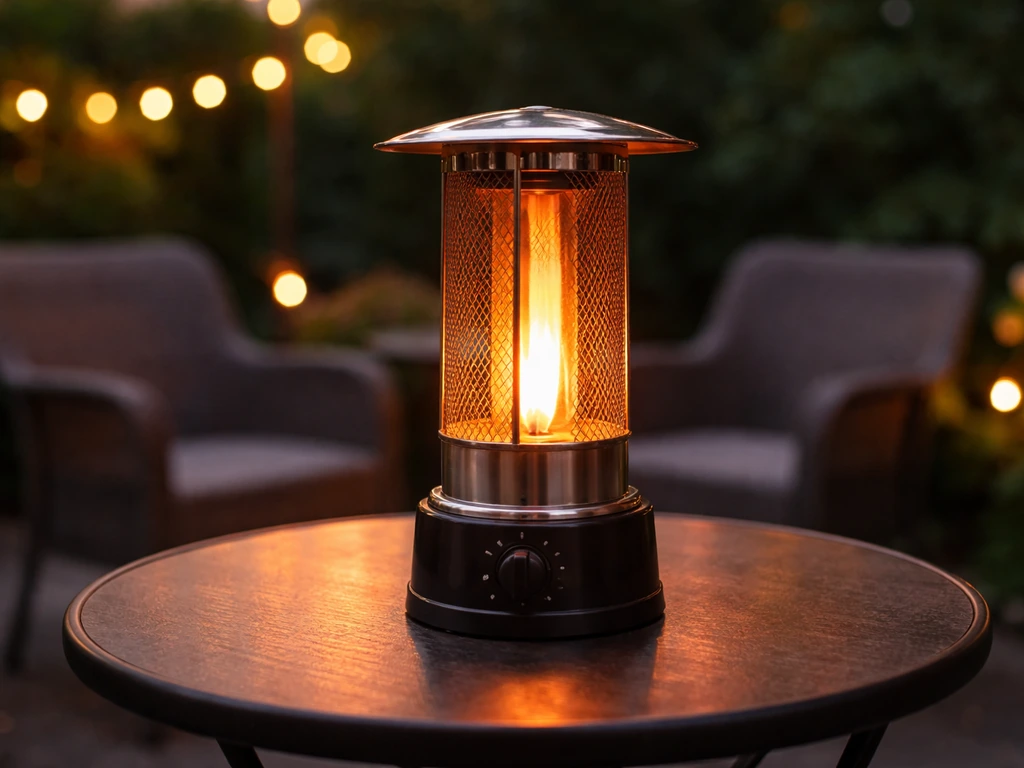
Shinerich patio heaters are a solid budget-friendly pick, especially the tabletop propane models like the SRPT03. They deliver real warmth, carry proper safety certifications, and won't drain your wallet. But they're not perfect: propane canister installation is genuinely tricky, ignition can be unreliable, and they're strictly calm-weather performers. If you're after a compact tabletop heater for a small covered patio or a deck dinner with four people, the SRPT03 gets the job done. If you need something that punches harder or holds up in breezy conditions, you'll want to look at other options or step up to Shinerich's larger SRPH78 model.
Shinerich Patio Heater Reviews: Best Tabletop Models

Willa Brennan
2 Jun 2026
Quick verdict on Shinerich patio heaters
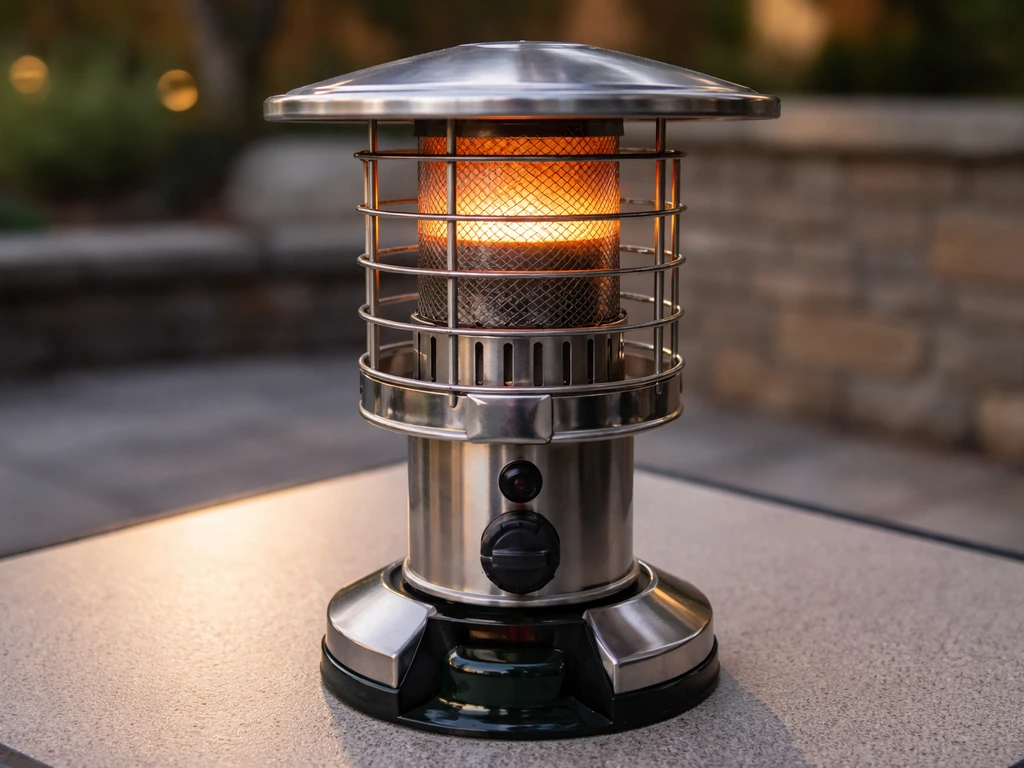
Shinerich (also sold under the Heatmaxx and Living Accents names at retailers like Walmart and Northern Tool) makes a narrow lineup of propane-fueled patio heaters. The bread-and-butter model is the SRPT03, a 10,000 BTU tabletop propane unit that covers around 75 square feet. There's also the SRPH78, a larger 48,000 BTU floor-standing unit with a tabletop feature that covers roughly 250 square feet. Both are CSA certified and include safety features you'd expect at this price point: flame failure protection, anti-tilt switches, and an Oxygen Depletion Safety (ODS) pilot on the SRPT03.
The overall picture from verified buyer reviews is mixed but fair. The heaters work when you get them going, but setup friction is a recurring complaint. Assembly instructions are described as "horrid" by more than one buyer, propane canister insertion is awkward especially for anyone with larger hands, and the push-and-turn ignition doesn't always fire reliably. Once lit, though, the heat output is described as decent for the price. Think of Shinerich as a capable entry-level brand, not a premium one.
Shinerich tabletop patio heaters: best for what size spaces
The SRPT03 is specifically designed for small, intimate outdoor seating areas. At 10,000 BTU with a rated coverage of 75 square feet, it's ideal for a bistro table with two to four seats, a small balcony, or a covered porch corner. Don't expect it to heat a full 12x15 patio on its own. It's a conversation-zone heater, not a perimeter heater.
The reason tabletop heaters like this punch above their BTU weight is placement. Because the heat source is sitting right at table height, radiating outward at the level where people actually are, less energy gets wasted warming empty air above everyone's heads. A 40,000 BTU standing floor heater might heat a 200-square-foot patio in theory, but a lot of that heat rises and disperses before it reaches anyone seated. A 10,000 BTU tabletop right in the center of a table warms the people around it much more efficiently at close range.
If your patio is larger than about 100 square feet, or you're hosting more than four people regularly, the SRPT03 alone won't cut it. You'd either need multiple units or you'd want to look at the SRPH78 instead, which covers up to 250 square feet and is a floor-standing design with a 48,000 BTU output.
Fuel type and heat style comparison
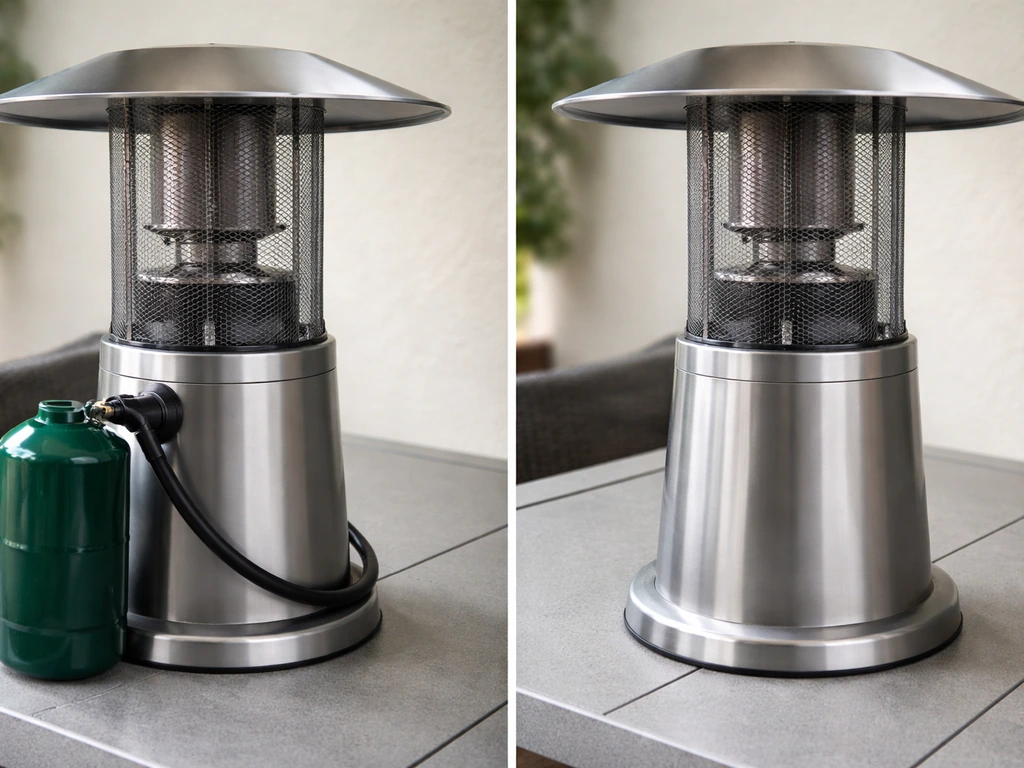
Both Shinerich models run on liquid propane (LP gas). The SRPT03 uses a standard 1 lb (16.4 oz) disposable propane cylinder, the kind you'd use for a camping stove. The SRPH78 burns propane at a much higher rate, about 900 g/hr, so it's suited for a larger tank setup. Here's how propane compares to the other fuel types this site typically covers, and how Shinerich's approach fits in.
| Fuel/Type | How it heats | Wind resistance | Coverage sweet spot | Best for |
|---|---|---|---|---|
| Propane (Shinerich SRPT03) | Radiant flame, ambient warmth | Poor to moderate | 75 sq ft tabletop zone | Small covered patios, balconies |
| Propane (Shinerich SRPH78) | Radiant flame, ambient warmth | Moderate | Up to 250 sq ft | Medium patios, backyard gatherings |
| Electric infrared (e.g., 1500W tabletop) | Infrared: heats people/surfaces directly | Good (infrared is less affected by wind) | Varies, typically 50–100 sq ft | Covered patios, restaurant terraces |
| Natural gas (standing heater) | Radiant/ambient | Moderate | 150–300+ sq ft | Permanent installs, larger patios |
| Halogen/quartz infrared | Radiant infrared | Good | Directional, 6–10 ft radius | Targeted spot heating, covered areas |
| Pellet heater | Convective/radiant | Poor | Small to medium | Off-grid, rustic setups |
One thing worth flagging: propane flame heaters like the Shinerich units warm the air around them (convective heating) and radiate some heat outward. If you're comparing different brands, these halogen patio heaters reviews can help you judge how infrared heat performs versus propane flame heaters. Electric infrared heaters, by contrast, heat objects and people directly without warming the ambient air first. That means electric infrared tends to feel more immediate and holds up better on breezy nights, while propane flame heaters struggle more when wind disturbs the flame. If wind is a regular issue on your patio, an infrared electric tabletop is worth considering alongside the Shinerich propane option.
Key specs that actually matter
Heat output and coverage
The SRPT03 puts out 10,000 BTU/hr, which translates to about 75 square feet of effective coverage. Tom’s Guide’s patio-heater coverage tables similarly benchmark tabletop models by pairing an example’s total BTU with an estimated heating area Tom's Guide. That's enough for a table with four chairs if people are seated within about 3 to 5 feet of the unit. The SRPH78 steps up to 48,000 BTU and around 250 square feet, which is much more comparable to a standard mushroom-top standing patio heater.
Safety features
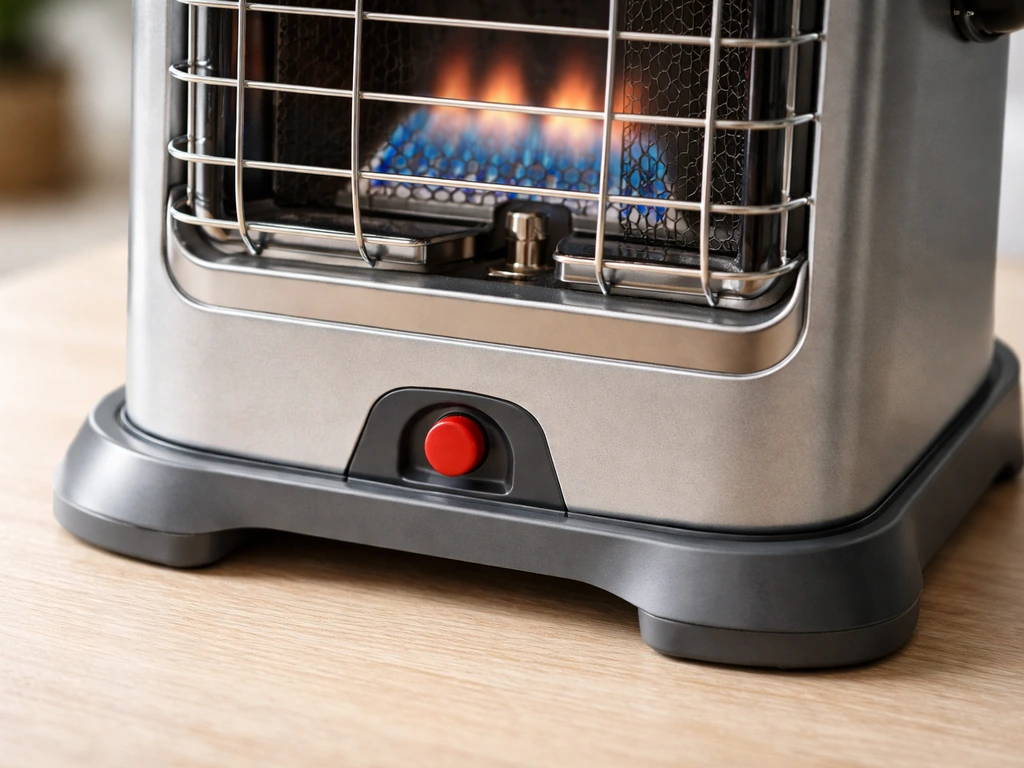
The SRPT03 comes with three important safety systems: a flame failure device that cuts the gas if the flame goes out unexpectedly, an anti-tilt switch that shuts the heater off if it tips over, and an ODS (Oxygen Depletion Sensor) pilot that shuts off the gas before oxygen levels drop to a dangerous level. The SRPH78 also includes a flame failure device and anti-tilt switch. Both units are CSA certified. These are the safety basics you'd expect, and it's reassuring that even the budget-level SRPT03 has all three.
Controls and ignition
The SRPT03 uses a push-and-turn control knob for ignition, meaning you press the knob, turn it to light, hold to let the thermocouple warm up, then adjust heat level. The SRPH78 uses electronic ignition that's described as sparking the flame quickly. In the real world, verified buyers of the SRPT03 have reported that the auto light doesn't always fire, so be prepared to use a lighter as a backup. This isn't unusual for budget propane heaters, but it is worth knowing upfront.
Fuel and runtime
The SRPT03 runs on a 1 lb LP-gas cylinder (16.4 oz). At 10,000 BTU/hr, a standard 1 lb canister gives you roughly 1.5 to 2 hours of heat on high. That's fine for a dinner on the patio but not all-night warmth. If runtime is important to you, factor in the ongoing cost of disposable canisters or plan to use a refillable 1 lb cylinder adapter.
Setup, usability, and real-world performance
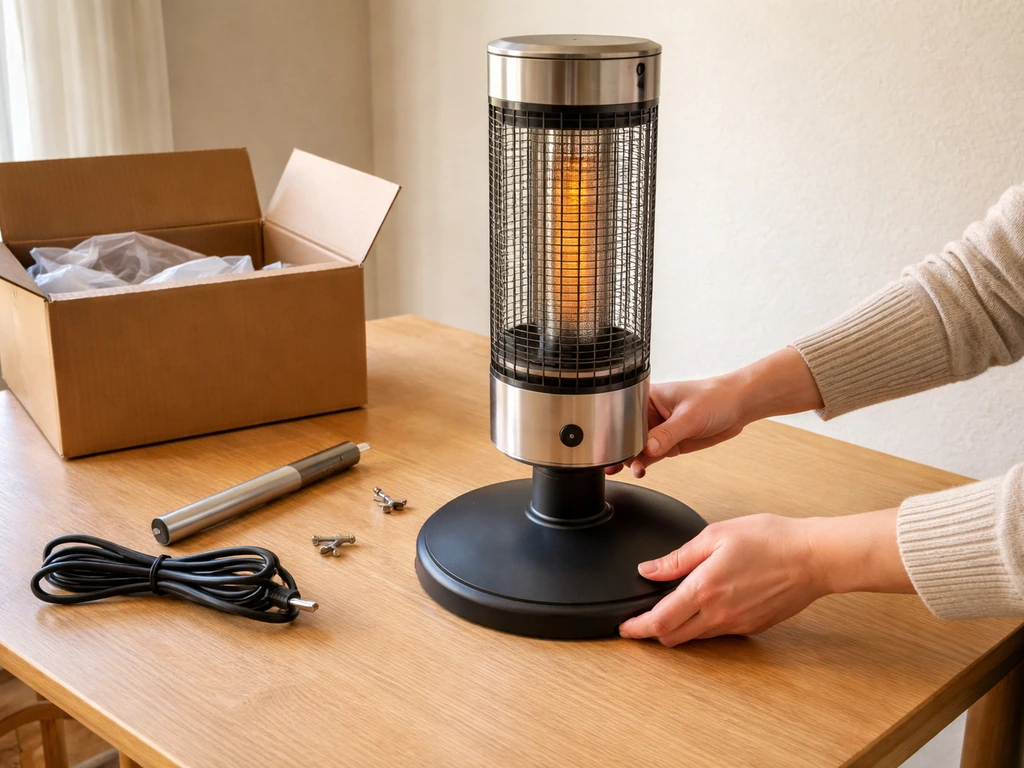
Here's where the Shinerich SRPT03 gets honest reviews that are a bit of a mixed bag. Assembly gets the most complaints: the instructions are described by verified buyers as genuinely confusing, and fitting the propane canister inside the housing is described as "extremely difficult," particularly for people with larger hands. The canister compartment is tight, and you have to thread the cylinder onto the regulator correctly or you won't get gas flow. This isn't a dealbreaker, but it does mean your first use will take longer than you'd expect.
Once it's assembled and lit, the performance is decent. Heat output is real and noticeable at the table level. But wind is its enemy. One verified buyer specifically said the heat is good "as long as wind is not too bad." On a still evening or a covered patio, the SRPT03 performs well for its size. On an open deck with any meaningful breeze, the flame will struggle, and you'll lose a lot of warmth.
Maintenance is straightforward. The manual says to turn the knob to OFF, disconnect the propane cylinder by turning it clockwise, and store the unit upright in a sheltered spot. Covering it after it cools is also recommended. There are no filters, no electrical components on the SRPT03 to worry about, and no pilot light to maintain. It's about as low-maintenance as outdoor heating gets.
The SRPH78 is more complex to set up given its two-piece pole construction and five-piece reflector assembly, but the larger format means the propane connection is easier to manage than the tight canister bay on the SRPT03. Electronic ignition is also more reliable on this model based on product descriptions, though real-world long-term reviews on the SRPH78 are less abundant than on the SRPT03.
Pros, cons, and who should buy which model
SRPT03 tabletop propane heater
- Pros: Compact and portable, covers 75 sq ft at table level effectively, CSA certified, three safety features (flame failure, anti-tilt, ODS), budget-friendly price point, no electrical hookup needed
- Cons: Propane canister installation is awkward and tight, ignition can be unreliable, very wind-sensitive, only 1.5–2 hours of runtime per 1 lb canister, assembly instructions are confusing
The SRPT03 is best for: apartment balconies, small covered patios, camping trips, or anyone who wants a portable propane heater for occasional use. It's not a good fit for open, breezy decks or anyone who wants a set-it-and-forget-it heater with reliable ignition every time.
SRPH78 full-size heater with tabletop feature
- Pros: 48,000 BTU covers up to 250 sq ft, electronic ignition, flame failure and anti-tilt safety, suitable for medium-sized patio gatherings, standard floor-standing format with familiar mushroom-top design
- Cons: More expensive than the SRPT03, requires more assembly, higher gas consumption (about 900 g/hr), still propane-dependent and wind-sensitive like most gas heaters, fewer user reviews available
The SRPH78 is best for: homeowners with a mid-size backyard patio (up to about 250 sq ft) who want a portable propane heater without committing to a natural gas installation. It sits in the same category as similar floor-standing propane heaters from other brands.
How to choose: matching heater type to your patio and budget
The right Shinerich model (or whether to go with Shinerich at all) depends mainly on patio size, how often you'll use it, and whether wind is a factor.
- Small patio or balcony under 100 sq ft, calm conditions: The SRPT03 is a reasonable choice. It's cheap, portable, and heats a tight seating area well. Just be patient with first-time setup.
- Medium patio, 100–250 sq ft: The SRPH78 is the better Shinerich option here. Alternatively, a standard 40,000–46,000 BTU standing propane heater from a brand like Hampton Bay often carries more user reviews and comparable performance at a similar price.
- Windy or exposed patio (any size): Skip the propane flame heaters and look at electric infrared options instead. Infrared heats people directly rather than warming the air, so wind doesn't carry the warmth away before it reaches you. Brands like Bromic offer high-end electric infrared that performs well in wind. Halogen patio heaters are another infrared option worth considering for directional spot heating.
- Covered patio or pergola: Both Shinerich models work well here since wind is blocked. Just remember the SRPT03 is strictly outdoor-use only due to carbon monoxide risk. Never use it in enclosed spaces.
- Budget is tight: The SRPT03 is one of the most affordable tabletop propane heaters with proper safety certifications. If you can stretch the budget, there are competitive electric tabletop options around the 1500W/5200 BTU range that offer tip-over and overheat protection and cost nothing per use beyond electricity.
- Want something permanent: Neither Shinerich model is a natural gas option. If you're looking for a fixed, piped-in solution, you'll want to explore natural gas standing heaters from other brands, which offer unlimited runtime without cylinder swaps.
It's also worth knowing that Shinerich sits in a crowded mid-to-budget segment. Brands like Hanover and Hampton Bay play in the same floor-standing propane heater space, while Bromic and Bernzomatic target different ends of the market (premium electric infrared and portable torch-style, respectively). If you are comparing brands, Hampton Bay outdoor patio heater reviews can help you judge how its models perform for wind and coverage needs.
If you’re specifically looking for Hanover patio heater reviews, you can use similar criteria like heat output, wind performance, and ignition reliability to compare models. If you're also comparing budget torch-style options, check out Bernzomatic patio heater reviews to see how they perform in real-world conditions. If you are leaning toward premium electric infrared options, browsing bromic patio heater reviews can help you compare performance and value versus budget propane models like the SRPT03.
If you've already narrowed down to a tabletop propane unit specifically, Shinerich's SRPT03 is a legitimate contender, but read through the setup pain points carefully and make sure you're buying from a retailer with a solid return policy in case the ignition gives you trouble out of the box.
Bottom line: Shinerich makes a capable, budget-priced tabletop propane heater that works well on calm nights within a small seating area. Go in with realistic expectations about setup difficulty and wind sensitivity, and you won't be disappointed. If your conditions are tougher or your space is larger, there are better-suited options out there worth comparing.
FAQ
Are Shinerich patio heaters good for breezy patios, or should I avoid them in wind?
They work best when wind is minimal. On breezy decks, the flame can be easily disturbed, so you should plan for reduced warmth and shorter effective coverage. If your area gets regular wind, consider an electric infrared tabletop or using the heater only in sheltered spots (under a porch overhang, behind a windbreak).
How long will a 1 lb LP cylinder run on the Shinerich SRPT03?
On high heat, expect roughly 1.5 to 2 hours from a typical 1 lb disposable cylinder. Real runtime can be shorter if you use higher settings frequently, and longer if you run it on low. If you host dinners often, budgeting for recurring canister swaps is important.
Is the SRPT03 hard to light every time, or is the “use a lighter” issue a rare problem?
Buyer reports indicate the push-and-turn ignition does not always spark or catch reliably, especially at first use or after refueling. Keeping a long lighter or match handy is a practical workaround, and trying to ignite after the control knob is fully held long enough for the thermocouple is usually key.
What is the biggest setup mistake people make with the SRPT03 propane canister?
Most complaints point to cylinder insertion and connection. The regulator must be threaded correctly for gas flow, and the canister bay is tight, which can make alignment difficult. If it does not ignite consistently, stop and re-seat the cylinder rather than forcing the knob or continuing repeated attempts.
Can I leave the heater outdoors between uses if I cover it?
You can cover it after it cools, but you should not store the unit outdoors long term. Aim to store it upright in a sheltered, dry location when not in use, and disconnect the propane cylinder before storage to reduce wear and corrosion risk.
Does the SRPH78 require an easier propane setup than the SRPT03?
Yes, the larger floor model is generally easier to connect because the propane connection and assembly are not as cramped. Even then, assembly involves more pieces, so plan extra time for reflector and pole setup, and double-check that sections are fully seated before attaching the propane line.
Is it safe to use Shinerich patio heaters under a covered porch or near furniture?
In a covered area, they can be a good fit as a conversation-zone heater, but you still need proper clearance from walls, cushions, and other combustibles. Use the recommended clearance distances from the manual, and avoid placing the unit where heat will be blocked by curtains or seated objects.
How many people will one Shinerich tabletop heater actually warm?
For the SRPT03, realistic comfort is usually around two to four seats when people are within a few feet of the table (often about 3 to 5 feet). If guests sit farther out, the effective warmth drops quickly, so you may need a second unit or a larger floor heater for bigger gatherings.
Should I choose Shinerich SRPT03 or SRPH78 if I am unsure about patio size?
If your patio area is under about 100 square feet and usage is for intimate seating, the SRPT03 is typically the better match. If you regularly host more people or want to cover up to roughly 250 square feet, the SRPH78 is the safer sizing choice because it provides much higher output and a broader effective zone.
Do Shinerich heaters have features to shut off if something goes wrong?
Yes. The SRPT03 includes flame failure protection, an anti-tilt shutoff, and an Oxygen Depletion Safety (ODS) pilot. The SRPH78 includes flame failure protection and anti-tilt as well. These are critical safeguards, but you should still shut down and disconnect propane when moving or storing the unit.