
Hanover makes a solid lineup of propane patio heaters that punch close to their BTU claims, look good on a deck, and land at a price point most homeowners can live with. The flagship models are umbrella-style propane standheaters rated at 48,000 BTU, though you'll also find a 41,000 BTU floor-standing option and at least one dual-fuel (propane/natural gas) stainless model. If you have a mid-size uncovered or semi-covered patio and want a free-standing heater you can move around, Hanover is genuinely worth considering. Where it gets trickier is ignition reliability over time, replacement parts availability, and how well the build holds up after a few seasons of outdoor exposure. This guide cuts through the review noise and tells you exactly which Hanover model type fits your situation. If you want to compare these models more directly, read our bernzomatic patio heater reviews to see how they stack up against other popular heater options.
Hanover Patio Heater Reviews: Best Types, Pros and Buying Guide

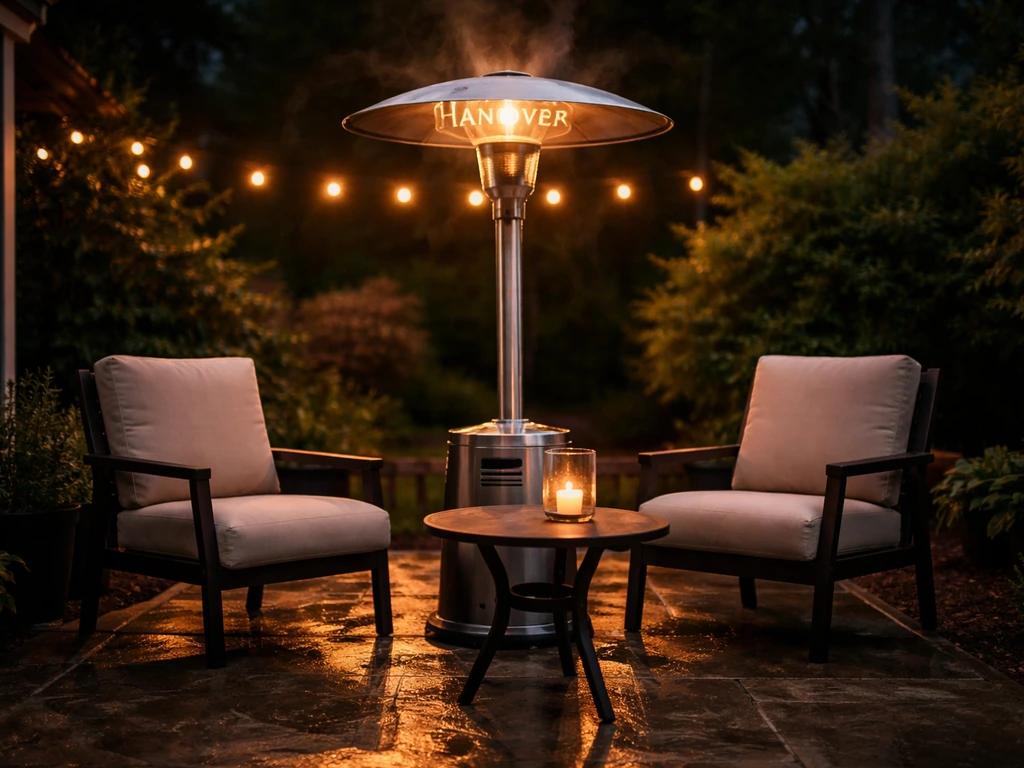
What Hanover patio heater reviews usually get right (and where they're missing context)
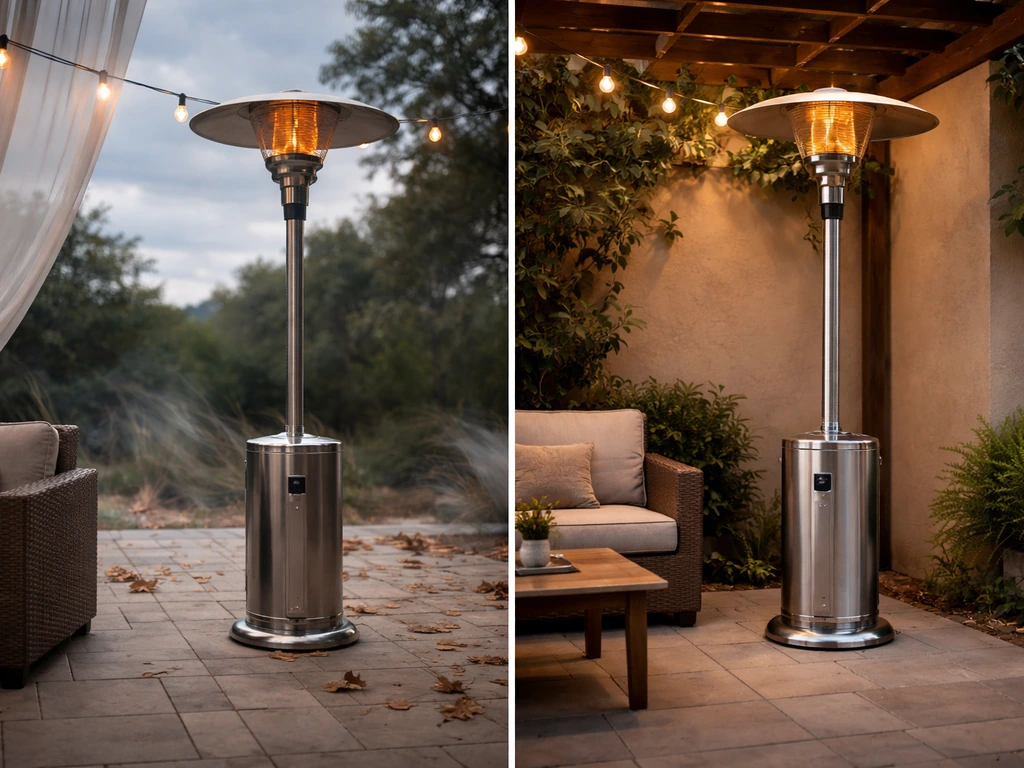
Most reviews you'll find on Home Depot and Lowe's for Hanover heaters are polarized in a useful way: people who set them up correctly and use them in reasonably sheltered spots tend to rave about the heat output and value. People who struggle tend to have problems with ignition systems after a season or two, or they expected the heater to warm a massive open deck in cold weather. Both groups are telling you something true.
Here's what reviewers consistently get right: Hanover heaters do produce strong radiant heat within their rated coverage zone. The 48,000 BTU umbrella-style models (like the HAN004BLK-CV and the H001BR hammered bronze) get praised for actually feeling warm within 6 to 8 feet. Assembly instructions are generally clear enough that most people get through it without a professional. The included weather-protective cover on models like the HAN004BLK-CV is a genuine bonus that extends the finish life, and reviewers notice.
Here's what those reviews miss: the 26.6 sq. ft. heat radius figure cited for the HAN002BRSS dual-fuel model sounds precise, but it's a manufacturer spec measured under controlled conditions. For the Hanover HAN002BRSS, you can also review buyer feedback on Home Depot to compare frequently mentioned pros and cons. Real-world effective coverage depends heavily on wind, ambient temperature, and whether you're in an enclosed versus open space. Reviewers writing from a screened porch in October and reviewers writing from a fully exposed deck in January are having completely different experiences with the same heater, and most review pages don't filter for that. Read reviews with that in mind.
Which Hanover heater type fits your patio
Hanover's primary lineup centers on propane standheaters, with one notable dual-fuel (propane/natural gas) option. If you want to narrow down your choices, these shinerich patio heater reviews can help you compare what matters most for performance and day-to-day use Propane standheaters. You won't find a dedicated Hanover electric or pellet patio heater in their current mainstream lineup the way you might with some competitor brands. So the real choice comes down to three configurations: standard propane umbrella-style, dual-fuel propane/natural gas, and the lower-output propane floor-standing model.
| Configuration | Typical BTU Output | Best Patio Type | Key Trade-off |
|---|---|---|---|
| Propane umbrella-style (e.g., HAN004BLK-CV, H001BR) | 48,000 BTU | Mid-size uncovered or semi-covered, 8–10 ft seating radius | Propane tank replacement cost; ignition issues over time |
| Dual-fuel propane/natural gas (HAN002BRSS) | 48,000 BTU | Patios near a natural gas line; semi-covered | Requires gas line hookup for NG use; higher upfront setup cost |
| Floor-standing propane (Lowe's 41,000 BTU model) | 41,000 BTU | Smaller patios, tight spaces, budget-conscious buyers | Lower output; less effective in open/windy settings |
If you have an existing natural gas line close to your patio, the HAN002BRSS is the smartest long-term buy because you eliminate propane tank swaps entirely. If you don't have a gas line and don't want to install one, a standard 48,000 BTU propane umbrella model is the better default. The 41,000 BTU floor-standing option from Lowe's makes sense if you're working with a smaller budget or a genuinely compact space where 48,000 BTU would be overkill.
Hanover doesn't currently offer a tabletop heater or a dedicated infrared electric model in the way some competitors do. If you specifically want electric infrared heating or a compact tabletop unit, you'll need to look at other brands. Similarly, if you want a pellet patio heater, Hanover isn't in that category at all.
Model-by-model review summaries: pros, cons, and who should buy
Hanover HAN004BLK-CV: 7 ft, 48,000 BTU Black Steel Umbrella with Cover
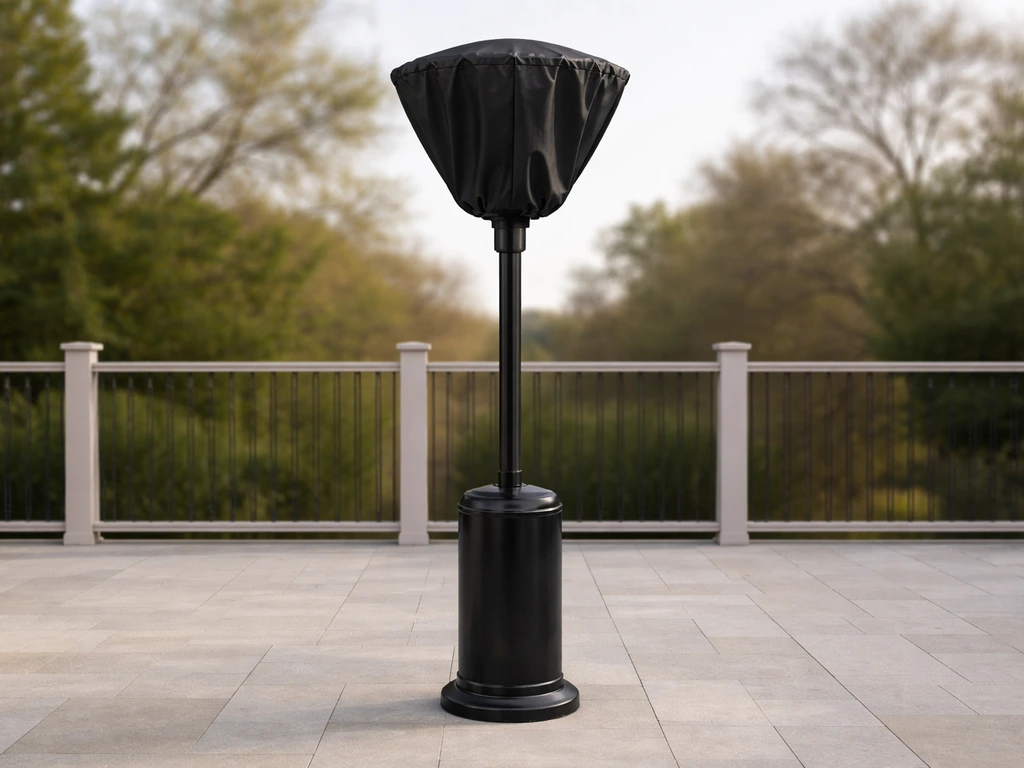
This is one of Hanover's most-reviewed models and a good benchmark for the brand overall. The black powder-coated steel finish looks sharp, and the included weather cover is the kind of practical addition that makes a real difference after a rainy season. At 48,000 BTU, it throws meaningful heat in a roughly 8-foot radius when conditions are calm.
- Strong heat output that reviewers consistently describe as noticeably warm within 6 to 8 feet
- Included weather cover adds value and helps protect the finish long-term
- Clean, modern look that works on most deck styles
- Straightforward assembly that most buyers complete without professional help
- Tilt function on the heater head lets you direct heat toward seating areas
- Ignition reliability is the most common complaint after the first season: piezo igniters degrade faster than they should for the price
- Powder-coat finish on the pole can show rust at stress points after 1 to 2 winters without consistent cover use
- Customer service and parts availability are weak points flagged in multiple reviews
- Wind sensitivity is real: effective coverage drops noticeably above 10–12 mph wind
Best for: homeowners who want a good-looking 48,000 BTU propane standheater for a semi-covered or modestly sheltered patio, and who are willing to store it properly between uses. Not ideal for fully exposed, windy yards or buyers who want a low-maintenance set-it-and-forget-it solution.
Hanover H001BR: 48,000 BTU Hammered Bronze Umbrella Heater
The H001BR is essentially the same 48,000 BTU umbrella configuration in a hammered bronze finish, which gives it a warmer, more traditional look compared to the matte black HAN004BLK-CV. Review themes are very similar across both models, which is useful because it tells you the performance and reliability patterns are structural to the design rather than finish-specific.
- Same strong heat performance as other 48,000 BTU Hanover models
- Hammered bronze finish holds up better visually over time than powder-coated black in some user reports
- Fits traditional or rustic patio aesthetics well
- Same ignition reliability complaints appear across reviews as with other Hanover umbrella models
- No included cover, unlike the HAN004BLK-CV, so you'd need to buy one separately
- Assembly can be finicky around the burner head attachment, per multiple reviewers
Best for: buyers who prefer a bronze aesthetic and already own a compatible patio heater cover, or who are willing to pick one up separately. Performance is comparable to the HAN004BLK-CV, so the decision largely comes down to which finish suits your patio furniture.
Hanover HAN002BRSS: 48,000 BTU Stainless Steel Dual-Fuel (Propane/Natural Gas)
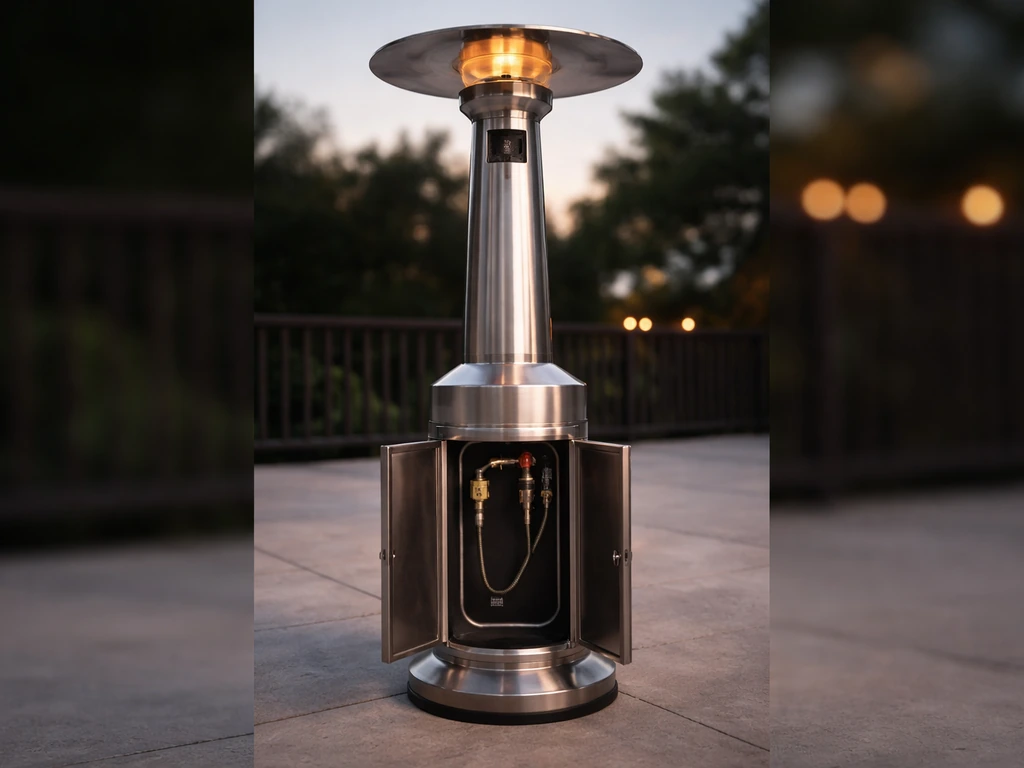
This is the most versatile Hanover heater for buyers who have or plan to install a natural gas line. It operates at the same 48,000 BTU output whether running on propane or natural gas, and it comes on wheels, which makes repositioning easy. The stainless steel construction is a genuine step up in durability compared to the powder-coated steel models, and it shows in how the finish holds up outdoors.
- Dual-fuel flexibility is the standout feature: switch between propane tanks and a fixed natural gas line depending on your setup
- Stainless steel body resists corrosion better than painted steel, particularly in humid coastal climates
- Wheels make it practical to move between patio zones
- 26.6 sq. ft. heat radius claim is consistent with 48,000 BTU output under calm conditions
- Higher upfront cost than single-fuel propane models
- Natural gas conversion requires proper fitting and ideally a licensed installer for the gas line connection
- Same ignition sensitivity issues appear in reviews, particularly after extended outdoor storage
- Stainless finish shows fingerprints and water spots more noticeably than bronze or black alternatives
Best for: buyers who want long-term operating cost savings via natural gas, or who want the flexibility to use propane now and convert later. If you're a renter or expect to move, the fixed natural gas hookup advantage disappears and a standard propane model makes more sense.
Hanover 41,000 BTU Floor-Standing Propane (Lowe's listing)
This lower-output model is worth considering if you have a genuinely compact patio (think 10 by 12 feet or smaller) or if you're heating a covered space where retained heat compensates for lower BTU output. The 41,000 BTU rating means it runs cooler than the 48,000 BTU flagship models, but for a small space that's not necessarily a bad thing.
- Lower price point than the 48,000 BTU models
- Proportionate for smaller patios where more output would just mean faster propane burn without extra comfort
- Similar umbrella-style design maintains consistent aesthetics with other Hanover models
- Not enough output for large open patios or cold-climate use below 40°F
- Same ignition reliability concerns appear in user feedback
- Fewer accessory and replacement part options than the flagship 48,000 BTU lineup
Best for: budget-conscious buyers with small to medium covered patios who don't need maximum heat output. Not the right call for large open decks or anyone heating more than a 4 to 6 person seating area.
Coverage and placement: how to size a Hanover heater for your patio
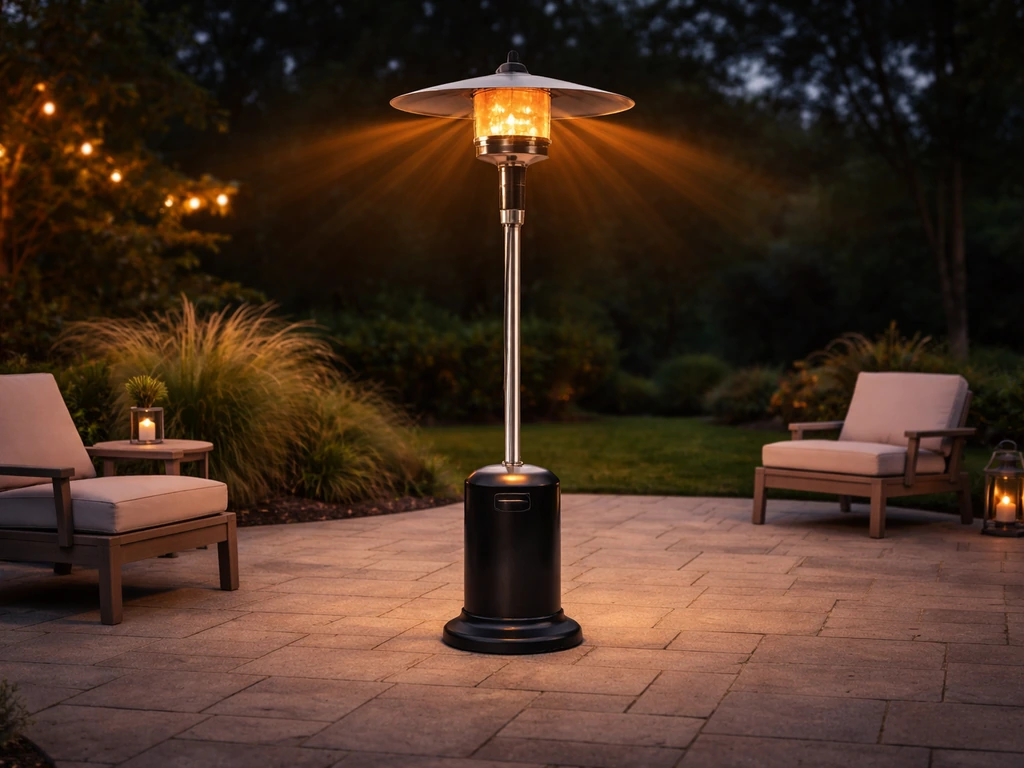
BTU ratings are useful, but they're only meaningful in context. A 48,000 BTU propane heater like Hanover's umbrella models radiates heat outward from the burner head, meaning people need to be within the heat cone to feel it. It warms people, not air. That distinction matters a lot for how you position the unit and how many you need.
For a single Hanover 48,000 BTU standheater, plan on effective comfort within about 8 feet of the heater under calm conditions (under 10 mph wind). The manufacturer's 26.6 sq. ft. radius spec for the HAN002BRSS translates to roughly a 6-foot radius circle. That's realistic for calm, partially covered conditions. In open, windier spots, effective coverage shrinks to 5 to 6 feet. Place the heater in the center of your seating group rather than off to one side if you want even warmth distribution.
For covered or semi-enclosed patios, a single 48,000 BTU unit can comfortably serve a 10 by 12 foot space because the structure helps retain radiant heat. On a fully open deck of 16 by 20 feet or larger, you'd realistically need two units positioned to cover opposite ends of the seating area, or you accept that only guests near the heater stay warm.
- Keep at least 36 inches of clearance between the heater head and any overhead structure (pergola roof, umbrella, awning)
- For covered patios, check manufacturer minimum clearance requirements before mounting or positioning near ceilings
- Position heaters away from high-traffic pathways to reduce tip-over risk
- Umbrella-style standheaters should be placed upwind of seating in moderate breeze conditions so heat drifts toward guests rather than away
- On wood or composite decks, use a heat shield pad under the base even if not explicitly required
Safety, reliability, and build quality: what to check before you buy
Hanover heaters in the 48,000 BTU umbrella category include standard safety features you should verify before purchasing: a tip-over safety shut-off (a tilt switch that cuts gas flow if the unit falls), an anti-tilt base, and a pressure regulator. These are baseline requirements for any propane standheater and Hanover includes them across their main lineup. What's less consistent is how well ignition systems and regulators hold up after 18 to 24 months of regular outdoor use, and that's where reviews start to diverge.
For the dual-fuel HAN002BRSS, make sure the natural gas conversion kit is either included or listed as available before you buy, and that any natural gas connection is done to local code requirements. Using a propane-configured regulator on a natural gas line (or vice versa) is a serious safety issue and the most common setup mistake reviewers report on dual-fuel models across all brands.
- Confirm tip-over safety shut-off is present and functional before first use: tilt the heater slightly (with gas off) to verify the switch engages
- Check that the propane regulator hose shows no cracking, discoloration, or brittleness before each season
- Verify CSA or ETL certification on the product label or spec sheet before purchase, especially for natural gas models
- Inspect the burner screen for debris or insect nests before lighting after any storage period
- Test the igniter before relying on it: if it doesn't spark within 3 tries, troubleshoot the electrode gap before assuming the heater is faulty
- Check the base stability on your specific deck surface: uneven boards or pavers can create tip risk even with a wide base design
- Confirm warranty terms and whether replacement igniters, regulators, and burner parts are sold separately
Operating costs, maintenance, and troubleshooting real-world review issues
What it actually costs to run a Hanover propane heater
A 48,000 BTU propane heater running at full output burns approximately 1 pound of propane per hour. A standard 20-pound tank (the common grill-size tank) gives you roughly 20 hours of run time at full blast, or closer to 30 to 40 hours at 50 to 75 percent output, which is where most people actually run them. At current propane exchange prices of around $4 to $6 per gallon (roughly $0.50 per pound), full-output running cost is about $0.50 to $1.00 per hour depending on local propane pricing. Over a typical patio season of 40 to 60 hours of use, that's $20 to $60 in fuel, which is reasonable. Natural gas running costs on the dual-fuel model are significantly lower, typically $0.10 to $0.20 per hour at full output at average residential gas rates.
Seasonal maintenance basics
- At season start: inspect and clean the burner ports with a soft brush to clear any spider webs or debris (a surprisingly common cause of ignition failure and uneven flame)
- Wipe down the reflector and emitter screen with a damp cloth to maximize heat radiation efficiency
- Check all hose connections and fittings for leaks using soapy water before first light-up of the season
- Lubricate the valve knob threads lightly with food-grade silicone spray if the knob feels stiff
- At season end: disconnect and store the propane tank separately, clean the entire unit, and use the included cover (or a separately purchased one) to protect the finish
Troubleshooting the most common Hanover review complaints
Ignition problems are the single most-reported issue across Hanover's umbrella-style models. Before assuming the igniter is dead, check three things: the electrode gap (should be about 3 to 4 mm from the burner), whether the igniter wire has come loose from the electrode (a common assembly and jostling issue), and whether the thermocouple is positioned correctly in the flame path. If the igniter sparks but the flame won't stay lit, the thermocouple is almost always the culprit. Replacement thermocouples are standard parts available at most hardware stores for under $15.
Uneven heating or a yellow/orange flame instead of blue usually points to blocked burner ports or a regulator issue. A yellow flame means incomplete combustion, which also produces more carbon monoxide, so don't ignore it. Clean the burner ports first; if the problem persists, the regulator may need replacement. Regulators can also go into "lock-out" mode if you open the tank valve too fast, cutting gas flow to a trickle. The fix is simple: close the tank valve, disconnect the regulator, wait 30 seconds, and reconnect before slowly reopening the tank.
Control knob failures (knobs that spin without changing output) are reported in a smaller subset of reviews and typically indicate a stripped valve stem. This is harder to DIY repair and often requires ordering a replacement valve, which is where parts availability becomes a real frustration with Hanover. If you can't source parts from Hanover directly or through the retailer, check whether the valve is a standard OEM part used across multiple brands, which is common in this price segment.
Hanover vs. the alternatives: when Hanover makes sense and when it doesn't
Hanover competes in the mid-range propane standheater segment, roughly $150 to $300 depending on the model and retailer. That puts it in direct competition with Hampton Bay (a Home Depot house brand at similar price points) and a step below premium brands like Bromic, which target the $400 to $900+ range. If you are comparing overall performance across brands, these bromic patio heater reviews can help you gauge how Bromic’s electric and high-end options stack up against Hanover. It's worth being honest about what those differences mean in practice.
| Brand | Price Range | Key Strength | Key Weakness | Best For |
|---|---|---|---|---|
| Hanover | $150–$300 | Strong heat output, good aesthetics, dual-fuel option | Ignition reliability after year 1–2, limited parts support | Mid-budget buyers with semi-covered patios |
| Hampton Bay | $100–$250 | Wide availability, easy replacement parts at Home Depot | Build quality slightly below Hanover on steel gauge | Budget buyers who prioritize parts accessibility |
| Bromic | $400–$900+ | Premium build, wall-mount and commercial-grade options, excellent reliability | High upfront cost, overkill for casual use | Serious outdoor entertaining, commercial spaces, covered patios |
| Shinerich | $120–$200 | Low entry cost, decent short-term performance | Durability and parts support are weaker than Hanover | Very budget-focused buyers with light seasonal use |
Choose Hanover if you want a better-looking heater than Hampton Bay at a similar price, especially if the dual-fuel option or stainless steel build quality matters to you. The HAN002BRSS in particular offers a durability step up that Hampton Bay's equivalent price range doesn't match. If you entertain outdoors frequently, more than 50 hours per season, or if you need absolute reliability without fussing with ignition systems, the gap between Hanover and a brand like Bromic starts to justify itself financially over a 3 to 5 year horizon.
If you want electric infrared heating instead of propane, Hanover isn't your answer right now. That's a category where other brands lead. Similarly, if you want a tabletop heater for a small balcony or bistro setup, Hanover's lineup is focused on floor-standing models. And if pellet-fueled patio heat is on your radar, that's a niche Hanover doesn't serve at all.
The bottom line on Hanover: they make a genuinely capable propane patio heater at a fair price, and the dual-fuel stainless model is the most interesting option in their lineup for serious buyers. The brand's weak spot is long-term ignition and parts reliability, which is an honest trade-off at this price point. Go in knowing that, keep up with basic maintenance, use the cover religiously, and a Hanover heater will serve most mid-size patios well for 3 to 5 seasons without drama. If you are comparing options based on halogen patio heaters reviews, you will want to check how halogen warmth and coverage compare to propane radiant heat in your setup a Hanover heater will serve most mid-size patios well for 3 to 5 seasons.
FAQ
Can I convert a Hanover dual-fuel propane heater to natural gas, and what should I verify first?
Yes, but only if your heater uses the correct fuel configuration and regulator for that gas type. For dual-fuel models, confirm the conversion kit is included or sold separately before purchase, and check that the regulator is labeled for natural gas or propane. If you are not sure, have a local gas fitter verify the setup to avoid serious safety risks.
If the BTU is high, do I still need to place multiple Hanover heaters on a large deck?
Do not rely on BTU alone to decide quantity. Hanover heaters heat people directly via radiant output, so you need to position the burner head to face your seating area. In practice, for a 48,000 BTU unit you will usually get best comfort within roughly an 8-foot cone under calm conditions, and in windy weather you may need two units even on the same patio size.
What end-of-season maintenance actually helps prevent Hanover ignition problems?
Store it fully protected, indoors or under a weatherproof cover, and do a quick end-of-season inspection. Reviews suggest ignition and regulator problems can worsen after repeated exposure, so keep the burner ports clear, ensure the electrode and thermocouple wires stay seated, and use the included cover when it is not in use.
How long will a 20-pound propane tank last on a Hanover 48,000 BTU model?
For propane, a common grill-size tank provides limited runtime at full output, so many owners extend usable time by running at partial output once everyone is warmed. If you often host, plan around about 20 hours at full blast for a 20-pound tank, or closer to 30 to 40 hours at moderate settings, and consider keeping a spare tank ready.
What does a yellow or uneven flame mean on a Hanover propane patio heater?
A yellow or orange flame is a warning sign, not just “normal burn.” It often indicates incomplete combustion, commonly from blocked burner ports or a regulator issue. Stop using the unit and clean the burner ports first, then check the regulator and burner alignment before retrying.
My Hanover won’t stay lit after ignition, what part should I check first?
If the igniter sparks but the flame will not stay lit, focus on the thermocouple position and flame path before assuming the igniter is bad. If the heater sparks but the flame drops out after release, a replacement thermocouple is usually the easiest and least expensive fix, and it is widely available.
Could tip-over safety shutdowns look like an ignition failure, and how do I check it?
If the unit tilts or the anti-tilt mechanism trips, the heater may seem “dead” until reset. Before troubleshooting components, ensure the heater sits level on a stable surface, and verify the anti-tilt base is fully engaged and not obstructed by debris or uneven patio stones.
The knob turns but the heat output does not change, what does that usually indicate?
Yes, control knob failures can happen and may be caused by a stripped valve stem, which can be hard to repair without parts. If you notice the knob spins without changing flame height, treat it as a parts issue and check whether the relevant valve component is listed for your model, since parts availability can be inconsistent.
Is Hanover’s dual-fuel model worth it if I might move or only use the heater occasionally?
It depends on your fuel source and how long you plan to keep the heater. If you already have a natural gas line nearby and you expect multi-year use, the dual-fuel stainless model can lower operating costs and eliminate tank swaps. If you rent, expect to move, or cannot use natural gas, the standard propane umbrella model is usually the safer value choice.
Do Hanover heaters offer an electric infrared or tabletop option like some competitors?
Not in the current mainstream lineup. Hanover focuses on propane standheaters, and while there is a dual-fuel propane/natural gas option, you generally will not find tabletop heaters or dedicated infrared electric or pellet models from Hanover. If you need those categories, you will likely need to switch brands.