
A tabletop electric patio heater is a compact, plug-in radiant heater designed to sit on an outdoor table or surface and warm the people sitting closest to it. Most run at 1500 watts, cover a small zone of roughly 9 to 25 square feet depending on the model, and use infrared or halogen heating elements that heat you and objects directly rather than trying to warm the surrounding air. If you have an outdoor outlet within reach, one of these can meaningfully extend your time outside on a cool evening without a gas line, a propane tank, or a permit.
Table Top Patio Heater Electric: How to Choose the Best One

Willa Brennan
6 May 2026
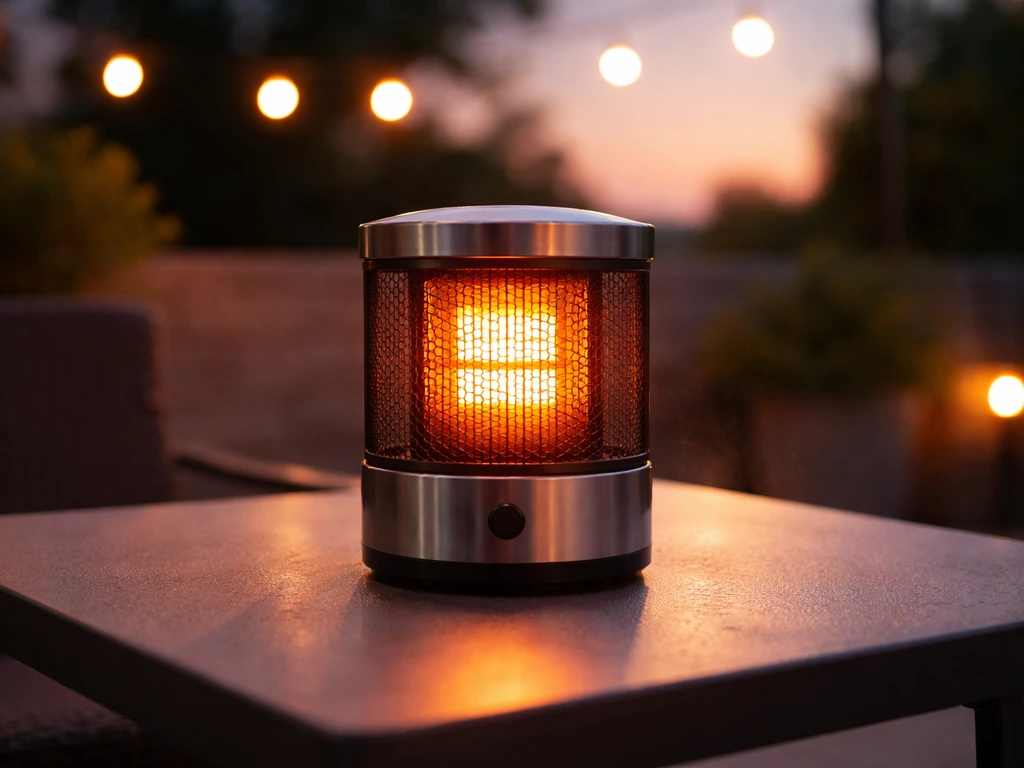
What a tabletop electric patio heater actually does
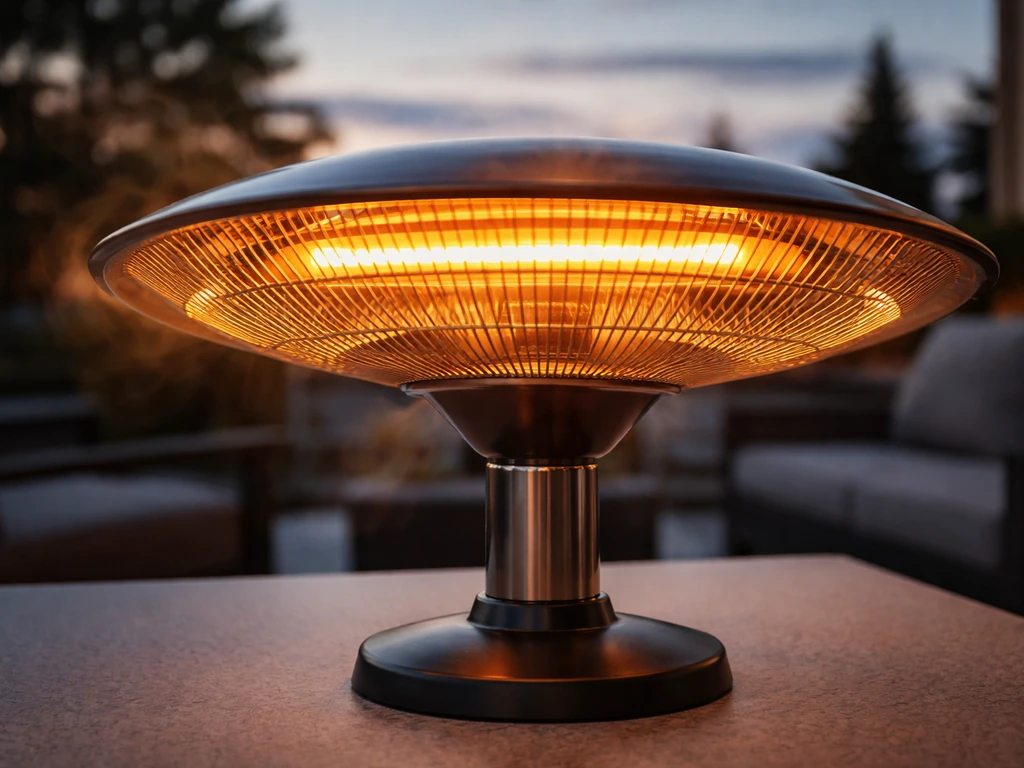
The key thing to understand is how these heaters work, because it sets realistic expectations right away. Electric tabletop patio heaters produce radiant heat, meaning they warm the people and objects in their line of sight, not the ambient air. That is the same principle as standing near a campfire or in a patch of sunlight. Dimplex's DIRP15A10GR, for example, is explicitly described in its manual as producing radiant heat that heats objects and people rather than the air. The practical consequence: the moment you step outside the heater's direct range, you feel the cold again. Wind doesn't rob you of your heat the way it does with a forced-air system, which is actually a real advantage for outdoor use.
Most tabletop electric models use a halogen or infrared element, sometimes marketed as 'zero light' (meaning the element glows minimally or not at all). The RADtec E32R zero-light series is a good example of the latter. The heating element sits inside a reflector, often made of aluminum, which focuses and distributes the warmth around the unit. Westinghouse markets a 360-degree aluminum reflector on their WES31-1566 tabletop model specifically to push heat in multiple directions from a central table position.
Where these heaters work best: small covered patios, screened porches, gazebos, balconies, and intimate outdoor dining setups where you're sitting within 3 to 5 feet of the unit. They're spot heaters, not whole-patio heaters, and that's completely fine as long as you go in knowing that.
Electric vs other tabletop heater types: when electric is the right call
Tabletop patio heaters come in electric, propane, and occasionally natural gas versions. Each has a legitimate use case, and electric isn't always the winner. Here's the honest breakdown.
| Feature | Electric Tabletop | Propane Tabletop |
|---|---|---|
| Heat output (typical) | 1500W / ~5100 BTU | 10,000–20,000 BTU |
| Coverage zone | 9–25 sq ft | Larger, less focused |
| Needs outlet? | Yes, standard 120V | No |
| Ongoing fuel cost | Low (electricity) | Propane refills |
| Wind performance | Good (radiant heat) | Fair to poor |
| Portability | Cord-limited | Fully portable |
| Safety/complexity | Simple plug-in | Requires tank handling |
| Best for | Covered patios, balconies near outlets | Open areas without power access |
Electric wins when you have an outdoor outlet within a reasonable cord run, you're in a covered or semi-enclosed space, and you want a no-fuss setup you can leave on the table season after season. Propane tabletop models (like those in the Cuisinart and pyramid-style tabletop lines) push more raw BTUs, which matters in wide-open, windy yards where you need to heat more air volume. If you want more heat output, propane table top patio heaters are often a better fit for windy, open outdoor areas Propane tabletop models. If that's your situation, an electric tabletop unit is going to disappoint you. But for a balcony, porch, or patio with a roof overhead, electric is cleaner, safer, and easier to manage day to day.
The specs that actually matter: watts, coverage, and controls
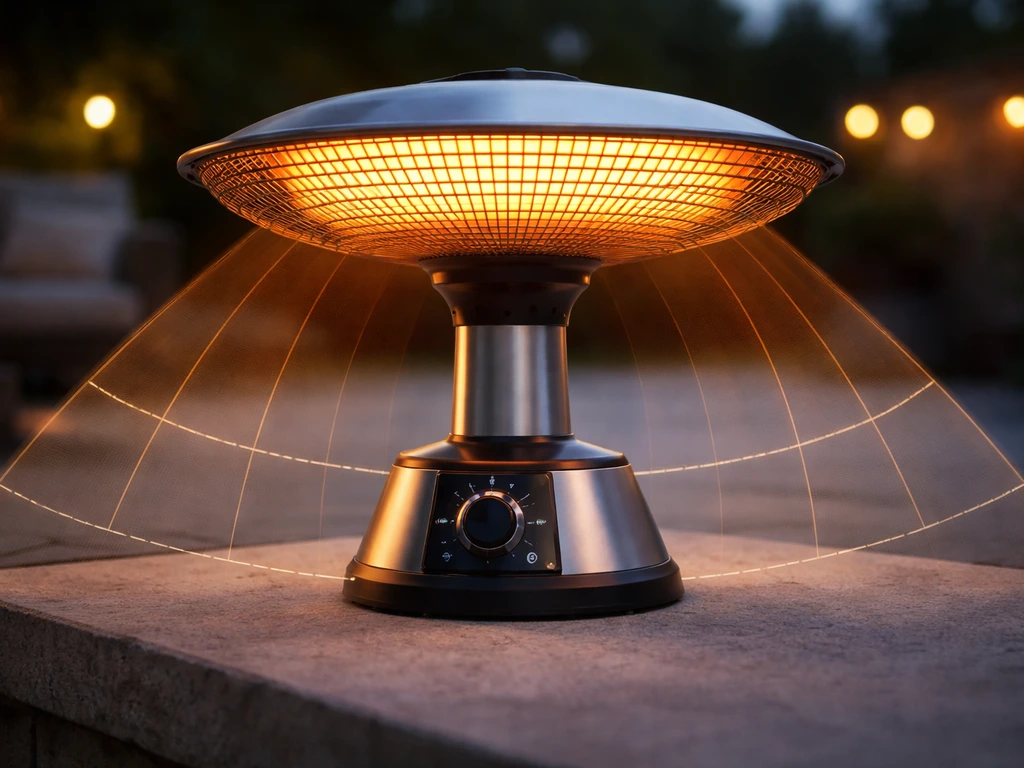
Most electric tabletop patio heaters cluster around 1500 watts. That's not a coincidence; it's the maximum draw for a standard 120V household circuit without tripping breakers. Models like the Westinghouse WES31-1566, the Star Patio STP1566-D-S, and the Star Patio 1566-CT all run at a fixed 1500W. Some lower-wattage options exist, but 1500W is the sweet spot for meaningful outdoor warmth. The DIRP15A10GR manual lists it as an electric infrared heater with 1500 W power and 120 V~60 Hz electrical specifications DIRP15A10GR as an electric infrared heater with 1500 W and 120 V~60 Hz.
Coverage area is where specs get more granular and more honest. The RADtec E32R owner's manual lists outdoor enclosed coverage areas by model: the E32R covers 25 square feet, the E24R covers 18 square feet, the E18R covers 14 square feet, and the E15R covers just 9 square feet. These are small zones. If you're expecting to heat a 12x12 patio from a single tabletop unit, you'll be cold. Think of these heaters as warming a 2-to-4 person dining setup where everyone is sitting within arm's reach of the table.
Controls vary quite a bit. Some units like the Star Patio 1566-CT run on a single fixed 1500W setting with no adjustment. Others offer two or three heat levels, and a few include a thermostat or remote control. If you're using the heater in variable weather, adjustable heat levels are worth paying a little more for. A thermostat is nice but rare at the tabletop price point. Look for at minimum a power switch and ideally a low/high setting.
Safety and placement: what you need to know before you plug it in
Electric tabletop heaters are generally safe, but there are a handful of non-negotiable rules. Ignoring them is how heaters end up as fire hazards or returned products.
Overhead clearance
Don't place the heater directly under a low ceiling or a patio umbrella canopy without checking the manual. The RADtec E32R specifies at least 6 inches (150mm) of clearance between the back of the heater and any ceiling or roof surface. Other units may require more. Umbrellas and low-hanging pergola fabrics are a real concern here.
Extension cords: proceed carefully
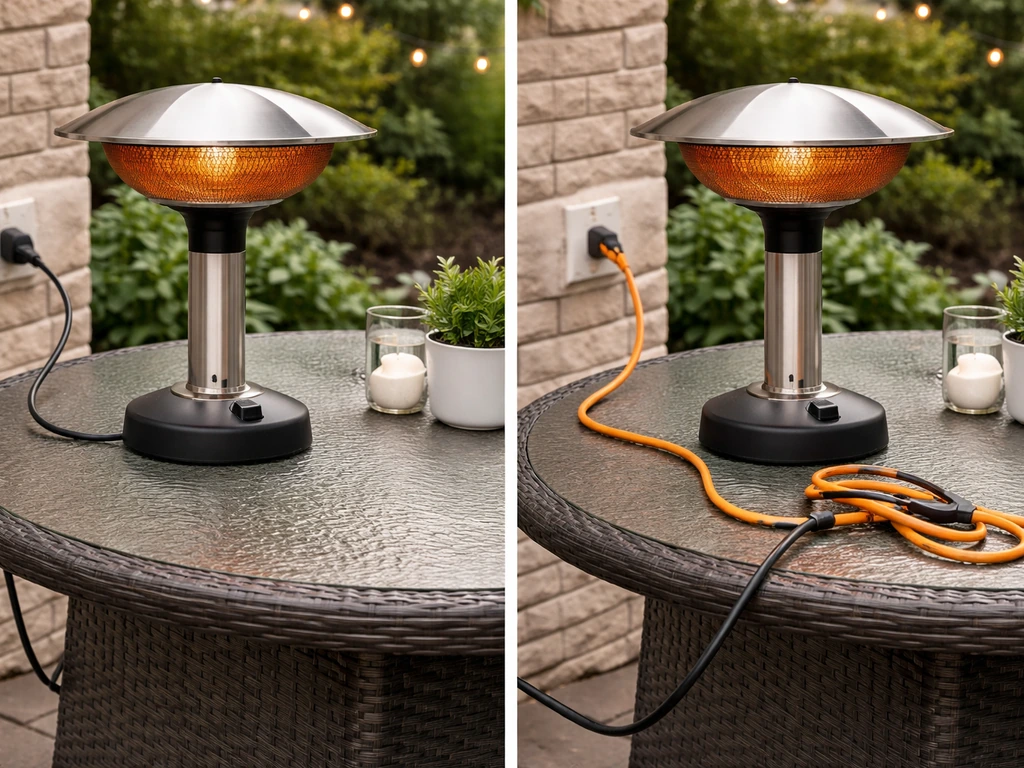
This is the area where most people make a dangerous mistake. The Blue Rhino Endless Summer EWUR810SP manual flatly states the heater 'functions best WITHOUT an extension cord' and warns that using one can cause overheating and fire risk. The CPSC echoes this: using an undersized extension cord with a high-wattage appliance is a genuine fire hazard. The U.S. CPSC also warns that extension cords lacking applicable safety characteristics, such as proper wire size and an outdoor-rated jacket, can create a substantial risk of electrical shock or fire using an undersized extension cord with a high-wattage appliance is a genuine fire hazard. If you absolutely need an extension cord, you need one that is outdoor-rated, 3-prong grounded, UL-listed, and rated for at least 15 amps. A thin indoor lamp cord is not acceptable. The safest answer is to position the heater where it can reach an outdoor outlet directly. Plan your table placement around the outlet if you can.
Tip-over and overheat protection
Look for units with automatic tip-over shutoff and overheat protection. These are now standard on reputable models. The HGM-50 tabletop heater listed on Home Depot includes both features. The Star Patio STP1566-D-S includes them as well. If a product listing doesn't mention these safety features at all, that's a red flag. Also confirm the unit carries a UL listing or equivalent certification. According to BBQGuys' patio heater FAQ, outdoor electric patio heaters should be UL-listed, full stop.
Weather exposure
Most electric tabletop heaters carry an IP44 rating, meaning they're protected against splashing water from any direction. The Star Patio STP1566-D-S and the HGM-50 both list IP44. That's solid for covered-patio use in light rain, but it doesn't mean you should leave them out in a downpour or store them outside year-round without a cover. IP44 is weatherproof, not waterproof. Always keep the electrical plug and connection point dry.
How to choose the right model for your specific patio
Your patio setup is the biggest variable. Here's how to match the heater to your situation.
Small balcony or apartment patio
This is the ideal use case for a tabletop electric heater. You're close to an outlet, space is limited, and you're typically sitting in one spot. A 1500W unit with a fixed single setting is perfectly adequate. Prioritize compact size and weight since you'll likely be moving it in and out. Look for units under 10 pounds with a carrying handle.
Covered patio or gazebo
A covered space holds heat better, which works in your favor. The radiant heat from a 1500W tabletop unit will feel noticeably warmer in a covered space than in an open yard. Check ceiling clearance carefully before buying. If your gazebo has a fabric or low ceiling, measure the height above the table and compare it to the heater's clearance spec. An adjustable heat setting becomes more useful here because you may want to dial down on milder evenings.
Windy or open outdoor area
Be honest with yourself: a tabletop electric heater in a fully open, windy yard is going to underperform. Radiant heat still works better than forced air in wind, but the sheer exposure will limit how warm you feel. If this is your situation, look at larger freestanding electric patio heaters, or consider whether a propane tabletop option makes more sense for the higher BTU output. The tabletop electric category is simply not engineered for fully exposed conditions.
Larger outdoor dining setups
If you're hosting 6 or more people around a large table, one tabletop unit won't cut it. You'd want either two units placed at opposite ends of the table, or a freestanding electric or propane floor heater that covers more square footage. Don't buy one tabletop heater expecting it to heat a 6-person dinner. The RADtec coverage numbers make this clear: even the largest E32R model covers 25 square feet outdoors.
Top picks and who each one is for
Rather than declaring one heater the universal winner, here's a practical comparison of the models worth considering based on verified specs and real-world use cases.
| Model | Wattage | Key Feature | Best For | IP Rating |
|---|---|---|---|---|
| Westinghouse WES31-1566 | 1500W | 360-degree aluminum reflector | Small round tables, 2–4 people | Outdoor-rated |
| Star Patio STP1566-D-S / 1566-CT | 1500W | Halogen element, tip-over/overheat protection | Budget pick, balcony use | IP44 |
| HGM-50 (Home Depot) | 1500W | Overheat auto shutoff, tip-over protection | Safety-focused buyer | IP44 |
| RADtec E32R Zero Light | Varies by model | Zero-light infrared, 25 sq ft coverage | Covered patio, ambiance-conscious buyer | Outdoor-rated |
| Dimplex DIRP15A10GR | 1500W | Plug-in infrared, radiant heating focus | Covered porch or screened patio | Outdoor-rated |
The Star Patio and HGM-50 models are the most accessible price-wise and cover the basics well for everyday balcony or covered-patio use. The Westinghouse WES31-1566 is a good mid-range pick if you want the 360-degree reflector design for a round dining table. The RADtec zero-light series is worth looking at if you want minimal visible glow from the element, which matters for ambiance-conscious setups. The Dimplex DIRP15A10GR is a solid plug-in choice if you want a brand with strong warranty support.
If you're also weighing propane tabletop options for more heat output, tabletop pyramid heaters, or models like the Cuisinart portable tabletop heater, those are worth comparing separately. If you are comparing models, the Cuisinart portable table top patio heater with cover is one option worth adding to your shortlist Cuisinart portable tabletop heater. If you're considering a table top pyramid patio heater, the same placement and coverage limits apply, but you may get more directional heat output tabletop pyramid heaters. They serve a different use case and the fuel-type tradeoffs are significant enough that the choice really comes down to whether you have a reliable outdoor outlet or not.
Setup tips and what to do when it doesn't feel warm enough
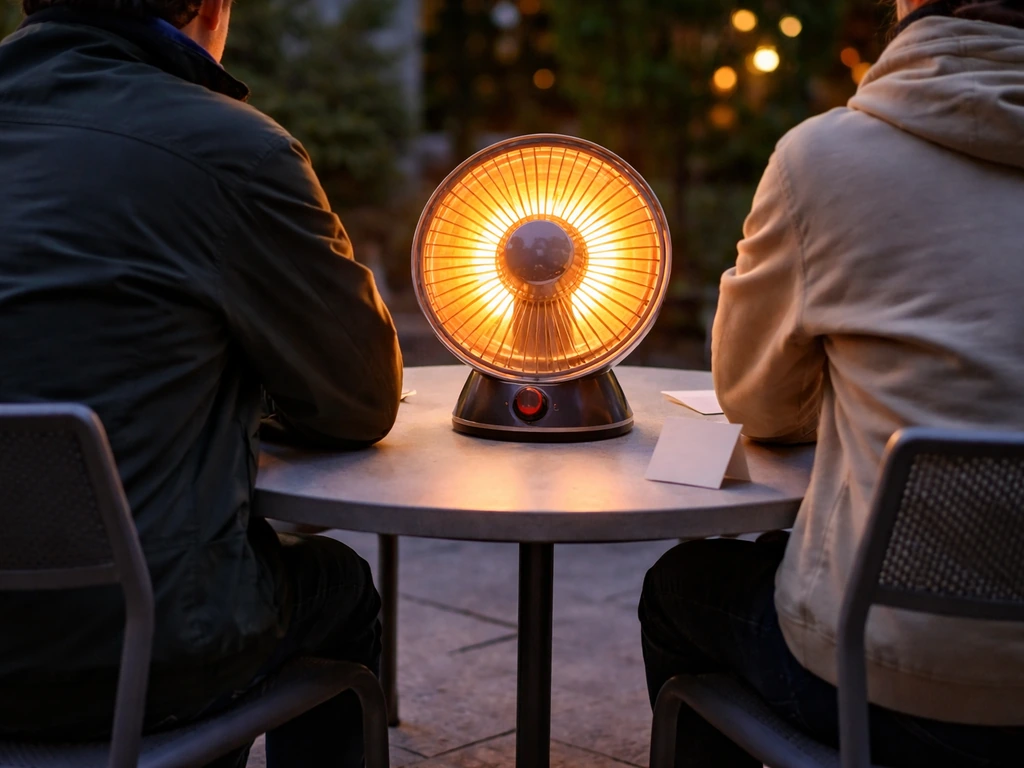
Getting the most out of a tabletop electric heater comes down to a few placement decisions. Position the heater centrally on the table so the reflector faces the people sitting around it. Avoid pointing it at a wall or directing it away from the seating. If the unit has a tilt function, angle it slightly toward the people at the table rather than straight up.
Sit closer. Radiant heat falls off with distance, so a heater that feels warm at 2 feet will feel noticeably weaker at 4 feet. This isn't a flaw, it's physics. Rearranging seating so people are 18 to 30 inches from the heater makes a real difference.
If the heater isn't warming you enough, check three things before returning it. First, are you in a covered or semi-enclosed space? Open areas will always feel cooler regardless of wattage. Second, is the reflector clean? Dust and grime on the reflector reduce heat output noticeably. Wipe it down periodically. Third, is the unit fully powered? Some multi-setting heaters default to a low setting. Make sure you're running on the highest heat setting before concluding the unit is underpowered.
For troubleshooting: if the heater shuts off unexpectedly, tip-over or overheat protection has likely triggered. Set it upright on a stable, level surface and let it cool for a few minutes before restarting. Make sure the table surface isn't wobbling. A heater that keeps tripping its overheat protection may be too close to an overhead surface, so check your clearance specs again.
Bottom line: a 1500W tabletop electric patio heater is genuinely useful for small, close-in outdoor settings with outlet access. If you are shopping by a specific model number, look for a tabletop patio heater that matches your outlet setup and coverage needs. It won't heat your whole backyard, but it will make a 2-to-4 person covered patio dinner comfortable on a cool evening. Get one with IP44 weather resistance, tip-over protection, UL listing, and a direct-to-outlet setup, and you'll get consistent, hassle-free warmth every time you use it.
FAQ
Can I mount a table top patio heater electric on a wall or hang it under my awning?
Most tabletop electric patio heaters are intended to sit on a table or stable surface with the plug accessible, because safety clearances and reflector positioning matter. If you mount it to a wall or railing, you can easily violate the required rear clearance and change the airflow around the unit, which can trigger overheat protection or reduce heat output.
Will a table top patio heater electric warm my whole yard on a windy night?
No, you should not rely on it for a fully open, windy backyard. Tabletop radiant heaters only warm people in their line of sight, and the effective zone is roughly 9 to 25 square feet. In open yards, you typically need either a larger freestanding heater or a higher-output option like propane.
What size and type of extension cord can I safely use with a table top patio heater electric?
You should plan for a dedicated outdoor outlet, ideally a grounded 120V outlet within reach. Many units perform best when plugged directly (not via extension cord), and using the wrong cord gauge can overheat the cable. If you must extend power, use an outdoor-rated, UL-listed 3-prong grounded extension cord rated for at least 15 amps.
How does distance or wind affect how warm it feels from a table top patio heater electric?
Assuming the heater uses infrared or halogen radiant elements, it will not warm the air like a space heater. You can still feel warmth through light wind, but if you stand outside the reflector’s effective range or get blocked by a table edge, the warmth drops quickly. Heating performance is mostly about distance (and seating position) rather than fan strength.
My table top patio heater electric keeps turning off, what should I check first?
If it shuts off repeatedly soon after turning on, tip-over or overheat protection is likely triggering. Place it on a level, stable surface, confirm the back and sides meet the clearance requirements from the manual, and let it cool before restarting. If it keeps tripping, recheck overhead clearance and reduce how close it is to coverings or fabric.
If my table top patio heater electric has only one setting, how can I adjust comfort?
A thermostat is uncommon in the tabletop category, so you may need manual control. If your model has high and low settings, start on high for the first few minutes, then lower it once people are seated and you feel comfortable. For mild evenings, starting lower can also help you avoid unnecessary power use.
Can I leave a table top patio heater electric outside in the rain if it has an IP44 rating?
Not a good idea. IP44 means protection from splashing water, it does not mean safe exposure to heavy rain or leaving the heater outdoors all season. Keep the plug and connection dry, store indoors or in a dry covered area, and use a cover designed for outdoor units if you leave it outside between uses.
Is it safe to place a table top patio heater electric on any outdoor table surface?
You should use the unit on a heat-safe surface and keep it away from anything flammable like umbrellas, tablecloths, and decorative fabrics. If your table has a treated wood or plastic top, verify heat safety with the manufacturer, because radiant heat can still warm nearby materials.
How many people can one table top patio heater electric realistically warm?
For group seating, use more than one heater. The largest coverage numbers still assume a small zone and close seating, so for 6 people you may need two units placed at opposite ends of the table, or switch to a freestanding heater designed for larger coverage.
How should I interpret the square-foot coverage rating on a tabletop electric patio heater?
Treat the coverage numbers as guidance for enclosed, sheltered conditions and consistent line of sight. If your patio is semi-open or you have a canopy with restricted angles, real coverage can be less than the spec. When in doubt, choose the larger wattage model available in the category (often 1500W) and prioritize placement near the center of the seating.