
Tabletop patio heaters are genuinely good at one specific thing: delivering warmth right at the people sitting around a patio table, without heating the whole yard. They are not full patio heaters. They won't warm a 10-person gathering or push back cold on a wide-open, wind-whipped deck. But for two to four people sitting close together, especially on a small balcony, a covered porch, or in a calm evening setting, a good tabletop model works surprisingly well and costs a fraction of a full-size standing heater.
Are Tabletop Patio Heaters Any Good? Real Results Guide

Willa Brennan
26 Jun 2026
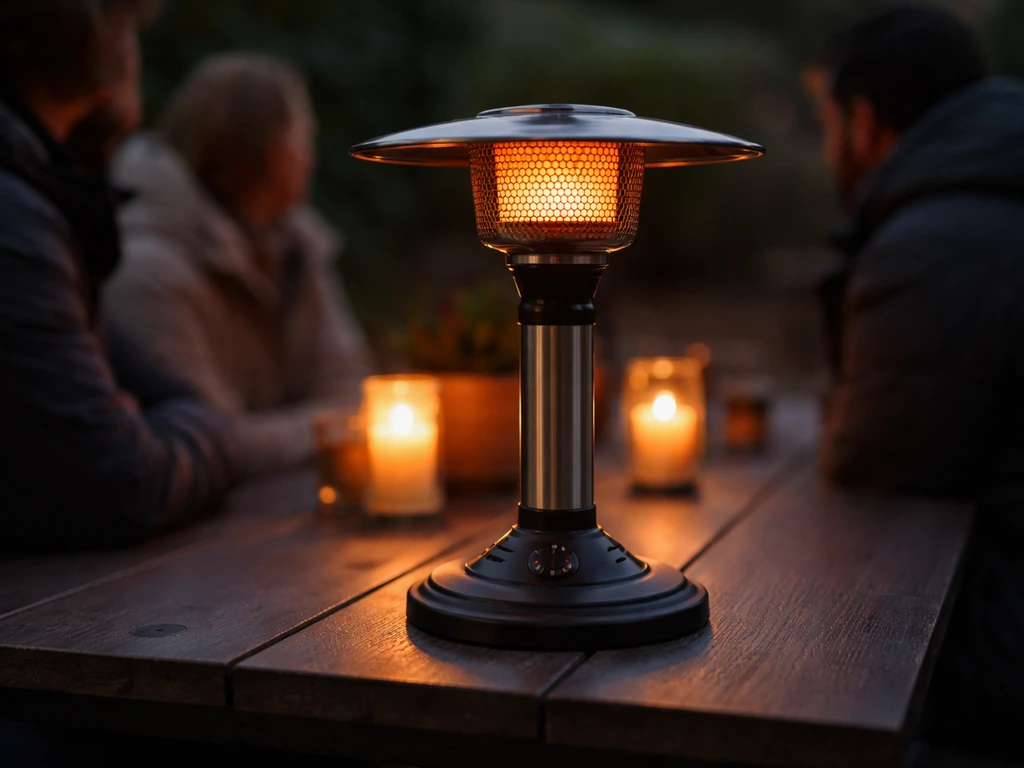
What tabletop patio heaters can and can't do
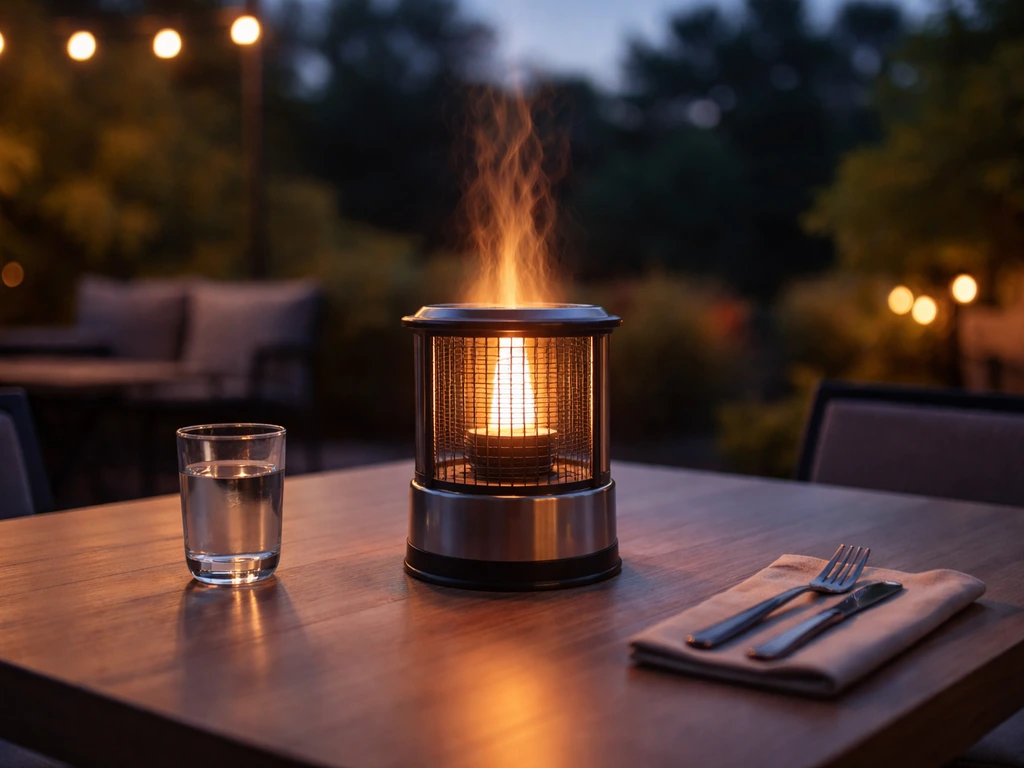
A tabletop heater sits at the center (or edge) of your patio table and radiates heat outward and upward at the level where people actually feel it: their torsos, arms, and faces. That proximity makes a real difference. You don't need to heat a large volume of air. You're heating people directly, which is exactly how radiant heating works most efficiently.
What they can do well: extend comfortable outdoor time by 1 to 2 hours on a cool evening, take the chill off a covered patio, and do it without the footprint or fuel cost of a full mushroom-style standing heater. They're also genuinely portable. Most propane tabletop units run on a standard 1-lb cylinder tucked into the base, and electric models just need an outdoor outlet.
What they can't do: heat more than a small personal zone (typically 4 to 7 feet in radius on a gas model, less on a compact electric), cope well with strong wind, replace a primary heat source for a larger group, or work as the sole heater on a fully open, exposed patio on a cold night. If you're expecting them to perform like a full-size 40,000 BTU standing unit, you'll be disappointed. They're a spot heater, not a space heater.
Electric/infrared vs. gas: which fuel type actually makes sense
There are two main types of tabletop patio heaters: small propane/butane gas units and electric infrared models. Each has a different feel, a different setup, and different practical trade-offs.
Propane tabletop heaters
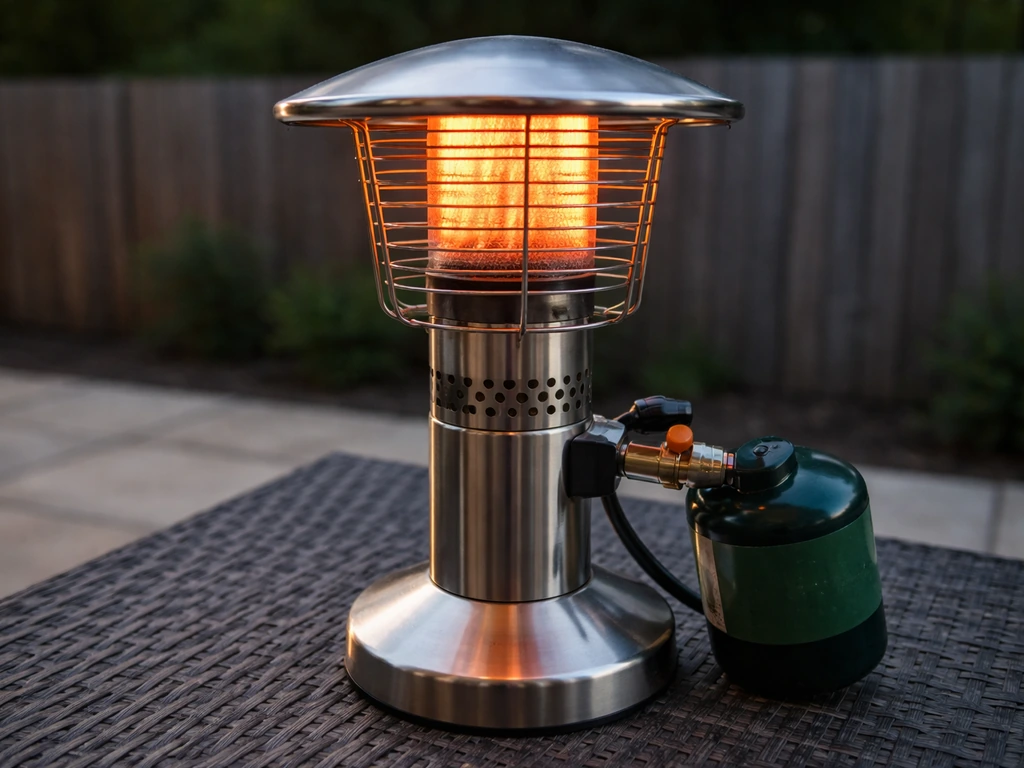
Gas tabletop heaters are the most common and most powerful option in this category. Models like the Mr. Heater tabletop (11,000 BTU) or the Fire Sense stainless steel tabletop (10,000 BTU) produce a visible flame element and emit radiant and convective heat. They run off a standard 1-lb propane cylinder stored in the base, which gives you roughly 2 to 4 hours of burn time depending on the heat setting. Some models, like the Cuisinart tabletop unit (also 11,000 BTU), can connect to a 20-lb tank via an optional adapter hose, giving you much longer runtime without constant cylinder swaps. The Costco FlamePro tabletop is another example that supports dual-tank compatibility via adapter hose, rated at 10,000 BTUs with a claimed 52-inch heat radius.
The main advantage of gas models is heat output. 10,000 to 11,000 BTUs is meaningful warmth at close range. The downside is fuel cost and logistics: 1-lb canisters get expensive if you use them regularly, and you need to keep spares on hand. They also require ventilation awareness (more on that in the safety section below).
Electric infrared tabletop heaters
Electric tabletop heaters like the Westinghouse infrared tabletop (1,500W) work differently. Instead of a flame, they emit infrared radiation that heats objects and people directly rather than warming the air. These are quieter, produce no combustion byproducts, and are generally easier to use. Just plug in and switch on. The Eurofase Vellura at 1,500W claims around 25 square feet of effective coverage, and the Westinghouse unit quotes 5 to 7 square feet of instant warming.
The reality with electric tabletop models is that 1,500W puts out roughly 5,100 BTU equivalent. That's noticeably less than even a modest propane tabletop. They work well in calm, sheltered spots, but they struggle in wind and won't push much warmth beyond arm's length. They're best used on a covered patio, a small screened-in area, or right next to you on a table. The big plus: no fuel to buy, no tank to swap, and no combustion risks.
| Feature | Propane Tabletop | Electric Infrared Tabletop |
|---|---|---|
| Typical output | 10,000–11,000 BTU | 1,500W (~5,100 BTU equivalent) |
| Heat radius | Up to ~4–5 ft radius | 5–25 sq ft (limited range) |
| Runtime per refuel | 2–4 hours (1-lb cylinder) | Unlimited (plugged in) |
| Wind performance | Moderate (flame can be affected) | Poor (heat disperses quickly) |
| Ease of use | Simple, no cord | Simplest (plug and go) |
| Combustion/CO risk | Yes, use outdoors only | None |
| Ongoing fuel cost | 1-lb canisters (~$5–8 each) | Electricity only |
| Best setting | Open or covered outdoor table | Covered or sheltered patio only |
How far they actually heat: coverage, wind, and honest expectations
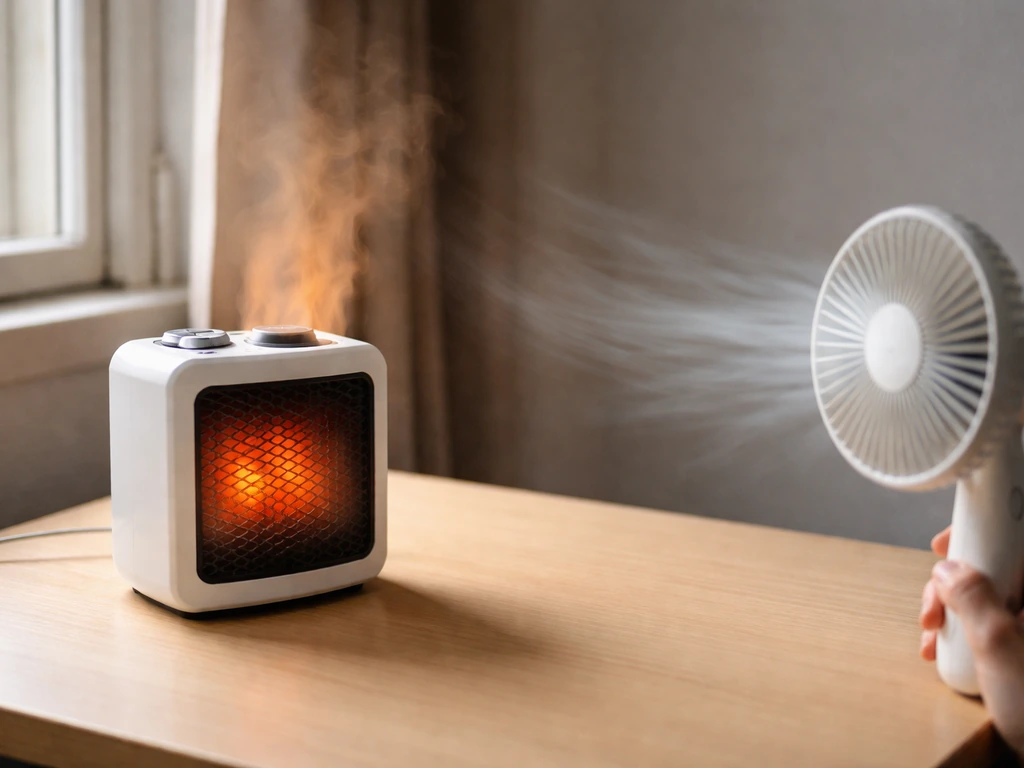
Manufacturer coverage claims for tabletop heaters should be read with some skepticism. A claimed 52-inch heat radius sounds solid, but that assumes still air and optimal conditions. In real-world outdoor settings, any breeze at all will reduce effective warmth noticeably. Wind is the single biggest enemy of a tabletop heater, especially gas models where the flame itself can flicker and redirect heat inconsistently.
As a practical rule of thumb: expect meaningful warmth within 3 to 4 feet of a 10,000–11,000 BTU gas tabletop in calm conditions. Electric infrared units are best treated as personal-zone heaters, effective within about 2 to 3 feet. The warmth is real and appreciated, but you're not heating a 10-foot dining table. Think of it as taking the chill off for the people sitting closest to it, not blanketing everyone equally.
If your patio is frequently windy, a tabletop heater will underperform. In that situation, a larger freestanding heater positioned at the perimeter will do much better, or you'll want a covered/enclosed setup where wind is less of a factor. Electrical Safety First in the UK specifically notes that in windy areas, heaters need to be appropriately weighted and anchored, which is worth considering for any compact unit sitting on a table. Electrical Safety First advises that in windy areas patio heaters should be appropriately weighted/anchored to reduce toppling risk, and that patio heaters are outdoor-only appliances in windy areas, heaters need to be appropriately weighted and anchored.
Safety and placement: what you actually need to know
Tabletop heaters are small, but the safety stakes are real. A few areas deserve careful attention before you put one on your patio table.
Tip-over and burn risk
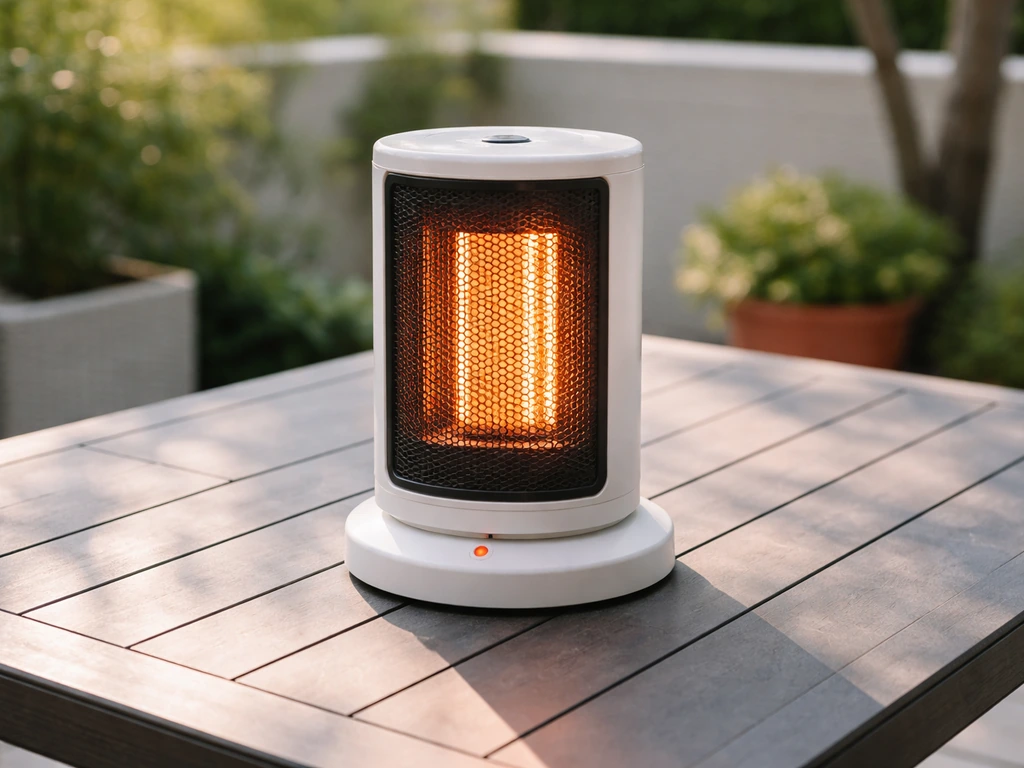
Tabletop heaters sit at arm's reach. Kids, pets, or someone knocking the table can tip them over. Look for a model with a built-in tip-over switch that automatically cuts the heat if the unit falls. The Mr. Heater tabletop propane model, for example, explicitly includes a tip-over switch plus a steel wire guard for exactly this reason. The CPSC has flagged tip-over hazards and overheating risks as primary concerns with portable heaters and recommends that units have automatic shutoffs when tipped. CPSC staff assessment on portable electric heaters (February 2023) includes sample evaluation of whether units had tip-over devices and how they shut off or reset when tipped upright blank" rel="noopener noreferrer">automatic shutoffs when tipped. Don't buy a tabletop heater that lacks this feature.
The guard or shield matters too. Gas tabletop heaters have a flame element that gets very hot. A wire guard reduces the chance of someone reaching in and burning themselves. Keep the heater away from table linens, umbrella fabric, paper plates, or anything else flammable sitting nearby.
Gas heaters: CO and ventilation
Propane tabletop heaters produce combustion byproducts, including carbon monoxide (CO). CO is colorless, odorless, and tasteless, which is what makes it dangerous. You must use gas tabletop heaters outdoors only, never in an enclosed space, not even a well-ventilated garage or a closed screen porch. The NFPA's outdoor heater safety guidance and LP-gas hazard control recommendations are clear: LP-gas appliances require proper outdoor placement and ventilation. The London Fire Brigade similarly warns about CO risk from portable gas appliances. A covered, open-sided patio is fine. A closed room or tent is not.
Clearance and placement on the table
Follow the manufacturer's minimum clearance requirements. For gas tabletop units, that typically means keeping overhead clearance (patio umbrellas, pergola fabric, or string lights) at a safe distance, usually at least 3 feet above the unit. The NFPA 54 National Fuel Gas Code provides minimum clearance concepts that manufacturer installation guides are built from. Don't place a propane tabletop directly under a closed patio umbrella. You may also want to compare pyramid vs umbrella patio heaters, since the umbrella style is often used in the same covered outdoor setups where tabletop heater placement matters. And per NFPA guidance on LP-gas containers, keep the propane cylinder upright and stable in the base as designed.
Table stability
Put the heater on a flat, stable table surface. Glass-top patio tables work fine structurally, but make sure the heater base sits solidly and can't shift. If you're on a windy patio, consider whether the table itself is heavy enough and not prone to rocking. A lightweight resin folding table is a risky base for a gas unit.
When a tabletop heater is the right call (and when it isn't)
Tabletop heaters shine in specific situations. They're a genuinely smart buy in these scenarios:
- Small balcony or apartment patio where a full standing heater won't fit or isn't allowed
- A patio dining table for 2 to 4 people who want warmth right at the table level
- A covered or semi-enclosed patio with low wind exposure
- Supplemental heat alongside a larger heater to fill the gap at table height
- Camping, tailgating, or any situation where portability matters more than power
- Anyone on a tight budget who wants something useful without a big investment
They are not the right tool if you're trying to heat a large open patio, entertain more than 4 to 5 people at once, or deal with a consistently breezy outdoor space. If you have a big uncovered deck, a large backyard dining setup, or you want one heater to warm the whole area, you'll want a full-size standing unit or a ceiling-mounted infrared heater instead. Tabletop heaters used in that context will feel weak and underwhelming.
What to check before you buy: specs that matter and red flags to avoid
Here's what actually matters when you're comparing tabletop heater models:
Specs worth checking
- Heat output: Look for 10,000–11,000 BTU for propane, or 1,500W for electric. Anything lower will feel weak outdoors.
- Tip-over shutoff: Non-negotiable. Confirm it's listed in the specs, not just implied.
- Overheat protection: Important for electric models especially.
- Wire guard or heat shield: Should come standard on any gas tabletop unit.
- Runtime: For propane, expect 2–4 hours on a 1-lb cylinder. Check if it can connect to a larger tank via adapter hose if you want longer sessions.
- Ignition type: Electronic push-button ignition is more convenient and reliable than manual lighting.
- Base stability: A wide, heavy base matters. Narrow bases on lightweight units tip easily.
- Certifications: Look for CSA, ETL, or UL listings. These indicate the unit has passed third-party safety testing.
Red flags to avoid
- Coverage claims that seem wildly inflated (e.g., '500 sq ft' from a 10,000 BTU tabletop)
- No tip-over protection listed anywhere in the specs
- No safety certification (CSA, ETL, UL)
- Lightweight plastic base with no ballast or stability weight
- No wire guard on a gas model
- Vague or absent clearance instructions in the manual
- No option to connect to a larger propane tank (limits long-term usability)
Tabletop vs. full-size patio heaters: the honest comparison
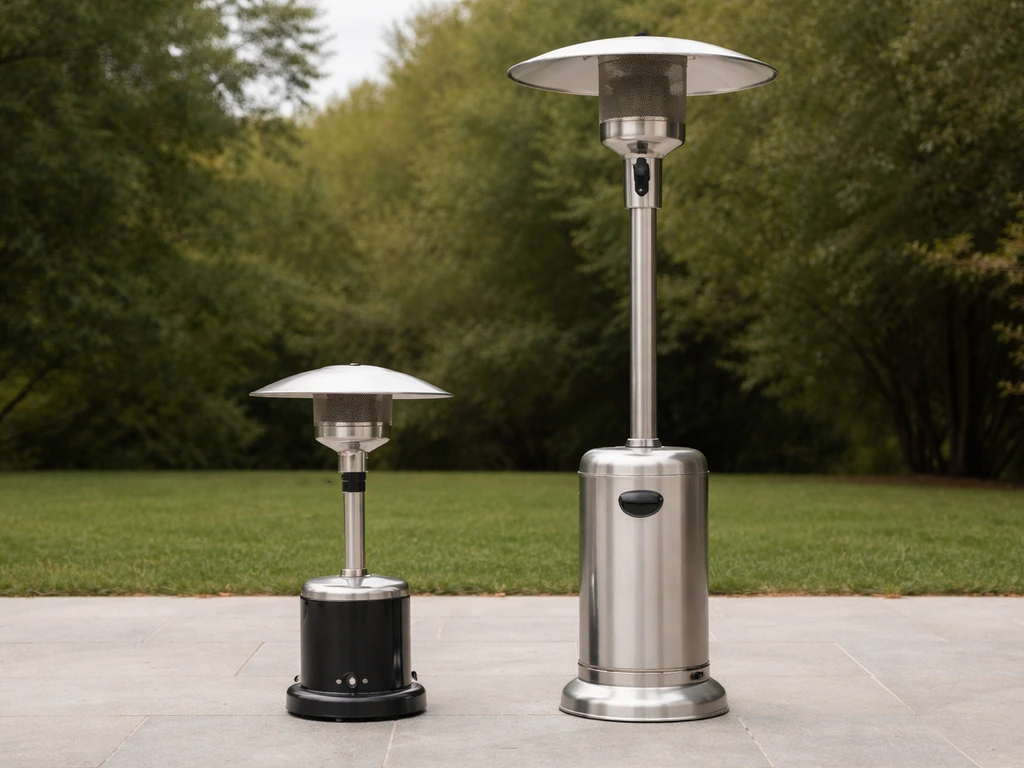
A standard freestanding patio heater (think the classic mushroom or pyramid style) typically outputs 40,000–46,000 BTU for propane models. That's roughly four times what a tabletop gas heater produces. Full-size heaters also throw heat from 6 to 8 feet up, which spreads warmth across a wider area and multiple seating zones. If you're comparing tabletop heaters to those, the performance gap is real. Pyramid and mushroom-style heaters genuinely are better for larger groups or bigger spaces.
But a full-size standing heater also costs more upfront (often $150 to $400+), requires a 20-lb propane tank, takes up floor space, and needs to be moved and stored. A tabletop unit is $50 to $150, stores easily, travels with you, and drops right on the table. If you are choosing between a pyramid versus a standard patio heater, the main difference is how the heat is distributed and how well it performs in windy or open areas A tabletop unit. The cost and convenience gap is just as significant as the performance gap.
| Factor | Tabletop Heater | Full-Size Standing Heater |
|---|---|---|
| Typical output | 10,000–11,000 BTU (propane) | 40,000–46,000 BTU (propane) |
| Coverage area | ~4–5 ft radius | ~10–15 ft radius |
| Upfront cost | $50–$150 | $150–$400+ |
| Fuel tank size | 1-lb cylinder (or 20-lb via adapter) | 20-lb standard propane tank |
| Runtime (1 fill) | 2–4 hours | 8–10 hours |
| Storage/portability | Very easy, compact | Bulky, needs storage space |
| Best group size | 2–4 people | 6–12+ people |
| Wind performance | Moderate to poor | Better (height advantage) |
| Ideal setting | Table, balcony, small patio | Open deck, backyard, large patio |
The bottom line: tabletop heaters aren't competing with full-size units, they're serving a different use case. Choosing between them comes down to how many people you're heating, how much space you have, and whether you need something portable or permanent. In some situations, a tabletop heater used alongside a larger perimeter heater is actually the best setup of all.
Quick decision checklist: should you buy a tabletop heater?
Before you pull the trigger, answer these questions honestly. They'll tell you whether a tabletop heater is the right choice or whether you should be looking at something bigger.
- How many people are you heating? If it's 2 to 4 people sitting at a table, a tabletop works. More than that, look at a standing heater.
- How big is the space? A small balcony or apartment patio: yes. A large open deck: no.
- Is the space covered or sheltered from wind? Covered/calm = tabletop heaters work well. Exposed/windy = performance will disappoint.
- How close will people be to the heater? If they're all within 3 to 4 feet, you'll feel it. If the table is 8 feet wide, only the people closest to the heater benefit.
- Do you need portability? If you want to move it between a balcony, a camping trip, and the backyard, a tabletop is hard to beat.
- Are you okay with 2 to 4 hour runtime? If you're having long evenings, pick a model that accepts a larger propane tank via adapter hose, or go electric.
- Is there a power outlet nearby? If yes, an electric infrared model is the easiest and safest option for covered spaces.
- Do you have kids or pets on the patio? Only buy a model with confirmed tip-over shutoff and a proper wire guard.
If most of your answers point toward a small, sheltered, close-proximity setup, a tabletop heater is absolutely worth buying. A propane model in the 10,000–11,000 BTU range (with tip-over shutoff, wire guard, and adapter hose compatibility) is the most versatile pick. If you're mostly in a covered, wind-protected spot and have an outlet, a 1,500W electric infrared tabletop is the safest and lowest-hassle option. And if your answers pointed toward a bigger, more exposed setup with more people, it's worth exploring full-size standing heaters instead. Tabletop heaters are genuinely good when you use them for what they're designed to do. The key is just knowing what that is before you buy.
FAQ
Are table top patio heaters any good for a normal dinner table?
Probably, but only if your expectation is “personal, close-range warmth.” If you need to warm a wide table or an uncovered windy deck, tabletop units will feel weak because they cannot maintain heat once air movement carries it away. Measure your seating distance first, then check that the heater’s effective radius matches your arm’s-length to 4-foot target in calm conditions.
Which is safer, electric or propane tabletop patio heaters?
Electric models are usually the better choice for people near the heater because there is no open flame and no combustion byproducts, but they still need safe placement. Put it on a stable surface with clearances from paper, tablecloths, and umbrella fabric, and avoid using extension cords not rated for outdoor use and the heater’s wattage.
Can I use a propane tabletop patio heater under a covered porch?
For gas units, aim for outdoor-only use even if the patio is covered on top. If the area has walls that enclose the space more than a few sides, you should treat it like an enclosure and choose an electric unit or reposition to a truly open-air spot.
Is it okay to put a tabletop patio heater on a glass-top or folding table?
Yes, but only if the table surface is solid and you can keep the heater from rocking or sliding. Avoid placing a tabletop propane heater on lightweight folding resin, especially where there is wind or foot traffic that can bump the table.
What safety features should I look for before buying a tabletop heater?
Check for an automatic tip-over shutoff plus a protective wire guard, then verify the guard spacing won’t block the heater’s heat output for your exact placement. Also make sure the model has a stable base designed to hold the cylinder upright, not just a loose canister pocket.
Do electric tabletop heaters warm faster than propane tabletop heaters?
Electric infrared is often more noticeable instantly, but it is less effective at spreading warmth. If you want faster comfort with fewer logistics, electric can feel great right away in calm conditions, while gas may provide stronger heat but depends more on wind and fuel management.
How accurate are the heat radius and square-footage claims on tabletop heater boxes?
Don’t rely on marketing coverage numbers for outdoor use. Real-world performance depends heavily on wind, ceiling height (for clearance), and whether the heater is centered at the table. Treat claimed radiuses as best-case scenarios, then plan for a smaller effective zone.
How long will a 1-lb propane tabletop heater run?
For 1-lb cylinder propane models, plan on frequent swaps if you run them at high output, especially on cool nights. If you expect more than short use sessions, prioritize models that support an adapter to a larger tank so you can refill less often and keep your setup consistent.
What should I do if my patio is windy?
If it’s windy most evenings, you will often be disappointed. In that case, either move the tabletop heater closer to people to use it as a personal warmer, or choose a larger perimeter-standing heater designed to throw heat above and around people.
Can a tabletop heater replace a standing patio heater?
Use it exactly as intended and don’t try to “match” a standing heater’s BTU by upgrading to a tabletop. A tabletop unit should be treated as a zone heater, so pair it with the right seating layout (fewer people, closer together) instead of trying to heat the entire gathering from the table.