
The best mushroom patio heater for most people is a 46,000 BTU propane floor-standing model like the AZ Patio Heaters HiLo or the Hampton Bay 48,000 BTU unit. They cover roughly 12 to 15 feet in diameter, cost between $100 and $250, and work without any gas line installation. If you have a plumbed natural gas line, a fixed NG version of a similar heater saves you fuel costs long-term. If you can't use gas at all, an electric infrared mushroom-style heater in the 1,500 to 2,000-watt range is a real option, though it won't push heat as far. The right pick depends mostly on your patio size, whether it's covered or open-air, and how much wind you're dealing with.
Best Mushroom Patio Heater Buying Guide for 2026

Willa Brennan
11 Jun 2026
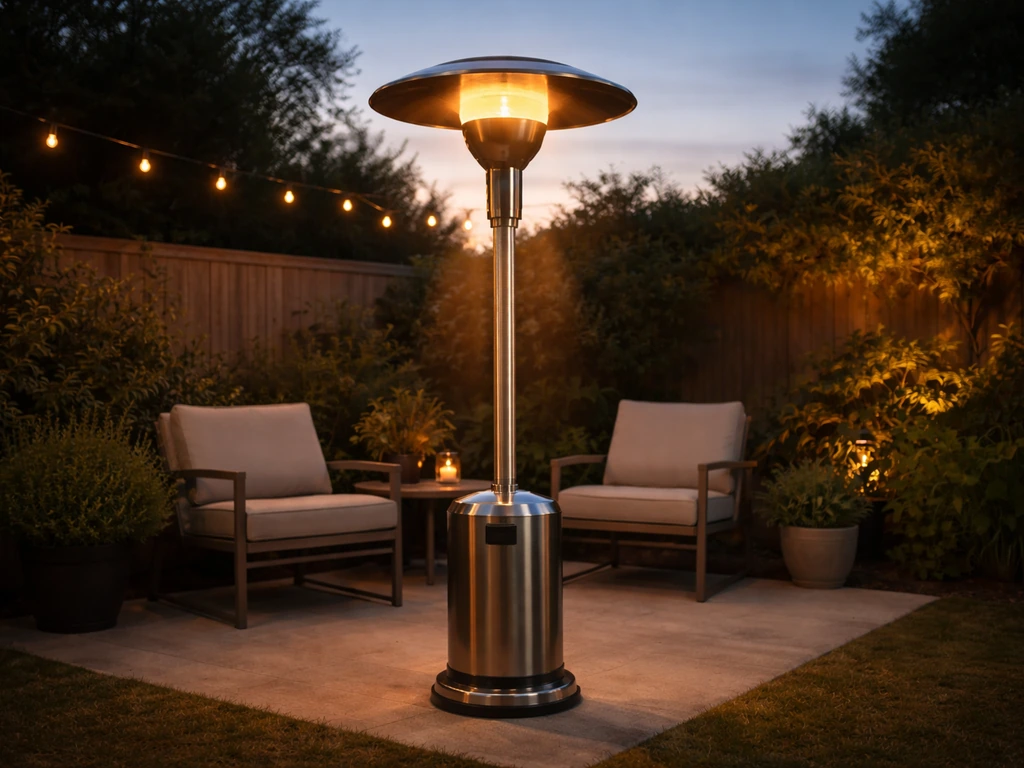
What a mushroom patio heater actually is (and how it heats)
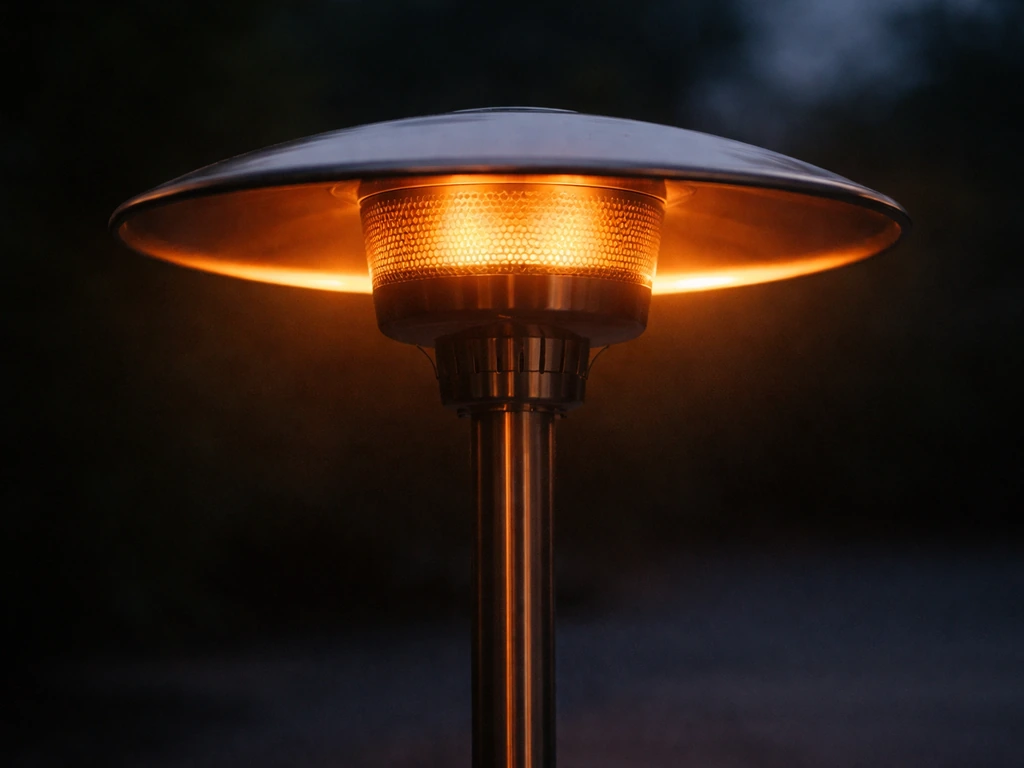
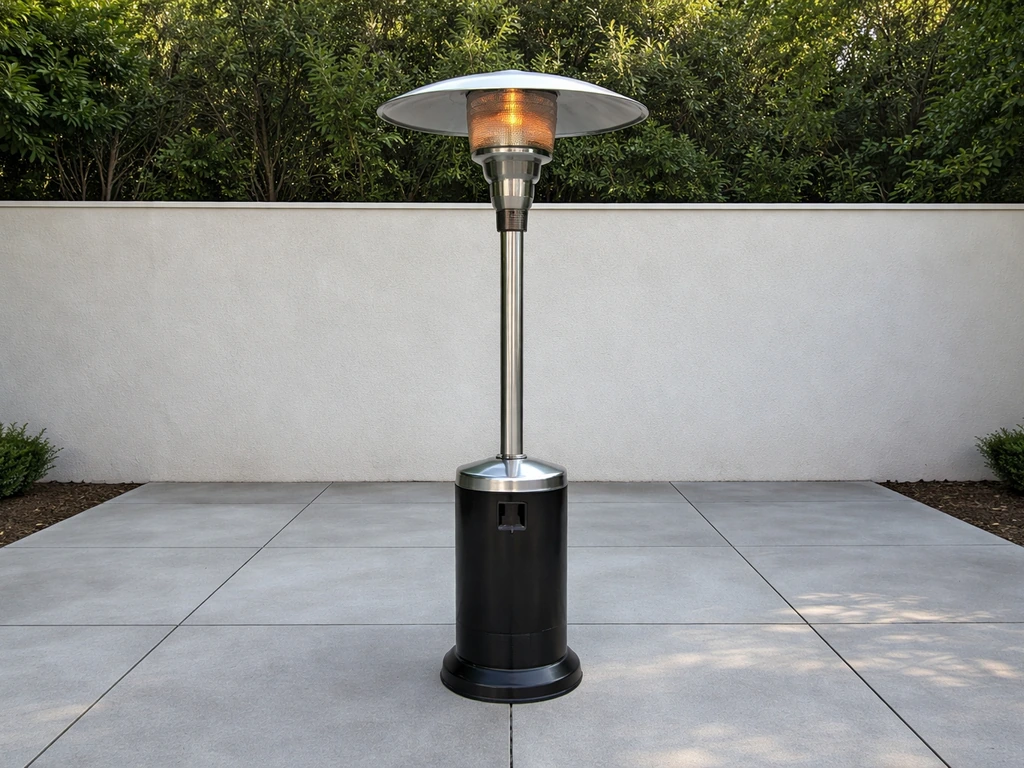
A mushroom patio heater gets its name from its shape: a tall pole with a wide, rounded cap on top that looks like, well, a mushroom. You'll also hear them called umbrella heaters, torpedo heaters, or just standard patio heaters. A patio heater, also called a [mushroom heater](https://en. wikipedia.
org/wiki/Patio_heater) or umbrella heater, is described as a radiant heating appliance for outdoor use. When you compare a pyramid vs standard patio heater, the main difference is how each style spreads radiant heat across your seating area standard patio heaters. They're the classic design you see on restaurant patios and in backyards everywhere.
The cap houses a burner (gas) or heating element (electric), and below the cap is a reflector dish that bounces radiant heat outward and downward in a wide, even halo.
The key word there is radiant. Mushroom heaters emit infrared energy that warms people and objects directly, the same way sunlight warms your skin without heating the air around you. This matters a lot outdoors because convection-style heaters, which work by warming air, lose most of that heated air the moment a breeze comes through. Radiant heat hits you whether the wind is blowing or not, which is why a well-placed mushroom heater on a breezy patio still feels noticeably warm.
The mushroom style differs from pyramid heaters (which have a glass tube flame column) and tabletop heaters (compact, low-output units for small gatherings). If you're deciding between the mushroom shape and those alternatives, the mushroom design tends to project heat over a wider, more even radius, making it the better choice when you need to warm a full group around a single unit.
Propane, natural gas, electric, or pellet: which fuel type fits your situation
This is genuinely the most important decision you'll make, and it's mostly determined by your setup rather than personal preference.
Propane (the most popular choice for good reason)
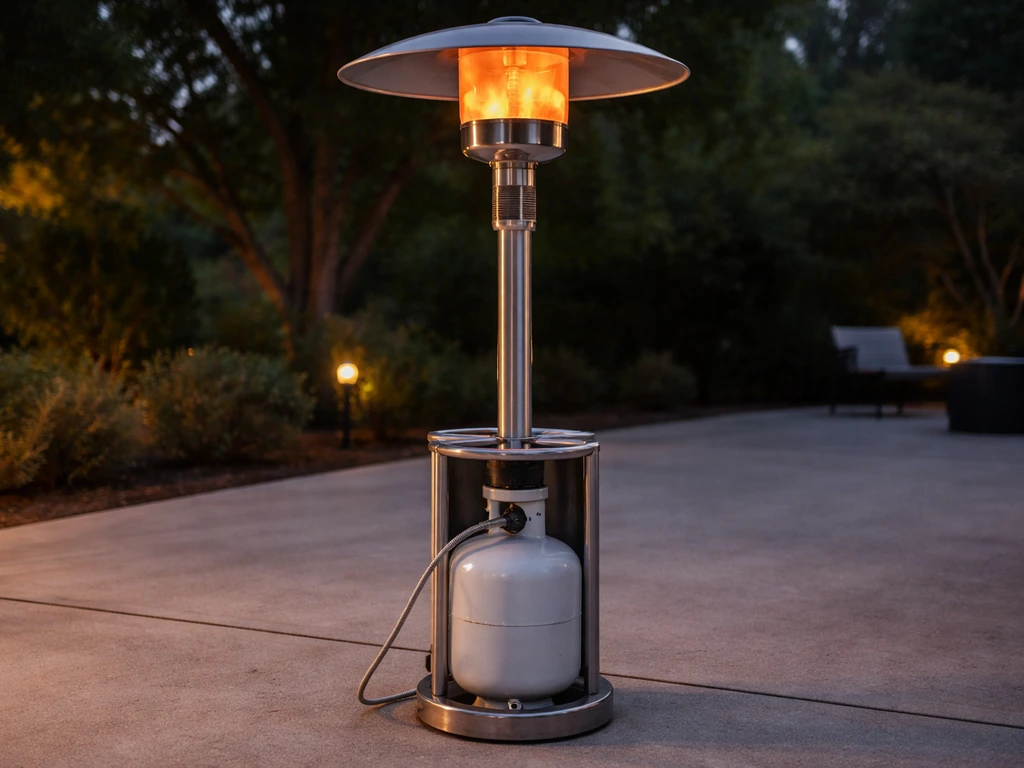
The vast majority of mushroom patio heaters run on propane, and there's a practical reason for that: no installation required. You wheel it out, attach a standard 20-lb tank (the same size used for most gas grills), and you're heating in minutes. At full output, a 46,000 BTU propane heater burns through a 20-lb tank in roughly 8 to 10 hours. That makes propane the go-to for renters, people who move their heater seasonally, and anyone without a gas line near the patio. The trade-off is ongoing fuel cost and the mild inconvenience of swapping tanks.
Natural gas (the best long-term value if you have a line)
If your home has a natural gas hookup and you're willing to run a line to your patio (or you already have one), a natural gas mushroom heater is the smarter long-term investment. You pay less per BTU than propane, you never run out of fuel mid-party, and the heater sits permanently in one spot. The downsides are real though: you need a licensed plumber or gas fitter to install the line, the heater is fixed in place, and upfront costs (heater plus installation) are higher. Budget at least $200 to $500 above the heater's sticker price for professional installation.
Electric (best when gas isn't an option)
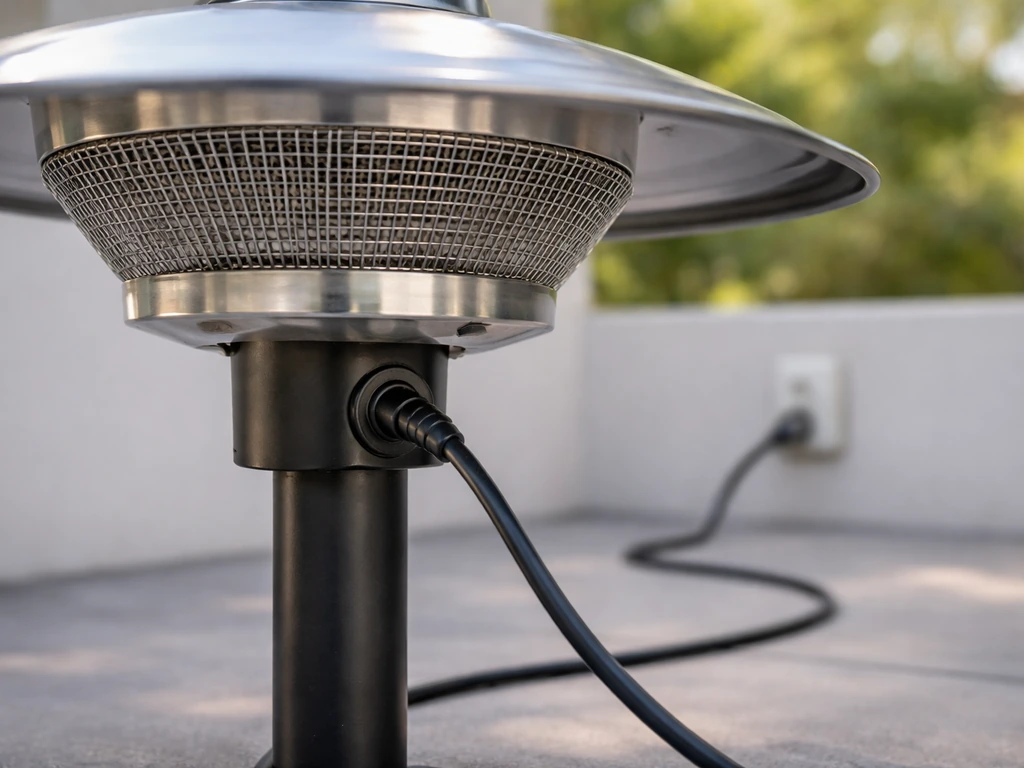
Electric mushroom-style heaters are often infrared units built in the classic floor-standing shape. They typically output 1,500 to 2,000 watts (roughly 5,100 to 6,800 BTU equivalent), which is significantly less heat than a gas model. That said, they work well for covered patios, smaller spaces (think 8 to 10 feet diameter), and situations where a gas heater simply isn't allowed, like apartment balconies or fully enclosed outdoor areas. They're also instant-on, produce no combustion byproducts, and cost nothing to install if you have a standard outdoor outlet.
Pellet heaters (a niche but growing option)
Pellet-burning outdoor heaters exist and they have fans, but they're not commonly manufactured in the classic mushroom shape. If you're searching for a pellet option, you're more likely looking at a fire pit-style or brazier design rather than a true mushroom heater. They produce great ambiance and decent radiant heat, but they require more setup, produce ash and smoke, and aren't ideal for covered spaces. Unless you specifically want the wood-burning experience, propane or natural gas will serve you better as a primary heater.
| Fuel Type | Typical Output | Best For | Key Trade-Off |
|---|---|---|---|
| Propane | 40,000–48,000 BTU | Portability, no gas line, most patios | Ongoing tank cost, refills needed |
| Natural Gas | 40,000–50,000 BTU | Permanent install, daily/heavy use | Requires gas line installation |
| Electric | 1,500–2,000W (5,100–6,800 BTU) | Covered spaces, no gas access, balconies | Less heat output, limited range |
| Pellet | Varies widely | Ambiance, fire experience | Ash/smoke, not ideal for covered areas |
Sizing your heater: how much heat do you actually need
The most common mistake people make is buying a heater that's too weak for their space and then wondering why they're still cold. Here's a simple way to think about it: a standard 46,000 BTU mushroom heater comfortably warms a circle roughly 12 to 15 feet in diameter, which translates to about 150 to 200 square feet. That's enough for a group of 6 to 8 people seated around the heater. Larger patios, or patios where you want warmth across the full space rather than just near the heater, need either a higher-output model or multiple units.
To estimate what you need, measure your patio's square footage (length times width). For a covered patio up to 200 sq ft, one 46,000 BTU propane heater typically does the job. For 200 to 400 sq ft, plan on two units placed strategically, or one very high-output model (50,000+ BTU). For large open patios over 400 sq ft, two or three units spaced evenly works better than a single monster heater because radiant heat doesn't travel well past 15 feet at ground level.
Wind exposure changes everything
An open, windy patio is the hardest environment to heat. Even though radiant heat is more wind-resistant than convection, strong sustained winds will still strip warmth away from people sitting on the perimeter. For windy spaces, look for heaters that specifically advertise a wind-resistant burner design, and consider placement near a wall or fence that blocks prevailing wind. Directional infrared heaters, which focus heat in a specific direction rather than in a full circle, can also reduce wasted energy in windy or partially enclosed spaces because you aim them exactly where people are sitting instead of radiating heat into open air.
Covered patios: watch your clearance
If your patio has a roof, pergola, or overhead structure, you need to check the required clearance before buying. Most full-size mushroom heaters require at least 24 to 36 inches of clearance between the top of the heater cap and any overhead surface. Some models require more. Using a gas heater under a ceiling that's too low is a fire and carbon monoxide risk. If your ceiling is under 8 feet, a tabletop electric heater or a low-profile infrared wall-mounted unit is safer than a floor-standing mushroom heater. A tabletop electric heater can be a better option than a floor-standing mushroom model if your clearance is tight.
Features that actually matter (and ones you can ignore)
Ignition type
Most propane and natural gas mushroom heaters use either a piezo ignition (push-button sparker, no battery needed) or an electronic ignition (battery-powered, more reliable in wind). Piezo igniters are simple but can be frustrating if the spark timing is off or the wind blows the pilot out before the gas catches. Electronic ignition systems are noticeably more reliable and worth paying a small premium for if you use the heater frequently. Either way, look for a model with a reliable anti-tilt safety shutoff and an ODS (oxygen depletion sensor) if you're using it in any partially enclosed space.
Heat controls
A variable heat control (low/medium/high or a continuous dial) is much more useful than a simple on/off switch. On mild evenings, you want the ability to run the heater at 50 to 70 percent output rather than blasting full power and roasting your guests. Look for at least three heat settings. Some higher-end models include a thermostat or remote control, which is a genuine convenience if you're hosting and don't want to keep walking over to adjust it.
Portability and build quality
For propane models, check whether wheels are included. A full-size heater with a 20-lb tank attached weighs 40 to 60 pounds, and moving it without wheels is awkward. Also check the base design: some models have a weighted base you can fill with sand or water for stability, which matters if you live somewhere with regular wind. Stainless steel and powder-coated aluminum both hold up well outdoors, but stainless resists rust better if your heater stays outside year-round in a wet climate. Avoid models with thin, lightweight poles that wobble when bumped.
Things that sound important but usually aren't
Fancy LED accent lighting built into the heater looks nice in product photos but adds zero warmth. Bluetooth connectivity for heat control is genuinely not necessary for a patio heater. And don't get swayed by maximum BTU claims alone: a 48,000 BTU heater with a wide, well-designed reflector cap will feel warmer at 10 feet than a 50,000 BTU heater with a cheap, narrow reflector that focuses heat straight up.
Safety rules, local codes, and keeping your heater running well
Safety basics you need to follow
- Keep the heater at least 3 feet away from any wall, furniture, or combustible surface on all sides.
- Never use a propane or natural gas mushroom heater indoors or in an unventilated space — carbon monoxide buildup is a real risk.
- Always check that the anti-tilt shutoff works before each use: tilt the heater slightly and confirm the gas shuts off.
- Don't leave a running heater unattended, especially around children or pets.
- Shut off the gas at the tank (not just the control knob) when you're done for the night.
- Inspect the hose and regulator connection before each season for cracks, kinks, or signs of wear. Replace if in doubt.
- Use a heater cover when the unit is stored to keep spiders and insects out of the burner assembly — a blocked burner is a fire hazard.
Local codes and installation rules
Most municipalities follow NFPA 58 (the propane safety code) and local fire codes that govern how close a portable heater can be to structures, required clearances from overhead combustibles, and whether natural gas heaters require a permit. If you're installing a natural gas line for a fixed heater, you almost certainly need a permit and licensed installation in most U.S. states. Check with your local building department or fire marshal before running any new gas line. Apartment renters should confirm with their landlord or property management that outdoor gas heaters are allowed before buying one.
Seasonal maintenance
At the start of each season, clean the reflector and emitter screen with a damp cloth to remove dust and debris, which can cause uneven heat distribution. Check all gas connections with soapy water while the gas is on: bubbles at a fitting mean a leak that needs immediate attention. If the heater won't ignite, the thermocouple (the safety sensor that confirms a flame is present) is often the culprit and is usually a cheap, easy replacement. Store the heater upright in a covered, dry location during the off-season with the propane tank disconnected and stored separately.
Best picks by patio size and use case
Rather than declaring a single winner, here's how I'd match a heater to your situation. These recommendations are based on feature sets and real-world performance categories rather than brand loyalty.
Best overall for most people: 46,000–48,000 BTU propane mushroom heater
For a mid-size patio (150 to 250 sq ft), a propane mushroom heater in the 46,000 to 48,000 BTU range hits the sweet spot. Look for one with electronic ignition, an anti-tilt shutoff, a variable heat dial, a weighted fillable base, and wheels. Models from AZ Patio Heaters, Hampton Bay, and Fire Sense all check those boxes in the $150 to $250 price range. These are the workhorses of the category and the right answer for most homeowners.
Best for small patios or apartment balconies: electric infrared mushroom-style heater
If your space is under 100 sq ft, you're on a balcony where gas isn't allowed, or you just want something simple to plug in, a 1,500W to 2,000W electric floor-standing infrared heater is the right move. You won't get the same warmth radius as a gas unit, but for two to four people gathered close, it works well. Look for a model with a tip-over shutoff and an IP44 or higher weatherproof rating. Prices typically run $80 to $180.
Best for large patios: two standard propane units or a high-output NG heater
For patios over 300 sq ft, a single mushroom heater won't cut it unless you're okay with guests near the edges feeling cold. Two 46,000 BTU propane units placed roughly 15 feet apart gives you overlapping heat coverage across the full space. If you have a natural gas line, a single 50,000 BTU NG model anchored permanently can also work well for larger spaces, though you'll still want it centrally placed. For very large commercial-style setups (over 500 sq ft), consider supplementing with directional infrared heaters mounted overhead.
Best for windy patios: wind-resistant burner design plus smart placement
No mushroom heater loves sustained wind, but some handle it better than others. Specifically look for models marketed with a wind-resistant burner design (the burner assembly is shielded to prevent flame-outs in gusts). Pair that with placement near a wall or fence that blocks prevailing wind, and keep the heater on the upwind side of your seating area so radiant heat blows toward your guests rather than away. If your patio gets frequent wind over 15 mph, a directional infrared heater mounted to a wall and aimed at the seating area will actually outperform any floor-standing mushroom heater in those conditions.
Best for daily heavy use: natural gas fixed installation
If you use your patio heater multiple times a week through a long heating season, the math on natural gas beats propane within one or two seasons. NG costs roughly 30 to 40 percent less per BTU than propane in most U.S. markets. The upfront installation cost is real, but for a restaurant patio, a year-round outdoor kitchen setup, or anyone who genuinely heats the patio five or more times a week, it pays for itself.
| Use Case | Recommended Type | Key Specs to Look For | Approx. Budget |
|---|---|---|---|
| Most homeowners, mid-size patio | Propane mushroom, 46–48k BTU | Electronic ignition, variable heat, anti-tilt shutoff, wheels | $150–$250 |
| Small patio or balcony, no gas | Electric infrared floor-standing | 1,500–2,000W, IP44 rated, tip-over shutoff | $80–$180 |
| Large patio (300+ sq ft) | Two propane units or high-output NG | 50,000 BTU, central placement or paired units 15 ft apart | $250–$600+ |
| Windy outdoor spaces | Wind-resistant propane or directional infrared | Wind-resistant burner, shielded design, or wall-mounted IR | $200–$400 |
| Daily/heavy commercial use | Natural gas fixed install | 50,000 BTU, CSA certified, professional gas line install | $300–$600 + install |
Common mistakes to avoid
- Buying based on BTU alone without checking the reflector design — a wide, angled reflector matters as much as raw output.
- Placing the heater against a wall to save space and then wondering why half the heat goes into the siding instead of toward guests.
- Forgetting to check overhead clearance on a covered patio before buying a full-size floor-standing model.
- Using a propane tank that's nearly empty — low fuel pressure causes uneven flames and poor performance well before the tank is actually empty.
- Skipping the anti-tilt test at the start of the season and using a heater whose safety shutoff no longer works.
- Assuming one heater will heat a 400+ sq ft patio adequately when two units are genuinely needed.
If you take one thing from this guide: match the heater to your actual space before worrying about brand names or minor features. However, the best way to know if pyramid patio heaters are any good is to compare their BTU output, heat radius, and wind performance to your patio size. A 46,000 BTU propane mushroom heater with electronic ignition, a variable dial, and a solid base will serve the overwhelming majority of homeowners well for years. Know your patio size, check your clearance if covered, decide between portable propane and fixed natural gas based on how often you'll use it, and don't underestimate wind as a factor. Get those things right and you'll be warm all season.
FAQ
How many people will one best mushroom patio heater actually warm at once?
A single 46,000 BTU mushroom heater usually covers about 150 to 200 square feet, which fits roughly 6 to 8 seated people if most are within the 12 to 15 foot “warm halo.” If you expect more spacing (restaurant-style) or people will be farther from the center, plan on two units or accept that the perimeter will feel much cooler.
Is BTU the most important spec when shopping for a best mushroom patio heater?
BTU matters, but heat distribution does too. Look at the manufacturer’s stated heat radius or coverage guidance, the reflector design (wide, even halo beats a narrow “upward” focus), and whether the burner is wind-resistant, because radiant comfort at 10 to 12 feet can beat a higher-BTU unit with poorer reflection.
Can I use a propane mushroom patio heater on a covered patio or under a pergola?
Only if you meet the overhead clearance listed by the model. Many floor-standing mushroom units need roughly 24 to 36 inches of space to overhead surfaces, some require more, and using them under low ceilings can create serious safety risk. If your clearance is tight (for example under about 8 feet), a low-profile electric infrared option is usually the safer direction.
What’s the safest placement to reduce wasted heat on a windy patio?
Aim to place the heater on the upwind side of your seating so radiant heat travels toward people rather than being stripped away. Also avoid putting the heater directly in the path of gusts and consider positioning near a wall or fence that blocks prevailing wind to keep the flame stable and the warm zone more consistent.
How can I tell if an electric mushroom-style heater will be strong enough?
Compare wattage and expected coverage, because 1,500 to 2,000 watts is typically only suited for smaller groups and smaller diameters (often around 8 to 10 feet). If you need to warm a full circle or a larger open area, electric may feel underpowered compared with gas, even if the heater is the same “mushroom” shape.
Will a thermocouple replacement fix ignition issues on a best mushroom patio heater?
Often, yes. If it sparks but won’t keep the flame, the thermocouple (flame-sensing safety part) is a common culprit and is usually inexpensive relative to the whole unit. If ignition repeatedly fails in wind, prioritize models with electronic ignition over piezo systems and ensure the heater is level and properly seated.
How do I know whether my heater’s ignition type is worth paying for?
If you use the heater frequently or in breezy conditions, electronic ignition is typically more reliable than piezo. Piezo can be frustrating when spark timing is slightly off or gusts blow the pilot out before gas catches, so the “cheaper” ignition can cost you time and wasted propane or frustration.
How often should I clean a best mushroom patio heater?
At minimum, clean the reflector and any emitter or screen surfaces at the start of each season using a damp cloth to remove dust and debris. Check connectors and hoses regularly, and if you notice uneven warmth, soot buildup, or a strange odor, clean and inspect before using again.
What’s the correct way to check for propane or gas leaks on a mushroom patio heater?
With the system running, apply soapy water to gas connections and fittings and look for bubble formation, bubbles indicate a leak that requires immediate attention. Do not use an open flame to test, and if you find leaks, shut the heater down and address the connection or have it serviced.
Should I buy wheels, and how important is a weighted base?
Wheels help a lot because a full-size propane unit with a 20-lb tank can be 40 to 60 pounds, and moving it without wheels becomes awkward. A weighted, fillable base (sand or water) improves stability in wind and reduces wobble, so it matters for patios with frequent breezes or for anyone who bumps the pole while moving chairs.
Do I need a permit for natural gas installation for a fixed mushroom patio heater?
In many U.S. states, yes, a permit and licensed installation are commonly required when running or modifying natural gas lines. If you rent, confirm with your landlord or property manager first, since outdoor gas heaters may be restricted by building or lease rules.
Is it okay to store a propane tank attached to a mushroom patio heater?
No, for off-season storage you should disconnect the propane tank and store the tank separately, and store the heater upright in a covered, dry location. Keeping the tank connected outdoors increases exposure to moisture and temperature swings, which can lead to regulator or connection issues.
When should I choose two best mushroom patio heaters instead of one larger unit?
If your patio is larger than about 200 to 250 square feet, two correctly placed units usually feel better than trying to “overdrive” one heater. Spacing helps because radiant heat loses effectiveness beyond the typical 12 to 15 foot range at ground level, so overlapping smaller zones creates a more even experience across the full seating area.
What’s a common mistake people make that makes their patio heater feel ineffective?
They buy too small a heater for the patio and then judge it from the perimeter, expecting heat to travel like a space heater would. If guests will be farther than the warm halo, you need either multiple heaters, higher-output equipment (or better reflectors), and better placement, especially in windy conditions.