
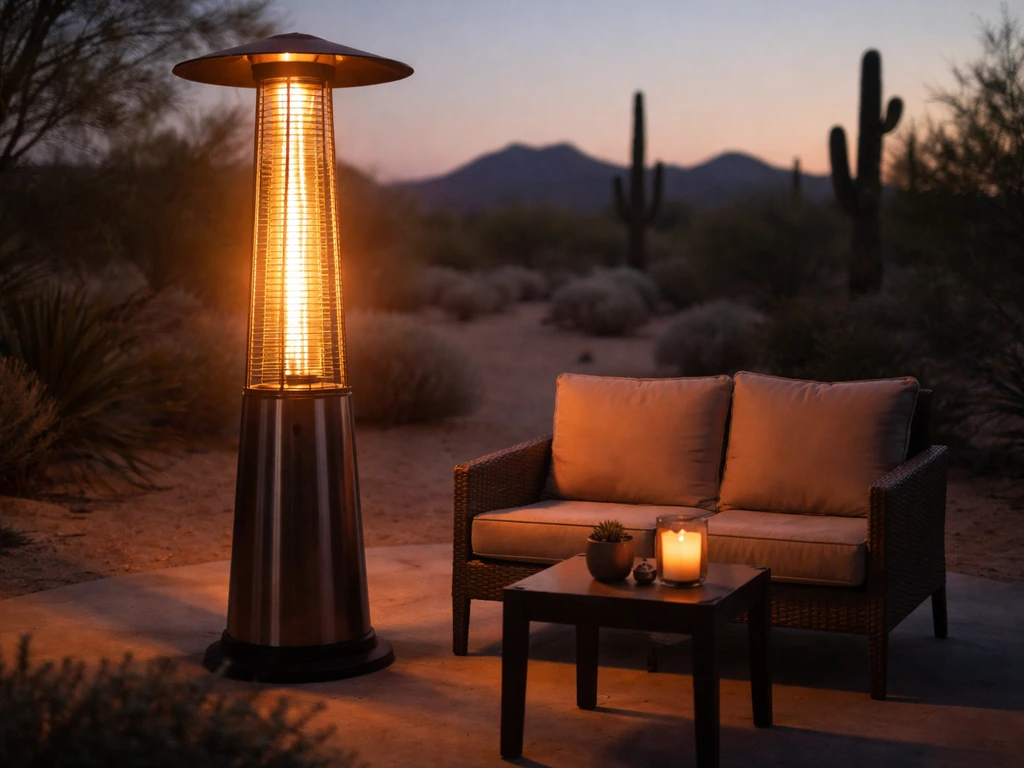
If you're shopping for an AZ patio heater and want a straight answer: for a mid-size covered patio (150–200 sq ft), the AZ Patio Heaters HLDS01-GTSS propane glass-tube model is the most popular pick and earns it, 40,000 BTU, solid safety features, and wide retail availability. For a small seating area or a covered deck where you can't run propane, the HIL-1500DI electric infrared unit or the tabletop HIL-1821 handle the job without the hassle of tanks. If you want a sleeker wall-mounted electric option with remote and Bluetooth controls, the Aura CF1500 or CF15120 are worth a serious look. Below is the full breakdown so you can match the right heater to your specific setup.
AZ Patio Heaters Review: Best Choices for Arizona Patios

Willa Brennan
5 Jun 2026
Quick take: which AZ patio heater fits your space
The fastest way to narrow this down is to answer three questions: How big is your seating area? Is it covered or open to the sky? And do you want to deal with propane tanks or just plug something in? A rough rule of thumb is 20 BTU per square foot of usable seating space, so a 150 sq ft covered patio needs roughly 3,000 BTU at minimum, but realistically 30,000–40,000 BTU if the space is open or exposed to wind. Arizona wind is no joke, especially in monsoon season, and it will cut your effective heat coverage significantly on open patios.
| Space Type | Best AZ Patio Heater Match | Output | Fuel |
|---|---|---|---|
| Large open patio (200+ sq ft) | HLDS01-GTSS (mushroom/glass-tube propane) | 40,000–48,000 BTU | Propane |
| Mid-size covered patio (100–200 sq ft) | HLDS01-GTSS or pyramid propane | 40,000–42,000 BTU | Propane |
| Small covered patio or deck (up to 90 sq ft) | Aura CF1500 or AZ HIL-1500DI | 1,500W / ~5,120 BTUh | Electric |
| Tabletop / dining table zone | AZ HIL-1821 or HLDS032-C | 11,000 BTU / 1,500W | Propane or Electric |
| Permanent install, natural gas hookup | AZ Patio Heaters natural gas models | 40,000+ BTU | Natural Gas |
AZ patio heater review: model by model
HLDS01-GTSS: the glass-tube propane standout
This is the model most people end up buying when they search 'AZ patio heaters review,' and for good reason. It puts out 40,000 BTU through a quartz glass tube that radiates heat in a wide arc around the unit, it's blank" rel="noopener noreferrer">certified to ANS Z83.26 and CSA standards, and it comes with a tip-over safety switch and thermocouple (anti-tilt) device that cuts gas flow automatically if the unit tips. You can find it at Home Depot under a 1-year limited warranty, and it consistently shows up as a top-seller in this category. If you want, you can also compare real user experiences in our broader lux patio heater reviews to see how these units stack up over time. blank" rel="noopener noreferrer">The main complaints buyers raise are ignition reliability over time and occasional shipping damage, so inspect the package before you sign for it and register your warranty immediately.
- Output: 40,000 BTU
- Fuel: propane (20 lb tank fits in base)
- Safety: tip-over switch, thermocouple, ANS Z83.26/CSA certified
- Warranty: 1-year limited
- Best for: mid-to-large covered or semi-open patios
- Watch out for: igniter wear after 1–2 seasons, check shipping box carefully
HLDS032-C and HLDS032-GTTSS: tabletop propane options
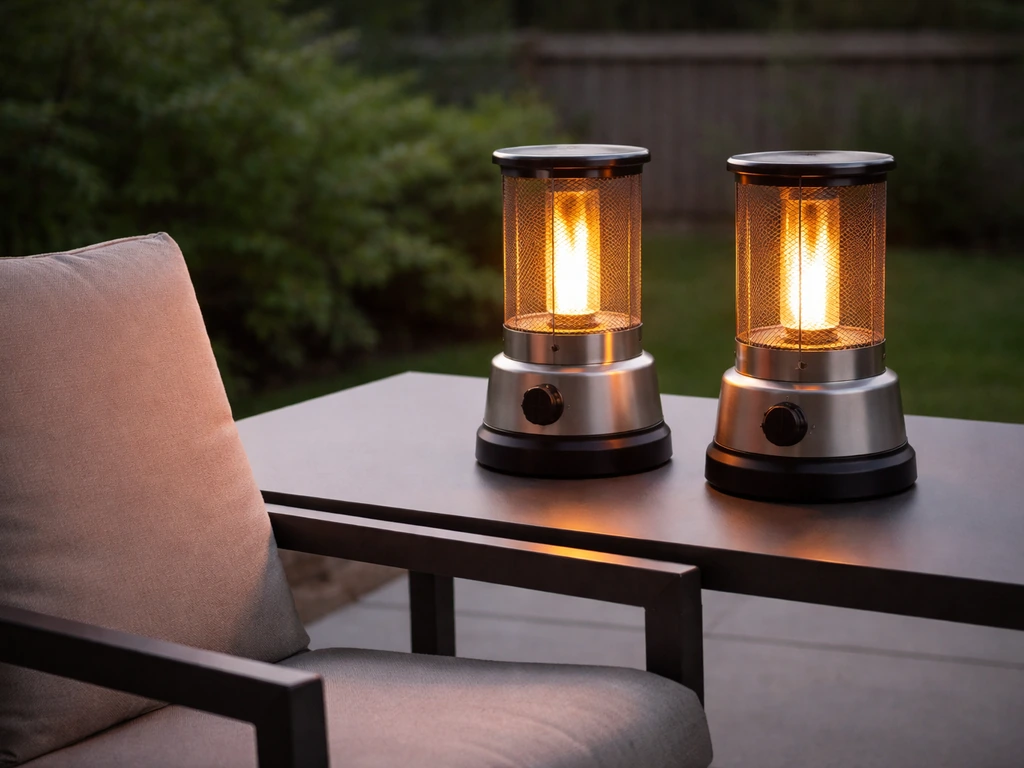
These compact tabletop propane heaters are built around the same safety DNA as the full-size units, anti-tilt feature, safety pilot that shuts off gas if the burner goes out, and a one-year manufacturer warranty. The HLDS032-C runs at 11,000 BTU, which is right-sized for warming a dining table seating four to six people. It's not going to heat a whole patio, but it creates a comfortable bubble of warmth for the people sitting around it. The HLDS032-GTTSS is the glass-tube version in the small format, and the manual gives the same placement/ignition guidance as the full-size family. If you're outfitting a small covered patio or a patio dining set, either of these is a practical choice.
HIL-1500DI: the electric infrared wall/ceiling model
The HIL-1500DI is AZ Patio Heaters' flagship electric infrared unit, and it's the one you'll find reviewed heavily on Best Buy. At 1,500W it delivers direct radiant heat, meaning it warms you and the furniture around you rather than trying to heat the air (which is pointless outdoors). That distinction matters a lot in Arizona, where any warm air you generate just gets swept away. The HIL-1500DI is a solid plug-in option for covered patios or screened porches where you don't want to deal with propane. Effective coverage is modest, think a seating zone rather than a full patio, but it does that job well.
HIL-1821: the electric tabletop heater
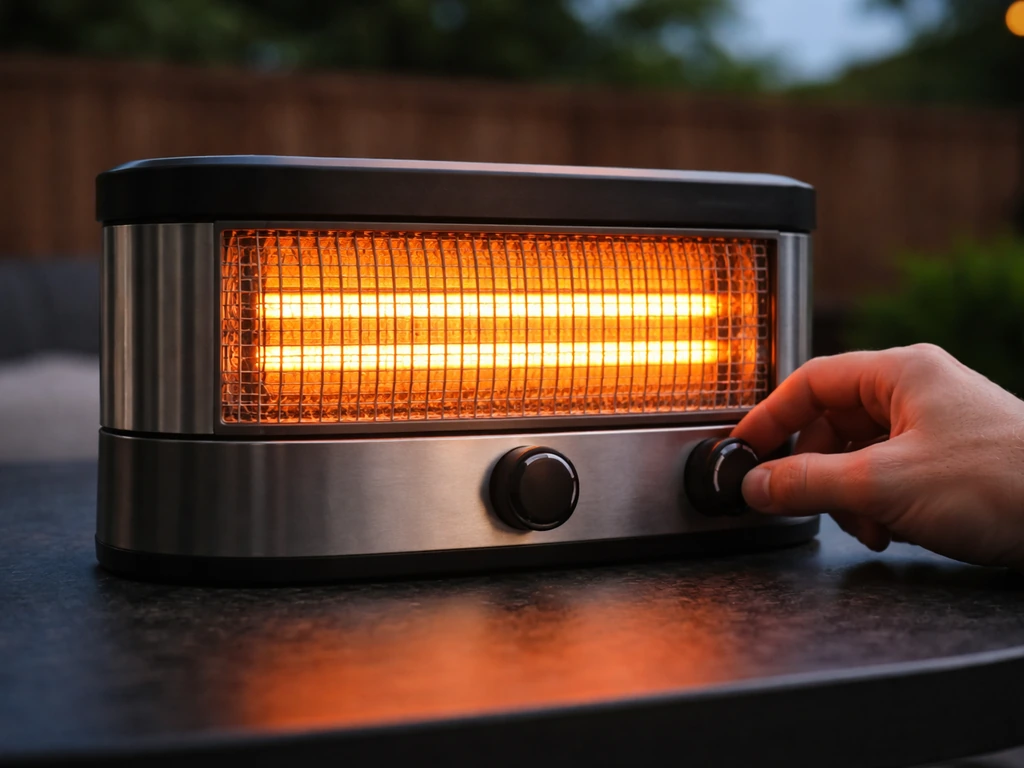
The HIL-1821 is AZ Patio Heaters' small electric tabletop model, and it's purpose-built for intimate seating areas up to about 50 sq ft. What buyers consistently note is that it gets to full heat almost instantly, which is a real advantage when you step outside on a cool evening and don't want to wait. It's not a replacement for a full-size heater, but as a supplement for a small bistro table or a reading nook on a covered porch, it does exactly what it promises. Plug it in, point it where you're sitting, and you'll feel the difference within seconds.
Aura CF1500 and CF15120: the premium electric infrared option
The Aura heaters come from a different brand but show up consistently in searches alongside AZ Patio Heaters, and they genuinely deserve a comparison. The CF1500 is rated for up to 90 sq ft, includes wall and ceiling mounting brackets, comes with an 8-foot power cord and remote control, and runs at 1,500W. The CF15120 steps it up with Bluetooth controls (wall-mounted panel) and an IP65 weather resistance rating, which is meaningfully better protection than you get from most plug-in electric heaters. The CF15120's spec sheet lists a heat zone of 72 sq ft at recommended mounting height, that's honest, conservative, and actually achievable.
One important caveat from Aura's own documentation: glass-element models (including the CF15120) are not recommended for windy or fully exposed environments. On an open Arizona patio with regular afternoon wind, that's a real limitation. For a covered patio, screened porch, or pergola with windscreen panels, these are excellent. For a fully open backyard, stick with a propane unit. Aura offers a 1-year limited parts warranty (including the emitter lamp) but requires registration within 90 days of purchase to lock in the warranty start date, don't skip that step.
Performance and heat coverage in real-world conditions
BTU ratings and wattage numbers tell you the output, but real-world coverage depends on whether you're using convection (heated air) or radiant infrared heat, how exposed your patio is, and mounting height. Propane heaters like the HLDS01-GTSS use a mix of convection and radiant heat. In calm, covered conditions they'll warm a 200 sq ft area comfortably. On a fully open patio with a steady breeze, effective coverage can drop by 30–40%, and pyramid-style heaters (which top out around 40,000–42,000 BTU) are more vulnerable to wind than mushroom-top designs that focus heat downward.
Infrared heaters behave very differently, they emit radiant energy that warms people and objects directly, not the surrounding air. That means a 1,500W electric infrared unit (roughly 5,120 BTUh) is far more effective per watt in an open or breezy environment than a convection heater of similar output. The trade-off is coverage area: you're warming a zone, not a room. Mounting height matters a lot here. A general cross-brand guideline from infrared heater manufacturers is that a unit mounted at 7–9 feet can reliably cover an 8x8 ft area. Go higher and coverage spreads but intensity drops.
For Arizona-specific use: if your patio gets afternoon or monsoon-season wind, infrared is more wind-resistant but propane gives you the BTU muscle for a large space. The sweet spot for most AZ homeowners is a propane unit for the main patio area plus a plug-in electric infrared (tabletop or wall-mount) for a smaller seating zone near the door.
Fuel type comparison: propane vs electric vs natural gas vs pellet
Each fuel type has a clear best-use case. Here's how they stack up for an Arizona patio context specifically:
| Fuel Type | Best Output Range | Wind Resistance | Installation | Running Cost | Best For |
|---|---|---|---|---|---|
| Propane | 11,000–48,000 BTU | Moderate (mushroom top better than pyramid) | Portable, no hookup needed | Tank cost; ~1 lb/hour at full burn | Large or open patios, no gas line |
| Electric (infrared) | 1,500W (~5,120 BTUh) | High (radiant, not air-based) | Plug-in or hardwired | Low per hour at standard rates | Covered patios, small zones, screened porches |
| Natural Gas | 40,000+ BTU | Moderate | Requires gas line hookup | Lower than propane per BTU | Permanent installs, frequent use |
| Pellet | Variable | Low (flame-based) | Freestanding, no hookup | Moderate fuel cost | Ambiance-focused, mild weather use |
For most AZ homeowners without a natural gas line to the patio, propane is the default for big heat output and electric infrared is the default for a smaller, low-maintenance zone. Natural gas is the best long-term value if you're willing to have a line run, you'll never deal with tanks and the cost per BTU drops significantly. Pellet heaters are more of a vibe than a heat solution: they look great but struggle in wind and don't deliver the consistent output you need for a larger space. If budget and ambiance are equally important to you, brands like La Hacienda offer pellet and flame-style options worth comparing. If you're considering pellet or flame-style options, La Hacienda patio heater reviews can help you compare performance and wind resistance before you buy.
Safety, build quality, weather resistance, and warranty
Safety features you should expect
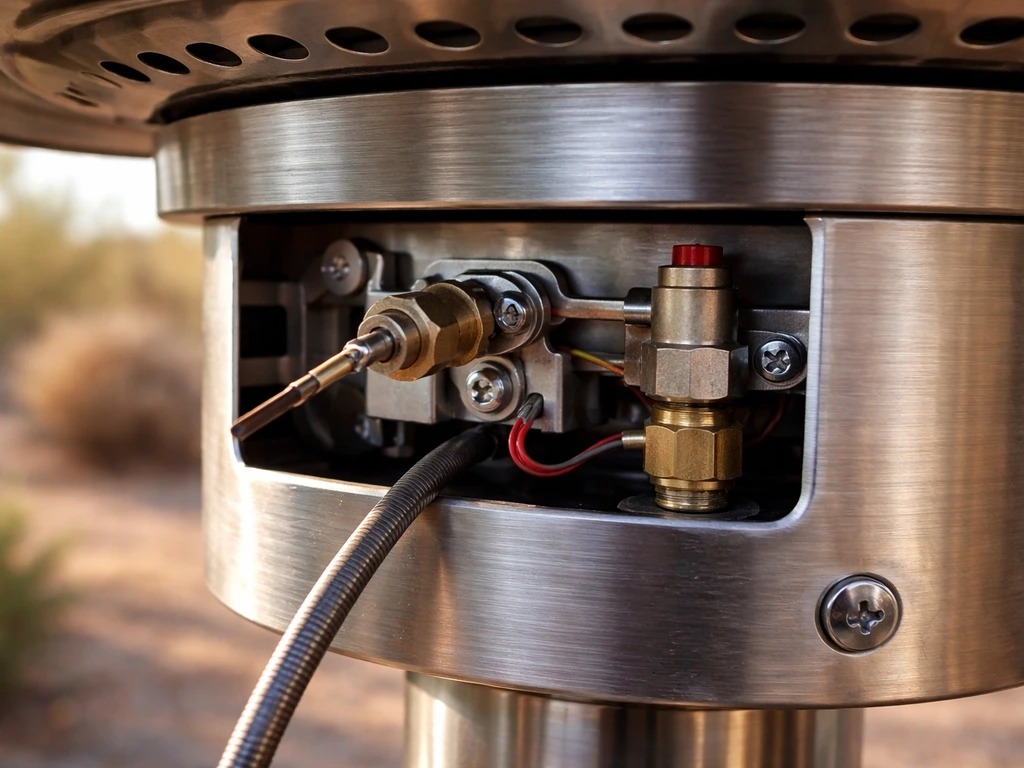
Any propane patio heater worth buying should have at minimum a tip-over safety switch and a thermocouple (sometimes called anti-tilt device) that automatically stops gas flow if the unit tips or the flame goes out. The HLDS01-GTSS and HLDS032-C both have these, and the HLDS032-C adds a safety pilot system as a second layer. If you're looking at a propane heater that doesn't list these features explicitly, walk away. For electric infrared heaters, check for a tip-over cutoff and verify the clearance requirements, the Aura CF1500 manual specifies a minimum of 6 feet clearance from the front of the heater. Don't mount it over a dining table or seating where people could be directly underneath at closer range.
Arizona-specific safety notes for propane
This is something AZ buyers specifically need to know: the AZ Patio Heaters HLDS01-WHDK manual explicitly warns against storing propane cylinders in temperatures exceeding 120°F (49°C). Arizona summer temperatures inside garages, sheds, or enclosed patio cabinets can absolutely hit that threshold. Store your propane tanks in a shaded, ventilated outdoor spot, never in an enclosed space in summer. This isn't just a liability warning; it's a genuine fire safety concern in the Arizona climate.
Build quality and weather resistance
AZ Patio Heaters' stainless steel models (the 'SS' suffix in model numbers) hold up better outdoors than the hammered-bronze or painted finishes. UV exposure in Arizona is intense, and powder-coat finishes fade faster than stainless. The Aura CF15120 carries an IP65 rating, which means it's dust-tight and protected against water jets, that's genuinely useful for monsoon-season rain on a covered patio. Most AZ Patio Heaters electric models don't publish an IP rating, so treat them as covered-use-only unless the listing specifically states otherwise.
Warranty comparison
Both AZ Patio Heaters and Aura offer 1-year limited warranties on their products. AZ Patio Heaters covers parts and manufacturer defects; the Aura warranty covers all components including the emitter lamp, but requires you to register within 90 days of purchase for the warranty to run from purchase date rather than registration date. Both are industry-standard for this price segment, not exceptional, but not unusually short either. Brands like Hiland (which shares some design DNA with AZ Patio Heaters models) and Calcana offer comparable coverage terms on their respective lineups. If you want more Hiland patio heater reviews, compare their design, heat output, and safety features the same way you would with AZ Patio Heaters.
Buying checklist: size, placement, budget, and use case
Before you add anything to your cart, work through these steps in order. They'll save you from buying a heater that's either too small, too large, or wrong for your setup.
- Measure your usable seating area in square feet, then multiply by 20 to get your minimum BTU target. A 150 sq ft covered patio needs at least 3,000 BTU in theory — but aim for 30,000–40,000 BTU for real-world comfort in an open or partially exposed space.
- Decide: covered or open? Covered patios can use any fuel type. Open patios should prioritize high-BTU propane or natural gas. Electric infrared works in both, but is best in covered spots where radiant heat can bounce back from overhead surfaces.
- Choose freestanding, tabletop, or wall/ceiling mount. Freestanding propane is the most flexible but takes up floor space. Tabletop works for dining zones. Wall or ceiling mount (like the Aura CF1500 or HIL-1500DI) keeps the floor clear and is ideal for small covered patios.
- Check your propane storage situation. If your patio area gets above 120°F in summer (garages, enclosed cabinets — common in AZ), you need a shaded ventilated spot for tanks or you should go electric.
- Set your budget range. Basic tabletop propane (HLDS032-C) runs under $100. A full-size glass-tube propane unit (HLDS01-GTSS) typically lands in the $150–$250 range at retail. Electric infrared wall-mounts from AZ Patio Heaters or Aura are generally $100–$300 depending on features like Bluetooth and IP rating.
- Factor in running costs. At full burn, a propane freestanding heater uses roughly 1 lb of propane per hour. A 20 lb tank lasts about 10 hours at full output. Electric at 1,500W costs you about 15–20 cents per hour at average US electricity rates.
- Register your warranty within 90 days of purchase — especially for Aura models, where the registration date determines warranty start.
- Inspect the unit on delivery. Shipping damage is one of the most common buyer complaints for AZ Patio Heaters models. Check the box for dents or damage before signing, and document anything you find immediately.
If you're still deciding between propane and electric after going through that list, here's the shortcut: propane if you need serious heat for a large or open space, electric infrared if you want low-maintenance warmth for a smaller covered zone. Either way, AZ Patio Heaters has a solid model in each category, and the Aura CF-series is worth a hard look if you want a wall-mount electric with smarter controls and better weather protection.
FAQ
How can I tell if a patio heater will shut off safely if it tips or if the burner goes out?
Check the heater’s stated safety shutoff type, not just “anti-tilt.” For propane models, look for both a tip-over cutoff and a thermocouple or anti-tilt device that stops gas when the flame goes out. For electric infrared, confirm it has a tip-over or overheat cutoff and follow the minimum clearance distance in the manual.
Can I use a propane AZ patio heater on an open patio during afternoon wind, and should I expect the listed coverage?
Yes, if you’re using a propane heater, you should plan for wind and avoid placing it where exhaust or warm exhaust air is directed into doors, windows, or airflow paths you use often. In practice, keep it away from openings and position it so the heat is aimed toward the seating area, then reduce expectations for coverage on breezy afternoons.
What’s the correct way to position an infrared electric heater so the warmth actually reaches the seating?
For electric infrared models, choose placement based on where people are, not where the room is. Infrared warms occupants and nearby objects, so if the heater is mounted too high or pointed poorly, you may feel “hot nearby” but still have a cold edge of the seating area. Using a lower mounting height than specified can also reduce effective intensity at seated height.
If an electric heater has an IP rating, can I leave it outdoors in Arizona rain?
Use the weather rating as a guide, but do not treat an IP rating as permission for uncovered direct rain all year. For example, models like the Aura CF15120 with IP65 are better suited for rain, while other plug-in electric models without an IP rating should generally be treated as covered-use only.
Why do some buyers feel the heater is underpowered even when it matches the square-foot estimate?
Expect noticeable variability if the patio is open, windy, or has reflective surfaces. Convection output can be dispersed by airflow, while infrared creates a more localized warm zone. As a simple check, if people at the far edge do not feel heat within a few minutes, you likely need either a larger unit, higher BTU/wattage, or a repositioning toward the group.
What are the most common setup mistakes that affect performance or safety for propane vs electric models?
Propane: use an appropriately sized propane tank and store it correctly. Do not store cylinders in enclosed, heat-trapping spaces, and keep them in shaded, ventilated outdoor storage. Electric: verify outlet capacity and use a grounded exterior-rated outlet if the manufacturer requires it, and avoid extension cords unless the manual explicitly allows them.
When installing a wall-mounted electric infrared heater, what clearance rules matter most?
If you’re mounting a wall electric model, verify clearance both in front of the emitter and around the unit’s sides. The article notes at least 6 feet clearance from the front for the Aura CF1500, but you should always follow the specific model’s manual, including minimum mounting height and any distance to overhead surfaces.
If I’m in a windy part of Arizona, should I avoid glass-element electric heaters entirely?
If your area is prone to regular gusts, choose propane for the main patio heater. Glass-element electric models are specifically not recommended for windy or fully exposed environments. A practical compromise is to use electric for a door-side zone and propane for the broader gathering area.
Do warranty start dates work the same for AZ Patio Heaters and Aura, and what should I do right after buying?
Warranties can differ in how they start. Aura requires registration within 90 days to lock in the warranty start date from purchase time, while AZ Patio Heaters typically starts from the time covered under its terms. If you buy through retail, save proof of purchase and register promptly to avoid losing days of coverage.
Can I run more than one electric infrared heater on the same patio outlet or extension setup?
Yes, but only if the outlet and heater are compatible. A heater’s rated wattage and your circuit amperage matter, and exterior outlets can be wired to different breakers. If you need multiple heaters, avoid stacking them on a single circuit without checking the breaker load and the manufacturer’s electrical requirements.
What quick decision rule should I use if I’m between a propane unit and an electric infrared heater?
Your best fit depends on whether you want a “zone” or “whole area” heat. Infrared electric is usually the right choice for quick warmth and smaller covered spaces, while propane is typically the default for larger or open patios needing more total BTU. If you tell me your patio type and wind exposure, you can translate that into a heater size and fuel choice.
If I choose a stainless steel propane heater or an IP-rated electric heater, what maintenance checks should I still do seasonally?
Don’t assume stainless automatically means no maintenance. Stainless is more corrosion resistant outdoors, but you still want to keep it clean of dust and salt residue, and periodically check fittings and the burner area (for propane). For electric, inspect for secure mounting after heavy monsoon winds.