
For most open patios, a 48,000 BTU propane heater is the sweet spot: enough heat to keep 6 to 10 people comfortable within about a 10-foot radius, on a calm evening. If you have a larger covered space, a natural gas model gives you that same output without tank swaps. If you want zero fuel hassles and have 120V or 240V power nearby, a high-output electric infrared heater is worth a serious look, even if it tops out closer to 40,000 BTU equivalent in radiant watts. The right choice depends on your patio size, how sheltered it is, and whether you want portability or a permanent install. This guide walks through all of it.
Best 48000 BTU Patio Heater: Buyer Guide and How to Choose

Willa Brennan
9 Jul 2026
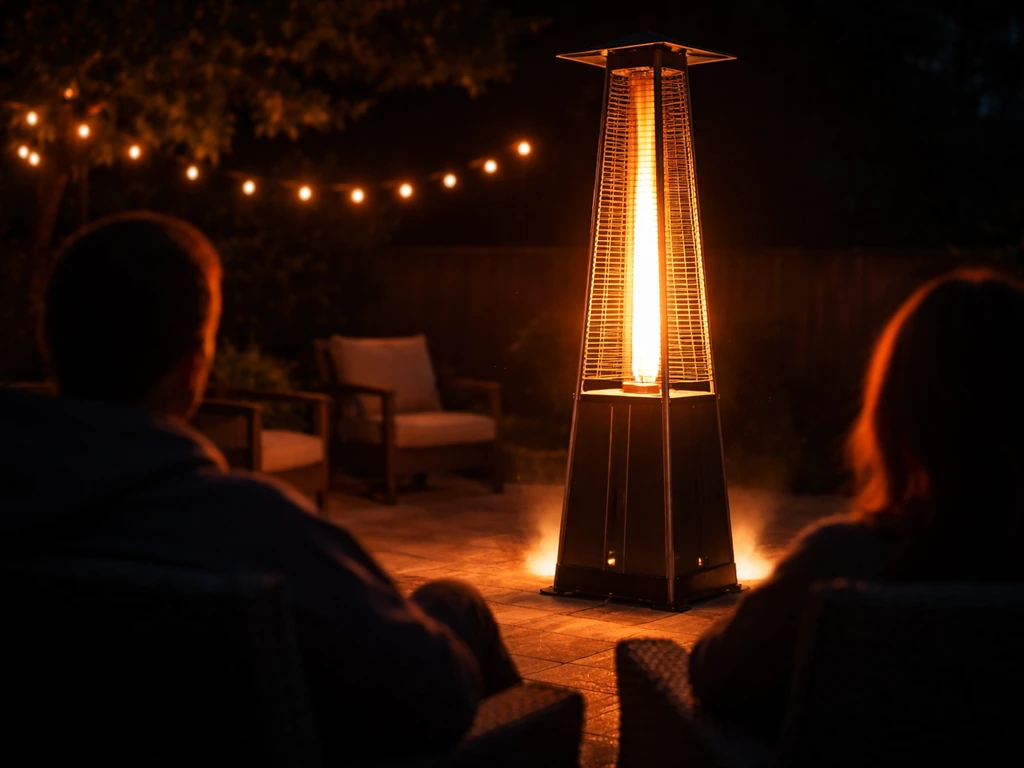
What 48,000 BTU actually heats (patio size and seat distance)
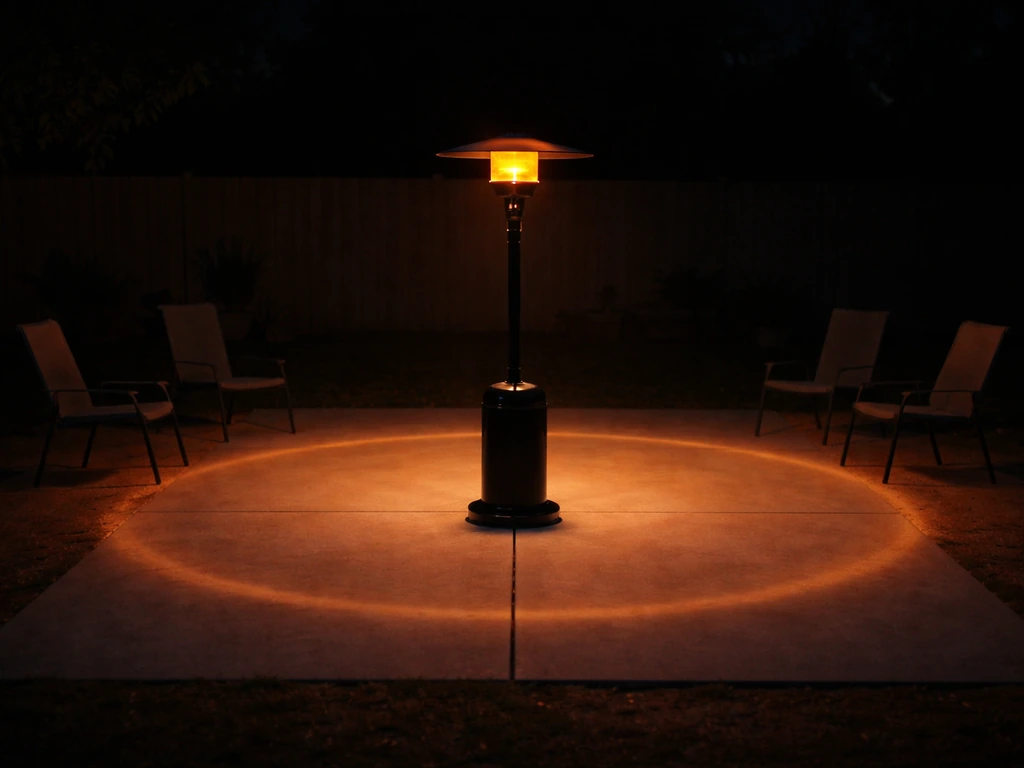
Manufacturer coverage claims for 48,000 BTU heaters range from 113 square feet all the way to 1,200 square feet depending on the brand, model, and how loosely they define 'heated area.' A Walmart listing claims 728 sq ft. Mr. Heater markets a 48,000 BTU model claiming up to 1,200 sq ft. Meanwhile, Omcan's 48,000 BTU propane model specifically documents 113 to 175 sq ft in its installation manual. That gap is not a typo, it reflects completely different assumptions about wind, temperature delta, ceiling height, and what 'comfortable' means.
A more useful way to think about it: at 48,000 BTU, a freestanding propane tower heater delivers meaningful radiant warmth to people sitting within roughly 8 to 10 feet of the unit on a calm night in mild-to-cool weather (say, 45 to 55°F). In ideal conditions with no wind and a covered ceiling to trap some heat, you can stretch that to about a 10-foot radius. Beyond that, you are relying on ambient air warming, which is far less effective outdoors. For open patios, think of 48,000 BTU as a social circle heater, not a whole-yard heater.
Ceiling height matters a lot for mounted or hanging heaters. Infrared models like those from IR Energy list heated area tied to a specific hanging height and line-of-sight distance, often around 128 sq ft at a stated mounting height. The further the heater is from the people, the more BTU you lose before it reaches them. For wall- or ceiling-mounted infrared units, follow the manufacturer's distance table exactly rather than trusting the headline coverage number.
- Open patio, no wind: effective warmth within 8–10 ft radius for seated guests
- Covered patio or pergola: trapped radiant heat can extend comfort range slightly beyond 10 ft
- Windy or exposed patio: expect to cut that radius to 6–7 ft, or plan for multiple units
- Ceiling-mounted infrared: coverage is directional (roughly 128–175 sq ft) tied to mounting height, not a circle around the unit
- Marketing claims of 700+ sq ft should be treated with serious skepticism outdoors
Gas vs electric vs pellet: which fuel type makes sense at this output level
Propane is still the most common fuel for 48,000 BTU patio heaters, and for good reason. It is portable, widely available, and requires no electrical connection for the burner itself (some models use a battery igniter or a small electronic valve, but the heat is all gas). A standard 20-lb propane tank gives you roughly 9 to 10 hours of runtime at full output, based on the BTU-per-pound math and consistent with what Mr. Heater publishes for their 48,000 BTU model. At current propane prices, a 20-lb refill runs about $18 to $25, which works out to roughly $2 to $2.50 per hour of operation. That is cheap enough for occasional use, but adds up fast if you run the heater every night.
Natural gas is the better long-term choice if you are installing a permanent heater and already have a gas line nearby. The fuel cost per BTU is lower than propane, there are no tanks to swap, and output is consistent. The downside is the installation cost: running a gas line, having a licensed plumber or gas fitter connect it, and the fact that the heater is now fixed in place. If you are comparing brands at 48,000 BTU on natural gas, the Hampton Bay stainless model and Nexgrill's lineup are frequently purchased options worth reviewing in detail.
Electric infrared heaters at this BTU-equivalent output level (roughly 11,000 to 14,000 watts) require 240V circuits, which is a meaningful install consideration. Lower-wattage 120V electric heaters simply cannot match 48,000 BTU in output, so if you are comparing 120V electric options, you are looking at a different category of heater. If you are trying to compare the best 120V patio heater options, focus on electric infrared models that can deliver meaningful radiant warmth at the BTU level you need 120V electric heaters. For true 48,000 BTU competition, electric infrared units from brands like Bromic are compelling for covered patios with power access, offering precise thermostat control and no combustion byproducts. Operating cost is roughly tied to your local electricity rate: at $0.15/kWh, a 13,000W unit costs about $1.95/hr, similar to propane.
Pellet heaters are a niche but interesting option. They burn wood pellets in a hopper (some hold up to 25 lbs), giving you a fire-like aesthetic with reasonable heat output. Runtime and fuel cost are comparable to propane in ballpark terms, but the experience is more about ambiance than raw heat distribution. Pellet heaters are harder to dial in to a specific BTU output, require more hands-on management (loading, ash cleanup), and are genuinely best suited to someone who wants the campfire feel on a patio rather than the most efficient or controllable heat source.
| Fuel Type | Portability | Output at 48K BTU | Approx. Cost/Hour | Best For |
|---|---|---|---|---|
| Propane | High (tank swap) | Full 48,000 BTU | $2.00–$2.50 | Open patios, occasional use, no gas line |
| Natural Gas | Fixed install | Full 48,000 BTU | $1.00–$1.50 | Permanent setups, frequent use, existing gas line |
| Electric (240V infrared) | Low (wired) | ~40,000–45,000 BTU equivalent | $1.50–$2.50 (varies by rate) | Covered patios, zero combustion, precise control |
| Pellet | Moderate (portable) | Variable, harder to control | Similar to propane | Ambiance seekers, fire aesthetic, casual use |
Radiant infrared vs air-warming: what comfort actually feels like
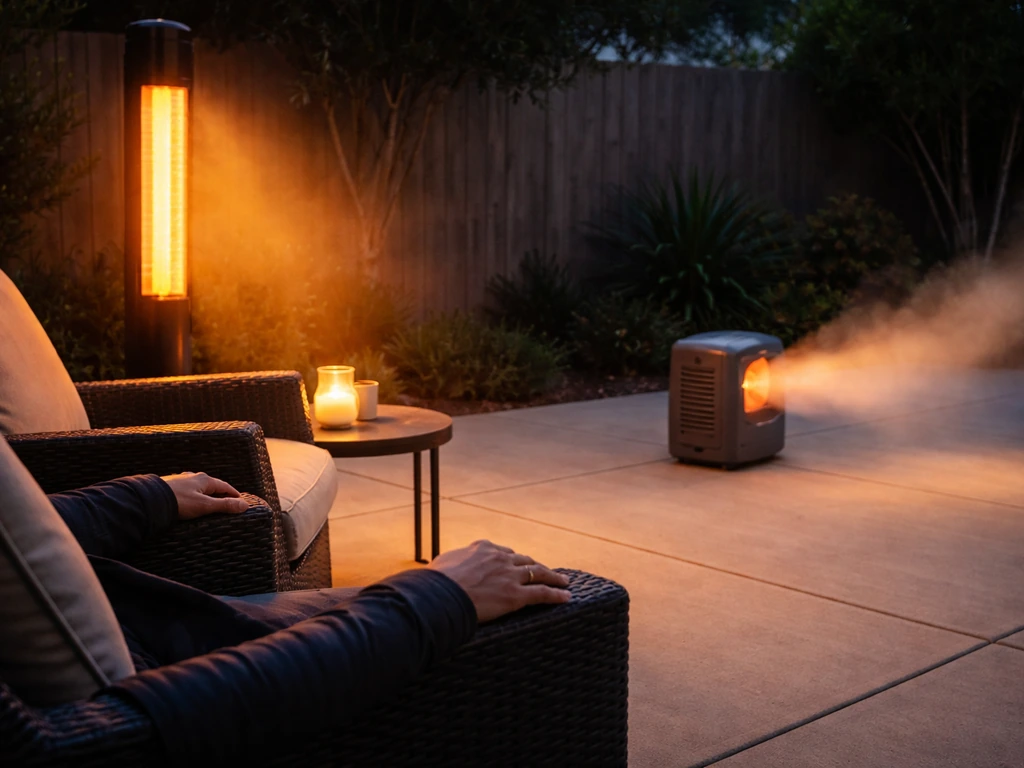
Most 48,000 BTU patio heaters, whether propane tower heaters or electric infrared panels, work through radiant heat. They warm objects and people in their line of sight, not the air around them. This is actually the right approach for outdoor use: heating the air outside is mostly pointless because it disperses immediately. Radiant warmth hits your skin and clothing directly, the same principle as sitting near a fire or stepping into sunlight on a cool day.
The practical implication: if you are not in the heater's cone of warmth, you will not feel it. Bromic and other infrared-focused brands are explicit that their radiant heaters deliver warmth to the outdoor space rather than uniformly heating the air. Reddit users who have compared setups in windy climates back this up consistently: infrared heaters remain effective in wind because the warmth is transferred directly, not blown away. A forced-air heater (think: industrial-style propane torpedo heater) attempts to heat the surrounding air, which is far less effective outdoors and usually reserved for construction sites or enclosed spaces.
For patio use at 48,000 BTU, you almost certainly want a radiant heater, not forced-air. The mushroom-style propane tower heaters (the classic umbrella shape) work on radiant principles. So do wall-mounted and ceiling-mounted infrared units. The heating pattern matters for placement: a freestanding tower heats in a roughly 360-degree pattern around it, while a mounted directional infrared panel heats a defined zone in one direction. If your seating wraps around a central point, a tower works well. If your seating is against a wall or under a pergola, a mounted directional panel is often more efficient.
Key specs to compare when you are shortlisting models
BTU rating is the starting point, not the whole story. Here are the specs that actually differentiate 48,000 BTU heaters from each other once you have narrowed down the fuel type.
- Heating method: radiant infrared (outdoor-appropriate) vs forced-air (not ideal for open patios)
- Effective heating area: look for the manufacturer's documented range, not just the marketing headline — a range of 113–175 sq ft documented in an installation manual is more reliable than a 1,200 sq ft headline claim
- Thermostat and controls: electronic ignition, variable heat settings, and remote or smart controls (available on higher-end electric infrared models) dramatically improve usability
- Safety shutoffs: an anti-tilt switch that cuts gas flow if the heater tips over is standard on quality propane tower heaters and should be non-negotiable — Hampton Bay includes this on their 48K BTU model as a baseline example
- Regulator and hose specs: propane models need a compatible regulator (typically included) and a proper gas hose rated for the pressure; natural gas conversions need a separately rated regulator
- Electrical requirements for ignition: most propane towers use a battery-powered piezo igniter, but some use a 120V connection — know which you are buying
- Burner type: stainless steel burners resist corrosion better than aluminum in humid or coastal environments
- Weather resistance: look for an IP rating or explicit outdoor rating; powder-coated steel and 304-grade stainless last significantly longer than plain steel
- Portability and weight: freestanding propane towers typically weigh 30–50 lbs without the tank; add another 37 lbs for a full 20-lb propane tank
- Certifications: look for ANSI/CSA Z83.26 certification on gas infrared models — this means the unit has been safety-tested to a recognized standard, not just marketed as 'safe'
Safety, installation, and setup: what to know before you buy
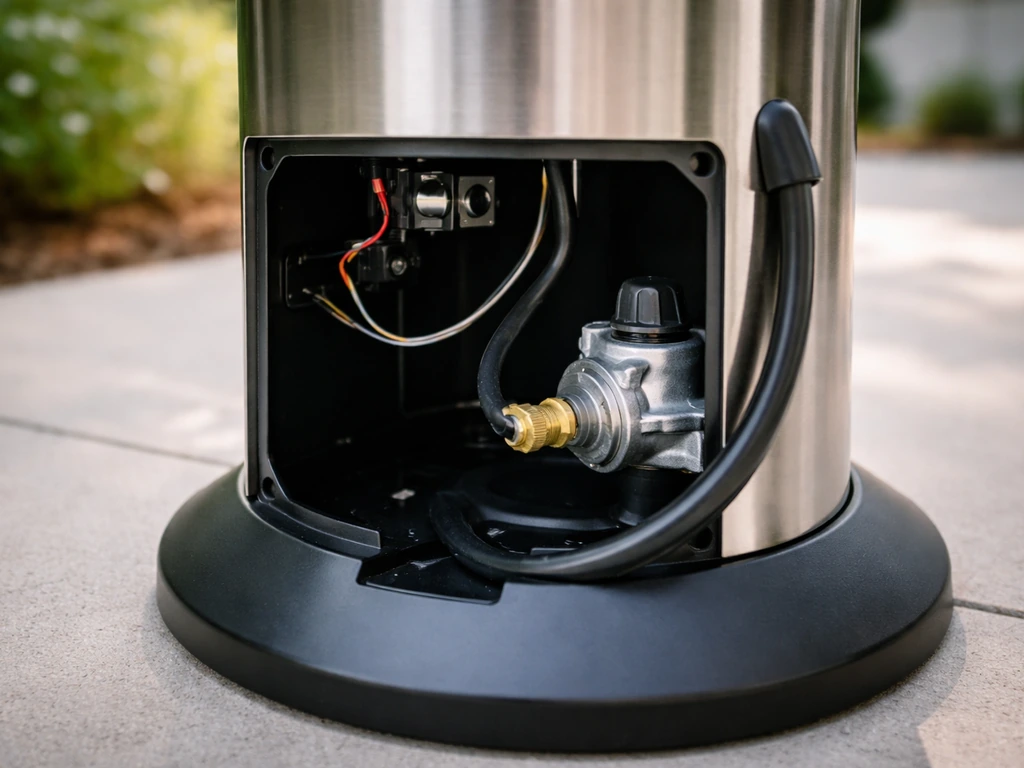
Propane patio heaters are covered under NFPA 58, the LP-Gas Code, which specifies requirements for heaters that use an integral LP-gas container. The practical takeaway: follow the manufacturer's installation manual exactly, and make sure the heater is used outdoors in a well-ventilated area, never in an enclosed space. AZ Patio Heaters, for example, explicitly states in their owner's manual that their propane heaters require an outdoor, well-ventilated environment and vapor-only propane connection. The NFPA also publishes an Outdoor Heater Safety fact sheet recommending you follow all manufacturer instructions and applicable fire codes.
For freestanding propane tower heaters, the anti-tilt safety switch is the most important safety feature. It cuts gas automatically if the heater tips over, preventing a runaway ignition. Make sure any model you buy includes this. Also verify the clearance requirements in the manual: most manufacturers require at least 3 feet of clearance from the top of the heater to any overhead surface (awnings, umbrellas, pergola beams), and a specified radius of clearance from combustibles at the side. OSHA’s temporary heating device standard also requires listed heaters to be installed with clearance to combustibles that meet the specified tables clearance requirements in the manual. OSHA clearance standards for temporary heaters and ANSI/CSA safety listing requirements reinforce this point.
Natural gas models require a permanent connection by a licensed professional. Do not attempt a DIY gas line connection for a patio heater. The installation also needs to account for combustion air and proper venting geometry, the heater needs to be positioned so combustion gases vent upward and away from occupied areas, and clearances to any overhead structure must be respected.
Electric infrared heaters at 240V require a dedicated circuit installed by a licensed electrician. They produce no combustion gases, which makes them safer under covered patios and pergolas with low clearance. They still get very hot on the surface and need clearance from flammable materials per the manufacturer's mounting specs. One advantage: no fuel storage, no gas line concerns, and no carbon monoxide risk.
Pellet heaters require a clear area for the fire and ash management. Keep them away from flammable decking materials, never leave them unattended for extended periods, and follow the specific hopper-loading and ash-disposal guidelines in the manual.
Operating costs, wind performance, and realistic runtime
At full output, a 48,000 BTU propane tower heater burns through a 20-lb tank in roughly 9 to 10 hours. That lines up with Mr. Heater's published runtime of up to 10 hours on a 20-lb tank, and with the general BTU-per-pound math (a 40,000 BTU heater gets about 10.75 hours from the same tank, per WoodlandDirect's propane buying guide framework). At $18 to $25 per 20-lb refill, you are paying $1.80 to $2.80 per hour. Most people run their heater at 70 to 80 percent output during a party, which stretches the tank further and cuts per-hour cost.
Wind is the single biggest real-world performance factor for any outdoor heater. In calm conditions, a 48,000 BTU heater performs close to its rated output. In sustained wind above 10 mph on an open patio, you will feel a meaningful drop in effective warmth at seat distance, and a propane tower heater may also have pilot/flame stability issues in gusts. Infrared heating holds up noticeably better in wind than forced-air because the radiant energy transfer happens directly, the heat is not 'blowing away' the same way warm air does. If your patio is exposed, infrared is worth the premium.
For pellets: a 25-lb hopper at a comparable output gives you roughly similar runtime to propane but at fuel costs that can vary significantly based on where you source pellets. BobVila's analysis notes that a propane refill for a 48,000 BTU tower runs $18 to $25, while pellet costs per equivalent session depend heavily on local pricing and burn efficiency. Pellets are not inherently cheaper, they are a different experience.
For electric: at $0.15/kWh, a 13kW unit runs about $1.95/hr. At $0.25/kWh (common in California, New England, Hawaii), that climbs to $3.25/hr, making electric more expensive than propane in high-electricity-cost regions. Check your local rate before deciding electric is the economical choice.
How to pick your best match: a quick scenario checklist
Run through these questions and the right heater type usually becomes obvious.
- Do you have a natural gas line within 15 feet of the heater location? If yes and you use the patio frequently, a permanent natural gas install at 48,000 BTU is the best long-term value. No tank swaps, lower fuel cost per hour, consistent output.
- Is your patio open and exposed to wind? If yes, prioritize a radiant infrared model (propane or electric) over a forced-air design. Multiple units may be needed for larger exposed areas.
- Do you need portability — moving the heater for events, storing it seasonally, or using it in different spots? A freestanding propane tower heater is the practical answer. Verify it has an anti-tilt switch and a stainless or powder-coated finish for longevity.
- Is your space covered (pergola, covered porch, low roof)? Electric infrared is worth serious consideration here. No combustion gases, precise control, and ceiling-mount options work well in low-clearance covered spaces. Make sure you have a 240V circuit available or budget for one.
- Is the fire/flame aesthetic important to you? Pellet heaters deliver that campfire feel. Accept that you are trading precision and convenience for ambiance.
- Are you buying for a restaurant, bar, or commercial space? Look for ANSI/CSA Z83.26 certified models, commercial-grade burners, and stainless 304 construction. The Hampton Bay and Nexgrill 48,000 BTU stainless models are popular starting points for semi-commercial residential and light commercial use.
- Budget under $150? You are in propane tower territory. Budget $150 to $350? You can reach better-built propane or entry natural gas models. Budget $400 and up? Electric infrared and commercial-grade propane units become accessible — and worth the investment if you will use the heater regularly.
One more thing worth mentioning: if you are specifically researching brand-level differences between popular 48,000 BTU propane models, the Hampton Bay stainless steel and Nexgrill lineups are two of the most reviewed options at this output level and are worth comparing side by side on build quality, warranty, and parts availability before making a final call. If you are comparing the Hampton Bay 48000 BTU patio heater review experiences, look closely at real-world coverage, runtime, and how well it holds up in wind.
The bottom line is that 48,000 BTU is a genuinely useful output level for patio heating, not underpowered, not overkill for most residential setups. Nail down your fuel type based on the checklist above, verify the safety certifications, confirm clearance requirements for your specific space, and do not rely on headline coverage claims. A well-chosen 48,000 BTU heater will serve you well for years. If you want to narrow brands quickly, read nexgrill 48000 btu patio heater reviews to compare performance, build quality, and heating comfort at real seat distance. A poorly matched one will sit in the garage after the first cold season.
FAQ
How far will I actually feel a best 48000 btu patio heater from the unit?.
Only count the effective radius if the patio is relatively calm and you will actually sit within the heater’s direct line of warmth. In open patios, coverage numbers can overpromise because radiant heat drops off quickly with distance and any wind reduces how much you feel at seat level.
Should I choose a tower style or a wall/ceiling infrared panel for a 48,000 BTU setup?.
If your goal is to heat people rather than the air, a radiant heater is the right match, but you still need correct placement. For a 48,000 BTU tower (360-degree), center it to face your seating, and for a directional infrared panel, mount it so the beam is aimed directly at the people area under your pergola.
What’s the simplest way to decide between propane, natural gas, and electric infrared at the 48,000 BTU level?.
Start by matching fuel to your power and installation tolerance. If you lack a gas line and also do not want electrical work, propane is usually simplest, even if it costs more per hour. If you are willing to run gas, natural gas typically wins for long-term convenience and steady output.
Can I use a 48,000 BTU electric infrared heater on a 120V outlet if I buy an adapter?.
Yes, but only if your heater and your electrical service align. Electric infrared units at this power class typically need 240V and often a dedicated circuit, so check the heater’s voltage requirement and whether your patio has a safe, weather-rated outlet location for the cabling and disconnect.
What happens if my patio only has 120V power and I want the best 48000 btu patio heater?.
Do not. Adapters can create overload or unsafe connections, and 48,000 BTU-class electric heaters generally cannot run correctly on 120V power. If you only have 120V access, you are usually looking at a smaller-wattage category, or you need to plan a proper 240V circuit by a licensed electrician.
Why do infrared heaters list different “heated area” numbers than propane 48,000 BTU towers?.
Your comfort depends on your seating height and the mounting height, not just the BTU. For infrared, the manufacturer’s distance and mounting-height chart is the real spec because radiant intensity drops with both distance and angle, so follow that table even if the product page shows a larger “coverage area.”
What safety feature matters most for a freestanding propane 48,000 BTU tower heater?.
For patio safety, the anti-tilt switch is important, but clearance compliance is the bigger day-to-day factor. Measure overhead obstructions (umbrellas, pergola beams, awnings) and side clearances to combustibles exactly as the manual states, because outdoor heat still transfers to nearby materials.
Can I use a 48,000 BTU patio heater under a covered patio or enclosed gazebo?.
Not unless the manual explicitly allows it, and even then you should be cautious. Propane and pellet heaters are intended for outdoor, well-ventilated use, and many setups that feel “covered” still trap exhaust or combustion byproducts. If you are installing under a roof, prioritize infrared for low-clearance situations, or confirm ventilation requirements with the manufacturer.
How should I adjust my setup if my patio is windy?.
Wind can cut effective warmth even if the unit is operating normally. A practical test is to plan seating on the wind-protected side of your patio, close windows or doors nearby if you have them, and choose infrared if your location regularly exceeds calm conditions.
Is the 9 to 10 hour runtime on a 20-lb propane tank accurate in real parties?.
Use the tank runtime as a planning tool, then refine for your real usage. Many people do not run at full output all night, so your per-hour cost will drop if you use a lower setting or cycle during conversations, but runtime estimates assume consistent operation at rated output.
How can I estimate my hourly cost for a best 48000 btu patio heater?.
Estimate based on your local propane price and your typical operating percentage. If propane is $18 to $25 per refill and you run at 70 to 80 percent output during gatherings, your cost per hour usually falls compared to full-output operation, but you should still budget for extra fuel on colder nights.
What are the common mistakes people make when installing a natural gas 48,000 BTU heater?.
For natural gas, the biggest “gotcha” is installation scope and permitted venting and positioning requirements. The heater must be connected and checked by a licensed professional, and you still need to verify overhead clearance and combustion air guidance for your specific mounting location.
Can uneven seating positions make a 48,000 BTU patio heater feel weak?.
Yes, and it can be a comfort problem, not just a safety one. If you place a radiant heater so you sit outside the cone or off to the side, you can feel uneven heating, even when the unit is rated high. Align the heater to your actual seating geometry, including where people will sit, lean, or move.
Why might my propane 48,000 BTU tower heater struggle during gusty evenings?.
Make sure the heater is operating at the correct output and that the ignition system is stable. If you experience shutdowns or inconsistent flame during gusts, prioritize wind-protection placement, consider a model designed for outdoor gust conditions, and avoid operating it in more exposed spots than necessary.
Is a pellet heater with 48,000 BTU output worth it if I want low maintenance?.
Yes, especially if you’re choosing pellet for ambiance rather than pure efficiency. Pellet setups require more hands-on tasks, like periodic ash cleanup and hopper attention, so consider whether you can manage loading and maintenance without it becoming a hassle mid-season.
What should I check for warranty and replacement parts when buying the best 48000 btu patio heater?.
Warranty and parts availability matter as much as heat output, because outdoor components fail from corrosion and weather exposure. Before buying, check that replacement parts are sold for your exact model (burners, ignition components, regulator or valve parts) and confirm the warranty coverage terms for outdoor use.