
For most covered patios, a wall- or ceiling-mounted infrared electric heater rated between 1,500 and 6,000 watts (or a mounted infrared propane/natural gas heater in the 25,000–50,000 BTU range) is the best all-around choice. Mounted heaters free up floor space, eliminate tip-over risk, and deliver focused heat exactly where people are sitting. The 'best' one for you comes down to four things: your fuel source availability, the square footage you need to cover, whether your patio is covered or exposed, and how permanently you want to install it.
Best Mounted Patio Heater: Propane, Electric, Gas, Pellet Guide

Willa Brennan
7 Jun 2026
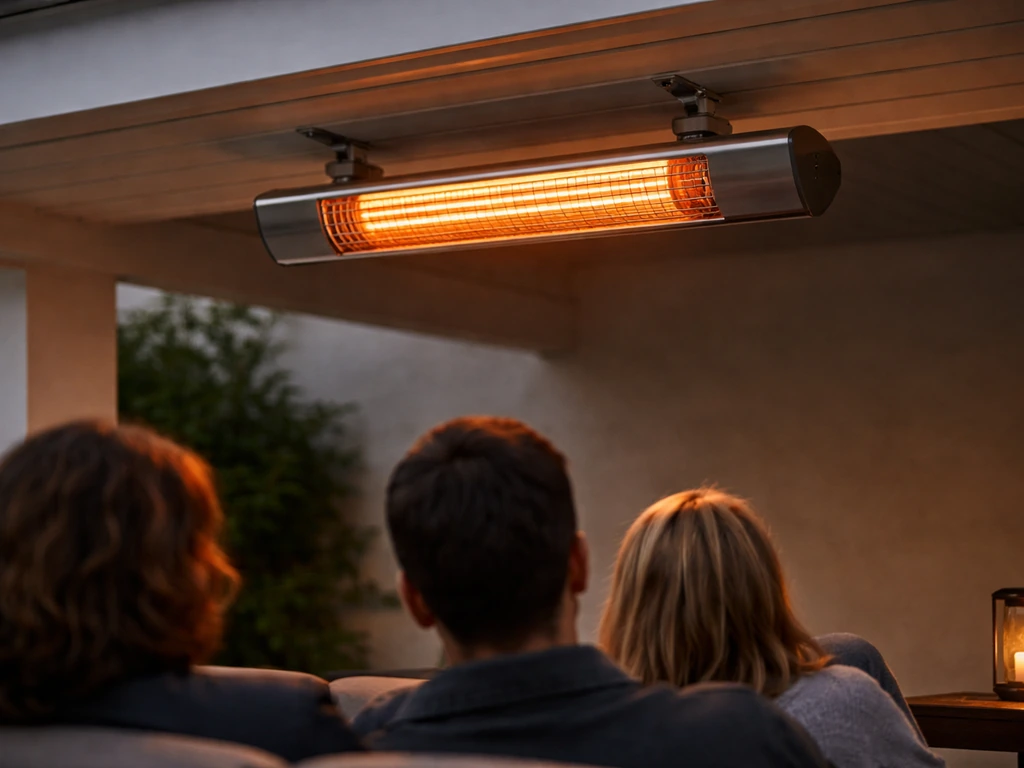
What 'mounted' patio heaters actually are (and why it matters)
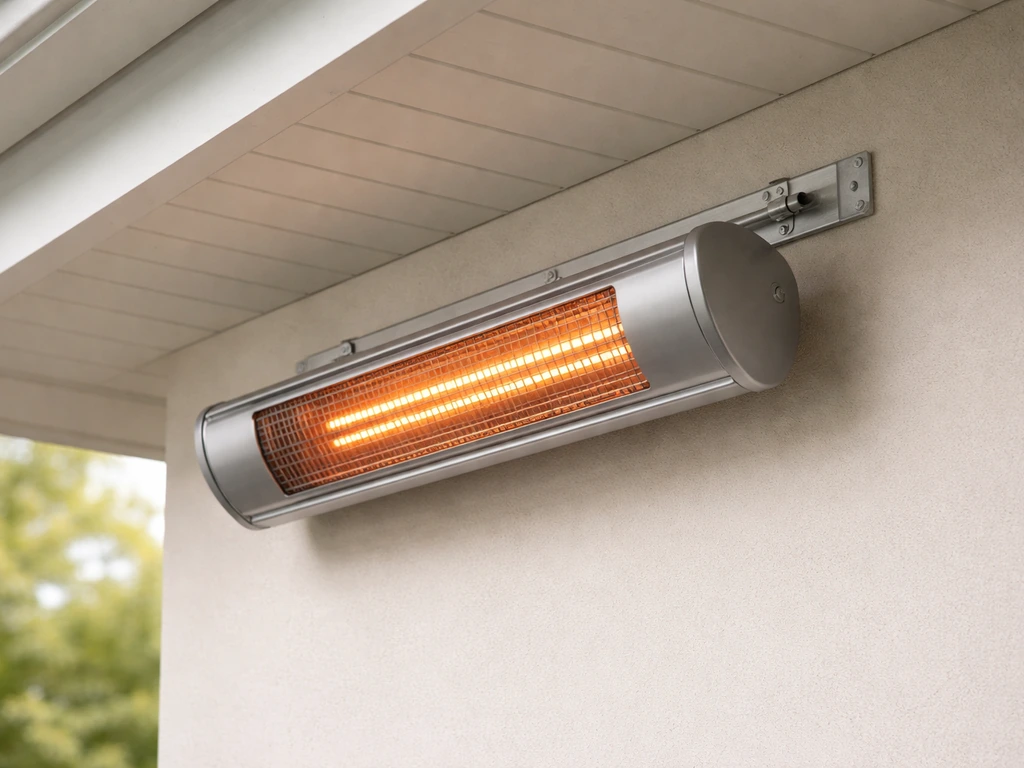
Mounted patio heaters are permanently (or semi-permanently) fixed to a wall, ceiling, or overhead beam rather than standing on the ground or a table. Woodland Direct similarly notes that wall-mounted and ceiling-mounted heaters are intended for permanent mounting to structures rather than freestanding use wall-mounted and ceiling-mounted heaters are designed for permanent mounting. That distinction matters more than it sounds. A freestanding tower heater can be knocked over, moved around, and becomes a trip hazard in a tight space. A wall-mounted or ceiling-mounted unit stays put, directs heat downward or outward at a fixed angle, and becomes part of your outdoor structure. This makes them especially practical for covered patios, screened porches, pergolas, and outdoor kitchens where you want heating to feel built-in rather than temporary.
The mounting style also changes how heat is distributed. A wall-mounted heater angled slightly downward covers a defined zone in front of it, making it ideal for seating areas or dining spots against a wall. A ceiling-mounted unit radiates downward across a wider footprint and works well when you want even coverage across a larger open area. Some models are recessed into the ceiling for a flush, architectural look. Hanging patio heaters (sometimes called pendant-style) are related but slightly different and worth exploring separately if you want maximum flexibility in placement.
Infrared vs. convection: why type matters more than brand
Almost every mounted patio heater worth buying uses radiant infrared technology, and there's a good reason for that. Infrared heaters warm people and objects directly by emitting radiation that's absorbed by whatever it hits, whether that's your jacket, the patio furniture, or the concrete floor. Convection heaters, by contrast, warm the surrounding air, which then rises and dissipates outdoors almost immediately. Decor Outdoor explains that radiant (infrared) patio heaters emit infrared radiation that nearby people and objects absorb, while convection heaters warm surrounding air that moves away as airflow outdoors convection heaters warm the surrounding air. As Bromic puts it plainly: outdoor spaces lose heat too fast for convection to work. You'd essentially be heating the sky. Radiant infrared is the correct technology for outdoor use, full stop.
Within infrared, there are a few sub-types worth knowing. Shortwave (bright glow) infrared heaters heat up almost instantly and are the most intense, but they can feel harsh if you're sitting too close. Mediumwave heaters warm up in about 30–60 seconds and offer a softer, more even heat. Longwave (dark emitter or ceramic) infrared heaters take longer to warm up but produce a gentle, consistent warmth with no visible glow, which some people prefer for ambiance. Most residential mounted heaters use mediumwave or longwave elements, while shortwave units are more common in commercial settings or very large covered spaces.
Fuel options compared: propane, electric, natural gas, and pellet
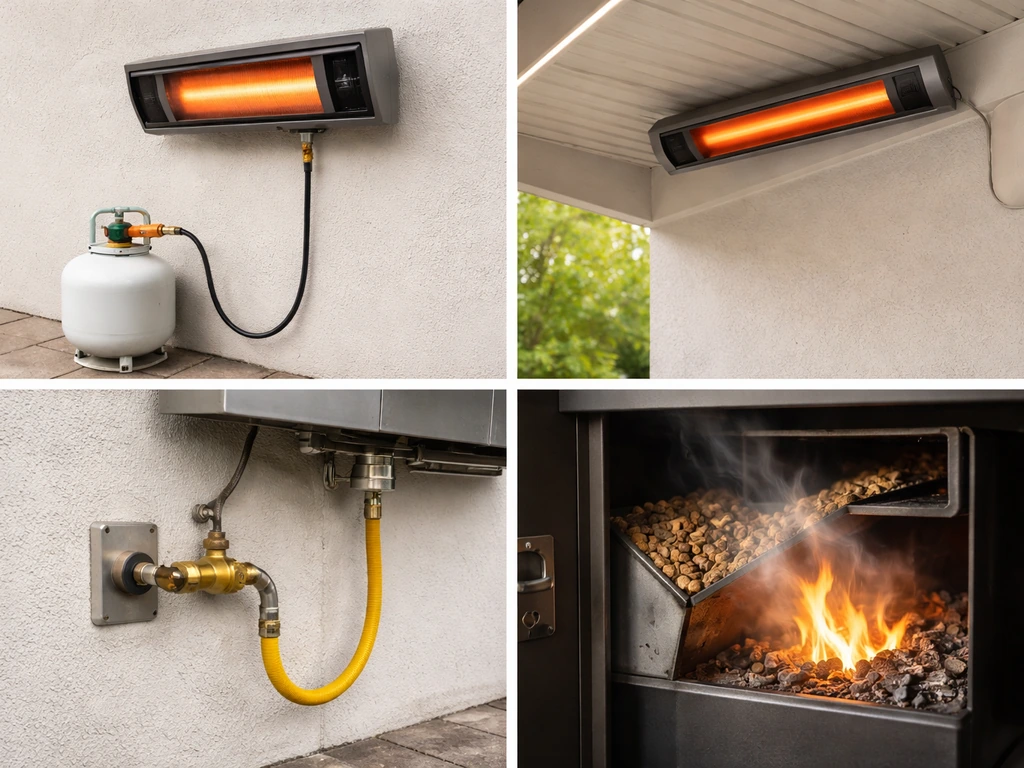
Each fuel type has a real-world sweet spot. Here's how they stack up for mounted outdoor heaters specifically:
| Fuel Type | Best For | Typical Output | Key Trade-off |
|---|---|---|---|
| Electric (infrared) | Covered patios with nearby outlet or dedicated circuit | 1,500–6,000W (5,100–20,500 BTU equivalent) | Ongoing electricity cost; needs wiring |
| Propane | Spaces without gas lines; semi-permanent install | 25,000–50,000 BTU | Tank refills needed; higher heat output |
| Natural Gas | Permanent installs with existing gas line | 25,000–50,000 BTU | Professional gas line installation required |
| Pellet | Off-grid or ambiance-focused setups | Varies widely | Fuel storage, ash management, less common as wall-mount |
Electric mounted heaters
Electric infrared heaters are the easiest to install and the most common choice for residential covered patios. Most plug into a standard 120V outlet or hardwire into a 240V circuit for higher output models. They're silent, produce no fumes or combustion byproducts, and work great in enclosed or semi-enclosed spaces. The downside is that electricity is more expensive per BTU than gas in most parts of the country, so if you're heating a large patio for hours every night, your electric bill will reflect it. For occasional use or smaller spaces, though, electric is hard to beat for simplicity.
Propane mounted heaters
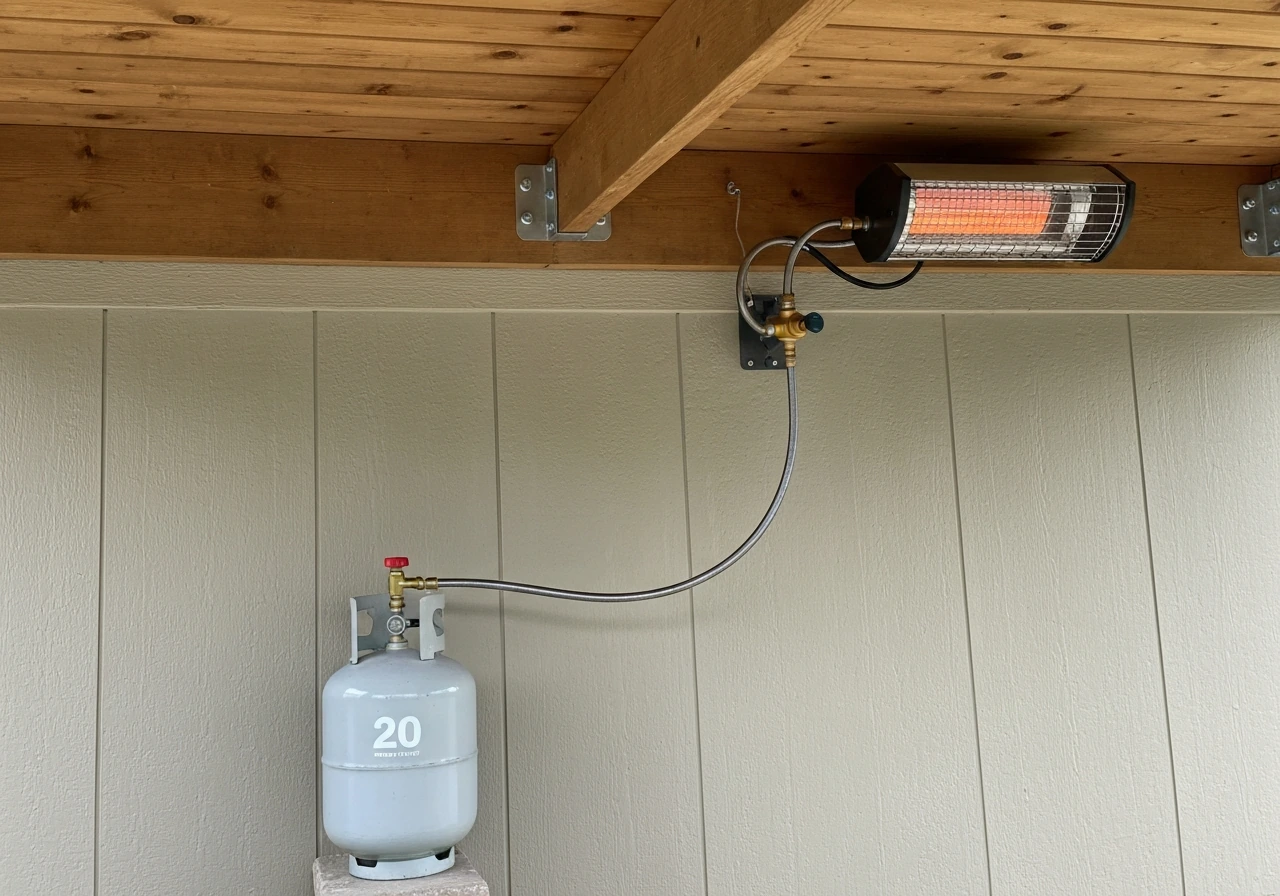
Propane wall-mount heaters pack serious heat output and are a strong option when you don't have a natural gas line. Many run off a standard 20 lb tank (the same as a gas grill), though larger units use 100 lb tanks for longer runtime. A 40,000 BTU propane heater on a 20 lb tank will run roughly 8–10 hours, so weekend use is manageable, but daily year-round heating gets expensive with regular refills. The installation is simpler than natural gas in terms of permitting, but you still need to think through tank placement, hose routing, and ventilation if the space is enclosed.
Natural gas mounted heaters
If you have an existing natural gas line or are building a new outdoor structure, natural gas is the premium long-term choice. You get the same high BTU output as propane with zero refill hassle and lower fuel cost. The catch is upfront installation: running a gas line to your patio and getting it permitted and inspected typically adds $300–$800 or more to your project depending on distance and local codes. But if you plan to use the heater heavily for years, the payoff in convenience and fuel savings is real.
Pellet heaters (and when they make sense)
Pellet heaters are the outlier in the mounted category. They're more commonly seen as freestanding or hearth-style units, and true wall-mounted pellet heaters for outdoor patios are a niche product. If you want the ambiance of a flame and are set up for fuel storage, a pellet option might appeal. But for most people shopping for a mounted patio heater, pellet isn't the practical first choice. It requires storing bags of pellets, managing ash, and dealing with a hopper that needs refilling. Worth knowing about, but not the default recommendation here.
Sizing your heater: BTU and wattage guidance for real patio sizes
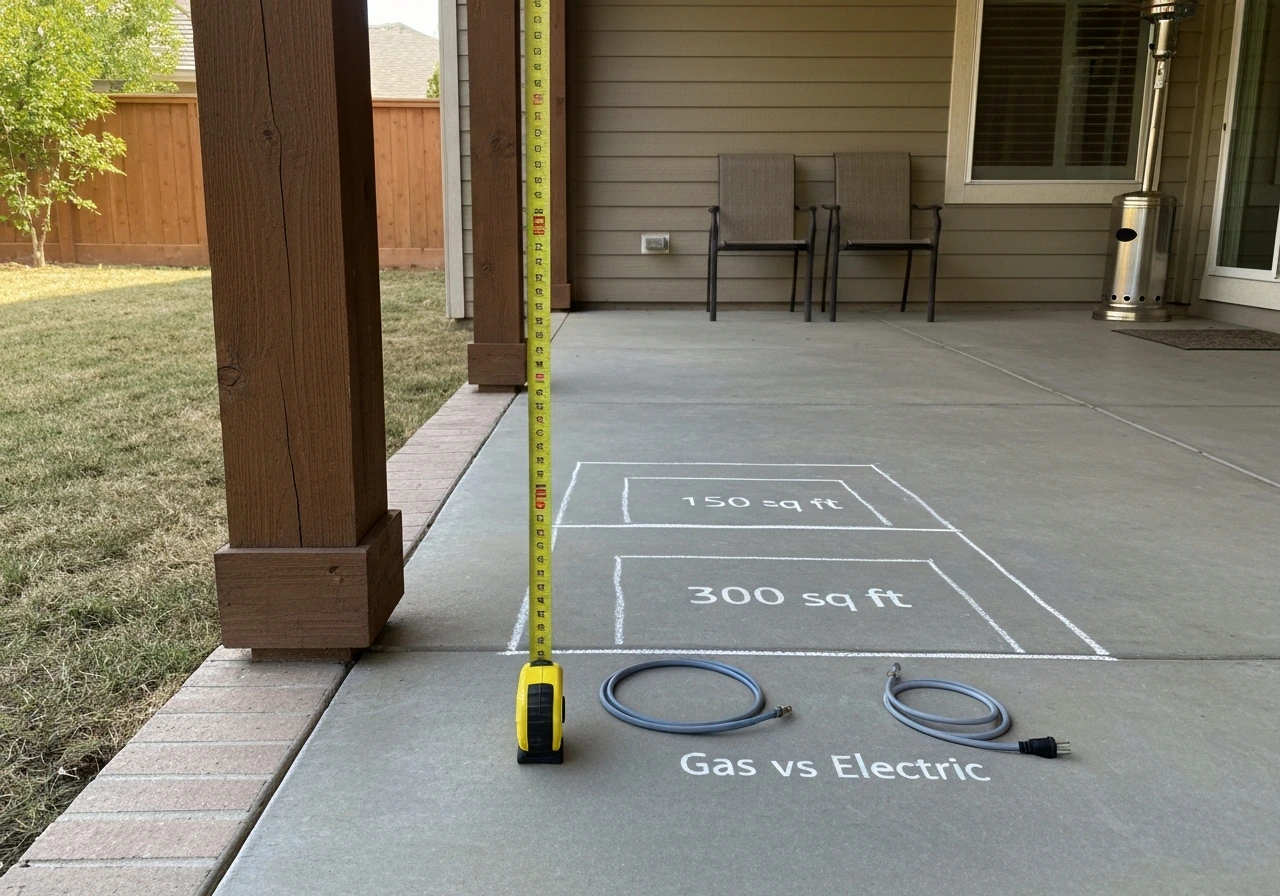
The rule of thumb most installers use is roughly 10 watts of electric heat per square foot for a covered patio, or about 1,000 BTU per 10 square feet for gas. These are starting points, not guarantees, because ceiling height, wind exposure, and ambient temperature all push the number up. Here's a practical sizing guide:
| Patio Size | Recommended Electric Output | Recommended Gas Output | Notes |
|---|---|---|---|
| Up to 100 sq ft | 1,500–2,000W | 10,000–15,000 BTU | One heater usually sufficient |
| 100–200 sq ft | 2,000–4,000W | 20,000–30,000 BTU | Single large or two medium units |
| 200–300 sq ft | 4,000–6,000W | 30,000–45,000 BTU | Multiple heaters or zone coverage |
| 300+ sq ft | Multiple 4,000–6,000W units | 45,000+ BTU or multiple heaters | Plan heating zones, not single unit |
Ceiling height is a factor people often underestimate. A heater mounted at 8 feet covers a different area than the same heater at 12 feet. As mounting height increases, heat spreads over a wider area but loses intensity. Most residential wall-mount heaters are rated for 7–9 foot mounting height. If your covered patio has a vaulted ceiling or high beam, look specifically for units rated for 10–12 foot mounting, or plan to use multiple heaters to compensate. Wind is the other wildcard: even a covered patio with open sides will lose radiant warmth faster than a fully enclosed one, so bump up your output estimate by 20–30% for very open layouts.
Installation, clearances, and what you need before you buy
Every mounted patio heater has a required clearance from combustibles, and this is the number most people skip in the product spec sheet before they buy. Clearances typically range from 12 inches on the sides to 24–36 inches below the heater for most residential units. Propane and natural gas heaters have stricter clearance requirements than electric. If you're mounting under a low ceiling with wood framing nearby, measure first and compare those measurements against the spec sheet before you order anything.
For covered patios specifically, the heater must be rated for covered (but not necessarily fully enclosed) outdoor use. Look for IP ratings of IP44 or higher for weather resistance, or an ETL/UL certification for wet or damp locations. A heater rated for 'indoor use only' should never go on a patio, even a roofed one. Open-air covered patios expose heaters to humidity, wind-driven rain, and temperature swings, so weatherproofing is non-negotiable. Wall-mounted heaters for uncovered or exposed patios are a much smaller category and generally only work in mild climates with minimal rain.
Electric installation specifics
Most electric heaters under 2,000W plug into a standard 120V, 20-amp outlet, which many covered patios already have. Heaters above 2,000W typically require a dedicated 240V circuit, which means hiring an electrician if you don't already have one. Budget $150–$400 for a basic 240V outlet installation. Hardwired models (no plug) need an electrician regardless of voltage. If you want a thermostat or smart controls, make sure the heater is compatible before assuming you can add one later; many basic plug-in units are on/off only.
Gas installation specifics
Natural gas heaters require a licensed plumber or gas technician to run and connect the gas line, and most municipalities require a permit and inspection. Propane wall-mount heaters are more DIY-friendly in terms of hookup (connect the regulator and hose to the tank), but you should still verify local codes. Either way, mount the heater to structural framing (studs or a solid beam), not just drywall or thin sheathing. Gas heaters also need adequate combustion air even in covered spaces, so a completely sealed enclosure is a problem.
Safety features, controls, and efficiency worth paying for
A mounted patio heater is a long-term fixture, so the control features you pick matter more than with a portable unit. Here's what's genuinely worth paying for versus what's mostly marketing:
- Thermostat compatibility: Electric heaters that work with an in-wall thermostat or smart thermostat let you set a target temperature and stop wasting heat once the space is warm enough. This can meaningfully cut your electricity use.
- Built-in timer or smart app control: Useful for automatically shutting off the heater after a set period, which prevents the classic 'left it on all night' mistake.
- Tip-over protection: Less critical for mounted units than for freestanding ones, but some wall-mount gas heaters still include tilt shutoff as a secondary safety measure.
- Oxygen depletion sensor (ODS): Standard on most propane and natural gas heaters, this shuts the unit down if combustion oxygen drops below a safe level. Non-negotiable if your covered space is at all enclosed.
- Overheat protection: Most quality electric infrared heaters include a thermal cutoff that triggers if the element gets too hot. Check the spec sheet to confirm it's present.
- Dimmer or multi-level heat settings: Lets you dial down on milder nights instead of running at full power or not at all. Extends element lifespan and saves energy.
Efficiency for gas heaters is measured by how much of the fuel's energy actually becomes usable radiant heat versus heat lost to the surroundings. Infrared gas heaters are generally 80–90% efficient at converting fuel to radiant output, compared to lower efficiency for standard forced-air outdoor heaters. For electric infrared heaters, essentially 100% of the electricity is converted to heat, so the only real efficiency question is whether you're directing that heat where people actually sit, which is why mounting angle and placement matter so much.
Best mounted patio heater picks by scenario
Rather than ranking products that may shift in availability and price, here's how to match heater type and specs to your real situation. These scenarios cover the vast majority of what readers are actually shopping for:
Small covered patio or porch (under 150 sq ft)
A wall-mounted electric infrared heater in the 1,500–2,000W range is the cleanest solution here. It's easy to install, produces no fumes, runs off a standard outlet, and is more than enough heat for a cozy seating area. Look for a unit with at least IP44 weatherproofing, a 120V plug or hardwire option, and a built-in on/off switch or remote. Brands like Dr. Infrared, Bromic (Tungsten Smart-Heat Electric), and EnerG+ offer solid options in this range. Budget: $80–$350 depending on features.
Medium outdoor living space (150–300 sq ft)
This is where you're choosing between a single high-output unit (4,000–6,000W electric or 30,000–40,000 BTU gas) or two smaller units positioned to cover different zones. If you have or can add a 240V circuit, a single ceiling-mounted or wall-mounted infrared electric heater at 4,000–6,000W from a brand like Schwank, Calcana, or Bromic Tungsten is a clean, powerful solution. If you'd rather go gas and have propane available, a 30,000–40,000 BTU infrared wall-mount like those from Mr. Heater or Dyna-Glo covers this size well. Budget: $200–$800 for the heater; add $150–$400 for electrical or gas work.
Large patio or outdoor kitchen (300+ sq ft)
Plan for zones, not a single unit. A 300 sq ft covered patio with a dining area on one end and a seating area on the other needs two or three heaters aimed at each zone rather than one massive unit trying to heat everything from the center. Natural gas is the strongest choice at this scale for its unlimited runtime and lower fuel cost. Work with a licensed installer, and consider wall-mounted units aimed at seating zones plus a ceiling-mounted unit over the dining table. Premium options from Bromic, Schwank, or Infratech are purpose-built for this kind of layout. Budget: $500–$2,500+ for heaters depending on quantity and brand, plus $400–$1,000+ for installation.
Budget-conscious shopper
If you're keeping costs under $200 total, a 1,500W electric wall-mount infrared heater is your best bet. If you want help narrowing down specific options, these wall mounted patio heater reviews can point you to models that perform well for your space. Plenty of solid options from AmazonBasics, Dr. Infrared, or Comfort Zone hit this price point and work well for small covered spaces. Don't skip weatherproofing ratings just to save $20, though; a cheap heater that fails after one rainy season costs more in the long run. Pair with a standard 120V GFCI outlet (required for outdoor electrical) and you're done.
Premium, permanent install with aesthetics in mind
If you want a heater that looks like it belongs on a high-end patio and you're not flinching at $800–$2,000+, Bromic and Infratech are the names that come up most often. Bromic's Tungsten and Platinum series offer flush-mount and ceiling-mount options that look architectural rather than industrial. Infratech's C-Series and W-Series wall-mount electric heaters are popular in upscale outdoor kitchens for their slim profile and high output. For more specific guidance, red mountain valley patio heater reviews can help you compare real-world performance, heat coverage, and build quality for your exact setup. These units usually require 240V hardwiring and are best installed by an electrician, but the result is a polished, permanent heating solution you won't want to swap out.
Quick buying checklist before you pull the trigger
Before finalizing your choice, run through this checklist. It's the same set of questions I'd ask anyone who told me they were about to buy a mounted patio heater:
- Measure your patio square footage and ceiling height. Don't estimate.
- Confirm your fuel source: existing 120V outlet, 240V circuit availability, natural gas line location, or propane tank logistics.
- Check the clearance requirements on the specific model against your actual wall, ceiling, and nearby combustibles.
- Verify the IP weatherproofing rating. For any covered outdoor space, IP44 minimum; for partially exposed or very humid environments, IP55 or higher.
- Confirm the mounting location lets the heater's beam angle cover your primary seating or dining zone, not just the center of the room.
- Check what controls are included and whether a thermostat or smart switch is compatible if you want one.
- Look for ODS (oxygen depletion sensor) on any gas heater used in a partially enclosed space.
- Factor in installation cost, not just product cost. Electric 240V or gas line work can double your total spend.
- Read at least a handful of real-user reviews specifically about durability and weather performance, not just heat output.
- Confirm the warranty: look for at least 1 year on parts, 2–3 years on the heating element for quality brands.
One last thing worth flagging: the 'mounted' category overlaps with hanging and wall-mounted styles that are worth distinguishing before you buy. If you're specifically looking for the best hanging patio heater UK, focus on pendant-style units with the right weather rating and mounting height for your layout. Wall-mounted heaters aim heat horizontally or at a downward angle from a side wall, while ceiling-mounted units hang directly overhead. If you're deciding between these two, think about your seating layout: wall-mount works best when seating is against or near a wall, ceiling-mount is better for a central dining table or open-center space. Reviews of wall-mounted patio heaters specifically, as well as hanging-style pendant heaters, can help you narrow down which physical configuration fits your structure best.
FAQ
Can I use a mounted patio heater on a partially enclosed, windy porch without overbuying?
Yes, but plan for the extra heat loss wind creates. Even if it is covered, open sides can reduce effective coverage, so consider adding 20 to 30 percent to your sizing estimate or using two lower-power heaters aimed at each seating zone rather than one powerful unit.
What should I do if the heater’s clearance from combustibles conflicts with my ceiling height or framing?
Measure framing members and nearby materials, then compare to the heater’s clearance spec, especially side and below-clearance. If you cannot meet the required space, do not reduce it by mounting tighter, reroute with standoff brackets only if the manufacturer allows it, or choose a model designed for low-clearance installations.
Do I need a GFCI for electric mounted patio heaters, even if they are hardwired?
Most outdoor installs require GFCI protection for safety, whether the heater is plug-connected or hardwired. If you are hardwiring, confirm the breaker or the upstream device provides GFCI protection, not just the heater’s internal controls.
How do I choose between shortwave and longwave infrared for comfort?
If you sit close to the heater and want maximum intensity, shortwave can feel very hot quickly but may be harsh at close range. If you want a softer, less glaring experience and more ambiance, mediumwave or longwave is usually more comfortable, since they warm up differently and feel more even across time.
Will a single heater cover an outdoor dining table and the surrounding seats at once?
Often not. Table-centered setups can heat the people at the table but leave side chairs cool, because radiant coverage is directional and depends on mounting angle. For a dining-plus-seating layout, a dedicated unit over the table plus one aimed at the adjacent seating zone typically performs better than one all-purpose heater.
Should I mount a wall heater at a steeper angle or a flatter angle?
Aim based on where you want the hotspot. A steeper downward angle concentrates heat sooner and covers a narrower area, while a flatter angle throws heat farther. If your seating is against the wall, a slight downward aim is usually better for directing warmth onto people rather than into open air.
What happens if my patio is cooler at night than the temperature you sized for?
Your real-world coverage can drop sharply as ambient temperature falls, because the heater must overcome a larger heat gap. If you live in a colder climate or expect frequent sub-freezing nights, size up (or plan for multiple heaters) instead of relying on the minimum watt-to-square-foot rule.
Can I put an electric mounted heater under an awning or near a ceiling fan?
You can if the heater’s weather rating supports the exact location and you maintain required clearances. Avoid placing it where a fan will blow air across the beam repeatedly, since that can reduce perceived warmth and complicate aiming for radiant coverage.
Are mounted propane heaters safe for covered patios, and do they require ventilation?
Yes, but do not treat covered space as sealed space. Gas units still need proper combustion air and must be installed per code and manufacturer instructions, and they should not be enclosed in a way that blocks airflow. If your patio is mostly closed in, consult a licensed technician for ventilation and air supply requirements.
How long will a propane wall heater run on a tank, and what affects runtime besides BTU?
BTU output and heater efficiency matter, but runtime also depends on regulator performance, ambient temperature, and how often the heater cycles on and off. If you expect frequent use, factor in real-world cycling, not just continuous burn estimates, and plan for tank access and hose routing.
Do natural gas mounted heaters require the same clearance and weatherproofing as propane?
They typically have similar clearance concepts for surrounding combustibles and require outdoor-appropriate ratings, but the key difference is installation rules and gas system requirements. Even if the heater itself is rated for outdoor use, the gas line run and connection work must meet local permitting and safety standards.
Can I add a thermostat or smart controls later on an on/off plug-in electric heater?
Sometimes, but not always. Many basic outdoor plug-in units only support simple on/off operation and may not be compatible with external thermostats or smart relays. Before buying, check whether the heater supports line-voltage control, remote operation, or has a thermostat input, otherwise upgrade to a model that includes compatible controls.
Is a pellet option worth it compared with electric infrared for a mounted setup?
Usually not for convenience, since pellet systems require ongoing fuel handling, ash management, and refilling hoppers. Pellet can create a different atmosphere, but for true wall-mounted outdoor heating, most people prioritize infrared electric or gas because they avoid fuel storage and maintenance.
What is the most common mistake when buying the best mounted patio heater?
Underestimating the effect of mounting height, wind exposure, and clearance requirements. Another frequent error is buying based only on total BTUs or watts without confirming weather rating for covered patios (for example, requiring a wet or damp location rating) and without planning heater placement to create intentional warm zones.