
The best hanging electric patio heater for most covered patios is a short-wave infrared model in the 1500W to 2000W range, mounted 8 to 12 feet overhead and aimed directly at your seating area. If you want a fast way to compare options, the best mounted patio heater choices in this guide focus on coverage, mounting height, and power requirements. At that spec, you get roughly an 11x11-foot comfort zone per heater, running costs around $0.24 per hour at average U.S. electricity rates, and no fuel lines, no combustion, and no carbon monoxide risk. Models like the Stiebel Eltron Sunwarmth CIR 200-2 O (2000W) hit the sweet spot between coverage, efficiency, and real-world durability. That said, the right pick depends on your ceiling height, patio size, and what power you have available, so read on before you buy.
Hanging Patio Heater Reviews for Electric Models

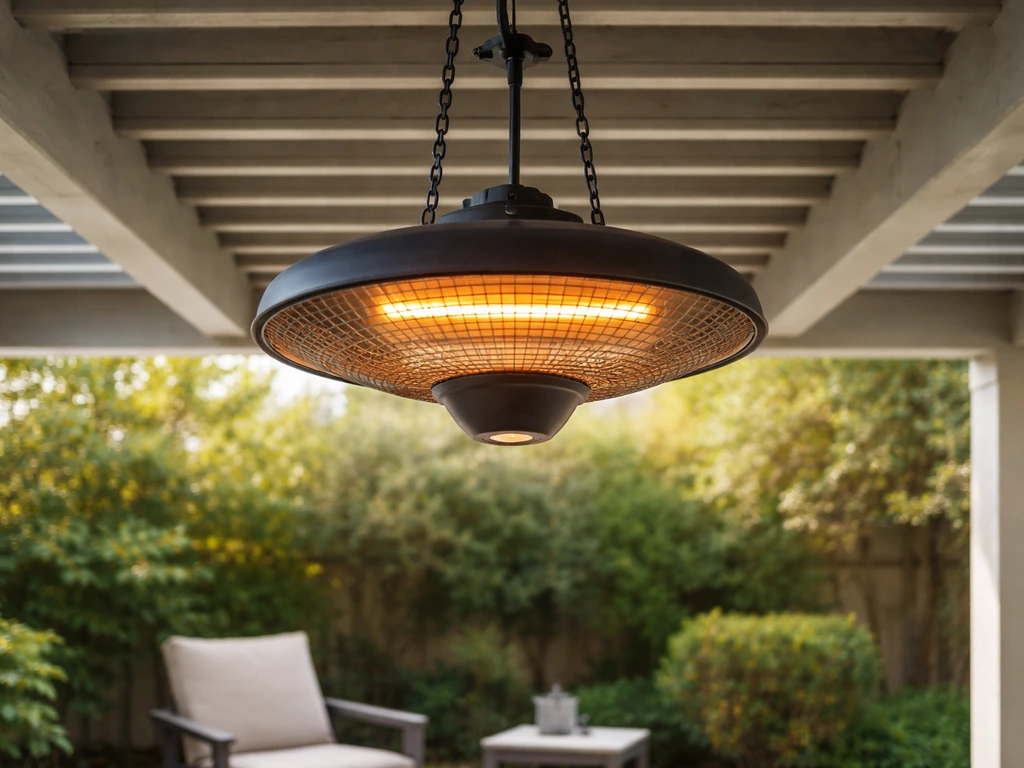
What a hanging electric patio heater is (and when it makes sense)
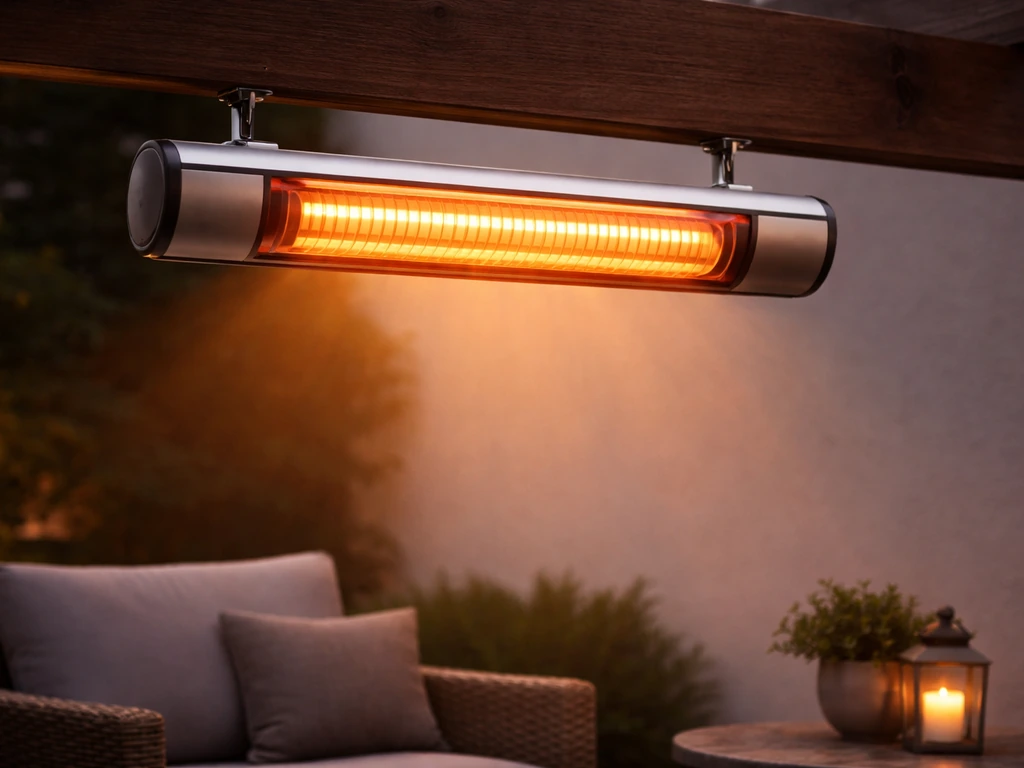
A hanging electric patio heater mounts overhead, either from a ceiling, pergola beam, or joist, and projects radiant heat downward onto the people and surfaces below. Almost all of them use infrared technology, which heats objects and people directly rather than warming the air. That's important outdoors because warm air just drifts away, but infrared warmth stays where it's aimed even in a light breeze.
The hanging format is a smart choice in specific situations. If you have a covered patio, a pergola with solid overhead structure, a screened porch, or a deck with exposed ceiling joists, a hanging heater keeps the floor and furniture space completely clear. It also puts the heat source exactly where you want it: above the seating zone, angled down toward the people sitting there. That placement is far more efficient than a freestanding tower heater sitting off to one side.
When does it NOT make sense? If you have no overhead mounting point, a completely open patio with no roof or pergola, or a ceiling that's below 8 feet, a hanging heater gets tricky. Wall-mounted models are worth considering in those cases, and for open uncovered patios, a freestanding propane unit often works better. The hanging design is also inherently more of an installation project than just plugging in a tabletop heater, so it rewards people who are willing to put in an hour of setup time for a cleaner, more permanent result.
Top hanging electric patio heater picks: what to buy and why
Here are the models I'd recommend today, based on real-world performance, build quality, safety certifications, and value for what you spend.
Stiebel Eltron Sunwarmth CIR 200-2 O (2000W): Best overall
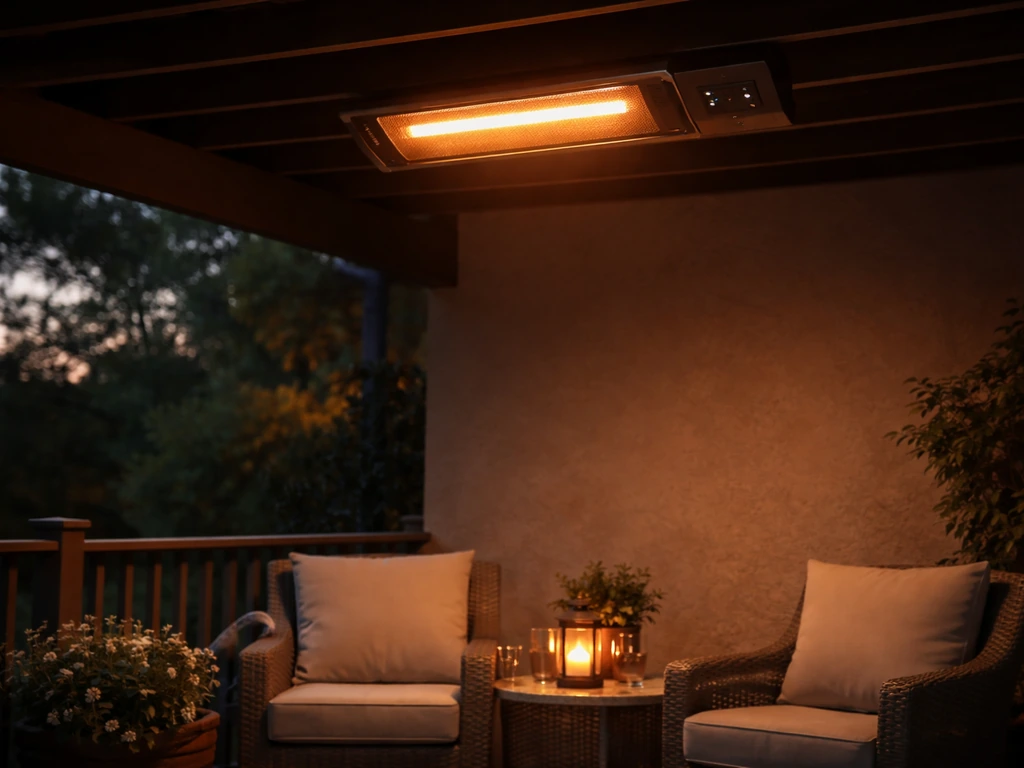
This is the one I keep coming back to for covered patios. The CIR 200-2 O is a 2000W short-wave infrared heater built for outdoor use, UL-certified under ANSI/UL standards, and designed to mount overhead via a sturdy bracket that attaches directly to a structural member. The short-wave infrared output is near-instant, no warm-up time, and the heat hits you the moment you switch it on. For a mid-size covered patio of around 10x12 feet, a single unit is enough. For larger spaces, two units side by side cover the zone well.
- 2000W output, suitable for covered patios up to roughly 120 sq ft per unit
- Short-wave infrared for instant, wind-resistant warmth
- UL/ANSI certified for outdoor use
- 8-foot cord with strain-relief mounting guidance in the installation manual
- Clean, commercial-style design that doesn't look out of place on a nice patio
Stiebel Eltron Sunwarmth CIR 150-1 O (1500W): Best for smaller covered spaces
If you have a small screened porch, a tight covered deck, or a modest pergola seating area, the CIR 150-1 O is the practical pick. It runs on a standard 120V circuit (unlike the 2000W and 4000W models that require 240V), which means you can likely plug it in without any electrical upgrades. Running cost is about $0.24 per hour at the U.S. average rate of around $0.16/kWh, which is genuinely affordable for evening use.
Stiebel Eltron Sunwarmth CIR 400-2 O (4000W): Best for large commercial-style installations

The 4000W model is overkill for a residential deck, but it's excellent for large covered patios, restaurant outdoor dining areas, or covered pavilions where you need to blanket a broad zone with heat. It requires a 240V dedicated circuit, so factor in electrical work costs. At $0.64 per hour to run, it's the most expensive to operate, but for what it heats, it's efficient.
Infratech CD Series: Best for premium coverage and flexibility
Infratech makes commercial-grade hanging and surface-mount electric infrared heaters that are popular in hospitality settings and high-end residential patios. Their CD-series models, mounted between 8 and 12 feet high, deliver approximately an 11x11-foot coverage footprint per heater according to Infratech's own sizing guide. They're built tough, have clean sightlines, and their heat output is consistent and well-distributed. The downside is the price: Infratech heaters sit at a higher price point than Stiebel Eltron. If budget is the main constraint, Stiebel Eltron wins. If you want the premium build and are doing a full outdoor renovation, Infratech is worth the investment.
| Model | Wattage | Coverage (approx) | Voltage | Best For | Est. Running Cost/hr |
|---|---|---|---|---|---|
| Stiebel Eltron CIR 150-1 O | 1500W | ~100 sq ft | 120V | Small covered porches/decks | ~$0.24 |
| Stiebel Eltron CIR 200-2 O | 2000W | ~120 sq ft | 240V | Mid-size covered patios | ~$0.32 |
| Stiebel Eltron CIR 400-2 O | 4000W | ~200+ sq ft | 240V | Large patios, commercial use | ~$0.64 |
| Infratech CD Series | 1500–4000W (varies) | ~11x11 ft per unit | 240V (most) | Premium residential/commercial | ~$0.24–$0.64 |
Heat coverage and performance: what the numbers actually mean
Manufacturers quote coverage areas, but those numbers assume ideal conditions: a still night, a ceiling at the right height, and people sitting directly in the beam. Real life is messier. Here's how to read the specs honestly.
Mounting height matters more than wattage alone
Infratech's reference data is a good benchmark: a heater mounted between 8 and 12 feet overhead delivers roughly an 11x11-foot comfort zone. Drop the mounting height below 8 feet and the beam gets concentrated and hot in a small spot. Go above 12 feet and the warmth spreads out so much that people feel only mild warmth. The 8-to-12-foot sweet spot is real, and it lines up with what I've seen in practice. If your covered patio has a standard 9-foot ceiling, you're in great shape.
Beam pattern and where warmth lands
Short-wave infrared heaters like the Stiebel Eltron CIR series emit a focused, directional beam. That's great for precision: you can aim the heat exactly where people sit. The flip side is that if someone is sitting at the edge of the seating area outside the beam, they'll feel significantly less warmth. Angling the heater slightly toward the center of the seating zone (rather than straight down) helps spread coverage across a dining table or outdoor sofa grouping more evenly. Reflective surfaces like light-colored walls or ceilings nearby also bounce warmth back into the space, improving perceived comfort noticeably.
Wind and weather effects
Infrared heat is more wind-resistant than convective heat, but it's not immune. In very cold or windy conditions, Infratech's own manual notes that effective coverage area can shrink. On a cold, gusty night, expect real-world comfort to match roughly 70-80% of the quoted coverage area. A 1500W heater that heats 100 square feet comfortably on a calm 45°F evening might feel borderline adequate at 35°F with a steady breeze. Sizing up one wattage tier for exposed or colder climates is a reasonable hedge.
Installation, safety, and mounting requirements
This is the section most buyers skim and then regret. Hanging a 2000W electric heater overhead is a permanent installation with safety implications. Take 10 minutes to understand the requirements before you buy.
Mounting structure: use a real structural member

The Stiebel Eltron CIR installation manual is explicit: the mounting bracket must be secured to a structural member, like a ceiling joist, pergola beam, or wall stud. Drywall anchors are not acceptable for a hanging heater. If your covered patio has a wood-framed ceiling or exposed pergola beams, you're in good shape. If you have a finished porch ceiling with no accessible joists, you'll need to locate them with a stud finder or plan to add a mounting block. This is one step you don't want to shortcut.
Clearance requirements
The CIR installation manual specifies a minimum 36 inches (92 cm) of clearance from combustible materials in the clearance diagram. That means at least 3 feet between the heater body and any wood, fabric, or other combustibles: think ceiling boards, pergola beams directly adjacent, outdoor curtains, or shade sails. Plan your mounting location with a tape measure before drilling anything. Most standard installations on open pergolas easily meet this requirement, but enclosed porches with low ceilings and fabric curtains need careful thought.
Electrical requirements and GFCI protection
For 1500W/120V models, you need a grounded 15-amp or 20-amp outdoor outlet within reach of the 8-foot power cord (the CIR manual specifically notes the cord is 8 feet and the outlet location should be planned so the cord is never pulled taut). For 2000W and 4000W models requiring 240V, you need a dedicated 240V circuit, which typically means an electrician visit if you don't already have one. Under NEC 2023 (section 210.8(F)), outdoor receptacles must have GFCI protection. If your outdoor outlet doesn't have it, have it upgraded before installing the heater. This is both a code requirement and a genuine safety measure.
Covered vs. uncovered patios: IP ratings
A hanging electric heater used on a fully open (uncovered) patio needs a high IP (Ingress Protection) rating to handle rain exposure, typically IP55 or better. Most residential hanging infrared heaters are designed for covered or semi-covered outdoor use, not direct rain exposure. If your space is fully exposed to weather, check the IP rating carefully before buying. Under a solid roof or deep pergola overhang, most outdoor-rated hanging heaters perform reliably. The Stiebel Eltron CIR "O" (outdoor) series models are rated for outdoor use but are best suited to covered or semi-covered installations.
Running costs and how electric compares to propane and natural gas
Operating cost is where electric hanging heaters get an honest mixed verdict. Here's the math and the honest comparison.
Electric running cost estimates
At the U.S. average residential electricity rate of roughly $0.16 per kWh, a 1500W heater costs about $0.24 per hour to run (1.5 kWh × $0.16). A 2000W unit runs about $0.32 per hour, and a 4000W model costs around $0.64 per hour. For a typical 3-hour evening session, that's $0.72, $0.96, and $1.92 respectively. Over a full patio season (say 60 evenings of 3-hour use), you're looking at roughly $43 to $115 in electricity depending on the model. That's genuinely reasonable, especially with no fuel to buy or store. Keep in mind that electricity rates vary significantly by state: California and New York pay well above the national average, so adjust the math for your location. For example, NYSERDA publishes a “Monthly Avg Electricity , Residential” price in $/kWh (cents/kWh) that you can use as a local, period-specific rate assumption NYSERDA’s “Monthly Avg Electricity – Residential” price in $/kWh.
Electric vs. propane vs. natural gas
| Fuel Type | Typical Running Cost | Installation Complexity | Best For | Key Trade-off |
|---|---|---|---|---|
| Electric (hanging) | ~$0.24–$0.64/hr | Moderate (wiring/mounting) | Covered patios, permanent installs | Higher per-kWh cost vs. gas in some regions |
| Propane (freestanding) | ~$0.40–$0.80/hr (varies with tank prices) | Low (no install needed) | Open patios, portability | Fuel storage, refills, CO risk in enclosed spaces |
| Natural gas | ~$0.15–$0.30/hr | High (gas line required) | Permanent outdoor kitchens, large patios | Upfront plumbing cost, not portable |
| Pellet | Variable, labor-intensive | High | Ambiance-focused, rural settings | Requires fuel management, smoke, not instant heat |
Electric hanging heaters win on convenience, safety (no combustion, no CO risk), and suitability for covered enclosed spaces where propane or natural gas heaters are genuinely dangerous due to carbon monoxide buildup. Propane freestanding heaters win on portability and upfront cost. Natural gas wins on long-term running cost if you already have a gas line and plan a permanent installation on a large open patio. For covered porches, screened rooms, or pergolas, electric is almost always the right choice on safety grounds alone.
How to choose the right hanging heater for your patio
Work through this in order and you'll land on exactly the right spec before you ever open a product page.
- Measure your patio and your ceiling height. Write down the square footage of the area where people actually sit (not the whole patio) and measure the height from the floor to where you'd mount the heater. If ceiling height is between 8 and 12 feet, you're in the ideal range for most hanging infrared models.
- Count how many 11x11-foot zones you need to cover. Divide your seating area's square footage by roughly 120 (the practical coverage per 1500W–2000W unit in covered conditions). Round up. That's how many heaters you need.
- Check your electrical supply. For a 1500W/120V model, do you have a grounded outdoor outlet within 8 feet of the mounting point? For a 2000W or 4000W model, do you have a 240V circuit available? If not, factor in electrician costs.
- Confirm your mounting structure. Find your ceiling joists, pergola beams, or overhead structural members. Make sure you can attach a mounting bracket securely. If you can't locate a structural member, plan to add a mounting block before buying.
- Check clearances. Measure 36 inches in every direction from your planned mounting location. Are there combustible materials (wood beams, fabric curtains, shade sails) within that radius? If yes, adjust the location or choose a different mounting point.
- Consider your climate. If you're in a colder region (sub-40°F evenings are common), or your patio gets regular wind, size up by one wattage tier from what the square footage calculation suggests.
- Set your budget and pick your model. For most covered residential patios: the Stiebel Eltron CIR 150-1 O (1500W) for smaller spaces on a 120V circuit, the CIR 200-2 O (2000W) for mid-size spaces with 240V available, or an Infratech CD-series unit if you want the premium build and are doing a full installation.
One thing worth checking before you finalize: if you're in the UK or shopping internationally, the product ranges and voltage standards differ enough that a separate review of UK-specific hanging heater options is worth consulting. If you're comparing options in the UK, look specifically for the best hanging patio heater UK models that match your voltage and covered or semi-covered setup. And if a full ceiling mount isn't feasible but you have a good wall surface nearby, wall-mounted infrared heaters solve the same comfort problem with a simpler installation. If you're comparing wall-mounted options, wall mounted patio heater reviews can help you shortlist the most reliable models for your space and climate. The decision framework above still applies either way: square footage, ceiling/mounting height, available power, and clearances are the four numbers that determine the right heater regardless of whether it hangs from above or mounts to the side.
The bottom line: take your measurements first, confirm your electrical supply, find a structural mounting point, and then buy to spec. A 2000W short-wave infrared hanging heater on a properly wired 240V circuit, mounted 9 feet overhead on a covered patio, will make that space genuinely comfortable from October through April without any fuel deliveries, gas lines, or combustion risks. That's a hard combination to beat. If you want a quick starting point before comparing wattage and mounting height, these red mountain valley patio heater reviews can help you narrow down the best option for your setup.
FAQ
How do I know whether I should buy one 1500W/2000W heater or multiple units for my patio?
Start with the seating area you want to warm, not the full patio dimensions. If people are spread across a wide table or multiple seating clusters, use 2 units aimed to overlap slightly in the center gap. In practice, if a heater’s quoted coverage only works when people sit directly in the beam, multiple smaller placements usually feel more even than one unit aimed too broadly.
Will a hanging infrared heater warm the whole patio evenly?
Not usually. Short-wave infrared is directional, so comfort drops off toward the edges of the beam. Aim the heater toward the center of your seating zone, and if you have reflective surfaces nearby (light-colored walls or a nearby ceiling), the perceived warmth spreads further. If you need true perimeter-to-perimeter warmth, consider either multiple heaters or a different heater style.
What happens if my patio is colder or windier than the manufacturer’s assumptions?
Expect reduced effective coverage. A practical rule is to size up one wattage tier for exposed areas, colder evenings, or steady wind. Also consider that heater placement matters, higher mounting can spread the beam less effectively in some conditions, so keep the installation within the recommended height range for your model.
Can I install a hanging patio heater on a ceiling made of drywall or plaster only?
No. The mounting must anchor to a structural member such as joists, pergola beams, or wall studs. Drywall anchors and non-structural fastening are not appropriate for overhead radiant heaters because the installation must resist both the heater’s weight and vibration over time.
Do I need an electrician for the 240V models, or can I handle it myself?
If you do not already have the correct 240V circuit routed to a safe location, plan on hiring an electrician. The work is not just “adding a plug,” it typically involves verifying circuit capacity, correct breaker sizing, proper outdoor-rated wiring, and GFCI requirements where required by code.
Is a GFCI outlet definitely required for outdoor hanging electric patio heaters?
Outdoor receptacles generally require GFCI protection under current NEC rules. If your receptacle lacks GFCI, you should have it upgraded before installation. This is both a compliance issue and a safety improvement, especially for overhead installations where water exposure is common.
What safety clearance matters most, combustible distance or spacing to the seating area?
Both matter, but combustible clearance is the hard constraint. Follow the manufacturer’s specified minimum distance from combustibles (wood, fabric curtains, shade sails, and similar materials). After that, think about human comfort and glare, adjust aim so the beam lands on the seating area rather than directly toward faces.
How waterproof does my heater need to be if my patio is only partially covered?
Check the IP rating specifically for your situation. If you have any direct exposure from rain, sleet, or wind-driven water, choose an outdoor-rated heater with a high IP rating (commonly IP55 or better for residential use). If the heater is truly under a solid roof with limited splash, the risk is lower, but you still want outdoor-rated components for condensation and wash-down exposure.
Can I run a 120V 1500W hanging heater on a regular extension cord?
You should avoid extension cords for overhead heating appliances unless the manufacturer explicitly approves them. Use the correct grounded outdoor outlet near enough that the heater’s power cord is not pulled taut. If the outlet isn’t positioned properly for cord slack, address the outlet location or use a compliant alternative per the heater’s instructions.
How can I reduce the chance of the heater’s heat feeling “too hot” in one spot?
Re-aim and adjust placement within the allowed mounting range. Slightly angling the heater toward the center seating zone can spread warmth across a dining table or sofa grouping. Also consider that reflective nearby surfaces will bounce more heat back, which can make one section feel hotter than expected.
Do hanging infrared heaters work through umbrellas, glass, or screens?
They work best when the beam can reach people and surfaces with minimal obstruction. Heavy or opaque materials can block or diffuse the infrared beam, reducing effectiveness. If you’re dealing with glass or mesh screening, test placement directionally, since comfort may drop sharply if the beam is interrupted or reflected away.
What should I check for mounting height if my ceiling is lower than 8 feet?
If you cannot reach the recommended height range, expect a tighter hot spot and less even coverage. You may need a different wattage, a different mounting approach (for example wall-mount infrared), or a different heater type depending on your ceiling height. Do not mount below the manufacturer’s guidance without confirming clearances and aiming behavior.
How do I estimate yearly operating cost more accurately than a simple “3-hour evening” assumption?
Multiply your actual use pattern, number of evenings, and average session length by the heater’s kWh draw. For example, 2000W is 2 kWh per hour. Then adjust for your local electricity rate and consider that windier or colder nights may require higher wattage or longer run times to reach the same comfort level.