
The best patio heater in Ireland for most people is an electric infrared heater in the 2kW to 3kW range, wall-mounted or ceiling-mounted overhead, ideally with IP65 weatherproofing. It heats people directly rather than warming the air, which means wind doesn't kill the warmth the moment it kicks on. If you don't have a power socket outside, a propane/LPG freestanding heater is the next best thing, especially if you want portability. Natural gas and pellet heaters are solid options in specific situations too, and I'll walk you through all of them so you can match the right type to your actual setup.
Best Patio Heaters Ireland Buying Guide 2026

Willa Brennan
29 Jun 2026
How to choose the right patio heater for an Irish patio
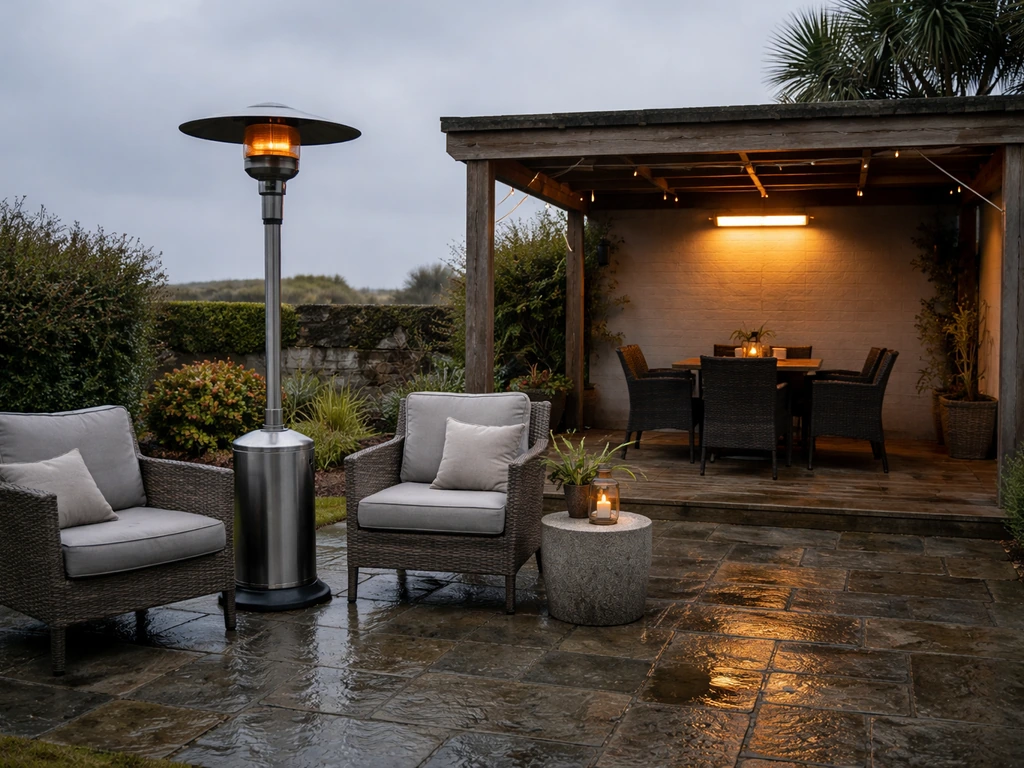
Ireland's climate throws a few curveballs at patio heating. You're dealing with Atlantic wind, rain, cool temperatures even in summer, and the fact that most patios are either completely exposed or only partially sheltered. Before you spend any money, you need to answer four questions honestly about your space.
Is your patio covered or open to the sky?
This is the single biggest factor. A covered patio (pergola with a solid roof, lean-to, or glazed extension) lets you use almost any heater type effectively, including convection-style models that warm the air. An open patio loses warm air constantly, so you need radiant or infrared heating that warms bodies and surfaces directly rather than the surrounding air. On an open Irish patio, a convection-style patio heater is basically warming the sky.
How exposed is it to wind?
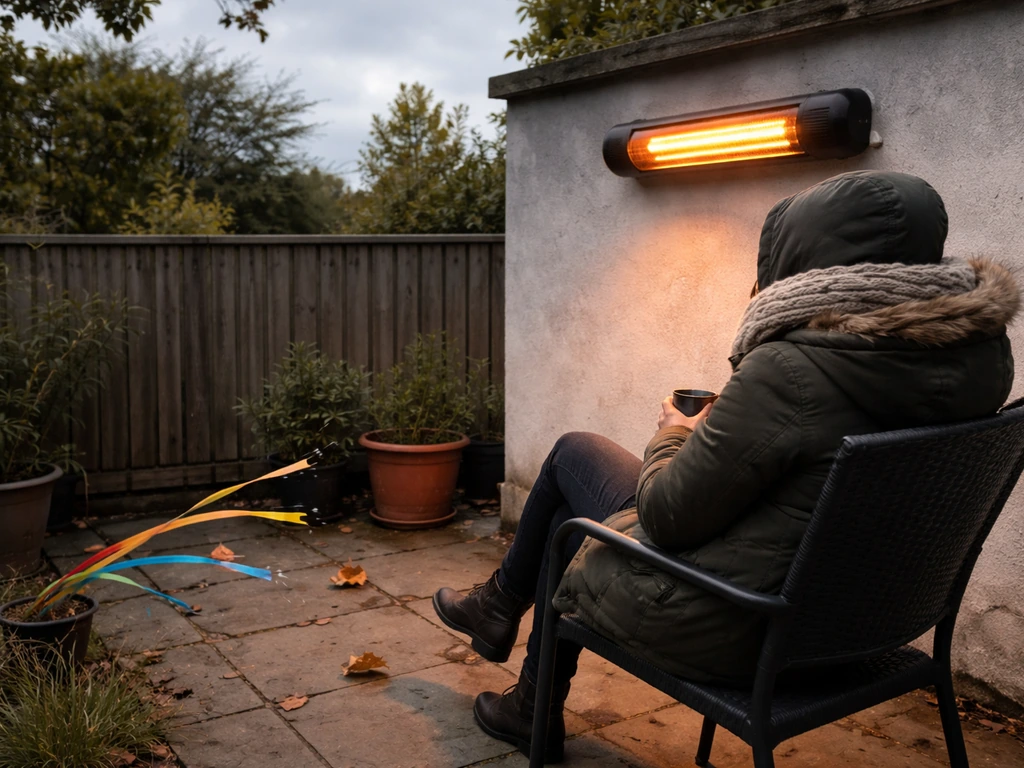
Wind is the enemy of outdoor heating. Research from Bromic confirms that convection heating (warm air) is dispersed outdoors very quickly, while radiant heat warms people and surfaces directly and stays effective even when wind is present. If your patio regularly catches a breeze from the west (very common in Ireland), go with infrared or radiant heating and consider adding a windbreak: a glass panel, a dense hedge, or even a well-positioned umbrella. Windbreaks can meaningfully cut your running costs too by keeping the heated zone contained.
Ceiling height and clearances matter more than people think
If you're mounting a heater on a pergola or lean-to ceiling, most infrared heaters need at least 2.1 to 2.4 metres of clearance from the heating element to the people below, depending on the wattage. Higher-output models (3kW+) often need more. Check the manufacturer's minimum height spec before buying anything wall or ceiling-mounted. For freestanding propane or LPG mushroom heaters, the standard height is around 2.2 metres, which works fine in most open patio setups but can be too tall under a low pergola.
How big is the seating area and how many people?
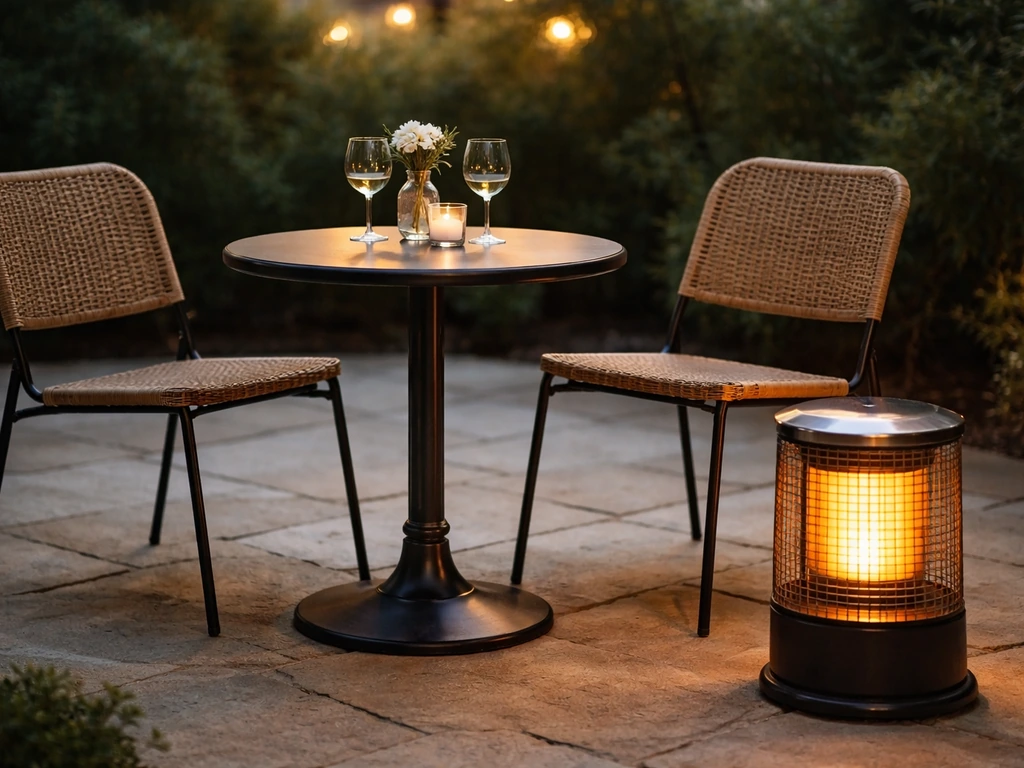
A small bistro table for two is a completely different problem from a six-person dining set on a 20m² patio. A table top patio heater is a good option for small seating areas or occasional use when you want focused warmth close to where people are sitting. The size of your seating area determines how many heaters you need and what output is appropriate. Don't just buy the biggest heater you can find and point it at everyone. Placement and spread matter as much as raw power, and I'll cover that in the sizing section below.
Patio heater types explained
There are five main fuel/technology types to consider in Ireland. Each has genuine strengths and real drawbacks depending on your setup.
Electric infrared heaters
These are my top recommendation for most Irish patios. They use infrared radiation to warm people and objects directly, just like the sun, without heating the air in between. That's why they work well even in windy or partially exposed conditions. They're instant-on (no warm-up wait), clean to run, and easy to mount overhead or on a wall. Shortwave infrared models (the ones with a bright orange glow) are best for fully exposed outdoor spaces. Medium or longwave infrared (darker, dimmer elements) suit covered patios where some air warming is acceptable. Most residential outdoor infrared heaters run between 1.5kW and 3kW. Look for IP55 or IP65 weatherproof rating for Irish conditions.
Propane and LPG freestanding heaters
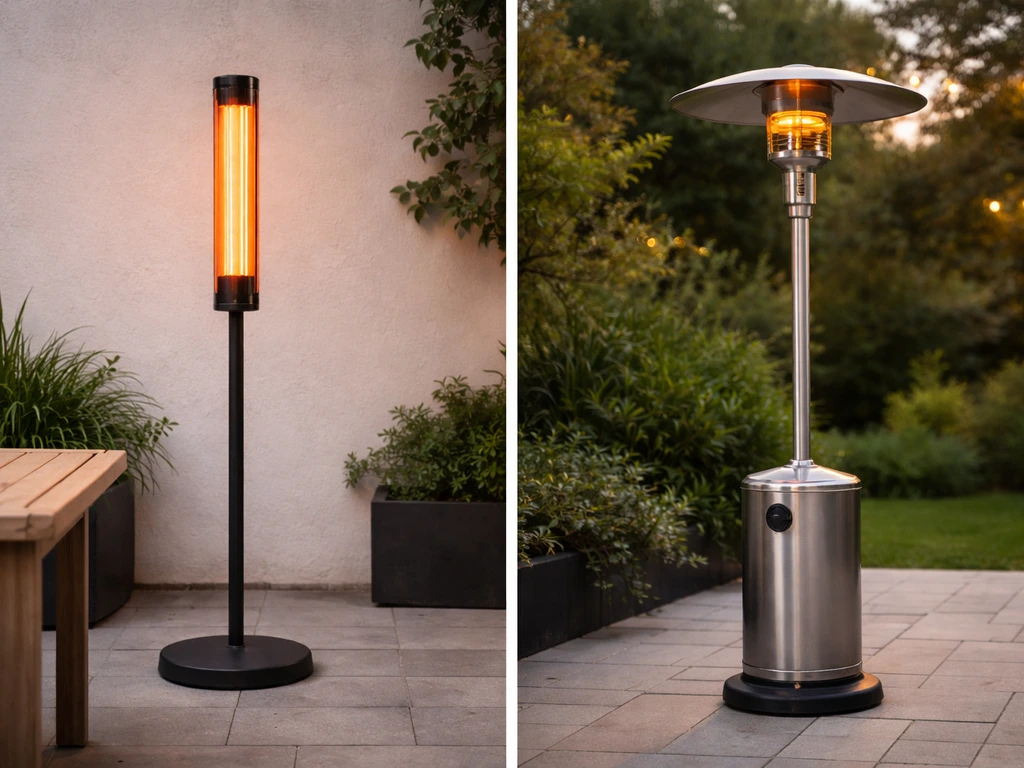
The classic mushroom-style patio heater most people picture uses propane or LPG (liquefied petroleum gas), which is the same thing in Ireland. They're completely portable since they need no electrical connection, which is their main selling point. Output ranges from around 10kW to 15kW (roughly 34,000 to 50,000 BTU), making them powerful enough for larger gatherings. The downsides: they produce convective warm air that blows away outdoors, they need gas bottles replaced or refilled, they're top-heavy in wind and need a weighted base, and the flame heats air more than it radiates warmth to people. For an exposed, breezy Irish patio, a 15kW LPG mushroom heater running full blast is less effective than a well-placed 2.5kW infrared heater. That said, they're widely available at hardware stores and DIY chains across Ireland, they're easy to move, and for occasional use they're very convenient.
Natural gas heaters
Natural gas patio heaters connect to your home's gas supply via a permanent pipe run. They're common in the UK but less widely used in Ireland, partly because natural gas availability is more limited outside Dublin and major cities. Where natural gas is available, these heaters make a lot of sense for permanent installations: no gas bottles to manage, lower fuel cost per kWh than LPG, and high consistent output. The trade-off is the installation cost (a registered Gas Safe/RGII installer must do the pipe work) and the fact that you're committing to a fixed location.
Pellet heaters
Pellet patio heaters are less common but growing in popularity as people look for more sustainable options. They burn compressed wood pellets and produce a visible flame, which many people find aesthetically appealing. They're best suited to sheltered or semi-covered patios where the fire can draw and burn steadily. Wind and rain make them impractical in exposed conditions. Running costs per kWh can be lower than electricity, but the experience is more involved: you need to load pellets, manage ash, and the unit needs more maintenance than electric. Think of a pellet heater as a practical fire pit alternative rather than a set-and-forget heating solution.
Tabletop patio heaters
Tabletop heaters (electric or small LPG) are a separate category worth mentioning. They're compact, portable, and perfect for small gatherings at a single table. A tabletop electric infrared heater on a 60cm table can comfortably warm two to four people without heating the entire patio. These are a popular option available at retailers like Argos, B&Q, and Dunelm, and they're often the most affordable entry point. If you're specifically researching tabletop options for a small covered space, they're worth looking at in detail separately.
Sizing and heat coverage: how much do you actually need?
Here's a practical rule of thumb: for outdoor infrared heating in an Irish climate, budget for roughly 1kW to 1.5kW of infrared output per person in an open or partially exposed setting. In a covered, sheltered space, you can drop that to around 0.5kW to 1kW per person. For LPG mushroom heaters, one 13kW to 15kW unit covers a rough circle of about 3 to 4 metres in diameter, so for a large patio with multiple seating groups, you may need two or three units.
| Patio size / use case | Recommended output | Suggested setup |
|---|---|---|
| Small table for 2 (e.g. bistro set) | 1.5kW to 2kW total | 1x tabletop or wall-mounted infrared heater |
| 4-person dining set, covered patio | 2kW to 3kW total | 1x 2.5–3kW ceiling or wall-mounted infrared |
| 6-person dining set, open patio | 4kW to 6kW total | 2x 2kW–3kW infrared or 1x 13kW+ LPG mushroom |
| Large open patio, 20m²+, multiple zones | 8kW+ total | 2–3x LPG mushroom or 3–4x infrared units zoned |
Remember that these are starting points. If your patio faces west (prevailing wind direction in Ireland), add 20–30% more capacity or invest in a good windbreak. If you're under a solid roof with low ceilings, you can often reduce output because the heat stays in the space better.
Safety, placement, and installation
I want to spend a bit of time on this because it matters. Patio heaters placed badly are either uncomfortable, ineffective, or genuinely dangerous.
Electric infrared placement
Mount overhead or angled down at roughly 45 degrees toward the seating area. Most residential units should be at least 2 metres above head height, with higher-output models (3kW+) needing 2.4 metres or more. Keep clear of combustibles including umbrellas, awning fabric, and overhanging plants. Ensure the heater is rated IP44 at minimum for outdoor Irish use, and IP65 if it's exposed to direct rain. All outdoor electrical installations must be wired by a registered electrician and comply with Irish electrical regulations (ETCI standards). Use an RCD-protected outdoor socket.
LPG and propane heater safety
Freestanding LPG mushroom heaters must be placed on a stable, level surface. Use a weighted base ring if provided. Keep a minimum of 60cm clearance from any flammable structure, awning, or furniture. Never use indoors or in enclosed spaces: LPG produces carbon monoxide and requires open-air ventilation. Store spare gas bottles outdoors in an upright, ventilated location away from heat sources. Check hoses and connections for cracks or wear before each season and replace them if in doubt. In windy conditions, a mushroom heater can tip: stake or tether the base if you're on a breezy site.
Natural gas installation
Any natural gas pipe run to an outdoor heater must be installed and certified by an RGII-registered gas installer in Ireland. This is a legal requirement, not optional. The heater itself must be rated for outdoor use. Permanent natural gas installations are generally not suitable for covered patios with low ceilings unless ventilation is adequate. Get the installer to assess the space before committing.
Where to position heaters for maximum comfort
Position heaters so they point toward people, not open sky or walls. Overhead mounting directly above or slightly behind the seating position works well for infrared. For side-mounted heaters, aim at a 45-degree angle toward the main seating area. Adding even a basic windbreak (glass panel, bamboo screen, brick wall) on the prevailing wind side dramatically improves comfort and can meaningfully reduce how much energy you need. Research from Sunpak confirms that windbreaks are one of the most cost-effective improvements you can make to an outdoor heating setup.
Running costs in Ireland: electricity vs LPG vs pellet
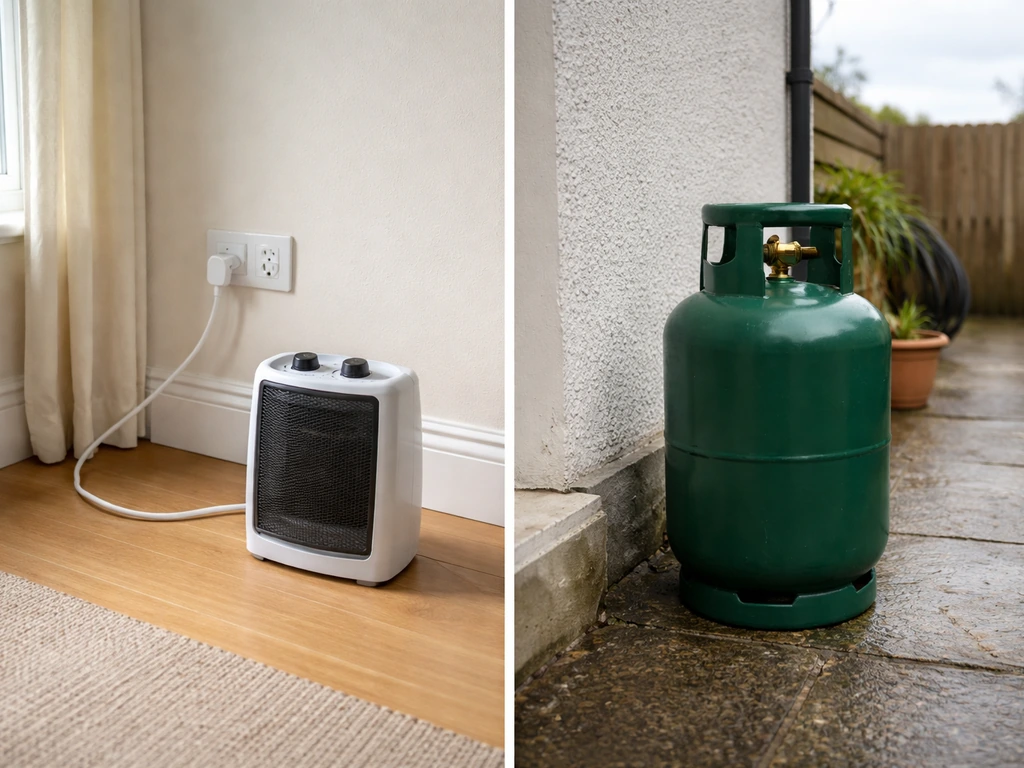
Running costs are a real consideration in Ireland, where electricity prices have been elevated in recent years. Here's a practical breakdown based on typical 2025-2026 Irish energy prices.
| Fuel type | Approx. cost per kWh (Ireland, 2026) | Cost per hour (2kW heater) | Notes |
|---|---|---|---|
| Electricity (grid) | ~€0.30–€0.38/kWh | €0.60–€0.76/hr | Clean, instant, no fuel handling |
| LPG / propane (bulk) | ~€0.10–€0.15/kWh | €0.20–€0.30/hr | Cheaper per kWh but bottles add faff |
| Natural gas (piped) | ~€0.08–€0.12/kWh | €0.16–€0.24/hr | Cheapest fuel where available |
| Wood pellets | ~€0.07–€0.12/kWh | €0.14–€0.24/hr | Low fuel cost, higher maintenance effort |
At first glance, electricity looks expensive. But a well-placed 2kW infrared heater is genuinely heating people, so it's comparable in real comfort to a 10kW–13kW LPG mushroom heater losing most of its heat to wind. The effective cost per person-hour of comfort is much closer between electric infrared and LPG than the raw per-kWh numbers suggest. If you're heating frequently (multiple evenings a week through the season), a natural gas permanent installation or an LPG setup with bulk cylinder delivery starts to make more financial sense. For occasional use, electric is simpler and still very reasonable.
Best options by use case
Rather than naming a single winner (because there isn't one for every situation), here's how I'd match heater categories to common Irish patio scenarios.
Best overall: wall or ceiling-mounted electric infrared (2kW to 3kW)
For most Irish homeowners with a covered or semi-covered patio and an outdoor power socket, a quality IP65-rated wall or ceiling-mounted infrared heater in the 2kW to 3kW range is the best all-round answer. Brands like Herschel, Infralia, Bromic, and Sunred all produce solid residential-grade units available in Ireland. Look for shortwave or medium-wave infrared with a tiltable mounting bracket, a remote control or smart timer, and CE marking. Expect to pay €150–€400 for a quality unit, plus installation.
Best for small spaces and balconies: tabletop electric infrared
For a balcony, a small courtyard, or a two-person bistro setup, a tabletop infrared heater is ideal. They're compact, inexpensive (often €40–€120), and don't require any installation. They produce focused warmth at table height, which is exactly where you need it. Models from Sunred, Kettler, and various own-brand options at Irish retailers work well. If you're exploring tabletop patio heater options, specific retailers like Argos, B&Q, and Dunelm each carry their own ranges worth comparing. If you're shopping specifically for a table top patio heater, B&Q can be a good place to check current tabletop infrared options tabletop patio heater options.
Best for windy, exposed patios: shortwave infrared (wall-mounted)
If your patio is exposed to the prevailing westerly wind with no shelter, shortwave infrared is the only type that holds up reliably. The radiant heat hits people and solid surfaces and isn't dispersed by wind the way warm air is. Combine a 2.5kW to 3kW shortwave unit with a windbreak on the western side and you'll be surprised how comfortable a breezy Irish patio can feel. Bromic's Tungsten Smart-Heat range and the Herschel Summit series are worth looking at in this category, though premium models can cost €400–€800+.
Best portable option: freestanding LPG mushroom heater
If portability matters, you need to move the heater inside for storage, or you simply don't have an outdoor power socket, a freestanding LPG mushroom heater is the practical choice. A good example you can compare in Ireland is a table top patio heater, including options from retailers like Dunelm. Go for a 13kW minimum output and buy one with a stainless steel head and a weighted base. Popular options in this category from brands like La Hacienda, Fire Mountain, and various hardware store own-brands are widely available at Woodies, B&Q Ireland, and online. Budget €80–€200 for a decent unit and don't forget to factor in ongoing gas bottle costs.
Best fixed installation for frequent use: natural gas or permanent LPG
If you use your patio regularly through autumn and spring and want to minimise the hassle of bottles, a permanent gas installation makes sense. Natural gas (where available in Ireland) piped to a fixed-position heater is the lowest-cost-per-hour option and very convenient. Where natural gas isn't available, a bulk LPG tank with a dedicated line is a similar solution at slightly higher running costs. Both require a registered installer and represent a higher upfront investment (€500–€1,500+ including installation), but for serious outdoor entertaining they're well worth it.
Maintenance and seasonal care
Patio heaters in Ireland earn their keep through shoulder season use (March to May, September to November), which means they often sit unused in winter. A little bit of maintenance goes a long way.
Electric infrared heaters
- Wipe the reflector dish clean at the start and end of each season. Dust and dirt reduce efficiency noticeably.
- Check mounting brackets and fixings annually for rust or loosening, especially in coastal locations.
- Inspect the power cable and plug for cracking or moisture ingress. Replace if in doubt.
- If the heater is IP65 but left outdoors year-round, a weatherproof cover in winter extends its lifespan significantly.
- Test the RCD and outdoor socket before first use each spring.
LPG and propane heaters
- Before each season, check the regulator hose for cracks, brittleness, or damage and replace it if it's more than 5 years old or shows any wear.
- Clean the burner head with a soft brush. Spider webs and insects are a surprisingly common cause of ignition failure.
- Check the igniter electrode and clean off any carbon deposits.
- Store the heater indoors or under a waterproof cover when not in use. Mushroom heaters hate prolonged exposure to Irish rain.
- Never store a connected gas bottle inside. Always disconnect and store bottles upright in a ventilated outdoor area.
Natural gas and permanent installations
Permanent gas installations should be inspected by an RGII-registered gas fitter every two to three years as a minimum. Check the heater's air intake vents and clean them seasonally. If the pilot light keeps going out or the burner produces a yellow or uneven flame, get it looked at before continued use.
Pellet heaters
Empty the ash tray after every few uses, or more frequently in heavy use. Clean the burn pot and air inlets at the start and end of each season. Store pellets in a dry location away from moisture as damp pellets cause poor combustion and clogging. Cover or store the unit indoors during winter months.
Your quick checklist before you buy
Run through these questions and you'll land on the right heater with a lot less second-guessing.
- Is my patio covered (solid roof/pergola) or open to the sky? Covered: almost any type works. Open: go infrared or radiant only.
- Is it exposed to wind? Yes: shortwave infrared is essential. Consider adding a windbreak.
- Do I have an outdoor power socket? Yes: electric infrared is the easiest and best option. No: LPG freestanding is your most practical alternative.
- How many people and how large is the seating area? Use the 1–1.5kW per person rule for infrared in exposed conditions.
- Do I want portability or a permanent setup? Portable: freestanding LPG. Permanent: wall/ceiling-mounted infrared or piped gas.
- How often will I use it? Occasional use: electric or portable LPG. Frequent use: permanent gas or large-capacity infrared installation.
- What is my budget? Entry level (€40–€150): tabletop or basic freestanding LPG. Mid-range (€150–€400): quality wall-mounted infrared. Premium (€400+): commercial-grade infrared or permanent gas installation.
- Check the IP rating before buying any electric heater: IP44 minimum, IP65 for exposed positions in Irish rain.
- Check minimum mounting height requirements for any wall or ceiling-mounted unit before buying.
- For any gas installation (natural gas or permanent LPG), budget for RGII installer costs on top of the unit price.
FAQ
Is the best patio heater in Ireland usually infrared, or should I consider convection?
Most people in Ireland will get the best results from an electric infrared patio heater rather than trying to use it as a “space heater.” If your patio is open or windy, prioritize shortwave or medium/longwave infrared and aim for at least 2 kW to 3 kW for small groups, then reduce output only if you have meaningful shelter (solid roof, glazed sides, or a strong windbreak).
Can I mount an infrared patio heater under a pergola or low roof?
Yes, but only if the model is designed for outdoor mounting. For infrared units, check the manufacturer’s minimum mounting height and ensure the beam pattern covers the seating area at your angle (for example, angled down around 45 degrees). If you have a low pergola, tabletop or wall-mounted units that keep safe clearance from combustibles are often easier than overhead mounting.
What IP rating do I really need for Irish outdoor patio use?
For electric infrared heaters, weatherproof rating matters, but placement still matters. Use the manufacturer’s IP guidance, keep electrics protected with proper outdoor sockets (ideally RCD-protected), and avoid aiming the heater at walls or directly at umbrellas or awnings since trapped heat can reduce safety margins.
Will a shortwave infrared heater be too bright to use near the table?
If you plan to run the heater after dark, check whether the infrared element style causes visible glow that affects comfort. Shortwave units typically have a brighter orange appearance, which some people like outdoors and others prefer to avoid under a covered dining area.
When do electric infrared heaters become more expensive than LPG or natural gas?
Electric heaters can be a better value when usage is occasional, because you avoid bottle handling and higher fixed costs. If you heat multiple evenings per week across the season, compare total running cost using your unit’s measured power draw, plus any stand-by consumption, then reassess whether LPG or natural gas is cheaper for your specific schedule.
Can I use a patio heater under a fabric canopy or partially enclosed awning?
Never assume any electric patio heater is safe to use under a sheltered area without checking the clearance, airflow, and controls rating. Confirm the heater’s outdoor use certification and the required clearances to combustibles, especially if your pergola includes fabric canopies or close-set timber beams.
Do smart or timer features on patio heaters save energy, or are they just convenience?
It depends on the control method. Some “remote or smart timer” infrared models still allow output changes only in certain modes, and some require app pairing to use schedules. Before buying, verify whether the schedule works offline (without constant app connection) and whether it has a true low-power setting for milder nights.
Why does my LPG mushroom heater feel weak when it’s windy, and what can I do?
For LPG mushroom heaters, wind resistance improves when the heater has a weighted base, correct cylinder size, and stable placement, but wind can still reduce comfort significantly. If you must use LPG on an exposed patio, pair it with a windbreak and consider positioning so the radiant warmth hits people first rather than trying to “warm the air.”
How do I calculate how many patio heaters I need for my patio size?
A good target is to warm people, not the whole patio. For electric infrared, use the per-person rule as a baseline, then adjust upward if you have a west-facing, breezy site, and adjust downward if you have a solid roof that holds heat. If you’re unsure, it’s usually safer to add one additional heater or reduce seating distance than to buy a single oversized unit.
Are natural gas patio heaters suitable for covered patios in Ireland?
The safest option is to assume you cannot use a natural gas heater on any covered patio with inadequate ventilation unless an installer confirms compliance for your specific space. Natural gas heaters also require a permanent, certified pipe run, so the decision is mostly about feasibility and ventilation rather than heater power alone.
What maintenance checks should I do before each patio-heating season for LPG?
Keep a close eye on flexible hose age and storage conditions. For LPG setups, replace any hose showing cracking, discoloration, or stiffness, and store spare cylinders upright in a ventilated outdoor spot away from heat sources. Also check the connection seals each season, not only when you first notice a problem.
Can a tabletop patio heater cover more than just two people if the patio is partly sheltered?
Many tabletop heaters are designed for small areas, but they are also more sensitive to obstructions. Avoid placing them so the heat line hits table decorations, chairs, or walls that block radiant warmth, and consider whether you need two smaller units aimed at different seating positions instead of one aimed too broadly.
Can I run an electric patio heater using an extension lead?
For electric outdoor heaters, use a genuine outdoor-rated RCD-protected supply, and avoid long extension leads unless the manufacturer explicitly allows them for outdoor use and the cable gauge is sufficient. If you need reliable operation during storms, a wall/ceiling-mounted hardwired option usually reduces hassle and improves safety.
Is it ever safe to use a patio heater indoors during a power cut or when it’s raining?
In most cases, not without a clear outdoor certification. Patio heaters typically have temperature, weather, and sealing requirements that are only guaranteed outdoors. If you want to warm an enclosed space, choose an indoor-rated appliance, since LPG and many outdoor gas heaters are not designed for enclosed areas due to carbon monoxide risk.