
Dunelm's tabletop patio heater range is small but clear: right now, the two main options are both Cosiscoop Fire Lantern models, gas-powered, lantern-style heaters that sit on your table and run off a 190g butane/propane cartridge. If you're expecting a plug-in electric infrared unit, Dunelm doesn't currently stock that in the tabletop category. What you get instead are compact, portable, genuinely attractive lantern heaters that double as a centrepiece and produce a gentle radiant heat, ideal for sitting around on a calm evening.
Table Top Patio Heater Dunelm Guide: Best Compact Options

Willa Brennan
29 Jun 2026
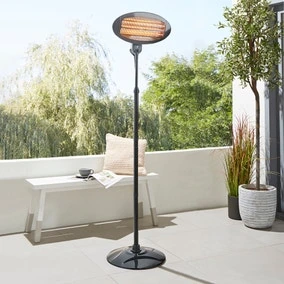
What a tabletop patio heater actually is (and what Dunelm offers)
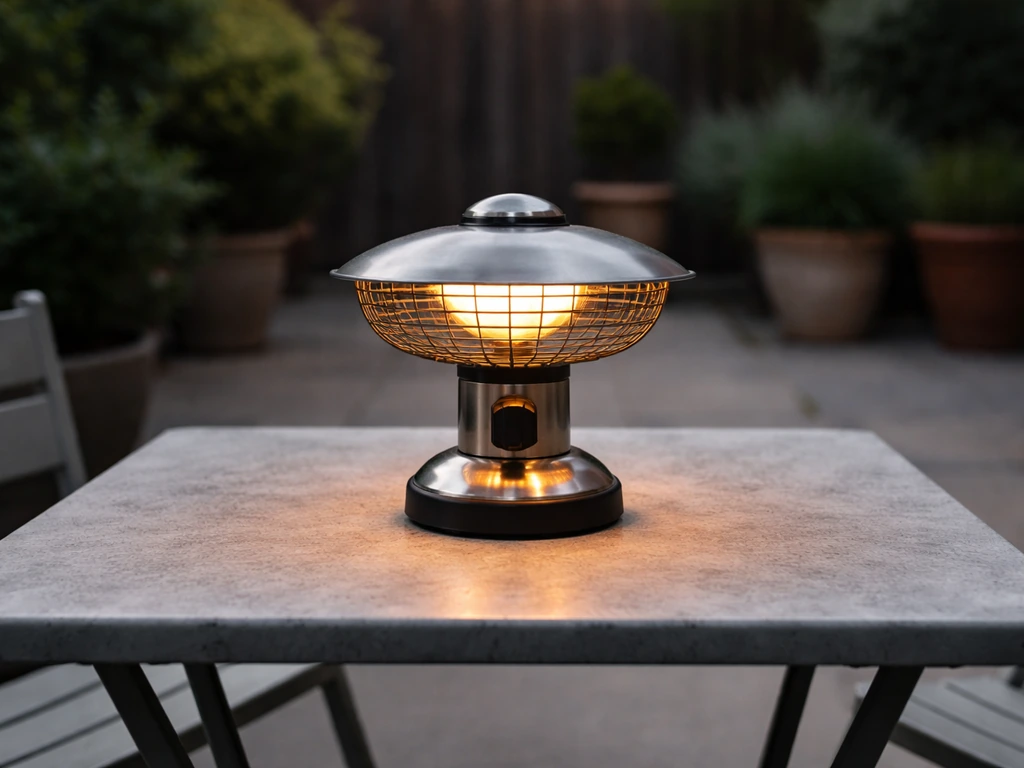
A tabletop patio heater is exactly what it sounds like: a compact heater sized to sit on a table, bistro surface, or patio ledge rather than standing on the ground. They're designed for close-range warmth rather than heating a large area, so the people sitting within a metre or two of the unit feel the benefit directly. They're popular on small balconies, apartment terraces, or intimate garden tables where a full-size standing heater would be overkill or simply won't fit.
Dunelm lists two specific tabletop models at the time of writing, both from the Pacific Lifestyle Cosiscoop range. The standard Cosiscoop Fire Lantern Table Top Heater (priced at £79. 20, down from £99) has a 16cm x 16cm footprint and stands 30cm tall. The Cosiscoop Bamboo Fire Lantern Table Top Heater (£129) is slightly wider at 18cm x 18cm and the same 30cm height, with a bamboo aesthetic.
Both weigh 2. 5kg and run off the same 190g gas cartridge. What Dunelm does not currently offer in this category is an electric tabletop infrared model, so if you need a plug-in option, you'd need to look at freestanding electric heaters or check retailers like Argos or B&Q who carry a broader electric tabletop range.
If you want a similar tabletop setup from another retailer, it is worth checking B&Q for a table top patio heater option Argos or B&Q.
How these heaters work: gas lanterns vs electric infrared
Both Cosiscoop models are gas heaters. You twist in a 190g pierceable butane or butane/propane mix cartridge (no regulator or separate hose required), switch on the gas, and light with a taper or candle lighter. The flame burns inside the lantern body, and the heat radiates outward through the glass or mesh panels. This is radiant heat, meaning it warms objects and people directly in its path rather than heating the surrounding air. That matters outdoors because warming the air is largely pointless on an open patio where it just escapes. Radiant heat is what you actually feel on your skin.
For comparison, electric infrared tabletop heaters (not currently in Dunelm's tabletop range) work on the same radiant principle but use an electric element. The practical trade-off is that electric models need a mains outlet nearby, which limits where you can place them, but they have no fuel to buy or run out of. Gas models like the Cosiscoop are genuinely portable: no cables, no outdoor socket needed, just a spare cartridge. The Cosiscoop's heat output is rated at 0.
29 kW on the Dunelm listing (Pacific Lifestyle's own spec sheet puts the broader Cosiscoop range at up to 0. 4 kW depending on the variant), with a [gas consumption rate of around 30g per hour](https://www. pacific-lifestyle. co.
uk/document/8414/18-543-BK%20-%20Spec%20Sheet. pdf). That's a gentle, atmospheric heat output, not a roaring blaster.
Picking the right heater for your space and wind exposure
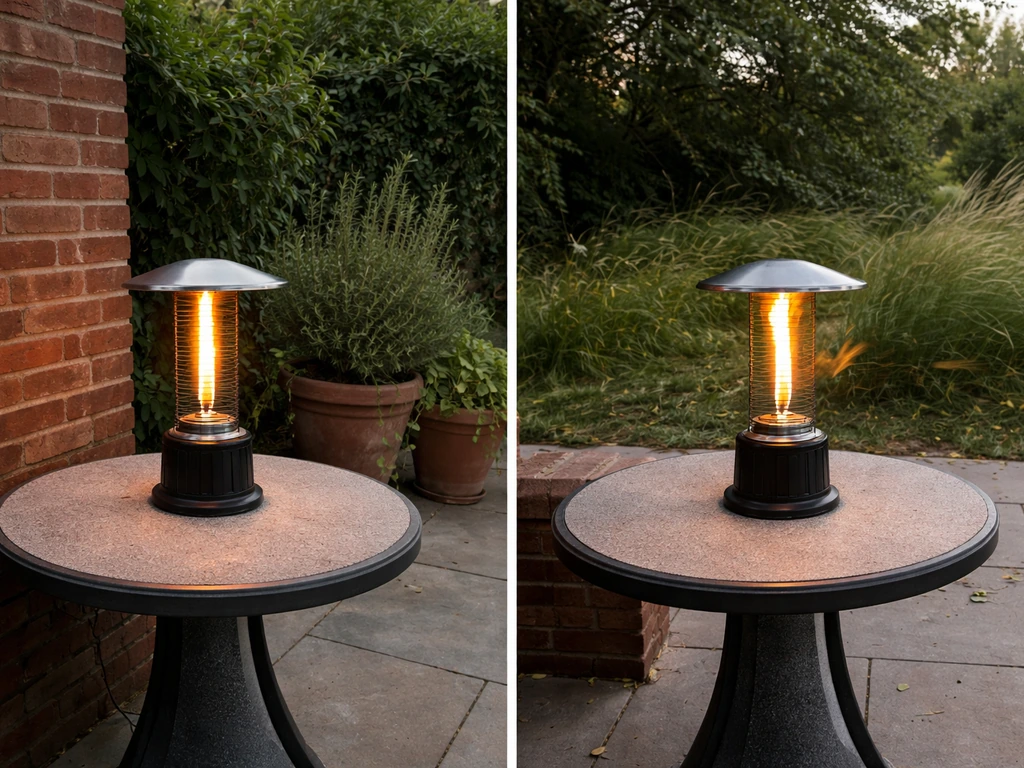
This is where you need to be honest with yourself about your setup. The Cosiscoop is best suited to sheltered, calm conditions. Wind is the enemy of any small gas heater: it disrupts the flame, reduces effective heat output, and in gusty conditions can extinguish the burner entirely. If your patio or balcony is exposed and regularly windy, a tabletop gas lantern will frustrate you. In that scenario, a more powerful freestanding heater or a covered outdoor area makes a bigger difference than any tabletop model. For a wider range of options, you can also compare freestanding solutions in best patio heaters ireland before deciding between a tabletop unit and a bigger outdoor heater freestanding heater.
For covered patios, enclosed balconies, or sheltered garden corners, the Cosiscoop works well. It's best described as a warmth-and-ambience unit rather than a primary heat source for a large group. Think two to four people sitting around a table at a comfortable distance. Neither model provides a specific coverage radius in the Dunelm listing, so you're working from the 0.29 kW output and general radiant heat physics. As a rough guide, expect meaningful warmth within roughly 0.5 to 1 metre of the unit. Beyond that, the heat throw tapers off noticeably.
- Sheltered balcony or covered patio: good fit for both Cosiscoop models
- Open, windy garden: likely to disappoint, consider a freestanding gas or electric heater instead
- Small bistro table for 2: either Cosiscoop model works well as a centrepiece
- Larger table for 4-6 people: you'd need two units or a higher-output heater
- No outdoor mains socket available: gas lantern is ideal since there's no cable needed
Safety, setup, and placement: what to check before you light up
Both Cosiscoop models are explicitly marked as safe to use on wooden decking, which is a meaningful reassurance since a lot of tabletop heaters can't make that claim. Dunelm also lists them as suitable for indoor and outdoor use, but gas heaters producing a live flame should always be used in well-ventilated spaces. Using one in a fully enclosed room is a carbon monoxide risk. On a covered but open-sided pergola or veranda, you're fine. In a sealed conservatory or shed, don't do it.
- Place on a stable, level surface: both units are 2.5kg and relatively low at 30cm, but a wobbly table edge is a risk with any open flame
- Keep a minimum clearance from overhanging materials: nothing flammable should be directly above the lantern while it's burning (table umbrellas, fairy lights, fabric sunshades)
- Keep children and pets at a safe distance: Dunelm's own safety note flags this explicitly
- Make sure the gas cartridge is correctly threaded and seated before ignition: a poorly fitted cartridge can leak
- Only use the specified 190g pierceable butane or butane/propane cartridge: don't substitute other sizes or connector types
- On windy days, either position the heater behind a wind break or don't use it: gusts can extinguish the flame and cause unburned gas release
- Never leave a lit gas heater unattended and always turn it off fully before leaving the table
- Let the unit cool before handling, refuelling, or storing
Comparing the two Dunelm tabletop models side by side
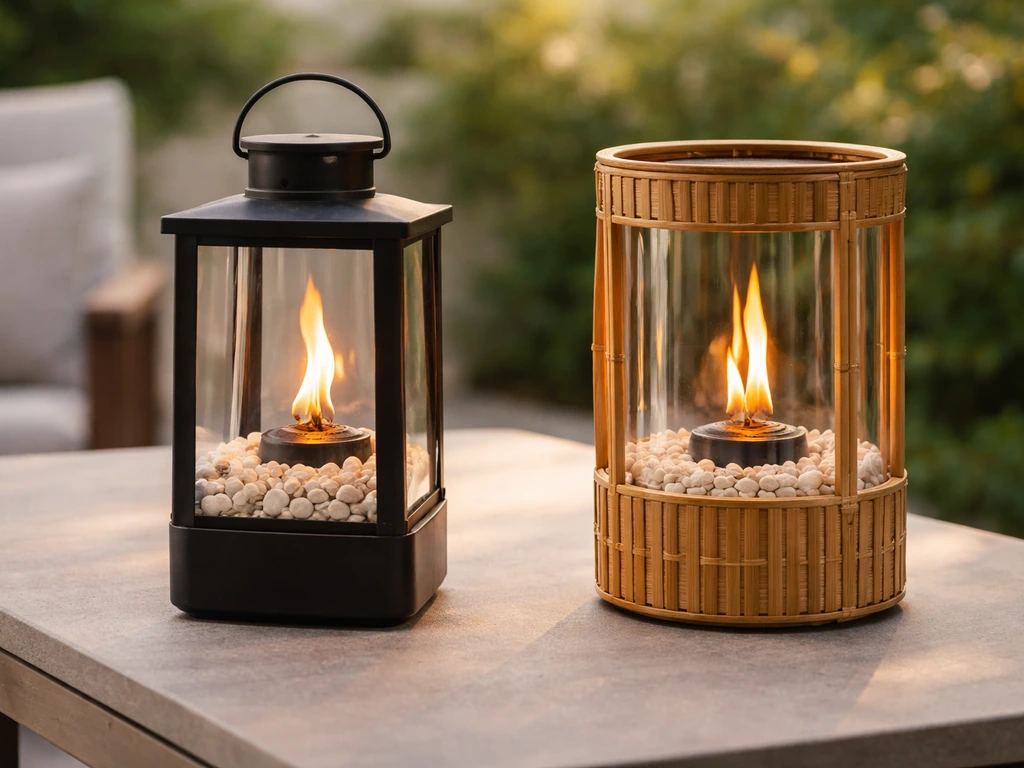
The spec difference between the two Cosiscoop models on Dunelm is mostly about aesthetics and price rather than performance. Both have the same heat output (0.29 kW), the same 190g cartridge, the same approximate burn time, and the same 30cm height. The Bamboo variant is slightly wider (18cm vs 16cm base) and costs £129 versus £79.20 for the standard model. Neither has a thermostat, heat settings, timer, or digital controls: it's an on/off gas flame, adjusted only by extinguishing or relighting. No IP rating is listed for either on the Dunelm product page, though both are described as weather resistant.
| Feature | Cosiscoop Fire Lantern Table Top | Cosiscoop Bamboo Fire Lantern Table Top |
|---|---|---|
| Price (at time of writing) | £79.20 (was £99) | £129 |
| Heat output | 0.29 kW | 0.29 kW |
| Fuel type | 190g butane/propane cartridge | 190g butane/propane cartridge |
| Burn time | Approx. 6 hours | Approx. 6 hours |
| Dimensions (W x L x H) | 16 x 16 x 30 cm | 18 x 18 x 30 cm |
| Weight | 2.5 kg | 2.5 kg |
| Thermostat/heat settings | No | No |
| Timer | No | No |
| Safety tip-over shutoff | Not specified in listing | Not specified in listing |
| IP/weather rating | Not listed (weather resistant stated) | Not listed (weather resistant stated) |
| Safe on wooden decking | Yes (stated) | Yes (stated) |
| Indoor/outdoor use | Both (ventilation required) | Both (ventilation required) |
| Regulator required | No | No |
| Aesthetic | Classic lantern style | Bamboo/natural material finish |
My honest take: unless the bamboo finish genuinely matters to your outdoor decor, the standard model at £79.20 is the better value. The heat output is identical and the 2cm difference in base width is not going to change your experience. If you're undecided, Dunelm's easy returns policy gives you a reasonable safety net if it doesn't work for your space.
Running costs and what to budget for fuel
This is one of the honest trade-offs of gas tabletop heaters. The Cosiscoop burns through a 190g cartridge in approximately 6 hours, at a consumption rate of around 30g per hour. A 190g Campingaz or compatible butane cartridge typically costs between £3 and £6 in the UK depending on brand and where you buy. That puts your running cost at roughly £0.50 to £1.00 per hour of use. For an evening session of two to three hours, you're looking at £1 to £3 in fuel, which is fairly reasonable. If you use it regularly throughout summer, factor in buying a pack of cartridges.
For comparison, an electric infrared tabletop heater at 1.5 kW would cost around 37p to 40p per hour at current UK electricity rates (roughly 24-25p per kWh). A 2 kW unit would cost closer to 50p per hour. So for short sessions, the gas Cosiscoop is competitive on running cost and doesn't require a socket. For longer sessions or frequent use, electric can work out cheaper if you already have a nearby outdoor socket, but Dunelm doesn't currently offer that in the tabletop category. If running costs are a major concern for heavy use, it's worth comparing what's available at other retailers like B&Q or Argos, which stock electric tabletop options.
How to verify the Dunelm listing before you buy
Product listings can be updated, prices can change, and stock availability shifts, especially heading into and out of peak garden season. Before you add to cart, here's what to confirm on the actual Dunelm product page.
- Confirm the current price and whether it's the discounted price or the RRP: the standard Cosiscoop was showing £79.20 at the time of writing but that could change
- Check the fuel type field: confirm it still states 190g pierceable butane/propane cartridge (not a screw-thread type, which is a different fitting)
- Look at the dimensions: 16x16x30cm or 18x18x30cm; measure your table surface to make sure the unit won't be crowded by plates, glasses, or a centrepiece
- Read the full product description for any updated safety certifications or tip-over protection details that may have been added since launch
- Check customer reviews specifically for comments on flame stability in mild wind, ignition reliability, and how long the heat is actually felt at table distance
- Confirm stock availability for click-and-collect or home delivery if you need it before a specific date
- Note whether a 190g gas cartridge is included or sold separately: based on the listing details, the cartridge is the fuel source but inclusion is not confirmed, so budget for buying one
Your next steps: shortlist, buy, or look elsewhere
If the Cosiscoop fits your use case (sheltered outdoor space, two to four people, ambient warmth rather than serious heat output, no outdoor socket), then the standard model at £79.20 is the one to go for. It's the same performance as the bamboo version at a lower price. Search for 'Cosiscoop Fire Lantern Table Top Heater' directly on Dunelm's site to land on the right product page and check current stock. If you're looking for a table top patio heater in Ireland, the key things to check are whether you can use the right fuel or power source safely where you live.
If you find the coverage too limited once you've read the specs, or you specifically want an electric plug-in model, Dunelm's tabletop range isn't going to solve that for you right now. In that case, it's worth checking tabletop patio heater options at Argos and B&Q, which carry a wider selection including electric infrared tabletop models. If you are specifically searching for a table top patio heater from Argos, compare the electric infrared options and check the power and required outlet. If you're based in Ireland, availability and pricing can also differ, so it's worth checking Irish-specific listings.
If your coverage needs are simply larger than any tabletop model can handle, step up to a freestanding electric or gas patio heater. A freestanding 2 kW electric heater or a small freestanding gas heater will warm a bigger seating area more reliably, especially on partially open patios. The tabletop format is genuinely excellent for intimate settings, but it's not a substitute for a proper standing heater if you're trying to keep six people warm on a cool evening.
FAQ
Can I use a table top patio heater dunelm Cosiscoop on a covered but open-sided patio (like a pergola)?
Yes, that setup is the intended use for a small gas lantern because ventilation is still present. Avoid using it under fully enclosed covers where airflow is limited, and keep it positioned so the glass and flame area are not obstructed by curtains, canopies, or nearby planters.
Do I need a regulator or hose with the Dunelm Cosiscoop fire lantern table top heaters?
No regulator or separate hose is listed as required. You fit the 190g pierceable butane or butane/propane mix cartridge directly into the heater, then light it with a taper or candle lighter, following the product instructions on cartridge type and seating.
How far should I place the heater from people or from combustible items?
Work on close-range comfort, typically within about 0.5 to 1 metre for noticeable warmth, and keep a sensible gap from anything that can scorch or catch, especially tablecloths, paper decorations, and overhanging foliage. If you are unsure, default to extra space because the lantern’s outer surfaces can get hot even when the heat feels gentle.
Are these table top patio heater dunelm models safe to use on wooden decking in real conditions (not just indoors)?
They are explicitly marked suitable for wooden decking, which is reassuring. Still, place them on a stable, level surface, avoid damp decking that can increase residue spread, and do not move the heater while it is lit or still hot.
What happens if the wind picks up during use?
Wind can reduce effective warmth and in some cases extinguish the burner, which means you lose the radiant heat effect. If your patio is regularly gusty, consider a sheltered spot (out of direct airflow) or upgrade to a freestanding heater designed for more robust wind resistance.
How do I estimate running costs if I use it more often than “a couple of hours”?
Use the cartridge consumption rate of around 30g per hour as your baseline. If a 190g cartridge gives roughly 6 hours, then multiply your price per cartridge by how many cartridges you expect to go through per week, and include extra cost for replacement cartridges during peak season.
Is it safe to bring a table top patio heater dunelm indoors, like a conservatory or shed?
If the space is fully enclosed, treat it as not suitable because a live flame creates a carbon monoxide risk. A conservatory can be effectively enclosed depending on doors and vents, so only use it in a well-ventilated area and never in a shed, garage, or closed room.
Do these heaters have a thermostat, timer, or adjustable heat settings?
No, the models described are on/off gas lantern heaters without thermostatic control. Expect that your “control” is essentially lighting level (as designed) and managing how long you run it, so you cannot fine-tune output like you would with an electric infrared unit that has settings.
If the heater seems like it is producing less warmth than expected, what are the most common causes?
Check for wind exposure first, then verify the correct cartridge type and that the cartridge is seated properly. Also ensure the unit is on a stable surface and not partially obstructed by glass panels or nearby objects, because the radiant output depends on an unobstructed line of sight to people and surrounding objects.
What should I check on the Dunelm product page before buying, given stock and model details can change?
Confirm the exact cartridge specification (190g pierceable butane versus butane/propane mix), current heat output figure, any weather resistance wording, and whether safety notes mention particular indoor-outdoor limitations. Also verify whether the product listing shows any IP rating or explicit outdoor guidance, since that level of detail may vary by listing update.