
If you're browsing B&Q (or diy.com) for a tabletop patio heater, the best starting point is a gas tabletop model running on a 27mm clip-on propane cylinder, typically outputting between 2kW and 4kW, with piezo ignition and a thermocouple flame-safety device. That combination gives you real warmth for a small outdoor table, genuine portability, and fuel you can pick up almost anywhere in the UK. The rest of this guide helps you confirm whether that's the right fit for your specific setup, compare it against electric and infrared alternatives, and know exactly what to check before you click buy.
Table Top Patio Heater B&Q Guide for UK Buyers: Gas Options

Willa Brennan
13 Jun 2026
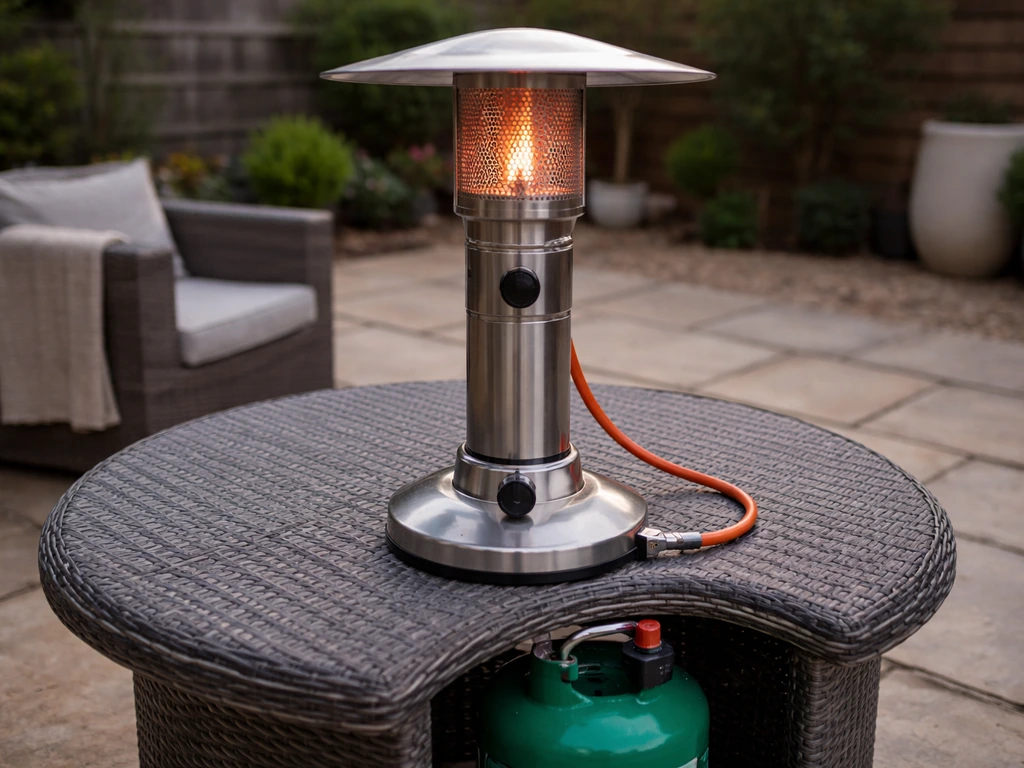
What a tabletop patio heater actually is (and why size matters more than you think)
A tabletop patio heater is a compact, freestanding heater designed to sit directly on an outdoor table or a low surface close to your seating. Unlike the tall mushroom-style floor heaters you see at pub beer gardens, these are scaled down to roughly 50–80 cm tall, putting the heat source at roughly head or chest height when you're seated. That proximity is actually their biggest selling point: instead of radiating heat upward and losing half of it to the sky, a tabletop model warms the people directly around it.
Most gas tabletop heaters work on the same basic principle as their full-size cousins: LPG (propane or butane) ignites at a top burner, producing a steady flame that heats a perforated metal screen or reflector, which then radiates warmth outward. The difference is scale. Where a tall floor-standing heater might cover 18–20 m², a tabletop unit typically covers 6–10 m², which is about right for a bistro table with two to four chairs. Try to heat a larger terrace with one and you'll be disappointed. Use it right where people are sitting, and it genuinely extends a UK autumn evening by an hour or two.
Size matters in another way too: the heater needs to physically fit your table without being a hazard. You want a stable, flat surface with enough clearance around it so nothing flammable is within the minimum safe distance recommended in the heater's manual. Tablecloths, curtains, awnings, and newspapers all need to be kept well clear during operation. If your only outdoor table is small or covered with a decorative cloth, a tabletop gas heater requires a bit of planning.
Gas vs electric vs infrared: which fuel type fits your patio and budget?
Most people searching specifically for a tabletop heater at B&Q end up going gas, and for good reason. But it's worth a quick comparison so you're choosing intentionally rather than by default.
| Type | Heat output | Warm-up time | Running cost (approx.) | Best for | Key downside |
|---|---|---|---|---|---|
| Gas (LPG propane) | 2–4 kW typical tabletop | 30–60 seconds | Low per hour with budget propane cylinders | Uncovered or semi-covered patios, no outdoor socket needed | Needs cylinder, wind can affect flame |
| Electric infrared | 1.5–3 kW typical | 1–2 seconds | Moderate, depends on electricity tariff | Covered patios or pergolas with outdoor socket | Needs outdoor power, less portable |
| Electric halogen/quartz | 1–2 kW typical | 2–5 seconds | Similar to infrared | Close-proximity table use, plug-in convenience | Shorter element lifespan, less weatherproof |
| Pellet/biomass | Variable | Slow (5–10+ minutes) | Low fuel cost, higher heater price | Ambient/decorative fire-pit feel | Not practical for tabletop, bulkier, more maintenance |
Gas wins on portability and raw warmth in open or windy UK gardens where you can't run a power cable. Electric infrared is excellent if you have a covered patio or pergola with an outdoor socket, and it heats up almost instantly (some models in as little as one to two seconds) with no cylinder to manage. High-quality infrared panels also convert a very high proportion of their electricity directly into heat rather than wasting it warming the air, which matters under a covered structure. Pellet heaters are really a different category entirely and aren't a practical tabletop option, so if that's on your radar, it's worth looking at dedicated fire pit or chiminea guides instead.
If you're in a smoke control area (common in many UK towns and cities), it's worth noting that rules around what fuels and appliances you can use outdoors, particularly in covered or semi-enclosed structures, are worth checking on gov.uk. Gas and electric heaters are generally unaffected, but it's a useful thing to be aware of.
How to choose the best tabletop patio heater in the UK: the specs that actually matter
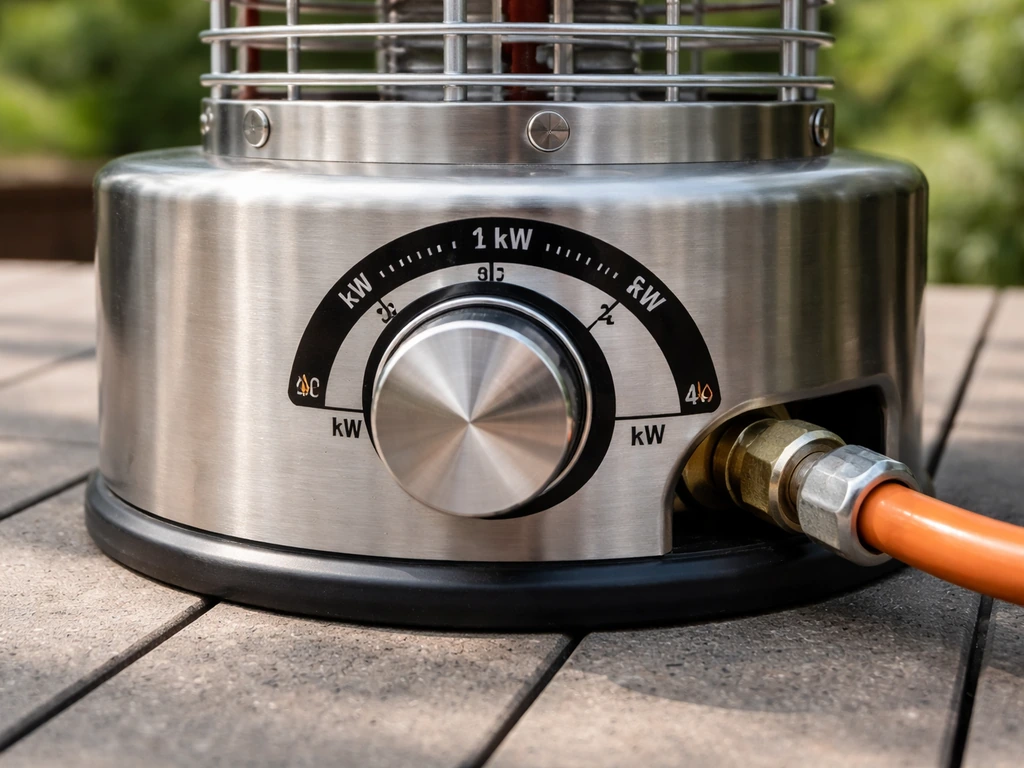
Once you've confirmed gas is your fuel of choice, here's what to compare across any models you're considering, whether on B&Q's site or elsewhere.
Heat output (kW)
For a tabletop model, 2–3 kW is the sweet spot for a small table of two to four people. At 4 kW you're getting into territory where the heat might be uncomfortably intense at close range. Don't assume more kW always means better: coverage area depends on the reflector design and positioning as much as raw output, so check the manufacturer's stated coverage figure, not just the kW number.
Fuel type and regulator compatibility
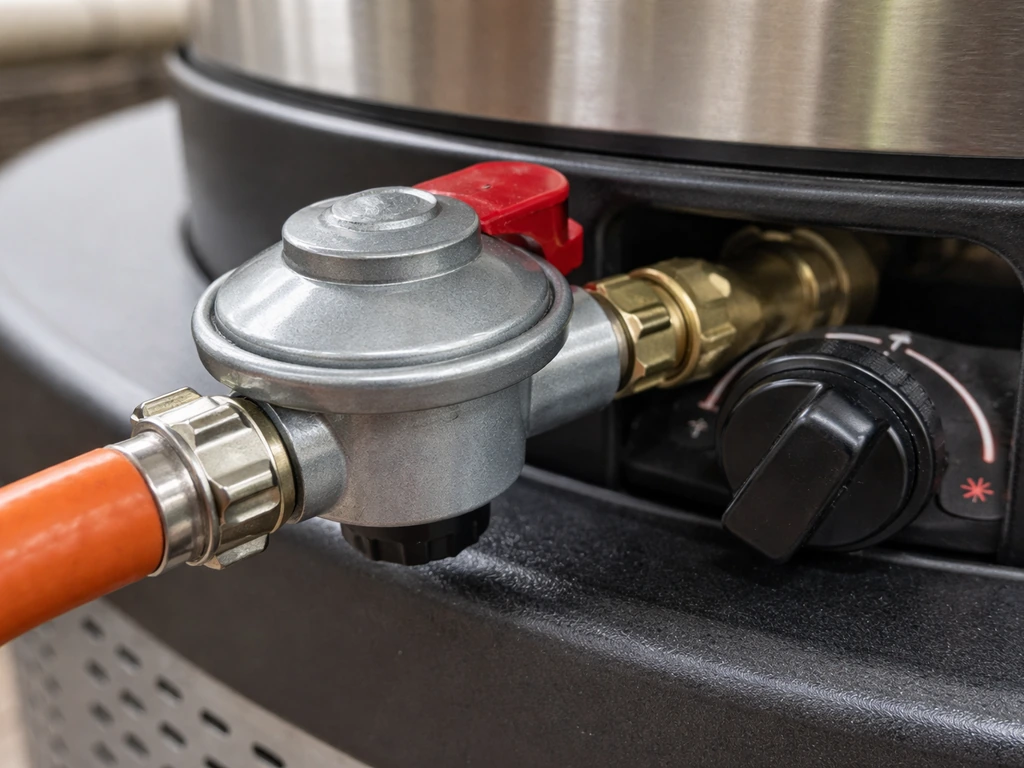
This is the most important practical spec to get right before you buy. Most tabletop gas patio heaters sold in the UK use propane and require a 27mm clip-on regulator. B&Q's own marketplace listings (and brands like Flogas, VonHaus, and Easi Gas regulators sold there) confirm that the 27mm clip-on is the standard. Check that your heater's documentation specifies 27mm clip-on propane compatibility, and verify the hose length and pressure rating match (most domestic UK patio heaters run on 37mbar). Do not assume a regulator from a BBQ or gas fire will be directly interchangeable without checking.
Ignition system
Piezo ignition (push-button spark) is standard and convenient. It saves you hunting for a lighter in the dark. More importantly, look for a thermocouple or flame-failure device: this is a safety sensor that cuts the gas supply if the flame goes out unexpectedly, whether from wind or a sudden gust. It's not a luxury feature; it's a basic safety requirement on any gas heater you'd trust on a table near people.
ODS (oxygen depletion sensor)
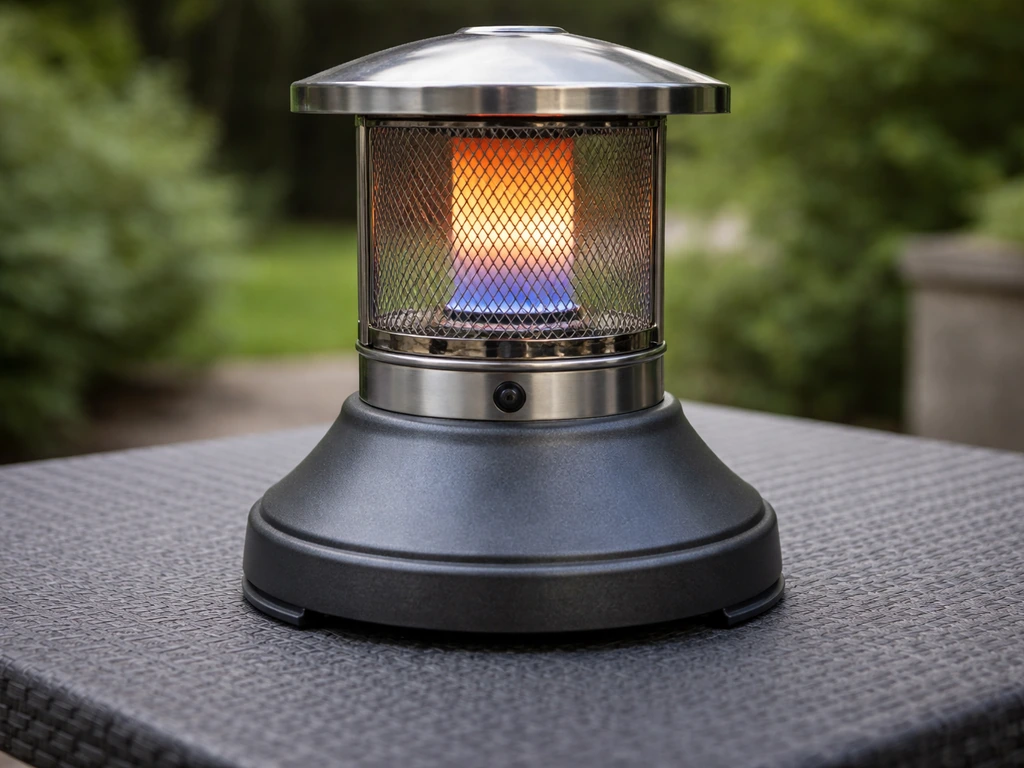
Some tabletop gas heaters include an ODS (oxygen depletion sensor), which shuts the heater off if the oxygen level around it drops too low, typically below around 16% by volume. This is most relevant if you're using the heater in a semi-enclosed space like a gazebo or a covered outdoor dining area. It's a feature worth looking for in the product documentation or spec sheet, particularly for covered patios.
Stability and base design
A top-heavy heater on a small table is a tipping risk. Look for a wide, heavy base or a design that accepts a ballast weight. Some models include a weighted base or anchor points. If the listing doesn't mention the base width or weight, check the manual or product dimensions carefully.
Wind resistance
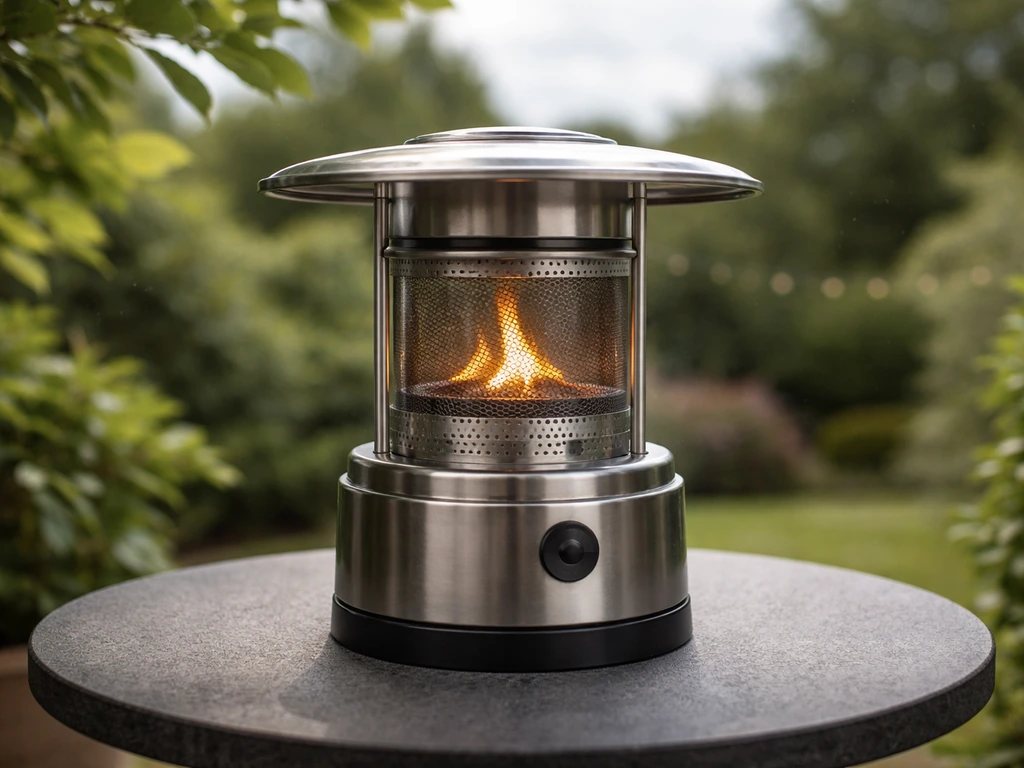
UK weather is what it is. Some tabletop heaters have wind guards or recessed burner designs that hold the flame more reliably in a breeze. If your table is exposed, this spec is worth paying attention to. The reality is that no tabletop gas heater loves a stiff wind, so bear in mind that guidance from Liquid Gas UK is clear: if a heater appears unstable or the flame is behaving erratically in high wind, turn off the gas at the cylinder.
What to check on B&Q listings before you buy
B&Q sells tabletop patio heaters both directly and through its diy.com marketplace, which means specs and documentation quality can vary between listings. Here's a practical checklist to run through before adding to basket.
- Fuel type confirmed: Does the listing explicitly state propane LPG? Avoid anything labelled vaguely as 'gas' without clarifying the fuel type and pressure rating.
- Regulator compatibility: Does it state 27mm clip-on? Is a regulator and hose included, or do you need to buy separately? Check this specifically on diy.com marketplace listings, where accessory bundling varies.
- Heat output in kW: Listed in the technical specs tab, not just the marketing headline. Cross-reference with the manufacturer's stated coverage area.
- Flame-safety device: Look for the words 'thermocouple' or 'flame-failure device' in the spec sheet or manual. If the listing doesn't mention it, download the manufacturer's manual from the product page and check.
- ODS mention: Especially important for covered or semi-covered use. Check the manual rather than relying on the listing description.
- Dimensions and base width: Confirm the heater will fit safely on your table with clearance on all sides.
- CE marking and UK Conformity Assessment (UKCA): For gas appliances sold in the UK post-2021, look for UKCA marking or confirmation the product meets UK gas safety standards.
- Returns and warranty: Marketplace seller policies on diy.com can differ from B&Q direct. Check the seller name and return window before buying.
One thing worth noting: B&Q's marketplace (diy.com) hosts third-party sellers, so the same heater model might appear at slightly different prices or with different accessory bundles depending on who is fulfilling it. If you find a model you like, searching its exact model name alongside 'manual PDF' or 'instruction manual' is the fastest way to verify safety features before committing.
Safety and practical setup for a tabletop gas heater

Tabletop gas heaters are genuinely safe when set up properly, but there are a few non-negotiable rules that the HSE, Liquid Gas UK, and Scottish Fire and Rescue all converge on.
Stability first
Place the heater on a flat, level surface. Never put it on a wobbly table or an uneven surface. Tip-over prevention is specifically highlighted by the HSE as a key fire safety consideration for heaters, and a gas heater falling over mid-operation is a serious hazard. If your table surface is small, place the heater at the centre rather than an edge. Do not sit it directly on a glass-topped table without verifying the glass is rated for heat exposure.
Clearances to combustibles
Every heater manual specifies minimum clearance distances between the heater and nearby surfaces, walls, ceilings, and fabrics. These are there for a reason. Remove tablecloths, keep curtains and awnings well back, and make sure overhanging branches or pergola roofing timbers are above the clearance threshold. The exact figures vary by model, so check your specific heater's manual rather than guessing.
Outdoors only
Gas tabletop patio heaters are strictly for outdoor use: patios, terraces, gardens, and open decking. Electrical Safety First is explicit that patio heaters should never be used indoors. Even in a very enclosed gazebo or conservatory, using a gas heater without proper ventilation is dangerous. If your 'outdoor' space is more enclosed than open, an electric infrared heater is a much safer choice.
Wind and instability
If the heater starts rocking, tilting, or the flame becomes erratic in wind, turn off the gas at the cylinder immediately and wait for conditions to improve. Do not try to hold a burning heater steady. This is the guidance from Liquid Gas UK and it's the right call.
Cylinder handling
When connecting or disconnecting the propane cylinder, make sure the heater is off and fully cooled. Check the connection is secure before igniting. Do not overfill portable cylinders (particularly relevant for refillable types) as highlighted in Scottish Fire and Rescue outdoor heating guidance.
Day-to-day use: lighting, fuel, maintenance, and storage
Lighting the heater
With piezo ignition, the standard procedure is: connect the cylinder and regulator, turn the control knob to the ignition position, press and hold (allowing gas to flow), then press the ignition button. On most models you'll need to hold the knob in for 15–30 seconds after the flame lights to let the thermocouple heat up and register the flame. If you release too early, the gas cuts off as a safety measure. If it doesn't light after two or three attempts, turn off, wait a minute for any gas to disperse, and try again. Always check for visible flame tongues at the burner to confirm it's lit before walking away.
Fuel refills and cylinder connections
Most tabletop gas heaters use small disposable or refillable propane cylinders, typically 3.9 kg or smaller, which you can buy at B&Q, Homebase, petrol stations, and garden centres. A 3.9 kg propane cylinder running a 2 kW heater will last roughly six to eight hours at full output, so budget for a spare if you're planning a long evening. When swapping cylinders, always do it in a well-ventilated area away from ignition sources, and check the regulator connection is tight before igniting.
Maintenance
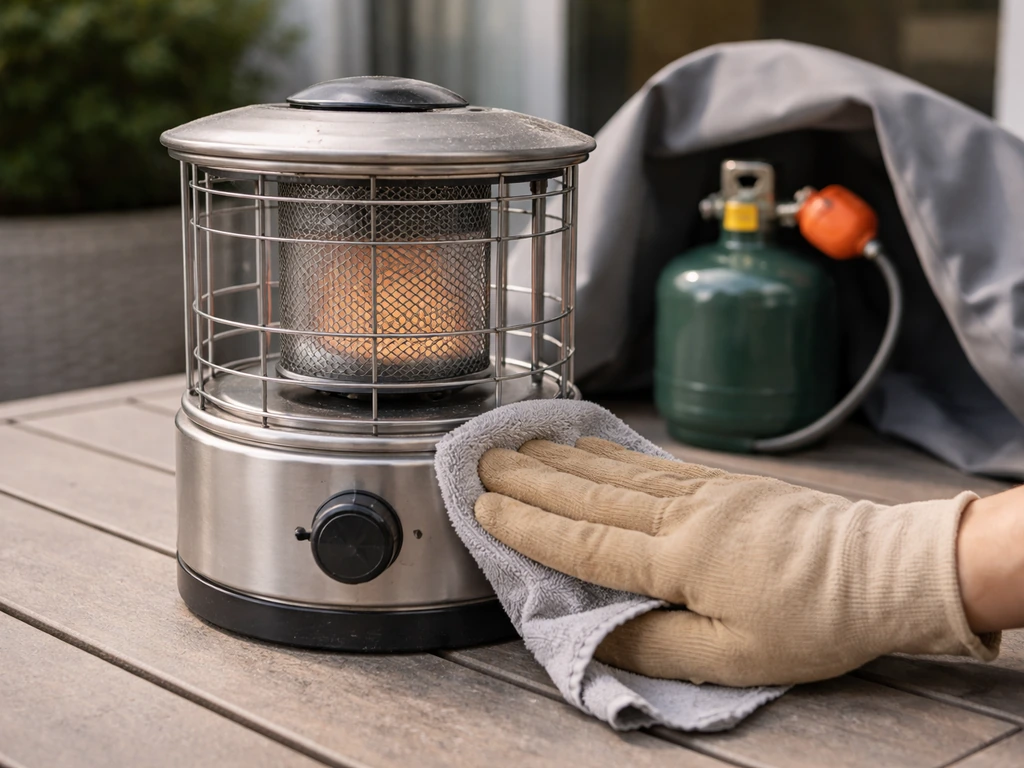
Tabletop gas heaters need very little maintenance, but a few habits make a real difference. After each use, wipe down the exterior with a damp cloth to remove moisture and grime. Periodically check the burner screen for blockages from insects or debris, which can cause uneven or poor flame. Check the hose and regulator connection for any signs of cracking or wear each season. If you smell gas when the heater is off, check the connection and regulator seal immediately.
Storage
Over winter, store the heater indoors or under a weatherproof cover. One important rule from tabletop heater manuals: do not cover the heater while it is in operation or still warm. When storing for the season, disconnect the cylinder (store the cylinder outdoors in a well-ventilated area, never in a garage or shed with a boiler), clean the heater, and ideally bag it in a breathable protective cover to keep insects out of the burner.
Quick shortlist: best-fit recommendations by patio situation
Rather than naming specific models (stock on B&Q changes seasonally and prices shift), here's how to match a heater type to your actual situation. Use this as your buying shortlist criteria when you're on the B&Q or diy.com product page.
| Your situation | Best heater type | Key specs to prioritise |
|---|---|---|
| Small bistro table, open garden, no power socket | Gas tabletop, propane 27mm clip-on | 2–3 kW, thermocouple safety, wide stable base, wind guard if possible |
| Covered pergola or gazebo with outdoor socket | Electric infrared tabletop or wall-mounted | 1.5–2.5 kW, IP44+ weatherproof rating, ODS if gas, fast warm-up |
| Exposed coastal or very windy garden | Gas tabletop with recessed burner/wind guard OR electric infrared | Wind guard design, heavy base, thermocouple, IP rating for electric |
| Large patio table, 6+ people | Consider a floor-standing gas heater instead | 12–15 kW floor model covering 18–20 m² will outperform any tabletop |
| Rental property or frequently moved between locations | Gas tabletop, lightweight with carry handle | Portability, clip-on cylinder (no fixed gas line), simple ignition |
| Budget under £60 | Gas tabletop, basic 2 kW model | Thermocouple essential, check regulator included, ignore premium finishes |
One honest note: if you're looking for something to heat six or more people across a large terrace, a tabletop heater of any type is going to leave half your guests cold. At that point, a floor-standing gas heater or a pair of electric infrared wall heaters is the smarter investment. Tabletop heaters genuinely shine for two to four people at close range, which is exactly what they're designed for.
If you're also comparing options at other UK retailers, it's worth knowing that similar tabletop gas heaters appear at Argos, Dunelm, and through Irish-focused outdoor retailers too. If you are shopping in Ireland, search for a table top patio heater ireland model and double-check fuel and regulator compatibility for your specific setup tabletop gas heaters in Ireland.
If you're specifically searching for the best patio heaters in Ireland, these same tabletop heater checks for safety features and fuel compatibility still apply Irish-focused outdoor retailers. If you are searching for a table top patio heater argos model, compare the heat output, regulator type, and safety features before you buy tabletop gas heaters appear at Argos. Specs and pricing vary, and occasionally a model sold under one retailer's branding is the same unit as another.
The spec checklist above applies wherever you end up buying.
Your next step is straightforward: go to diy.com, filter by tabletop patio heaters, and run each shortlisted model through the checklist in the 'What to check on B&Q listings' section above. Download the manual for any model you're seriously considering, confirm the regulator compatibility and safety features, and check the base dimensions against your table. That's genuinely all you need to make a confident, well-matched purchase.
FAQ
Do B&Q tabletop patio heaters use propane or butane, and will a 27mm regulator always fit?
Most UK tabletop gas models are set up for propane with a 27mm clip-on regulator, but the documentation should confirm the fuel type and regulator spec (27mm clip-on and matching pressure). If a listing mentions butane or a different regulator type, do not assume compatibility.
Can I use a larger patio heater cylinder than the one that came with the heater?
Often you can, but only if the regulator and pressure rating are correct for the heater (commonly 37mbar on UK patio heaters). You also need to match the cylinder fitting to the regulator type, and you should keep the heater outdoors and upright while changing cylinders.
What should I do if it won’t ignite after a few attempts?
Turn the gas off at the cylinder, wait about a minute for any gas to disperse, then try again. Avoid repeated ignition while it is still releasing gas, and confirm the flame actually appears at the burner before you release the control knob.
How do I stop the heater from tipping on a table with a small footprint?
Prioritise a model with a wide, heavy base, or one that mentions ballast or anchor points. If the base width is not stated in the listing, check the manual or product dimensions, then place it centrally on a level, non-slip surface.
Is a tabletop gas heater safe on a glass-topped patio table?
Do not use it on glass unless the glass is explicitly rated for heat exposure and you can keep the required clearance distances. As a rule of thumb, choose a heat-resistant, stable surface rather than relying on typical glass strength.
Do I need an ODS sensor if I use the heater under a gazebo or pergola?
ODS is most relevant in semi-enclosed spaces where oxygen can drop, so if your dining area is covered with limited ventilation, it is worth selecting a model that includes an oxygen depletion sensor and checking the rated shut-off behavior in the instructions.
How windy is too windy for a tabletop gas heater?
No tabletop heater performs perfectly in high wind, so use it with a clear view of the flame behavior. If the flame looks erratic or the heater becomes unstable, switch off at the cylinder immediately rather than trying to shield it by hand.
Where exactly should I place the heater relative to people and furniture?
Follow the minimum clearance distances in the specific manual, because they vary by model and include clearances to fabrics, walls, and overhead structures. Tablecloths, curtains, awnings, and any nearby paper items should be kept well away during operation.
Can I use a tabletop gas patio heater indoors in a conservatory or shed?
No. Gas patio heaters are intended for outdoor use only, because they require ventilation for safe combustion. If your space is enclosed, switch to an electric infrared heater designed for that environment.
How long will a 3.9 kg propane cylinder last, and does output affect runtime?
Runtime depends on the heat output and how long you run it at full power. At 2 kW, a 3.9 kg propane cylinder is roughly 6 to 8 hours at full output, and it will be shorter if you run higher output more of the evening.
What maintenance checks prevent problems with uneven flames?
Periodically inspect the burner screen for insect debris or blockages, and check the hose and regulator connection for cracking or wear each season. If you notice a gas smell when the heater is off, treat it as a connection issue and stop using until it is verified.
Is it safe to store the heater outside under a cover?
You can store it outdoors under a weatherproof cover for off-season protection, but never cover it while it is still operating or warm. Disconnect the cylinder for storage and keep the cylinder in a well-ventilated area outdoors, not in a garage or enclosed shed with ignition sources.