
The Better Homes & Gardens Standing Steel Propane Patio Heater is a solid, budget-friendly mushroom-style heater that works best on medium open patios where you need warmth for a small group without spending a lot upfront. It runs on a standard 20 lb propane cylinder, produces enough heat to take the edge off cool evenings in a roughly 9-foot radius, and assembles in under an hour. If you want simple, no-fuss outdoor warmth and you're buying from Walmart on a modest budget, this heater earns its place. That said, it has real limitations in wind, and it isn't the right call for every patio setup, so read on before you click Add to Cart.
Better Homes & Gardens Standing Steel Propane Patio Heater Review

Willa Brennan
25 Jul 2026
Who this review is for and the bottom line
This review is written for homeowners and renters who are evaluating the Better Homes & Gardens Standing Steel Propane Patio Heater as a primary or supplemental outdoor heat source. Maybe you spotted it at Walmart, or you've been browsing Better Homes & Gardens outdoor heating products and want to know how this specific standing steel model compares to the brand's other offerings and to alternatives powered by electricity, natural gas, or infrared. I've gone through the owner manual (model series BH10-093-999-04), cross-referenced retailer spec pages, and applied standard propane runtime calculations to give you a clear picture of what you're actually getting.
Bottom line recommendation: buy this heater if you have an open or partially sheltered medium-sized patio, a $100–$200 budget, and you want a portable propane option you can move around your yard. Skip it if your patio is small and enclosed, you're looking for all-season use in consistently windy conditions, or you need a longer continuous runtime than a 20 lb tank can provide at higher BTU settings.
Product overview: design, build, and intended use
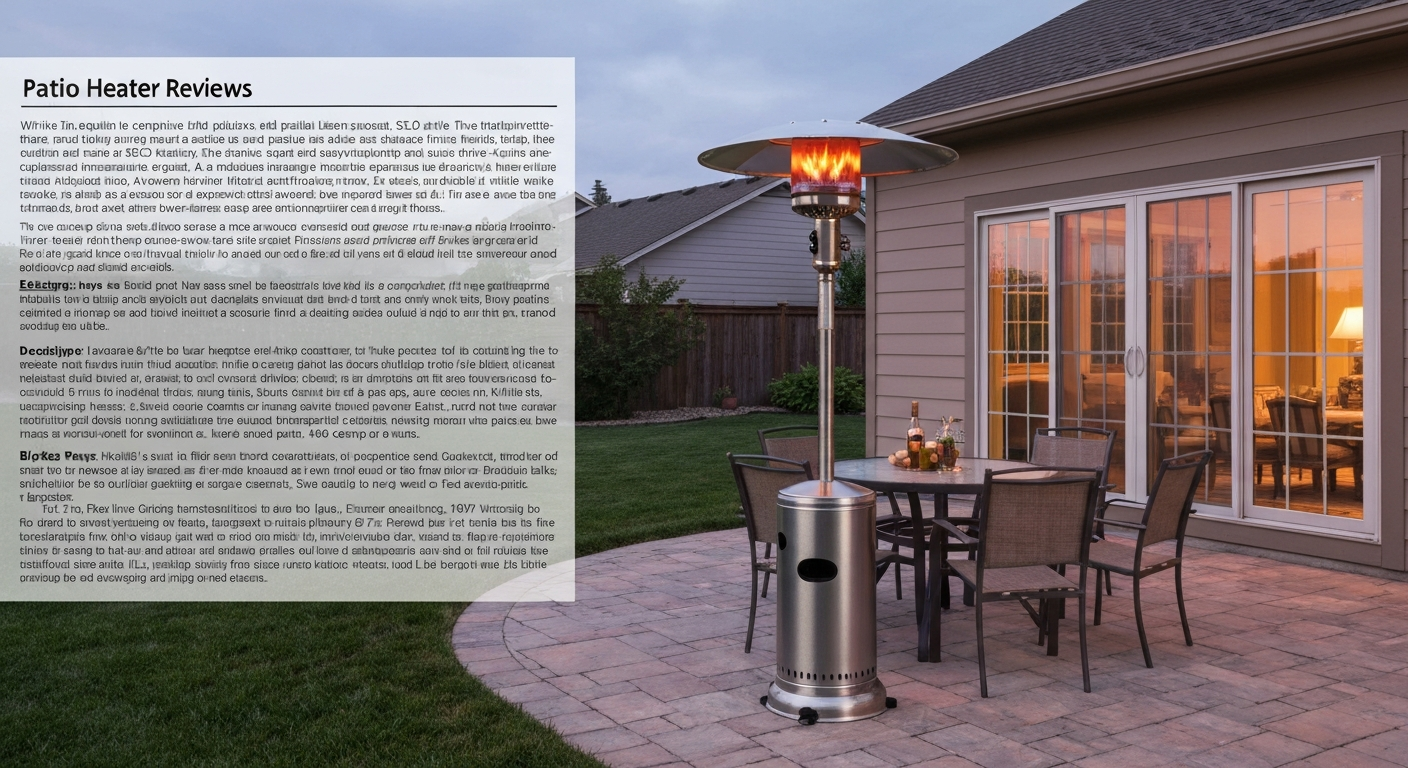
The Better Homes & Gardens Standing Steel Propane Patio Heater is a classic mushroom-cap (dome-top) freestanding heater finished in steel with a powder-coat paint treatment. The reflector dome at the top disperses heat downward and outward in a 360-degree pattern, which is the defining feature of this style. The base houses a compartment designed to conceal a standard 20 lb (approximately 4.7 gallon) propane cylinder, keeping the tank out of sight and lowering the center of gravity slightly for stability.
The heater is marketed explicitly as an outdoor product and the BH10-093-999 series manual states it clearly: outdoor use only. The intended use case is open or partially open patios, decks, and outdoor dining areas where ambient air movement can safely disperse combustion gases. It stands roughly 87–90 inches tall depending on exact configuration, which is the standard height for this category and puts the heat dome at an appropriate radiating height above seated guests. The overall footprint is compact enough for most medium patios but the unit does require clear overhead and side clearances during operation.
Real-world performance: what to actually expect
Warmth distribution and coverage
Mushroom-style propane heaters like this one radiate heat in a wide cone beneath the dome. In calm conditions at full output, you can reasonably expect comfortable warmth within an 8-to-10-foot radius from the pole, which translates to roughly 200–300 square feet of loosely defined coverage. For standardized guidance on infrared thermometer selection and use during hands‑on temperature mapping, see ASTM E2758-22, Infrared thermometer selection and use guide (standard summary) ASTM E2758-22 — Infrared thermometer selection and use guide (standard summary). In practice that means four to six people seated around an outdoor table will feel the heat, but guests on the outer edge of that radius will notice a significant drop-off in perceived warmth on colder nights. The heat is radiant, meaning it warms surfaces and people directly rather than heating the surrounding air, so it feels most effective when you're seated and stationary under the dome rather than moving around.
Wind sensitivity
Wind is the single biggest real-world performance killer for this type of heater. Even a moderate breeze of 10–15 mph will push the flame sideways, trigger the thermocouple safety shutoff, and cause the burner to cut out repeatedly. The BH10-093-999 series manual and standard industry guidance for this heater class acknowledge wind sensitivity as a limitation. If your patio is regularly exposed to wind, you'll spend more time relighting than warming. A fence, wall, or patio screen on the windward side makes a meaningful difference.
Propane runtime expectations
Using standard energy conversion values from the U.S. Energy Information Administration, a full 20 lb propane cylinder contains roughly 430,000 usable BTUs (at approximately 91,452 BTU per gallon, with 4.7 usable gallons per 20 lb tank). If this heater operates at a rated output near 40,000–46,000 BTU/hr at its highest setting, you can expect a full tank to last approximately 9 to 11 hours at maximum output. Turn the heat down to a medium setting and that runtime extends meaningfully, you could reasonably get 15 or more hours out of a single tank at lower settings. Real-world runtime tends to run slightly shorter than the calculated ceiling because cold ambient temperatures reduce propane pressure and efficiency. For weekend entertaining, one 20 lb tank should easily cover a full season of casual use if you're not running the heater at full blast every night.
Noise and ignition
At steady operation, these heaters produce a low, consistent flame-combustion hiss that most people find unobtrusive in an outdoor setting. The ignition mechanism is typically a piezo push-button starter. Like most piezo igniters in this price range, it is reliable when new but is one of the first components to fail with age and moisture exposure. If the igniter stops clicking, a long-reach lighter gets the job done while you source a replacement igniter, these are inexpensive and widely available.
Key specifications to compare
| Specification | Detail |
|---|---|
| Model series | BH10-093-999-04 |
| Fuel type | Propane (LP gas) |
| Tank requirement | Standard 20 lb (≈4.7 gal) propane cylinder |
| Estimated BTU output | 40,000–46,000 BTU/hr (at max setting) |
| Estimated coverage | Up to ~200–300 sq ft / ~9–10 ft radius in calm conditions |
| Estimated runtime (full tank, max) | ~9–11 hours |
| Estimated runtime (full tank, medium) | ~15+ hours |
| Height | ~87–90 inches |
| Materials | Steel frame with powder-coat finish |
| Ignition | Piezo push-button |
| Safety shutoff | Thermocouple/tilt safety device |
| Warranty | 2-year limited (frame and burner, original purchaser) |
Note on BTU and coverage claims: manufacturer BTU ratings represent maximum burner output under controlled lab conditions. Real-world effective coverage depends heavily on ambient temperature, wind, and how tightly guests are seated around the heater. Treat manufacturer coverage figures as a ceiling, not a guarantee.
How it stacks up against other BH&G models and the Harbor City fire pit
| Model | BTU Output | Coverage (approx.) | Runtime (20 lb tank) | Fuel Type | Primary Material | Approx. Price Range |
|---|---|---|---|---|---|---|
| BH&G Standing Steel Propane Heater (BH10-093 series) | 40,000–46,000 BTU/hr | ~200–300 sq ft | 9–15 hrs | Propane (LP) | Steel / powder coat | $130–$180 |
| BH&G Electric Outdoor Patio Heater | ~5,100 BTU equivalent (1,500W) | ~100–150 sq ft | N/A (plug-in) | Electric (120V) | Steel / powder coat | $250–$300 |
| BH&G Harbor City Fire Dining Table (BH19-092-097-26) | Decorative / low BTU | Ambiance, not space heating | Varies with LP use | Propane (LP) | Steel / tabletop | $150–$250 |
| Generic 40k–48k BTU mushroom heater (comparable tier) | 40,000–48,000 BTU/hr | ~200–300 sq ft | 9–12 hrs | Propane (LP) | Steel / aluminum | $100–$200 |
The BH&G Electric Outdoor Patio Heater listed at approximately $297 on Walmart is a fundamentally different product: no propane, no open flame, just plug-in convenience. It suits small covered patios near an outdoor outlet but can't match the raw BTU output of the propane standing model for open areas. The Better Homes & Gardens Harbor City fire pit (model BH19-092-097-26) is worth mentioning here because it's often browsed alongside the standing heater, but the Harbor City is primarily an aesthetic piece, a dining table with a central LP flame, not a performance heater. If you're deciding between warmth and ambiance, those are genuinely different product categories.
Pros and cons at a glance
Strengths
- Affordable entry price for a full-size standing propane heater
- Uses a widely available standard 20 lb propane tank — easy to refill or swap
- Portable: no gas line required, move it wherever you need heat
- 360-degree heat distribution covers a seated group evenly in calm conditions
- Clean mushroom-cap design fits most traditional patio aesthetics
- 2-year limited warranty on the frame and burner provides basic peace of mind
- Simple assembly documented in a clear 17-page owner manual
Common drawbacks
- Wind sensitivity is high — even moderate breezes can cause repeated shutoffs via the thermocouple
- Piezo igniter quality is average for the price tier and may fail within 1–2 seasons
- Steel construction without premium stainless finishing means rust is a concern in wet climates without a cover
- Propane running cost adds up over a full season compared to a natural gas or electric connection
- Tank runtime of 9–11 hours at max output means frequent refills for heavy users
- Mass-market build quality; tolerances on assembly hardware can be inconsistent unit to unit
Situations to avoid
- Do not use in fully enclosed or semi-enclosed spaces (garages, screened porches with limited airflow, indoor patios)
- Not ideal for consistently windy exposed locations without wind barriers in place
- Not the right choice if you want heat for a very large area (over 300 sq ft) — consider a second unit or a higher-BTU model
- Avoid if you plan to leave it fully exposed year-round without a protective cover — steel will rust
Safety and installation guidance
Required clearances
The BH10-093-999 series manual specifies that this heater must be used outdoors only and requires adequate clearance from overhead structures, walls, and combustible materials. As a general rule for this class of heater, maintain at least 24–36 inches of clearance from any side obstruction and a minimum of 36 inches of vertical clearance above the heater dome. Never operate under a low patio umbrella or beneath a covered pergola with insufficient vertical clearance. When in doubt, the manual is your binding authority, read the clearance section before first use.
Securing the base
These heaters are tall and have a relatively narrow base footprint. On windy evenings, tip-over risk is real. The manual includes a tilt-safety device (thermocouple cutoff) that shuts the burner off if the unit falls, but prevention is better than a shutoff. On a hard surface, place the heater on a level area and consider sandbag weights around the base legs if you're in a location prone to gusts. Never position the heater where it could fall toward people, furniture, or any combustible surface.
Propane hookup and leak checks
Install the 20 lb propane cylinder in the base compartment, connect the regulator hose hand-tight (plus a quarter turn with a wrench, do not overtighten), then perform a soap-solution leak test before ignition. Mix dish soap with water, apply the solution to every connection point, open the tank valve slowly, and look for bubbles. Any bubbling indicates a leak at that fitting. Tighten or reseat the connection and retest. This step is not optional, it's documented in both the BH10-093 series manual and the Harbor City fire pit manual (BH19-092-097-26) as a required pre-use check. The customer service line for the BH10-093 series is 855-600-9294 if you have hookup questions.
Covered vs. open air use
This heater is designed for open-air outdoor use. Operating it under a partially covered patio structure (like an open pergola with generous roof clearance) may be acceptable if ventilation is abundant and clearances are met, but a fully or mostly enclosed space is a carbon monoxide hazard. If your patio is substantially enclosed, an electric heater is the appropriate choice.
Child and pet safety
The emitter screen and dome get very hot during operation. Keep children and pets at least 3 feet away from the heater at all times when it is lit. Turn the heater off and allow it to cool fully before allowing children or animals near it. Never leave a lit heater unattended, and always close the propane tank valve when the heater is not in active use.
Routine maintenance and troubleshooting
Seasonal checks
The BH10-093 series manual recommends inspecting the heater before each use season and at least annually by a qualified service person. At the start of each season: inspect all hose connections for cracks or stiffness (replace any hose showing wear), check the burner emitter screen for debris or insect nests (spiders are notorious for blocking gas orifices on heaters stored over winter), and verify the regulator is functioning by observing flame behavior on first light.
Cleaning tips
- Wipe down the steel exterior with a damp cloth and mild soap after each season — avoid abrasive cleaners that strip the powder coat
- Clear the burner emitter screen with a soft brush or compressed air at the start of each season
- Inspect the gas orifice for blockage if you notice uneven or weak flame — a fine wire can clear minor clogs
- Store with a weather-resistant cover during off-season months to prevent rust and protect the igniter from moisture
Burner and ignition troubleshooting
| Symptom | Likely Cause | Fix |
|---|---|---|
| Heater won't ignite | Empty tank or closed tank valve | Check tank level and open valve fully |
| Heater won't ignite | Failed piezo igniter | Use a long-reach lighter; replace igniter |
| Flame cuts out shortly after lighting | Thermocouple not heated / safety shutoff triggered | Hold ignition button for 15–30 seconds to heat thermocouple before releasing |
| Flame cuts out in wind | Thermocouple triggered by wind-disturbed flame | Reposition heater out of direct wind; add a wind barrier |
| Weak or uneven flame | Blocked gas orifice or low tank pressure | Clear orifice; warm a cold tank slightly or replace nearly empty tank |
| Yellow or sooty flame | Incorrect air-to-gas ratio or debris in burner | Clean burner and emitter screen; check air shutter adjustment |
| Gas smell without visible leak at fittings | Loose regulator or faulty hose | Perform soap-solution leak test on all connections; replace hose/regulator if leaking |
Parts to inspect and replace
The BH10-093-999-04 manual includes a service parts list. The components most likely to need replacement over the heater's lifetime are the piezo igniter module, the thermocouple, the gas regulator hose assembly, and the emitter screen. Replacement parts can be sourced through the BH&G customer service line (855-600-9294) or through regional hearth and patio retailers. Shops like Heat Exchange Hearth & Patio Shoppe in North Ridgeville, OH, which advertises that it services what it sells and honors manufacturer warranties, are the kind of local resource worth identifying in your own area for hands-on parts sourcing and repair help.
Cost and value analysis
Purchase price
The Better Homes & Gardens Standing Steel Propane Patio Heater typically retails in the $130–$180 range at major retailers including Walmart, Home Depot, and Lowe's, with sale pricing occasionally dropping it below $130. This puts it squarely in the economy-to-lower-midrange tier for full-size standing propane heaters, a category that spans roughly $100 (no-name imports) to $500+ (commercial-grade stainless models).
Fuel cost and runtime math
A 20 lb propane tank exchange costs roughly $18–$25 depending on region and retailer (2026 pricing). At a calculated runtime of 9–11 hours per tank at maximum output, your fuel cost runs approximately $1.80–$2.80 per hour of full-heat operation. At medium settings with 15+ hours per tank, that drops to around $1.25–$1.70 per hour. Over a typical patio season of 30–40 hours of use, expect to spend $55–$110 on propane alone, in addition to the purchase price. Compare that to an electric heater at roughly $0.18–0.25 per kWh: a 1,500W electric model costs about $0.27–$0.38 per hour to run, which is cheaper per hour but delivers significantly less heat output.
Lifetime value
A well-maintained mid-grade steel propane heater in this category realistically lasts 3–6 seasons with proper cover storage and annual maintenance. Factor in propane costs across that lifespan and your total ownership cost over four seasons could run $350–$550 or more. At that math, a natural gas conversion (if you have a gas stub on your patio) makes economic sense for heavy users, but the propane model wins on portability and zero installation cost.
Comparing fuel and technology options
No single heater type is right for every patio. Here's how propane standing heaters sit relative to the other main options you'll encounter on a site like this one.
| Heater Type | Best For | Heat Output | Running Cost | Installation | Portability | Key Limitation |
|---|---|---|---|---|---|---|
| Propane (LP) standing (this model) | Open/semi-open medium patios, portable use | High (40k–46k BTU) | Moderate ($1.50–$2.80/hr) | None — tank only | Excellent | Wind sensitivity, ongoing fuel cost |
| Electric (plug-in) | Small covered patios near outlet | Low–moderate (1,500W / ~5,100 BTU equiv.) | Low ($0.27–$0.38/hr) | Requires outdoor outlet | Good (cord-limited) | Low BTU; cord dependency |
| Natural gas (NG) | Permanent large patios with gas stub | High (40k–50k+ BTU) | Low (lowest fuel cost) | Professional gas line required | None — fixed | No portability; install cost |
| Infrared electric | Covered patios, targeted directional heat | Moderate (1,500–3,000W) | Low–moderate | Requires mounting or stand | Moderate | Directional only; cold wind limit |
| Pellet heater | Off-grid, ambiance + warmth | Moderate | Moderate (pellet cost) | Minimal | Moderate | Ash/fuel management; less common |
| Tabletop propane/electric | Small tables, accent warmth | Low (5k–10k BTU) | Low–moderate | None | Excellent | Very limited coverage area |
If your patio is fully covered and small, an electric infrared heater is often a smarter, safer pick. If you have a natural gas hookup and a large permanent patio, a natural gas standing heater will save you money over time. Propane models like this one earn their place specifically when you need flexible, portable, high-output heat with no utility hookup required.
How this model compares to other BH&G lines and the Harbor City fire pit
Better Homes & Gardens sells several distinct outdoor heating products, and it's worth being clear about what each one actually does. The Standing Steel Propane Heater in this review is the workhorse of the lineup, it's designed to heat people. The BH&G Electric Outdoor Patio Heater is its plug-in counterpart, trading BTU output for convenience and safety in tighter spaces. It's a reasonable choice for small apartment balconies where propane isn't practical.
The Better Homes & Gardens Harbor City Fire Dining Table (model BH19-092-097-26) is a different animal entirely. It's a propane-fueled decorative fire table that doubles as a dining surface, its LP flame creates ambiance and provides mild warmth for the people seated immediately around it, but it is not engineered or rated as a space heater. Its manual documents LP tank installation and a required soap-solution leak check at connections (identical safety steps to the standing heater), and customer service for that model runs through a different number (1-866-905-4107). If you're comparing these two because you want warmth, choose the standing heater. If you want a centerpiece for your patio dining set that happens to have a flame, the Harbor City fire pit serves that purpose well.
For a deeper look at the full Better Homes & Gardens patio heater lineup and how the various models are positioned, the broader Better Homes & Gardens patio heater overview on this site covers the complete product family in one place. See our better homes and gardens patio heater guide for side-by-side specs and model comparisons. And if you're considering the Harbor City fire table as a companion piece rather than a replacement, the dedicated Harbor City patio fire pit review walks through assembly, performance, and value in more detail.
Where to buy: retailer availability and purchasing tips
This heater is primarily a mass-market product available through big-box and online channels. Walmart is the most common retail home for BH&G outdoor products and typically offers the lowest shelf price. See the Better Homes & Gardens Freestanding Patio Heaters, Walmart category listing for current availability, pricing, and user ratings blank" rel="noopener noreferrer">Better Homes & Gardens Freestanding Patio Heaters — Walmart category listing. Home Depot, Lowe's, Target, and Wayfair also carry comparable models in the BH&G lineup or functionally equivalent alternatives during peak season (spring through early fall). Online marketplaces like Amazon may list the same or similar models through third-party sellers, verify the model number and confirm it includes a manufacturer warranty before purchasing from an unfamiliar seller.
If you prefer buying from a specialist retailer who can provide setup advice, local service, and warranty support, regional hearth and patio shops are worth seeking out. Heat Exchange Hearth & Patio Shoppe in North Ridgeville, OH (reachable at 440-327-6242) is an example of the kind of full-service dealer that stocks, installs, and services outdoor heating equipment and honors manufacturer warranties. The value of buying from a specialist isn't price, it's the ability to call someone local when your igniter fails two weeks before Thanksgiving and you need it fixed fast.
What to check on delivery or in-store pickup
- Open the box before leaving the store or before the delivery driver leaves — verify all assembly hardware is included
- Check the steel pole sections for dents or bends that would affect stability
- Inspect the emitter screen for shipping damage or deformities
- Confirm the regulator hose and fittings are present and show no cracks or stiffness
- Check the piezo igniter mechanism clicks before assembly (a quick dry test)
- Verify the model number on the box and manual matches what you ordered
Warranty, parts, and service
The BH10-093-999-04 manual documents a two-year limited warranty covering the metal frame and burner to the original purchaser. To use the warranty, you'll need proof of purchase. The customer service contact listed in the manual is 855-600-9294, along with a customer care email address printed in the warranty section of the manual itself. As with most mass-market warranties, coverage is limited to manufacturing defects, it does not cover damage from misuse, weather exposure, or improper storage.
Two years is a standard and acceptable warranty for this price tier. For comparison, premium commercial-grade patio heaters often carry longer frame warranties, but they also cost two to four times as much. The practical limitation of this warranty is parts availability after year two. Thermocouples, igniters, and regulator hose assemblies are the components most likely to need replacement, and sourcing them after warranty expiration means going through the customer service line, a third-party hearth and patio dealer, or a universal-fit parts supplier. Keep the parts list from the owner manual, it lists the part names and identifiers you'll need when ordering replacements.
On the broader safety front: the U.S. Consumer Product Safety Commission (CPSC) maintains records on outdoor gas appliance recalls and safety incidents. While no specific standing recall applies to the BH10-093 series based on current available information, CPSC records for the outdoor gas heater category do include historical actions (including a Coleman patio heater recall and recalls of various LP fire pit products sold through major retailers). Checking CPSC.gov for current advisories before operating any propane appliance is a simple precaution worth taking annually.
Buying recommendations by patio size, cover, and budget
Small balcony (under 100 sq ft)
This heater is too large and too powerful for a small enclosed balcony, and open-flame propane use in tight quarters raises genuine safety concerns. For a small balcony, look at a 1,500W electric patio heater or a small infrared heater with an outdoor-rated cord. The BH&G Electric Outdoor Patio Heater is worth considering for this use case.
Medium open patio (150–300 sq ft)
This is the sweet spot for the Standing Steel Propane Heater. A single unit positioned centrally will cover a dining or seating area effectively in calm to light-breeze conditions. At the $130–$180 price point, it's a strong value choice for this patio size.
Large open area (over 300 sq ft)
One unit won't cut it for a large open patio. You're better served by two standing heaters positioned strategically, a higher-BTU model in the 48,000–50,000 BTU range, or a natural gas standing heater if you have a gas supply. Running two of these BH&G units is a budget option that works, but ongoing propane costs for two units add up quickly.
Covered vs. uncovered spaces
Open sky: this propane heater is ideal. Open pergola with good clearance: acceptable if clearances are met and airflow is sufficient. Partially enclosed covered patio: evaluate carefully, if three or more sides are enclosed or the roof is low, switch to electric. Fully enclosed: do not use this heater.
Budget tiers
- Economy ($100–$150): This BH&G model or comparable mass-market alternatives — good for occasional use, expect to replace parts within 2–3 seasons
- Midrange ($150–$300): Better build quality, stainless or hammered-bronze finish options, improved igniter systems — worth spending up if you're using the heater weekly for 4+ months per year
- Premium ($300–$600+): Commercial-grade stainless steel, CSA/ETL certified to stricter standards, longer warranties — justified for high-use commercial or semi-commercial patios
Installation checklist and quick-start steps
- Unbox and verify all parts against the manual parts list before beginning assembly
- Assemble the pole sections and base on a level, stable surface following the manual diagrams — do not skip hardware steps
- Attach the emitter screen and reflector dome according to the manual sequence
- Place a full, undamaged 20 lb propane cylinder in the base compartment — check that the valve is fully closed before connecting
- Connect the regulator hose to the tank valve: hand-tighten, then snug with a wrench (do not overtighten)
- Perform a soap-solution leak test on all connections before first ignition — look for bubbles with the tank valve open
- Open the tank valve one full turn
- Press and hold the control knob in the pilot/ignite position while pressing the piezo igniter button until the pilot flame catches — hold for 15–30 seconds to heat the thermocouple before releasing
- Rotate the control knob to your desired heat setting
- Verify the flame is stable and the reflector dome is heating evenly before leaving the heater unattended
- At end of use: turn control knob to off, then close the tank valve fully
Should you buy this heater? A decision checklist
This is a recommended purchase if all or most of the following apply to your situation:
- You have an open or minimally sheltered outdoor patio or deck
- Your patio is roughly 150–300 sq ft and you need warmth for 4–6 people
- You want a portable heater with no utility hookup required
- Your budget is $130–$180 for the unit
- You're comfortable doing a simple propane connection and annual maintenance checks
- You have a relatively sheltered location or can add a wind barrier
- You plan to store the heater with a cover during off-season months
- You accept that propane fuel will be an ongoing operating cost of roughly $55–$110 per season
Skip it or consider alternatives if: your patio is small and enclosed, you're in a consistently windy location without natural wind protection, you want all-season operation with minimal maintenance hassle, or you're looking for a long-term investment heater that will last a decade with zero issues.
Final verdict and next steps
The Better Homes & Gardens Standing Steel Propane Patio Heater is an honest, affordable choice for the casual patio entertainer. It does what it promises on a calm evening: radiates solid warmth over a comfortable gathering area from a portable, propane-powered unit that costs less than most of its competition at launch. It is not a premium product and shouldn't be evaluated as one. The steel construction, mass-market igniter, and wind sensitivity are genuine trade-offs you're accepting at this price point.
Where to buy: Walmart is the most accessible channel for the lowest price. If you want local service backup, look for a hearth and patio specialist near you, retailers like Heat Exchange Hearth & Patio Shoppe who service what they sell are genuinely useful when you hit a troubleshooting snag in year two.
What to do on delivery: open the box, check all hardware, perform a visual inspection of hose and fittings, and do the soap-test before first light. Set a calendar reminder for an annual pre-season check in early spring. Cover the heater when not in use. With that basic discipline, this heater will serve you reliably for several seasons before the first replacement part is needed, and that is a fair return on a sub-$180 investment.
If after reading this you're still deciding between the standing propane model and another fuel type or BH&G product, the broader patio heater guides on this site cover natural gas, electric, infrared, and alternative energy hearth options in the same detail. For a focused comparison of renewable and low‑carbon options, see our alternative energy hearth patio guide. The goal is always to match the heater to your specific setup, because the right heater for your patio is the one that works reliably on the night you need it most.
FAQ
What product documentation and manufacturer sources are required?
Primary manufacturer documentation: model‑specific owner/installation/parts manual (e.g., BH10‑093‑999‑04 PDF), official product pages, published warranty text and customer‑service contacts. Use these for exact specs (BTU, dimensions, fuel type, recommended cylinder size), safety/clearance requirements, assembly diagrams, leak‑check procedures, maintenance intervals, and warranty terms. Treat the owner manual as the authoritative baseline for safe operation/installation text and part numbers.
Which technical specifications must be collected and verified?
Collect model number, rated input (BTU/hr), typical heat spread/radius if provided, recommended propane cylinder size and connection type, run‑time estimates or fuel consumption data, dimensions/weight, materials and finish (e.g., powder‑coated steel), ignition type (piezo/pilot), thermostat or control features, certification listings (CSA/ETL/ANSI standards referenced), and stated warranty length/coverage. Verify these across manual, manufacturer site, and multiple retailer listings to reconcile discrepancies.
What hands‑on performance tests are necessary to produce evidence‑based findings?
Repeatable field tests to measure: steady‑state heat output (surface temps on reflector and tip), heat spread radius (temperature vs distance map at seated height), propane consumption (tank‑weight delta vs runtime), ignition reliability (cold starts), wind sensitivity (performance in 0–15 mph bins), and noise level. Also test real‑world usability: assembly time/difficulty, stability in gusts, and accessory compatibility (screens, covers). Run multiple iterations (≥3) and include ambient conditions for each run.
What instruments and measurement protocols are recommended?
Calibrated instruments and documented protocols: non‑contact IR thermometer or thermal camera (ASTM E2758 guidance; note emissivity settings), thermocouples or ambient thermometers, precision scale for tank weight (NIST traceable calibration), stop‑watch/logging software, handheld anemometer for wind speed, sound level meter for ignition/noise, tape measure and grid markers for mapping heat field. Record ambient temp, humidity, and wind; document instrument make/model and calibration status. Use same heater settings and tank fill level across runs.
How should propane runtime and consumption be calculated and presented?
Estimate tank energy capacity using standard conversion (≈91,452 BTU/gal propane; a 20 lb cylinder ≈4.7 usable gal → ≈430,000 BTU). Calculate runtime_hours = tank_BTU_capacity ÷ heater_BTU_per_hour and cross‑check with measured tank‑weight delta during runtime tests. Present both theoretical and measured runtimes, and explain variance causes (setting, ambient temps, wind, regulator flow limits).
Which safety, installation and code references are required?
Cite the product manual's clearance and leak‑check procedures, and reference applicable standards and codes: CSA/ANSI Z83.26 (outdoor infrared patio heaters), ANSI Z21.97/CSA 2.41 (outdoor decorative gas appliances), NFPA 54 (ANSI Z223.1) and NFPA 58 for propane handling. Include CPSC recall/advisory checks for the model and general patio‑heater recalls. Recommend qualified annual inspection where manual advises it.