
The Char-Broil Patio Bistro 240 Gas is a compact, TRU-Infrared propane grill with 240 square inches of primary cooking area and a 13,000 BTU single burner. It is genuinely well-suited for apartment balconies, small patios, and RV setups where space is tight and full-size grills simply won't fit. It delivers fast, even heat and solid searing for its size, but it carries an important safety history you need to know about before you buy.
Char-Broil Patio Bistro 240 Gas Review: Compact Propane

Willa Brennan
13 Jul 2026
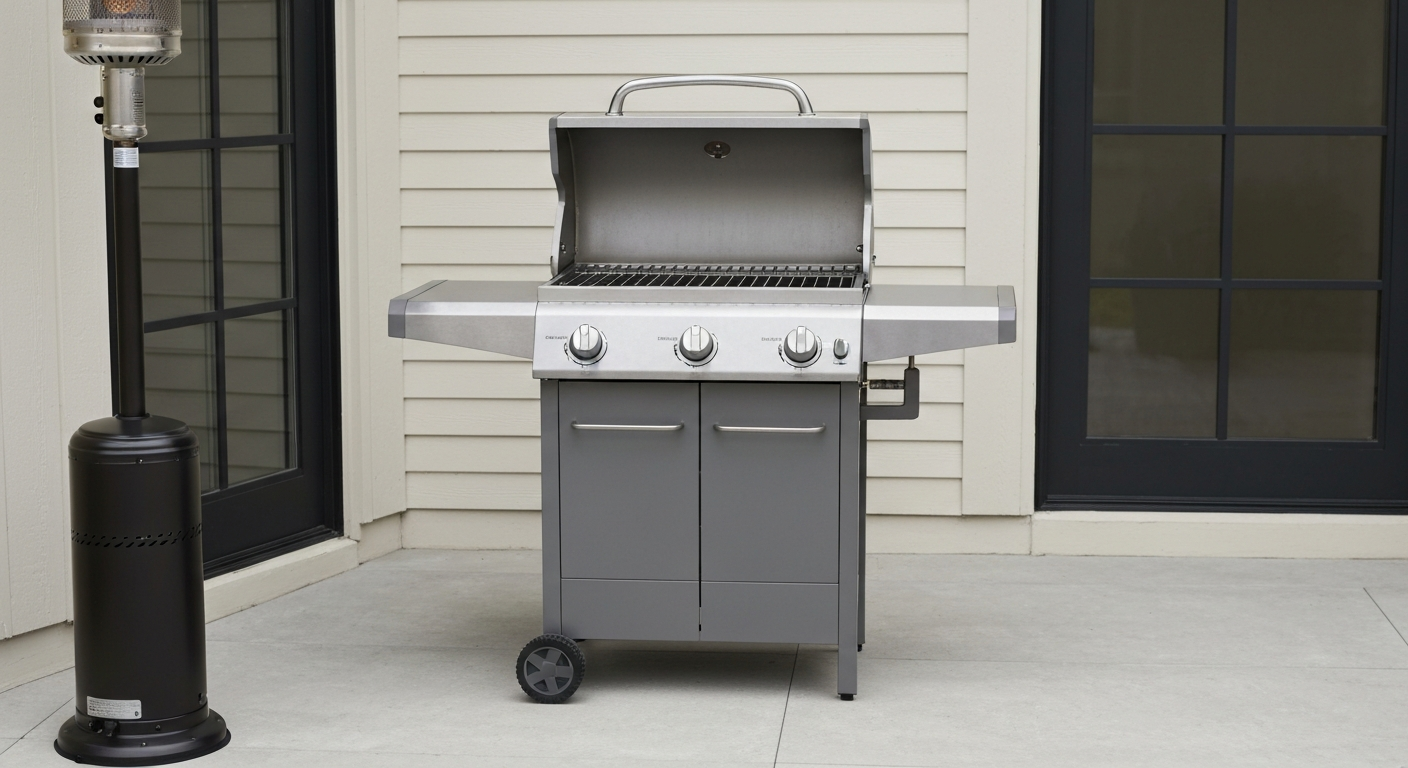
Quick verdict and who this grill is really for
Verdict: a capable, space-saving propane grill for small outdoor spaces, best for solo cooks or couples who grill a few times a week and don't need to feed a crowd. The TRU-Infrared cooking system genuinely reduces flare-ups and produces even results across the small grate, which is its strongest real-world advantage over similarly priced gas grills in this footprint.
- Apartment balcony: the compact footprint and single-burner design keep it manageable on tight balconies, though you must confirm propane is permitted by your building and local fire code before setting this up.
- Small patio (under 100 sq ft): this is where it performs best, with enough output to handle weeknight burgers, chicken thighs, or vegetables without overwhelming a modest space.
- RV and tailgating: the relatively low weight makes it portable enough for travel, and the standard Type-1 LP connection hooks up to common camping propane cylinders.
- Not ideal for: families of four or more, frequent large cookouts, or anyone who wants indirect-heat smoking — the 240 sq in cooking area and single zone limit your options.
What exactly is the Patio Bistro 240 Gas
Char-Broil designed the Patio Bistro line specifically for small-space grilling. The 240 Gas is the propane-fueled version of a product family that also includes electric variants (the 240 Electric and the Patio Bistro TRU-Infrared Electric), which you may have come across while researching this model. Those electric versions share the same compact format and infrared cooking philosophy but are powered by a 1,750-watt electrical connection rather than propane, making them suited to balconies where open-flame grills are prohibited. If you're weighing the two fuel types, the comparison section below covers the key differences side by side.
The gas model runs on liquid propane only (no natural gas conversion), uses Char-Broil's TRU-Infrared emitter system to distribute heat evenly across the grate, and stands on a wheeled cart that makes it easy to reposition. It targets grillers who want genuine grilled flavor in a small package without dealing with charcoal cleanup.
Full specifications
| Specification | Detail |
|---|---|
| Primary cooking area | 240 sq in |
| Warming rack area | included (secondary rack above primary grate) |
| BTU rating | 13,000 BTU/hr (single burner) |
| Fuel type | Liquid propane (LP) only — no natural gas conversion |
| Cooking system | TRU-Infrared emitter with stainless-steel grates |
| Ignition | Electronic (battery-powered ignitor module) |
| Number of burners | 1 |
| Assembled dimensions (approx.) | Approx. 24.5 in W × 22 in D × 43.5 in H (on cart) |
| Weight | Approx. 50–55 lbs assembled (varies by model year) |
| Lid and body material | Powder-coated steel lid, porcelain-coated firebox |
| Grate material | Stainless steel (TRU-Infrared emitter below grate) |
| LP cylinder compatibility | Max 20 lb tank (12 in/30.5 cm dia × 18 in/45.7 cm tall), Type-1 outlet with OPD valve |
| Warranty (typical) | 3 years on firebox and lid, 1 year on remaining parts (verify current warranty card) |
These specs are drawn from Char-Broil's owner's manual for the Patio Bistro 240 (LP Gas) and cross-checked against retail listings. BTU output and cooking area are the two numbers most relevant to buying decisions: 13,000 BTU on 240 sq in gives you roughly 54 BTU per square inch, which is reasonable for infrared cooking (infrared systems tend to run hotter at the surface than conventional burner/grate setups with the same BTU rating).
What comes in the box
- Main firebox and lid assembly (partially pre-assembled in most configurations)
- Cart/stand with wheels and side shelf hardware
- TRU-Infrared emitter panel and stainless-steel cooking grate
- Warming rack
- LP regulator and hose (connects to standard Type-1/OPD propane cylinder)
- Electronic ignition module with AA battery
- Grease tray and drip cup
- Assembly hardware bag (bolts, washers, cotter pins)
- Owner's manual and assembly guide
- Warranty registration card
A propane cylinder is not included. You'll need to purchase a standard 20-lb LP tank separately, or use a smaller portable cylinder with an appropriate adapter (more on that in the propane hookup section below). The manual is worth reading fully before assembly, it includes a required LP leak test that many buyers skip and shouldn't.
Hands-on performance: heat-up time, evenness, and searing
In reported use, the Patio Bistro 240 Gas preheats noticeably fast for its size. Most users and reviewers observe the grate reaching grilling temperature in roughly 8 to 10 minutes at full output, which is consistent with what you'd expect from a compact infrared system. Independent test data from Char‑Broil Patio Bistro 240 Im Test, CHIP reports similar rapid heat‑up times for the Patio Bistro 240 electric variant, supporting the 8–10 minute preheat claim blank" rel="noopener noreferrer">Char‑Broil Patio Bistro 240 Im Test — CHIP. The TRU-Infrared emitter (a perforated steel panel that sits between the burner flame and the cooking grate) is the main performance driver here: it converts the burner's radiant heat into a more even, consistent surface temperature rather than letting hot spots concentrate directly above the burner tube.
Testing methodology from labs like Consumer Reports evaluates grill evenness using wired thermocouples placed at multiple points across the grate surface, measuring temperature variance at the 10-minute mark. For infrared grills in this BTU class, a variance of under 50°F across the cooking surface is considered good. User feedback on the Patio Bistro 240 Gas (aggregated across retail reviews, where the product holds approximately a 4.3/5 rating on major retail platforms) consistently cites even cooking as a genuine strength, notably fewer reports of burnt edges and undercooked centers compared to conventional grate designs.
Searing ability is respectable. The infrared surface gets hot enough to produce good grill marks and a proper Maillard crust on steaks and burgers within a reasonable window. One honest caveat: with only 240 sq in of primary cooking area, you're limited to about four to six burger patties at once. High-heat searing sessions with dense proteins will cause the surface temp to drop and recover more slowly than on larger-burner grills, so managing batch size matters.
The warming rack above the main grate is useful for toasting buns or keeping cooked items warm while you finish the next batch. Temperature control on a single-burner grill is inherently less flexible than a two-zone setup, but the rotary control knob gives a reasonable range from low simmer to full heat. Common user complaints are worth noting: a minority of reviews flag difficulty maintaining very low heat for extended indirect cooking, and a handful cite grease management as needing attention (regular cleaning of the drip tray is important, covered in the maintenance section below).
Assembly, portability, and installation
Assembly typically takes 30 to 60 minutes for most people and requires a Phillips-head screwdriver and a wrench (usually 10mm or adjustable). The manual breaks the process into clear illustrated steps, mounting the cart legs, attaching the firebox to the cart frame, connecting the side shelf, and then attaching the ignition module wiring before the first use. Most users report no major difficulties, though a recurring theme in reviews is that some hardware bags arrive with slightly mismatched or imprecise labeling, so laying out all hardware before starting saves frustration.
Portability is one of this grill's practical strengths. The cart has two wheels at the rear, and at roughly 50 to 55 lbs assembled (without a propane tank), one person can move it across a patio or deck without difficulty. Rolling it through a doorway for storage is manageable as long as your door opening is at least 24 to 25 inches wide.
For balcony installation, measure your available space carefully before ordering. The grill assembled with the cart is approximately 24.5 inches wide and 22 inches deep, but you need additional clearance: Char-Broil recommends at least 24 inches of clearance from any combustible surface on all sides when in use. Always check your building's rules on propane grills on balconies, many apartment complexes and some local fire codes prohibit propane cylinders above a certain floor level, or ban open-flame cooking on balconies entirely. If that's your situation, the electric Patio Bistro 240 variants are worth a look instead.
Propane hookup, tank compatibility, and runtime estimates
The Patio Bistro 240 Gas uses a standard LP regulator and hose that connects to any Type-1 (POL or QCC1/Acme) propane cylinder with an OPD (Overfill Protection Device) valve. The manual specifies a maximum cylinder size of 20 lbs (approximately 9 kg), with cylinder dimensions of 12 inches (30. The Char‑Broil Patio Bistro (Gas) Product Manual, Manualzz (office copy of manufacturer manual) specifies the required LP cylinder as 12" (30.5 cm) diameter × 18" (45.7 cm) tall, maximum 20 lb (≈9 kg) capacity, and requires a Type‑1 outlet with an OPD valve Char‑Broil Patio Bistro (Gas) Product Manual — Manualzz (office copy of manufacturer manual). 5 cm) diameter by 18 inches (45.7 cm) tall. A standard 20-lb barbecue cylinder from any hardware store, Walmart, or propane exchange meets these requirements.
You can also use a 1-lb disposable camping cylinder with a QCC1 adapter hose (sold separately), which is handy for travel or tailgating but runs out quickly. A 1-lb cylinder holds roughly 21,660 BTU worth of propane, at 13,000 BTU/hr, that gives you under two hours of full-output cook time on a single canister. Not ideal for longer sessions.
With a full 20-lb tank, the math looks considerably better. Propane contains approximately 21,660 BTU per pound (based on EPA energy content data for commercial-grade propane). A 20-lb tank therefore holds roughly 433,200 BTU. Running the single 13,000 BTU/hr burner at continuous full output, you'd theoretically get about 33 hours of cook time from one tank. In real-world grilling, you're rarely at full output the whole session, medium heat, preheat cycles, and idle time mean a 20-lb tank realistically lasts many weeks or months of typical home use.
| Tank size | Usable BTU (approx.) | Max continuous runtime at 13,000 BTU/hr | Practical estimate (normal use) |
|---|---|---|---|
| 1-lb disposable canister | ~21,660 BTU | ~1.7 hours | 1–2 sessions |
| 5-lb cylinder | ~108,300 BTU | ~8.3 hours | Several sessions |
| 20-lb standard tank | ~433,200 BTU | ~33 hours continuous | Many weeks of regular grilling |
Before first use and any time you reconnect the propane cylinder, perform the leak test described in the manual: open the tank valve, apply soapy water to all connections, and look for bubbling. If you see bubbles, close the valve immediately, disconnect, and recheck all fittings before using the grill. This takes two minutes and is non-negotiable.
Ignition, controls, and safety, including the recall you need to know about
The Patio Bistro 240 Gas uses a battery-powered electronic ignition module. To light the grill, you open the lid, turn the control knob to the ignition position, and press the ignitor button. A single AA battery powers the module. The control knob rotates through a range from off through the ignition detent and then to high, medium, and low heat positions. The layout is straightforward, but the ignition detent position is exactly where the documented safety issue lives.
In 2013, the U.S. Consumer Product Safety Commission (CPSC) issued a formal recall for Char-Broil Patio Bistro Gas Grills, including 240 models. The issue: when the control knob was rotated past the ignition position, the grill could ignite unexpectedly, creating a burn hazard. Char-Broil responded with a voluntary recall and offered a free repair kit along with replacement electronic ignition modules and installation instructions. The recall remedy remains available through Char-Broil's customer service and recall page.
If you're buying a used Patio Bistro 240 Gas, the first thing to verify is whether the recall repair has been completed. Check the model number against the CPSC recall notice and contact Char-Broil directly if you're unsure. For new-in-box units sold after the recall period, the ignition module should reflect the corrected design, but it's always worth verifying with the retailer. Char-Broil's recall page includes links to official repair/installation videos that walk through the ignition module replacement step by step.
Beyond the recall, standard safety practices apply: always open the lid before lighting to prevent gas buildup, never leave the grill unattended while lit, keep children and pets away from the cooking area, and allow the grill to cool fully before covering or storing it. There is no built-in automatic safety shutoff on this model beyond the OPD valve on a properly equipped propane cylinder.
Covered vs. uncovered use and ventilation
The Patio Bistro 240 Gas is designed for outdoor use only. Using any propane grill in an enclosed or semi-enclosed space creates carbon monoxide risk. A covered patio with open sides (a pergola, a roof overhang with good airflow, or a partially covered deck) is generally acceptable, but a screened-in porch with limited airflow is not. Always ensure adequate ventilation and never use this grill indoors, in a garage, or in any enclosed structure. Check your local fire code and HOA rules: some jurisdictions restrict propane grills on balconies above certain floor levels, and some restrict any open-flame grill on combustible decking without a grill mat.
Cleaning and maintenance
The TRU-Infrared emitter system has one maintenance quirk worth knowing: grease and food debris collect on the emitter panel (the perforated steel sheet below the grate), and if it's not cleaned regularly, flare-ups and uneven heating follow. After each cook, burning off residue on high for 5 minutes with the lid closed helps. A deeper clean every 5 to 10 uses keeps the emitter panel performing correctly.
- After every use: brush the stainless-steel grate with a grill brush while warm. Empty and wipe the grease drip tray and cup — a full drip tray is a fire risk.
- Monthly or every 5–10 uses: remove the grate and emitter panel, soak in warm soapy water, scrub with a non-abrasive pad, rinse and dry fully before reassembly.
- Seasonally: inspect the LP hose and regulator for cracking, brittleness, or damage. Replace hose assemblies every 3–5 years or if any damage is visible.
- Ignition module: if the electronic ignitor fails to spark, replace the AA battery first. If it still doesn't spark, Char-Broil offers replacement ignition modules through its parts finder (model number 12601688-A1 is documented in parts resources, though your specific model number may vary).
- Cover the grill when not in use: a fitted cover extends the powder-coat and lid life significantly, especially in humid or coastal climates.
Honest pros and cons
| Pros | Cons |
|---|---|
| Compact footprint fits balconies and small patios | Only 240 sq in of primary cooking area — not enough for families |
| TRU-Infrared system delivers even heat with fewer flare-ups | Single burner limits two-zone cooking options |
| Fast preheat (approximately 8–10 minutes) | Documented 2013 CPSC recall — verify repair status on used units |
| Portable — wheels and manageable weight for repositioning | No natural gas conversion option |
| Stainless-steel grates are durable and easy to clean | Emitter panel requires regular cleaning or performance drops |
| Standard Type-1 LP connection — compatible with common tanks | Low-heat temperature control is less precise than two-burner designs |
| Aggregated retail rating approximately 4.3/5 | Replacement parts availability may vary as model ages |
Gas vs. electric Patio Bistro 240: which one actually makes sense for your space
This is the comparison most buyers need to make before committing. The Char-Broil Patio Bistro 240 line comes in both gas (propane) and electric versions, and they share the same compact footprint and TRU-Infrared cooking philosophy, but the differences in how they connect to energy and where you can legally use them are significant.
| Feature | Patio Bistro 240 Gas (Propane) | Patio Bistro 240 Electric |
|---|---|---|
| Fuel/power source | Liquid propane (LP) | 120V electrical outlet, 1,750 watts |
| Primary cooking area | 240 sq in | 240 sq in |
| BTU/heat output | 13,000 BTU/hr | ~5,970 BTU equivalent (1,750W) |
| Cooking system | TRU-Infrared | TRU-Infrared |
| GFI/GFCI outlet required | No | Yes — must be GFCI-protected |
| Balcony use (open-flame rules) | Check local codes — propane often restricted | Generally permitted where open flame is banned |
| Portability (no outlet needed) | Yes — fully portable with propane tank | Limited by proximity to electrical outlet |
| Preheat speed | Faster (~8–10 min) | Slightly slower (~10–15 min typical) |
| Ongoing fuel cost | Propane tank refills (~$15–25/20 lb) | Standard electricity rate |
| Recall history | 2013 CPSC recall — verify repair status | No equivalent recall on electric models |
| Best for | True outdoor portability, RV, tailgating | Balconies with outlet access, no-flame buildings |
The electric Patio Bistro 240 models have their own detailed evaluations worth reading if you're in a no-flame building or an apartment where propane cylinders aren't permitted. For aggregated user experiences and expert write-ups, see Char-Broil Patio Bistro electric 240 reviews for hands-on impressions of the electric variants. The Char-Broil Patio Bistro Electric 240 and the broader Char-Broil electric Patio Bistro range are covered in sibling reviews on this site that go deeper into wattage, GFCI requirements, and how the electric models compare on sear quality. For a focused comparison of the electric models, see our patio bistro electric grill review. See our char broil electric patio grill reviews for in-depth comparisons of the electric Patio Bistro 240 and other electric models.
My honest take: if propane is permitted in your space, the gas model delivers noticeably more heat output (13,000 BTU vs. the electric's 1,750W equivalent) and doesn't require an outlet within cord distance. If you're on an upper-floor apartment balcony where open flame is prohibited or propane storage is restricted by building rules, go with the electric version, it's the practical choice, not a compromise.
Alternatives worth considering
If the Patio Bistro 240 Gas isn't quite the right fit, these are the categories worth exploring based on what you've told me you need:
| Alternative | Fuel type | Best for | Price tier |
|---|---|---|---|
| Char-Broil Patio Bistro 240 Electric | Electric (1,750W) | Balconies with outlet, no-flame buildings | Similar price range |
| Weber Q1200 | Propane | More portable, slightly more BTU (8,500), good for camping | Slightly higher |
| Cuisinart CGG-180T Petit Gourmet | Propane | Ultra-portable tailgating, tabletop use | Lower |
| George Foreman Indoor/Outdoor Grill | Electric | True indoor/outdoor flexibility, no flame | Lower to mid |
| Napoleon TravelQ 285 | Propane | More cooking area (285 sq in), rugged, excellent searing | Higher |
If your primary driver is heating a small outdoor space rather than cooking on it, this site's patio heater buying guides cover propane and electric heating options purpose-built for warmth, a different product category but frequently confused with compact grills at first glance.
Price, value, warranty, and where to buy
The Char-Broil Patio Bistro 240 Gas has sold in the $150 to $230 range depending on retailer and season, placing it in the mid-budget tier for small propane grills. For the features you get (TRU-Infrared, stainless grates, warming rack, wheeled cart), that's reasonable value. The warranty typically covers the firebox and lid for 3 years and remaining components for 1 year, check the warranty card in your specific unit's box, as terms can change by production year.
Major retail availability includes Walmart, Lowe's, Home Depot, and Amazon, as well as Char-Broil's own website. Buying from an authorized retailer matters for warranty purposes. If you're buying used, factor in the 2013 recall: confirm with the seller whether the recall repair was completed and ask for the model number so you can cross-reference it against the CPSC recall list yourself.
Replacement parts (burner, ignitor module, emitter panel, regulator/hose) are available through Char-Broil's parts finder by model number. Having the model number off the rating plate before you need a part saves time, jot it down when you assemble the grill.
Final verdict
The Char-Broil Patio Bistro 240 Gas earns its place as one of the more thoughtfully designed small-space propane grills on the market. The TRU-Infrared cooking system is a genuine performance advantage at this size class, the build quality is solid for the price, and the compact footprint is a real-world benefit for anyone working with a balcony or small patio. The 2013 CPSC recall is the one thing that deserves your attention before purchasing used, it's a solvable issue with the free Char-Broil repair kit, but you need to verify it's been addressed.
Buy it if: you have a small patio or deck, propane is permitted in your space, and you cook for one to three people regularly. Skip it if: you regularly cook for four or more, you want two-zone cooking, or you're on a balcony where open-flame grills aren't allowed (in which case the electric Patio Bistro 240 variants are purpose-built for your situation). For the right use case, this grill punches above its weight.
FAQ
What primary product specifications must I research to produce an authoritative Char‑Broil Patio Bistro 240 Gas review?
Collect factory specs from the manufacturer manual and verified retailer listings: cooking area (sq in), BTU rating (total and per burner if listed), grate/warming‑rack materials, overall assembled dimensions, packed weight, materials/finish (steel/stainless), lid type, ignition type, regulator/cylinder compatibility, and warranty text. Authoritative sources: Char‑Broil product manual (manufacturer PDF) and major retailer spec pages (Lowe’s, Walmart).
Which safety and recall information is required and where should I source it?
Include official recall details (date, affected model numbers, hazard description, remedy/repair kit availability and instructions). Use primary sources: Char‑Broil recall page and the U.S. CPSC recall entry. Also link to manufacturer repair‑kit videos and official repair instructions. Cite both Char‑Broil and CPSC for accuracy.
What hands‑on performance data should I gather and what reference methods/sources validate it?
Report heat‑up time (cold to target), temperature control/responsiveness, evenness across the grate, max surface temps and searing ability, and typical cooking outcomes. Reference testing methodology from Consumer Reports and AmazingRibs for thermocouple placement and test protocols; cite independent reviews/lab tests (e.g., CHIP, Consumer Reports tests where available) and large‑sample user feedback for real‑world behavior.
How do I estimate propane run time and what sources back the math?
Calculate runtime by dividing usable tank BTU by grill BTU/hr. Use EPA/industry energy content for propane (~90,500 BTU/gal or ~21,660 BTU/lb) and a run‑time calculator/method page to show examples (e.g., 13,000 BTU/hr grill on a 20‑lb tank → ~33 hours continuous theoretical run). Cite EPA energy data and a runtime calculator (Calculator.Academy) and note real‑world duty cycle caveats.
What assembly, installation and portability details are required and where do I find them?
Document parts/steps required for typical assembly time, tools needed, mounting/clearance recommendations for balconies/patios/RVs, folded/unfolded footprint and weight for lifting/transport. Source the manufacturer assembly instructions/manual and retailer dimensions/weight fields. Use parts diagrams and assembly videos for practical tips.
What propane hookup and regulator details must be included?
List LP cylinder size compatibility (recommended 20‑lb max dimensions), regulator/type (Type‑1/OPD), hose length/connection type, leak‑test procedure, and recommended storage/transport guidance. Source: manufacturer manual, parts pages, and Manualzz/manuals+ copies of the product manual that specify cylinder/regulator requirements.