
Optimus makes two electric patio heaters worth knowing about: the PHP-1500DIR floor-stand model and the PHE-1500BR ceiling-mount model. Both run on 1500W of infrared halogen heat, both include a remote and three power settings (500/1000/1500W), and both sell in the $80-$120 range at major US retailers. If you have a covered patio or garage and want a ceiling-hung unit, go with the PHE-1500BR. If you need something freestanding that you can move around a deck or porch, the PHP-1500DIR is the pick. Neither is a premium heater, but for the price, they can genuinely take the edge off cool evenings in the right setup.
Optimus Electric Patio Heater Reviews: Best Models for 2026

Willa Brennan
3 Jul 2026
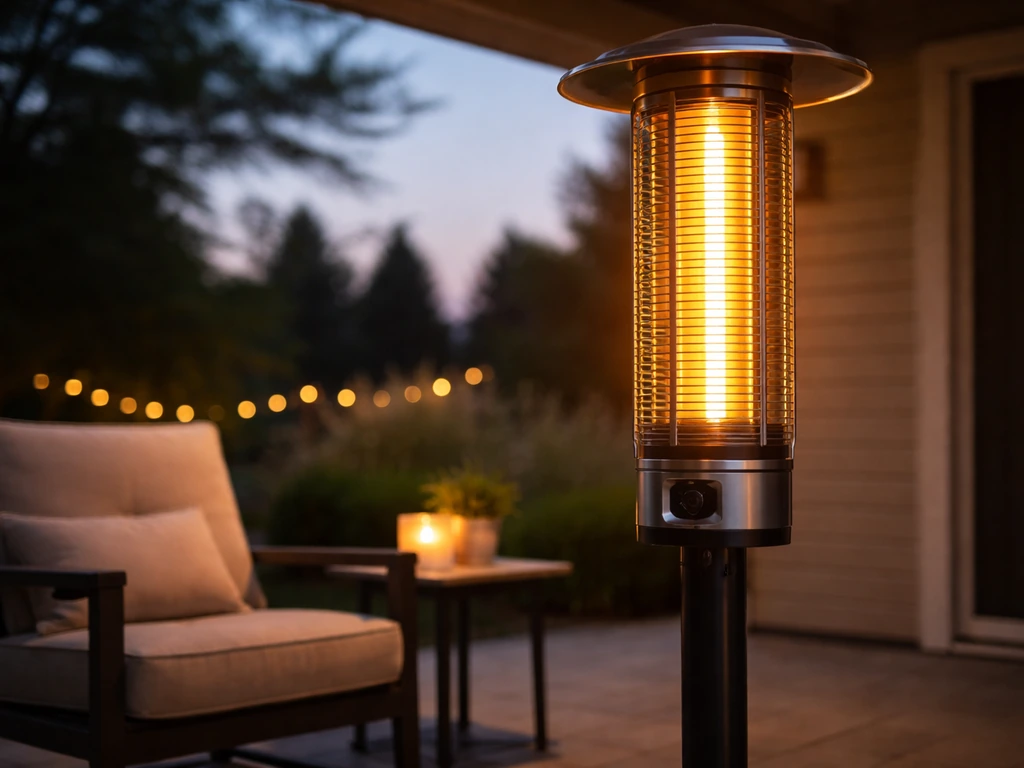
What Optimus electric patio heaters actually are
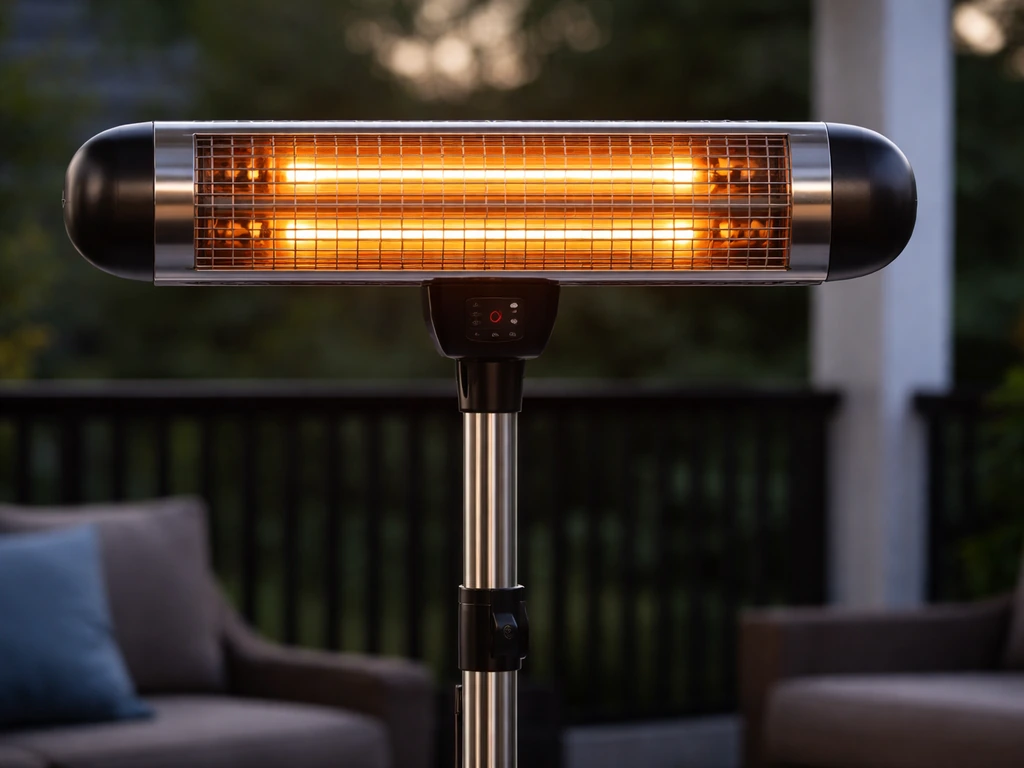
Optimus Enterprise is a US-based consumer electronics company better known for portable fans and space heaters than outdoor heating. Their patio heater lineup is small but focused: the two main models you'll see searched and sold are the PHP-1500DIR and the PHE-1500BR. Both are infrared halogen heaters, not fan-forced or convective heaters. That distinction matters a lot in practice, which is covered further below.
The PHP-1500DIR is the freestanding floor model. It has three halogen tubes, an adjustable-height stand, a thermostat, a remote control, and a 70.8-inch power cord. Physical size is about 21 x 9 x 21 inches, and Optimus rates it at 5,120 BTU/hour at full power. It comes with a 3-year limited warranty, which is better than average for this price bracket.
The PHE-1500BR is the ceiling/hanging version. It uses a single halogen tube instead of three, but still delivers the same 500/1000/1500W range. Dimensions are roughly 420 x 420 x 240 mm (about 16.5 x 16.5 x 9.5 inches), and it ships with the same remote control and 70.8-foot cord. It's sold at Home Depot, Walmart, and through Northern Tool. Both models carry IP34 splash-water and dust protection, which means they can handle light rain but are not fully weatherproof.
| Feature | PHP-1500DIR (Floor Stand) | PHE-1500BR (Ceiling Mount) |
|---|---|---|
| Heat type | Infrared halogen (3 tubes) | Infrared halogen (1 tube) |
| Wattage settings | 500 / 1000 / 1500W | 500 / 1000 / 1500W |
| Max BTU/hr | 5,120 | ~5,120 (estimated) |
| Mounting style | Freestanding, adjustable height | Ceiling/overhead mount |
| Remote control | Yes | Yes |
| Thermostat | Yes | No (on/off + settings only) |
| IP rating | IP34 | IP34 |
| Cord length | 70.8 in | 70.8 ft |
| Warranty | 3-year limited | Not confirmed |
| Retail price (approx.) | $80–$120 | $80–$110 |
Key features that actually matter in real use
Infrared heat vs. other electric types
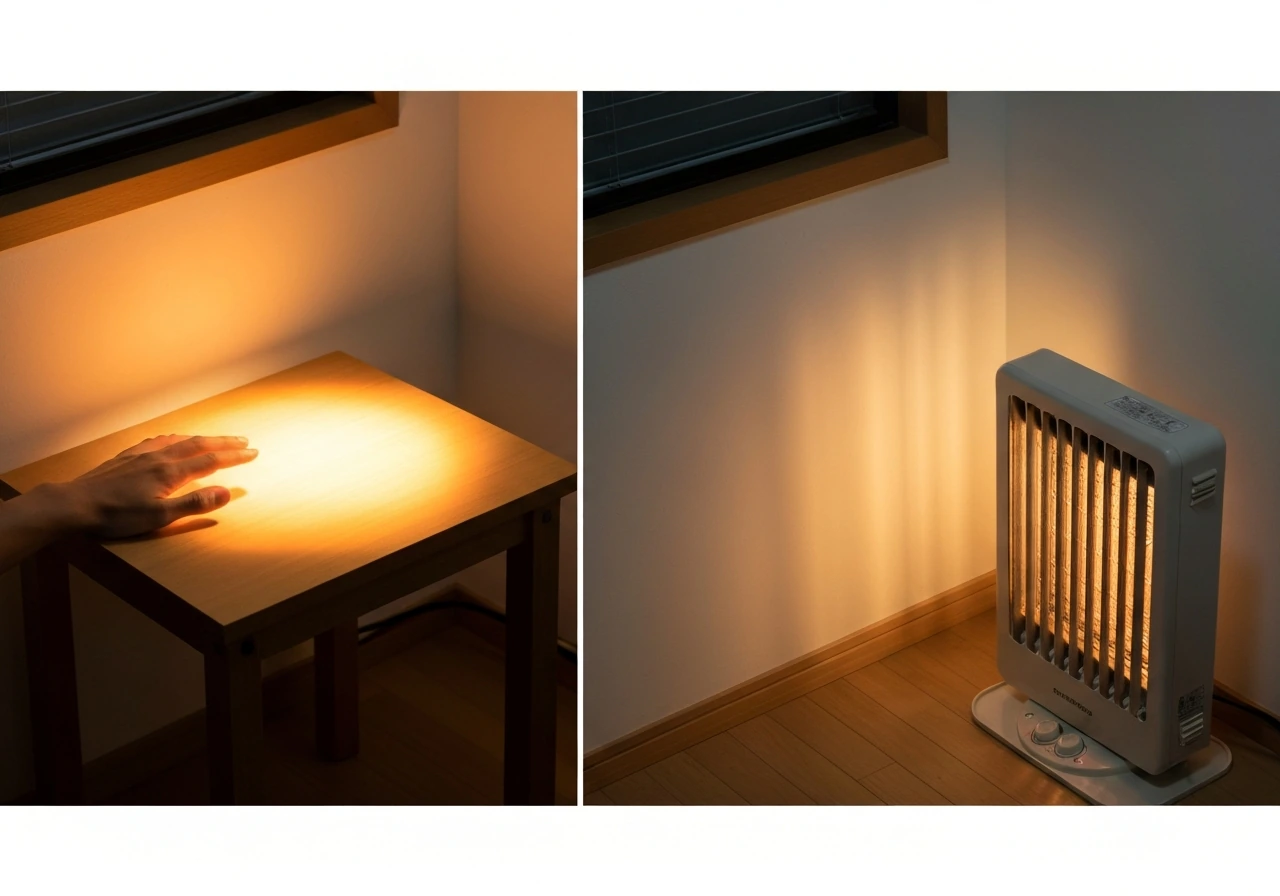
Infrared heaters work by emitting radiant heat that warms surfaces and people directly, not the surrounding air. Think of the sun: you feel warm in sunlight even when the air is cold. That's the same principle. The practical payoff is that Optimus's infrared heat is not blown away by a breeze the way convective heat from a fan-forced heater would be. That's not just marketing copy from Northern Tool's listing. It's a real physical advantage for outdoor use. The trade-off is that infrared is directional. If you're not in the path of the beam, you won't feel much warmth, so placement and angle matter a lot.
Wattage and coverage
At 1500W (the maximum setting), these heaters are pulling the same power draw as most residential kitchen toasters or hair dryers. For context, 1500W translates to about 5,120 BTU/hour, which is on the lower end of outdoor heaters. A standard propane patio heater produces 40,000+ BTU/hour. That gap is significant. Optimus heaters are best thought of as personal zone heaters rather than full-patio warmers. Realistically, they keep one or two people comfortable at close range rather than heating a 200-square-foot deck evenly.
Controls and thermostat
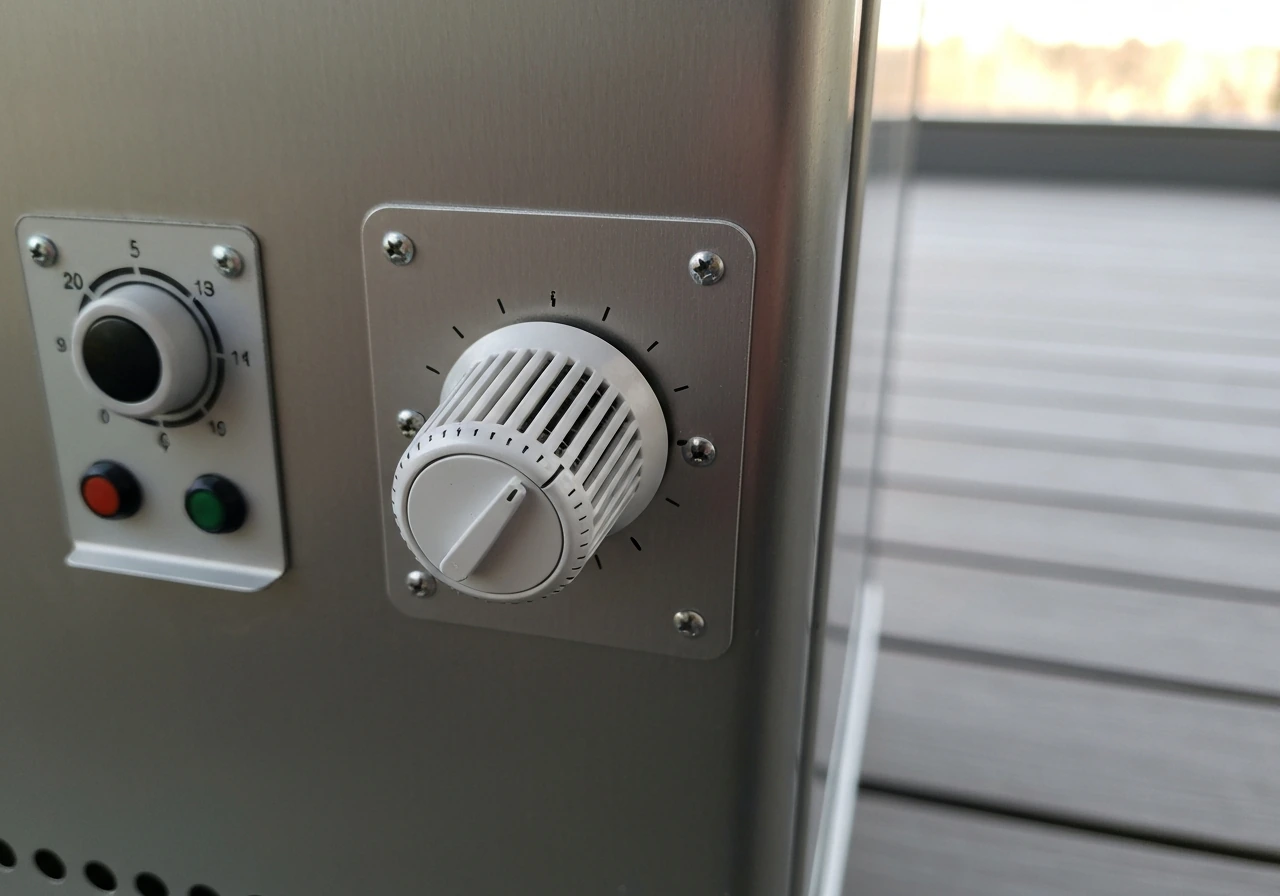
The PHP-1500DIR includes a thermostat, which is genuinely useful for set-and-forget comfort on an enclosed porch or covered space. The PHE-1500BR does not have a thermostat; it has an on/off switch on the unit plus the remote to cycle through settings. For a ceiling-mounted heater this is less of a drawback since you're mostly just dialing the heat level manually anyway, but it's worth knowing going in.
Safety features
Both models carry IP34 protection, meaning they can handle splashing water from any direction but shouldn't be left out in rain. Optimus heaters in their broader product line consistently include overheat protection and tip-over safety switches, and those safety features appear across their indoor/garage models. For the freestanding PHP-1500DIR in particular, a tip-over cut-off is important since it sits on a floor stand on patios where it can be bumped. Always check that the specific model you receive has these features confirmed in the included manual.
Which patio setup is each model actually best for
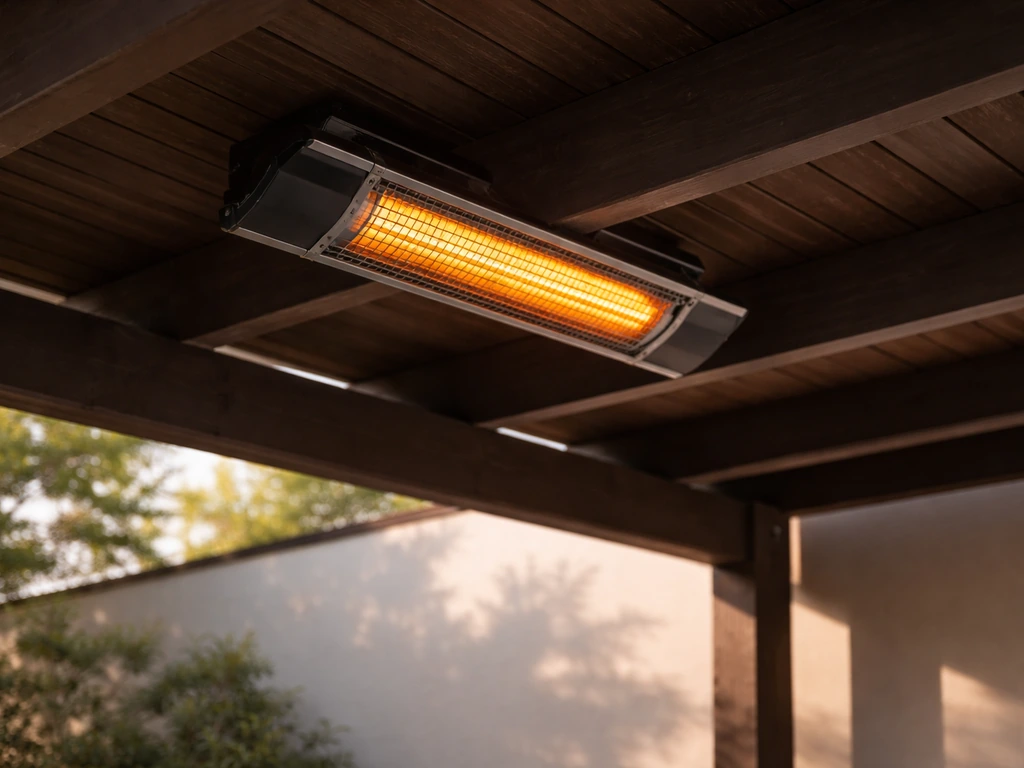
The single most important thing to match is your patio's structure to the right model. Here's how to think through it:
- Covered patio, pergola, or gazebo: The PHE-1500BR ceiling mount shines here. Install it overhead at least 1.8 meters (about 6 feet) above the floor with a minimum 30 cm (12 inches) clearance from the ceiling itself. Overhead infrared heat feels natural because it replicates the downward angle of sunlight. You free up floor space, and the heater stays out of the way.
- Open deck or backyard without a cover: The PHP-1500DIR floor stand is the better option since you can't mount anything overhead. On open, fully exposed patios with strong wind, even infrared loses effectiveness beyond about 4-5 feet. A windbreak (fence, privacy screen, umbrella) makes a noticeable difference.
- Garage or workshop: Either model works, but the PHE-1500BR ceiling mount is cleaner for a garage since it keeps the unit out of traffic. Garages also give you the ceiling height and enclosure that makes infrared more efficient.
- Small covered balcony or enclosed porch: This is the sweet spot for both models. Low ceilings, protected air, and close seating distances all work in their favor.
- Large open patio (200+ sq ft): Honestly, one Optimus unit won't cut it. You'd need multiple units or a higher-output heater (propane or natural gas).
What performance to expect vs. what the box says
Optimus doesn't publish a specific 'effective heating radius' for these models, and that's actually common across the industry. Based on user reviews and the 1500W/5,120 BTU output, here's a more honest picture: at 1500W, you'll feel meaningful warmth if you're sitting within about 5-6 feet of the PHP-1500DIR floor stand, directly in its beam. If you’re searching for optimus 500/1000/1500w electric patio heater reviews, the takeaway is that these models feel best up close in the direct beam.
The PHE-1500BR ceiling mount, installed at the minimum 1. 8-meter height, will warm a seating area of roughly 6-8 feet below it comfortably on a still evening when temps are in the 45-55°F range. Drop below that, and you'll want the full 1500W setting running. On a breezy 40°F night on an open deck, you'll feel the limit of what 1500W can do.
Placement tips that actually help: For the floor stand, angle the reflector slightly downward toward your seating area rather than pointing it straight out horizontally. Most of the heat output misses you if it's aimed past head height. For the ceiling mount, center it directly above your main seating spot rather than centering it in the room. Even a few feet off-center makes a noticeable difference in perceived warmth at the 1500W draw.
Energy use and what it costs to run
At the 1500W setting, these heaters consume 1.5 kWh per hour. At 1000W, they use 1.0 kWh/hour. At 500W, that drops to 0.5 kWh/hour. The US average electricity rate as of mid-2026 is around $0.17 per kWh, though it varies considerably by state (California and Hawaii are closer to $0.30+, while Texas and the Midwest run lower).
| Setting | Power Draw | Cost/Hour (US avg $0.17/kWh) | Cost/Hour (High rate $0.30/kWh) |
|---|---|---|---|
| Low | 500W | ~$0.09 | ~$0.15 |
| Medium | 1000W | ~$0.17 | ~$0.30 |
| High | 1500W | ~$0.26 | ~$0.45 |
Running the heater at full power for 3 hours an evening, 4 nights a week, costs roughly $3-$5 per week at average US rates. That's considerably cheaper to operate than propane, where a 20-lb tank runs out in about 10 hours at full blast and costs $20-$30 to refill. The thermostat on the PHP-1500DIR helps keep costs in check by cycling down when the set temperature is reached. Without a thermostat (the PHE-1500BR), you're manually managing it, which most people don't bother doing, so they end up running it at full power the whole time.
Setup, installation, and daily usability
Both Optimus models plug into a standard 120V household outlet. No hardwiring, no electrician, no special circuit required as long as your outlet can handle 1500W (which any standard 15-amp circuit can). The 70.8-inch cord on the PHP-1500DIR floor stand is just under 6 feet, which is enough for most patio placements if you have an outdoor outlet nearby. The PHE-1500BR lists a 70.8-foot cord, which gives you significant flexibility for ceiling mounting in garages or covered patios where the outlet may be far from your ideal mounting point.
Assembly for the PHP-1500DIR involves attaching the stand and setting the height, which takes about 10-15 minutes with the included hardware. The PHE-1500BR requires ceiling mounting with appropriate hardware (hooks or brackets into a joist or beam). The manual specifies at least 1.8 meters above the floor and 30 cm from the ceiling. Don't mount it directly against a ceiling without that clearance gap, both for safety and heat performance.
Day-to-day use is straightforward. The remote on both models lets you switch between heat settings from your seat without getting up. The PHP-1500DIR's thermostat means you can set a temperature target and let it cycle. The halogen tubes glow orange-red when heating, so there's visible light output at night, which some people find warm and cozy and others find distracting.
Honest pros, cons, and what the reviews actually reveal
Looking across Walmart reviews for both models, the feedback pattern is pretty consistent. blank" rel="noopener noreferrer">Recent reviews for the PHP-1500DIR include a 5-star 'porch heater' review from April 2026 and a 1-star 'junk of an item' review from February 2025. If you want more guidance, an electric patio heater review can help you compare wattage, coverage, and reliability across brands before you buy porch heater. The PHE-1500BR has a 4-star 'slightly above average' from February 2026 and a 1-star 'defective, quit working in less than an hour' from January 2026. That split tells you something real: these are budget heaters with inconsistent quality control.
What buyers consistently like
- Easy setup and plug-in convenience with no special wiring
- Remote control is genuinely useful, especially for ceiling-mounted PHE-1500BR
- Quiet operation compared to fan-forced heaters
- Infrared warmth feels immediate when you're sitting in range
- Price point is accessible at under $120
- PHP-1500DIR's thermostat adds useful automation
Recurring complaints and what they mean
- Early failure (unit stops working within hours or weeks): This is the most alarming pattern and has shown up across both models and multiple years. It suggests quality control issues at the unit level rather than a design flaw. Buying from a retailer with an easy return policy (Walmart, Home Depot) is important.
- Limited heat range on cold nights: Not a defect, just a physics reality. 1500W is not enough for a large open space in cold weather. If you expect this to heat a whole patio in 40°F temperatures, you'll be disappointed.
- Halogen tubes burn out: Halogen elements have a finite life, and replacement parts are not always easy to source for Optimus's specific models.
- Cord length on PHP-1500DIR is short: The 70.8-inch (not 70.8-foot) cord means you need an outdoor outlet very close to where you plan to use it. An outdoor-rated extension cord may be necessary.
Bottom line on reliability: these are budget-tier heaters and should be treated as such. The 3-year limited warranty on the PHP-1500DIR is a positive, but warranty claims require effort. If long-term reliability matters more than upfront cost, you'll want to look at higher-end electric infrared options or a different fuel type entirely.
How to decide what to buy (and when to skip Optimus entirely)
Here's the honest decision path. Optimus is a reasonable buy if you have a covered patio or garage, plan to use it within 5-6 feet of your seating area, and want a low-cost, plug-in option without any installation complexity. The PHP-1500DIR is the stronger of the two for most people because the thermostat adds real value and the freestanding design is flexible. The PHE-1500BR is the better pick if you specifically want overhead mounting in a pergola or covered space where floor space is at a premium.
If you're considering other Optimus-branded options, there's a dedicated breakdown of the 500/1000/1500W settings across the Optimus line that goes deeper on spec comparisons by power level. For a broader look at how Optimus stacks up against other brands in the electric category, general electric patio heater reviews cover competitors at similar and higher price points. The Blumfeldt electric patio heater is one worth comparing if you want a more polished build quality at a moderate step up in price. If you want a direct Blumfeldt electric patio heater review, compare its heat output and build quality against these Optimus models before choosing.
If your patio is large (over 150 square feet), open to wind, or you regularly use it in temperatures below 40°F, an electric heater at this wattage simply won't be enough. A propane heater in the 40,000 BTU range will heat a much larger area far more effectively, though with the ongoing cost and hassle of refilling tanks. Natural gas is the most cost-efficient option if you have a gas line nearby and want permanent installation.
For a more powerful electric option, a 2000W unit like the Heller 2000W outdoor patio heater is worth considering if you want to stay electric but need more output. If you want to stay electric but need more heat output, a 2000W unit like the Heller 2000W outdoor patio heater review is worth comparing.
Quick selection checklist
- Do you have a covered patio, pergola, or garage? If yes, either model works. If no (open deck), go with the PHP-1500DIR floor stand.
- Do you want ceiling-mounted and overhead heat? Choose the PHE-1500BR. Make sure you can mount it at least 1.8 meters (6 feet) above the floor with 30 cm from the ceiling.
- Do you want freestanding and portable? Choose the PHP-1500DIR. Verify you have an outdoor outlet within 6 feet or plan to use an outdoor-rated extension cord.
- Is your primary seating within 5-6 feet of where the heater will be placed? If yes, these models are a reasonable fit. If your patio is larger, consider a higher-output heater.
- Are you in a region with electricity rates above $0.25/kWh? Factor in $0.38-$0.45/hour at full power. It's still cheaper than propane per hour but worth knowing.
- Are you buying from a retailer with easy returns? Given the early-failure complaints, this matters. Home Depot and Walmart both make returns straightforward.
- Do you want reliability over budget price? Consider stepping up to a higher-rated electric brand or switching to propane/natural gas for large or exposed patios.
FAQ
Are Optimus PHP-1500DIR and PHE-1500BR safe to use in light rain, and can I leave them outside?
They are IP34 rated, so they can handle splashing water and damp conditions. However, IP34 is not the same as being fully weatherproof, so you should not leave them outside in ongoing rain or when wet overnight. If you use an outdoor cover, wait until the unit is completely cool and dry before covering.
What is the biggest mistake people make with infrared patio heaters like these?
Most people aim the heater too broadly or at the wrong angle. Infrared heat is directional, so if you are not inside the beam path, you will feel little warmth. For the floor model, angle the reflector toward your seating level, and for the ceiling model, center it above the main seating spot rather than the middle of the room.
Do I need a special outdoor outlet or an exterior-rated extension cord to power them?
They plug into a standard 120V outlet, but the outlet itself and any cord you use must be outdoors-rated if it runs outside. Also confirm your patio circuit can handle 1500W (about 12.5 amps at full power on 120V) without sharing the circuit with high-draw devices.
Will the PHP-1500DIR thermostat actually save money in real use?
It can, but only if you set a reasonable target temperature for your enclosed or covered space. On open decks with wind, the heater may cycle frequently or never reach setpoint, which reduces savings. If your main goal is predictable comfort at one seating area, plan to use manual high settings on windy nights.
How high should I mount the PHE-1500BR, and what happens if I mount it too low or too close to the ceiling?
The manual calls for mounting at least 1.8 meters above the floor and keeping clearance from the ceiling (not flush against it). Mounting too low or with insufficient clearance can reduce effective coverage, increase unwanted heat near overhead surfaces, and create a safety risk. If your pergola has low beams, check the clearances before buying.
Can I use one heater to warm a whole patio, like a 200 square foot deck?
These are best treated as zone heaters, not space heaters. At 1500W, meaningful warmth is limited to a few feet in front of the heater, especially on still nights. For larger or wind-exposed patios, you will typically need multiple heaters, higher wattage (for example, 2000W class), or a different fuel type (propane or natural gas).
Why do some buyers report the ceiling-mount model stops working quickly?
For budget heaters, quality control can be inconsistent, and a short lifespan is a common complaint pattern. Before mounting, do a quick test run right away to confirm heating behavior and remote control response, and keep the receipt so you can pursue the warranty promptly if it fails early.
What seating distance should I plan for if I want comfortable warmth in the 40s °F?
A reasonable expectation at full power is close-range comfort within roughly 5 to 6 feet for the floor model, and about 6 to 8 feet directly below the ceiling unit on a still evening. Once temperatures drop below the mid-40s, windy conditions, or you sit farther off-axis, you should assume you will need full power continuously.
Is it okay to run these heaters continuously for several hours?
They are designed for outdoor use and include safety features such as overheat protection and (for the floor model) tip-over cut-off, but continuous running increases wear and the chance of failure for budget units. For best results, use the available thermostat on the PHP-1500DIR, avoid overextending or damaging power cords, and inspect tube condition and connections periodically.
How do I reduce glare from the glowing halogen tubes at night?
The tubes glow orange-red and that is normal. To minimize distraction, position the heater so the bright portion is not directly in your line of sight, and angle the reflector toward your seating rather than toward eye level. Outdoor umbrellas or small shade structures can also help if they do not block the beam path.