
Paramount makes a solid lineup of patio heaters worth considering, especially if you want an electric infrared option that skips the propane tank hassle. Their flagship floor-standing electric model (the MS-1500WOIRPH) runs on a standard 110V outlet, puts out 1,500 watts of infrared heat, and covers around 120 square feet. Their full-size propane standing heater (the PH-S-112-MK) cranks out 46,000 BTU and runs up to 10 hours on a 20 lb tank. Both are competent, well-built heaters, but they suit very different setups, and neither is the perfect pick for everyone. Here's the breakdown so you can figure out which, if any, is the right fit for your patio.
Paramount Patio Heater Review: Performance, Coverage, and Fit

Willa Brennan
1 Jul 2026
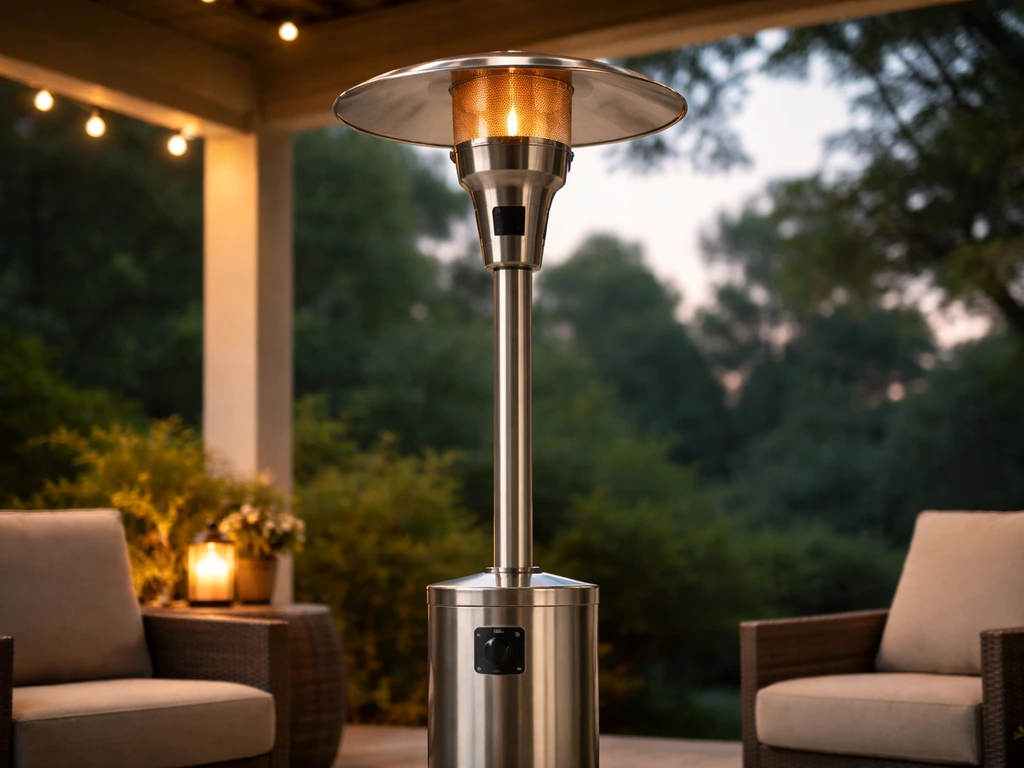
Quick verdict on Paramount patio heaters
Paramount is a mid-range Canadian outdoor brand with a focused patio heater lineup that punches above its price for build quality. Their electric infrared models are the standout for covered patios and anyone who wants plug-and-play simplicity. The propane models are more traditional mushroom-style heaters with solid heat output and reliable piezo ignition. Customer ratings on the propane PH-S-112-MK sit at 4.
7 stars with consistent praise for heat output and ease of use. The infrared models draw similar praise for quality, though coverage expectations need to be managed (120 sq ft is realistic for the electric floor unit, not a large deck). If you're in Canada or buying through retailers like The Home Depot Canada, RONA, or JR Home, Paramount is easy to find and service.
If you need something with massive coverage for a wide-open uncovered patio, you'll want to look elsewhere.
What Paramount uses to heat
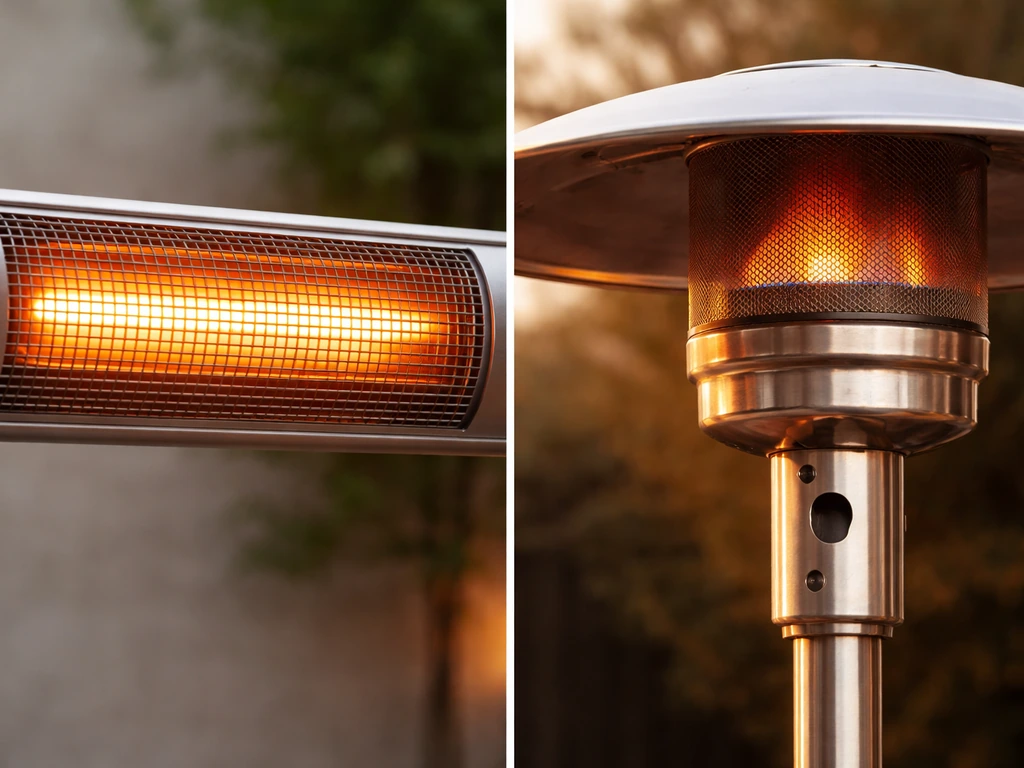
Paramount offers both electric infrared and propane heating across their lineup, so the heating type depends on which model you're looking at. The electric models (MS-1500WOIRPH and PH-E-144) use quartz infrared lamp technology, which means they heat objects and people directly rather than warming the air around them. If you are comparing infrared options across brands, a mosaic patio heater review can help you understand how different units perform in covered and windy spaces infrared lamp technology.
This is a meaningful difference in practice: infrared heat feels almost immediate (the MS-1500WOIRPH manual describes 'max heat within seconds'), and it's not disrupted by wind the way convection heating from propane flame heaters can be. The MS-1500WOIRPH manual specifically states 'no flame, no gas, no UV rays,' which also means no fumes and no odor.
The propane models work differently. The PH-S-112-MK is a classic mushroom-top standing heater that burns propane to create a flame, which heats a radiant screen at the top of the unit and warms the surrounding air by convection. At 46,000 BTU, it's significantly more powerful than the electric units on paper, though coverage in real-world windy conditions is far less reliable than that number suggests. The tabletop PH-T-107-SS runs on propane too but is scaled down to 11,000 BTU for close-range, intimate use.
| Model | Type | Heat Output | Coverage | Fuel |
|---|---|---|---|---|
| MS-1500WOIRPH | Electric infrared (floor-standing) | 1,500W / 5,118 BTU | ~120 sq ft | 110V electric |
| PH-E-144 | Electric infrared (wall-mount) | ~1,500 BTU equiv. | Focused zone | 110V electric |
| PH-S-112-MK | Propane standing (mushroom) | 46,000 BTU | Up to ~15 ft radius | 20 lb propane tank |
| PH-T-107-SS | Propane tabletop | 11,000 BTU | Close-range / intimate | Small propane canister |
Key features and build quality
Build quality is one of Paramount's stronger suits. The MS-1500WOIRPH is a stainless steel floor-standing unit that weighs 49 to 53 lbs depending on the source, with an 18-inch diameter base and a telescoping design that extends to around 86 to 93 inches tall. That's a substantial, stable unit. The stainless steel finish resists rust reasonably well, though like most outdoor appliances it'll benefit from a cover when stored.
The PH-E-144 is the most feature-rich model in the lineup. It's a wall-mounted infrared heater with Bluetooth app control, which means you can adjust heat settings, set a timer, and control the unit from your phone. It has a 6-step heat/dimmer control and auto shutoff via the app. Some variants also include an LED background light and even a speaker function, making it more of a multi-use outdoor fixture than just a heater. The listing notes it's 'certified and protected from light-pressure spray or rain,' though it's designed for covered outdoor use, not open exposure.
On the propane side, the PH-S-112-MK uses a piezo ignition system described as one-step, which is a genuine convenience feature. No matches, no lighters. The PH-S-112-GY variant requires one AAA battery for its electronic ignition. The MS-1500WOIRPH includes a built-in auto shut-off if the unit is tilted, which is an important safety feature for a tall floor-standing heater that could tip. All electric models carry ETL certification.
Fuel type and day-to-day usability
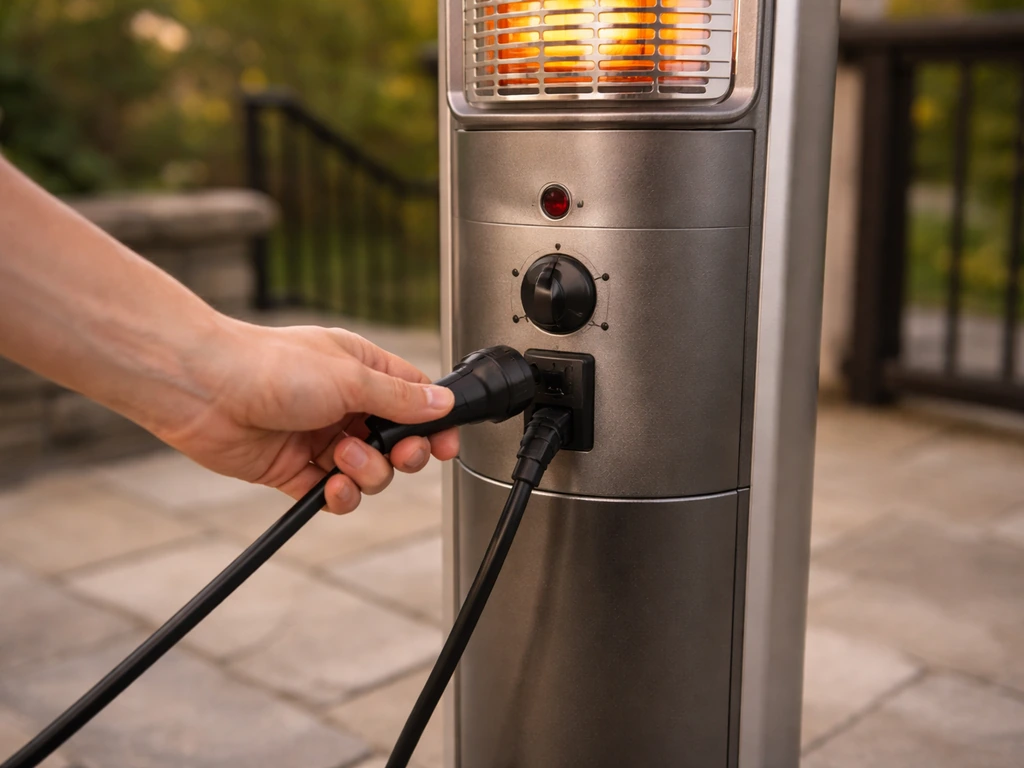
Electric infrared models
The electric Paramount heaters are about as low-maintenance as outdoor heating gets. Plug the MS-1500WOIRPH into a standard 110V outlet, switch it on, and you have heat within seconds. If you are shopping for an imus eco patio heater review, focus on the same things: power source, coverage size, and how the controls work day to day. There's no tank to refill, no gas line to connect, and no ignition sequence to manage.
The quartz infrared lamp is the main consumable, but those typically last thousands of hours. The main limitation is the power cord: you need an outlet within reach of your setup, and you'll want to make sure you're not running a long extension cord that could trip a circuit. The PH-E-144 wall mount eliminates the cord-management issue entirely since it's a fixed installation, and the Bluetooth app control makes it very easy to use day to day.
Propane models
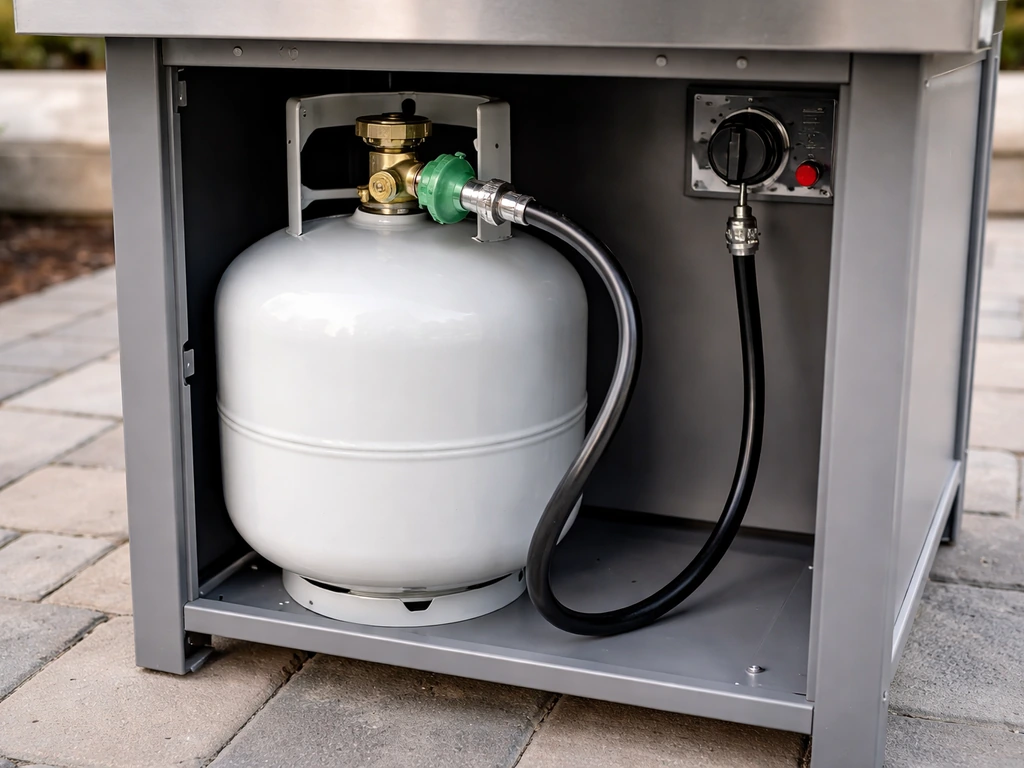
The PH-S-112-MK is straightforward to set up: attach a standard 20 lb propane tank to the base (tank not included), connect the regulator hose, and use the piezo ignition to light. At 46,000 BTU with up to 10 hours of runtime per tank, you're getting good fuel efficiency for the output. Refilling or swapping tanks is the main ongoing task, and at full output you'll go through a tank in about 10 hours, so for frequent use it adds up. Storage is also a factor: propane tanks need to be stored safely and upright, and you'll want to turn off the gas at the tank when the heater's not in use.
Performance for different patio sizes and conditions
This is where you need to be honest with yourself about your patio setup, because no heater performs the same on a sheltered covered porch versus a wide-open windy deck.
The electric infrared MS-1500WOIRPH is rated for 120 square feet, which is a realistic number for a covered patio or screened enclosure. In a 10x12 sitting area with a roof overhead, it should keep two to four people comfortably warm. Because infrared heat works by radiating energy directly to people and surfaces (not the air), wind doesn't diminish its effectiveness the way it does for propane heaters. That said, 1,500 watts is still a relatively modest output for very cold nights. The manual notes reduced efficiency below 40°F, so on a hard frost night you may feel the limits.
The propane PH-S-112-MK has much higher raw output at 46,000 BTU, which translates to a heating radius of roughly 12 to 15 feet in calm conditions. However, the PH-F122 manual (another Paramount propane model) explicitly states that wind velocity must be below 10 mph for safe, effective operation. In practice, any meaningful breeze will carry the warm air away from a standing propane heater and cut your effective coverage significantly. For an uncovered open patio on a breezy evening, the propane heater will feel inconsistent. For a sheltered patio or pergola on a calm night, it's genuinely warming.
The tabletop PH-T-107-SS at 11,000 BTU is really designed for a small table of people, not a whole patio. Think of it as a conversation-starter centerpiece that keeps a group of four warm over dinner, not something that heats a space.
Safety, reliability, and common complaints to watch for
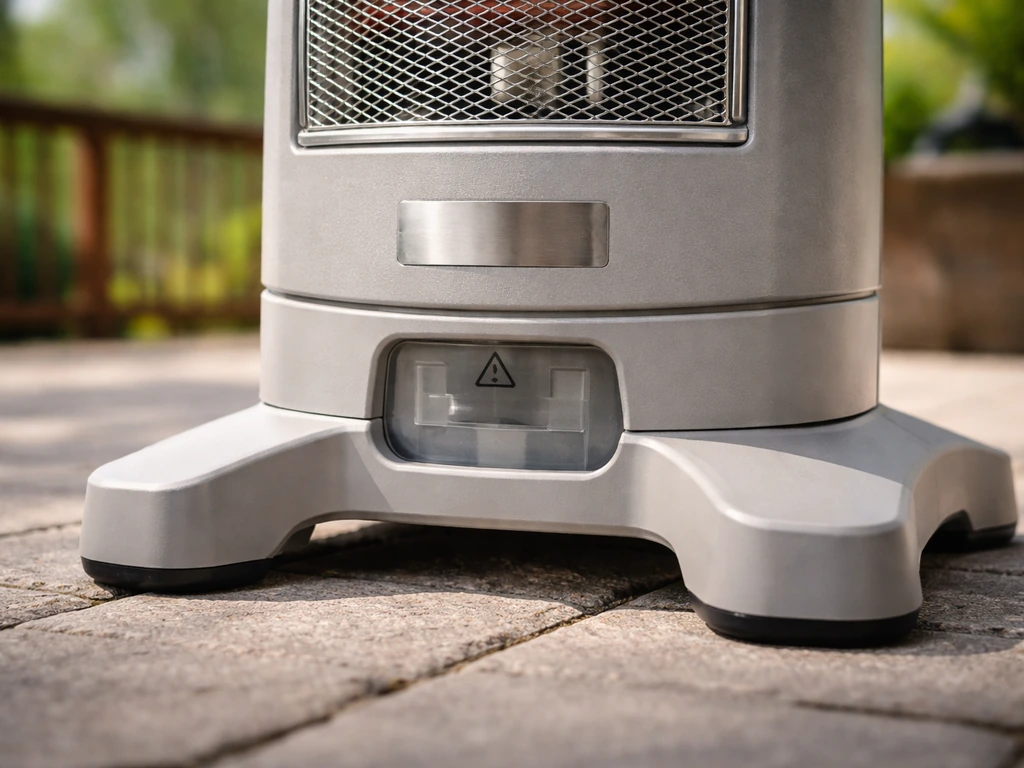
Paramount's safety specs are thorough and in line with what you'd expect from a quality mid-range brand. The MS-1500WOIRPH has an auto tilt shutoff, ETL certification, and a 3-foot minimum clearance requirement from furniture, curtains, and combustibles. The propane PH-F122 manual calls for 36 inches of clearance above the heater and 24 inches on the sides, which is standard for standing propane units. Always check those clearances before placing a propane heater on a covered patio with a low ceiling: if you're under a pergola or patio cover, make sure you have enough vertical clearance.
Common issues to watch for based on customer feedback patterns and the product specs: the electric floor-standing units are heavy (49 to 53 lbs), so moving them around frequently gets old fast. If you need portability, the tabletop propane model makes more sense. The propane standing heater requires a AAA battery for ignition on some variants, which is a minor but annoying failure point if the battery dies. The PH-E-144's Bluetooth connectivity is convenient, but like all smart home features it adds a dependency: if the app updates or connectivity drops, you're falling back to manual controls. For covered patio use only, the weather resistance is adequate, but don't leave any Paramount heater out in direct rain without a cover.
- Electric floor unit is heavy (49-53 lbs): not ideal if you frequently move it
- Propane ignition requires AAA battery on some variants: keep a spare handy
- Propane and electric models should not be used in windy open conditions for best performance
- All models need minimum clearance distances: 3 ft for electric, 36 in overhead for propane
- PH-E-144 is for covered use only despite spray resistance certification
- Performance drops on electric models below 40°F ambient temperatures
Paramount vs other patio heater types
Paramount's lineup covers two of the major patio heater categories: electric infrared and propane. Here's how those stack up against the other common options you'll encounter when shopping.
| Heater Type | Best For | Heat Output Range | Wind Resistance | Ongoing Cost | Key Limitation |
|---|---|---|---|---|---|
| Paramount Electric Infrared (MS-1500WOIRPH) | Covered patios, plug-and-play use | 1,500W / 5,118 BTU | Excellent | Low (electricity) | Limited to ~120 sq ft |
| Paramount Propane Standing (PH-S-112-MK) | Open or large patios, no outlet needed | 46,000 BTU | Poor in wind | Medium (tank refills) | Ineffective in windy conditions |
| Paramount Tabletop Propane (PH-T-107-SS) | Small intimate spaces, portability | 11,000 BTU | Poor in wind | Low-medium | Tiny coverage area |
| Natural Gas Patio Heater | Permanent installs, frequent use | 40,000-60,000 BTU | Poor in wind | Low (gas line) | Requires gas line installation |
| Pellet Patio Heater | Ambiance + heat, off-grid | Varies, moderate | Moderate | Low-medium (pellets) | Requires refueling and cleaning |
| High-output Infrared (other brands) | Large covered areas, commercial use | 3,000W+ / 10,000+ BTU | Excellent | Medium (electricity) | Needs higher amperage circuit |
| Tabletop Electric Infrared | Tiny patios, portability | 750-1,500W | Excellent | Low | Very small coverage |
If you're comparing Paramount to other brands reviewed on this site, brands like HeatMax and Costco's private-label heaters often compete in the same propane standing heater space, while Mosaic and similar brands lean into the decorative or pellet-fired segment. If you’re comparing alternatives, check out our heatmax patio heater review for how its output and coverage stack up against propane and infrared options. Paramount differentiates itself by offering both a solid propane option and a genuinely capable smart electric infrared model in the same lineup, which makes it a versatile brand if you're deciding between fuel types. If you've already narrowed down to electric infrared, the PH-E-144's app control is a genuine differentiator at its price point.
How to choose and buy: a practical checklist
Before you buy any patio heater, including a Paramount, get specific about your space. The three things that matter most are: your patio square footage, whether your space is covered or open, and how often you deal with wind. Those three factors will immediately narrow your choices.
- Measure your patio: The MS-1500WOIRPH covers 120 sq ft. If your sitting area is larger, consider the 46,000 BTU propane model or pairing two electric units.
- Check your shelter situation: If your patio is covered (pergola, roof, screen enclosure), electric infrared is the smarter pick. If it's fully open, propane gives you more raw output, but manage expectations on windy nights.
- Assess wind exposure: If you regularly get breezes above 10 mph, propane heaters will underperform. Electric infrared is wind-resistant by nature.
- Find your nearest outlet: Electric models need a 110V outlet within practical reach. If there's no outlet near your patio, propane or a natural gas heater with a line run is more realistic.
- Decide on portability vs permanence: The standing floor heaters (both electric and propane) can be moved but are heavy. The PH-E-144 wall mount is permanent but cleaner. The tabletop propane is the most portable.
- Set your budget: Electric models have lower ongoing costs (just electricity), while propane adds tank refill costs. At high-frequency use, natural gas with a fixed line will save money long-term.
- Check clearances before finalizing placement: 3 ft minimum all around for electric, 36 inches overhead and 24 inches on sides for propane. Measure your covered patio ceiling height before buying a propane unit.
Who should buy a Paramount heater
- You have a covered patio or screened-in porch and want a clean, plug-in electric infrared option: the MS-1500WOIRPH or PH-E-144 are great fits
- You want a smart heater you can control from your phone: the PH-E-144 with Bluetooth app is the pick
- You need a reliable propane standing heater with good BTU output and a one-step ignition: the PH-S-112-MK at 4.7 stars is proven
- You're in Canada and want good retail availability and warranty support through RONA, Home Depot Canada, or JR Home
Who should skip Paramount (or consider alternatives)
- You have a large open patio (over 200 sq ft) with frequent wind: look at higher-output infrared heaters or a permanently installed natural gas unit instead
- You want to heat a very large uncovered space: Paramount's propane model tops out at 46,000 BTU, which is average, and you'd need something in the 50,000-60,000 BTU range with a flame guard for open exposure
- You need a 240V hardwired electric infrared heater for commercial-level output: Paramount's electric lineup runs on 110V standard outlets, not 240V
- You want a pellet heater for the ambiance of a real fire: Paramount doesn't offer this, and brands in the pellet/fire pit heater category are a better fit
The bottom line
Paramount makes genuinely good patio heaters for the right situations. Their electric infrared models are among the most practical options for covered patios: no fuel to manage, wind-resistant heating, fast warmth, and smart controls on the PH-E-144. Their propane standing heater delivers solid heat output with a reliable ignition and strong customer satisfaction.
The brand's main limitation is range: they don't cover the full spectrum of patio heating (no natural gas, no pellet, no 240V high-output electric), so if your situation calls for one of those solutions, you'll need to look beyond Paramount. But for the majority of homeowners with a covered deck or sheltered patio who want a quality heater they can buy locally in Canada and set up in an afternoon, Paramount is a very sound choice.
FAQ
Is the Paramount MS-1500WOIRPH safe to use under a roof or pergola, and how much clearance do I need?
Use the 3-foot minimum clearance rule for combustibles and furniture when placing the floor unit, and double-check vertical space if your roof or pergola is low. Infrared is still heat output, so keep curtains, umbrellas, and hanging fabrics outside the clearance zone even on covered patios.
What happens if I use the MS-1500WOIRPH with an extension cord, and what should I avoid?
The electric floor unit needs a properly rated cord length that matches the heater’s power draw, otherwise you risk voltage drop and overheating at the connection. If you cannot place it close to the outlet, it’s usually better to choose the wall-mounted PH-E-144 or reposition the heater rather than rely on a long, lightweight extension cord.
Will the MS-1500WOIRPH still work on very cold nights, or does it completely stop below a certain temperature?
It doesn’t shut off, but efficiency drops below 40°F as noted in the manual. Practically, you may feel less warmth at distance or if seating is farther from the heater, so plan to place it closer to the people or treat it as partial coverage in hard frost conditions.
How many people can the 1,500W infrared unit actually warm, and does that change with seating distance?
The stated 120 sq ft is a realistic planning number for a covered 10x12 style seating zone, but comfort depends heavily on how close people are to the unit. If you have a wider spread, expect fewer comfortably warm seats, since infrared reduces with distance because it radiates directly to objects rather than mixing air.
What wind speed is a dealbreaker for the Paramount propane models like the PH-S-112-MK?
A key constraint is wind, one manual notes operation must be under 10 mph for safe and effective performance. If you regularly get more than a light breeze, the propane heater can feel inconsistent because warm air is carried away, so prioritize a sheltered setup or consider infrared for wind-prone patios.
Do I need to buy a regulator or special parts for the PH-S-112-MK, or is it plug-and-tank ready?
You attach a standard 20 lb tank to the base and connect the regulator hose, but tank and hose components are not always included in every package. Before first use, confirm the kit includes the correct regulator for your tank style and that all connections are tightened properly and leak-tested.
How often do I need to replace or maintain the quartz infrared lamp in the MS-1500WOIRPH?
The quartz infrared lamp is typically a long-life consumable, measured in thousands of hours, so routine replacement is not usually a near-term concern. Maintenance is more about keeping the exterior clean and protected from moisture when stored, because performance and longevity depend on avoiding exposure to direct rain over time.
Is the PH-E-144 actually weatherproof, or is it only for covered use?
It’s designed for covered outdoor use, the listing states it is protected from light-pressure spray or rain. If your patio experiences direct exposure (for example, uncovered on a stormy night), you should cover it when not in use to prevent water intrusion and electrical issues.
What should I do if the PH-E-144 Bluetooth app stops working after an update or loses connection?
Treat the app as convenience, not your only control method, and verify whether the heater supports manual settings when disconnected. If connectivity fails, you want to be able to keep the unit on preset levels safely without relying on the phone.
Is the Paramount PH-S-112-MK easy to ignite in cold weather, and does ignition depend on batteries?
The PH-S-112-MK uses a piezo one-step ignition, so it does not rely on a AAA battery for lighting on that variant. Other propane variants may require a battery for electronic ignition, so if you choose a different model, check whether you will need to keep a spare battery on hand.
How do I store a propane Paramount heater and tank safely during the off-season?
Store the heater in a way that keeps the unit clean and dry, and store propane tanks upright in a well-ventilated area away from heat sources. Also turn off the gas at the tank when the heater is not in use, and avoid long-term storage where tanks could be exposed to freezing or moisture that might complicate connections.
Are there any common placement mistakes that reduce performance for both electric and propane models?
For electric infrared, a frequent mistake is putting the heater too far from the seating group or blocking line-of-sight with furniture or tall backrests. For propane, placing it in a breezy open spot and assuming the BTU rating guarantees full coverage is the big mistake, so match placement to sheltered or calm conditions.