
Style Selections gas patio heaters are propane-fueled, floor-standing units sold primarily through Lowe's and Canadian retailers like RONA. The main models you'll encounter are the PG211S (48,000 BTU), the PG212H (42,000 BTU), the FHTS80093A, and the NCZH-G-KMZMSS infrared model (also 48,000 BTU). All of them run on a standard 20-lb propane tank (sold separately), use electronic or knob-based ignition, and come with built-in safety shutoffs. They're genuinely solid entry-level heaters for medium to large patios, but they're not without quirks, and knowing which model fits your situation before you buy saves a real headache.
Style Selections Gas Patio Heater Reviews and Buying Guide

Willa Brennan
20 Jun 2026
What Style Selections Gas Patio Heaters Actually Are
Style Selections is a Lowe's house brand, which means these heaters are manufactured by third-party OEMs and sold under the Style Selections label. You'll sometimes see nearly identical units from brands like Garden Treasures (another Lowe's brand) with the same or very similar model numbers. That matters because user reviews, replacement parts, and troubleshooting advice for one often apply to the other.
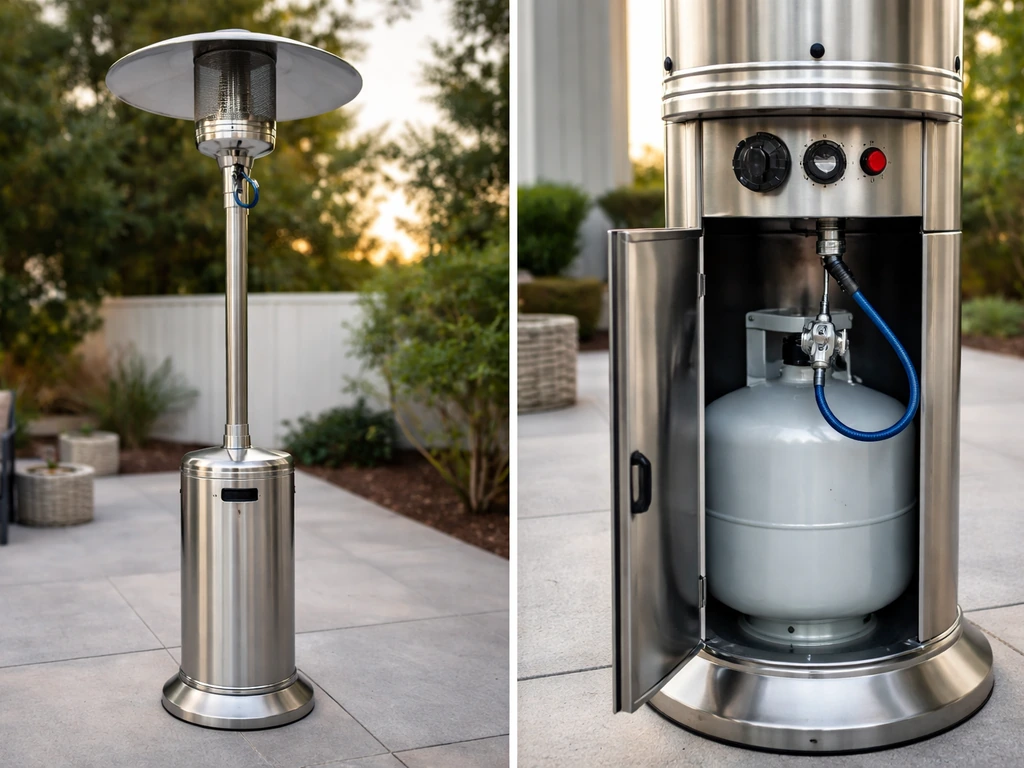
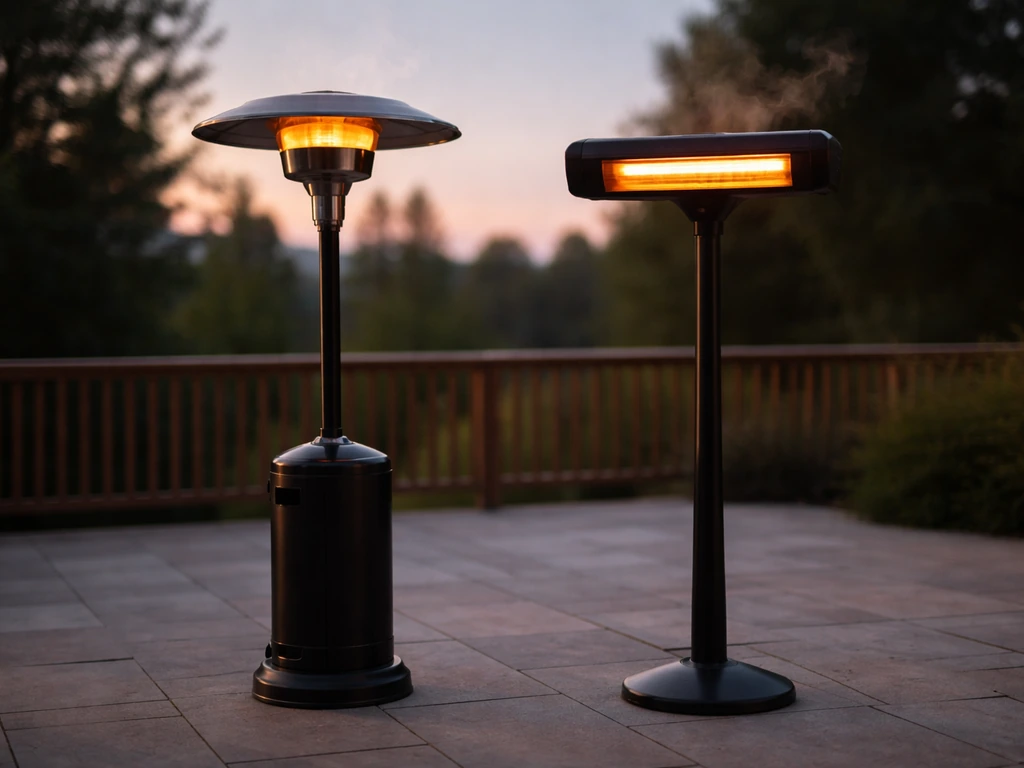
The lineup is built around the classic mushroom-top, floor-standing propane heater design: a tall post (around 90 inches on the PG212H), a domed reflector on top, and a hidden propane tank in the base. The NCZH-G-KMZMSS is the outlier, it's technically a gas-fired infrared model, which means it heats objects and people directly rather than warming the surrounding air. That's a meaningful difference in wind performance, which I'll get into below.
None of these come fully assembled. The PG212H, for example, ships with a reflector panel, flame screen, glass tube, control box, support arms, and a protective guard, all needing to be put together. A glass tube heater is essentially a type of patio heater that uses a heated glass tube element, and it can be compared directly against traditional patio heaters to see which one fits your space and wind conditions. Budget 30 to 45 minutes for assembly if you're handy, longer if it's your first time with this type of heater. They also all require a 20-lb propane tank that is not included in the box, so factor that into your upfront cost.
Common Style Selections Gas Patio Heater Models at a Glance
| Model | BTU Output | Heating Area | Ignition Type | Key Feature |
|---|---|---|---|---|
| PG211S | 48,000 BTU (max) | ~200+ ft² (estimated) | Electric | Stainless steel, highest BTU in lineup |
| PG212H | 42,000 BTU/hr | 171 ft² | Knob/electronic | Glass tube design, thermocouple + tilt switch |
| FHTS80093A | Not published (LP gas) | Not published | Control knob + AA battery | Manual-style ignition, infrared emitter screen |
| NCZH-G-KMZMSS | 48,000 BTU/hr | Not published | Knob-based | Infrared, includes wheel kit, thermocouple + tilt switch |
How to Read Gas Patio Heater Specs for Real-World Performance
BTU (British Thermal Unit) is the most-advertised spec, but it's also the most misunderstood. A useful rule of thumb: multiply your patio's square footage by 20 to get a rough BTU target. So a 200 ft² patio needs around 4,000 BTUs to feel comfortable, except that assumes calm air, no wind, and a somewhat enclosed space. In reality, an open patio loses heat fast, and you'll want more headroom in your BTU rating than the math suggests.
The PG212H's listed coverage of 171 ft² sounds modest for a 42,000 BTU heater, but that's actually a conservative retailer figure. On a calm evening with guests seated within about 8 to 10 feet of the heater, a 42,000 BTU unit will feel genuinely warm. Add a breeze and that comfort radius shrinks fast, this is where infrared models like the NCZH-G-KMZMSS have an edge, since infrared heat warms surfaces rather than air, making it less vulnerable to wind.
Ignition type matters more than people think. The PG211S has a listed electric ignition, which means a push-button or piezo starter, convenient and reliable in moderate conditions. The FHTS80093A uses a control knob and a single AA battery for ignition. In cold or damp conditions, battery-assisted igniters can be finicky, so knowing what type you have is important before you're standing outside in October trying to get the thing lit.
Both the PG212H and the NCZH-G-KMZMSS include a thermocouple and a tilt switch. The thermocouple detects whether the pilot flame is actually burning and shuts off gas if it goes out, preventing gas buildup. The tilt switch cuts gas if the heater tips over. These aren't luxury features; they're basic safety must-haves and a good sign that the units meet standard LP gas appliance safety expectations. If a heater you're considering doesn't list both, that's worth questioning.
Style Selections Gas Patio Heater Reviews: Best-For Categories
Best for Large Open Patios: PG211S (48,000 BTU)
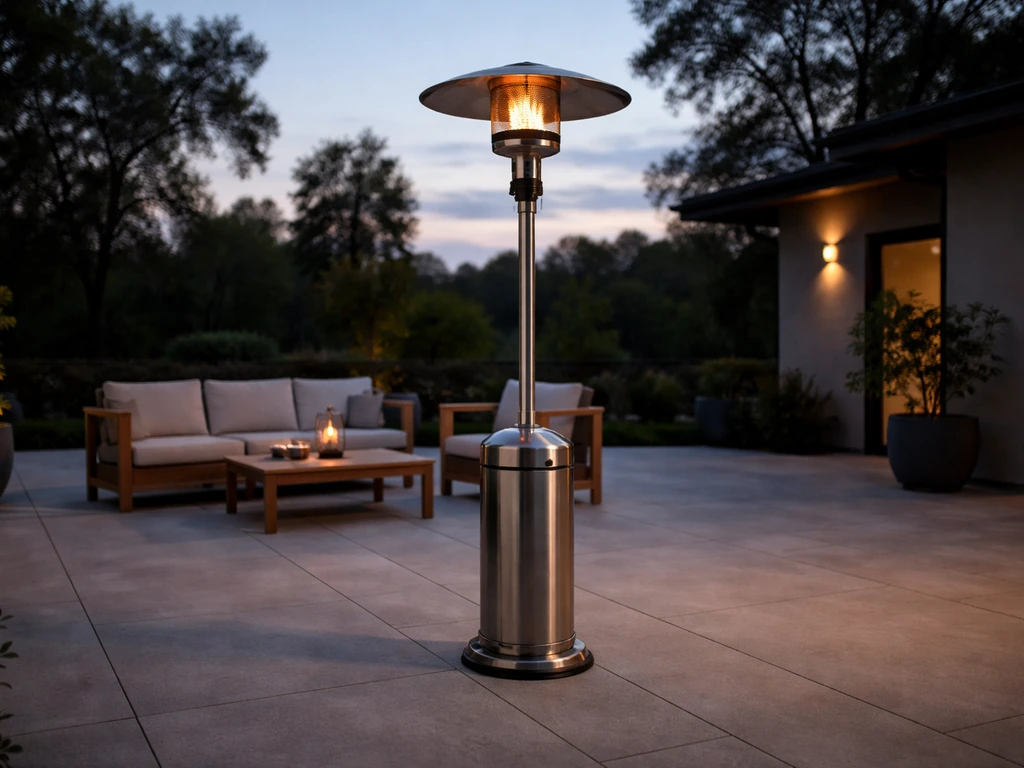
If you've got a deck or patio over 150 ft² that's open to the sky with minimal wind protection, the PG211S is the one to look at. If you want more detailed home appliance guys patio heater reviews-style comparisons, the next sections break down which models fit specific patio sizes and conditions PG211S. Its 48,000 BTU max output gives you more thermal headroom than the PG212H, and the electric ignition is convenient.
The stainless steel build handles outdoor exposure reasonably well. That said, 'adjustable output' means you'll dial it back under a covered patio or for smaller gatherings, and on the lowest setting, you're burning propane less efficiently, so you'll go through tanks faster than you might expect if you keep it cranked.
- Buy it if: You have a large open patio (150 ft² or more), you want the highest BTU output in the Style Selections lineup, and you prefer electric ignition
- Skip it if: Your patio is under a pergola or covered porch, where 48,000 BTUs is overkill and potentially a fire hazard near overhead structures
Best for Mid-Size Patios and Casual Entertaining: PG212H (42,000 BTU)
The PG212H is the most commonly reviewed Style Selections model and probably the one most people encounter at Lowe's or RONA. At 42,000 BTU/hr with a 171 ft² rated coverage area, it's a solid match for a typical backyard patio seating area with 4 to 6 people. RONA's product specifications for the Style Selections PG212H (propane) also list a heating area of 171. 15 ft² [171 ft² rated coverage area](https://www.
rona. ca/en/product/style-selections-42-000-btu-stainless-steel-propane-free-standing-patio-heater-pg212h-41915008). The glass tube design looks nicer than a plain steel emitter, and the thermocouple and tilt switch add legitimate peace of mind. If you are specifically comparing glass-tube models, the quartz glass tube style on the PG212H is a key detail to check in your Style Selections quartz glass tube patio heater review.
Assembly is required and involves more pieces than you'd expect, so set aside proper time and follow the manual closely. The ignition timing warning in the manual is worth highlighting: don't hold the control knob in for more than 10 seconds before igniting, or you risk a ball of flame at startup, not dangerous if you're standing clear, but startling and a bad habit.
- Buy it if: You want a reliable, mid-range propane heater for a 100 to 170 ft² patio with 4 to 6 guests, and you're willing to spend 45 minutes on assembly
- Skip it if: You want something plug-and-play or need heat in a consistently windy area
Best for Windy or Exposed Patios: NCZH-G-KMZMSS (Infrared, 48,000 BTU)
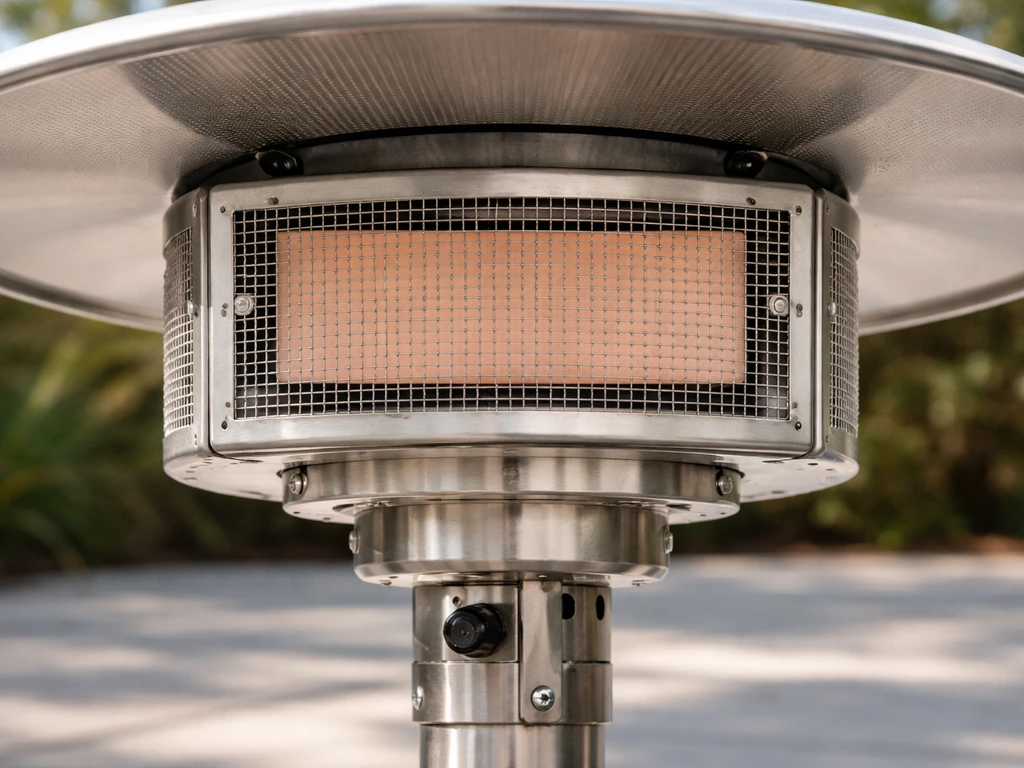
The NCZH-G-KMZMSS is Style Selections' infrared entry, and it's a genuinely different product from the other models. Because it heats via radiant infrared energy rather than convective air warming, wind affects it far less. If you're specifically looking for enders elegance patio heater reviews, infrared models like this one are often discussed because they tend to keep working well even when there's wind.
Guests seated within its heating radius feel warm even if the air temperature around them is cool. It ships with a full package including a reflector panel set, wheel kit, gas hose and regulator, and base, which is a nice inclusion since the gas hose and regulator are sometimes sold separately with other brands.
The one real-world issue flagged in user reports is ignition: some users describe lighting the burner only to have the flame go out when they release the knob to adjust the output. This is a thermocouple holding-time issue, the fix is to hold the knob in longer (typically 30 to 45 seconds) after ignition to let the thermocouple heat up before you release. It's a quirk, not a defect, but it's frustrating if you don't know about it.
The unit also carries a one-year limited warranty.
- Buy it if: Your patio is open and exposed to wind, or you want infrared warmth that feels more targeted and efficient
- Skip it if: You're hoping for a simple, quick-start heater with no learning curve — the thermocouple hold time can be irritating until you get used to it
Best for Budget-Conscious Buyers: FHTS80093A
The FHTS80093A is the most basic model in the lineup. It uses a control knob with a single AA battery for ignition and has an infrared emitter screen that glows red-hot during operation. Setup follows the same propane connection process as the other models: attach the hose and regulator to the cylinder, place the tank in the housing, strap it in, and do a leak check before first use.
The leak check procedure the manual specifies is the dishwashing detergent method, mix soap and water, apply it to the hose-regulator and regulator-cylinder joints, and watch for bubbles. It's a 2-minute step that's easy to skip and shouldn't be. This model doesn't publish a specific BTU figure or coverage area in most listings, which makes comparison harder, but it's clearly positioned as a value-tier option.
If you want to sanity-check what to buy, comparing these Style Selections results to well traveled living patio heater reviews can give you a broader sense of real-world performance and quirks.
- Buy it if: You want the lowest entry price, you understand the basic setup process, and you have a modest patio or deck
- Skip it if: You want clear spec comparisons or higher BTU output for a larger space
Style Selections Propane vs Other Fuel Types: Which Makes Sense for You?
Propane (LP gas) heaters like the Style Selections lineup are popular for good reasons: they're portable, don't require any electrical hookup, and put out serious heat. But they're not always the best choice depending on your patio setup. Here's an honest comparison across the fuel types covered on this site.
| Fuel Type | Heat Output | Portability | Operating Cost | Best For |
|---|---|---|---|---|
| Propane (LP) | High (up to 48,000 BTU) | High — tank is self-contained | Moderate — tank refills needed | Open patios, no utility hookup, max warmth |
| Natural Gas | High (similar BTU range) | None — fixed line required | Lower long-term | Permanent installs, frequent use, gas line access |
| Electric | Low to moderate | High (cord-dependent) | Higher per hour, varies by rate | Covered patios, small spaces, no fuel handling |
| Pellet/Biomass | Moderate | Moderate | Low fuel cost, higher effort | Aesthetic appeal, ambiance, rustic setups |
| Infrared (gas-fired) | High, targeted | High (freestanding) | Similar to propane | Windy spaces, targeted zone heating |
If you have a natural gas line at your home and you're planning to heat the patio regularly (say, three or more times a week through fall and spring), a permanent natural gas connection is almost always more cost-effective long-term than cycling through 20-lb propane tanks. Natural gas models aren't in the Style Selections lineup as far as current listings show, so you'd be looking at a different brand.
On the flip side, if your patio doesn't have a gas line and you rent or move frequently, propane's portability wins outright. Electric heaters are worth considering for smaller covered patios where fire clearance is a concern and convenience matters, though their heat output tops out well below what a 42,000 or 48,000 BTU propane unit delivers.
For a broader look at gas patio heater options beyond this brand, the gas patio heater reviews section of this site compares the category more thoroughly. If you want more detail beyond Style Selections, these gas patio heater reviews help compare models by size, fuel type, and real-world performance. And if infrared is catching your attention, the glass tube patio heater and quartz glass tube patio heater reviews are useful comparisons to the NCZH-G-KMZMSS.
Safety, Maintenance, and Using These Heaters in Different Weather
Clearances and Safe Placement
The FHTS80093A manual specifies a minimum of 3 feet of clearance from combustibles on the sides and 3 feet from the top. This applies to all the propane models in the lineup as a general rule. In practice, that means no overhead umbrellas, no string lights within arm's reach, and no patio cushions or throws draped anywhere near the unit. The emitter screen on the FHTS80093A gets red-hot during operation, visibly so. It's not a heater you want kids or pets near without supervision. All these units are for outdoor use only; they produce carbon monoxide and must never be operated in enclosed spaces, including garages, tents, or screened porches with minimal ventilation.
Stability and Wind Handling
Floor-standing propane heaters are tall and top-heavy by design, which makes stability a real consideration. The tilt switch on the PG212H and NCZH-G-KMZMSS will cut gas if the unit tips, but it's better not to let it tip in the first place. On windy evenings, position the heater in a corner or against a wall, and if your patio surface is uneven, add sandbags or patio weights to the base. Don't use these on soft ground like grass without a stable paver or surface underneath. A heater that tips and ignites nearby furniture is a serious fire risk, tilt switch or not.
Propane Connection and Leak Checks
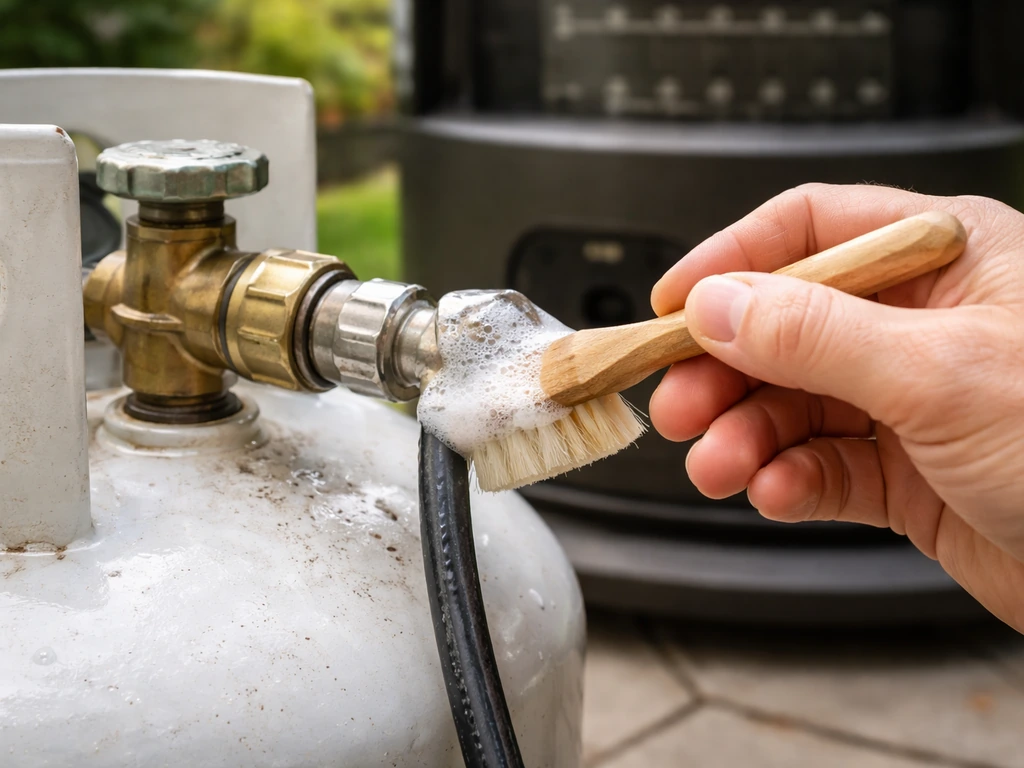
Every time you connect a new propane cylinder, do the soap-and-water leak check. It takes two minutes: mix a few drops of dish soap with water, brush the solution onto the hose-to-regulator joint and the regulator-to-cylinder connection, then open the tank valve slightly. If you see bubbles, tighten the connection or replace the hose before proceeding. Don't skip this because it worked fine last time, propane fittings can develop micro-leaks over a season of use, and they're invisible without the soap test.
Routine Maintenance
At the start of each season, check the burner orifice for blockages, spiders love to nest in gas orifices during storage, and a partial blockage is one of the most common reasons a burner won't light or lights inconsistently. The FHTS80093A troubleshooting section specifically calls this out. Clear any debris with compressed air or a small brush (never use a pin or sharp object that could enlarge the orifice). Also inspect the hose and regulator for cracks or stiffness annually and replace them if anything looks worn. Store the heater under a cover or indoors during extended off-season periods to slow weathering and protect the igniter.
Your Buying Checklist Before You Pull the Trigger
Before you order any Style Selections model (or compare it against other brands), run through this quick checklist. If you're comparing options, a dedicated glass tube patio heater review can help you judge efficiency, heat pattern, and build quality before you buy. It'll save you from the most common buyer regrets.
- Measure your patio. Use the 20 BTU per square foot rule as a starting point. A 200 ft² patio targets around 40,000 BTUs minimum, making the PG212H (42,000 BTU) or PG211S (48,000 BTU) both reasonable fits.
- Check your fuel access. Do you have easy access to propane refill or exchange stations? If yes, propane is fine. If you already have a natural gas line on your property, explore NG-compatible brands instead.
- Decide: covered or open patio? Under a pergola or roof, you need fewer BTUs and fire clearance becomes more critical. On an open deck, higher BTU and wind resistance (infrared) matter more.
- Check ignition preference. The PG211S has electric ignition. The FHTS80093A uses a battery-assisted knob. If you hate fiddling with knobs in cold weather, prioritize electric ignition models.
- Factor in assembly time. All Style Selections models require assembly. If you want something close to ready-to-use out of the box, budget at least 45 minutes and read the manual before starting.
- Budget for the tank. A 20-lb propane tank costs $30 to $50 to purchase new and $15 to $25 to exchange. Plan for 2 to 4 exchanges per season depending on usage frequency.
- Verify the warranty. The NCZH-G-KMZMSS carries a one-year limited warranty. Confirm the warranty terms for whichever model you buy, since house-brand warranties can be harder to exercise than name-brand options.
- Think about long-term use. Style Selections is a value-tier brand. For occasional seasonal use, it delivers strong value. If you plan to heat your patio five nights a week for years, investing in a higher-end brand with better parts availability may save frustration down the road.
Bottom line: Style Selections gas patio heaters punch above their price point for casual to moderate use, and the PG212H or PG211S are the two I'd recommend most confidently for a typical backyard setup. The NCZH-G-KMZMSS infrared model is genuinely worth considering if wind is an issue on your patio. Just go in with clear expectations about assembly, the propane tank situation, and the thermocouple hold-time quirk, and you'll likely be satisfied.
If you're on the fence about propane versus another fuel type for your specific setup, comparing them side by side, as covered in the broader gas patio heater reviews and brand comparisons on this site, is time well spent before you commit. If you’re searching for living accents patio heater reviews, focus on burn performance, wind resilience, and how easy the ignition is in real backyard conditions broader gas patio heater reviews.
FAQ
Do Style Selections gas patio heaters work in windy conditions, and which model is best?
They vary a lot by heating method. The radiant infrared NCZH-G-KMZMSS generally holds comfort better in wind because it warms people and surfaces instead of mostly warming air. Traditional propane models (PG211S, PG212H, and the infrared-style emitter in FHTS80093A depending on how it’s configured) can feel noticeably less effective as wind strips away warmed air around the heater’s column.
How do I choose between the PG211S and the PG212H if my patio size is in between their coverage ranges?
If you are between sizes, lean toward the higher BTU option (PG211S) only if your setup is open and exposed, because wind and openness reduce real comfort more than the marketing coverage suggests. If your patio is more enclosed, the PG212H often delivers enough warmth and can mean fewer tank refills due to how you might run it at lower output.
What propane tank should I buy, and can I use an adapter to run from a larger tank?
The heaters are designed around a standard 20-lb propane cylinder connection. If you want to use a larger tank, you generally need a compatible regulator and hose kit rated for outdoor LP use, and the flow must match what the heater expects. Avoid improvising with mismatched regulators, because incorrect pressure regulation can cause poor ignition or unsafe operation.
Why does the infrared NCZH-G-KMZMSS sometimes shut off right when I release the knob?
It’s typically related to thermocouple heat-up time. The fix is to hold the control knob in longer after ignition (often 30 to 45 seconds) so the thermocouple reaches the temperature needed to keep the gas flowing. If it still shuts off quickly, recheck that the knob release timing is consistent and confirm the burner is lit correctly before adjusting output.
Are these heaters safe under umbrellas, close to outdoor lights, or near patio furniture?
You should not operate them where anything combustible can fall or sit within the clearance zones. The general safety approach is no overhead umbrellas, no string lights near the warm area, and no draped cushions or throws. Even if the unit shuts off on tilt, keeping a wide “no nearby objects” buffer reduces the risk of ignition of nearby items if wind shifts them.
What is the correct way to do the soap-and-water leak test, and where should I test?
Test at the hose-to-regulator joint and the regulator-to-cylinder connection. Mix dish soap with water, brush the solution on those joints, then open the tank valve slightly, look for bubbles, and don’t proceed if you see growing bubbles. This is most important after any new cylinder, hose, or regulator change, and it’s also worth repeating early in the season.
Do I really need to check the burner orifice for blockages every year?
Yes, especially if the heater sits in storage, because insects and debris can partially block the orifice and cause weak ignition or inconsistent flames. Clean using safe methods like compressed air or a small brush, avoid pins or sharp objects that could enlarge the orifice, and inspect hose and regulator condition annually for stiffness, cracking, or wear.
What should I do if my heater won’t ignite reliably in cool or damp weather?
Start by matching your expectations to your ignition type. Battery-assisted ignition (like the FHTS80093A with an AA battery) can be more finicky when it’s cold or damp, so use fresh batteries and ensure the battery terminals are clean. Also verify propane supply, confirm the control knob timing matches the manual, and recheck burner cleanliness.
Can I use these heaters on a deck or patio over grass, and do I need weights?
Don’t place them on soft, shifting surfaces like untreated grass. Use a stable surface, such as a patio base/paver area, and if the patio is uneven, consider patio weights or sandbags that secure the heater’s base. The tilt switch is a backup, it does not replace proper leveling and stable placement.
How long does assembly usually take, and what’s the most common assembly mistake?
Expect roughly 30 to 45 minutes for first-time assembly if you are handy, longer for first-timers because there are multiple panels and alignment steps. The most common problem is rushing the fit of the reflector and guard components, which can affect how the heater operates and how safely it sits. Follow the manual in order and ensure panels are seated before tightening everything fully.
How do I estimate operating cost since these are propane units with different BTU ratings?
A practical approach is to compare how often you refill rather than only comparing BTU numbers. Higher-output models can use fuel faster if you run them near high output, so decide the comfort target first (seat radius and wind exposure), then consider running at a lower setting when possible. If you keep a heater cranked on the lowest setting for long sessions, fuel burn can still be high enough that refill frequency surprises people.