
A tabletop pyramid patio heater is a compact, freestanding heater designed to sit on or near your outdoor table and warm a small circle of people at close range. Most propane versions run between 11,000 and 15,000 BTU and cover roughly 25–30 square feet, while electric models typically land at 1,500W and cover a similar zone. If you have a small patio, a bistro-style table, or just want heat exactly where you're sitting without a full standing heater dominating the space, this style makes a lot of sense. Pick the wrong size or fuel type, though, and you'll either be too cold or dealing with a heater that's overkill for a table setup. This guide walks you through every decision so you get it right the first time.
Table Top Pyramid Patio Heater: Buy, Set Up, and Use Safely

Willa Brennan
18 May 2026
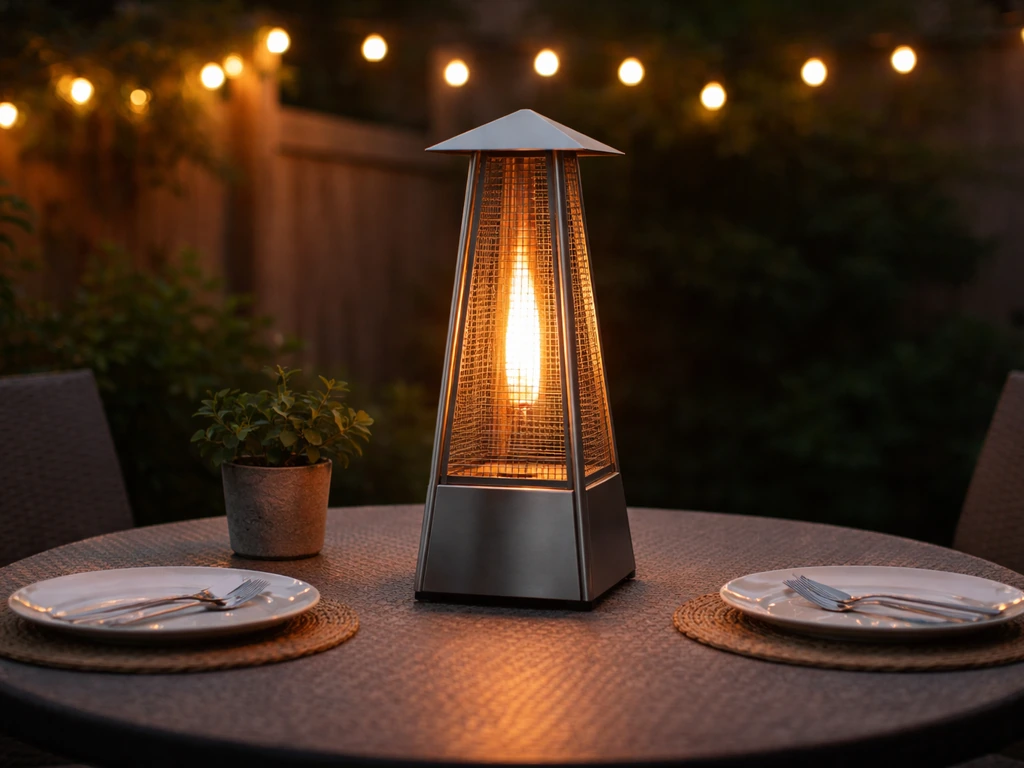
What a tabletop pyramid patio heater is (and who actually needs one)
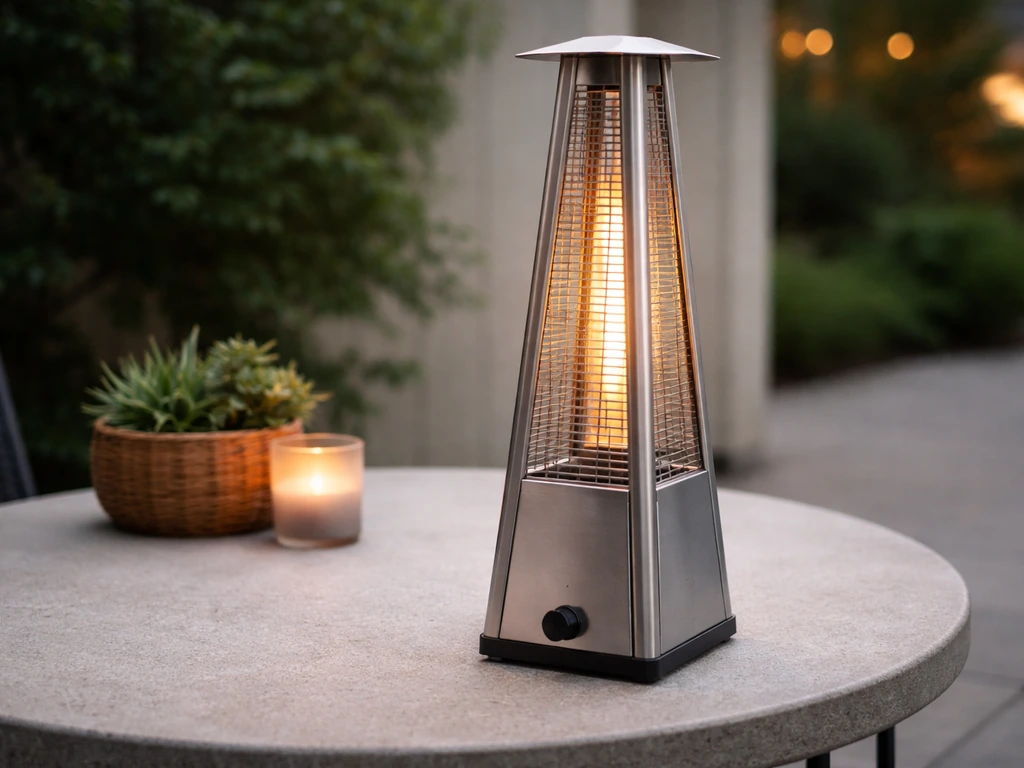
The tabletop pyramid style is exactly what it sounds like: a heater with a tapered, pyramid-shaped body that sits on a flat surface at table height. Unlike a tall standing mushroom-top heater, the heat source is right at sitting level, so it warms you directly instead of radiating heat above your head. The pyramid shape isn't just aesthetic. On propane models, it typically houses a vertical flame column protected by a glass tube, which is genuinely useful for wind resistance. On electric models, the pyramid shape usually houses infrared heating elements.
This type of heater is best for a two-to-four person table on a small patio, deck, or balcony where you don't want a 7-foot standing heater taking up floor space. It's also popular for covered pergolas, screened porches, and outdoor dining setups where you want something that looks intentional on the table rather than industrial. If you're heating a large open patio for a crowd, a full-sized pyramid or mushroom-top standing heater is a better fit. Those units can hit 40,000–48,000 BTU and cover up to 175 square feet, which is a completely different product category even if the pyramid shape looks similar.
Heat coverage and sizing for your patio or table setup
The honest planning rule for propane patio heaters is blank" rel="noopener noreferrer">roughly 5,000 BTU per 100 square feet as a baseline. A tabletop propane unit at 11,000 BTU, like the Cuisinart COH-500P, is rated to warm up to 30 square feet. That lines up well with a small dining table and a few chairs in calm conditions. Once wind picks up, coverage shrinks noticeably, so mentally subtract 20–30% on breezy nights.
Electric tabletop infrared models at 1,500W show wildly varying coverage claims in product listings, ranging from 5–7 square feet on the conservative end to 322 square feet on the optimistic end. The real-world sweet spot for a 1,500W tabletop electric unit is probably 10–20 square feet of effective warmth radius, meaning the people sitting within arm's reach feel it meaningfully. Treat manufacturer coverage numbers as a starting point rather than a guarantee, especially outdoors where wind and ambient temperature change everything.
| Heater Style | Typical BTU / Wattage | Effective Coverage | Best For |
|---|---|---|---|
| Tabletop propane (small) | 11,000–15,000 BTU | 25–35 sq ft | 2–4 person bistro/dining table |
| Tabletop electric infrared | 1,000–1,500W | 10–20 sq ft (realistically) | Covered patios, balconies, low-wind spaces |
| Full-size standing pyramid (propane) | 40,000–48,000 BTU | 150–175 sq ft / 10–11 ft diameter | Large open patios, gatherings, no table needed |
Propane vs electric: which fuel type fits your setup
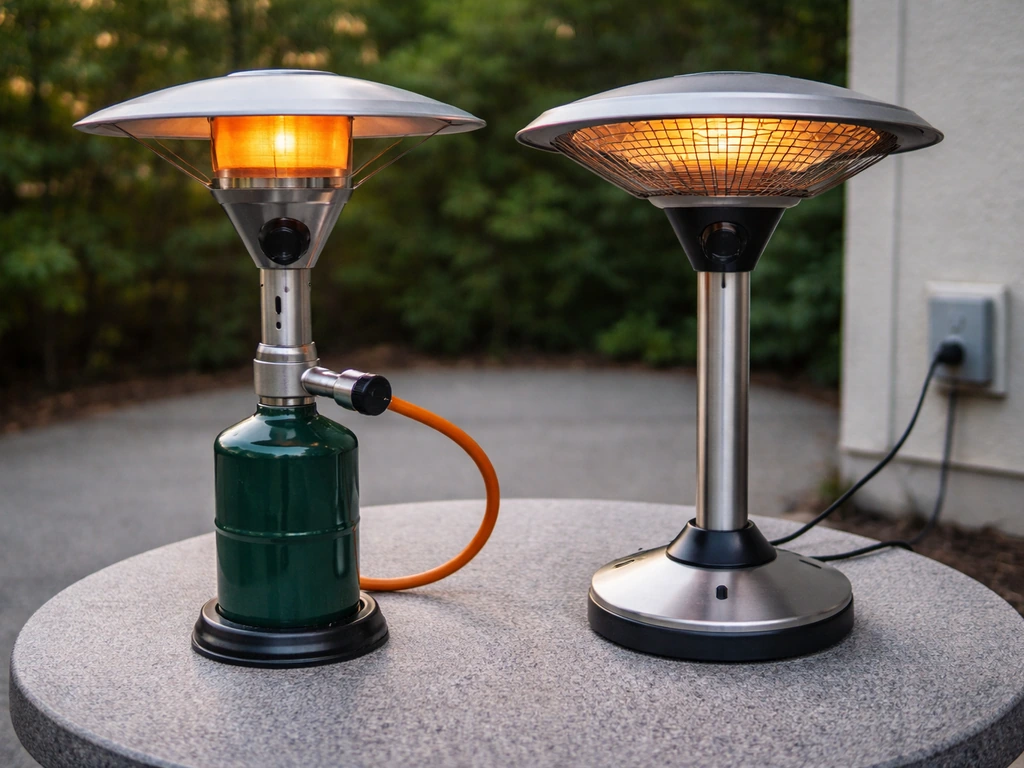
Tabletop patio heaters almost always run on either propane or electric power. Natural gas is not a realistic option for a tabletop unit since it requires a fixed gas line, and pellet heaters at this scale don't exist in any meaningful way. So it really comes down to propane or electric, and the right call depends on where and how you use it.
Propane tabletop heaters
Propane gives you real heat output and freedom from power outlets. You can put it anywhere on the table without worrying about cord management. Most small tabletop propane units like the Cuisinart COH-500P run on a 1-lb disposable tank, which is convenient but comes with a real limitation: a 1-lb tank lasts about 25 minutes at full burn before the tank cools and freezes from the rapid gas draw. That's normal behavior, not a defect. The tank warms back up and you can keep going, but it means a 1-lb tank is really a short-session option. For longer evenings, look for a unit that supports an optional hose and regulator to connect to a standard 20-lb tank. The Cuisinart COH-500P does support that with an optional regulator (sold separately), which extends runtime dramatically. If you're shopping for a specific option like the table top patio heater model hps-c-pc, check whether it supports a hose and regulator for longer runtime.
One propane-specific note: always use the manufacturer-specified hose and regulator. Cuisinart's manual is explicit that replacement hose assemblies must be the ones specified by the manufacturer. This isn't fine print to skip. Using a mismatched regulator on a small tabletop unit is a real safety risk.
Electric tabletop heaters
Electric infrared tabletop heaters are simpler to operate: plug in, turn on, adjust heat level. A table top patio heater electric option is a convenient choice when you have an outdoor outlet nearby. No tanks to swap, no regulator to check, no fuel cost beyond electricity. They're a strong choice for covered patios, screened porches, and balconies where an outlet is close. Look for an IP44 or IP55 weatherproof rating if the unit will be exposed to rain or heavy moisture. The tradeoff is that electric units generally produce less intense heat than a propane model in the same price range, and they need a cord, which can be awkward on a table.
If you're deciding between tabletop propane and electric options, propane wins for raw warmth, portability, and outdoor use in exposed spaces. Electric wins for convenience, simplicity, and covered/semi-enclosed setups where you don't want an open flame.
Features that actually matter before you buy
Anti-tilt shut-off
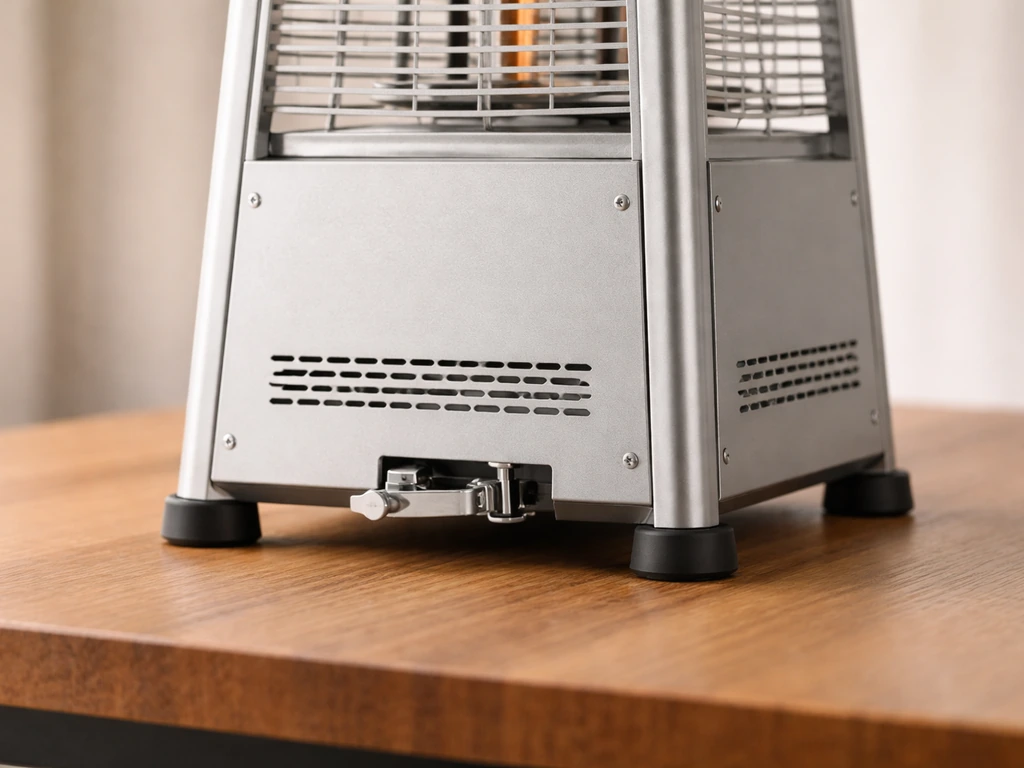
This is non-negotiable for a tabletop propane heater. If the unit tips over on a table, it needs to cut off gas automatically. The Cuisinart COH-500P has a built-in anti-tilt automatic shut-off, and any tabletop propane heater you consider should too. It's a basic safety feature that separates serious products from cheap units.
Burner guard or screen
A burner screen guard prevents accidental contact with the heat source, which matters when the heater is sitting at arm level on a table with drinks, hands, and curious kids nearby. Check that any model you consider includes this.
Ignition type
Push-button electronic ignition is the standard on most quality tabletop propane heaters and is far more convenient than manual lighting. If the heater fails to light, always wait at least 5 minutes before retrying to let any gas dissipate. That's a safety step, not optional.
Wind performance
The glass tube flame enclosure on pyramid-style propane heaters is specifically designed to protect the flame from wind, and it works meaningfully better than an open burner in a light breeze. That said, all tabletop heaters struggle in sustained wind. If your patio regularly gets strong wind, consider positioning the heater near a windbreak or wall, and factor in that your effective coverage area will be smaller than what the manufacturer advertises. Coverage estimates from manufacturers are generally given in calm, controlled conditions.
Stability and base design
A tabletop heater needs a flat, stable surface. Cuisinart's manual specifically instructs users to fix the base on a stable surface and avoid placing any materials under or near the heater base. This matters more than people expect since tables can wobble, especially on uneven deck boards. A wide, heavy base is a plus.
Safe placement and how to use it right from day one
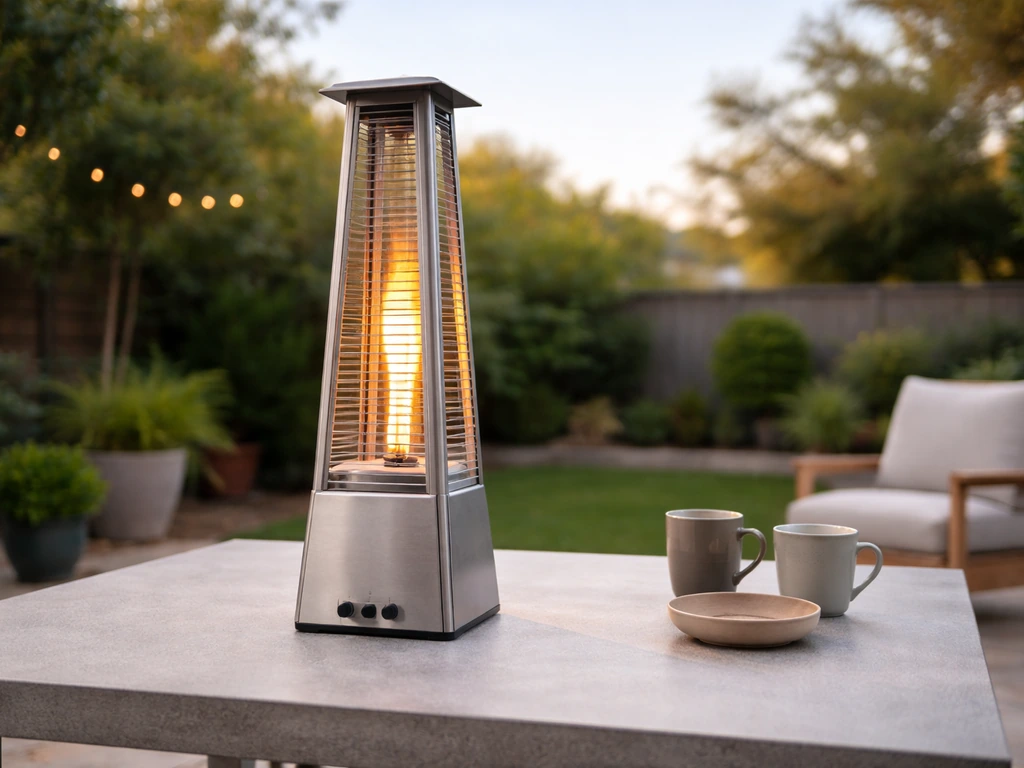
Tabletop pyramid patio heaters are outdoor-only products. Do not use a propane tabletop heater indoors, in a garage, or in any enclosed space. Even a covered patio needs good airflow. If you're under a pergola, awning, or overhang, check the clearance: Cuisinart's COH-500P manual requires a minimum of 3.61 feet (1,100 mm) of clearance to any combustible material in all directions. That includes overhead structures, nearby umbrellas, chair cushions, and hanging lights. Napoleon's heater manuals make this point clearly too: radiant heat from a patio heater can affect materials above and beside the unit, not just directly in front of it.
On first use, don't be alarmed if you notice smoke or a slight burning smell. Residual manufacturing oils burn off during the first 20–30 minutes of operation. It's normal and temporary. Just run the heater outdoors in an open area for the first session.
Before every propane use, do a quick leak test with soapy water on all connections, especially after connecting a new tank. Touchstone’s Citadel Pyramid patio heater manual warns users to check for fire hazards by performing a leak test before lighting, and it identifies the model as 40001CITADEL do a quick leak test with soapy water. Apply the solution to hose connections and look for bubbles while the gas valve is open. Bubbles mean a leak; tighten or replace the connection before lighting. Never skip this step on a new setup.
- Place the heater on a flat, stable surface with at least 3.6 feet of clearance to any combustible overhead or nearby.
- Connect the propane tank (or plug in the electric unit) and perform a soapy-water leak test on propane connections.
- On first use, expect mild smoke or odor for up to 30 minutes as manufacturing residue burns off.
- If the heater fails to ignite, turn off the gas and wait 5 minutes before retrying.
- Never leave the heater unattended while running, especially with kids or pets nearby.
- After use, turn off the gas at the tank valve first, then let the burner flame out on its own.
- Do not touch or move the heater for at least 45 minutes after shutting it off.
- Never store a spare propane cylinder near the heater or indoors.
Maintenance and off-season storage
Tabletop heaters don't need much maintenance, but a few regular checks go a long way. For propane models, inspect the burner, the air circulation passageways, and the control compartment periodically for debris, insects, and spiders. A clogged burner or air passage is a real fire risk. Cuisinart's manual specifically calls out insects and spiders as common culprits. Use a soft brush or compressed air to clean these areas before the first use of the season.
Check the hose and regulator before every season. Look for cracks, brittleness, or any signs of wear. If in doubt, replace it with the manufacturer-approved replacement part, not a generic substitute. Annual inspection by a qualified service person is recommended for any propane heater used regularly.
For off-season storage, disconnect and remove the propane tank before storing the heater. Store the tank outdoors in a well-ventilated area, never in a garage, basement, or enclosed space. For the heater itself, a purpose-made cover is worth using. A cuisinart portable table top patio heater with cover is an example of the kind of dedicated cover that helps protect key components during storage a purpose-made cover. Cuisinart makes a dedicated cover for the COH-500P (the CHC-501), and using something like that protects the glass tube, controls, and finish from off-season moisture and debris. For electric models, store indoors to protect electrical components from freeze-thaw cycling.
How to compare models and pick the right one
When you're comparing specific tabletop pyramid heaters, these are the specs that actually move the needle. Manufacturer marketing copy can be misleading, especially on coverage claims, so focus on the numbers and verified features.
| Spec | What to Look For | Why It Matters |
|---|---|---|
| BTU output (propane) | 10,000–15,000 BTU for tabletop use | Determines warmth radius; match to your table size |
| Wattage (electric) | 1,000–1,500W for tabletop use | Higher wattage = more heat, but check outlet/circuit capacity |
| Anti-tilt shut-off | Must-have on any propane tabletop unit | Cuts gas if heater tips over on a table |
| Tank compatibility | 1-lb tank standard; 20-lb with optional hose | 1-lb is short-session; 20-lb setup extends evening use |
| Clearance required | At least 3–4 ft to combustibles | Critical for placement under pergolas and awnings |
| Weatherproof rating (electric) | IP44 minimum; IP55 better | Protects against rain and moisture outdoors |
| Burner/flame guard | Glass tube or screen guard included | Protects flame from wind; prevents accidental contact |
| Ignition type | Push-button electronic preferred | More reliable and safer than manual lighting |
| Cover/accessory support | Manufacturer cover available | Protects investment in off-season storage |
Your buying decision really comes down to three questions: Do you have an outlet nearby or do you need portability? How long are your typical outdoor sessions? And is the heater going under any kind of overhead structure? If you need portability and real warmth, go propane and budget for a 20-lb tank adapter so you're not swapping 1-lb canisters every half hour. If you're on a covered patio with an outlet, electric is simpler and cleaner. If you're going under a pergola or awning, measure your clearance before you buy anything.
Tabletop propane heaters like the Cuisinart COH-500P represent the compact, close-range end of the propane spectrum. If you find yourself wanting more coverage or you're heating a larger group, it's worth comparing dedicated tabletop propane models side by side with tabletop electric options, since the fuel type often matters more than brand for this style. For anyone who wants a model that travels easily or needs a matching protective cover, those are specific features worth filtering by before you start browsing.
The bottom line: a tabletop pyramid heater is a genuinely useful product for the right situation. Get the fuel type matched to your setup, confirm your clearances, and make sure the safety features are there before you buy. Do those three things and you'll be warm on your first night out.
FAQ
Can I use a tabletop pyramid patio heater under a pergola or near an overhead ceiling fan?
Yes only if you have the required overhead clearance and the heater is not in the fan’s direct airflow. Radiant heat can warm nearby materials above and beside the heater, and fan airflow can also disturb flame protection on propane units. Measure clearance in all directions, not just above the flame, and keep the heater away from hanging fixtures that are directly over the table.
How do I position a tabletop heater on the table so it warms people instead of heating the tabletop?
Place it centered and angled so the warm zone faces seating positions, keep it away from table edges, and verify the base sits on a flat, stable surface with no heat-trapping pads underneath. If your table has a removable top or glass inserts, confirm those materials can handle the heater’s radiant output and are not creating a contact heat hazard.
What’s the safest way to handle wind gusts with a propane tabletop heater?
Do not increase the flame or run it as-is during strong, sustained gusts. Instead, reposition it closer to a windbreak or wall, and reduce the number of seats within the effective warm radius. Even though the glass tube helps, tabletop heaters still lose performance when wind repeatedly pushes heat away.
Why does my propane tabletop heater shut off even though the burner looks lit?
Common causes include a sensor-triggered anti-tilt condition (even slight movement), low-quality or mis-seated fuel connections, or obstructions that restrict airflow. Make sure the base is fully stable, re-seat the regulator/hose per instructions, and inspect for debris or insects in the burner and air passages before assuming it’s a fuel problem.
How long can I run a 1-lb tank before it freezes, and is there anything I should do to prevent that?
With small disposable tanks, the heater often runs briefly at full output and the tank can chill and freeze from rapid gas draw. That behavior is typical, not a sign of a leak, but you can reduce interruption by planning shorter bursts or using a compatible hose and regulator for a larger 20-lb tank for longer sessions.
Do I need to turn the heater off before moving it on the table or clearing the area?
Yes. Turn it off, let it cool, then move it. For propane models, moving while hot increases the chance of disturbing the base or connections, and for any tabletop heater it can also shift the safety position that keeps the anti-tilt protection from triggering or preventing ignition.
Can I use an extension cord with an electric tabletop pyramid patio heater?
Avoid extension cords unless the manufacturer explicitly allows them. Use the correct outdoor-rated cord if approved, keep connections elevated and protected from moisture, and do not run the cord where people can trip or where the cord can be heated by radiant output.
What weatherproof rating should I look for on an electric tabletop heater?
If it could get rain or heavy moisture, prioritize an outdoor safety rating such as IP44 or IP55 as a baseline. Also confirm the plug and cord connections are designed for outdoor use, because the rating of the heater body alone may not cover the electrical connection points.
Is it normal to smell burning or see smoke during the first use of a tabletop heater?
A short initial burn-off smell or light smoke can be normal due to manufacturing oils, but it should fade within the first session. If the odor is strong or continues beyond a short break-in window, stop using it and check for packaging debris, mispositioned parts, or blockage in the airflow path.
How often should I do a leak test on a propane tabletop heater?
Do a leak test every time you connect a new tank or make a connection change, and re-check if you ever notice odor, irregular ignition, or after transporting the unit. Use soapy water on all connections, and if bubbles appear, stop and correct the connection before lighting.
What maintenance should I do if insects keep getting into my tabletop propane heater?
Clean the burner area and air passages before each season, and consider using a dedicated cover when stored. If insects persist during use, inspect more frequently for blockage and make sure the heater is not left uncovered between sessions, because a partial obstruction can affect combustion and create a safety risk.
How should I store the heater and tank if I live in a freeze-thaw climate?
For propane tabletop heaters, disconnect and remove the tank and store the tank outdoors in a well-ventilated area, never in an enclosed space. Store the heater with a purpose-made cover to protect the glass tube and controls from moisture, and for electric units store indoors so the electrical components do not cycle through freezing and thawing.
What’s the quickest way to tell whether I should buy electric or propane for my patio size?
Use your seating layout, not just square-footage claims. If you need warmth at close range for a few people and can manage propane setup, propane usually gives a more noticeable heat output. If you have an outlet and a covered area with limited drafts, electric is simpler, but expect a smaller effective warm radius and plan seating closer to the heater.