
Pyramid patio heaters are genuinely good, but with a real catch: they look fantastic and throw decent heat in a tight circle around them, yet they struggle in wind, lose effectiveness fast beyond about 6 to 8 feet, and work best when people are gathered close. If you have a calm, open patio where aesthetics matter and you want a freestanding focal point, a pyramid heater earns its place. If your yard is exposed, large, or covered in a way that suits overhead mounting, other heater types will probably serve you better.
Are Pyramid Patio Heaters Any Good? Honest Verdict and Buy Checklist

Willa Brennan
28 Jun 2026
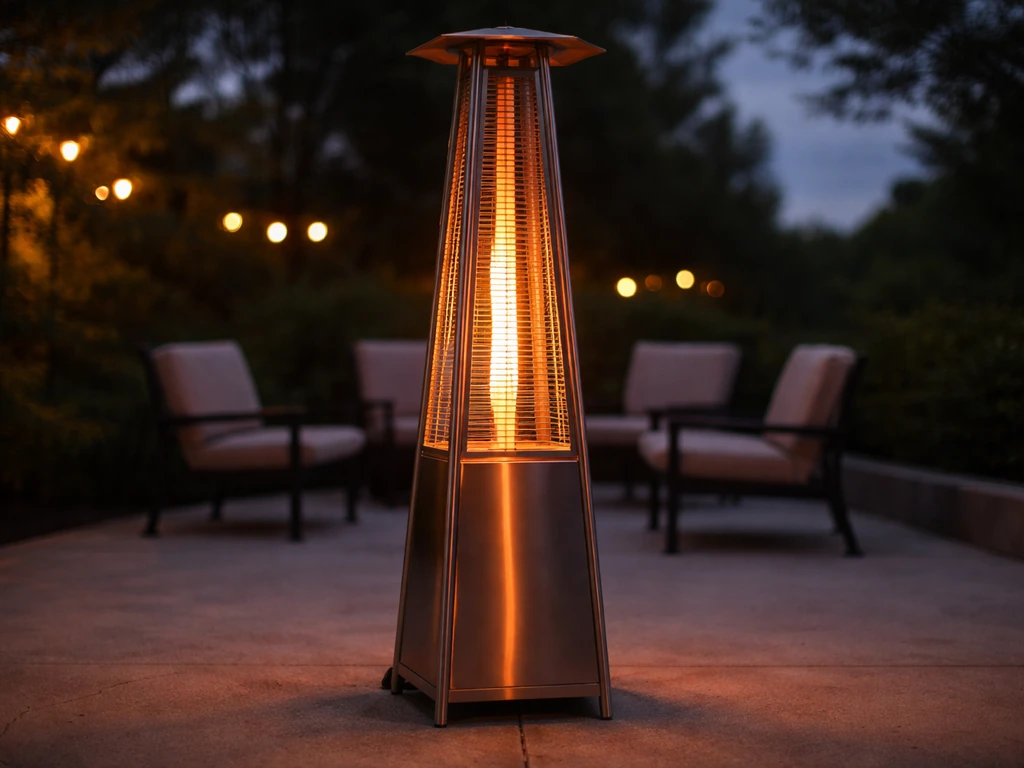
Quick verdict on pyramid patio heaters
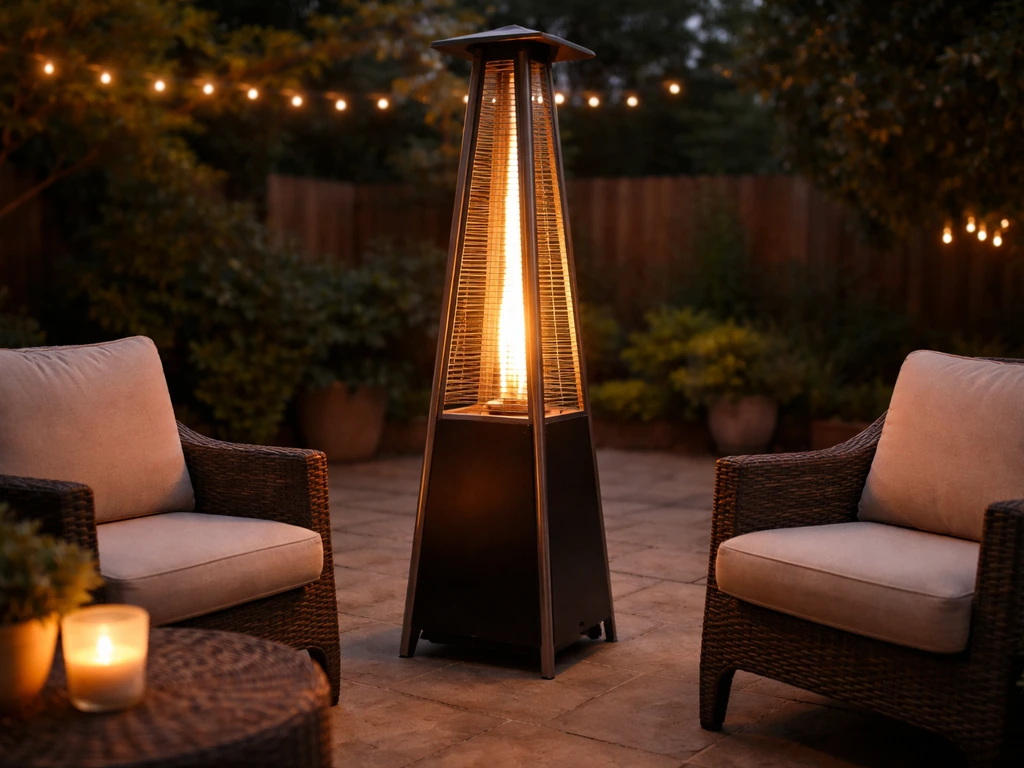
Pyramid heaters are a solid choice for a specific kind of backyard setup: a calm evening, a small to medium patio, guests gathered within a few feet of the heater, and a homeowner who wants the heater to look good while it works. Most models run on propane (20 lb tank fits inside the base), put out between 40,000 and 46,000 BTUs, and heat a practical zone of roughly 10 to 15 feet in diameter under ideal conditions. In the real world, with any wind, that comfortable zone shrinks considerably. They're not a magic warm bubble for your whole yard, but used correctly, they absolutely work.
The pyramid style sits alongside the mushroom (umbrella) heater as one of the classic freestanding propane designs. The main difference is cosmetic and directional: mushroom heaters radiate heat downward from a dish at the top, while pyramid heaters use a tall glass tube running up the center of the unit to disperse flame-generated radiant heat outward at a lower height, which tends to be a bit more at body level. That difference matters for comfort.
How pyramid heaters work (and when they do or don't)
A pyramid patio heater burns propane to produce a flame inside a tall glass or quartz tube. That tube radiates heat outward in all directions at roughly torso height, which is why standing or sitting near one feels noticeably warm. This is radiant heating, meaning the heat travels directly from the hot surface to people and objects in line of sight, the same basic principle behind all outdoor radiant heaters including infrared electric models. You're not heating the air around you, you're being warmed directly by radiant energy, which is why you feel it the moment you step close.
The line-of-sight part is critical. If something is blocking you from the tube (a table, another person, a chair back), you lose warmth fast. And because the heat radiates outward from the tube rather than being directed from above, it disperses quickly with distance. Warmth drops off noticeably past 6 feet and gets thin beyond 8 to 10 feet. Manufacturer coverage claims of 15 feet or more are best-case-scenario numbers under calm, controlled conditions.
Wind is the biggest performance killer for pyramid heaters. Unlike ceiling-mounted infrared panels that direct heat straight down onto people and surfaces, a freestanding pyramid heater's radiant output can be disrupted by even moderate breezes. The warm air convected around the tube gets blown away, and the radiant spread becomes uneven. CSA and ANSI standards for gas-fired outdoor infrared patio heaters specifically include wind-condition performance requirements, which tells you the industry has long acknowledged this as a real limitation. If your patio gets regular gusts, expect noticeably reduced comfort from a pyramid model.
There are also safety parameters to keep in mind. Propane industry guidance is clear that you should never move a propane heater while it's running. Pyramid heaters are freestanding and can be knocked over, so placement matters. Keep them on a stable, level surface away from flammable materials, follow manufacturer clearance guidelines, and never use a propane pyramid heater in an enclosed or low-ventilation space. AmeriGas’ Dec 2020 portable outdoor propane patio heater safety fact sheet also emphasizes using propane patio heaters only in outdoor, well-ventilated areas and following clearance guidance to reduce risk blank" rel="noopener noreferrer">follow manufacturer clearance guidelines, and never use a propane pyramid heater in an enclosed or low-ventilation space.. Carbon monoxide buildup is a real hazard with any gas burner indoors or in covered areas with poor airflow.
Heat coverage vs real patio size and wind
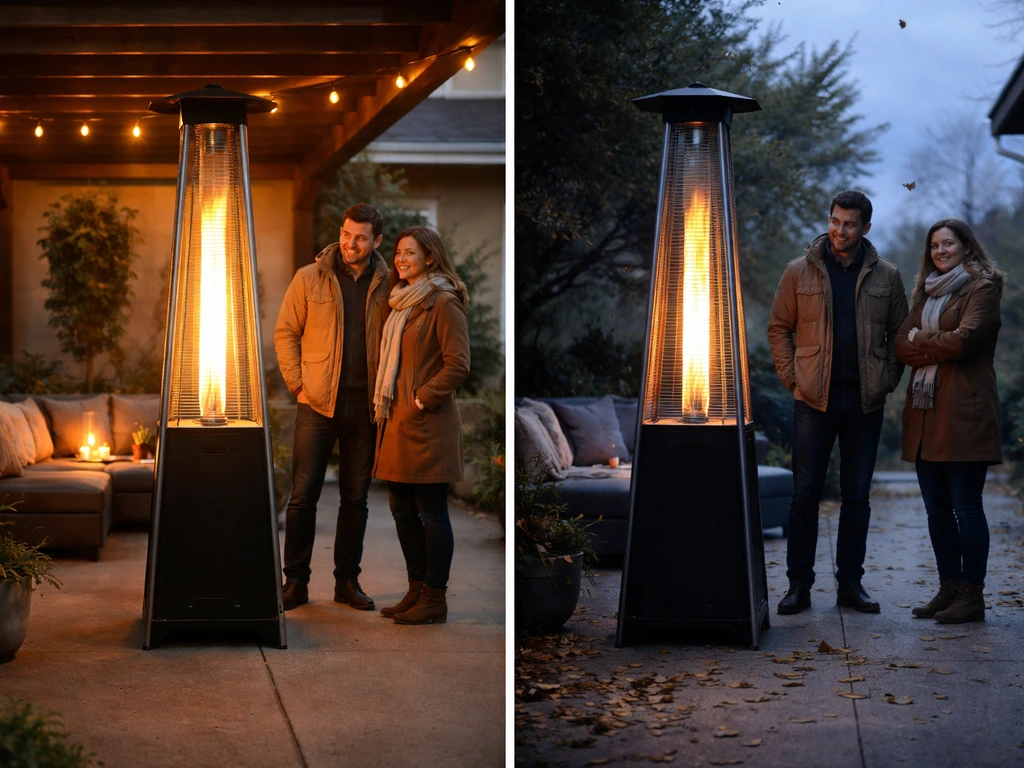
Let's be practical about coverage numbers. A 46,000 BTU propane pyramid heater might claim a 15-foot heating diameter. In a no-wind lab setting, that might be accurate at the edges of comfort. On a real patio with even a light breeze, you're looking at a comfortable zone closer to 8 to 10 feet across. That's enough for a small seating group of 4 to 6 people gathered around it. For a larger party or a bigger patio, one pyramid heater won't cut it. You'd need two or more, spaced to overlap their coverage zones.
Covered patios present their own tradeoffs. A pergola or partial roof overhead can block wind and help retain some warmth, which benefits a pyramid heater's performance. But if your covered space is fully enclosed or has low clearance, you should not use a propane heater at all due to carbon monoxide risk. Covered but open-sided patios (the most common setup) are usually fine with a pyramid heater, and the reduced wind exposure helps. Uncovered, exposed patios in climates with regular evening winds are where pyramid heaters underperform most.
Practically speaking: for a 10x10 foot patio or a small deck with a tight seating arrangement, one pyramid heater placed centrally works well on calm nights. For a 20x20 foot space, expect to need two heaters positioned at opposite corners. On a large open backyard patio above 400 square feet, pyramid heaters start to feel inadequate unless you're buying several.
Performance comparisons: pyramid vs other heater types
Pyramid heaters do well in some areas and lose out in others compared to different heater categories. Here's how they stack up across the specs that actually matter for a homeowner's buying decision.
| Heater Type | Heat Output | Wind Resistance | Coverage Area | Aesthetics | Best For |
|---|---|---|---|---|---|
| Pyramid (propane) | 40,000–46,000 BTU | Low to moderate | 8–12 ft diameter (real world) | Excellent, statement piece | Small calm patios, ambiance |
| Mushroom/umbrella (propane) | 40,000–48,000 BTU | Low to moderate | 8–12 ft diameter | Good, classic look | Standard open patios |
| Ceiling-mount infrared (electric) | 1,500–6,000W (~5,100–20,000 BTU) | High (directed downward) | Up to 11x11 ft per unit | Minimal, discreet | Covered patios, windy areas |
| Natural gas (fixed) | 40,000–50,000+ BTU | Low to moderate | 10–15 ft diameter | Similar to propane | Permanent installs, frequent use |
| Pellet heater | Varies widely | Low | Small to medium zone | Rustic, campfire style | Ambiance-focused setups |
| Tabletop infrared (electric) | 750–1,500W (~2,500–5,100 BTU) | Moderate | Very small, personal zone | Compact | Small tables, personal use |
The biggest performance competitor to pyramid heaters is the ceiling-mount or wall-mount electric infrared panel. Infrared electric heaters direct radiant heat straight down onto the people and surfaces below, making them far less vulnerable to wind disruption. A 6,000W electric infrared unit covers roughly 11x11 feet (about 121 square feet) under average outdoor conditions, and that coverage holds up much better in a breeze because the heat is traveling downward rather than outward. Manufacturers like Infratech publish that their units are around 90% energy efficient, and in well-protected environments the effective coverage can exceed their average specs. The trade-off is that you need a covered structure to mount them and access to a 240V circuit for higher-wattage models.
Mushroom and umbrella-style propane heaters are the pyramid's closest relatives. They work on the same fuel and produce similar BTU output, but mushroom heaters radiate heat downward from a reflector dish at the top, which some people find more effective for seated guests. If you're comparing these two purely on warmth delivery, mushroom heaters often win slightly on efficiency of directed heat. But pyramid heaters win on looks, which is genuinely a valid reason to choose one if performance is otherwise similar for your use case. That comparison goes deeper in a dedicated pyramid vs. umbrella breakdown if you want to dig into the specifics.
Tabletop heaters (both propane and electric infrared) are a completely different category. They're personal-zone heaters, not patio heaters in the traditional sense. If you're wondering whether tabletop patio heaters are any good, treat them as personal-zone warmth for small areas rather than a solution for heating a whole patio. A 1,500W electric tabletop infrared unit might cover as little as 20 square feet. The 2026 SereneLife infrared patio heater listing for a 1500W portable stand cites a claimed 20 sq ft coverage area and an IP65 weather rating for real-world expectations tied to that specific product category blank" rel="noopener noreferrer">20 sq ft coverage area and IP65 weather rating. They're excellent supplements or for solo use on a small balcony, but they can't replace a full-size heater for a group.
Gas vs electric vs alternatives: what to choose
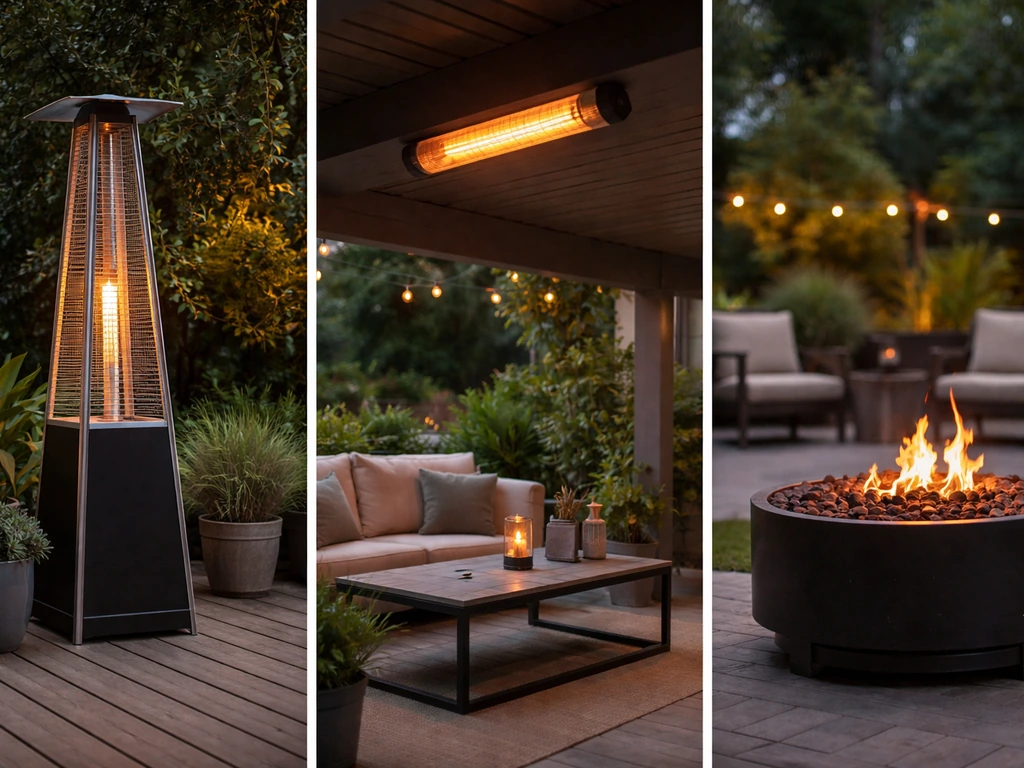
Propane pyramid heaters are the right pick when you want flexibility, no hardwiring, and a strong visual presence on your patio. You can move them around (when off), store them in winter, and get a lot of heat output without electrical work. The running cost of propane varies, but a 20 lb tank typically lasts 8 to 10 hours at medium output on most models.
Electric infrared heaters, whether mounted overhead or freestanding, make more sense when you have a covered patio and want wind-resistant, consistent heat. The 90% efficiency claim from manufacturers reflects the fact that nearly all electrical energy converts directly to radiant heat rather than being wasted on combustion byproducts. They're also safer for covered spaces since there's no combustion and no carbon monoxide risk. The downside is installation cost, especially for 240V models, and you lose the flexibility of moving them around.
Natural gas heaters sit between the two. If you entertain frequently and want permanent heat without constantly swapping propane tanks, a natural gas model connected to your home's gas line makes financial sense over time. The upfront installation cost is higher, but per-BTU operating cost is typically lower than propane. These work similarly to propane pyramid heaters in terms of wind sensitivity and coverage, just with a fixed fuel source.
Pellet and wood-burning patio heaters are worth a mention for people who want ambiance as much as heat. They produce real fire, crackle, and warmth, but they're slower to heat up, require fuel management, and don't deliver consistent measured output. Think of them as a campfire substitute rather than a practical heating solution. If the fire experience matters to you, they're fun. If you need reliable warmth for guests, they're secondary.
Which fuel type is right for your setup
- Propane pyramid or mushroom heater: open or semi-covered patio, want portability, no gas line, entertaining occasionally
- Electric infrared (mounted): covered patio with structure to mount on, frequent use, windy location, want zero combustion risk
- Natural gas heater: frequent entertainers, permanent outdoor setup, existing gas line nearby, want low running costs
- Tabletop heater: small balcony, personal use, supplement to existing heating, tight budget
- Pellet or wood-burning: ambiance is a priority, occasional use, don't mind managing fuel
Buying checklist and best-use recommendations
Before you buy a pyramid heater (or any patio heater), run through these practical checkpoints. They'll save you from buying the wrong model or the right model for the wrong space.
- BTU output: Look for at least 40,000 BTU for a standard outdoor patio. Models below that threshold are borderline for anything beyond a tight personal zone. Most quality pyramid heaters land between 40,000 and 46,000 BTU.
- Fuel compatibility: Make sure the regulator and hose are compatible with standard 20 lb propane tanks (most are, but double-check imported models). If you want natural gas, confirm the model has a natural gas conversion kit or is sold in a NG version.
- CSA/ANSI certification: Look for certification to ANSI Z83.26 / CSA 2.37, the standard specifically for gas-fired outdoor infrared patio heaters. This means it's been tested for wind-condition performance and includes an automatic flame-loss shutoff that cuts the gas if the flame goes out.
- Safety tip-over protection: Any freestanding heater should have an auto-shutoff that triggers if the unit tips over. This is non-negotiable for a pyramid heater since the tall profile and freestanding base makes tip-over a real risk.
- Clearance requirements: Most pyramid heaters need a minimum of 3 feet of clearance from overhead structures and combustible materials on the sides. Check the manual before placing under a pergola or umbrella.
- Wind exposure at your patio: If you regularly get wind above about 10 mph in the evenings, seriously consider a wall or ceiling-mounted infrared electric heater instead. Pyramid heaters in windy yards are a frustrating investment.
- Patio size and guest count: One pyramid heater handles a circle of roughly 8 to 10 feet comfortably in real conditions. For more than 6 to 8 guests spread across a larger space, budget for two heaters.
- IP rating for electric models: If you're considering an electric infrared option, look for at least an IP65 weather rating for true outdoor exposure resistance.
- Storage plan for winter: Pyramid heaters are tall and not always easy to store. Measure your storage space before buying. Most come with a cover that extends their life significantly when stored outdoors.
The bottom line is that pyramid patio heaters genuinely work, and they're worth buying if you go in with accurate expectations. They're not all-weather outdoor warming systems, and they won't heat a large patio evenly. But for a small to medium calm patio where the heater is also supposed to look good, they're a practical and satisfying choice. If wind, coverage size, or a covered structure is your main concern, pivot toward a mounted electric infrared unit instead. When you compare a pyramid vs standard patio heater, the biggest deciding factors are wind performance and how evenly they warm the seating area pivot toward a mounted electric infrared unit. And if you're torn between the pyramid style and a mushroom heater, the performance difference is close enough that aesthetics can be the deciding factor.
FAQ
How can I tell if a pyramid patio heater will be enough for my seating layout, not just the claimed BTU range?
Use a distance-based check: plan for most comfort within about 6 to 8 feet of the heater in real outdoor conditions. If your seating faces each other across the heater or you have people farther than that, budget for additional heaters or accept uneven warmth. Also consider whether your group is clustered in one zone, since radiant heaters lose comfort when people are spread out.
Do pyramid patio heaters work well if my guests are standing up, walking around, or mixing indoors and out?
They’re best for seated or stationary guests because radiant warmth depends on line of sight to the heated tube. If people stand, move behind furniture, or step away between conversation, comfort will drop quickly. For mixed movement, pair the heater with smaller personal-zone heaters at the periphery or choose mounted electric infrared for more consistent coverage.
Can I reduce the wind problem with a pyramid patio heater using placement or barriers?
Yes, modestly. Place it behind a solid wind break (like a low wall or building corner) rather than in the open center of the patio, and avoid placing it where gusts funnel across it. Even with barriers, expect reduced warmth compared with calm conditions, but positioning often improves how even the radiant zone feels.
What’s the safest way to position a propane pyramid heater to prevent tipping and heat damage?
Put it on a stable, level surface and keep clearance from furniture, railings, and flammables according to the manufacturer’s guide. Avoid placing it where foot traffic or tight pathways can nudge the base. If your patio surface is sloped or uneven, don’t rely on leveling tricks, use a proper stand or mounting pad designed for outdoor heaters.
Is it ever okay to use a pyramid patio heater under a partially covered pergola or roof?
Partial overhead cover can help by cutting wind, which improves comfort. The key limitation is ventilation and clearance: do not use it in any enclosed or low-clearance area. If smoke or combustion odor lingers, treat that as a sign airflow is inadequate and switch to a non-combustion electric infrared option.
How do I compare pyramid heaters to electric infrared panels if I care most about wind resistance?
Prioritize the heating direction. Electric infrared panels send heat downward onto people and surfaces, so breezes disrupt them less than a freestanding radiant tube that disperses outward. If your patio is frequently windy, the more “aimed downward” approach usually gives more predictable comfort for the whole seating spot.
What propane tank size or runtime should I plan for, and what changes runtime?
Many propane pyramid heaters use a 20 lb tank and often run in the neighborhood of 8 to 10 hours at medium output, but runtime varies based on burner regulation, how often you cycle the heat up and down, and ambient temperature. In cooler weather or at higher settings, expect noticeably shorter runtime. If you host long evenings, plan a spare tank rather than relying on a single one.
Why do pyramid heaters feel much less effective than the “15-foot diameter” claims?
Those coverage numbers assume calm, controlled conditions and comfortable line-of-sight exposure. In wind, the warm zone becomes uneven, and radiant intensity drops quickly with distance, especially beyond about 6 to 8 feet. Furniture blocks also matter, since people cannot “receive” heat that’s blocked by chairs, tables, or railings.
Can I use a pyramid patio heater to heat the entire patio evenly, like a space heater?
Usually no. Pyramid heaters provide radiant warmth in a localized area, not whole-patio uniform heating. For even comfort across a larger space, use multiple heaters spaced to overlap zones, or choose a heating setup designed for broader distribution such as mounted electric infrared panels.
What are common mistakes people make that reduce comfort or cause safety issues with pyramid heaters?
Common mistakes include placing the heater where wind hits directly, assuming BTU claims guarantee wide coverage, and using it too close to combustible materials. Another frequent issue is moving the heater while it’s running or setting it on an unstable surface that can tilt. Finally, never use propane heaters in poorly ventilated spaces due to carbon monoxide risk.