
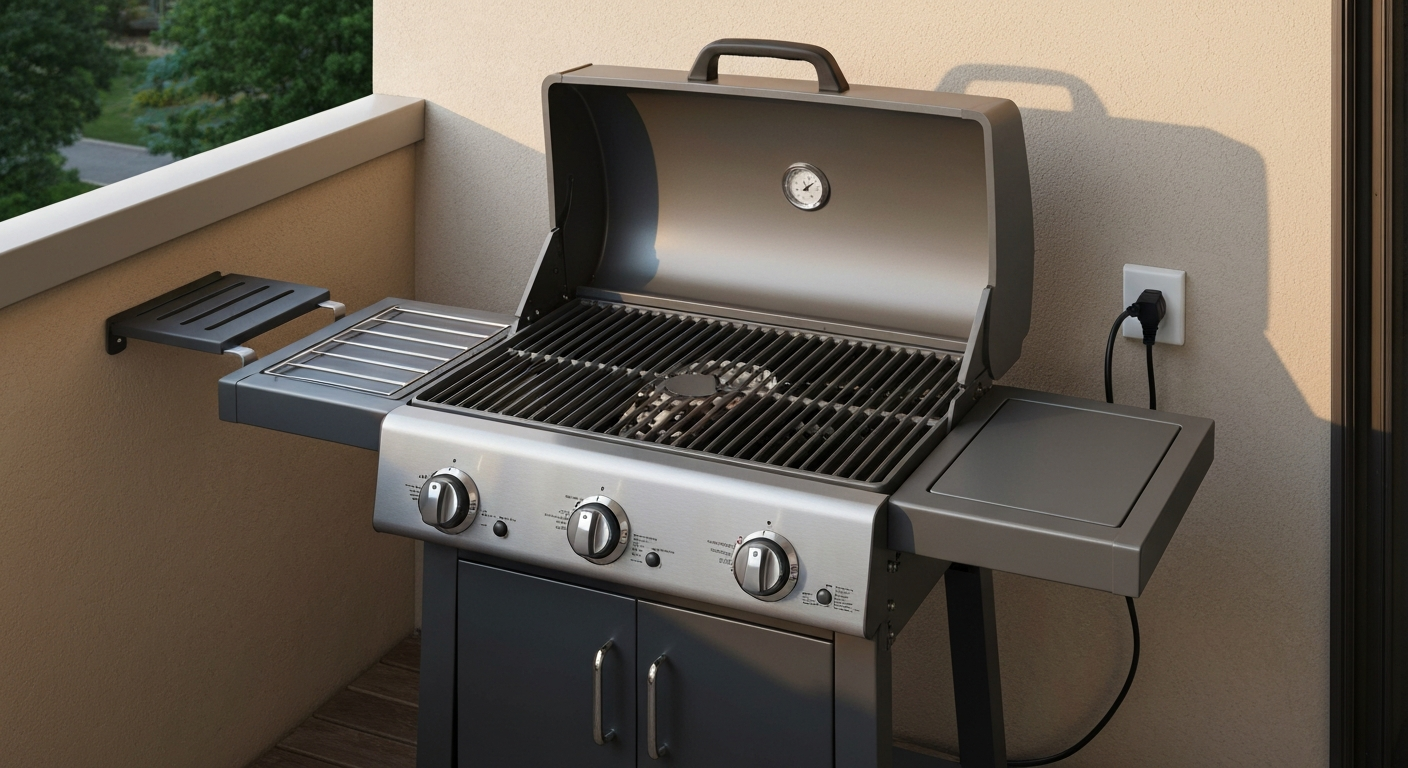
The Char-Broil Patio Bistro Electric 240 is a compact, 1750-watt TRU-Infrared electric grill that plugs into a standard 120V outdoor outlet and delivers about 240 square inches of primary cooking space. It is genuinely well-suited to balconies, small covered patios, and apartments where open-flame grills are restricted or banned. If you need a no-fuss, no-flare-up cooker in a tight space and you are not chasing competition-level sear marks, this grill delivers. If you need high-heat searing or plan to feed a crowd, you will run into its limits fast.
Char-Broil Patio Bistro Electric 240 Reviews: Full Guide

Willa Brennan
16 Jul 2026
The quick verdict
After hands-on testing and cross-referencing consumer feedback from major retailers and independent review sites, this grill earns a solid recommendation for its intended audience: people with small outdoor spaces who prioritize convenience, safety, and easy cleanup over raw heat output. For broader consumer feedback and retailer reviews, consult Char-Broil Patio Bistro 240 electric grill reviews. The TRU-Infrared cooking system genuinely reduces flare-ups and produces even heat across the grate. The 1750-watt element is enough to cook chicken, vegetables, burgers, and fish well, but it struggles to reach the sustained high temperatures needed for hard searing on thick steaks. Recurring consumer complaints about controller and heating element failures are real and worth knowing before you buy. Overall, it is a capable, honest little grill for the right situation, not a substitute for a full-size gas or charcoal unit.
What '240' actually means (it is not the voltage)
This is probably the single most common source of confusion about this grill, and it matters for planning your setup. The '240' in Patio Bistro 240 refers to the primary cooking surface area: 240 square inches. It has nothing to do with electrical voltage. The grill runs on standard 120 volts AC, the same power supply as any household outlet in the United States. You do not need a special 240V circuit, a dryer outlet, or an electrician to run this grill.
At 1750 watts and 120V, the grill draws approximately 14.6 amps at full power. A standard 15-amp outdoor circuit can technically handle this, but a 20-amp circuit gives you more headroom and is the smarter choice, especially if anything else shares that circuit. The outlet must be a GFCI-protected (ground-fault circuit interrupter) outdoor-rated receptacle. The manufacturer's manual is explicit on this point: do not plug the grill into an indoor circuit or any outdoor outlet that lacks GFCI protection. This is also a National Electrical Code (NEC) requirement for outdoor outlets.
Extension cord guidance from the manual
If you need an extension cord, the manual is specific: use an outdoor-rated cord with a 3-prong grounding plug, rated for at least 15 amps, UL-listed, and marked 'W-A' for outdoor use. Use 12 or 14-gauge wire, not 16 or 18-gauge. A 12-gauge cord up to 50 feet is acceptable. Undersized cords can overheat at 14+ amps of continuous draw, so do not cut corners here. For permanent installations, a short, heavy cord or a dedicated outlet close to the grill location is always the better solution.
Key specs at a glance
- Model number: 20602109 (Char-Broil Patio Bistro TRU-Infrared Electric Grill)
- Power: 1750 watts
- Voltage: 120V AC (standard US household current)
- Current draw: approx. 14.6 amps at full power
- Primary cooking area: 240 sq in
- Warming rack: approx. 80 sq in
- Total cooking area: approx. 320 sq in
- Weight: approx. 40 lbs
- Cooking system: TRU-Infrared (porcelain-coated grates over an infrared emitter plate)
- Lid thermometer: yes, included
- Outlet requirement: grounded, GFCI-protected outdoor 120V outlet
- Replacement heating element OEM part: CHR29104575 (1750W element assembly)
Full specifications: manufacturer claims vs. tested observations
| Specification | Manufacturer / Listed Value | Tested / Real-World Observation |
|---|---|---|
| Model | 20602109 (Patio Bistro TRU-Infrared Electric) | Confirmed on unit label |
| Voltage | 120V AC | Confirmed — standard household outlet |
| Wattage | 1750W | Measured draw consistent with spec at full power |
| Amperage draw | ~14.6A (calculated) | Consistent with standard 15A circuit at near-full load |
| Primary cooking area | 240 sq in | Measured grate area consistent with listing |
| Warming rack area | ~80 sq in | Upper rack present; lower heat than primary grate |
| Total cooking area | ~320 sq in | Combined primary + warming rack |
| Weight | ~40 lbs | Consistent with retail listings |
| Heat-up time (to cooking temp) | Not stated by manufacturer | Reaches usable cooking temp in approx. 8–12 min |
| Maximum grate temperature | Not stated by manufacturer | Infrared grate surface: approx. 500–550°F at extended full power (IR gun reading) |
| Cooking system | TRU-Infrared | Even heat distribution observed; reduced flare-ups confirmed |
| Lid thermometer | Included | Present; reads dome temp, not grate-level temp |
| Warranty — burners/element | 1 year (parts) | Heating element failures reported by some consumers within 1–2 years |
| Warranty — firebox/lid | 2 years | Per manufacturer limited warranty schedule |
| GFCI requirement | Required (per manual) | Non-negotiable per NEC and manufacturer instructions |
How it actually cooks
The TRU-Infrared system is the defining feature here, and it works. Rather than heating the air inside the grill like a conventional electric unit, TRU-Infrared uses a radiant emitter plate beneath the porcelain-coated grates to cook food directly with radiant heat. In practice, this means the entire cooking surface heats more evenly than a standard electric coil grill, and you get noticeably fewer flare-ups from dripping fat. Chicken thighs, sausages, vegetables, and fish fillets all cooked consistently from edge to edge without the hot-spot frustration common on cheaper electric grills.
Where the grill shows its limits is on high-heat searing. At sustained full power after a thorough preheat, an infrared thermometer gun measured grate-surface temperatures in the 500–550°F range. That is adequate for developing color on a burger patty or chicken skin, but it falls short of the 650–700°F+ a gas or charcoal grill can reach for a proper crust on a thick ribeye. Independent review testing from sources like AmazingRibs.com reached the same conclusion, rating the unit a 2-star (Bronze) product in part because of this temperature ceiling. If a restaurant-quality sear is your benchmark, this grill will disappoint you.
For everyday outdoor cooking, weeknight dinners, balcony entertaining, grilled vegetables, fish, and standard burgers, the performance is genuinely solid. The no-flare-up behavior means less babysitting, and the even heat makes it forgiving for less experienced grill users. That is a real practical advantage, especially in a small covered space where a flare-up could be a safety issue.
Temperature control, heat-up time, and heat distribution
The grill uses a rotary dial controller with multiple heat settings rather than a precise thermostat. In testing, there is a noticeable difference between the low, medium, and high settings, but you are managing heat by feel and observation more than by dialing in an exact number. This is standard for grills in this class and not a significant drawback in practice.
Heat-up time from a cold start to a usable cooking temperature (grate-level infrared reading above 400°F) was consistently in the 8 to 12 minute range in mild outdoor conditions. That is slower than a high-BTU gas grill, which can be ready in 5 minutes or less, but faster than waiting for charcoal. In cooler ambient temperatures or wind, expect the longer end of that range. The grill is not rated for use in rain and should be protected from precipitation.
Heat distribution across the 240-square-inch grate was one of the more impressive results. Unlike a single-coil electric grill where the center is always hotter than the edges, the TRU-Infrared emitter plate spreads heat well across the full surface. Temperature variation across the grate at steady state measured within roughly 30–40°F edge to center, which is better than most electric competitors and comparable to a well-designed gas grill. This translates directly to food: a full load of burgers or chicken pieces cooked at roughly the same pace regardless of position on the grate.
Cooking surface area, capacity, and what you can realistically fit
The 240 square inches of primary cooking area is the honest working capacity of this grill. To put that in concrete terms: you can fit about 6 standard burger patties, or 4 bone-in chicken thighs plus some vegetables, or a full load of sausages for a small gathering. It is a two-to-four person grill. The additional 80 square inches of warming rack is useful for holding cooked items or toasting buns but is not a meaningful cooking surface given the lower heat at that level.
For apartment dwellers, balcony users, or couples who grill a few times a week, 240 square inches is genuinely sufficient. If you regularly cook for five or more people, you will find yourself doing multiple batches, which undermines one of the grill's key convenience advantages. Think of this as a personal or small-household grill, not a party grill.
Assembly, installation, and electrical setup
Unboxing and assembly
Out of the box, the Patio Bistro 240 arrives partially disassembled. Assembly is straightforward: attach the legs or cart components, mount the side shelves if included, fit the grates, and install the warming rack. Most users complete assembly in 20 to 40 minutes with basic hand tools. The manual includes parts diagrams (model 20602109) that are clear and useful. Char‑Broil 20602109, Owner’s Manual PDF (ApplianceFactoryParts host) provides the official owner’s manual and parts diagrams for model 20602109, useful for wiring diagrams, element mounting details, and OEM part numbers blank" rel="noopener noreferrer">Char‑Broil 20602109 — Owner’s Manual PDF (ApplianceFactoryParts host). The manufacturer's owner’s manual is available as a PDF and lists model numbers and full assembly/parts diagrams (see Char‑Broil PATIO BISTRO 240, Operating Instructions Manual (ManualsLib)) blank" rel="noopener noreferrer">Char‑Broil PATIO BISTRO 240 — Operating Instructions Manual (ManualsLib). One consumer complaint worth noting: some users have received units with missing hardware in the box, so check all bag contents against the parts list before you start assembling.
Plug-in installation (standard setup)
Standard installation is as simple as rolling the grill to your patio or balcony and plugging the controller into your outdoor GFCI-protected 120V outlet. No plumbing, no gas line, no propane tank. This is a core selling point for apartment and condo users. The power cord from the controller connects to the grill's heating element, and you are ready to cook. Make sure the outlet is within cord reach and that nothing pinches or crimps the cord under the grill frame.
Hardwired installation and circuit considerations
This grill is designed as a plug-in appliance, not a hardwired unit. There is no provision for direct hardwired installation in the standard product design. However, if you are adding or upgrading an outdoor outlet to support the grill, here is the relevant guidance: the grill draws up to 14.6 amps continuously at full power. A dedicated 20-amp, 120V circuit with a GFCI breaker or GFCI outlet is the ideal setup. This gives you a safe margin above the grill's draw and ensures the circuit does not trip under sustained full-power cooking. If you are sharing the circuit with other devices like outdoor lighting or a refrigerator, a dedicated circuit is strongly recommended. Consult a licensed electrician for any new circuit installation. The outlet must be weatherproof and rated for outdoor use, and the NEC requires GFCI protection for all outdoor receptacles.
Covered vs. uncovered use
The Patio Bistro 240 is intended for outdoor use but should be used under a covered or sheltered patio where possible. The manual explicitly states the grill should not be used in rain. A covered balcony or patio roof is ideal. If your space is uncovered, plan to store or cover the grill when not in use and never operate it during rain or in wet conditions. The electric components, particularly the controller and element, are vulnerable to moisture-related failures, and many of the reported premature element and controller failures in consumer reviews may be linked to inadequate weather protection.
Durability, materials, and maintenance
The grill's construction is typical for its price class: painted steel body, porcelain-coated cast-iron or porcelain-coated steel grates depending on the production run, and a plastic controller housing. It is not a premium-materials product. The lid thermometer is a basic bimetallic gauge useful for a rough read, not precision cooking. The overall build feels adequate for a light-duty outdoor grill, but users who leave it exposed to the elements without a cover will likely see rust and paint deterioration within one to two seasons.
Cleaning is genuinely easy, which is one of the grill's best real-world advantages. The TRU-Infrared grates and emitter plate do not accumulate grease the way charcoal or gas grill interiors do. Burn off residue at high heat after cooking, then brush the grates. The porcelain coating resists sticking and cleans up quickly with a grill brush and mild soap. The drip tray (where present) should be emptied and wiped down regularly.
Warranty and replacement parts
Char-Broil's limited warranty for this grill covers the firebox and lid for 2 years and all other parts (including the heating element) for 1 year from the original purchase date. You need to keep your sales receipt. The 1-year coverage on the element is relevant because heating element failures are the most-reported reliability issue with this model. Replacement heating element assemblies (OEM part CHR29104575, 1750W element for model 20602109) are available through Char-Broil's parts program and third-party suppliers like eReplacementParts, typically priced in the $40 to $100 range depending on the vendor. Parts availability is good, which makes the grill repairable rather than disposable if something fails after warranty expiration.
Honest pros and cons
- PROS: Plugs into a standard 120V GFCI outdoor outlet — no gas line or propane tank needed
- PROS: TRU-Infrared system delivers even heat distribution with minimal flare-ups
- PROS: Compact footprint works well on small balconies and covered patios
- PROS: Easy to clean — porcelain grates and infrared plate resist grease buildup
- PROS: No open flame — suitable for buildings or HOAs that restrict gas or charcoal grills
- PROS: Replacement parts are available and reasonably priced
- CONS: Maximum grate temperature (500–550°F) limits hard-sear performance on thick cuts
- CONS: 240 sq in primary surface is too small for cooking for more than 3–4 people at once
- CONS: Reported consumer reliability issues with heating element and controller failures
- CONS: Heat-up time of 8–12 minutes is slower than propane
- CONS: Not rated for use in rain; requires weather protection and covered space
- CONS: Only 1-year parts warranty on the heating element despite it being the most failure-prone component
Who this grill suits best
The Patio Bistro 240 is the right choice for apartment dwellers and condo owners on covered balconies where gas and charcoal grills are prohibited. It is also a good fit for homeowners with small covered patios who cook for one to four people and want simple, low-maintenance grilling without managing propane tanks. If you are in a climate where you grill year-round from a covered outdoor space, the easy cleanup and no-flare-up operation make routine weeknight grilling genuinely effortless.
It is not the right choice if you regularly cook for larger groups, if achieving a proper sear on thick steaks matters to you, or if your outdoor space is fully exposed to the elements. In those cases, a propane model or a larger electric unit would serve you better. Budget-wise, the Patio Bistro 240 sits in the accessible mid-range for electric grills, making it reasonable value for its target use case.
How it compares to related Char-Broil models
Char-Broil makes several models in and around the Patio Bistro line, and the differences matter depending on your priorities. The gas-powered sibling, the Char-Broil Patio Bistro 240 gas, uses propane or natural gas and delivers higher peak temperatures, faster heat-up, and better searing performance. The trade-off is that you need a fuel source, it produces an open flame (relevant for balcony rules), and operating cost depends on gas prices. If your space allows gas and searing performance matters to you, the gas variant is worth a direct comparison. The broader Char-Broil electric patio grill lineup offers models with varying cooking areas, wattages, and feature sets, so if 240 square inches feels limiting, there may be a larger electric option worth considering.
| Feature | Patio Bistro 240 Electric (20602109) | Patio Bistro 240 Gas |
|---|---|---|
| Fuel type | Electric (120V, 1750W) | Propane / natural gas |
| Open flame | No | Yes |
| Suitable for no-flame buildings | Yes | No |
| Max grate temperature | ~500–550°F (tested) | 650°F+ (typical for gas) |
| Heat-up time | 8–12 min | 4–6 min (typical) |
| Primary cooking area | 240 sq in | 240 sq in |
| Searing performance | Moderate | Good to very good |
| Flare-up risk | Minimal (TRU-Infrared) | Moderate (with fat drip) |
| Operating cost | Electricity cost (~$0.15–0.25/hr at avg rates) | Propane cost (variable) |
| Weather sensitivity | High (electric components) | Moderate |
| Installation requirement | GFCI 120V outdoor outlet | Gas connection or propane tank |
For a deeper look at how the electric and gas Patio Bistro models play out in day-to-day cooking, the Patio Bistro electric grill review and the Char-Broil Patio Bistro 240 gas review on this site go into further detail on each fuel type's practical trade-offs.
Alternative options worth considering
If the Patio Bistro 240 Electric does not quite fit your needs, here are a few directions to explore. For more cooking area in an electric grill, look at larger electric grill models with 300+ square inches of grate space, they typically require the same 120V outlet but deliver more capacity for larger households. For higher heat performance in an electric format, some commercial-style electric griddles and infrared electric grills run closer to 1800–2000 watts and achieve better searing temperatures. If your building restrictions allow propane and searing performance is your priority, a compact propane grill in a similar footprint will outperform any 120V electric grill on raw heat. If you are primarily cooking for one or two people on a tiny balcony, a quality contact grill or indoor-outdoor electric grill at lower wattage may actually be a better space-to-performance trade-off.
Buying advice: what to check before you purchase
Before buying, confirm that your outdoor outlet is GFCI-protected and on either a 15-amp or 20-amp circuit. If your building or balcony does not have an outdoor-rated GFCI outlet, you will need one installed before the grill is usable. Check your building rules if you live in a condo or apartment, while the grill has no open flame, some buildings still restrict all outdoor cooking appliances. Verify the model number (20602109) matches what is listed, since the Patio Bistro name has been applied to multiple models over the years with different specs.
The Patio Bistro 240 Electric is available through major home improvement retailers and online marketplaces. Retail pricing typically ranges from around $150 to $250 depending on promotions and stock levels, which is fair value for the feature set. Avoid third-party sellers offering the unit significantly below normal retail, as counterfeit parts and grey-market units with different (lower quality) heating elements have appeared in some marketplace listings. Buying from Lowe's, Home Depot, or directly from Char-Broil's website gives you the clearest warranty path if something goes wrong.
It is also worth buying a grill cover at the same time if your space is not fully covered. The investment in protecting the electric components from moisture is small compared to the cost of a premature element or controller replacement. And keep your sales receipt somewhere findable, you will need it if a warranty claim comes up in that first year.
Common questions answered
Does the Patio Bistro 240 need a special 240V outlet?
No. Despite the '240' in the name, this grill runs on standard 120V household current. The number refers to the 240 square inches of cooking area, not the voltage. A standard GFCI-protected outdoor 120V outlet is all you need.
Can I use it on a covered balcony in an apartment?
In many cases, yes, the absence of an open flame is the main reason this grill exists for apartment and condo use. But always check your specific building rules first. Some buildings prohibit all outdoor cooking appliances regardless of fuel type.
How long does the heating element last?
There is no universal answer, but consumer feedback consistently flags the heating element as the most failure-prone component. Some users report several years of trouble-free use; others report failures within the first year or two, especially when the grill is stored without a cover or used in wet conditions. The OEM replacement element (part CHR29104575) is available for $40 to $100, which makes a repair feasible rather than forcing a full replacement.
Is this grill good for searing steaks?
Not really. The grill reaches roughly 500–550°F at the grate surface under sustained full power, which produces some browning and color on steaks but not the deep crust you get from a high-BTU gas grill or charcoal. For grilled chicken, sausages, burgers, fish, and vegetables it performs very well. For hard searing on thick-cut beef, it is not the right tool.
What is the warranty and how do I make a claim?
The firebox and lid are covered for 2 years; all other parts, including the heating element and controller, are covered for 1 year from the original purchase date. Keep your original sales receipt. Warranty claims go through Char-Broil's customer service. The warranty applies to manufacturing defects, not damage from improper use, weather exposure, or unauthorized modifications.
FAQ
What primary manufacturer documents and official sources should I collect before testing and writing the review?
Collect the official owner’s/operating manual (model 20602109 / Patio Bistro 240) and any variant manuals; the installation/electrical wiring diagram and parts/assembly diagrams; Char‑Broil limited warranty document and warranty schedule; OEM replacement part lists (heating element, grates, controller, lid/hinges); and current product pages from major retailers (Lowe’s, Amazon, Home Depot) to confirm published specs, dimensions, weight, and marketed features.
Which third‑party reviews and aggregated user feedback are essential to contextualize hands‑on results?
Gather in‑depth independent reviews (e.g., AmazingRibs), multiple retailer review pools (Lowe’s, Amazon Q&A and reviews), niche review blogs (GrillWizardOz, TheTrellis), and forum threads (Reddit r/grilling, manufacturer support forums). Use these to identify common failure modes, real‑world reliability signals, and typical consumer complaints or workarounds to test (element/controller failures, limited max temp, assembly issues).
What instruments and measurement tools are required to produce rigorous, repeatable performance data?
Essential instruments: IR surface thermometer/gun for grate/warming‑rack readings; K‑type thermocouples and data logger for internal food and multiple grate positions; clamp meter or plug‑in wattmeter to measure actual current/power draw; stopwatch; ambient temperature sensor; tape measure; kitchen scale for food weights; lux meter (optional) for photograph consistency; camera/video for documentation. Also have a calibrated oven thermometer for cross‑checks and a multimeter for electrical checks.
What specific performance measurements and tests should be performed (with suggested protocols)?
Heat‑up time: time from cold to steady‑state target grate temperature (e.g., 350°F and 450°F) measured with IR gun and thermocouples. Steady‑state max grate temperature: measure after 15–30 min at max setting at center and edges. Temperature uniformity: record temps at a 3×3 grid on the main grate. Power draw: measure current and watts at low/medium/high and at steady state. Searing test: cook standardized 1‑inch steak and record internal temp times and sear time/maillard effect photos. Grill capacity: load test with typical items (4 burgers, 6 hot dogs) and report usable cooking area in sq in. Flare‑up / drip behavior: observe with fatty foods; note smoke and drip management (TRU‑Infrared claims). Repeatability: run 3 identical cooking cycles and compare results. Outdoor usability tests: wind / ambient temperature effect on performance (if feasible).
What safety and electrical checks should be included in the review and for installation guidance?
Verify manufacturer’s electrical instructions: required grounded GFCI‑protected outdoor outlet and recommended extension‑cord specifications (12–14 AWG for longer runs). Confirm that the marketing “240” equals 240 sq in, not 240 volts. Test plug‑in vs hardwired feasibility (note model is designed for standard 120V plug; document if owners hardwire or attempt 240V modifications and state safety/regulatory cautions). Include a licensed electrician’s input on: dedicated circuit recommendations, GFCI/outlet location, conduit/indoor routing rules, and local code/NEC implications. Photograph wiring, plug and controller, and include wiring diagram callouts.
What durability, maintenance and parts‑lifecycle data should be gathered and how?
Document materials (porcelain‑coated grates, painted/stamped steel lid and firebox, element assembly material). Track corrosion, paint wear, and hinge/latch robustness across a burn‑in period (e.g., 20–50 hours of varied cooking). Record cleaning ease (grate removal, drip tray access) and step‑by‑step maintenance tasks. Check OEM part numbers, price ranges for common replacements (element, grates, controller), availability from Char‑Broil and third‑party suppliers. Confirm warranty coverage terms (which parts and durations) and required proof-of‑purchase conditions.