
If you're shopping Endless Summer patio heaters right now, the short version is this: the brand makes a solid lineup that spans propane standing heaters, dual-function gas fire pit heaters, and electric radiant models including a tabletop option. A good outdoor patio heater table top can be a convenient way to add warmth for small groups without taking up a lot of space tabletop option.
Endless Summer Patio Heater Reviews and Best Model Guide

Willa Brennan
28 Apr 2026
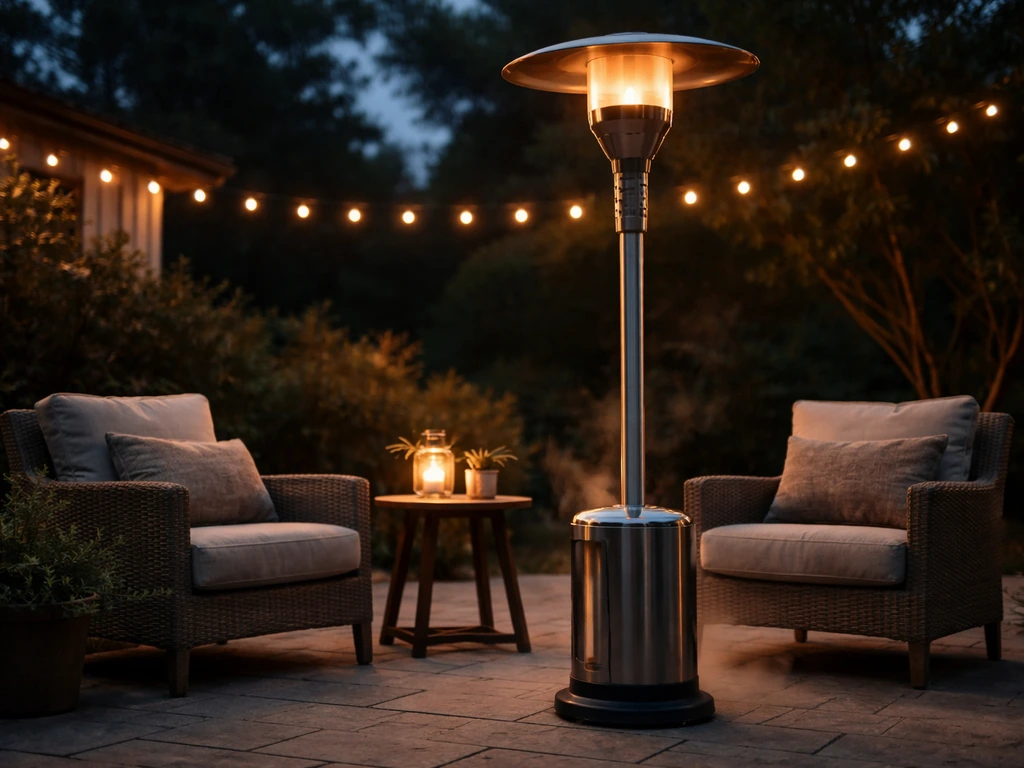
The best pick depends almost entirely on your patio size, whether it's covered or open-air, and how much you want to spend per hour running it. For most medium-to-large uncovered patios, the propane ES4000COMM or the DualHeat fire pit combos (like the Donovan or Dakota) are the go-to choices. For smaller covered spaces or balconies, the EWUR730SP or EWTR890SP electric models are safer, cheaper to run, and genuinely easier to deal with.
What Endless Summer Patio Heaters Actually Are
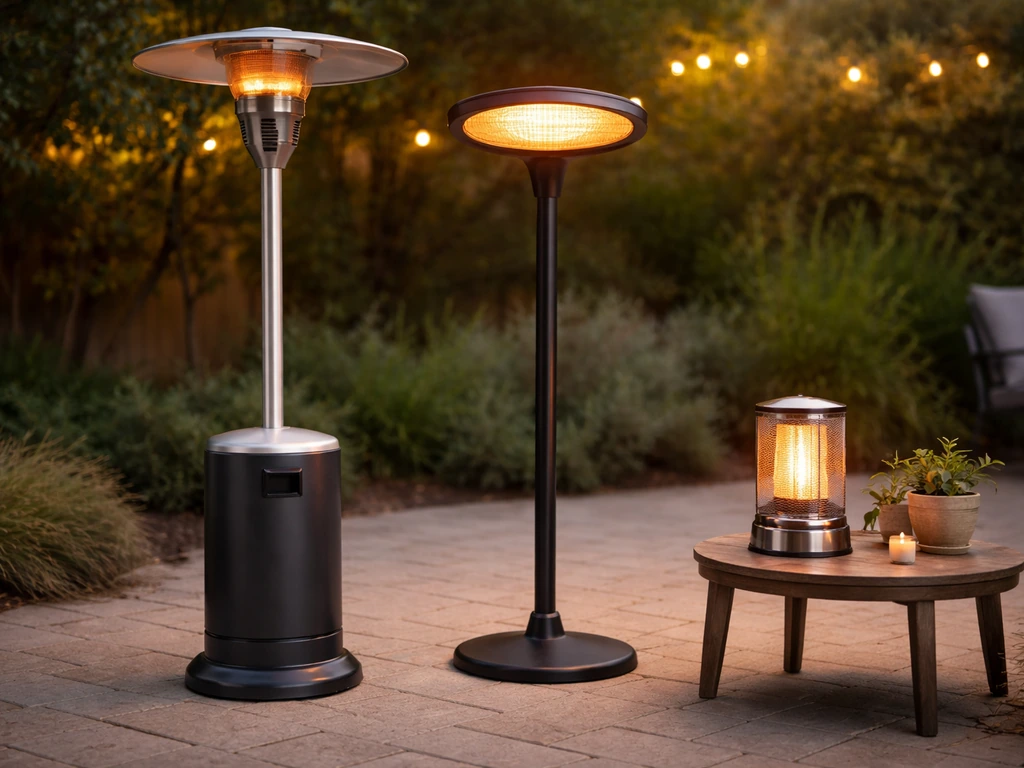
Endless Summer is a brand under the W.C. Bradley umbrella (same family as UniFlame) and has built its identity around outdoor fire features and heating products sold through major retailers like Home Depot and BBQGuys. The lineup is more varied than most people realize when they first search for it.
Here are the main categories you'll encounter:
- LP Gas Standing Patio Heater (ES4000COMM): A traditional mushroom-style propane tower heater designed strictly for outdoor use. This is the brand's most classic standalone propane heater.
- DualHeat LP Gas Fire Pit Heaters (Donovan, Dakota): These are combination units that function as both a gas fire table (30,000 BTU upper burner) and a lower patio heater (11,000 BTU), giving you 41,000 BTU total. You get the ambiance of a fire pit plus directed heat from below the tabletop.
- Electric Floor Lamp Heater (EWUR730SP / EWTR730 series): A 1,200-watt, 120V radiant electric heater styled like a floor lamp. It uses infrared radiant technology, meaning it warms people and objects directly rather than heating the surrounding air.
- Tabletop Electric Heater (EWTR890SP, branded 'Vacation Day'): A compact tabletop lamp-style electric unit also running at 1,200 watts with a halogen heat element. Good for smaller gatherings or tight spaces.
- Gas Fire Pit Products (50,000 BTU stainless burner SKUs): Endless Summer also sells standalone LP gas fire pit products with higher BTU burners (up to 50,000 BTU) that lean more toward ambiance than directed heating, though they do radiate warmth.
There is no pellet-fueled model in the current Endless Summer lineup, and natural gas conversion options depend on the specific unit. Most models are LP (propane) by default. If natural gas is a priority, check the individual model's manual and your local codes before assuming compatibility.
Quick Comparison: Best Endless Summer Model by Patio Size and Situation
| Model | Fuel Type | Heat Output | Best For | Covered/Uncovered |
|---|---|---|---|---|
| ES4000COMM | LP Propane | High BTU (mushroom tower) | Medium to large open patios, decks | Uncovered only |
| Donovan / Dakota DualHeat | LP Propane | 41,000 BTU combined | Large patios where you want fire pit ambiance + heat | Uncovered preferred |
| EWUR730SP / EWTR730 | Electric (1,200W) | Radiant infrared, ~4,100 BTU equiv. | Small covered patios, balconies, apartments | Covered or semi-covered |
| EWTR890SP (Vacation Day) | Electric (1,200W) | Radiant infrared, halogen | Tabletop use, dining tables, small groups | Covered or semi-covered |
As a rule of thumb: if your patio is over 200 square feet and open to the sky, go propane. If you're in a smaller enclosed or semi-enclosed space, electric is the smarter and safer choice. The DualHeat models are unique because they solve two problems at once (fire feature plus warmth), but they're not ideal if you just need a focused heater without the fire table.
Real-World Performance: Heat Coverage, BTUs, Wind, and Safety
What BTU numbers actually mean for you
BTU (British Thermal Unit) measures how much heat a unit produces per hour. A general rule for outdoor heaters is that you need roughly 5,000 to 6,000 BTU per 100 square feet, though wind, ceiling height, and ambient temperature all chip away at that. The DualHeat units' 41,000 BTU combined output can realistically warm a 300-400 square foot outdoor zone on a calm, cool evening. The LP standing heater (ES4000COMM) in the same BTU class will cover similar ground. The electric models, at 1,200 watts (roughly 4,100 BTU equivalent), are designed for personal-zone warmth: keep people within about 4-6 feet and you'll feel the difference.
Infrared vs. convection: why it matters outdoors
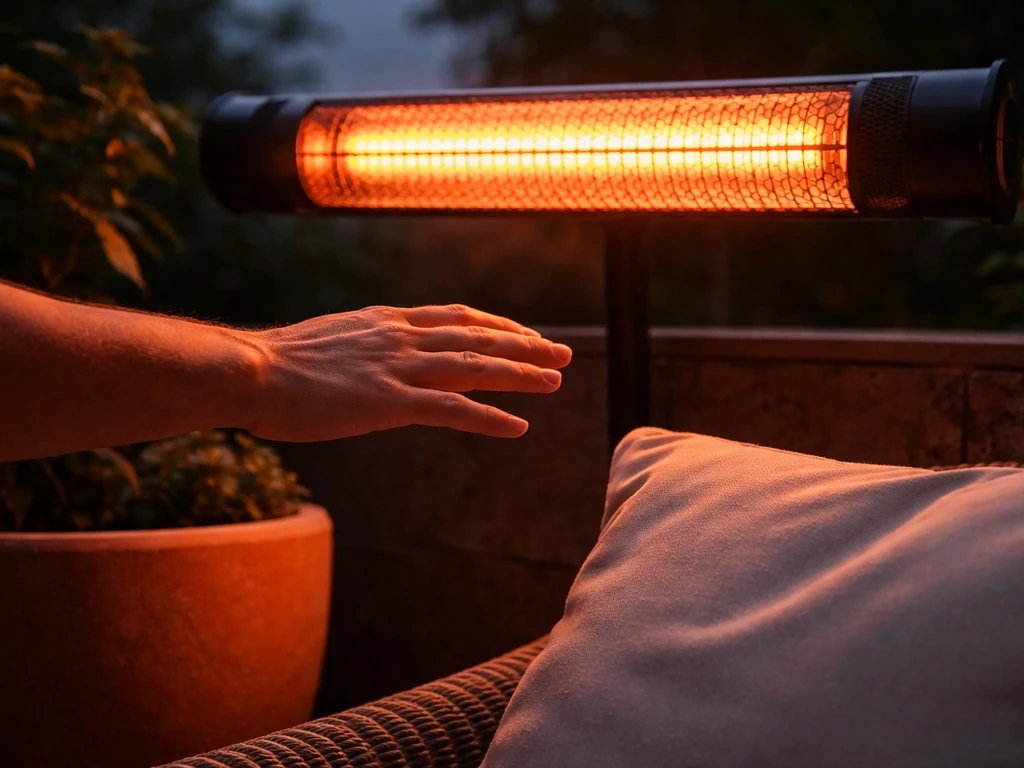
The electric Endless Summer models (EWUR730SP, EWTR890SP) use infrared radiant heating, which means they heat you directly rather than warming the air around you. Endless Summer's own FAQ explicitly confirms this. The practical upside: infrared doesn't get wasted when a breeze rolls through. The downside: you need line-of-sight proximity to the element. Step out of the beam and you feel nothing. For small covered patios or balconies, this is perfect. For large open spaces, you'll feel underserved.
Wind and weather effects
Gas heaters like the ES4000COMM are more vulnerable to wind than electric infrared units because convective heat (warm air rising) gets dispersed quickly in a breeze. If your patio is routinely windy, positioning matters a lot: orient the heater so it backs into the wind, and look for natural windbreaks (fences, walls, planters). The DualHeat fire pit models have the advantage of a lower heat source close to sitting height, which helps somewhat.
The electric radiant models actually perform better in wind because they don't rely on heating air at all. The ES4000COMM manual is explicit that it's for outdoor use only, and for good reason: LP combustion produces carbon monoxide, so never run it in any enclosure, covered pergola with poor airflow, or garage.
Safety basics
Every LP Endless Summer unit carries a carbon monoxide hazard warning in the owner's manual. For the Endless Summer Vacation Day tabletop heater model EWTR890SP, model-specific owner’s manual details are available through manual hosting pages that reference the official owner’s manual EWTR890SP owner’s manual details. The ES4000COMM documentation specifies outdoor-only use and references compliance with ANSI Z223.1/NFPA 54 fuel gas codes. The electric models draw 12-14 amps at full capacity, which sits close to the limit of a standard 15-amp household circuit. Endless Summer's own documentation flags this, so plug the electric heater into a dedicated outlet when possible and avoid running other high-draw appliances on the same circuit.
Installation and Setup by Fuel Type
LP Propane (ES4000COMM and DualHeat units)
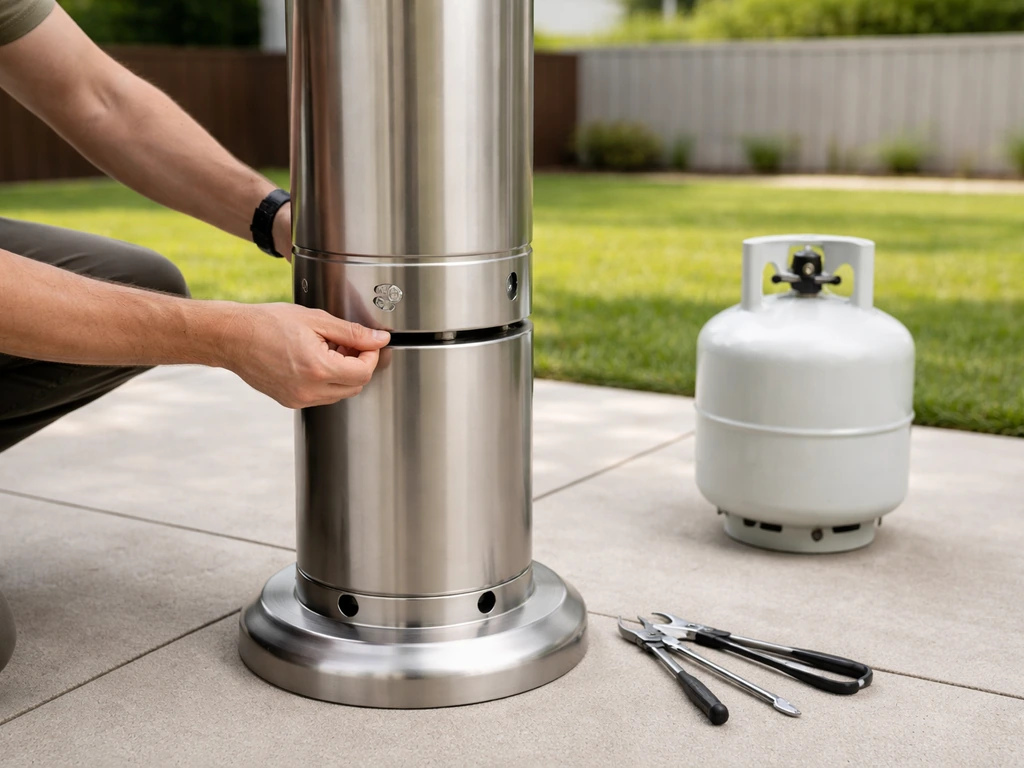
- Assemble the heater per the manual. The ES4000COMM tower heater comes in sections and typically takes 20-30 minutes. The DualHeat fire pit units require more assembly since you're dealing with a table frame, burner, and heater base.
- Connect a standard 20 lb propane tank using the included regulator and hose. Check that all fittings are hand-tight, then apply soapy water to connections to check for bubbles (leaks) before lighting.
- Confirm minimum clearance requirements from the manual: typically at least 24-36 inches of clearance around the heater and 36-48 inches of overhead clearance from the element to any overhead structure.
- Check local fuel gas codes. The ES4000COMM manual references ANSI Z223.1/NFPA 54 and CSA B149.1 for compliance. Most residential installations are straightforward but this is worth confirming if you're in a condo or HOA property.
- Light using the piezo igniter (press and hold, turn to pilot, then release and turn up). Most Endless Summer gas units use a push-turn ignition system.
Electric models (EWUR730SP / EWTR730 / EWTR890SP)
- These require almost no installation. Assemble the pole/lamp housing, insert the heating element per the manual, and plug into a standard 120V outdoor-rated outlet.
- Use only outdoor-rated extension cords if needed. The EWUR810SP manual addresses extension cord use specifically: use a cord rated for outdoor use and for the amperage draw (at least 14-gauge for 1,200W loads).
- Position the heater so the element faces the seating area within 4-6 feet. Because it's radiant, angling matters more than placement distance alone.
- The tabletop EWTR890SP should be placed on a stable, level surface away from tablecloths or flammable decor. Keep it clear of overhead awnings.
Operating Costs and Efficiency: What It Really Costs Per Hour
This is where the electric models become genuinely compelling. Endless Summer's official FAQ estimates the UniFlame electric heater costs around 10 cents per hour based on an electricity rate of $0. Endless Summer’s FAQ also says UniFlame electric heaters are designed for outdoor use only.
08/kWh. Even if your local electricity rate is closer to the national average of $0. 13-$0. 16/kWh, you're looking at roughly 15-20 cents per hour.
Compare that to propane, where a standard 20 lb tank holds about 430,000 BTU worth of fuel. At current propane prices of roughly $3. 50-$5. 00 per gallon, a full 20 lb tank costs around $20-$28.
Run the heater at full output and you'll burn through it in 8-14 hours depending on the BTU rating, putting your cost at $1. 50-$3. 50 per hour.
| Heater Type | Fuel Cost Per Hour (Approx.) | Runtime Per Tank/Charge | Notes |
|---|---|---|---|
| Electric (1,200W) | $0.10-$0.20/hr | Continuous (grid-powered) | Based on $0.08-$0.16/kWh rates |
| LP Gas (moderate output) | $1.50-$2.50/hr | 10-14 hrs per 20 lb tank | Cost varies with propane price |
| LP Gas DualHeat (full 41,000 BTU) | $2.50-$3.50/hr | 8-12 hrs per 20 lb tank | Running both burners simultaneously |
The takeaway: electric wins on operating cost by a wide margin. Propane wins on raw heat output and portability (no outlet required). If you run a heater 3-4 hours per session, three nights a week through a fall season, that electric cost adds up to just a few dollars. The propane equivalent could be $30-$50 per month or more in fuel alone.
Usability and Build Quality: What It's Like to Actually Use These
Controls and ignition
The gas units use a standard push-turn ignition with a piezo spark. It works fine in calm conditions but can be finicky in cold weather or if the unit hasn't been used in a while (pilot can be slow to catch). A common fix is to hold the igniter button a few extra seconds while the thermocouple warms. The electric models are as simple as they come: plug in, flip a switch. No ignition issues, no pilot, no gas smell.
Noise
The electric infrared heaters are nearly silent. The gas heaters produce the typical low hiss and occasional flame flutter you'd expect from any propane burner. Neither is disruptively loud, but if you're in a very quiet outdoor setting, the electric models will bother no one.
Portability and assembly
The electric floor lamp models (EWUR730SP) are reasonably portable: unplug, collapse if possible, and move them inside. The tabletop EWTR890SP is the most portable option in the lineup and easy to store. The LP standing heater is portable in the sense that it doesn't require a gas line, but a full 20 lb propane tank is heavy and the assembled tower can be awkward to move solo. The DualHeat fire pit units are large and heavy, and once set up they tend to stay put.
Durability and weather resistance
Most Endless Summer heaters are built for outdoor use but are not rated for all-weather exposure. The steel and painted finishes on gas units can show rust and weather damage if left uncovered through wet seasons. Use a heater cover when not in use. The electric models should never be left out in rain. The halogen heating element in the tabletop and floor lamp units is fragile if bumped hard, so handle with care during storage.
Pros, Cons, and Who Each Model Is Best For
ES4000COMM LP Gas Standing Heater: Best for large uncovered patios
- Pros: High BTU output, no electrical connection needed, traditional mushroom heater design that many people prefer, relatively simple setup
- Cons: Requires propane tank management, carbon monoxide risk means covered spaces are off-limits, higher operating cost per hour, ignition can be finicky in cold weather
- Best for: Homeowners with large open decks or patios who want serious heat output and don't mind swapping propane tanks
Donovan / Dakota DualHeat: Best for large patios where ambiance matters
- Pros: 41,000 BTU total output, doubles as a fire feature (fire table + heater), great centerpiece for outdoor entertaining, two independent heat zones
- Cons: Expensive, heavy and not portable, highest propane consumption in the lineup, best in calm conditions, not for covered spaces
- Best for: Homeowners who want a fire pit and patio heater in one and are entertaining larger groups on an open patio
EWUR730SP / EWTR730 Electric Floor Lamp: Best for covered spaces and budget-conscious buyers
- Pros: Very low operating cost (~$0.10-$0.20/hr), safe for covered patios and balconies, no fuel to manage, silent operation, simple controls
- Cons: Limited range (works best within 4-6 feet), struggles in large or open spaces, requires a nearby outdoor outlet, element is fragile
- Best for: Apartment balcony users, small covered patios, anyone who wants the lowest possible running cost and zero fuel hassle
EWTR890SP Tabletop 'Vacation Day': Best tabletop option for small gatherings
- Pros: Ultra-portable, no floor space needed, 1,200W halogen heat is effective at close range, inexpensive, great for dining table use
- Cons: Only heats a very small zone, not suitable for anything beyond 2-4 people seated close by, halogen bulb fragility
- Best for: Small patios, dining settings, or as a supplemental heater alongside a larger unit
If you're torn between the electric floor lamp and the tabletop, the floor lamp gives you more flexibility in positioning and slightly better coverage. The tabletop version is the right call only if floor space is genuinely at a premium. Compared to other tabletop brands like Garden Sun or rattan tabletop heaters, the Endless Summer EWTR890SP holds its own on output but faces stiff competition on style and price at the tabletop level.
If you are comparing options beyond the EWTR890SP, a rattan table top patio heater can be another stylish way to keep small gatherings warm. If you're also comparing alternatives, check the member's mark patio heater with led table reviews to see how its LED table setup stacks up for small gatherings.
Maintenance, Troubleshooting, and Warranty: What to Know
Routine maintenance
- Gas units: Clean the burner ports annually with a soft brush or compressed air to clear spider webs and debris (one of the most common causes of ignition failure or uneven flame). Check the regulator and hose for cracks before each season.
- Electric units: Wipe down the reflector and element housing with a dry cloth. Never spray the element or electrical components with water. Check the cord for damage before each use.
- All units: Use a weather-resistant cover during the off-season. Store electric units indoors through winter if possible.
Common troubleshooting issues
- Gas heater won't ignite: Hold the ignition button longer (10+ seconds) to let the thermocouple heat up. Check that the propane valve is open and the tank is not empty. Inspect burner ports for blockage.
- Gas flame goes out after lighting: Thermocouple may be dirty or failing. This is a common serviceable part listed in the ES4000COMM replacement parts section.
- Electric heater trips a circuit breaker: The unit draws 12-14 amps and is close to the 15-amp circuit limit. Disconnect other appliances on the same circuit.
- Electric element not heating evenly or flickers: The halogen bulb/element may be failing. Replacement elements are available through the brand and major retailers.
Warranty and parts support
Endless Summer provides manufacturer-backed limited warranties for both gas and electric models. The EWTR730 electric model has a formal warranty document (available through major retailers like Home Depot). The ES4000COMM manual includes a dedicated Limited Warranty section and a replacement parts list, which means common wear items like the thermocouple, regulator, or igniter can be sourced without replacing the entire unit. If you run into an issue, start with the troubleshooting section in your model's owner's manual before contacting customer support, since the ES4000COMM manual explicitly addresses most common problems step by step.
Your next move: measure your patio in square feet, figure out whether it's covered or open-air, and check whether you have a convenient outdoor outlet. If the space is under 150 square feet and has any overhead coverage, go electric (EWUR730SP for floor use, EWTR890SP for tabletop). If you've got an open patio over 200 square feet and want real warmth for a crowd, the LP gas standing heater or a DualHeat unit is where to spend your money.
Either way, you've got a well-supported lineup with real warranty backing and enough model variety to match most outdoor setups. If you're specifically shopping for an east Oak setup, take these Endless Summer model considerations and pair them with our east oak patio heater reviews before you buy.
FAQ
How do I estimate how many BTUs I actually need for my patio, not just the square footage number?
Use the 5,000 to 6,000 BTU per 100 sq ft rule as a baseline, then adjust down if your heater will sit close to seating (within about 6 feet) and up if the area is very windy, has high ceilings, or stays cold at night (near-freezing temps). If you are between sizes, it is safer to size up for uncovered patios because wind reduces effective heat fast.
For the electric infrared models, do I need to worry about ceiling height or ducting like with gas?
Yes, but differently. Infrared is line of sight, so ceiling height matters mostly because it affects whether you can place the heater so people are inside the beam. It matters less than it does for convection style heaters, but if people are seated farther than the effective range, higher placement will not fix the drop-off.
Is it safe to use an Endless Summer LP heater on a covered patio under a pergola?
Do not assume “covered” means safe. LP units are designed for open air use, and the manuals warn against running them in enclosures or areas with inadequate ventilation. If there is a roof or solid overhead structure that limits airflow, you should switch to an electric infrared model instead of trying to rely on a gas heater.
What should I check if the electric heater keeps tripping a breaker or shuts off?
Confirm you are plugged into a dedicated 15-amp circuit, and avoid sharing that circuit with other high draw devices (space heaters, window AC units, kettles). Also check for extension cords, if the cord is long or underrated it can cause voltage drop and overheating that triggers protection.
Do I need a regulator or special setup for natural gas, if my home has NG instead of propane?
In most cases, yes. Many Endless Summer units are LP by default, and natural gas compatibility is model specific. Before buying parts, verify the exact model number and consult the unit’s manual for approved conversion components, and confirm local code requirements.
What is the best way to position a propane heater in a windy backyard?
Place it so it faces into the wind or is sheltered by a windbreak (fences, walls, planters). Also avoid placing it in open corners where gusts flow directly across seating. For the most consistent comfort, aim the heater so people are not only within range but also not sitting directly downwind.
How long can I expect an LP tank to last on the ES4000COMM if I use it nightly?
Tank runtime depends on how long you run it at full output and the unit’s specific BTU rating. A practical approach is to track usage for your first week, note the start date and remaining tank level, then calculate average hours per session. That will be more accurate than generic “8 to 14 hours” estimates if your model cycles or you use lower settings.
What are the most common ignition problems with propane models, and what should I try first?
Cold starts and units not used recently are the usual culprits. If ignition is slow, hold the ignition button a few extra seconds so the thermocouple warms before releasing. Also check that the unit is on stable ground and the gas supply is fully opened, then refer to the troubleshooting section in your owner’s manual.
Do infrared electric heaters get hot enough to pose a burn risk to kids or pets?
Yes. Even though they are safer than combustion appliances, the heating element and nearby surfaces can reach high temperatures. Use a barrier or place the heater out of reach, and keep it away from curtains, umbrellas, and foot traffic areas where it can be bumped.
Can I leave an electric Endless Summer patio heater outside year-round?
No. The electric models should not be left out in rain, and they are generally not intended as all-weather equipment. Store them in a dry location when not in use, and if you use a cover outdoors, choose one that allows ventilation and does not trap moisture against the unit.
Are heater covers enough to prevent rust on the gas models?
A cover helps, but it does not make the unit “weatherproof.” Use a proper grill-style cover sized correctly, keep the heater dry and clean before covering, and still plan on inspecting for rust at the start of the season. If you notice bubbling paint or surface corrosion near burners or controls, stop using the unit until it is checked.
Which Endless Summer option is better for parties, the DualHeat fire pit or a standing heater?
Choose DualHeat when you want one centerpiece that combines a seating-height flame and radiant warmth, and accept that it is not as focused as a dedicated heater. Choose the standing heater when your priority is consistent heat over a wider area and you do not need a fire feature as part of the ambiance.
If my patio is under 150 sq ft but mostly open-air, should I still choose electric?
Often yes for smaller spaces, but only if people will sit close enough for infrared line of sight (typically within about 4 to 6 feet). If the wind is strong or the area is truly exposed with little shelter, electric may feel underpowered at the edges, so consider a positioning change first, or step up in output if your model offers it.
Do I need to buy replacement parts, or are most issues covered by warranty?
Start with the owner’s manual troubleshooting because many problems come down to ignition timing, gas flow checks, or simple resets. If the issue persists, the warranty and the parts list matter: some common wear items like igniters or thermocouples can be replaced without replacing the whole heater, which is typically faster and cheaper than warranty replacement.