
East Oak makes a solid lineup of patio heaters that genuinely cover the range from small tabletop electric units to full-size 50,000 BTU propane towers, and most of them are worth buying if you match the right model to your actual space. The propane standing heaters are the strongest performers for medium-to-large open patios, while the electric infrared options are smarter picks for covered areas, smaller setups, and anyone who wants zero fuel management.
East Oak Patio Heater Reviews: Best Options by Size

Willa Brennan
28 Apr 2026
The biggest mistake buyers make is choosing by price alone and ending up with a 1,500W electric unit trying to heat a 300-square-foot exposed patio in October. Get the fuel type and BTU range right first, and East Oak delivers real value at its price point. The Gadgeteer published a June 24, 2025 review of the East Oak TORCH 48,000 BTU propane patio heater.
What to know about East Oak patio heaters before you buy
East Oak is a brand sold through major retailers including Home Depot and its own website, and it positions itself at the mid-range price point with certifications you'd want to see: ETL, UL, and CSA depending on the model. That matters because cheap patio heaters from unknown brands often skip independent safety certification entirely. East Oak's product names (TORCH, RADIATE, E-GLOW, Firecove, Firehut) can get confusing fast, but they basically map onto two categories: propane standing heaters and electric infrared heaters, with wall-mount and tabletop variations inside the electric line.
Before you pick a model, answer three questions: How big is your patio? Is it covered or open? Do you want the convenience of plugging in, or are you okay managing a propane tank? Those three answers will cut the decision in half before you look at a single spec sheet.
- Propane models top out at 50,000 BTU and cover up to a 20-foot radius, making them the right tool for large open spaces
- Electric infrared models max out at 3,000W (about 10,236 BTU equivalent) and are better suited for covered patios and smaller zones
- ETL/UL certification is present across the lineup, which is a meaningful baseline for outdoor appliance safety
- All propane models require a standard 20 lb propane tank (12-inch diameter, 18-inch height) per the owner's manuals
- Electric models need a grounded outdoor-rated outlet, not an extension cord running from inside
East Oak models and how they compare
Here is how the main East Oak models stack up side by side across the specs that actually matter for a buying decision.
| Model | Fuel Type | Output | Coverage | Style | Key Certifications |
|---|---|---|---|---|---|
| TORCH Firecove | Propane | 48,000 BTU | 18-ft radius | Standing tower | ETL |
| RADIATE 50,000 BTU with Square Table | Propane | 50,000 BTU | 20-ft radius | Standing tower with table | ETL |
| Home Depot 48,000 BTU with Drinks Table | Propane (gas) | 48,000 BTU | ~18-ft radius | Standing with integrated table | CSA, ETL |
| E-GLOW Tabletop Electric (1500W) | Electric infrared | 1,500W / ~5,118 BTU equiv. | ~43–65 sq ft | Tabletop | IP65, ETL/UL |
| 1500W Infrared Electric Heater (standing) | Electric infrared | 1,500W | ~43–65 sq ft | Standing floor unit | IP55, ETL/UL |
| E-GLOW Wall Mounted Electric (3000W) | Electric infrared | 3,000W / ~10,236 BTU equiv. | Larger covered zones | Wall mount | IP65, ETL/UL |
The RADIATE 50,000 BTU model is the top-of-line propane option, built entirely from 304 stainless steel and adding a 20-foot heat radius over the Firecove's 18. That extra 2,000 BTU and two feet of radius is meaningful for a larger deck but probably overkill for a standard 12x16 patio. The E-GLOW wall-mounted 3,000W model is the strongest electric option and the only one that makes real sense for a full covered patio since it runs at double the wattage of the tabletop versions.
Fuel type and tech differences explained
Propane: high output, outdoor-ready, more management
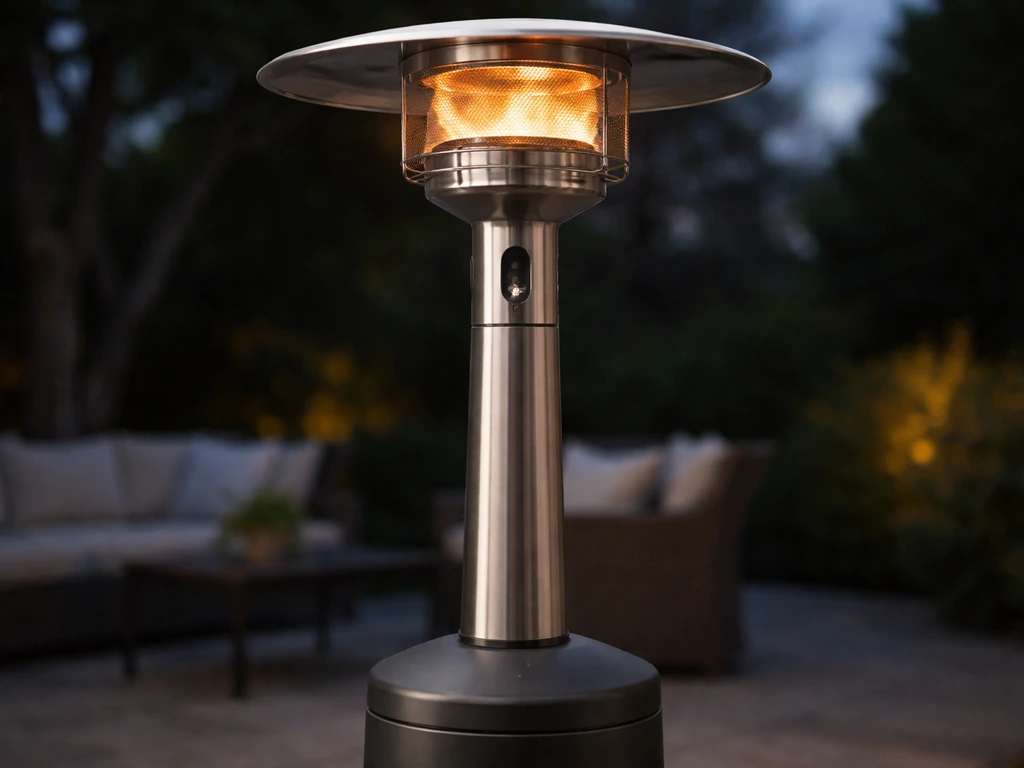
East Oak's propane heaters use a mushroom-cap burner design, which is standard for standing patio heaters. Heat rises and radiates outward from the top element. At 48,000 to 50,000 BTU, these units can genuinely warm a 15 to 20-foot radius on a calm evening. The tradeoff is that you're managing a fuel supply: a 20 lb propane tank runs roughly 8 to 10 hours at full output, so for frequent use you'll be refilling or swapping tanks regularly.
Operating cost on propane runs about $1. 50 to $2. 50 per hour at full blast depending on local propane prices. The combustion process also means these heaters must stay outdoors, never under a low enclosed roof, and always on a flat surface per the EO-PH001 owner's manual.
Electric infrared: instant heat, lower running cost, best for covered spaces
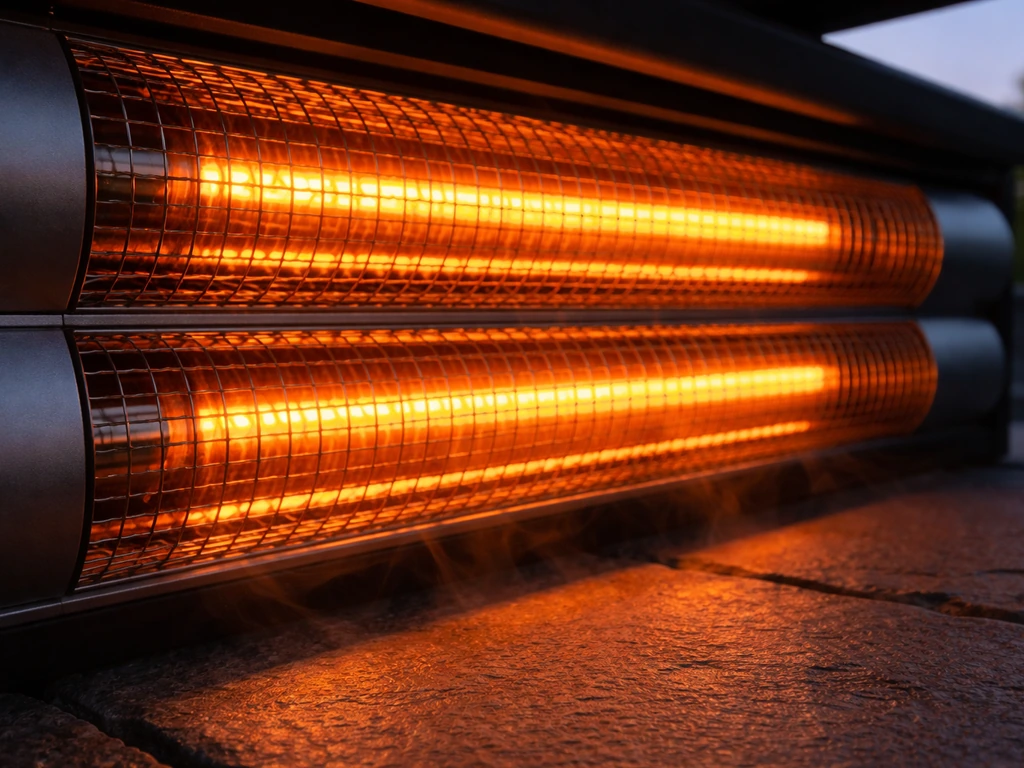
East Oak's electric models use carbon-fiber infrared tubes, not a traditional heating coil. That matters because infrared heaters warm objects and people directly, not the surrounding air, which makes them far more effective in partially open or breezy spaces than a convective heater would be. The 1,500W models fire up in about 1 to 2 seconds, have no exhaust, and East Oak claims 95% thermal efficiency for the 1,500W infrared unit. At a U.
S. average of around $0. 16 per kWh, a 1,500W heater costs about $0. 24 per hour to run, and the 3,000W wall-mount runs about $0.
48 per hour. That is significantly cheaper per hour than propane, but the output ceiling is also much lower, which is why matching wattage to space size is critical.
Infrared vs convective: why the tech type matters
Convective heaters heat air, which then gets blown away by wind. Infrared heaters (which all East Oak electric models use) heat surfaces and people directly, so wind has less effect on the perceived warmth. This is a big practical advantage for patios that aren't fully enclosed. The downside is that infrared heat drops off sharply with distance. Tom's Guide's 2025 testing found the East Oak electric infrared heater effective across roughly 43 to 65 square feet, which is honest and limited. It's a great zone heater for two people sitting close, not a whole-patio solution.
Performance for real patio sizes
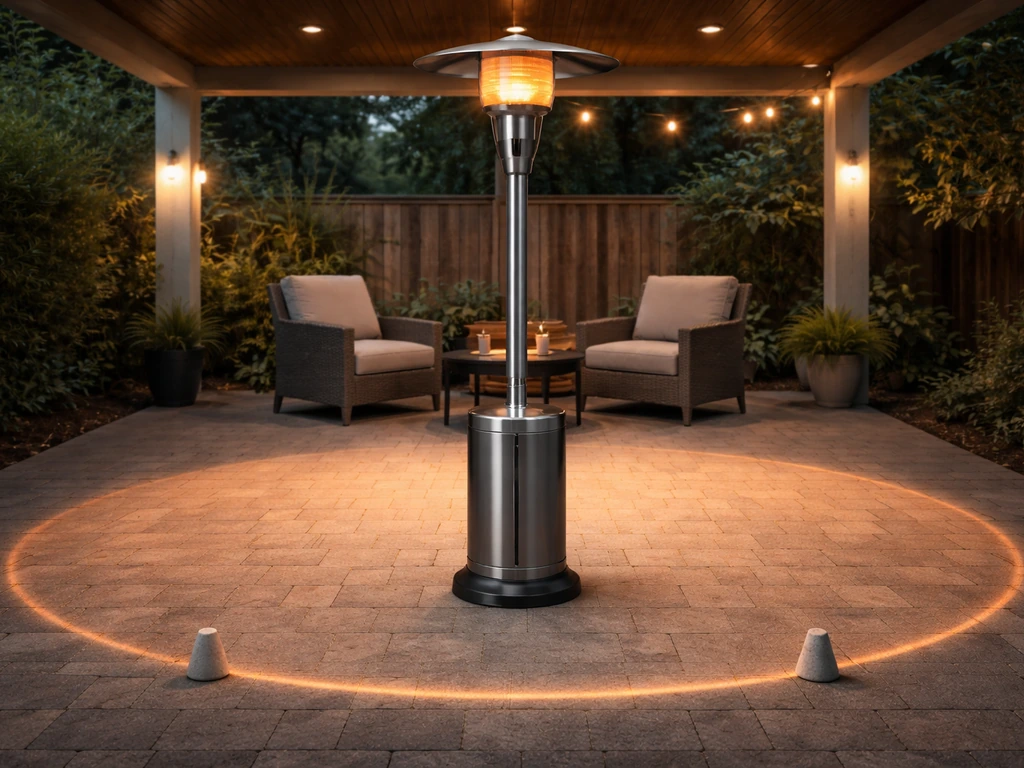
East Oak's coverage claims are best understood as ideal-condition numbers. Wind, ceiling height, and whether your space is enclosed all reduce effective coverage. Here's how to think about it by patio size.
| Patio Size / Setup | Recommended East Oak Model | Why It Works | What to Watch |
|---|---|---|---|
| Small covered patio or screened porch (under 100 sq ft) | E-GLOW Tabletop 1500W or Standing 1500W | Sufficient output for enclosed space, no exhaust | Do not use propane in enclosed spaces |
| Medium covered patio (100–200 sq ft) | E-GLOW Wall Mounted 3000W | Double the wattage covers larger zones, fixed installation frees floor space | Needs a grounded outdoor outlet near mounting location |
| Medium open patio (10x12 to 12x16) | TORCH Firecove 48,000 BTU propane | 18-ft radius handles this size on calm nights | Wind will reduce effective radius; position centrally |
| Large open deck or backyard (over 300 sq ft) | RADIATE 50,000 BTU propane | 20-ft radius and stainless steel build for maximum coverage and durability | Will need more than one unit for large rectangular spaces |
| Uncovered patio with regular wind | Any propane model (48K or 50K BTU) | Higher BTU compensates for heat loss; infrared electric not recommended | Position upwind side; consider a wind break |
For covered patios specifically, the electric infrared options shine because they have no combustion concerns, no carbon monoxide risk, and the infrared waves bounce off surfaces and warm occupants efficiently in enclosed areas. For a garden sun table top patio heater setup, focus on choosing the right wattage for your patio size and whether the area is covered or open. If you're shopping for the la hacienda table top electric patio heater, use the same wattage and coverage logic to size it for your covered or open patio. If you're comparing East Oak's tabletop electric models against something like the Endless Summer tabletop patio heater or tabletop propane options from other brands, East Oak's IP65 rating on the E-GLOW gives it a weather durability edge worth noting.
Safety, weather use, and maintenance
Propane safety requirements
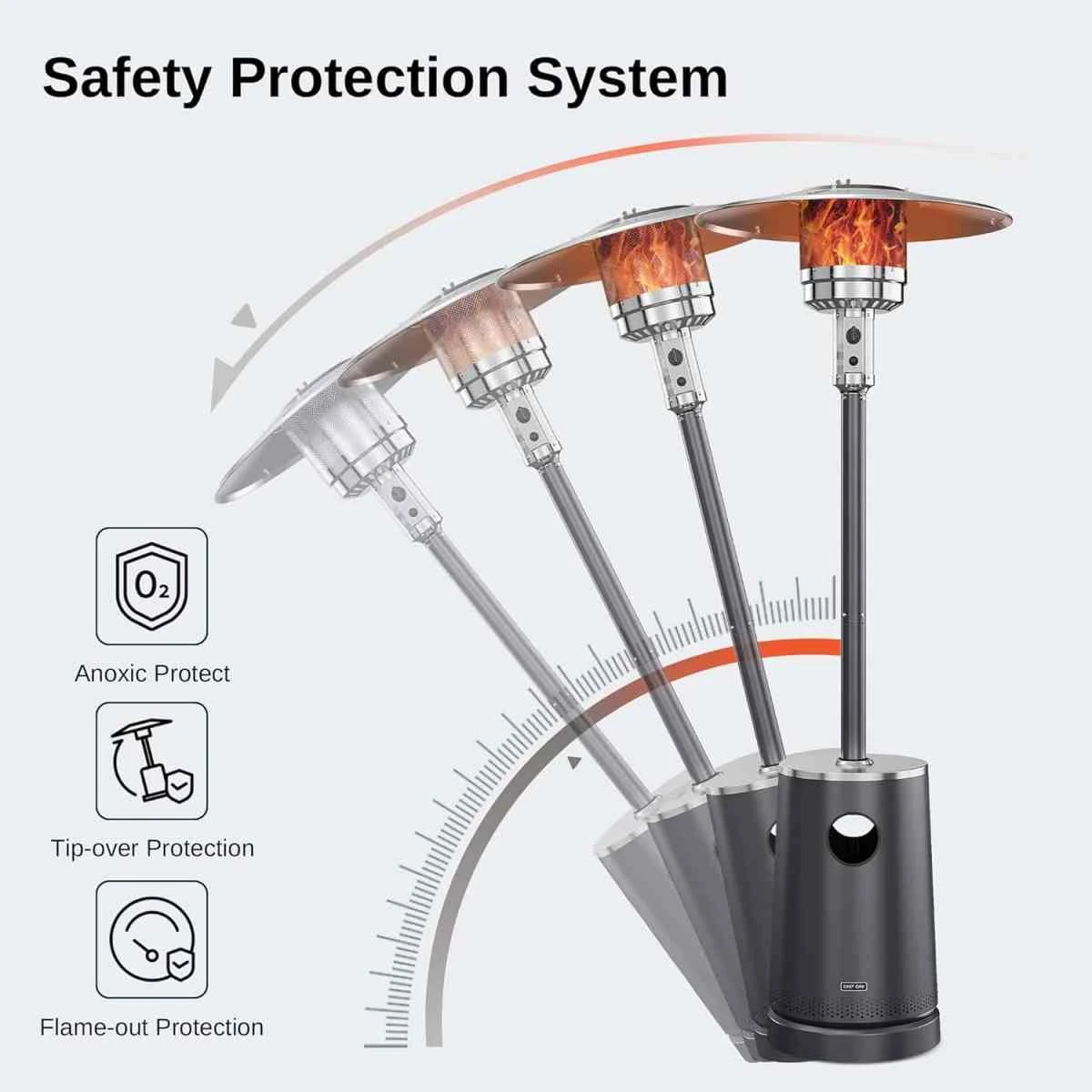
East Oak's TORCH and RADIATE propane heaters include what they call Triple Safety Protection, which typically covers tip-over shutoff, flame-out shutoff, and overheat protection. The EO-PH001 manual is explicit: these heaters must be used on flat, stable surfaces outdoors only. Never use them on wood decks without a heat-resistant mat, and never under a low roofline or inside an enclosed structure. The recommended propane tank is a standard 20 lb cylinder (12-inch diameter, 18-inch height), and the max supply pressure is 11 WC (water column). If you ever smell gas, shut off the tank valve immediately and don't operate the igniter.
Electric safety and weather ratings
The electric models include automatic tip-over protection and overheat cutoff. East Oak's manual specifies using a grounded outlet, not a standard two-prong setup or an unrated extension cord. The IP65 rating on the E-GLOW tabletop and wall-mount models means they're protected against dust ingress and low-pressure water jets from any direction, so light rain isn't a problem. The 1500W standing heater carries blank" rel="noopener noreferrer">IP55, which still handles rain but with slightly less protection. If you are comparing to a specific tabletop option like an Endless Summer model, prioritize heat output and safety ratings that match your patio layout endless summer table top patio heater. None of these are designed to be left submerged or in standing water.
Maintenance basics
- Propane models: inspect the burner head and emitter screen each season for debris, spider webs, or blockage, which can cause uneven flames or ignition failure
- Check the gas line and regulator connection for cracks or wear before each season
- For the stainless steel RADIATE model, wipe down with a mild stainless cleaner once a season to prevent surface rust in coastal or humid climates
- Electric models: wipe the reflector and tube housing with a dry cloth when cool; never spray water directly onto the heating element or electrical housing
- Store propane heaters with the tank disconnected during winter or extended storage
- Electric models can stay mounted year-round in climates without hard freezes given their IP65/IP55 ratings, but indoor storage extends tube life
Noise, heat feel, and everyday convenience
Electric infrared heaters are virtually silent. There's no fan in any of East Oak's electric models (Tom's Guide confirmed this), which means zero mechanical noise but also no air circulation to spread warmth around a larger space. The heat feel is direct and warm within a few feet of the element, similar to sunlight on your skin, but it drops off noticeably beyond the effective range. For two people sitting at a table, this is ideal. For six people spread across a patio, it won't be enough from a single tabletop unit.
Propane heaters produce a soft hiss from the gas flow and a low roar when burning at full output. It's not loud, but it's noticeable in a quiet backyard. The heat from a mushroom-cap propane heater feels softer and more ambient than infrared, and the 18 to 20-foot radius claim means it genuinely warms the air and surfaces in a meaningful zone on a calm night. In a 10 to 15 mph breeze, expect to lose 20 to 30% of effective coverage.
Convenience-wise, the electric models win clearly. The 1,500W standing and tabletop units include a remote control, they're on in under two seconds, and there's nothing to refill or ignite manually. The propane heaters require a push-ignition startup, tank monitoring, and periodic tank swaps, which adds friction if you use the heater casually multiple times a week. If convenience is your top priority, go electric.
If you're specifically shopping for a member's mark patio heater with LED table reviews, it's worth comparing heat coverage, power draw, and safety features against these East Oak options. If you're also reading endless summer patio heater reviews, compare the same heat coverage, power draw, and safety features side by side with the East Oak options member's mark patio heater with LED table reviews.
If raw heat output for an open space is the priority, propane is the only choice in the East Oak lineup.
Best-pick recommendations and buying checklist
Direct recommendations by situation
- Best for a small covered patio or balcony: E-GLOW Tabletop 1500W. Safe for enclosed use, IP65 rated, instant-on with remote, low operating cost at about $0.24/hour
- Best for a medium covered patio: E-GLOW Wall Mounted 3000W. Double the output of the tabletop, keeps floor space clear, and IP65 handles year-round weather
- Best for a medium open patio (10x16 or similar): TORCH Firecove 48,000 BTU propane. 18-foot radius covers this size well on typical evenings, ETL certified, straightforward operation
- Best for a large open deck or frequent entertaining: RADIATE 50,000 BTU propane. Maximum output, 20-foot radius, 304 stainless steel for long-term durability, integrated table is a practical bonus
- Best for convenience over coverage: Any East Oak 1500W electric infrared model. Remote control, 2-second startup, no fuel management
- Avoid the 1500W electric models for any unenclosed patio larger than about 65 square feet, especially in wind. The output simply isn't there
Buying checklist before you order
- Measure your patio. Note both square footage and whether it's covered, partially covered, or fully open
- Confirm your fuel preference: do you want no maintenance (electric) or maximum heat output (propane)?
- Check that you have a grounded outdoor outlet within safe cord reach if going electric, or clear space for a 20 lb propane tank if going gas
- Verify the certification label on the specific model you're ordering: look for ETL, UL, or CSA depending on what matters most to you or is required by local code
- Check the IP rating: IP65 for the best weather protection, IP55 as a minimum acceptable for outdoor use
- For propane models, confirm you need a standard 20 lb tank (12-inch diameter, 18-inch height) and have a place to store it safely
- If you're on a covered patio, never use a propane or gas heater: use only electric models to avoid carbon monoxide risk
- Factor in operating cost: propane at roughly $1.50 to $2.50 per hour vs electric at $0.24 to $0.48 per hour for the East Oak electric range
- If you are comparing East Oak against other tabletop brands, check IP ratings, ETL/UL certification, and actual wattage or BTU rather than just marketing headlines
FAQ
What size patio should I target for East Oak electric infrared heaters, not just the listed coverage?
Treat coverage as a close-range zone, then size for the number of seated people and sightlines. For a breezy or partially open patio, assume you need to reduce the effective area to the “two people sitting close” use case, and consider adding a second unit or choosing a wall-mount 3,000W model for better overlap.
Can I use an East Oak propane heater on a wooden deck without damaging the surface?
You should only use it outdoors on a flat, stable surface, and the manual requires a heat-resistant mat if you place it on wood. Without that mat, heat and radiant output can discolor or scorch decking, especially near the base where heat builds.
Is it safe to mount an East Oak electric heater under a roof overhang or near a wall?
Covered locations are where electric infrared typically makes sense, but “under a low roofline” is specifically called out as unsafe for the propane units. For electric models, still follow the mounting distances in the manual, ensure the heater is not blocked by drapes or furniture, and avoid installing where rainwater can drip directly onto the controls.
Do East Oak electric infrared heaters work in wind, or will they feel weak outside?
They usually feel better than convective heaters because they warm people and objects directly, but infrared still drops off with distance. If your patio is wide or windy, keep people within the effective radius, reduce seating spread, or consider the propane standing heater for whole-patio coverage.
How long will a 20 lb propane tank last on the East Oak models?
At full output, the stated estimate is about 8 to 10 hours per 20 lb tank. If you run on lower usage patterns, actual runtime will be longer, but if you consistently run at peak for evening gatherings you should plan on frequent tank swaps or refills.
Are East Oak propane heaters safe to run continuously during longer parties?
They can run safely within their intended outdoor setup, but “continuous at full blast” still increases operating cost and will accelerate tank depletion. Use the Triple Safety Protection as designed, keep the heater on stable ground, and consider staging a spare tank if your event lasts beyond the 8 to 10 hour window.
What extension cord rules should I follow for East Oak electric heaters?
East Oak specifies using a grounded outlet and not a standard two-prong setup. The bigger practical point is to avoid under-rated or long extension cords, since high wattage can create voltage drop and overheating risk. If you need a cord, match the gauge and length to the heater’s power draw and confirm it is rated for outdoor, grounded use.
What weather rating should I choose if I expect light rain or morning dew?
Pick the model with the stronger IP rating for more comfort during damp conditions. East Oak’s E-GLOW uses IP65, while the 1500W unit is IP55, which still handles rain but is not the same level of dust and low-pressure water-jet protection. Either way, do not leave the heater submerged or in standing water.
Do East Oak electric heaters need ventilation since there’s no exhaust?
No exhaust is one of the benefits, but that does not mean you can ignore placement. Keep clearances from walls, curtains, and other materials, and do not operate them in enclosed spaces where heat can build up near flammable surfaces.
How can I decide between a wall-mounted 3,000W electric unit and a smaller tabletop model?
Wall-mount generally makes more sense when you want fewer hot spots and better coverage across a covered patio. Choose tabletop when the goal is a tight “zone” for a small group and you can position people close to the heater. If you regularly host larger groups, the 3,000W wall-mount is usually the more efficient next step.
What should I do if I smell gas near an East Oak propane heater?
Shut off the tank valve immediately and do not attempt to re-ignite. Wait until the area is aired out, then inspect for leaks before restarting, since continuing with a suspected leak is dangerous even if the heater has safety shutoffs.