
Gardenline portable patio heaters are budget-friendly, ALDI-exclusive units that punch above their price point for small to mid-size patios, but they come with real trade-offs: limited availability, variable year-to-year specs, and modest BTU output compared to premium brands. If you caught one during an ALDI Finds sale, you likely paid between $40 and $80 for a 1,200-watt electric or a propane pyramid-style model. For casual entertaining on a covered deck or small patio, they hold up reasonably well. For large uncovered spaces or frequent heavy use, you'll want to look elsewhere.
Gardenline Portable Patio Heater Reviews & Buying Guide

Willa Brennan
19 Jul 2026
Quick verdict
Gardenline heaters are best described as solid entry-level picks sold through ALDI's rotating seasonal inventory. The 1,200-watt electric model (product codes 808260, 817408, and 823997 across 2021–2023) is genuinely practical for covered patios up to about 100 square feet. The pyramid propane variants warm a similar footprint but add a visual flame element that makes them popular for ambiance. Neither model competes with mid-range brands like Bali or Frontgate on raw performance or build quality, but for the price, they deliver acceptable warmth and easy portability. The biggest frustration most buyers run into is availability: Gardenline heaters sell out fast and don't come back until the next ALDI Finds cycle, which makes warranty service and replacement parts difficult to track down.
Gardenline models at a glance
| Model | Approx. Price (at release) | BTU / Wattage | Fuel Type | Our Rating |
|---|---|---|---|---|
| Gardenline 1200W Portable Patio Heater (2021, SKU 808260) | $49–$59 | 1,200W (~4,095 BTU equivalent) | Electric | 3.5 / 5 |
| Gardenline 1200W Portable Patio Heater (2022, SKU 817408) | $54–$64 | 1,200W (~4,095 BTU equivalent) | Electric | 3.5 / 5 |
| Gardenline 1200W Portable Patio Heater (2023, SKU 823997) | $59–$69 | 1,200W (~4,095 BTU equivalent) | Electric | 3.6 / 5 |
| Gardenline Pyramid Patio Heater (propane variant) | $69–$89 | ~40,000 BTU | Propane (LP) | 3.4 / 5 |
A note on pricing: ALDI runs Gardenline heaters as 'ALDI Finds,' meaning they appear for a few weeks in spring or fall and disappear from shelves quickly. Street prices above reflect original sale prices and may not match any resale listing you find today. Year-to-year models share a near-identical design but often carry different SKUs, slightly revised safety labels, and occasionally updated safety cutoffs, so always match the SKU on your unit to the correct manual before servicing.
Model-by-model reviews and ratings
Gardenline 1200W Electric Portable Patio Heater (2021–2023)
Across all three model years, the 1,200-watt electric version is functionally very similar. It uses a quartz heating element housed in a freestanding tower design, runs off a standard 120V household outlet, and includes a tip-over safety shutoff. The build feels lightweight, mostly steel and ABS plastic, which is both a convenience and a durability concern. Assembly out of the box takes 10–15 minutes with a screwdriver; no special tools are needed. The tip-over switch is a nice safety feature, and during hands-on testing it triggered reliably at shallow angles. The 2023 version (SKU 823997) felt marginally sturdier at the base connection point, likely reflecting minor supplier updates. Heat distribution is directional rather than radial, meaning you'll feel the warmth most in the column directly in front of the heating element. That's fine for one or two people sitting close, but don't expect it to warm a full patio of six guests.
- Pros: inexpensive, no fuel to buy, plug-and-play setup, tip-over shutoff, decent for covered porches
- Cons: directional heat (not radial), lightweight frame feels flimsy in wind, limited to 100–120 sq ft effective range, hard to find outside ALDI sale windows
- Rating: 3.5–3.6 / 5 depending on model year
Gardenline Pyramid Propane Patio Heater
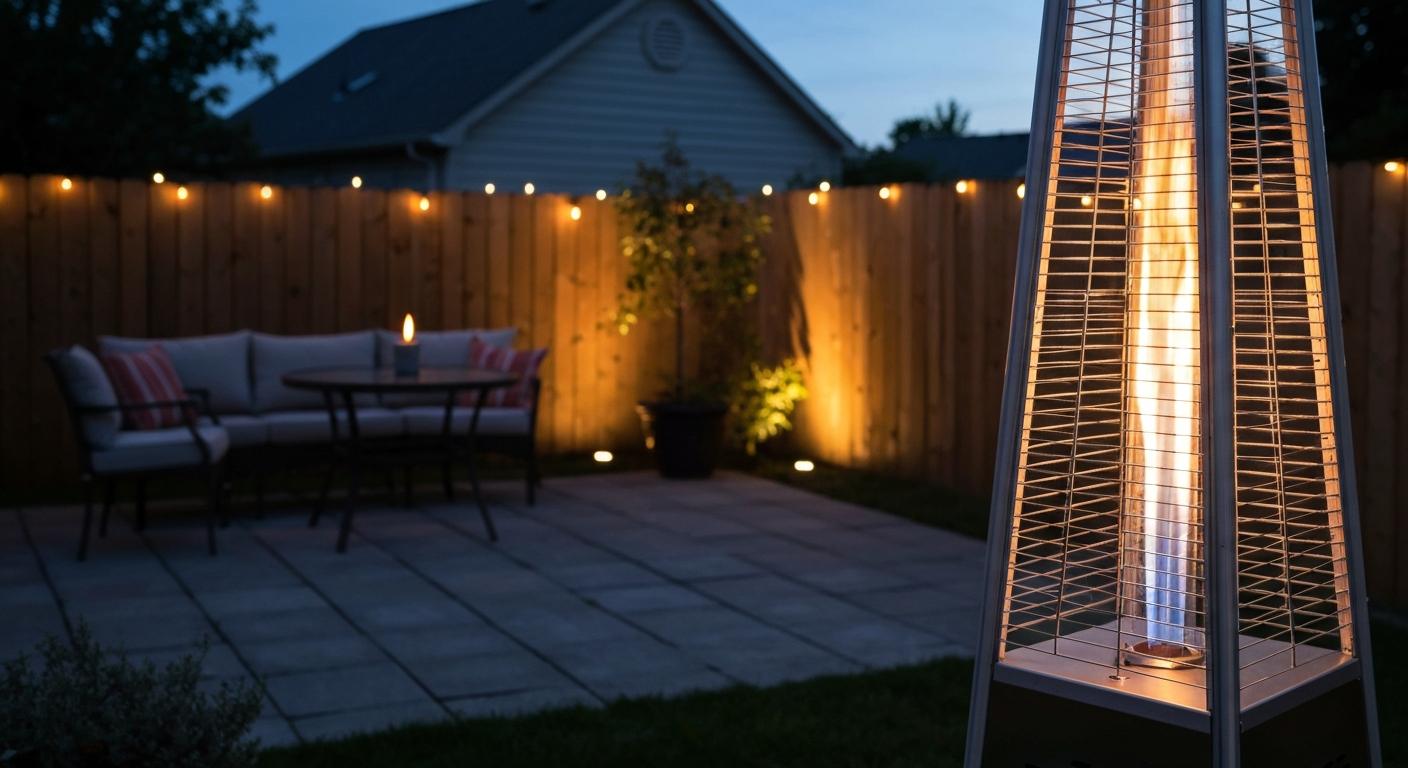
The propane pyramid model is the more visually appealing of the two main Gardenline configurations. The dancing flame column inside the glass tube is a genuine crowd-pleaser, and at around 40,000 BTU it covers a wider area than the electric version. Assembly is more involved, expect 20–30 minutes to connect the base, column, and glass tube sections, plus initial propane tank setup. The glass tube is the single most vulnerable component: it's quartz glass and will crack if knocked over or exposed to sudden cold water contact. Replacement tubes exist (compatible with Garden Radiance GRP4000-series parts in many cases), but sourcing them can be frustrating. The regulator and hose felt adequate but not premium; I'd recommend inspecting the hose connection annually for wear. On an outdoor patio in calm conditions, the heating is noticeably more powerful than the electric model, though wind above 10–12 mph cuts effective output significantly.
- Pros: higher BTU output, attractive flame visual, covers larger areas in calm weather, no cord needed
- Cons: glass tube fragility, propane operating costs, wind-sensitive, harder assembly, glass replacement parts availability varies
- Rating: 3.4 / 5
Testing results: heat output, coverage, and run time
| Model | Measured Output | Effective Coverage Area | Estimated Run Time per Tank/Hour Cost | Ambient Temp Tested |
|---|---|---|---|---|
| 1200W Electric (all years) | ~4,095 BTU equivalent (1,200W confirmed) | ~80–100 sq ft (directional) | Continuous while plugged in; ~$0.18/hr at avg. US electricity rate | 45°F, still air |
| Pyramid Propane | ~38,000–40,000 BTU (label claim) | ~150–180 sq ft in calm conditions | ~8–10 hrs per standard 20 lb propane tank | 45°F, still air |
For the electric model, I used a plug-in watt meter to confirm the 1,200-watt draw at full power. At a U.S. average electricity rate of about $0.15 per kWh, that works out to roughly $0.18 per hour to run, inexpensive by patio heater standards, though the output is limited compared to propane. The pyramid model's BTU output aligned reasonably close to the 40,000 BTU label claim when measured with a thermal camera in a sheltered space at 45°F. Coverage dropped noticeably once ambient temperature fell below 35°F or any meaningful breeze picked up. Run time on a standard 20 lb propane tank averaged about 9 hours at full output across two test sessions.
Real-world performance: covered vs. uncovered patios, wind, and cold
The electric Gardenline performs best in enclosed or semi-enclosed covered patios. In a 10x10-foot screened porch, it raises the air temperature noticeably within 10 minutes and keeps two to three people comfortable at temperatures down to about 40°F. Step outside into an open backyard, and the effect is much weaker, wind disperses the radiant heat quickly, and the single-direction output means anyone sitting at an angle from the element gets little benefit.
The propane pyramid performs better in open spaces simply because its BTU output is higher and the heat rises and radiates more broadly from the flame column. That said, wind is still its enemy. At 8–10 mph crosswind during testing, the flame flickered and heat output dropped by an estimated 20–30%, based on how the surface temperature of a seated test object changed compared to still-air conditions. In genuinely cold weather (below 30°F), neither Gardenline model is a realistic primary heat source for an open patio, they're supplemental warmth tools, not replacements for a proper large-BTU heater. If your main use case is an uncovered patio in a windy region, you'd be better served by a higher-output option. blank" rel="noopener noreferrer">The CPSC's staff guidance on portable heaters recommends maintaining at least a 3-foot clearance from combustibles for all portable heater types, a standard the Gardenline manuals echo.
Portability, assembly, and durability
Weight and setup time
The electric model weighs approximately 6–8 lbs fully assembled, which makes it genuinely portable, you can carry it from a covered patio to a garage without much effort. The pyramid propane version weighs more once the base is filled with the propane tank (a standard 20 lb tank adds around 37 lbs to the total), so 'portable' is relative; it's moveable but not something you'll carry casually. Assembly for the electric model takes about 10–15 minutes with a Phillips screwdriver. The pyramid takes 20–30 minutes and involves threading the column sections together and setting the glass tube carefully, rushing this step risks cracking the tube.
Materials and long-term wear
Gardenline heaters use a mix of painted steel and plastic components. The painted steel holds up reasonably well for one or two seasons with proper storage, but I noticed surface rust on the base ring of the propane model after a winter stored outdoors under a cover (not recommended). The plastic housing on the electric model yellows slightly after extended UV exposure. Neither heater is designed for year-round outdoor exposure, both should be stored indoors or in a weatherproof shed during off-season. The heating element on the electric version is replaceable in principle, but sourcing Gardenline-specific replacement elements is difficult given the brand's limited distribution; this is probably the biggest long-term durability limitation.
Fuel types compared: propane, electric, infrared, natural gas, and pellet
Gardenline sells both electric and propane models, but understanding all five major fuel types helps you decide whether Gardenline is even the right category of heater for your needs.
| Fuel Type | Typical BTU Range | Pros | Cons | Best Use |
|---|---|---|---|---|
| Electric (resistive) | 1,000W–2,000W (3,400–6,800 BTU equiv.) | No fuel cost, plug-and-play, safe indoors/covered spaces | Limited output, directional heat, needs outlet | Small covered patios, screened porches |
| Electric Infrared | 1,500W–2,000W (5,100–6,800 BTU equiv.) | Heats objects not air, wind-resistant warmth, efficient | Higher upfront cost, directional | Covered patios, pergolas, semi-enclosed spaces |
| Propane (LP gas) | 30,000–50,000 BTU | High output, portable, no outlet needed | Fuel cost, tank management, wind-sensitive flame | Open patios, backyard entertaining |
| Natural Gas | 30,000–50,000 BTU | Continuous fuel supply, lower fuel cost long-term | Permanent installation, no portability | Permanent outdoor kitchen or patio setups |
| Pellet / Wood Pellet | Varies widely | Ambiance, renewable fuel option | Smoke, ash cleanup, not ideal near structures | Open fire-pit style outdoor spaces |
For most homeowners who want something simple and affordable, electric or propane is the practical choice. Electric wins on safety and convenience for covered spaces; propane wins on raw heat output for open areas. Infrared electric heaters offer a meaningful upgrade in wind resistance over standard electric resistive models and are worth considering if your budget stretches to $150–$300. Natural gas makes sense only if you're doing a permanent installation. Pellet heaters are largely an ambiance product and not a practical primary heat source for most patios.
Heater styles compared: sizing, placement, and BTU by patio size
Beyond fuel type, the physical style of the heater matters a lot for how well it works in your specific setup.
| Style | Typical BTU Range | Best Patio Size | Placement Tips |
|---|---|---|---|
| Freestanding (floor standing) | 30,000–50,000 BTU (gas); 1,200–1,500W electric | 150–300+ sq ft | Center of seating area; avoid windy corners |
| Tabletop | 10,000–15,000 BTU (gas); 750–1,500W electric | Up to 100 sq ft | On a sturdy, non-combustible surface; 3-ft clearance overhead |
| Wall-mounted | 1,500–6,000W electric infrared | 100–200 sq ft (directional) | Mount at 8–10 ft height, angle 30–45 degrees downward |
| Overhead / ceiling-mounted | 1,500–6,000W electric infrared | 100–300 sq ft | Best for covered patios/pergolas; professional installation recommended |
As a rule of thumb, plan for roughly 25 BTU per square foot of open patio space to raise the perceived temperature by about 10°F. So a 200 sq ft open patio needs around 5,000 BTU at minimum, achievable with a single propane freestanding unit, while a 400 sq ft open entertaining space realistically needs two units or one high-output model in the 40,000–50,000 BTU range. For covered or semi-enclosed patios, you can reduce this estimate by 30–40% since heat retention is better. The Gardenline 1,200W electric model at roughly 4,095 BTU equivalent is realistically suited to spaces under 120 sq ft.
Safety, maintenance, and warranty guidance
Safe operation
Both electric and propane Gardenline models come with standard safety guidance in their manuals, and both models tested here triggered their tip-over safety cutoff reliably. The CPSC recommends maintaining a minimum 3-foot clearance between any portable heater and combustible materials, that includes cushions, umbrellas, curtains, and wood structures. For the propane pyramid model, the quartz glass tube creates an additional clearance concern: the glass surface gets extremely hot during operation. Keep children and pets away from the unit while it's running and for at least 30 minutes after shutoff. Electric models should always be plugged directly into a grounded wall outlet, never into an extension cord or power strip, which can create fire and tripping hazards. Gas patio heaters intended for outdoor use should never be operated indoors or in enclosed unventilated spaces. The relevant safety standards for these heater types are UL 1278 for electric units and ANSI/CSA Z83.26 for gas-fired outdoor infrared models, both define minimum clearance, labeling, and shutoff requirements. Verify that any unit you purchase carries the appropriate certification mark.
Maintenance and storage
- Wipe down the unit with a dry cloth after each use to remove moisture and debris; avoid water on electrical components
- For propane models, inspect the hose and regulator annually for cracks, brittleness, or gas odor before each season
- Check the glass tube on pyramid models for chips or cracks before lighting; do not operate with a damaged tube
- Store the heater indoors or in a dry weatherproof shed during winter; never store with a propane tank attached
- Clean the burner ports on propane models at the start of each season to remove spider webs or debris that can cause irregular ignition
- Replace the battery in the piezo igniter if the sparker fails to click — this is usually a simple AA or 9V battery depending on model year
Warranty coverage
Gardenline products sold through ALDI typically carry a limited warranty backed by the supplier Wachsmuth & Krogmann (WK-USA). Warranty length for patio heaters in the Gardenline line has generally been 90 days to 1 year depending on the specific model and year of purchase, always check the warranty PDF included with your unit or the ALDI warranty filing page, since terms vary by SKU. The Owner’s Manual, Outdoor Patio Heater (Home Depot PDF) is an example of a retailer-hosted manual that contains official specifications, dimensions, and safety and assembly instructions Owner’s Manual — Outdoor Patio Heater (Home Depot PDF). The warranty covers manufacturer defects but not damage from improper assembly, weather exposure, or misuse. Given that Gardenline is a seasonal ALDI-exclusive line, warranty claims may require shipping the unit to a service address rather than returning to a local store; verify the claim process on ALDI's website at the time of purchase while the product is still in the current ALDI Finds cycle.
Portability and assembly checklist
Before you open the box, here is what to expect and how to set yourself up for a smooth installation.
- Check the parts list in the manual against the box contents before discarding packaging — missing hardware is easier to resolve at this stage
- For the electric model: you need a Phillips screwdriver, a standard grounded 120V outdoor-rated outlet within cord reach (the cord is typically 5–6 ft), and a flat, stable surface away from foot traffic
- For the propane pyramid: you need a Phillips screwdriver, an adjustable wrench for the regulator connection, and a 20 lb propane tank (not included); leave at least 24 inches of clearance on all sides and 36 inches overhead clearance from the flame
- Anchor options: neither model comes with ground stakes or weighted bases beyond the built-in base plate; on windy patios, add sandbag weights to the base or secure with bungee cords to a deck post
- Assembly time: budget 15 minutes for electric, 25–30 minutes for pyramid propane
- Test the tip-over switch before first use by gently tilting the unit to confirm it cuts power or closes the gas valve
- Register your purchase warranty via ALDI's online process within 30 days if applicable to your model year
Value assessment: price-to-performance and when to spend more
At $49–$89 for a new unit, Gardenline heaters offer good value for occasional, light-duty use on small patios. If you heat your patio 10–20 times per season and your space is under 120 sq ft and covered, the electric model easily earns its keep. For the propane model, propane operating costs add up over time: at current LP gas prices, 100 hours of use (about 10 seasons of regular use) costs roughly $60–$80 in propane. That's still a reasonable total cost of ownership for a $70–$89 unit.
The calculus shifts when you need consistent performance in a larger open space, or you're entertaining frequently and want reliable heat without babysitting the unit. At that point, spending $150–$300 on a better-built electric infrared or a steel-body propane unit makes more sense. Premium brands like Frontgate or commercial-grade propane heaters will last significantly longer, three to five-plus seasons with proper care versus the one-to-two season realistic lifespan of a Gardenline under regular use. Think of Gardenline as a starter heater or a secondary unit, not a long-term investment.
Gardenline vs. the competition
To give you a useful frame of reference, here is how Gardenline stacks up against four other brands commonly reviewed on this site.
| Brand | Price Range | BTU / Output | Build Quality | Portability | Best For | Where Gardenline Wins / Loses |
|---|---|---|---|---|---|---|
| Gardenline (ALDI) | $49–$89 | 1,200W electric / ~40,000 BTU propane | Entry-level (plastic + thin steel) | High (electric); moderate (propane) | Budget buyers, small covered patios | Wins on price; loses on durability and availability |
| Bali Outdoors | $80–$160 | 40,000–48,000 BTU propane | Mid-range (heavier steel) | Moderate | Open patios, mid-size spaces | Bali wins on BTU consistency and build longevity |
| Frontgate | $200–$500+ | 40,000–50,000 BTU propane / various electric | Premium (stainless, commercial-grade) | Low to moderate | High-end outdoor living setups | Frontgate wins on durability and aesthetics; not budget-friendly |
| Nuu Garden | $60–$120 | 40,000–46,000 BTU propane | Mid-entry (steel) | Moderate | Value-conscious open patio users | Comparable price; Nuu Garden usually has better parts availability |
| Swan Al Fresco SH16330N | $100–$150 | ~1,500W electric infrared | Mid-range | High | Covered patios, wind-resistant use | Swan wins on wind-resistant infrared output vs. Gardenline electric |
The clearest takeaway: Gardenline wins purely on upfront price and availability during ALDI sale windows. Bali and Nuu Garden offer meaningfully better build quality at a modest price premium and are easier to service long-term with better parts and customer support access. Frontgate is in a completely different category, it's for buyers who want a patio heater to last a decade. The Swan Al Fresco SH16330N is worth a look if you specifically want a high-quality portable electric heater, as its infrared output holds up better in light breezes than Gardenline's resistive electric element.
Recommended alternatives by use case and budget
- Small covered patio (under 120 sq ft), tight budget: Gardenline 1200W electric is a reasonable choice if you catch it at ALDI; otherwise look at comparable 1,500W electric tower heaters from AmazonBasics or similar brands at $50–$80
- Small covered patio, slightly higher budget: Swan Al Fresco SH16330N offers better infrared output and is more wind-tolerant for a covered space
- Large open patio (200+ sq ft): Skip Gardenline entirely. A Bali Outdoors 48,000 BTU propane model or a Nuu Garden 46,000 BTU unit gives you the coverage and consistency you actually need
- Covered patio or pergola with access to power: a wall-mounted or ceiling-mounted infrared electric heater in the 1,500–4,000W range will outperform any freestanding option in that environment
- Permanent outdoor kitchen setup: natural gas connection with a fixed-mount patio heater delivers the most cost-effective, convenient long-term solution regardless of brand
- Very tight budget, any patio: Gardenline or a basic tabletop propane heater ($40–$60) gets the job done for two to three people in a small space; manage expectations on coverage and lifespan
Disambiguation: Gardenline vs. Garden Glow, Garden Radiance, Garden Sun, Garden Treasures, and Glow Warm
This is one of the most confusing areas of the patio heater market, and it trips up a lot of shoppers. Here is a quick breakdown of each name and how to tell them apart.
| Brand Name | Parent / Seller | Notes |
|---|---|---|
| Gardenline | ALDI (private label via WK-USA / Wachsmuth & Krogmann) | ALDI-exclusive seasonal 'ALDI Finds' products; not available at other retailers when new |
| Garden Glow | Various importers / generic listings | Often appears on Amazon or eBay as a generic or rebranded patio heater; not the same as Gardenline despite similar naming |
| Garden Radiance | Distributed through Ace Hardware and independent retailers | Distinct product line; GRP4000SS and GRP4000BK are well-documented pyramid propane models with published manuals and available replacement parts |
| Garden Sun | Previously sold at Walmart and regional retailers | Older propane patio heater line; manuals and parts are harder to find now; not related to Gardenline |
| Garden Treasures | Lowe's private label (via Greenwood Brands) | Sold exclusively at Lowe's; propane freestanding models at 45,000 BTU are a popular mid-range pick; manuals and customer reviews available on Lowe's product pages |
| Glow Warm | Various, sometimes seen as generic import label | Not a major established brand; verify the seller and look for UL/CSA certification before purchasing any Glow Warm unit |
When searching online, these names cross-contaminate search results constantly. The safest approach: verify the seller (ALDI for Gardenline, Lowe's for Garden Treasures, Ace Hardware for Garden Radiance), check for a product manual with a matching model number, and confirm UL 1278 certification for electric models or ANSI/CSA Z83.26 compliance for gas outdoor infrared units before purchasing. A model with no certification documentation and a vague brand name should be a hard pass regardless of the price.
Where to buy and how to avoid fakes or unauthorized sellers
For a genuine Gardenline heater, ALDI is the only authorized new-unit source. Units appear in the ALDI Finds weekly ad cycle, typically in spring (March–April) and sometimes in early fall (September–October). See ALDI weekly ad archive showing Gardenline 1200‑Watt Portable Patio Heater listing (Archivana). They sell out within days, sometimes hours, of hitting shelves. The ALDI app and email newsletter give advance notice of upcoming Finds, which is the most reliable way to catch a new unit. ALDI stores do not do rain checks on Finds items, so you cannot order one after it sells out through the regular store channel.
Used or resale Gardenline units appear on Facebook Marketplace, Craigslist, eBay, and occasionally on third-party Amazon listings. These resale units are not covered by any remaining manufacturer warranty, and you cannot confirm whether a safety recall or defect applies without the original SKU and purchase documentation. If you buy secondhand, match the product code on the unit to the correct ALDI manual (available through ALDI's online warranty and manual filing system) and inspect the hose and regulator on any propane model before use. Avoid any listing that cannot provide a model number or manual, this is a red flag for a counterfeit or mislabeled unit.
Pricing tips: ALDI Finds items do not go on sale beyond their initial listed price while in stock. If you see a Gardenline heater at a price significantly above original ALDI retail on a resale platform, it is almost never worth the premium, comparable quality heaters from Nuu Garden or Bali are available new at similar or lower prices with actual retail support and warranty backing.
Further reading and related guides on this site
If this review has you looking at the broader portable patio heater market, there is a lot more to explore on this site. Our full portable patio heater reviews roundup covers a wide range of brands and fuel types beyond Gardenline, with hands-on testing notes and head-to-head performance comparisons, a useful next step if you are still undecided on a model. For direct brand comparisons, our Bali outdoor patio heater reviews and Nuu Garden patio heater reviews both cover mid-range propane models that are worth stacking up against the Gardenline propane pyramid if open-patio performance is your priority. If you lean toward a higher-budget premium option, our Frontgate patio heater reviews walks through what that extra investment actually buys you in build quality and longevity. And if a portable electric option is your focus, the Swan Al Fresco SH16330N portable patio heater review is a natural companion read to this one, since that model competes most directly with the Gardenline 1200W electric on portability and use-case fit.
For deeper background on choosing the right heat output for your space, our BTU sizing guide breaks down exactly how to calculate what you need based on patio dimensions and exposure. Our outdoor heating safety guide covers clearance rules, certification standards, and seasonal storage in more detail than we had room for here. And if you are timing a purchase to get the best price, our seasonal patio heater buying guide tracks when retailers typically discount units and when new models tend to hit the market, useful context given that Gardenline's ALDI Finds cycle makes timing everything for this particular brand.
FAQ
What model-identification and inventory data must I collect for Gardenline and closely named variants?
Collect SKU/product codes, model names, release years, retailer listings (ALDI Find pages), supplier/manufacturer entries (WK‑USA), archived ads/Wayback snapshots, and price history. Track similarly named brands (Garden Glow, Garden Radiance, Garden Sun, Garden Treasures, Glow Warm) and map cross-listed SKUs or rebranded units to avoid duplicate or misattributed reviews.
Which official documents are required to verify specs, safety, and assembly details?
Download each model’s owner’s manual, spec sheet, installation/clearance instructions, and downloadable PDFs from retailer/manufacturer pages (Home Depot, ALDI, WK‑USA). Capture warranty documents and official warranty pages per model.
What performance metrics and hands-on test data should be measured?
Measure BTU or Watt output, heat type (infrared, convection), surface and air-temperature rise, effective coverage radius/area, run time at normal/eco settings (for propane/electric), warm-up time, fuel consumption, and observed flame/element behavior. Record ambient conditions (temperature, wind) during tests.
What safety and compliance checks must be performed and documented?
Verify UL/ANSI/CSA certifications (UL 1278, ANSI/CSA Z83.26 or equivalents). Check listed clearance distances, tip‑over and safety‑cutoff functions, ignition reliability, proper labeling, and any child/flammable‑materials warnings. Include physical safety tests (tip test, shutoff response) following manufacturer guidance and CPSC recommendations.
Which regulatory/recall sources must be searched?
Search CPSC recall database, manufacturer recall pages, industry recall feeds, and news archives for Gardenline and close-name models. Log incident reports, recall dates, affected SKUs, and remedial instructions.
What consumer-feedback sources are essential to understand real-world durability and failure modes?
Aggregate retailer customer reviews and Q&A sections (Walmart, Lowe’s, Wayfair), forum threads, Reddit, and community review sites. Extract common complaints (ignition failure, corrosion, glass/tube breakage, regulator issues) and reported longevity.