
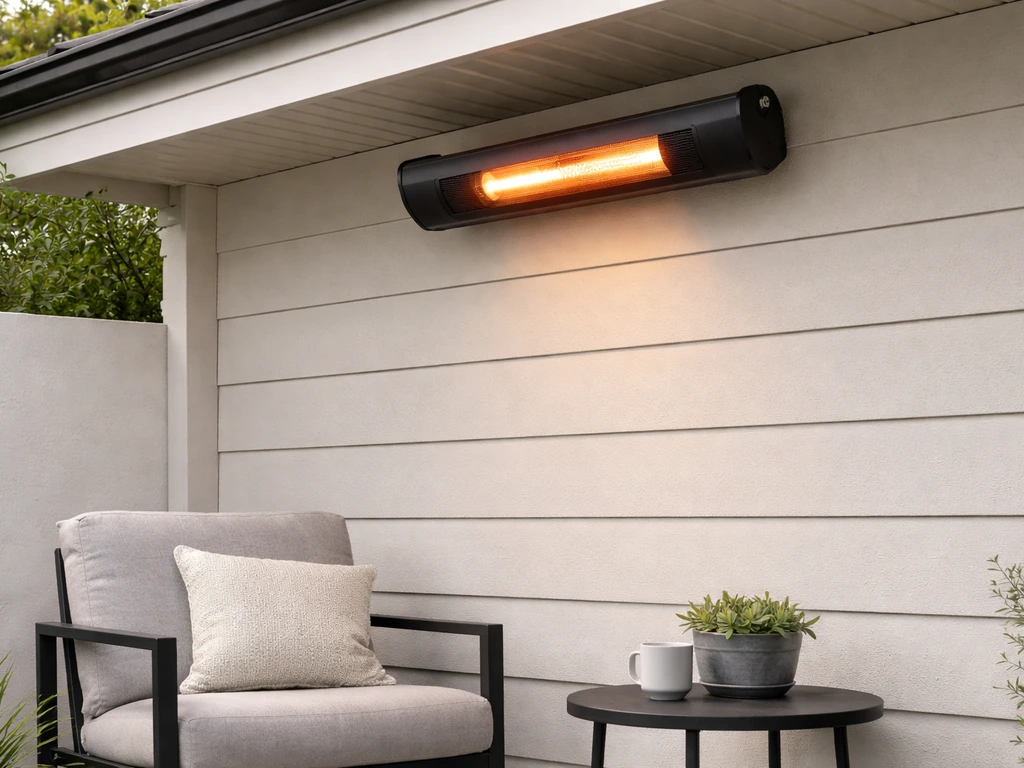
The Gtech HeatWave (model HW01) is a wall-mounted electric infrared patio heater that pumps out 2 kW of heat, claims a 6-metre warming range, and reaches full warmth in about one second. It runs on a standard 220–240 V household outlet, weighs just 1.5 kg, and carries an IP65 weatherproof rating, making it a genuinely practical pick for covered patios, pergolas, and sheltered outdoor areas. For most people searching 'Gtech patio heater,' this is the one model in the lineup worth knowing about right now.
Gtech Patio Heater Review: Models, Coverage, Cost, and Safety

Willa Brennan
14 Jun 2026
Which Gtech patio heater are we actually talking about?
Gtech is primarily known for cordless garden tools and vacuums, so if you stumbled onto their patio heater range expecting a big product family, the reality is simpler: the HeatWave HW01 is the main (and currently most widely available) patio heater model from the brand. It's a wall-mounted infrared unit rather than a freestanding propane tower or tabletop heater, which immediately tells you a lot about where it fits in the market. If you were hoping for a portable propane option or something like a pellet-burning fire pit, the HW01 isn't that. But if you need a no-fuss, plug-in outdoor heater you can mount once and forget about, it deserves a proper look.
The specs that actually matter
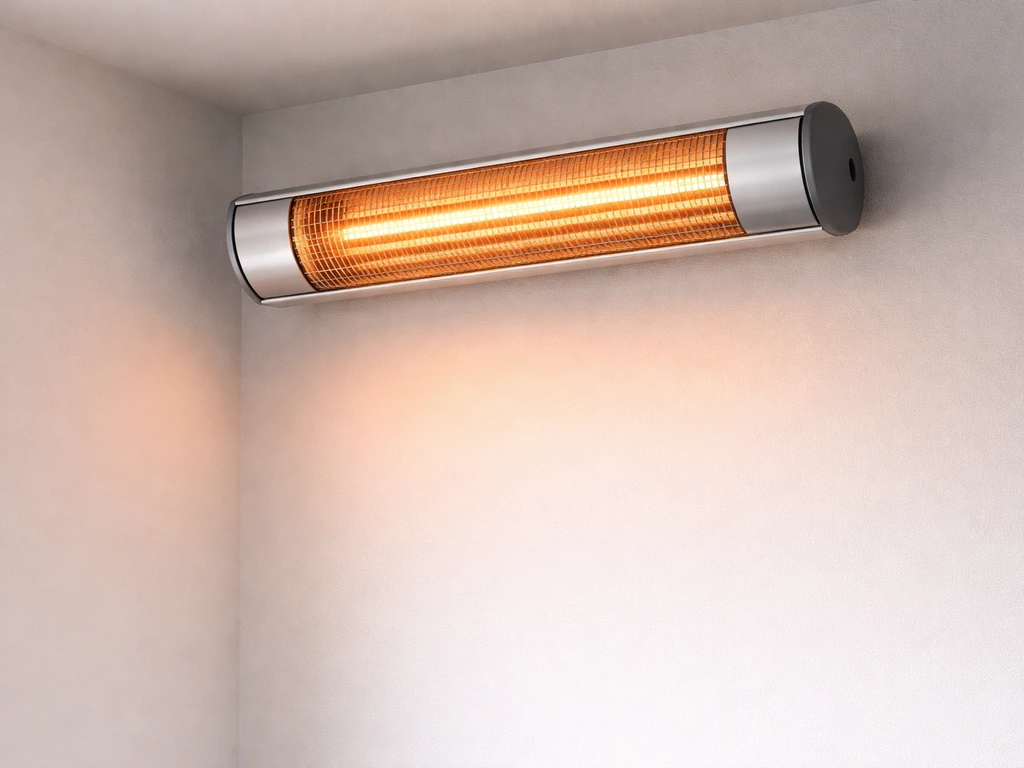
Let's run through the numbers that will actually affect your buying decision, not just the marketing highlights.
| Spec | Gtech HeatWave HW01 |
|---|---|
| Model number | HW01 |
| Heat output | 2,000 W (2 kW) |
| Heating range | Up to 6 metres |
| Fuel / power type | Electric infrared |
| Voltage | 220–240 V, 50/60 Hz |
| Warm-up time | ~1 second |
| IP rating | IP65 (dust-tight, splash-proof) |
| Weight | 1.5 kg |
| Cable length | 190 cm |
| Dimensions | H 18.5 cm x W 57 cm x D 10.5 cm |
| Mounting type | Wall-mounted |
| Warranty | 2 years |
The 2 kW output sits right in the middle of the electric patio heater market. It's not the most powerful unit you can buy (some electric models push 3 kW), but for a heater of this size and weight, 2 kW is respectable. The 6-metre range claim comes from the manufacturer, and like most 'maximum range' figures it assumes calm conditions and direct line-of-sight from the heater element to the person below. In real life, expect comfortable warmth within 3–4 metres in typical conditions. The IP65 rating is a genuine plus: it means fine dust can't get in and the unit can handle low-pressure water jets, so light rain and damp outdoor air won't damage it.
How it actually performs outside
Covered patios and pergolas: where it shines
The HW01 is genuinely well-suited to covered or semi-enclosed spaces. Infrared heat works by warming objects and people directly rather than heating the air, which means in a pergola or under a patio roof, the warmth reflects off surfaces and concentrates around the people sitting underneath. For a small to medium covered patio (think 10–20 square metres), one HW01 mounted at the recommended height of at least 180 cm above the floor does a solid job at extending the usable season into autumn and mild winter evenings. On cold but still nights under a cover, the 2 kW output is noticeably effective within 2–3 metres.
Open, exposed, and windy spaces: honest limitations
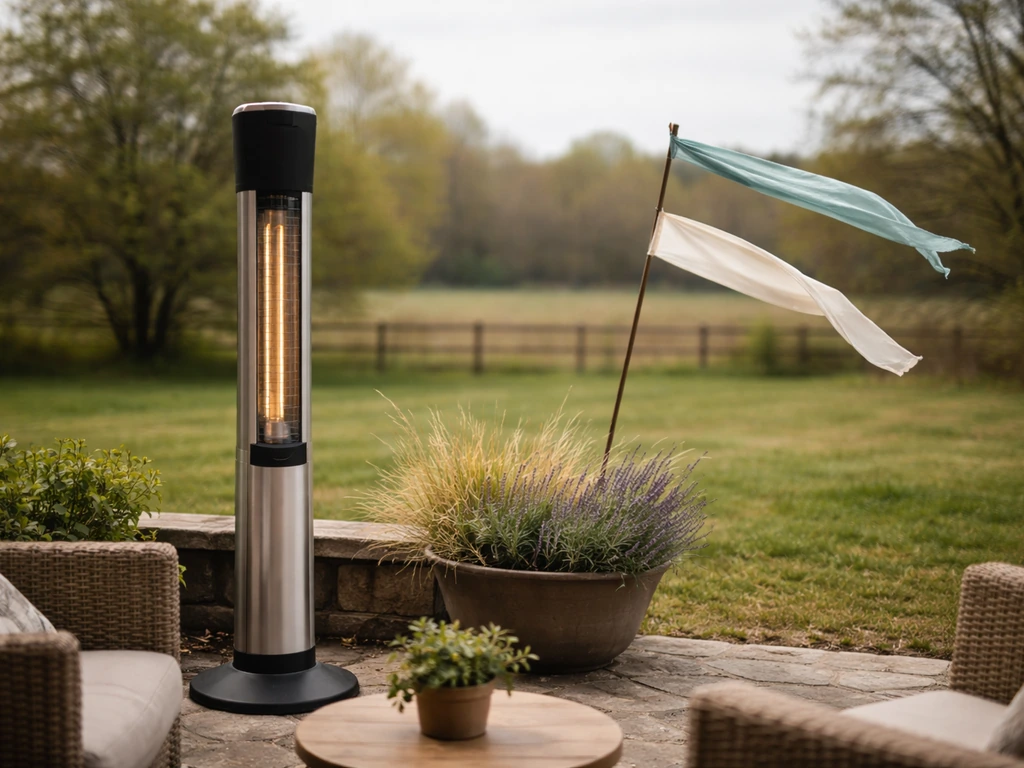
Out in the open, infrared heaters face the same physics challenge every outdoor heater does: wind carries warmth away before it reaches you. The HW01 is not a strong performer in exposed, windy gardens. At anything more than a light breeze, the effective comfort distance drops noticeably, and you'll want to be within 2 metres of the unit rather than relying on that 6-metre figure. If your patio is exposed on multiple sides with regular wind, you'll likely need either a higher-powered unit or a propane tower heater that throws more BTUs into the air. For large open terraces, one 2 kW infrared panel is undersized.
Patio size guidance
- Small covered patio (up to 12 sq m): one HW01 works well, especially mounted centrally on a wall or ceiling joist
- Medium covered patio (12–25 sq m): one unit handles it at the lower end; two units at opposite walls for the upper end
- Large open patio or decking (25+ sq m): the HW01 is not the right primary heater here — consider a higher-output propane or natural gas unit instead
- Under a parasol or gazebo: useful as supplementary heat but not a standalone solution in cold temperatures
Ease of use: setup, controls, and day-to-day living with it
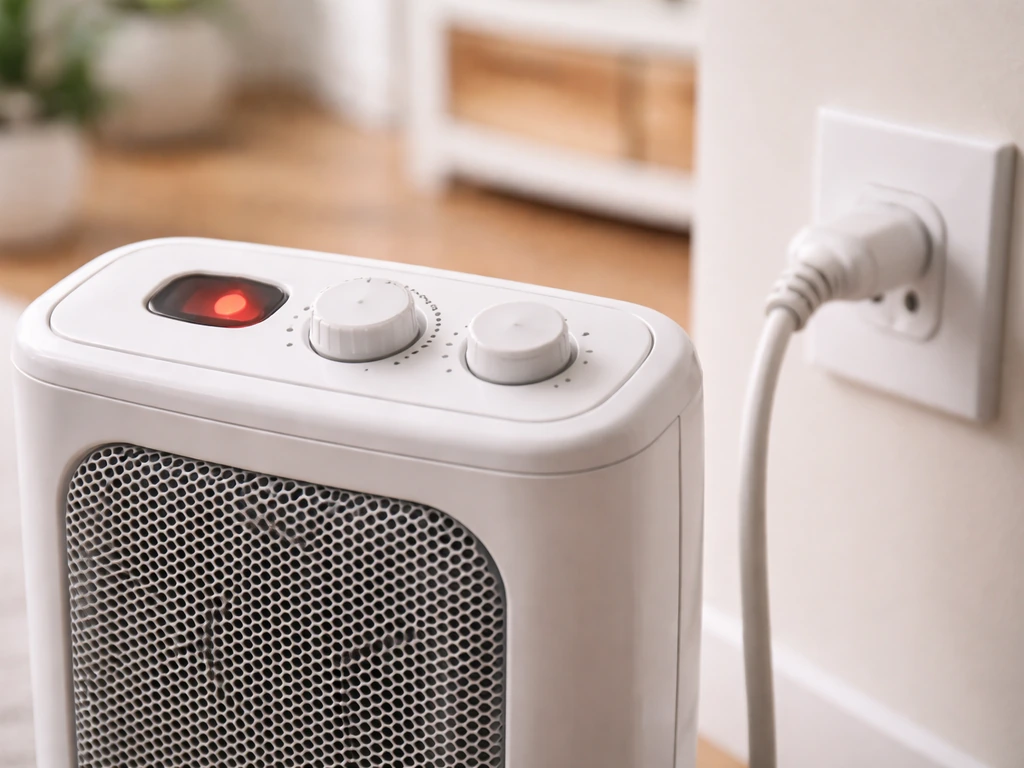
One of the HW01's strongest selling points is how simple it is to live with. There's no gas line to connect, no propane tank to swap, and no ignition system to troubleshoot at 9 pm on a cold Friday night. You plug it into a standard outlet, mount it on the wall at the correct height (at least 180 cm off the floor, at least 40 cm from side walls as specified in the manual), point it where you need heat, and switch it on. The one-second warm-up is real: infrared panels don't need any pre-heating cycle. You get heat the moment power flows.
The controls are minimal by design. There's no elaborate digital interface or app pairing to worry about. At 1.5 kg, the unit itself is light enough that one person can handle installation easily. The 190 cm cable is long enough for most wall positions to reach a nearby outdoor socket without an extension lead, though you should check your specific setup before buying. There are no wheels or carrying handles since this is a fixed-mount unit, so portability isn't part of the equation. If you want to move your heat source around the garden, this isn't your heater.
Safety features worth knowing
- IP65 weatherproof rating protects against rain and outdoor moisture
- Manual specifies minimum installation clearances (180 cm above floor, 40 cm from side walls) to prevent heat buildup near combustible surfaces
- Infrared heating elements are enclosed rather than open-flame, eliminating fire risks associated with gas heaters
- No combustion means no carbon monoxide risk, making it safer for semi-enclosed spaces than gas alternatives
- 2-year manufacturer warranty covers material and manufacturing faults
What it costs to run, and whether it's worth it
Running costs for the HW01 are straightforward to estimate because it's a fixed 2 kW electric unit. In the UK, where this heater is primarily sold, electricity typically runs around 24–28 pence per kWh (as of mid-2026). At 2 kW, the HW01 costs roughly 48–56 pence per hour to run at full power. Run it for three hours on a weekend evening and you're looking at around £1.50 per session. Over a full outdoor season of, say, 60 such evenings, that's about £90 in electricity. For context, a standard 13 kg propane gas patio heater burns through roughly £20–25 of gas per tank and typically provides 8–12 hours of heat at maximum output depending on the model.
The electric running cost is a real consideration if you use the heater heavily. Where the HW01 wins on cost is in upfront simplicity: no gas delivery, no tank refills, no regulator replacement. The unit itself is priced competitively for a branded infrared panel with IP65 rating and a 2-year warranty. For occasional use on a small covered patio, the total cost of ownership is genuinely low. For heavy daily use on a large space, the running costs stack up and you'd likely be better served by a more efficient infrared unit with higher output or a natural gas heater permanently plumbed in.
Warranty and parts
The 2-year guarantee covers manufacturing and material defects, which is solid for an outdoor heater at this price point. If you run into a fault that the manual's troubleshooting steps don't fix, the Gtech customer care line can walk through further diagnostics and send replacement parts where applicable. Parts and service availability can vary by region (Gtech's Iceland operation, for example, has a specific local repair workshop), so if you're outside the UK, it's worth confirming parts availability before buying. For most UK buyers, Gtech's support network is well-established through their main product lines.
Gtech HW01 vs other fuel types and brands
The most useful question to ask isn't just 'is the Gtech good?' but 'is a 2 kW wall-mounted infrared heater the right type for my situation?' Here's how it stacks up against the main alternatives.
| Heater type | Heat output range | Best for | Limitations vs HW01 |
|---|---|---|---|
| Gtech HW01 (electric infrared) | 2 kW | Small/covered patios, instant heat, low maintenance | Fixed position, not for large open spaces |
| Propane tower heater | 10–15 kW (34,000–50,000 BTU) | Large open patios, portable use | Ongoing fuel cost, tank swaps, open flame |
| Electric infrared (higher output brands) | 3–4 kW | Larger covered areas, colder climates | Higher price, still limited in wind |
| Natural gas (plumbed) | 10–13 kW | Permanent large patio setup, heavy use | Requires gas line installation, fixed cost |
| Pellet/fire pit style | Variable | Ambience + heat, social gatherings | More maintenance, smoke, ash, slower heat |
| Tabletop infrared | 0.5–1.5 kW | Small table areas, café-style setups | Very limited range, not for whole patio |
Against other infrared electric brands, the HW01 competes directly with options like Infratech wall-mount models, which offer higher wattage options but at a significantly higher price. If you are comparing options, these infratech patio heaters reviews can help you judge performance, build quality, and value for similar covered spaces. If your budget allows and you need more power for a larger covered space, it's worth comparing those. For buyers who want fire-pit ambience alongside heat, something like a pellet-burning option or a Tiki-style fire pit brings a different experience entirely. For more product comparisons and buyer impressions, read our thermo tiki patio heater reviews to see how Tiki-style options stack up. If you are specifically looking for tiki brand patio fire pit reviews, compare features like heat output, burn time, and build quality against your space and climate Tiki-style fire pit. The Gtech wins on simplicity, weatherproofing, and zero-fuss operation, not raw heat output.
Who should buy the Gtech HW01 (and who shouldn't)
Best for
- Small covered patios up to around 15 square metres where a wall-mount makes practical sense
- People who want zero maintenance and instant heat without gas connections or fuel deliveries
- Renters or homeowners who can mount a single unit and leave it in place season after season
- Anyone who values a clean, flush-mounted aesthetic over a freestanding heater that takes up floor space
- Covered dining areas or outdoor kitchens where permanent heat directly overhead is the priority
- Budget-conscious buyers who don't want to overpay for a brand name on a basic infrared panel
Not the best fit for
- Large open decking or exposed garden patios where wind will defeat the infrared warmth
- Anyone needing portability — this is a fixed-mount unit with no wheeled base
- Very cold climates where you need 3 kW or more to stay comfortable in winter
- Buyers who want the social experience of an open flame or fire pit as part of the outdoor setting
- Spaces without an accessible outdoor electrical socket within 190 cm of the planned mount position
Maintenance, troubleshooting, and keeping it safe
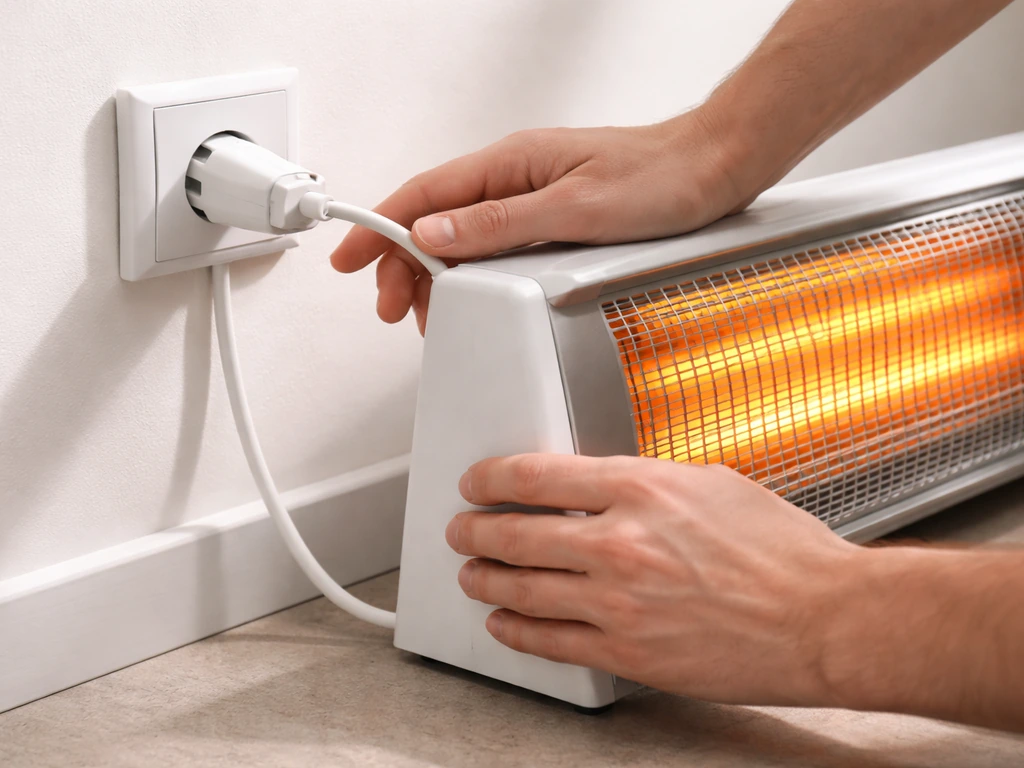
Routine maintenance
One of the best things about an electric infrared heater is how little upkeep it needs compared to gas or pellet alternatives. There's no burner to clean, no igniter to replace, and no fuel system to inspect. To keep the HW01 running well: wipe the front panel with a dry or lightly damp cloth a few times a season to remove dust and debris that can affect heat output. Make sure the mounting hardware stays tight, especially after winter when temperature swings can loosen fixings. Check the cable and plug for any signs of wear or water ingress at the start of each outdoor season.
Troubleshooting common issues
- Heater not warming: check the power outlet is live and the cable connection is secure; the one-second warm-up means it should be instant, so any delay suggests a power issue
- Heat feels weak: check that you're within 3–4 metres and in direct line of sight from the element; also verify the unit is mounted at the correct height and angle
- Unit trips the circuit breaker: do not share the circuit with other high-draw appliances; the HW01 draws a full 2 kW which can overload a shared outdoor socket
- Visible damage or burning smell: switch off and unplug immediately; contact Gtech customer care before attempting any fix yourself
- Moisture inside the unit (despite IP65): check that the mounting position isn't directing water runoff directly onto the unit; IP65 handles splash but not sustained immersion
Safety do's and don'ts
- Do mount the unit at least 180 cm above floor level and at least 40 cm from side walls — these clearances are in the manual for a reason
- Do use a qualified electrician if you're adding a new outdoor socket rather than extending an indoor one
- Do turn it off at the socket when the patio is unattended for extended periods
- Don't mount it beneath low, combustible ceilings (untreated timber, thatch, etc.) without verifying clearance from the manual
- Don't use it as an indoor heater — it's rated for outdoor/semi-outdoor use and the IP65 rating is no substitute for indoor-rated appliances
- Don't attempt to modify the cable length or unit yourself — doing so voids the 2-year warranty and creates a genuine safety risk
Overall, the Gtech HeatWave HW01 is a well-specified, sensibly priced infrared patio heater for a specific use case: a small to medium covered outdoor space where you want plug-in simplicity, fast heat, and minimal long-term hassle. It's not trying to be a propane powerhouse or a social fire-pit centrepiece, and it shouldn't be judged as one. If your patio fits the profile, it's a very solid buy. If you specifically want the best patio heater for your space, reading trustech patio heater reviews can help you compare performance and value solid buy. If it doesn't, the alternatives across propane, natural gas, and higher-output infrared options are worth exploring before committing. If you are also shopping for a timber patio heater style, big timber patio heater reviews can help you compare build quality, heat output, and real-world performance.
FAQ
Do I need planning permissions or building rules compliance to mount the Gtech HeatWave HW01 on a patio wall?
In many UK cases, a fixed wall-mounted heater typically falls under ordinary home improvements, but requirements can vary by council and property type (for example, listed buildings or leasehold restrictions). If you are in any of those categories, check local planning guidance and your tenancy or lease terms before mounting.
Can I use the HW01 under a pergola with slatted roofing or partial gaps?
It can work well under partial cover, but slats and open sides reduce how much infrared heat stays concentrated around people. If the roof is mostly open or you expect regular wind through the structure, plan for a shorter effective comfort distance than the advertised maximum.
What’s the correct mounting height if my patio seating is lower than average?
The article notes a minimum recommended height of at least 180 cm above the floor, which helps target the infrared correctly. If your seating is lower, avoid mounting below the minimum, and instead reposition seating or increase the distance from the wall so the heat pattern still falls on people rather than only the floor.
Will I need an extension lead to reach my outdoor socket?
The cable is listed as 190 cm, which may be enough for many wall locations. If you do need a lead, only use an outdoor-rated extension that is suitable for the heater’s power draw, and keep connections off wet surfaces to reduce the risk of water ingress.
Is the HW01 safe to run during light rain or misty evenings?
The IP65 rating indicates protection from dust and low-pressure water jets, so light rain should not be an issue for the unit itself. However, you should still protect the plug and socket area, and avoid using it in driving rain where water could pool around the connections.
How much clearance do I really need from side walls and nearby objects?
The article mentions keeping it at least 40 cm from side walls per the manual. Treat that as a real safety clearance, not a suggestion, and do not place curtains, cushions, umbrellas, or other flammables within the same zone.
Does infrared heat feel the same everywhere on the patio?
No, infrared warmth is directional and line-of-sight matters. People closer to the heater will feel it more strongly, and if another person is between you and the panel, you can notice a drop in comfort because your body is no longer receiving the direct radiant energy.
What changes when the patio is exposed to wind, and how should I adjust expectations?
Wind carries radiant heat away before it reaches you, so the useful comfort distance can fall well below the headline range. If you routinely feel a breeze where you sit, plan to be roughly within about 2 metres of the panel or consider a higher-output option designed for exposed spaces.
Can I run the heater on a lower setting to reduce electricity use?
The description frames the HW01 as a fixed 2 kW unit, so there may not be meaningful power modulation like you would see on some higher-end infrared models. If you want to control costs, use shorter sessions rather than expecting it to automatically scale down power.
What should I do if the unit trips a breaker or fails to heat after being plugged in?
First, verify the outdoor socket and any RCD protection are functioning, then inspect the cable and plug for damage. If it powers but doesn’t warm, follow the manual troubleshooting steps mentioned in the warranty section, and contact Gtech support for diagnostics and potential replacement parts.
How often should I clean it, and is wiping it down enough?
A seasonal wipe-down is recommended to remove dust and debris that can reduce output. Avoid aggressive cleaning agents, and do not open the unit, since IP65 protection is about sealed operation, not DIY repairs.
Is the HW01 a good choice for an open, large terrace with no cover?
It’s designed primarily for covered or semi-enclosed spaces, where infrared warmth concentrates around people. For open, large terraces, especially with frequent wind, one 2 kW wall-mounted panel is likely to feel underpowered, and you may need multiple panels or a different fuel type.