
The Lil' Timber patio heater is a wood-pellet-burning outdoor heater that punches well above its compact size with up to 72,000 BTU of radiant heat. If you want real, wood-fired warmth on your patio without the hassle of split logs or the ongoing cost of propane, this heater is genuinely worth considering. But it's not for everyone, and the fuel type comes with trade-offs around setup, wind sensitivity, and maintenance that you need to know before you spend the money.
Lil Timber Patio Heater Review: Worth It for Your Patio?

Willa Brennan
16 Jun 2026
What the Lil' Timber Is and Who It's Actually For
The Lil' Timber is made by Wood Pellet Products (marketed under the Timber Stoves brand) and burns standard wood pellets, the same compressed biomass fuel used in pellet stoves and grills. There are two main models you'll see in the wild: the original WPPLT1. 7LS and the updated WPPHLT2. 5LS, which runs at 72,000 BTU/hr input.
The owner’s manual PDFs for the Lil’ Timber Patio Heater list model [WPPHLT2. 5LS](https://images. thdstatic. com/catalog/pdfImages/ff/ff0f07b4-c1ba-429a-a41a-232fae4ac89b.
pdf) with a 72,000 BTU/hr input. There's also a premium "Elite" variant (the Lil' Timber Elite Patio Heater) that shares the 72,000 BTU rating but comes with a redesigned protective cage and updated fittings. Timber Stoves lists the Lil' Timber Elite patio heater as an Elite series model rated at 72,000 BTU, with a redesigned protective cage and updated fittings 72,000 BTU rating but comes with a redesigned protective cage and updated fittings.
If you're shopping around, make sure you know which version you're looking at, because the Elite carries a higher price tag and some build improvements over the base model.
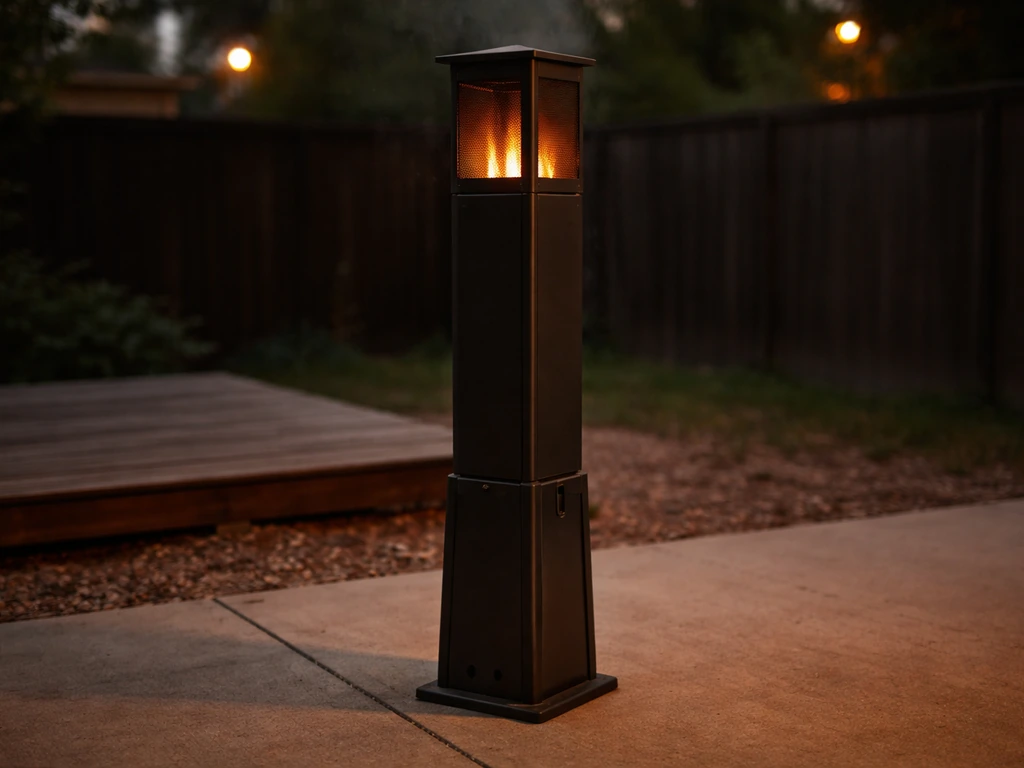
The heater looks like a tall, freestanding column, similar in silhouette to a propane mushroom heater, but it feeds pellets from a hopper rather than connecting to a gas tank. That design makes it genuinely portable, no gas line required, and gives it a more natural, crackling warmth that many people prefer over the sterile output of electric or gas alternatives.
This heater is best for: homeowners with a medium to large patio who want wood-fire ambiance without the chaos of a log fire, people in areas where propane is expensive or natural gas lines aren't practical, and anyone who already buys pellets for a pellet grill or indoor stove. It's less ideal for apartment balconies, tiny patios, or anyone who wants zero-effort heat at the push of a button.
How It Actually Performs on a Real Patio
Heat coverage and BTU in practice
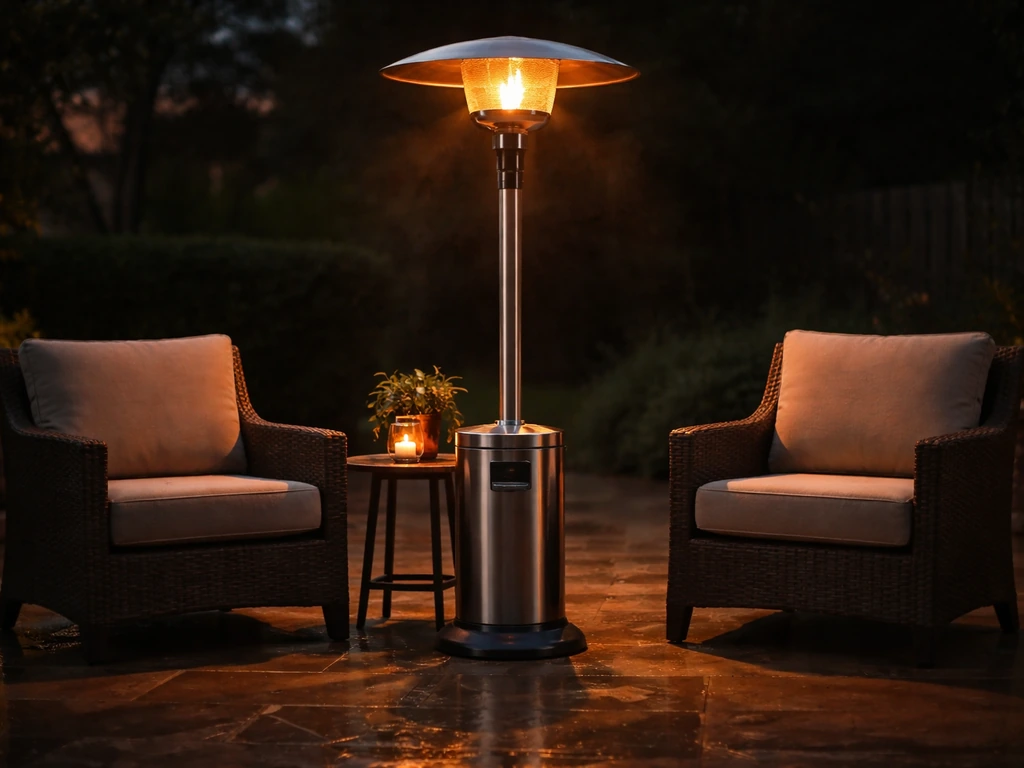
At 72,000 BTU/hr, the Lil' Timber WPPHLT2.5LS puts out serious heat. For context, most standard propane mushroom heaters run 40,000 to 46,000 BTU, so the Lil' Timber has a meaningful output advantage on paper. In practice, that translates to comfortable warmth across roughly a 15- to 20-foot diameter circle under calm conditions, enough to keep 6 to 8 people comfortable at a patio table. At sitting height specifically, where it matters most, the radiant heat feels noticeably strong within about 8 to 10 feet of the unit.
Wind sensitivity
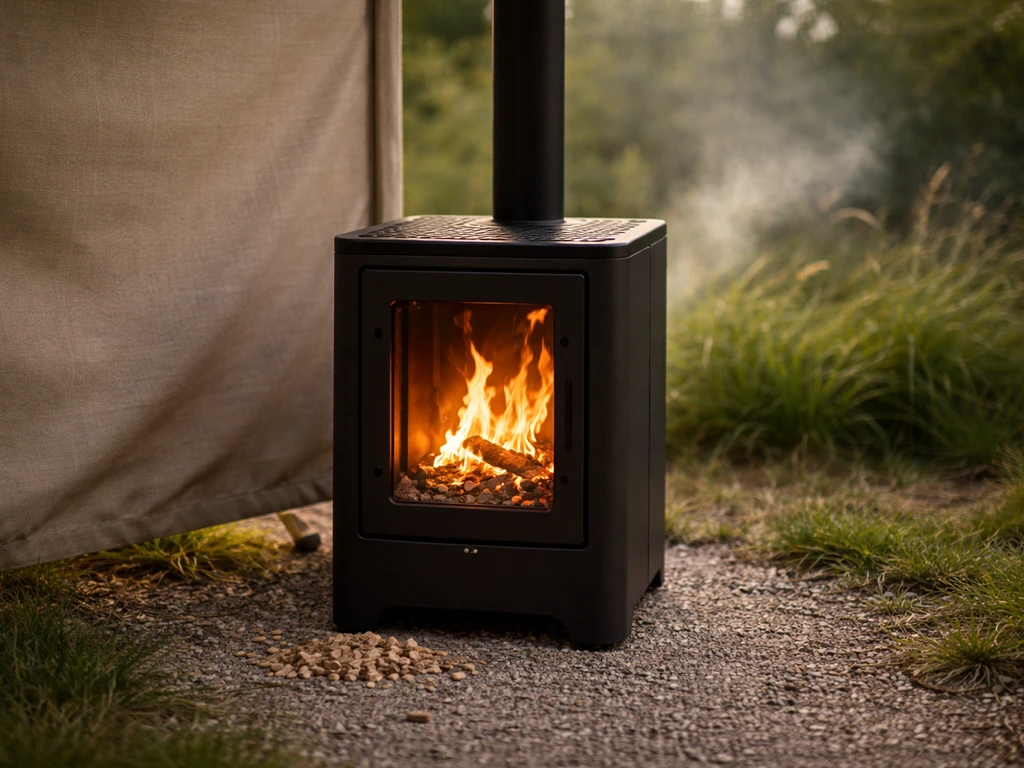
Here's where pellet heaters show their biggest weakness: wind. Because the Lil' Timber relies on controlled combustion of loose pellets, a stiff breeze (anything consistently above 10 to 15 mph) can disrupt the burn, reduce heat output noticeably, and in some cases cause ignition issues. In a semi-covered or sheltered patio, it performs excellently. On a fully exposed deck with no windbreak, you'll fight it on breezy evenings. This isn't unique to Lil' Timber, it's a pellet-heater limitation, but it's worth calling out directly.
Warm-up time
Don't expect instant heat. The Lil' Timber takes 10 to 15 minutes to reach full operating temperature once lit, which is longer than flipping on an electric heater (near-instant) and slower than a propane unit (3 to 5 minutes). Plan ahead. If you're hosting and want the patio warm when guests arrive, start it well before you need it.
Setup, Operation, and Day-to-Day Usability
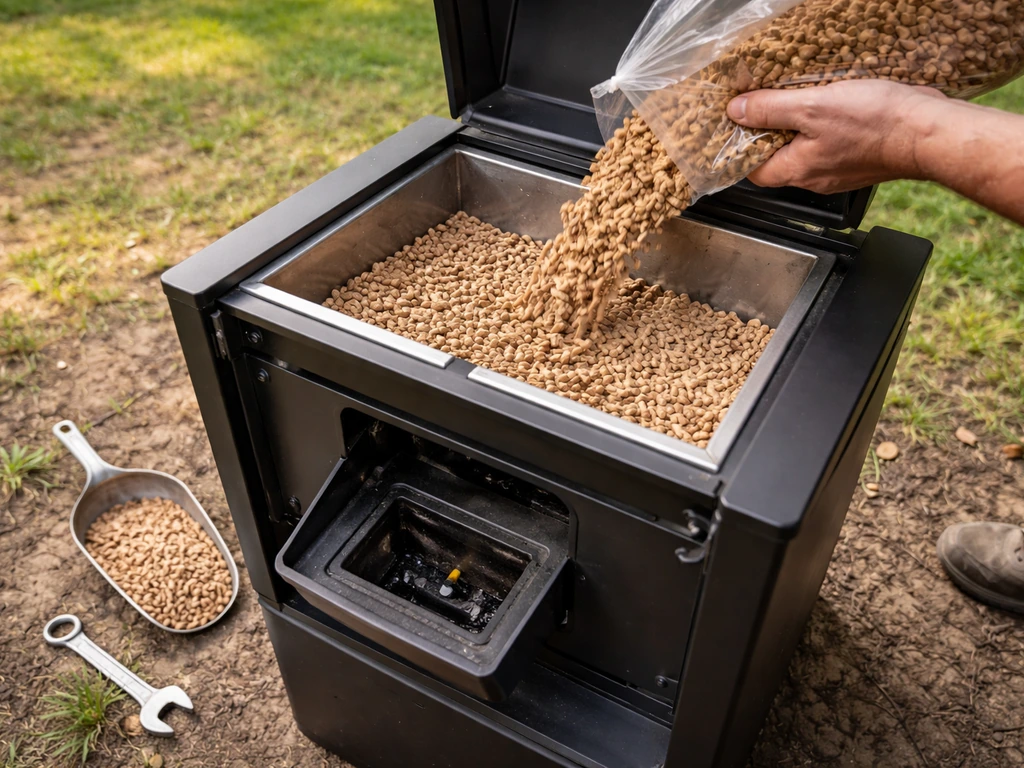
Assembly is straightforward. The unit ships in sections, stacks together, and most people finish setup in under 30 minutes with basic tools. The pellet hopper sits at the top or side depending on the model variant, and you load standard 40-lb bags of wood pellets that you can find at any hardware or home improvement store.
Day-to-day operation is manual. You load the hopper, ignite the burn pot (an electric igniter is included on newer models), and wait for the pellets to catch fully before walking away. There's a low-tech satisfaction to it that resonates with people who like fire, but if you want to flip a switch and forget it, this heater will frustrate you.
Portability is a genuine plus. Since it runs on bagged pellets and has no gas line or dedicated electrical circuit, you can move it around your yard, take it to a tailgate or outdoor event, or store it indoors during the off-season without any complicated disconnection process. The unit is heavy enough to feel stable but manageable for one person.
Safety, Maintenance, and How Long It Will Last
Safety basics
Like any combustion heater, the Lil' Timber produces carbon monoxide and must never be used indoors or in enclosed spaces. Keep it at least 3 feet from any combustible surface, including deck railings, umbrella fabric, and patio furniture cushions. The protective cage on both the base model and the Elite variant keeps accidental contact away from the burn chamber, but supervise children and pets regardless. Always extinguish and allow the unit to cool fully before refilling the pellet hopper.
Maintenance and cleaning
Pellet heaters produce ash, and the Lil' Timber is no exception. Plan on cleaning the burn pot and ash collection area after every 3 to 5 uses, or sooner if you're running it for long sessions. It takes about 10 minutes with a small ash vacuum or brush, and skipping this step leads to incomplete combustion, harder ignition, and shorter equipment life. The burn pot and hopper should also be inspected seasonally for wear, corrosion, or pellet debris buildup. Store the unit in a covered area or use a weather-resistant cover to protect the electronics and hopper from moisture.
Durability
Build quality on the WPPHLT2.5LS and the Elite variant is solid, with a powder-coated steel body that holds up well to outdoor use. The weak points are the igniter and the auger motor, which can fail after a few seasons if the unit is left uncovered in wet conditions. Replacement parts are available through Timber Stoves, and the company has a reasonable support track record, but factor in the possibility of an igniter or motor replacement after 3 to 5 years of regular use.
What It Costs to Run Compared to Other Heater Types
Wood pellets typically run $5 to $9 per 40-lb bag, and the Lil' Timber at full 72,000 BTU output burns roughly 2 to 3 lbs of pellets per hour. At average pellet prices, that works out to approximately $0. 30 to $0. 65 per hour of heat.
Compare that to propane at $3. 00 to $5. 00 per hour for a typical mushroom heater, and the fuel savings are real, especially if you run the heater frequently. Electric patio heaters are cheaper per BTU when grid rates are low, but most electric units top out at 5,000 to 10,000 BTU, nowhere near the Lil' Timber's output.
Natural gas is the cheapest fuel to run at scale (often under $0. 20 per hour), but requires a fixed gas line connection and professional installation, which eliminates portability entirely.
| Fuel Type | Typical BTU Output | Estimated Cost Per Hour | Portability | Warm-Up Time |
|---|---|---|---|---|
| Lil' Timber (wood pellet) | 72,000 BTU | $0.30–$0.65 | High (no lines) | 10–15 min |
| Propane mushroom heater | 40,000–46,000 BTU | $3.00–$5.00 | High (tank swap) | 3–5 min |
| Electric patio heater | 5,000–10,000 BTU | $0.10–$0.40 | Medium (needs outlet) | Near-instant |
| Natural gas heater | 40,000–50,000 BTU | $0.15–$0.25 | None (fixed line) | 3–5 min |
| Infrared heater (electric) | Up to 15,000 BTU | $0.20–$0.50 | Medium (needs outlet) | Instant |
Pellet fuel wins on cost-per-BTU for high-output portable heating. The trade-off is the upfront work: buying and storing bags, loading the hopper, and cleaning ash. If low maintenance is your priority, electric infrared heaters (which deliver directional radiant heat instantly with no ash or fuel handling) are a better fit, though they can't match the Lil' Timber's raw output.
Lil' Timber vs Competing Heater Types and Similar Models
The most direct competitors to the Lil' Timber are other high-output freestanding heaters, mainly propane mushroom heaters and natural gas column heaters. Against propane, the Lil' Timber wins on fuel cost and raw BTU, but loses on ignition simplicity and wind resilience. Against natural gas, the Lil' Timber wins on portability but loses on long-term operating cost and reliability in any weather.
Within the pellet heater category, the Lil' Timber competes with its bigger sibling, the Big Timber, which steps up in output and hopper capacity for larger patios. If your outdoor space is genuinely large (20-plus people, open commercial patio), the Big Timber is worth the extra spend. For residential decks and patios up to about 300 to 400 square feet, the Lil' Timber handles the job.
Infrared electric heaters like those from Infratech are worth mentioning as a contrast. They deliver targeted, windproof radiant heat with zero fuel handling, which is why they're popular in covered or semi-covered outdoor restaurant settings. If your patio is covered and you have a 240V outlet nearby, an infrared electric heater is a serious alternative. The Lil' Timber beats it on ambiance, portability, and peak BTU output, but the infrared wins on convenience and zero-maintenance operation.
Tabletop and tower propane models from brands like Thermo Tiki fill a different niche: they're smaller, cheaper, and easier to move, but they simply can't heat the area or provide the warmth intensity that a 72,000 BTU pellet heater delivers. If you're specifically shopping for Thermo Tiki patio heater models, the brand's tabletop and tower options are worth comparing side by side with your needs and space Thermo Tiki patio heaters. If you are specifically comparing with Thermo Tiki models, the best approach is to look at tiki brand patio fire pit reviews alongside BTU output and wind performance. Think of those as options for a small bistro table setup, while the Lil' Timber is built for a full patio gathering.
Should You Buy It? Here's My Honest Take
The Lil' Timber is a genuinely good patio heater for the right buyer. If you’re looking for trustechn patio heater reviews, this Lil' Timber breakdown helps you compare performance, maintenance, and real-world coverage before buying trustech patio heater reviews. It's powerful, reasonably affordable to run, portable, and gives you that real wood-fire warmth that neither propane nor electric heaters can replicate. If you want, you can also compare this Lil' Timber setup with other options using a gtech patio heater review approach genuinely worth considering. But it asks something of you in return: it needs regular ash cleaning, a protected location on windy nights, and 10 to 15 minutes of lead time before it's fully warm.
Buy it if you: want the highest BTU output in a portable heater, already use pellets for other appliances, have a semi-covered or sheltered patio, and don't mind a small amount of ongoing maintenance. Skip it if you: want push-button convenience, have a fully exposed windy patio, or want the cheapest possible operating cost (natural gas wins that race).
Quick buying checklist before you order
- Confirm which model you're buying: base WPPHLT2.5LS or the Elite variant, as the Elite includes cage and fitting upgrades.
- Check that your patio has a sheltered area or windbreak, wind consistently above 15 mph will cause burn issues.
- Budget for pellet fuel storage: a 40-lb bag per 15 to 20 hours of heating adds up if you use it regularly.
- Plan your ash disposal routine before the first use, don't skip this or combustion efficiency drops fast.
- If your patio is fully uncovered and exposed, consider whether an electric infrared heater or propane unit would be a more reliable daily option.
- Check local fire codes for pellet-burning devices on decks or patios, some municipalities restrict open combustion on attached wood decks.
- Factor in a protective cover for offseason storage to protect the igniter and electronics from moisture damage.
FAQ
What pellet type should I use with the Lil' Timber, and will wood-pellet grill pellets work?
Use standard compressed wood pellets intended for pellet appliances (low-ash, no additives). Pellets meant only for decorative fire use or those mixed with binders, oils, or heavy additives can burn poorly and create more ash, which can clog the burn pot and raise the odds of ignition issues.
How windy is “too windy,” and can I fix wind problems with placement?
If you see consistent wind above about 10 to 15 mph, expect reduced output and higher chances of ignition trouble. You can improve performance by placing the heater in a semi-sheltered spot, behind a solid windbreak, or oriented so the air stream hits the protective cage rather than the burn chamber opening.
How long does it take to get from lighting to usable heat each night?
Plan on roughly 10 to 15 minutes to reach full operating temperature after ignition. If you’re hosting, light it as soon as guests start arriving rather than at the “doors open” moment, since wind and cold ambient temps can stretch that window.
Does it need a battery or power source to ignite, and what happens if power goes out?
Most newer versions use an electric igniter, so they require electricity for starting and ongoing control. If you lose power, you may not be able to restart safely until power returns and the unit is fully cooled, so consider having a clear plan for outages.
How often should I empty ash, and what’s the risk if I wait longer?
Clean the burn pot and ash area after about every 3 to 5 uses (or sooner for long sessions). Waiting longer can lead to incomplete combustion, harder relighting, more smoke, and faster wear on the burn pot and feed components.
Can I use the Lil' Timber under a covered patio or pergola?
Yes, as long as it is not in an enclosed space and you maintain safe clearance from combustibles. Even under cover, keep proper airflow around the heater and never run it in a closed gazebo, screened room, or anywhere people could be trapped near exhaust.
What clearance distances should I follow beyond the “3 feet from combustibles” guidance?
Stick to at least 3 feet from combustibles for the immediate surroundings, and give extra space to items that can shift or heat-soak, like umbrella fabric, hanging cushions, and deck railing trim. If your furniture is close, aim the seating so radiant heat hits people directly rather than blowing heat into cushions.
Is it safe to refill pellets immediately after turning it off?
No. Always extinguish the unit and allow it to cool fully before refilling. Refilling while components are hot increases the chance of smoldering, flare-ups, and damaged parts.
How heavy is it, and is one person realistically able to move it?
The unit is heavy enough to feel stable, but generally manageable for one person to relocate on the same patio or yard. Still, use a methodical approach, especially when the hopper is full, and store it with a weather cover to reduce lifting issues during off-season moves.
What parts are most likely to fail, and how do I reduce the odds of needing replacements?
The igniter and the auger motor are the typical weak points over time, especially if the heater sits uncovered in wet weather. Use a proper cover, store it under shelter when possible, and keep the burn pot area free of ash buildup so the feed system runs smoothly.
How do I store it for winter without damaging the electronics or hopper?
Store it in a covered area and protect it from moisture, especially around electronics and any openings that can collect water. Keeping pellets dry is also important, because damp pellets can ignite poorly and increase ash and residue.
What’s the best way to estimate whether it’s enough BTU for my patio size?
Use the stated warm-circle guidance as a starting point, but adjust for wind exposure and seating height. If your patio is open or you sit farther than about 8 to 10 feet from the unit, you may need a windbreak, a different heater placement, or a larger output model (like the Big Timber) to maintain comfort.
Does the Lil' Timber work well for small spaces like balconies?
Usually not. Besides clearance and smoke considerations, pellet heaters are more work (loading, ignition lead time, ash cleaning) and they become more sensitive to wind turbulence in tight outdoor areas. For balconies, a lower-output, more controllable option or an infrared electric heater is often a better fit.
How does fuel cost change if pellet prices rise or if I don’t run it at full output?
Fuel burn is tied to output and burn behavior, so costs shift with pellet price and runtime. If you run it less often or at a lower effective heat demand (for example, shorter sessions), your per-hour cost drops, but you still need consistent ash cleaning so performance stays stable.