
The most comfortable patio heater for your space is almost always an infrared radiant model, sized to roughly 20 BTU per square foot of seating area, matched to your fuel source and wind exposure. That combination beats any single brand name or wattage spec, and once you understand the logic behind it, picking the right unit gets a lot easier. This guide walks you through exactly how to do that, with honest takes on what each heater type actually delivers in the real world.
Patio Comfort Heater Reviews: Best Picks by Patio Size

Willa Brennan
15 Jun 2026
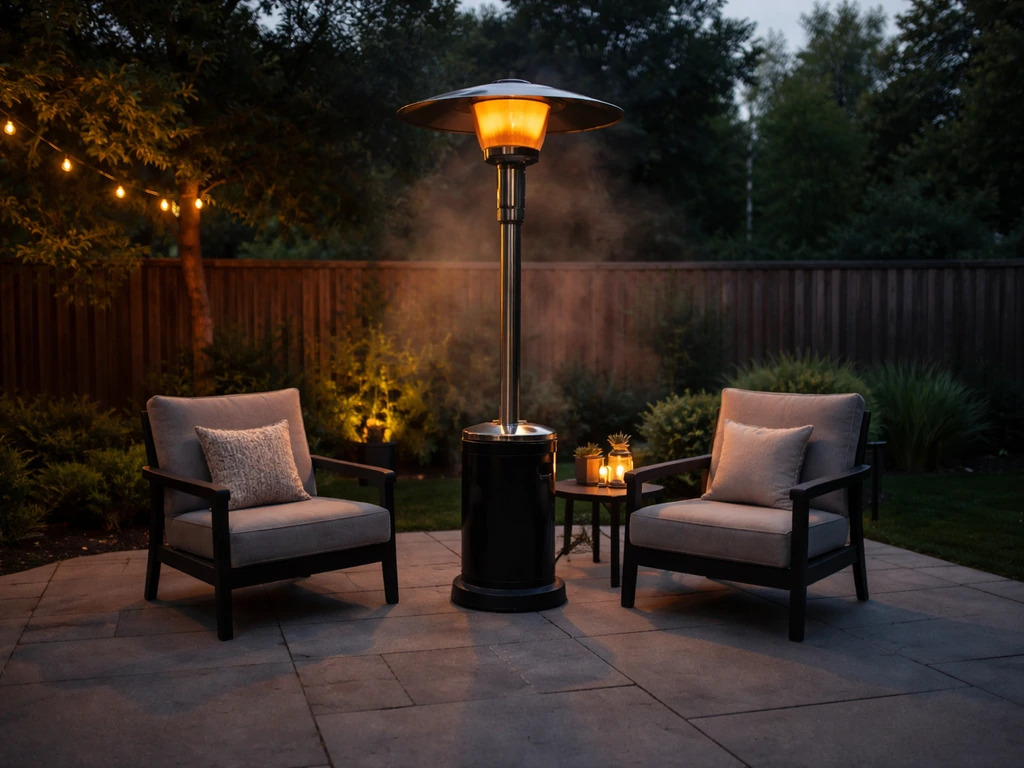
How to choose a patio comfort heater (size, coverage, and layout)
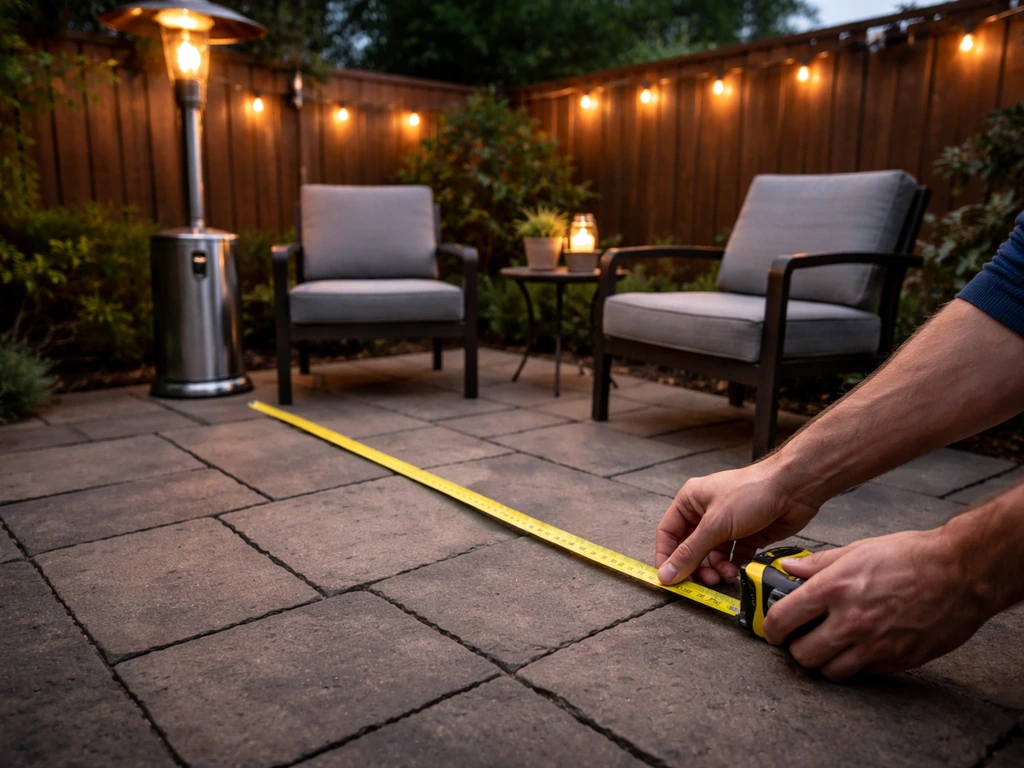
Start with your square footage, then adjust for your actual conditions. A practical rule of thumb: plan on about 20 BTU per square foot of usable seating area. So a 200 sq ft patio needs roughly 4,000 BTU just as a baseline. But that number shifts based on your setup. If your patio is completely open with no walls or overhead cover, add 10 to 20 percent to that estimate. If you have a pergola, overhang, or covered roof, subtract 5 to 10 percent. And if your ceiling is above about 8 feet, think in cubic feet rather than square feet since the heater also has to work against extra open volume above you.
A standard full-size propane patio heater puts out around 40,000 BTU and can realistically cover a circle about 20 feet in diameter, which works out to roughly 314 square feet. That sounds generous, but real coverage shrinks fast once wind and cold air enter the picture. For larger gatherings or blank" rel="noopener noreferrer">patios over 3,500 square feet, check your local fire codes before adding multiple propane units. Some jurisdictions, including guidelines from fire departments in major cities, treat that threshold as a trigger for stricter permitting or safety review.
Layout matters just as much as BTU rating. A single high-output heater placed poorly leaves half your guests cold while the other half roast. Multiple lower-output units placed closer to seating zones almost always deliver better comfort than one massive unit in the center. And if wind is a factor, adding a windbreak, whether that's a fence, lattice, or even a canvas screen, can do more for perceived warmth than bumping up BTU by 10,000. One of the most common buyer regrets I see in reviews is pairing a very high-BTU heater with a low-clearance pergola or running a powerful gas unit on a screened porch with open sides, where heat just bleeds away.
Fuel-type heater reviews: propane vs electric vs natural gas vs pellet
Each fuel type has a genuinely different comfort and convenience profile. There's no universal winner, but there are clear situations where one beats the others.
Propane
Propane is the most popular choice for good reason: it's portable, powerful, and needs no permanent installation. You roll it out, hook up a standard 20 lb tank, and you're heating within minutes. A typical 40,000 BTU floor-standing unit covers that 20-foot diameter zone and runs around 8 to 10 hours on a full tank, depending on the heat setting. The tradeoff is ongoing tank cost and the stability issue that shows up repeatedly in reviews. Several popular models, including some widely sold at home improvement stores, draw complaints about narrow bases tipping in wind. Look for anti-tilt features and an auto-shutoff that cuts fuel flow when the unit tips past about 45 degrees. That's not a nice-to-have, it's a must-have for safety on any open patio.
Electric
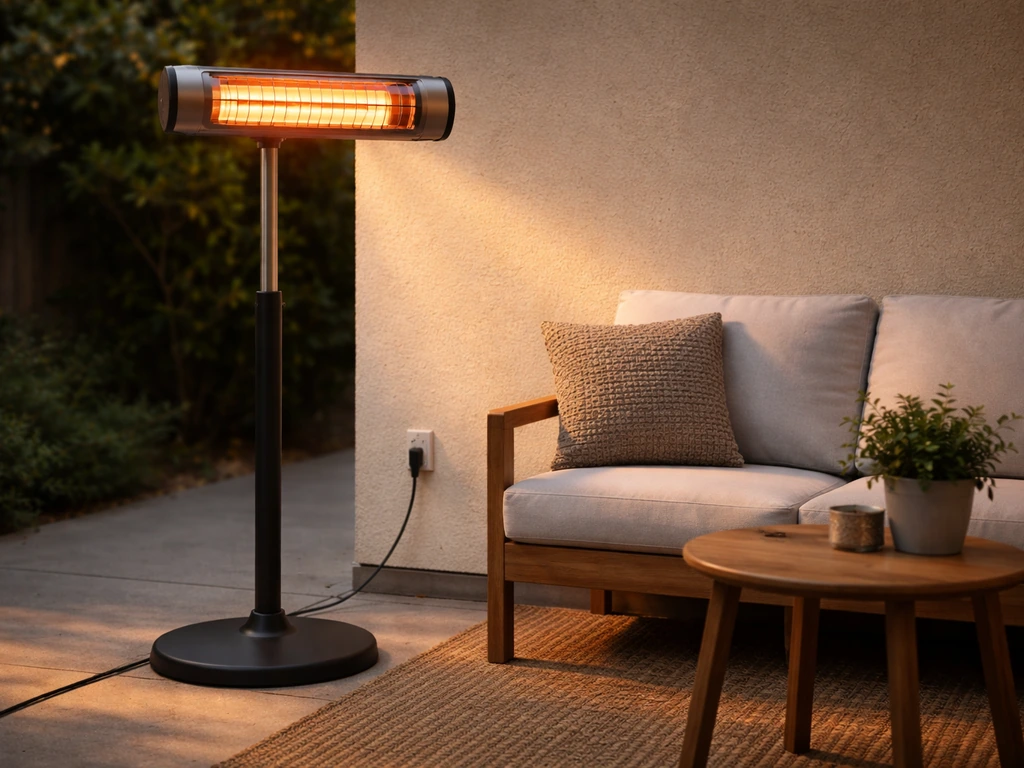
Electric heaters (almost always infrared these days) are the cleanest and simplest option if you have an outlet nearby. No tanks, no fuel cost variability, no combustion byproducts. They come on instantly and can be wall-mounted or ceiling-mounted, which solves the tipping problem entirely. The limitation is output: most electric units top out around 1,500 to 4,000 watts, which translates to roughly 5,100 to 13,600 BTU equivalent. That's enough for a covered patio or a compact space, but it won't keep you warm on a large open deck in a 35-degree night with a breeze. Electric infrared also tends to perform better in covered and semi-enclosed patios, which makes it a natural fit for under-pergola or balcony setups.
Natural gas
Natural gas is the heavy-duty permanent solution. You're running a gas line to the patio, which means upfront installation cost, but once it's in, the fuel cost per hour is lower than propane and you never run out mid-evening. High-end natural gas infrared models like the Bromic Tungsten 500 Smart-Heat output around 43,000 BTU per hour and deliver direct radiant warmth that genuinely feels different from a mushroom-style convection heater. The Schwank outdoor infrared patio heater is another benchmark at 25,000 BTU, which is better matched to smaller or covered areas. Natural gas is the best long-term value for a permanent patio build, but it's overkill if you rent, move frequently, or just want something seasonal.
Pellet
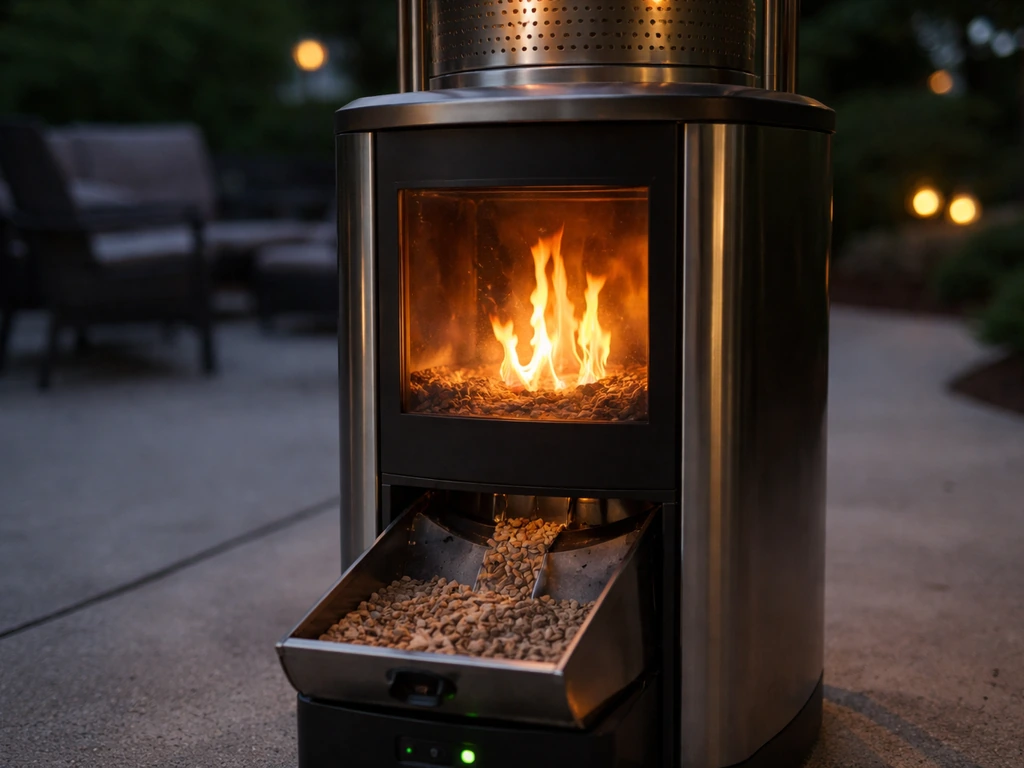
Pellet patio heaters are the most niche of the four. They burn compressed wood pellets and produce a warm, fire-like ambiance that's genuinely appealing. But the recurring complaints in customer reviews, including those for the Even Embers Pellet Patio Heater, consistently flag ignition inconsistency, smoke and soot output that can annoy guests, and uneven heat delivery compared to gas or electric. They need regular cleaning, and runtime depends on pellet quality. Pellet heaters work well as a centerpiece with some supplemental warmth, but I wouldn't rely on one as a primary comfort heater for a cold or windy evening.
| Fuel Type | Typical Output | Portability | Setup | Best For | Main Drawback |
|---|---|---|---|---|---|
| Propane | 30,000–48,000 BTU | High | Plug-and-play | Open patios, events | Tank cost, tipping risk |
| Electric | 1,500–4,000W (~5,100–13,600 BTU eq.) | Medium | Outlet required | Covered/enclosed patios | Lower max output |
| Natural Gas | 25,000–48,000+ BTU | None (fixed) | Gas line required | Permanent large patios | Installation cost |
| Pellet | Varies (~20,000–30,000 BTU) | Medium | Simple setup | Ambiance + light heat | Smoke, ignition issues |
Infrared vs radiant vs convection: what actually feels warm and why
This is the part of patio heater shopping that confuses a lot of people, and it matters more than almost any spec on the box. Here's the core distinction: convection heaters warm the air around them, and that warm air rises and disperses. Outdoors, wind strips it away almost immediately. Radiant infrared heaters work differently. They emit energy that travels directly to people and objects, warming them without needing to warm the surrounding air volume first. That's why standing in front of an infrared heater on a windy evening feels noticeably warmer than standing near a mushroom-style convection heater running the same BTU.
In practical terms, on a covered patio with little wind, both types can feel comfortable. But as soon as the wind picks up or the space opens up, infrared's advantage becomes obvious. The heat literally travels to you. Bromic describes this as heating people, not places, which is a good way to think about it. For open patios, balconies, or any space with airflow, infrared radiant is the right choice almost every time. Convection-style heaters (many older mushroom-top propane units use a convection-heavy design) make more sense in very enclosed or barely-ventilated spaces where air movement is minimal.
One practical note on wind limits: some gas radiant units have explicit wind constraints. Certain models specify not to operate when wind exceeds 15 mph, so even infrared isn't completely immune to very strong gusts. At that point, a physical windbreak around your seating area is the right fix, not a more powerful heater.
Tabletop and small-space heaters for balconies and covered patios
Tabletop heaters are a genuinely useful category for compact spaces: apartment balconies, under-cover dining areas, small cafe-style setups, or any patio where a full floor-standing heater is too big or too expensive. They sit on a table or surface, direct heat at people seated around them, and pack away easily when the season ends. The tradeoff is output, typically ranging from about 10,000 to 15,000 BTU for propane tabletop units, which is enough for a small group at close range but won't heat a 300 sq ft patio.
Safety is the most important thing to get right with tabletop heaters. Propane tabletop models should always include a tip-over shutoff (an auto-shutoff tilt valve that cuts gas flow if the unit falls) and an oxygen depletion sensor, commonly called an ODS. The ODS shuts the heater off automatically if oxygen in the immediate area drops too low, which is critical if you're using a propane unit in a semi-enclosed space. Brands including Fire Sense, Napoleon, and Uline's branded tabletop unit all include these features in their current models. Keep flammables at least three feet away, and make sure the heater is sitting on a stable, level surface. The most common cause of nuisance tip-over shutoffs triggering is an uneven table or surface, which gets flagged repeatedly in troubleshooting guides.
Electric infrared tabletop heaters are a good alternative for covered balconies with an outlet. They have a tip-over safety switch as well and produce zero combustion risk. The Star Patio 1566-CT is one example in this category. They're simpler to use than propane tabletop units and require no ventilation considerations, which makes them easier to recommend for someone who just wants warmth without any setup friction.
- Look for tip-over shutoff and ODS on any propane tabletop model
- Keep the heater on a stable, level surface to avoid nuisance shutoffs
- Maintain at least 3 feet of clearance from flammables and overhead obstructions
- Electric tabletop infrared units are the lower-friction choice for balconies with an outlet
- Don't expect a tabletop unit to heat more than a small group seated directly around it
Performance, safety, and comfort factors to compare before you buy
BTU for gas heaters and watts for electric heaters are the starting point, but they're not the whole story. Here's what else to evaluate when you're reading reviews or comparing specs. If you're comparing patio heat lamp reviews, focus on real-world heat output, stability in wind, and how consistent the ignition and control performance is over time.
Wind performance
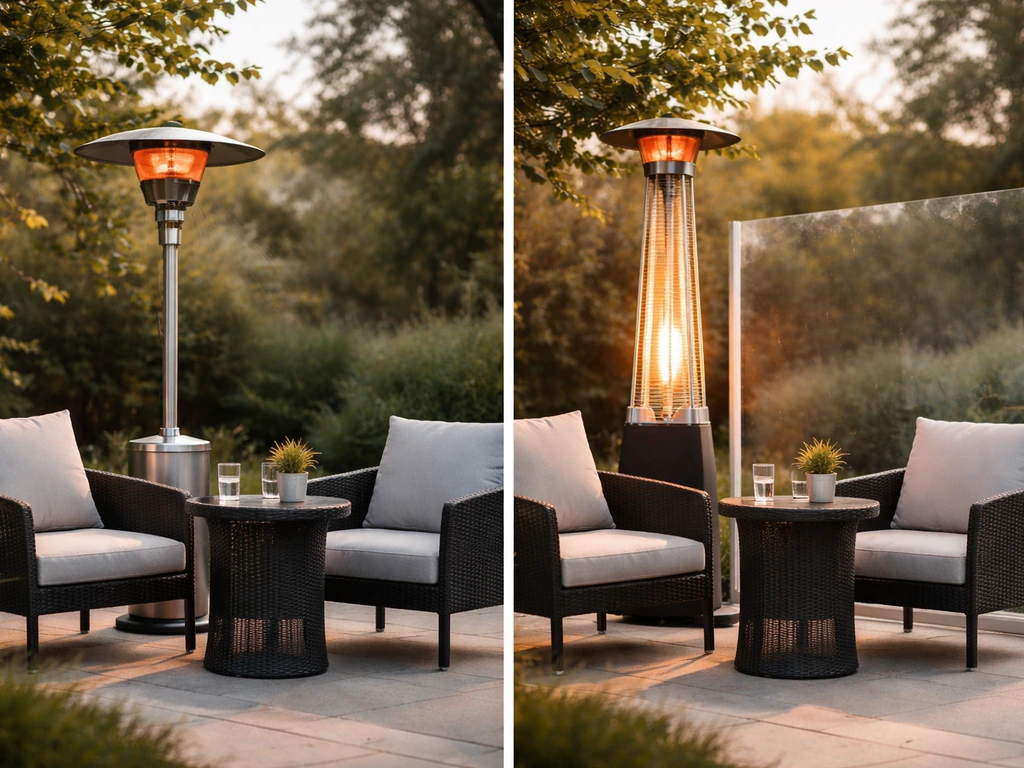
Open-air patios lose heat fast when wind picks up. Infrared radiant models handle this much better than convection designs. If wind is a regular factor in your climate or your patio is exposed, infrared is the safe choice. For gas models, check whether the manufacturer specifies a wind limit. Some do, around 15 mph, meaning you'd need to shelter the heater in strong conditions. Floor-standing propane heaters with a narrow base are also a stability risk in wind, so look for a wide base or consider a wall-mount or ceiling-mount installation instead.
Ignition reliability
Ignition problems are one of the most common complaints across all gas patio heater reviews. If you want to compare options efficiently, reading gas patio heater reviews alongside specs like ignition type and wind limits will help you spot repeat issues early. The typical failure modes: burner won't light, or it lights and then shuts off immediately after ignition. The latter is almost always a thermocouple or ODS issue (the sensor isn't detecting the flame and cuts the gas as a safety measure). It helps to know this because it's usually fixable with cleaning or a replacement part, not a reason to return the whole unit. But if a model has widespread ignition complaints in reviews, that's a red flag for build quality, not just a setup issue.
Controls and convenience
Modern electric and some premium gas heaters come with remote controls, timers, and thermostat settings. These are genuinely useful, not just marketing extras. A timer prevents you from leaving the heater running all night. A thermostat (or multiple heat settings) lets you dial back output on milder evenings and extend fuel or electricity use. Remote control troubleshooting does show up in reviews, typically tied to battery issues or interference, so check that replacement remotes are available for the model you're considering. For basic propane mushroom heaters, the control is just a gas knob, which is simple and reliable.
Safety features checklist
- Anti-tilt shutoff: cuts fuel or power if the heater tips beyond a safe angle (around 45 degrees for most gas models)
- Oxygen depletion sensor (ODS): essential for any propane unit used in partially enclosed spaces
- Stable wide base or fixed mounting: reduces tip-over risk on windy patios
- Clearance ratings: always check manufacturer minimums for overhead and side clearances, especially under pergolas or covered patios
- CSA or UL certification: confirms the unit has been tested to recognized safety standards
Real-world comparison and best picks by scenario
Here's how all of this translates into actual buying decisions based on the most common patio setups and priorities.
| Scenario | Best Heater Type | What to Look For | What to Avoid |
|---|---|---|---|
| Large open patio, windy area | Natural gas or propane infrared radiant | 43,000+ BTU, wall/ceiling mount, wide base stability | Convection mushroom-top designs, narrow-base floor units |
| Covered or semi-enclosed patio | Electric infrared (ceiling/wall mount) | 1,500–4,000W, timer, thermostat setting, UL certified | High-BTU gas without proper clearance from overhead structure |
| Small balcony or tight space | Electric tabletop infrared or propane tabletop | Tip-over shutoff, ODS (propane), stable surface, compact footprint | Full-size floor-standing heaters, high-output propane without ventilation |
| Budget buyer, occasional use | Propane floor-standing (40,000 BTU) | Anti-tilt shutoff, wide base, simple ignition, standard 20 lb tank connection | Very cheap units with no safety certifications or ignition reliability issues |
| Permanent patio build, long-term use | Natural gas infrared (fixed mount) | Licensed install, 25,000–48,000 BTU range, smart controls if desired | Pellet heaters as primary heat source, portable propane for a permanent setup |
For most homeowners with a covered or semi-covered patio in the 150 to 300 square foot range, a wall-mounted or ceiling-mounted electric infrared unit is the most practical pick. It's safe, simple, and very effective when airflow is limited. If your patio is large and open and you entertain regularly, a natural gas infrared heater with a permanent mount is the best long-term investment, even accounting for installation cost. And for a balcony or a small outdoor dining area where you just want to take the edge off on a cool evening, a quality tabletop propane or electric infrared unit with proper safety features is all you need.
One last thing worth knowing: heater covers, placement, and seasonal storage matter more than most buyers expect. If you're shopping for a cover, these patio heater cover reviews can help you compare fit, weather resistance, and durability. A good quality cover extends heater life significantly, especially for propane models left outdoors between uses. If you plan for seasonal trends in patio comfort, focus on storage and weather protection as much as on BTU output seasonal storage. If you're also comparing heat lamp-style directional units for a very targeted seating area, or looking at what the ratings across a wider range of brands look like in aggregate, there's more detail in the related content on this site covering electric patio heater reviews, patio heat lamp reviews, and overall patio heater ratings and reviews. If you want to compare performance side by side, patio heater ratings reviews can help you separate marketing claims from what buyers actually experience patio heater ratings and reviews. Those go deeper on specific brand performance and can help you cross-reference what you're seeing in product listings. If you are comparing patio heater reviews in Australia, the same wind and coverage rules still apply, but you should also match models to local power, tank, and installation norms patio heater reviews australia.
FAQ
Should I size a patio comfort heater by total patio square footage or only the seating area?
Measure the seating footprint you want to heat, not the full patio deck. The common “20 BTU per square foot” baseline applies to usable space where people sit, then you adjust for openness, roof cover, and wind. If your patio has a large walkway or open grass area, exclude that portion or you will overbuy power.
How do I estimate propane tank runtime for real patio comfort heater use?
If you use propane, plan for extra tanks on parties and overnight use. Many heaters can run 8 to 10 hours on high, but real burn time drops with windier conditions and frequent on off cycling. It is smarter to buy one additional tank than to assume a single full tank covers the entire evening.
Can poor placement make a high-BTU patio comfort heater feel weak?
Yes, you can end up wasting BTU if you place the heater where heat cannot “see” people. Start by ensuring a clear line of sight between the radiant source and seated guests, and avoid centering one high output unit if wind corridors can carry heat away. For best comfort, position heaters so each seating zone has coverage, not just the middle of the patio.
What should I check about remotes and timers in patio comfort heater reviews?
Remote controls and timers can be worthwhile, but check replacement availability before you rely on them. If the remote uses batteries or has a limited pairing range, you may experience intermittent operation in winter when temperatures drop. Also verify whether the timer shuts down fully or just reduces output, since some models cycle power differently.
Do electric patio comfort heaters require a special electrical setup?
Electric infrared can work very well under pergolas, but you still need to confirm the circuit can handle the load. A 1,500 to 4,000 watt heater may be fine on a dedicated outlet, yet it can trip breakers if you run other high draw appliances on the same circuit. Look at the heater wattage and your outdoor outlet amperage before buying.
What should I do if my patio comfort heater has a stated wind limit?
Wind limits are not just marketing, especially for gas models that specify an operating maximum around 15 mph. If your yard frequently exceeds that, add a physical windbreak around the seating zone instead of increasing BTU, because radiant comfort depends on how much heat reaches people before gusts disperse it.
Are tabletop propane heaters safe for screened patios, and what safety features are non-negotiable?
Tabletop propane heaters should only be used if they include both tip-over shutoff and an oxygen depletion sensor (ODS). If either safety feature is missing, treat the unit as unsuitable for semi-enclosed areas like screened porches. Also place it on a level surface, because uneven tables commonly trigger nuisance shutoffs.
Why does my patio still feel cold even when the heater is on full power?
In cold weather, effective warmth is often limited by airflow and mounting height rather than the heater’s advertised BTU. For open patios, prioritize infrared radiant models and consider directing heat slightly lower toward guests, within the manufacturer’s clearance guidance. For convection style units, the same BTU usually feels less effective outdoors because wind removes warmed air quickly.
Is natural gas always the best patio comfort heater choice, or is propane better in some cases?
Natural gas is usually the best long-term option if you will use the patio frequently and want predictable costs. However, it only makes sense when the installation fits your layout, because running a line and choosing a permanent mount can be expensive. If you move often or only use the patio seasonally, propane or electric typically gives better value.
How can I tell whether a gas heater’s ignition issues are fixable or a red flag?
Look for repeated mentions of ignition failures, flame detection problems, and fast shutdown in reviews. If symptoms are “lights then shuts off immediately,” the underlying cause is often sensor related (thermocouple or ODS), which may be fixable with cleaning or a replacement part. Widespread ignition complaints across reviewers are a stronger signal of build quality than isolated issues.