
Ace Hardware carries tabletop propane patio heaters from brands like SUNHEAT and AZ Patio Heaters, with outputs ranging from around 11,000 BTU up to 48,000 BTU. These compact units sit directly on a table or flat surface and throw heat in a tight radius, typically warming a zone of roughly 10 to 15 square feet around the heater. If you need warmth for two to four people gathered around a small table, a tabletop propane model from Ace is a genuinely practical pick. If you want plug-in electric or infrared convenience instead, Ace's in-store and online selection is narrower in the tabletop category, so it's worth knowing your options and doing a quick availability check before you head in.
Table Top Patio Heater at Ace Hardware: Buying Guide

Willa Brennan
27 May 2026
What a tabletop patio heater actually is (and what it isn't)
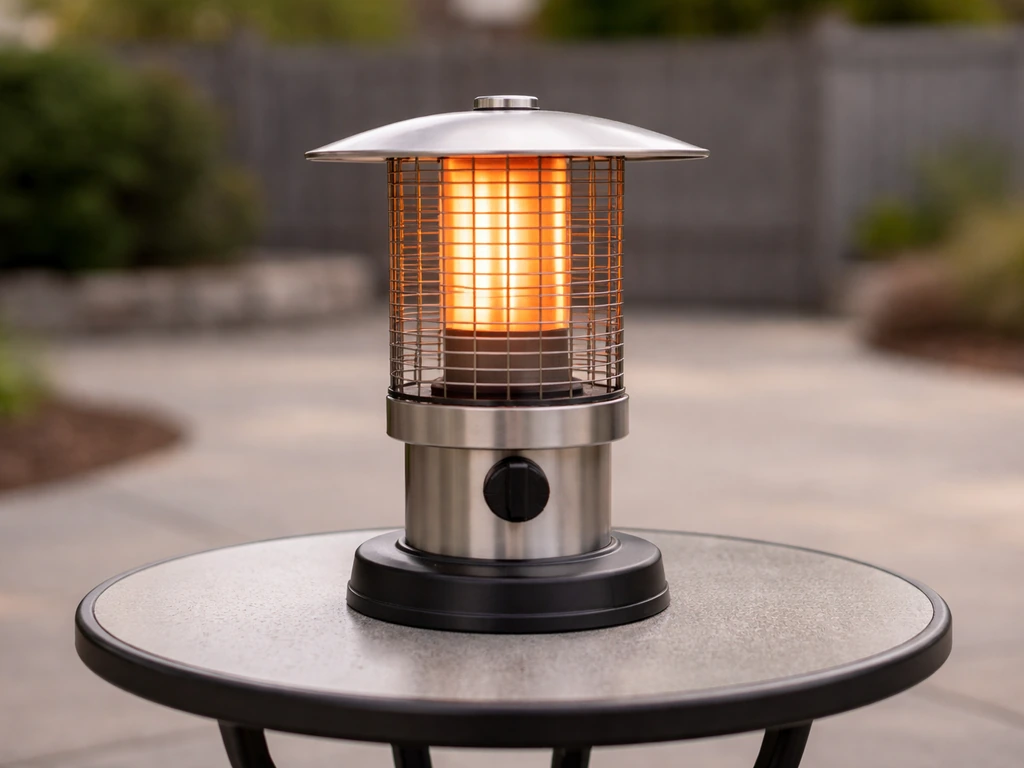
A tabletop patio heater is a compact, freestanding unit you place on top of a table, countertop, or flat outdoor surface. It's not a full-size mushroom-cap tower heater on a pole, and it's not a wall-mount infrared panel. The whole point is portability and proximity: you put it where the people are, and it warms the air and surfaces directly around it rather than trying to heat the whole deck.
Most tabletop models sold at Ace Hardware are propane-fueled. They connect to a small 1-lb propane canister (the kind you'd use for a camp stove) or, in higher-output models, to a standard 20-lb tank via a hose and regulator. A 48,000 BTU model like the AZ Patio Heaters HLDS01-SSHST is a serious heat source despite its tabletop footprint, though that output comes with a larger burner head and a bulkier profile than the lighter 11,000 BTU SUNHEAT-style units. Electric and infrared tabletop heaters exist, but they tend to show up more at big-box stores than at Ace, so you may need to order online if that's what you want.
The key distinction to keep in mind: tabletop heaters are designed for zone warming, not area heating. Don't expect one unit to keep a large open deck warm on a cool evening. Do expect it to make a small table gathering noticeably more comfortable.
Choose the right heater for your patio size and wind exposure
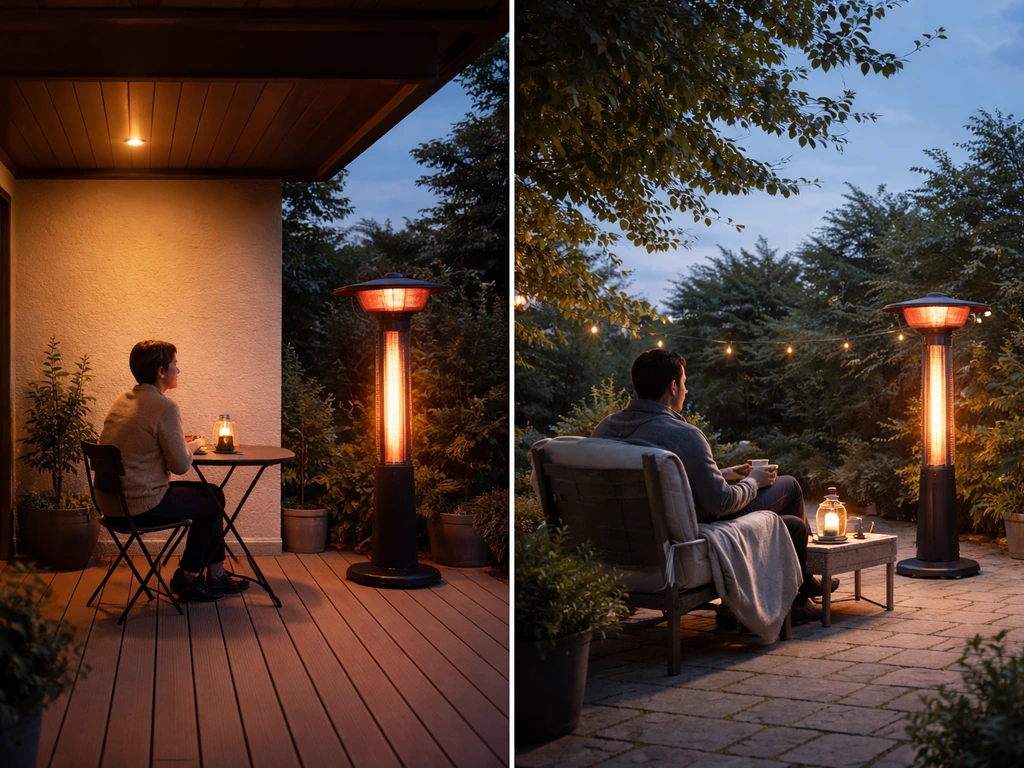
Before you buy, think about three things: how much space you're actually trying to warm, whether your patio is covered or open, and how windy it gets. These factors determine whether a tabletop heater will work for you at all, and which output level makes sense.
Patio size and how many people you need to warm
Ace Hardware's own product listings describe tabletop heaters as covering very small areas, around 15 square feet in many cases. That's basically a four-person bistro table. If you're sitting right next to the heater, you'll feel it. If you're across a large dining table, you probably won't. For a small patio set (two to four seats), one tabletop heater placed centrally works well. For a larger group or a bigger table, you'd need two units or a step up to a freestanding tower heater.
Covered vs. open patios
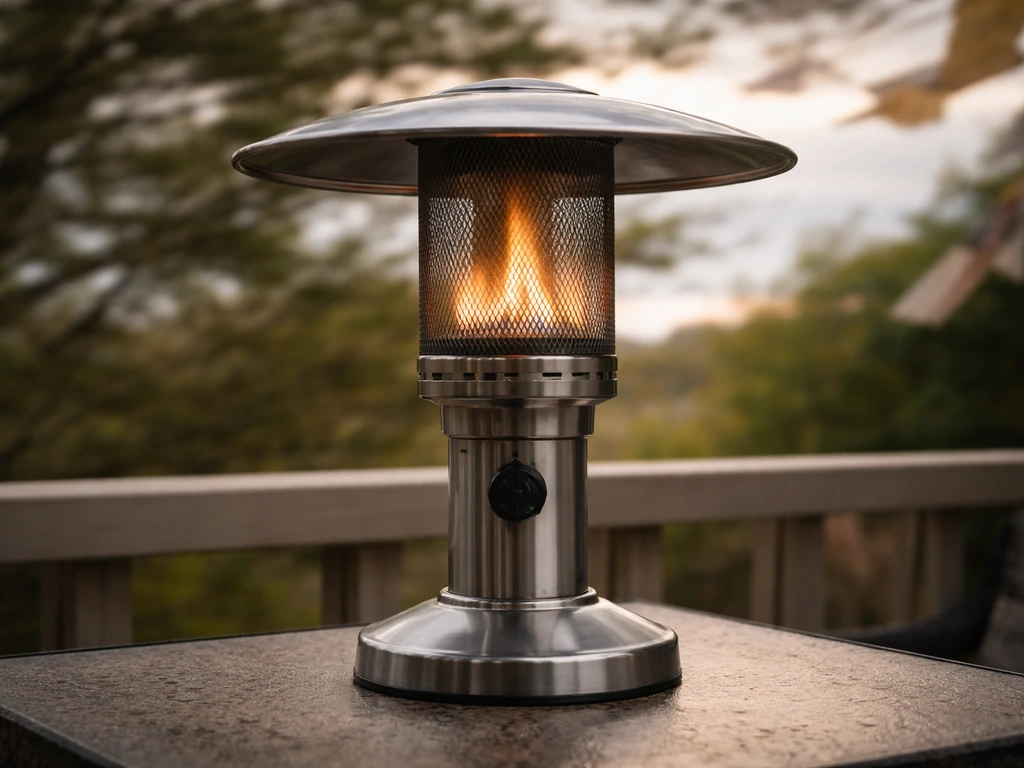
A covered or semi-enclosed patio retains heat better, which means a lower-output unit (say, 11,000 BTU or a 1,500-watt electric) can do more work than the same unit on a fully open deck. On an open, uncovered patio, wind strips heat away quickly, and you'll want a higher-output propane model positioned close to your seating. Under a pergola or a covered porch, even a modest tabletop heater can make a real difference. Just note: propane combustion produces carbon monoxide, so fully enclosed spaces are off-limits. AZ Patio Heaters’ HLDS01-SSH instruction sheet states the tabletop LP-gas heater is designed and approved for outdoor use and provides operational safety guidance propane combustion produces carbon monoxide. More on that in the safety section.
Wind exposure
Wind is the enemy of tabletop heaters. Convection-style propane heaters lose efficiency fast in a stiff breeze because the rising hot air just gets blown away. Infrared tabletop heaters handle wind better because they heat surfaces and objects directly rather than warming the surrounding air. If your patio is regularly exposed to wind, either choose an infrared model or add a simple windbreak (a privacy screen or patio wall) and position the heater on the sheltered side of the table.
Ace Hardware shopping checklist
Whether you're buying in-store or ordering through Ace's website for local pickup, run through this checklist before you finalize anything.
- Check local store availability online before driving in. Ace's inventory varies significantly by location, and tabletop heater stock can be thin outside of peak season.
- Confirm the BTU output and coverage area listed on the product page. The AZ Patio Heaters 48,000 BTU model and the SUNHEAT 11,000 BTU unit are very different tools despite both being called 'tabletop patio heaters.'
- Find out what fuel source and tank size the heater requires. Some models use a 1-lb disposable canister; higher-output units need a 20-lb tank with a separate regulator hose. Ask if Ace stocks the compatible tank or adapter if you don't already have one.
- Look at the base dimensions and weight before you buy. A larger tabletop propane unit can be heavy and may need a reinforced table surface. Make sure your table can handle the weight and has a flat, stable top.
- Ask about the return window and whether the heater can be returned if it's been used. Ace Hardware's return policy can vary by franchised location, so clarify this upfront, especially for seasonal items.
- Check for included accessories like a cover, ignition tool, or pressure regulator. Some kits include them; others require a separate purchase.
- Verify whether the model requires any assembly and if hardware is included. Most tabletop heaters are simple to set up, but a few require attaching a burner head or base components.
Electric vs. infrared vs. propane tabletop heaters: the honest tradeoffs
These three fuel types work in genuinely different ways, and the right one depends on your setup, not just your preference. Here's a straightforward comparison.
| Type | Heat Output | Best For | Handles Wind? | Needs Fuel/Cord? | Ace Availability |
|---|---|---|---|---|---|
| Propane (convection) | 11,000–48,000 BTU | Open patios, larger groups, no outlet nearby | Poorly | Propane tank or canister | Good, multiple models listed |
| Infrared (electric) | 1,000–1,500 watts | Covered patios, windy spots, plug-in convenience | Well | Electrical outlet required | Limited, mostly online |
| Infrared (propane) | 10,000–20,000 BTU | Moderate wind, no outlet, targeted warmth | Moderate | Propane canister | Limited, check local stock |
Propane convection models
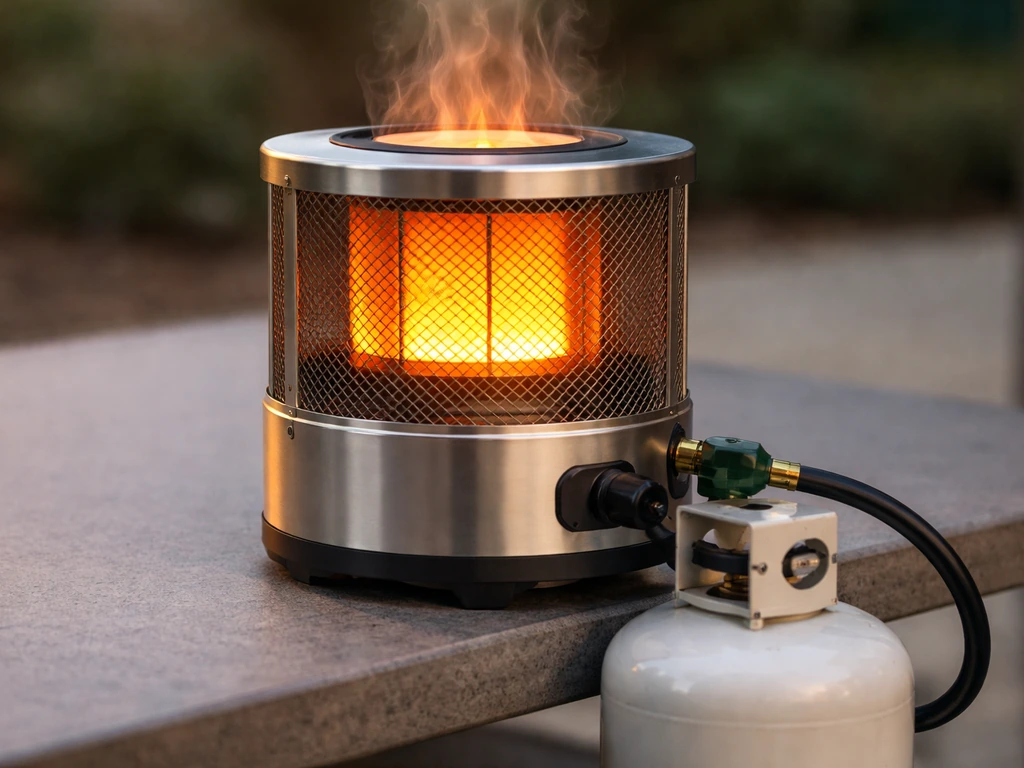
These are the most common tabletop heaters you'll find at Ace. They burn propane to heat a metal element and push warm air outward and upward in a cone. The higher the BTU, the wider and stronger the heat envelope. A 48,000 BTU unit runs hot enough to feel through clothing several feet away, while an 11,000 BTU model is more like a warm glow for people directly next to it. Runtime on a 1-lb canister is typically one to two hours at full output, so a 20-lb tank (with the right regulator hose) is a much better choice for an evening on the patio.
Electric infrared models
Plug-in infrared tabletop heaters use a quartz or ceramic element to emit infrared radiation, which heats people and objects directly rather than heating the air. They turn on instantly, require no fuel, and work much better in breezy conditions than propane convection models. The tradeoff is the power cord: you need an outdoor-rated extension cord and an outlet within reach. Output tops out around 1,500 watts (roughly 5,100 BTU equivalent), so they're less powerful than a high-output propane unit. They shine on a covered patio where you just want consistent, hassle-free warmth.
Which one should you actually buy?
If your patio has no outlet nearby and you want real heat output for an open space, go propane. If you have a covered porch, a nearby outlet, and hate dealing with fuel canisters, an electric infrared model is more convenient and more wind-tolerant. If you're at Ace specifically and want to buy today, propane tabletop models are your most reliable in-store option. Electric infrared tabletop units may require an online order through Ace's website or a visit to a competing retailer. For context, stores like Home Depot, Lowe's, and Costco tend to carry a broader electric and infrared tabletop selection, which is worth considering if that fuel type is your priority. If you are specifically shopping for a table-top patio heater costco, compare the exact BTU rating and fuel type so you can match it to your patio size and wind exposure Costco tend to carry a broader electric and infrared tabletop selection.
Safety, placement, and covered-space rules
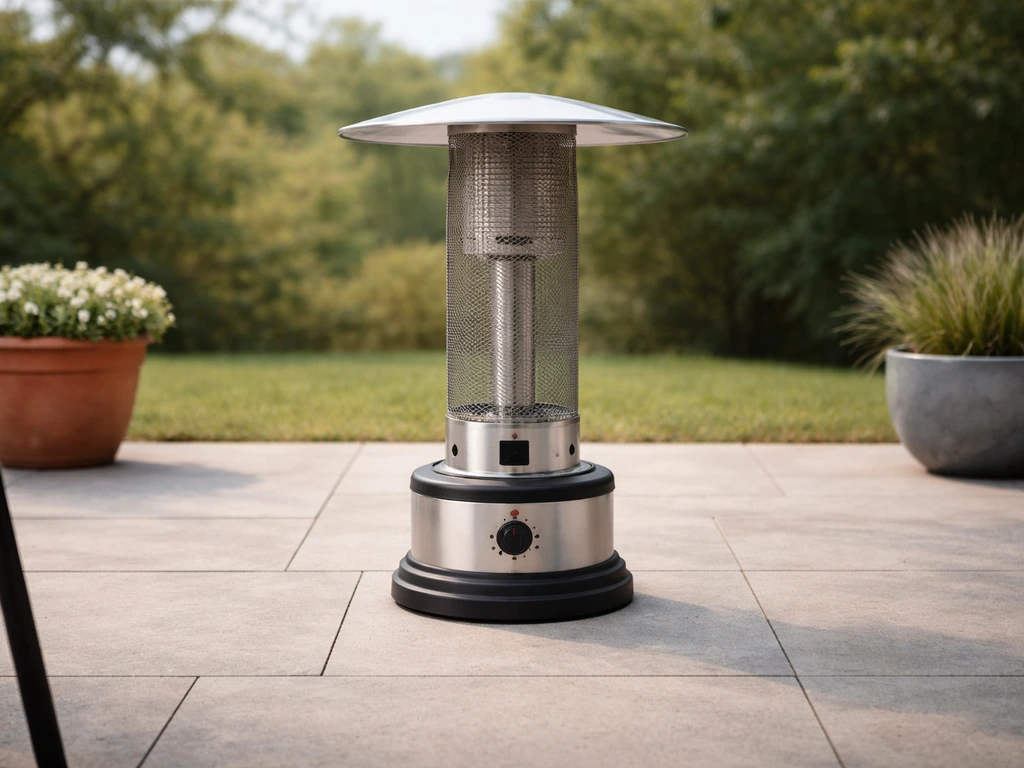
This section isn't filler. Tabletop heaters concentrate a lot of heat in a small footprint, and a few placement mistakes can create real hazards.
- Never use a propane tabletop heater indoors or in a fully enclosed space. Propane combustion produces carbon monoxide, which is odorless and dangerous. The AZ Patio Heaters instruction manual explicitly states outdoor-only use.
- Under a covered porch or pergola is generally fine, as long as there's adequate airflow on the sides and the heater is not directly under a low overhead structure. Maintain at least 3 feet of clearance above the burner head.
- Keep the heater at least 2 to 3 feet away from tablecloths, cushions, umbrellas, curtains, and any fabric or flammable material. A tablecloth draped over the edge of a table near a burner is a serious fire risk.
- Set the heater on a stable, level, non-flammable surface. Most tabletop propane heaters have a relatively small base for their height, so make sure the table itself is heavy and level enough that the heater won't tip.
- Look for a tip-over safety shutoff. Most quality tabletop propane heaters include an ODS (oxygen depletion sensor) or a tip-over cutoff valve that shuts off the gas if the unit is knocked over or tilts significantly.
- Keep children and pets at a safe distance. The burner head and surrounding metal get very hot during operation.
- After use, turn off the gas at the tank valve, not just the heater knob, to prevent slow gas leaks from a worn regulator.
How to use, maintain, and fix common problems
First-time setup
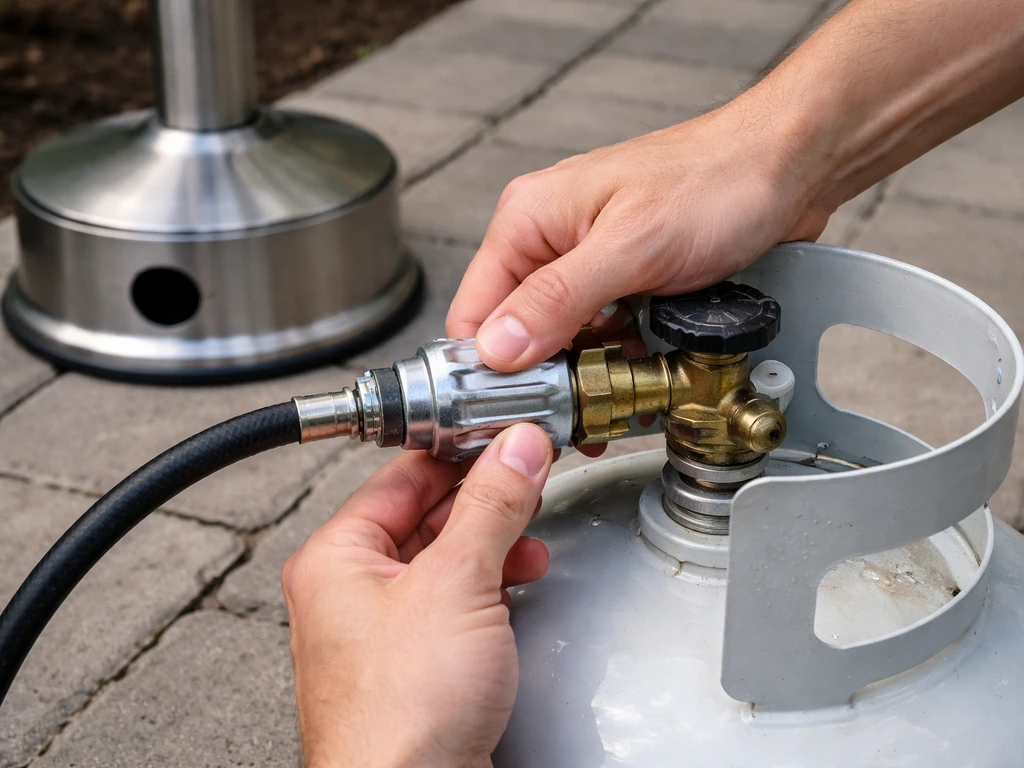
Most tabletop propane heaters assemble in under 15 minutes. Attach the burner head to the base column, connect the regulator to your propane tank, and ensure all fittings are hand-tight before doing a leak test. Apply soapy water to all connections and look for bubbles when the tank valve is open. No bubbles means you're good. If you see bubbling at a fitting, close the tank, tighten the connection, and retest before lighting.
Lighting it
Most models use a push-button piezo igniter. Open the tank valve, turn the heater control knob to the 'pilot' or 'ignite' position, press and hold the knob while pressing the igniter button repeatedly until the pilot lights, then hold for 15 to 30 seconds to let the thermocouple heat up before releasing. If you release too quickly, the flame will go out. If it won't light after several tries, the piezo igniter may need replacing, or the thermocouple needs more time to warm. A long-reach butane lighter is a reliable backup if the piezo fails.
Troubleshooting common issues
| Problem | Likely Cause | Fix |
|---|---|---|
| Heater won't ignite | Piezo igniter dead or pilot orifice clogged | Use a long-reach lighter; clean orifice with a soft brush or compressed air |
| Flame goes out immediately after lighting | Thermocouple not heated long enough, or thermocouple faulty | Hold knob pressed for a full 30 seconds; replace thermocouple if still failing |
| Heat output feels weak | Low tank pressure (cold weather or nearly empty tank), or regulator in bypass mode | Warm the tank slightly, reset regulator by closing tank and reopening slowly |
| Heater works but flame is yellow/orange instead of blue | Burner ports clogged with debris or spider webs | Clean burner ports with compressed air; inspect and clear any blockage |
| Regulator clicks into bypass mode (safety shutoff) | Tank valve opened too fast | Close tank fully, wait 30 seconds, then open valve slowly and steadily |
| Heater tips over easily | Surface is uneven or windy conditions | Place on a flat, heavy surface; use a sandbag or weighted base if available |
Seasonal maintenance
At the end of the season, disconnect and store propane tanks outside in a well-ventilated area (never inside your home or garage). Cover the heater with a weather-resistant cover to protect the burner from moisture, insects, and debris. Check the burner ports and orifice at the start of each season and clean them before first use. If the regulator shows any signs of cracking or stiffness, replace it before lighting the heater.
Quick shortlist: match features to your budget and needs
Rather than pointing to a single winner, here's how to quickly narrow to the right model type for your situation. Use this before you head to Ace or browse their site.
| Your situation | What to look for | Output target |
|---|---|---|
| Small covered patio, outlet available, prefer no fuel hassle | Electric infrared tabletop heater with tip-over shutoff and 180-degree directional element | 1,200–1,500 watts |
| Open patio, 2–4 people around a bistro table, occasional use | Compact propane tabletop heater using 1-lb canisters, with push-button ignition and ODS safety | 10,000–15,000 BTU |
| Open deck, 4–6 people, cooler evenings, want real heat | Higher-output propane tabletop heater compatible with 20-lb tank via regulator hose | 40,000–48,000 BTU |
| Windy patio, no outlet, want better wind performance than convection | Propane infrared tabletop heater with radiant emitter panel | 10,000–20,000 BTU |
| Budget under $80, occasional use only | Entry-level propane tabletop heater using 1-lb canisters; check Ace clearance rack or end-of-season sales | 10,000–12,000 BTU |
A few final things worth checking at Ace before you buy: confirm the model in-store matches the spec sheet online, since tabletop heater models sometimes get updated mid-season. Ask if the store has the matching 1-lb propane canisters or a 20-lb tank adapter in stock, because walking home with a heater and no fuel is a frustrating experience. And if you're not sure between a tabletop and a freestanding stand heater, consider that freestanding models heat a wider radius but aren't portable in the same quick, grab-and-go way. For a dedicated patio table setup with two to four people, a tabletop model is genuinely the more practical tool. If you want to shop online instead, searching for a table top gas patio heater on Amazon can help you compare current prices and availability quickly table top gas patio heater amazon. If you’re shopping around Black Friday deals, focus on tabletop propane models that fit your small-table coverage needs and match the fuel setup you have table top patio heater black friday.
FAQ
Does a table top patio heater at Ace use a 1-lb propane canister or a 20-lb tank?
Most tabletop propane units use a 1 lb canister, but higher-output models may require a 20 lb tank with a specific regulator hose. Before you leave Ace, confirm the exact fuel connection your model uses (canister-only vs. tank-and-regulator) so you do not end up with the wrong propane setup at home.
What surface and spacing requirements should I follow for a tabletop propane patio heater?
If your heater is meant for a table, keep the base on a stable, level surface and do not place it on a wobbly chair or uneven tabletop. Also maintain clearance from the table surface, umbrella fabric, and nearby furniture, since radiant heat and hot components can damage plastics and scorch fabrics even when the flame is small.
Will a privacy screen help a propane table top patio heater in windy conditions?
Use a windbreak if you get gusts, but keep it behind the heater relative to the wind direction (the sheltered side of your table). Do not enclose the heater fully or place it under a canopy that traps exhaust, propane combustion still creates carbon monoxide risk.
How do I check for propane leaks on a tabletop patio heater?
A simple soapy-water leak test is appropriate on propane connections, and you should repeat it any time you swap tanks or notice a fitting that was disturbed. If bubbles appear, close the tank, tighten, and retest before lighting, do not try to “burn it off” or ignore the issue.
Why won’t my tabletop propane patio heater stay lit after I ignite it?
For propane units, ignition can fail if the thermocouple does not warm long enough after lighting. When the pilot lights, keep the control knob held for the manufacturer’s recommended hold time (commonly 15 to 30 seconds) before releasing, otherwise the flame may shut off.
Can I use an extension cord with an infrared table top patio heater from Ace, and what should I watch for?
Electric infrared tabletop heaters can work with a proper outdoor-rated extension cord, but the cord must match the heater’s power draw and be suitable for outdoor use. If you are using a long cord, undersizing can cause voltage drop and poor performance, check the wattage and cord rating before buying.
What should I do if one tabletop heater does not warm the whole table?
Tabletop heaters create a warm zone, not an all-over patio heat source. If you can feel it on one side of the table but not the other, add a second unit centrally on the other side of the grouping, or consider a freestanding tower heater for coverage across the whole table.
Should I choose propane or infrared for a patio that is often windy?
Yes, but placement matters. If you choose propane for an open patio, position it as close to your seating as safely possible within clearance guidelines, since wind strips heat away from the air. If you are frequently in gusty conditions and want less sensitivity to wind, infrared is typically easier to live with.
What maintenance steps should I do before the first use of the season?
At startup, clean the burner ports and inspect the orifice before first use each season. If the regulator shows cracking or stiffness, replace it before lighting, worn regulators are a common cause of unstable flame or poor performance.
How should I store a tabletop patio heater and propane tank between seasons?
Do not store propane tanks or keep them indoors between uses. Store tanks outdoors in a well-ventilated area away from ignition sources, and cover the heater to protect the burner from moisture, insects, and debris.