
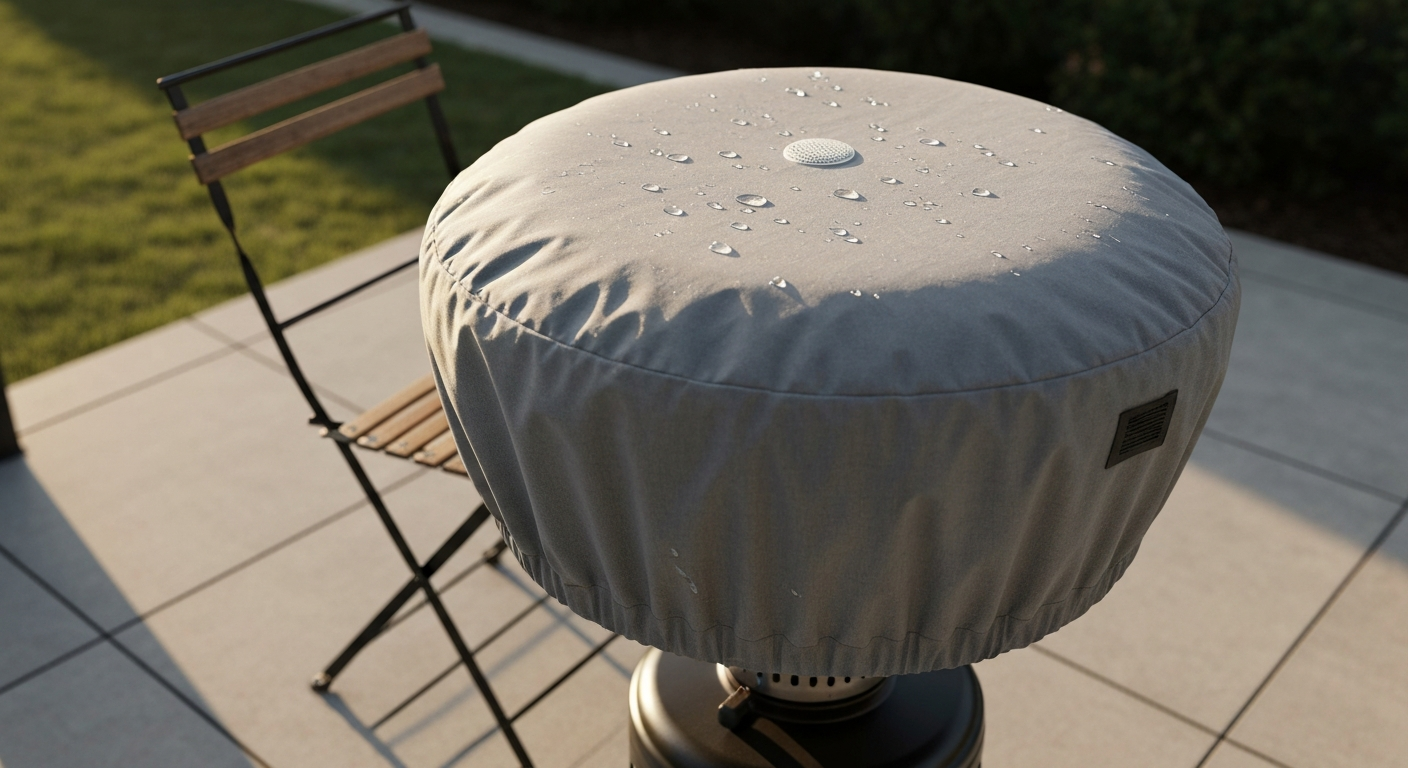
A good tabletop patio heater cover costs between $15 and $55, fits snugly over a cooled-down heater, and buys you months of extra life from rain, UV, and mildew. The single rule that matters most: never put a cover on a heater that is still warm. Every major manufacturer, from Fire Sense to Mr. Heater to the Uline H-series, includes that warning in their manuals, and it applies regardless of what material the cover is made from.
Table Top Patio Heater Cover: Buy, Size & Maintain Guide

Willa Brennan
11 Aug 2026
TL;DR: Quick Buying Recommendations
If you just need a fast answer, here is where I would point you depending on your budget and situation.
- Budget pick (under $20): A 210D polyester Oxford cover with a drawcord hem. It won't last five seasons in a harsh coastal climate, but for covered patios and mild weather it is perfectly fine. Look for Nuu Garden or AmazonBasics-compatible options around $15 to $18.
- Mid-range pick ($20–$35): Classic Accessories Veranda 21-inch round tabletop cover. Gardelle woven polyester with a water-resistant laminated backing, a full-length zipper, padded handles, air vents, and an elastic hem cord. Two-year limited warranty. This is the one I'd recommend to most people.
- Premium pick ($35–$55): A 600D polyester or solution-dyed acrylic cover with taped seams, dual air vents, and a locking buckle strap. Worth it for uncovered patios in high-UV, humid, or coastal environments.
- Best for glass-tube heaters: Look for a tall tower-profile cover with a padded or foam-lined interior. Standard dome covers won't clear the tube assembly on glass-tube models without putting stress on the glass.
- Best for halogen heaters: A close-fit cover with ventilation mesh at the top. Halogen tabletop heaters tend to have exposed quartz elements that need airflow even in storage to prevent dust caking.
- Heat-resistant use case: No consumer-grade polyester or vinyl cover is rated for use while the heater is running. If you genuinely need a heat-barrier wrap (for transport or workshop storage next to a hot surface), look at silicone-coated fiberglass products rated for continuous service up to around 260°C (500°F), not a standard patio cover.
Top Picks Broken Down by Budget and Style
The table below pulls together the key specs you actually need to compare covers side by side. Prices reflect typical online retail pricing as of mid-2026.
| Cover / Tier | Material | Typical Size | Key Features | Warranty | Price Range | Best For |
|---|---|---|---|---|---|---|
| Nuu Garden Round Tabletop Cover (Budget) | 210D polyester, PU-coated | 18–21 in. diameter | Drawcord hem, basic water resistance | 90 days | $13–$18 | Covered patios, mild climates |
| Classic Accessories Veranda 21 in. (Mid-Range) | Gardelle woven polyester, water-resistant laminate | 21 in. round | Full-length zipper, padded handles, air vents, elastic hem cord | 2 years | $22–$30 | Most round tabletop heaters, everyday outdoor use |
| Modern Leisure Premier Tower Cover (Mid-Range) | 420D Oxford polyester, PVC-coated | 11 in. W x 28 in. H | Velcro strap, storage bag | 1 year | $25–$35 | Tower/column-style tabletop heaters |
| Classic Accessories Ravenna 600D (Premium) | 600D polyester, laminated backing | 21 in. round or custom | Taped seams, dual vents, buckle strap, reinforced handles | 2 years | $38–$52 | Uncovered patios, coastal and high-UV climates |
| Glass-Tube Tower Cover (specialty) | 420D–600D polyester, padded lining | Tower profile: ~10–14 in. W x 28–34 in. H | Foam or padded interior, zipper closure | Varies | $28–$45 | Glass-tube tabletop heaters |
| Halogen Heater Vented Cover (specialty) | 210D–420D polyester with mesh vent panel | Heater-specific fit | Top mesh vent, elastic hem | Varies | $18–$32 | Halogen tabletop heaters in storage |
| Silicone-Coated Fiberglass Wrap (heat-resistant) | Silicone-coated fiberglass fabric | Cut to size | Continuous service to ~260°C (500°F), industrial grade | Per vendor | $40–$80+ | Heat shielding and transport only, NOT operational use |
Understanding Tabletop Patio Heaters: Types, Shapes, and Why Fit Matters
Tabletop patio heaters come in more shapes than most people realize, and that directly affects which cover will actually work for you. Getting the wrong profile cover is one of the most common mistakes I see, especially when people buy a generic round cover for a tower-style heater and then wonder why it pools water and never really fits.
Heater types and their cover implications
- Propane tabletop heaters: Usually dome or mushroom-top profiles with a widened reflector and a squat base that holds a small propane cylinder. They need dome-profile covers with a roomy top and a snug base closure to keep the burner assembly dry.
- Electric tabletop heaters: Wide variety of shapes, from flat-panel radiant units to small tower designs. Measure each dimension individually — there is no standard profile.
- Infrared tabletop heaters: Often tower-shaped with an exposed quartz or carbon fiber element. Need a cover that does not press tightly against the element housing. A padded or stiffened interior helps.
- Halogen tabletop heaters: Compact units with exposed quartz tubes. As covered separately in our tabletop halogen patio heater guide, these need ventilated covers to prevent moisture and dust from collecting directly on the element.
- Glass-tube tabletop heaters: Tall, slender, visually dramatic designs. As detailed in our table top glass tube patio heater coverage, the glass envelope is fragile under side pressure — a well-fitted tower cover with some internal clearance is essential.
- Round/dome-top heaters: The most common tabletop style. Covers are widely available and standardized around 18, 21, and 24-inch diameter openings.
- Tower/column-style heaters: Taller and narrower than dome tops. Need a cover that matches height and width rather than diameter.
The shape mismatch problem is real. A dome cover on a tower heater acts like a sail in wind and can blow off repeatedly. A tower cover on a dome heater creates air pockets that trap moisture and speed up corrosion. Match the profile first, then check dimensions.
Materials and Construction: What Actually Matters
Cover materials fall into four practical categories. Each has a real use case and real trade-offs, so I'll be straight about where each one belongs.
Polyester Oxford (210D, 420D, 600D)
This is the most common cover material and the baseline for comparison. The 'D' stands for denier, which is a measure of yarn thickness and density. Higher denier means heavier, more tear-resistant fabric. A 210D cover is fine for covered patios or seasonally dry climates. A 600D cover with a PU or laminated backing holds up much better in rain-heavy or UV-intense conditions. The trade-off is that PU and PVC coatings can become brittle with prolonged UV exposure over several seasons, so even premium polyester covers eventually need replacing. PVC-coated versions are typically rated for continuous use between 0°F and 180°F (0–82°C), which means they are not rated for any contact with a heater still generating heat.
Vinyl / PVC-Coated Polyester
Heavier and more water-resistant than standard polyester, vinyl-coated covers handle standing water well and are easy to wipe clean. The downside is stiffness in cold weather and a tendency to crack or peel at folds with age. They work well for uncovered patios in rainy climates where the cover goes on after every use. They're less ideal for high-UV environments because PVC degrades faster in prolonged sunlight than solution-dyed materials.
Solution-Dyed Acrylic (Sunbrella-Type)
Solution-dyed acrylic fabric like Sunbrella is the premium choice for UV and color retention. Because the pigment is built into the fiber rather than applied as a surface dye, it doesn't fade or chalk like coated polyester. Sunbrella technical datasheets document excellent mildew resistance and straightforward cleaning with mild soap and water. For homeowners in high-UV climates (Southern California, Arizona, Florida, coastal regions) who leave covers on year-round, this is the one category of material worth paying up for. Covers made in this material are less common for tabletop heaters specifically, but they exist in the premium range.
Heat-Resistant Industrial Fabrics
Silicone-coated fiberglass and PTFE-coated fiberglass fabrics (like Saint-Gobain's A2005 series) offer continuous service temperatures up to 260°C (500°F). These are industrial materials, not consumer patio covers. I'm including them here for clarity: if someone searches for a heat-resistant tabletop patio heater cover thinking they can cover a running heater, the answer is still no. No cover is designed or approved for operational use over a live heater. These industrial fabrics are relevant only for transport protection or workshop heat-shielding scenarios, not for outdoor patio storage.
Material comparison at a glance
| Material | Water Resistance | UV Resistance | Durability | Cold Flexibility | Typical Price | Best Use Case |
|---|---|---|---|---|---|---|
| 210D Polyester (PU coat) | Moderate | Moderate | 2–3 seasons | Good | Low | Covered patios, mild climates |
| 420D Polyester (PU coat) | Good | Moderate | 3–4 seasons | Good | Low-Mid | General outdoor use |
| 600D Polyester (laminated) | Very Good | Good | 4–5 seasons | Good | Mid | Uncovered patios, regular rain |
| Vinyl / PVC-coated Polyester | Excellent | Fair | 3–5 seasons | Fair (stiffens) | Mid | Heavy rain, easy-clean needs |
| Solution-Dyed Acrylic | Good (breathable) | Excellent | 5–7+ seasons | Excellent | High | High-UV, coastal, year-round covers |
| Silicone/PTFE Fiberglass | Good | Good | Long (industrial) | Moderate | Very High | Heat shielding only, NOT storage use |
Fastening and Fit Features: What to Look For
The fastening system determines whether a cover stays on in a 30 mph gust or ends up in your neighbor's yard. Here is what each option gives you.
- Drawcord hem: The simplest and most common. Pull the cord tight and tie it under the base. Works well for calm and moderate-wind environments. Can loosen over time as the cord stretches.
- Elastic hem cord: Similar to a drawcord but uses elastic banding rather than a tie. Easier to put on and remove but provides slightly less cinching force.
- Buckle straps: A webbing strap that runs under the heater base and buckles on the other side. Much more secure in wind than a drawcord alone. Worth the extra cost for uncovered or exposed patios.
- Full-length zipper: Allows the cover to open completely flat for easy placement and removal. Classic Accessories uses this on their Veranda line and it genuinely makes a difference if you're covering and uncovering the heater daily.
- Padded handles: Not a fastening feature, but padded handles (also on the Veranda line) make lifting the cover off a heater much easier without scratching the finish.
- Weighted hem: Some covers include small weights or sand pockets sewn into the hem. Useful for very windy yards but adds bulk to the cover when storing.
- Air vents: Mesh-covered vents on the side or top allow air to circulate and prevent pressure buildup (which can cause the cover to balloon and shift in wind). They also reduce condensation inside the cover during temperature swings.
Compatibility Notes: Model-Specific Fits and Retailer Covers
Generic covers work for most standard round dome-top tabletop heaters, but several brands and retailers sell heaters with unusual proportions that require checking before you buy a cover separately.
Uline's H-series tabletop patio heaters (H-5221 and related models) come with specific clearance requirements: 24 inches of clearance above the heater and 36 inches on the sides during operation. Their installation manuals also specify cylinder cover ventilation requirements. If you have a Uline tabletop heater, check whether Uline sells a matching cover through their catalog before buying a generic one. The base and dome dimensions on some Uline models are slightly different from standard consumer dimensions, and a cover that fits loosely enough to flutter against the burner assembly in wind is worse than no cover. See our table top halogen patio heater guide for model-specific dimensions and compatible covers. Our dedicated table top patio heater Uline page has more detail on that model family specifically. See our dedicated table top patio heater Uline page for detailed fit measurements and part numbers for the H-series models. See our table top glass tube patio heater page for model-specific fit details and recommendations.
For style-forward tabletop heaters, including the brushed-stainless or matte-black designer models covered in our style table top patio heater guide, you'll often need a cover that either comes from the original brand or is sized to a close-fit tower profile. These heaters tend to have more complex shapes (tapered bases, wider reflector flanges) that don't always fit standard dome covers cleanly.
A practical compatibility checklist before you buy any cover:
- Measure your heater's maximum width (dome or reflector), base width, and total height.
- Check the manufacturer's website or manual for a recommended cover part number.
- Confirm the cover profile (dome vs. tower) matches your heater's overall shape.
- Verify the cover's stated internal clearance is slightly larger than your measurements — typically 1 to 2 inches of clearance on all sides is ideal.
- If buying from a retailer like Uline, cross-reference the heater model number with their accessory catalog.
How to Choose by Location and Climate
Where and how you use your patio heater matters as much as what heater you have when picking a cover. Here is how I think about it by environment.
Covered patios and sheltered spaces
A covered patio offers natural protection from direct rain and most UV. Here you can use a 210D or 420D polyester cover without worrying too much about premium waterproofing. The main enemy is condensation (temperature swings under a covered patio trap moisture) and dust. A vented cover matters more here than a fully sealed one. Look for mesh vent panels and a snug hem closure.
Uncovered patios and open yards
Fully exposed to rain, sun, and wind, an uncovered patio demands at least a 420D laminated or 600D polyester cover with taped seams. A buckle strap or weighted hem is essential in areas with regular wind. If you live somewhere that gets frequent heavy rain, a vinyl-coated cover is worth the extra stiffness for its superior water shedding.
Humid and coastal climates
Salt air, high humidity, and frequent moisture cycling are brutal on both heater finishes and cover materials. Mildew is the primary threat here, so look for covers that are either breathable (solution-dyed acrylic or vented polyester) or treated with an anti-mildew coating. Avoid fully sealed covers in humid climates because they trap moisture against the heater finish. A breathable or vented cover that allows some airflow will outlast a sealed one in these conditions and protect the heater better.
Cold and wet climates
In climates with freezing winters, PVC and vinyl covers can become brittle and crack at fold points. A 600D laminated polyester cover with some flexibility in cold temperatures is the better choice. Store the cover (and the heater) indoors during the coldest months if possible. If the heater must stay outside, a cover with a full-length zipper is much easier to manage with gloves on than a tight drawcord.
Windy environments
Wind is the number one reason covers fail prematurely, not rain. Covers that blow off and flap against the heater body cause scratches and eventually tear along the hem. A buckle strap that wraps under the base is the single most effective upgrade for windy sites. Air vents also help because they reduce the pressure differential that causes covers to balloon and lift.
High-UV environments
In Sunbelt states and high-altitude locations, UV degradation is the primary material failure mode. PU-coated polyester can chalk, crack, and delaminate within two to three seasons under intense UV. Spending the extra money on a solution-dyed acrylic cover (or at minimum a 600D polyester with UV-stabilized coating) pays off in longevity. Look for covers that explicitly list UV resistance as a specification rather than just water resistance.
Sizing and Measurement Guide
Getting the size right is straightforward if you take three measurements before you shop. Manufacturers typically list cover sizes as diameter (for round dome models) or width by height (for tower models). Here is what to measure and how to interpret the numbers.
What to measure
- Maximum width: For a dome-top heater, measure the widest point of the reflector/dome, not the base. For a tower heater, measure the widest part of the body at any point from top to bottom.
- Base width: Measure the footprint of the base. This is often wider than the body on propane models with a weighted base ring.
- Total height: Measure from the bottom of the base to the very top of the heater, including any finial or cap.
- Dome depth (for dome heaters only): Measure from the outer edge of the dome down to where the body narrows. This helps you confirm the cover's dome cavity will clear the reflector without pressing against it.
Tolerance rules and fit guidelines
A good cover should have 1 to 2 inches of clearance around the widest dimension and 1 to 3 inches of extra height. Too tight and the cover stresses the heater's finish and is difficult to remove. Too loose and wind gets underneath, water pools, and the cover doesn't protect the base opening effectively. Avoid covers that are more than 3 to 4 inches oversized in any dimension.
Sample measurements for common heater types
| Heater Type | Typical Max Width | Typical Height | Recommended Cover Size | Profile |
|---|---|---|---|---|
| Small round dome propane (e.g., tabletop 10,000 BTU) | 16–18 in. | 20–24 in. | 18–21 in. round dome cover | Dome/round |
| Standard round dome propane (e.g., tabletop 12,000–14,000 BTU) | 19–22 in. | 24–28 in. | 21–24 in. round dome cover | Dome/round |
| Glass-tube tower (e.g., 1,500W electric) | 8–12 in. | 26–34 in. | Tower cover 10–14 in. W x 28–36 in. H | Tower/column |
| Halogen tabletop (compact) | 10–14 in. | 18–24 in. | Tower cover 12–16 in. W x 20–26 in. H | Tower/column |
| Uline H-series tabletop | Check manual (typically 18–22 in. dome) | Check manual (typically 22–28 in.) | Model-specific; check Uline catalog | Dome/round |
| Style/designer tabletop (tapered base) | 12–16 in. body, 14–18 in. base | 22–30 in. | Tower or tapered cover per brand spec | Tapered/tower |
Measurement Diagrams and Step-by-Step Templates
These step-by-step measurement workflows replace a visual diagram. Work through the one that matches your heater's shape.
Round / dome-top heater measurement template
- Place the heater on a flat surface and ensure it is fully assembled as it sits when in use.
- Use a flexible tape measure. Stretch it across the widest part of the dome/reflector (point A to point A on the opposite side). This is your dome diameter. Write it down.
- Measure across the widest part of the base (point B to point B). Write it down.
- Measure total height from the floor to the top of the heater (point C). Write it down.
- Measure from the underside of the reflector rim down to the top of the base ring (point D). This is your body height.
- Add 1.5 inches to your dome diameter measurement to get your minimum cover diameter.
- Add 2 inches to your total height to get your minimum cover height.
Square or rectangular heater measurement template
- Measure the widest horizontal dimension side-to-side (point A). Write it down.
- Measure the depth front-to-back (point B). Write it down.
- Measure total height from base to top (point C). Write it down.
- Add 1.5 inches to width and depth measurements for minimum cover dimensions.
- Add 2 inches to height for minimum cover height.
- When buying, confirm the cover is labeled for square/rectangular heaters and check that it cinches at both the top and base.
Tower / column heater measurement template
- Identify the widest cross-section of the tower body. Measure diameter or width at that point (point A). Write it down.
- Measure the base footprint width and depth separately (points B and C). Write both down.
- Measure total height from floor to top, including any finial or cap (point D). Write it down.
- For glass-tube models: measure the outer diameter of the glass tube assembly separately and confirm the cover interior will clear it by at least 1 inch on all sides.
- Add 1 to 2 inches to the body width for the cover width.
- Add 2 to 3 inches to total height for the cover height (tower covers that are too short leave the base exposed).
Safety First: What Every Cover User Needs to Know
This is the section I most want every reader to actually internalize. The safety rules around covers are not boilerplate, they reflect real fire and injury risks. See NFPA, Outdoor Heater Safety Fact Sheet (clearances/installation guidance) for official placement and clearance guidance and the reminder to verify required clearances against each heater’s label or manual blank" rel="noopener noreferrer">NFPA — Outdoor Heater Safety Fact Sheet (clearances/installation guidance).
- Never cover a heater while it is operating. Every major manufacturer manual, from AmazonBasics to Fire Sense to Mr. Heater, explicitly states this. Covering a running heater blocks ventilation, traps heat, and can cause thermal runaway or fire.
- Allow adequate cool-down time before covering. Even after switching off a propane or electric heater, internal surfaces retain heat. Allow at least 30 to 60 minutes of cool-down before placing any cover.
- Propane and natural gas heaters need ventilation clearance during storage, too. Mr. Heater and Uline manuals warn against blocking ventilation openings even when the heater is off. A tight-fitting cover over a propane tabletop heater should not seal the cylinder area completely.
- Maintain code-required clearances. NFPA outdoor heater guidance and UL 1278 (for electric models) require specific clearances from combustible materials. The cover itself is a combustible material, so store the covered heater away from open flames, grills, and ignition sources.
- Check for CPSC recalls before buying a cover for an older heater. If the heater itself has an active recall, covering and continuing to use it is not safe. The CPSC's Grills and Accessories recall list includes patio heater models.
- Fire-rated textile standards: NFPA 701 is the U.S. test method for flame propagation of textiles and films. A small number of commercial outdoor covers claim NFPA 701 compliance. This doesn't mean the cover is approved for use near flames — it means the fabric resists self-propagating combustion. It's a meaningful spec but not a green light for operational use.
How to Fit and Install a Cover: Step-by-Step
Putting on a tabletop patio heater cover is simple, but a few steps make the difference between a cover that lasts and one that fails in the first season.
Placement steps
- Confirm the heater is completely off and has cooled for at least 30 to 60 minutes. Touch the heater body — it should feel no warmer than ambient air temperature.
- For propane models: close the propane valve and ensure the cylinder is seated correctly before covering.
- Shake out the cover and inspect it for debris, moisture, or tears before placing it on the heater.
- Approach the heater from behind or the side and lower the cover over the top, guiding it down over the dome or tower profile.
- Work the cover downward evenly on all sides, not just pulling one side down. Uneven placement stresses the seams.
- Once seated, ensure the hem reaches the base of the heater (or the table surface for table-mounted models). A short cover that stops at mid-body leaves the base exposed.
- Fasten the closure: pull and tie the drawcord snugly, zip the zipper from bottom to top, or buckle the strap under the base.
- Check that air vent panels are not pinched against the heater body.
Removal tips
- Loosen the drawcord or unbuckle the strap before lifting. Pulling a fully fastened cover off a heater strains both the cover and the heater's finish.
- Use the padded handles if your cover has them — they protect your hands and give you better control.
- If the cover is damp, allow it to air dry completely before storing it folded. Storing a wet cover in a stuff-sack grows mildew very quickly.
- Shake the cover out after removing to clear dust, debris, and any insects that may have sheltered inside.
Cover do's and don'ts
| Do | Don't |
|---|---|
| Allow full cool-down before covering | Cover a heater while warm or running |
| Air dry the cover before folding for storage | Store a damp cover in a sealed bag |
| Check for mesh/vent panel clearance after fitting | Pinch vent panels against the heater body |
| Use a buckle strap in windy environments | Rely on a drawcord alone in exposed outdoor spaces |
| Inspect the cover seasonally for UV degradation and tears | Leave a cracked or split cover in place (moisture intrusion worsens) |
| Store propane cylinders per manufacturer guidance even when covered | Assume a cover creates a sealed safe-storage enclosure for fuel |
| Clean the cover with mild soap and water | Machine wash or use bleach on PU/PVC-coated covers unless the label specifically permits it |
Cleaning, Care, and Storage
Covers last longer when you give them basic maintenance. Here is the routine that works for most materials.
- Routine cleaning: Wipe down with a damp cloth after dusty or muddy conditions. For bird droppings, sap, or heavier soiling, use mild soap (dish soap works) and a soft brush, then rinse with a garden hose. Do not use pressure washers on consumer-grade covers — they damage coatings.
- Mildew treatment: A diluted solution of white vinegar (1:4 ratio with water) applied with a soft brush and allowed to sit for 10 minutes before rinsing handles most surface mildew. For Sunbrella or solution-dyed acrylic, the manufacturer recommends a weak bleach solution (1/4 cup per gallon of water) for mildew, followed by thorough rinsing.
- Seasonal deep clean: Before storing for the winter, hand wash the full cover with mild soap, rinse thoroughly, and allow to dry completely in the sun before folding.
- Storage: Fold loosely (don't force tight creases into coated fabrics) and store in a breathable bag in a dry location. If the cover came with a storage bag, use it — the bag is usually sized to avoid stress-folding.
- Re-waterproofing: After two to three seasons, the DWR (durable water repellent) coating on polyester covers can wear off. A spray-on DWR treatment (available at outdoor gear and hardware stores for around $10) can restore basic water beading. This doesn't fully restore a delaminating laminate backing but it helps covers in early wear.
Durability, Warranty, and When to Replace
A realistic lifespan for a mid-range 420D polyester cover on a covered patio is three to four seasons. On an uncovered patio with regular sun and rain, expect two to three seasons. Signs that a cover needs replacing include visible coating delamination, cracking at fold seams, tears or holes larger than a few millimeters, and elastic hem cord that no longer holds tension. Classic Accessories offers a two-year limited warranty on their Veranda and Ravenna lines, which is among the better warranty terms in this category. Most budget covers carry a 90-day or one-year warranty.
Where to Buy Tabletop Patio Heater Covers
Tabletop heater covers are available at most major home improvement and outdoor retailers. Home Depot, Lowe's, Walmart, Wayfair, and Amazon all carry cover options, with Lowe's and Home Depot typically stocking Fire Sense and Classic Accessories as their primary house brands for this category. Amazon has the widest selection of budget and specialty covers. If you have a Uline tabletop heater, check Uline's accessory catalog first for model-specific covers before going to a general retailer. For premium solution-dyed acrylic covers, specialty outdoor patio furniture retailers and direct-brand websites tend to have the best selection.
Troubleshooting Common Cover Problems
Tears and wear
Small tears along seams can be temporarily repaired with waterproof fabric repair tape (available at hardware stores). Tears in the middle of the body usually indicate UV degradation of the coating, patch it and plan to replace the cover that season. Hem tears where the drawcord runs typically mean the cord routing has sawn through the fabric; a new cover is the right fix here.
Condensation and moisture inside the cover
If you are finding the inside of the cover wet after leaving it on overnight, the most likely causes are: the cover has no vent panels, the cover is made from a non-breathable material that traps moisture from temperature swings, or you covered the heater before it had fully cooled (which adds residual heat that creates condensation as temperatures drop). Switch to a vented cover and always wait for full cool-down.
Mold and mildew
Surface mildew on the exterior of a cover is usually cleanable with the vinegar or diluted bleach treatment described in the cleaning section above. Mildew growing on the interior face (against the heater) usually means the cover was stored wet or sealed on a humid heater. This is the more damaging scenario because the mildew is sitting directly on the heater finish. Clean both the cover interior and the heater surface with a mild mildew-removing cleaner before re-covering.
Cover keeps blowing off
If you have a drawcord cover that keeps blowing off in wind, the fix is either to add a buckle strap that wraps under the heater base, or to upgrade to a cover that includes one. A temporary fix is to run a bungee cord under the base footprint and hook it to the hem on two opposing sides. Longer-term, a properly fitted cover with a buckle strap is the right solution.
A Quick Buying Checklist
Before hitting buy, run through this checklist to make sure you've covered the bases.
- Measure your heater's maximum width, base width, and total height.
- Match the cover profile to your heater shape (dome vs. tower vs. tapered).
- Choose material based on your climate: 420D+ laminated for most outdoor use, solution-dyed acrylic for high-UV or coastal, vented polyester for humid/covered patios.
- Confirm the cover has air vents if your patio is covered or in a humid climate.
- Choose fastening type: drawcord for sheltered locations, buckle strap for windy or exposed spots.
- Check warranty terms: aim for at least one year, two years for mid-range and premium picks.
- Verify model-specific fit if you have a Uline, Fire Sense, or other branded heater with non-standard dimensions.
- Budget at least $22 to $30 for a cover you'll use regularly on an exposed patio. Under $20 is fine for occasional use on a covered patio.
FAQ
What primary source documents must be consulted to confirm safety, venting, and 'do not cover while hot' guidance for specific tabletop patio heater models?
Owner's manuals and installation guides from each heater OEM (AmazonBasics, Fire Sense, Mr. Heater, Uline, SereneLife, etc.). Look for explicit statements about covering, required cool-down times, ventilation/opening restrictions, and model-specific clearance measurements. Save PDF manuals and quote exact lines for any safety guidance.
Which codes, standards, and regulatory sources are required to support safety and flammability guidance in the guide?
UL standards relevant to portable heaters (e.g., UL 1278) for electrical heaters; NFPA guidance and local fire code references for clearances and combustible materials; NFPA 701 (textile flame propagation) for cover flammability claims; and CPSC recall database for heater and accessory recalls. Use official texts or summaries and cite clause numbers where possible.
What product‑level sources should be collected to build an accurate comparison table of recommended covers?
Manufacturer product pages and datasheets (Classic Accessories, Fire Sense, Nuu Garden, AmazonBasics, Modern Leisure, etc.) and major retailer listings (Home Depot, Lowe's, Wayfair, Amazon) that include material (denier, coating), dimensions, vents, closures, warranty, and price. Also capture user reviews and Q&A for fit complaints and recurring issues.
Which material technical datasheets and tests must be referenced to compare polyester, vinyl/PVC, canvas, and high‑temp fabrics?
Technical datasheets from material manufacturers/suppliers (210D/420D/600D polyester Oxford specs; PU vs PVC coating datasheets; Sunbrella/Glen Raven solution‑dyed acrylic TDS for UV/mildew claims; vinyl‑coated polyester TDS for temperature and brittleness limits; industrial PTFE/silicone‑coated fiberglass datasheets for heat‑resistant fabric benchmarks). Where available, include hydrostatic head/waterproofing, UV/colorfastness, and temperature limits.
What independent test reports or comparative reviews should I cite for waterproofing, UV, and vent performance when lab data is unavailable?
Third‑party outdoor cover reviews and testing summaries from outlets such as Good Housekeeping Institute, HGTV/Forbes shopping guides, and independent test blogs (e.g., Ideal.house). Use their methodology notes (water resistance, UV exposure, wind retention via vents/straps) and corroborate with manufacturer specs where possible.
What concrete measurement questions must be answered to produce the sizing-and-measurement guide and measurement diagrams?
For each heater style answer: maximum height (top of dome/reflector to base), widest diameter at the dome/reflector and at the base, narrowest width (for tower/round stems), fuel‑control/knob protrusions, handle/hose clearances, and storage/stand footprint. Also identify how to measure nonstandard shapes (rectangular bases, glass‑tube length). Provide allowance guidance (recommended cover tolerance: +2 to +4 inches in height, +1 to +3 inches in diameter) and how to measure under removable parts.